Many photographers focus intensely on technical aspects—shutter speed, aperture, and ISO—but the true difference between a good photograph and a great one lies in composition. Composition is the deliberate arrangement of elements within your frame, guiding the viewer’s eye and conveying meaning or emotion. Mastering these foundational visual principles allows you to transform ordinary scenes into compelling works of art, regardless of the camera equipment you use. This comprehensive guide presents 20 essential composition rules that, when applied thoughtfully, will instantly elevate the quality and impact of your photography.
While rules like the Rule of Thirds or leading lines are well-known, this list delves deeper, covering concepts such as negative space, framing, symmetry, and color theory, providing you with a robust toolkit for visual storytelling. Whether you are a beginner looking for structure or an experienced shooter seeking fresh perspectives, understanding these principles is crucial for developing a strong photographic voice. Start practicing these techniques today, and watch as your images move beyond simple documentation toward sophisticated, gallery-worthy visual statements.
The Interplay of Texture and Color: A Macro Study of Rain on Polished Chrome
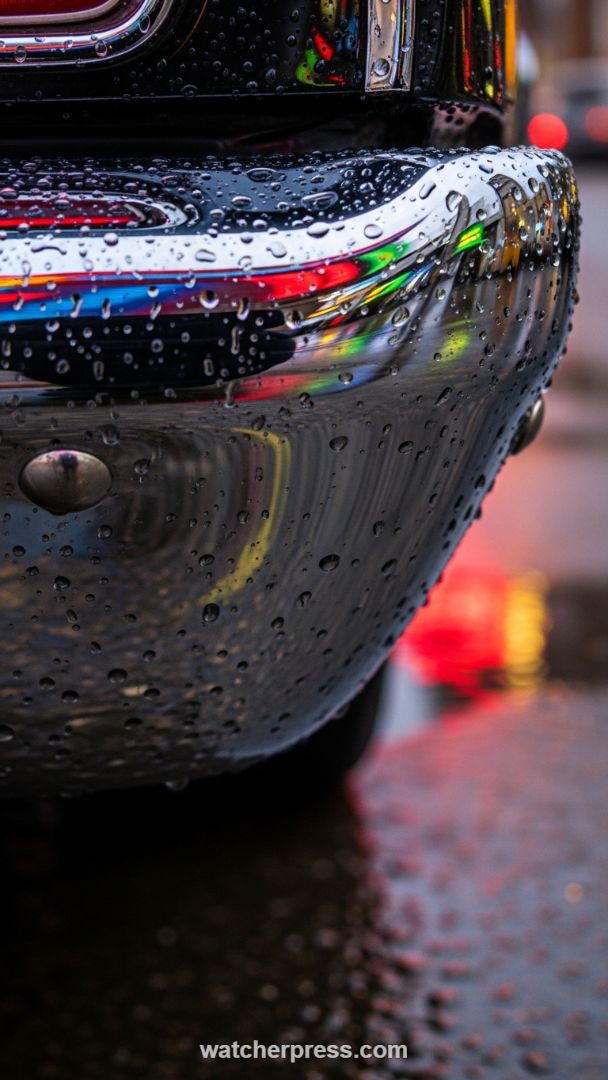
This image is a masterful demonstration of how focusing on micro-details can create powerful urban abstracts. By isolating the wet chrome bumper of a car, the photographer transforms an ordinary rainy street scene into a vibrant study of light and texture. The composition utilizes extreme close-up framing to emphasize the surface tension and reflective qualities, turning simple water droplets into mesmerizing lens elements.
- Texture Emphasis: The sharp focus on the countless water droplets provides intense texture contrast against the smooth, curved metal, inviting the viewer to explore the minute details and the physical reality of the rain.
- Dynamic Reflections (Color Contrast): The highly polished chrome acts as a mirror, capturing the blurred, intensely saturated colors of surrounding neon or brake lights (red, yellow, blue), creating a powerful abstract element that injects energy into the frame.
- Shallow Depth of Field: The use of a tight focus plane isolates the bumper detail, blurring the background (the street and tail lights) into soft bokeh, thus guiding the viewer’s eye exclusively to the intricate surface patterns.
This image proves that compelling compositions often lie in the overlooked details of the everyday environment, especially when enhanced by atmospheric conditions like rain.
Compositional Harmony: Utilizing Vertical Lines and Ambient Light for Intimate Storytelling
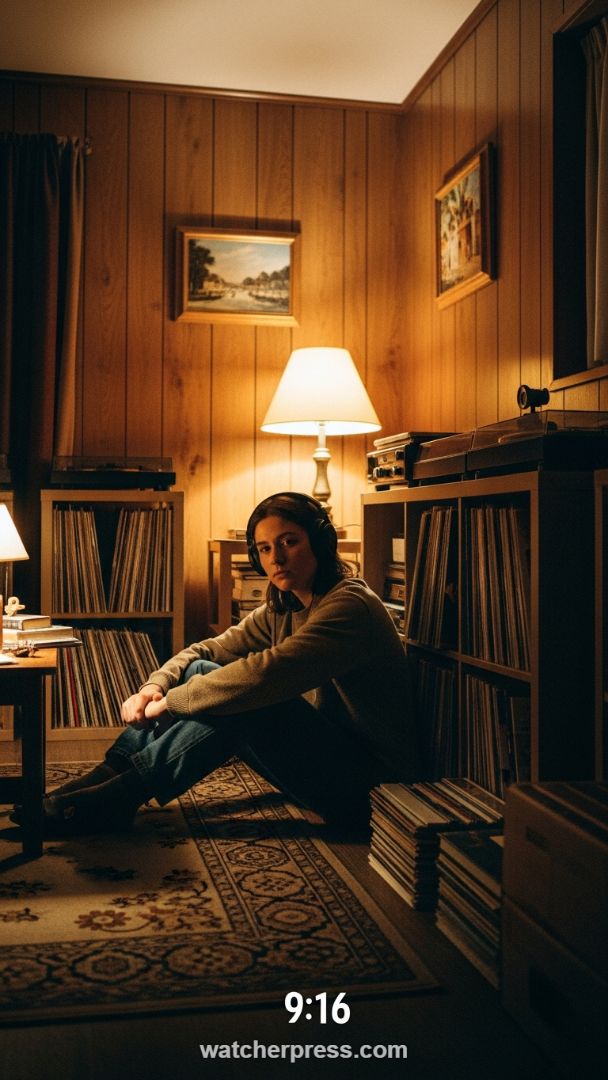
This photograph serves as a masterclass in utilizing ambient, low-key lighting to craft an intimate and narrative-driven portrait. The rich, warm tones of the interior, dominated by wood paneling and vinyl records, immediately establish a nostalgic and contemplative mood, drawing the viewer into the subject’s private space. The photographer expertly manages the limited light sources to create deep shadows and luminous highlights, emphasizing the textures and the thoughtful expression of the subject.
- Controlled Low-Key Lighting: The central table lamp acts as the sole, directional light source, creating a dramatic, chiaroscuro effect that highlights the subject’s face while allowing the surrounding environment to recede into warm shadow, thus maintaining focus.
- Structural Verticality: The strong, repeating vertical lines of the wood paneling and the stacked vinyl records act as powerful leading lines, adding depth and structure to the tall 9:16 aspect ratio and effectively framing the seated figure.
- Narrative Context and Framing: The environment—filled with elements like headphones, records, and vintage decor—is utilized not as clutter, but as essential context, deepening the story and anchoring the subject within a personal, music-focused sanctuary.
This image perfectly demonstrates how context, controlled warmth, and structural elements combine to elevate a simple portrait into a powerful piece of visual storytelling.
Dynamic Rule of Space: Freezing Action with High-Speed Sync and Bokeh

This stunning wildlife capture perfectly illustrates how to use advanced techniques like shallow depth of field and high-speed sync to isolate a fast-moving subject. The moment a vibrant hummingbird approaches a striking red hibiscus is frozen in time, providing an excellent study in color theory and compositional flow. This image demonstrates several critical rules essential for high-impact action photography.
- Isolation Through Shallow Depth of Field: The background is rendered as a deep, creamy bokeh, ensuring that the iridescent colors and sharp details of the hummingbird and the red flower are the sole focus, eliminating visual clutter.
- Rule of Space and Visual Flow: The subject is positioned on the left side of the frame and is moving toward the right (the flower), creating necessary “leading room” or “visual space” that enhances the dynamic feel of the action and directs the viewer’s eye across the frame.
- Complementary Color Contrast: The composition leverages the high contrast between the cool, iridescent greens and blues of the bird against the warm, saturated reds and yellows of the hibiscus, making the subject leap off the dark canvas.
By utilizing these foundational compositional rules, the photographer transforms a fleeting moment of nature into a powerful, visually arresting image.
Isolating Emotion: Mastering Aperture and Warm Light for Intimate Detail

This shot exemplifies how effective use of depth of field and controlled lighting can transform a simple gesture into a profound statement about human connection. By focusing tightly on the clasped hands, the photographer has eliminated all environmental distractions, allowing the subtle texture and warmth of the interaction to take center stage. The composition utilizes key techniques to maximize emotional impact and visual appeal, demonstrating the power of technical precision in intimate photography.
- Shallow Depth of Field (Isolation): A very wide aperture ensures that the background melts away into a soft, creamy bokeh, isolating the hands and ensuring that 100% of the viewer’s attention is drawn to the point of connection.
- Dramatic Rim Lighting: Strategic backlighting creates a strong, golden outline around the edges of the hands, known as rim light. This technique provides separation from the dark background, adds texture, and enhances the overall warm, intimate mood.
- Intimate, Vertical Cropping: The close, vertical crop amplifies the sense of intimacy and immediacy. By filling the frame with the subject, the photographer successfully conveys the emotional weight and detail of the moment without unnecessary surrounding context.
This image serves as a powerful reminder that technical mastery of light and focus is essential for capturing compelling, emotionally resonant detail photography.
Harnessing High Contrast and Rim Lighting to Capture Emotional Connection
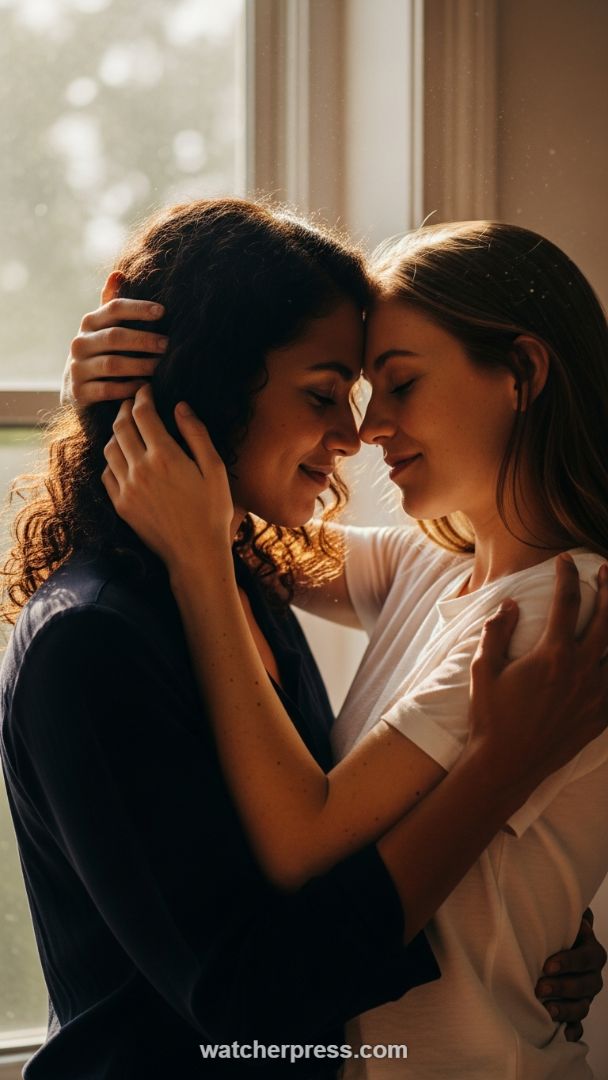
This stunning portrait exemplifies how strategic use of natural light can transform a simple embrace into a deeply evocative image. By positioning the couple directly in front of a bright window, the photographer expertly utilizes high contrast and warm tones to convey profound intimacy and emotional connection, turning the light source itself into a compositional element.
- Dramatic Backlighting and Rim Light: The strong light source from the window creates dramatic contrast, illuminating the edges of the subjects’ hair and shoulders (rim lighting), effectively separating them from the slightly underexposed foreground and adding a glowing, ethereal quality.
- Focus on Intimacy via Framing: The composition strictly fills the frame with the subjects, using implied lines created by the arms and shoulders to draw the viewer’s eye directly to the emotional focal point—the gentle touch of their foreheads and the soft expressions on their faces.
- Atmospheric Detail and Texture: The subtle presence of dust motes catching the light (atmospheric haze) introduces texture and depth into the composition, enhancing the warmth and reinforcing the intimate, enclosed setting.
The resulting image is a powerful study in portraiture, demonstrating how intentional lighting choices and close cropping enhance both emotional narrative and compositional depth.
The Art of Contrast: Utilizing Hard Light and Diagonal Shadows for Elevated Product Composition
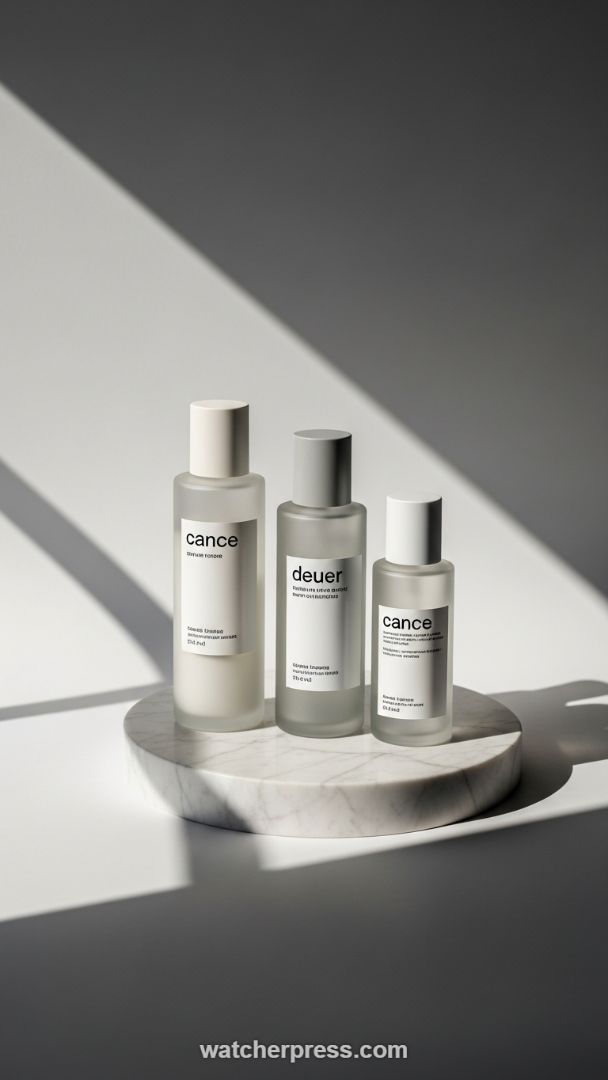
This striking product shot perfectly illustrates how strategic, hard lighting and minimalist staging can transform simple objects into high-end commercial imagery. The composition leverages negative space and stark contrast to draw the viewer’s eye directly to the trio of skincare bottles, emphasizing their subtle textures and clean forms. Resting on a circular marble plinth, the products are framed by dramatic, geometric shadows that add crucial depth and dynamism, turning a simple still life into an editorial-quality advertisement.
- Dynamic Leading Lines: The powerful diagonal shadows cast across the background and foreground act as strong leading lines, guiding the viewer’s gaze toward the product arrangement and adding an architectural sense of structure to the overall frame.
- Rule of Odds and Scale: The use of three bottles of varying heights (the Rule of Odds) creates visual interest and a natural sense of hierarchy, preventing the grouping from appearing static or overly symmetrical.
- Texture and Tonal Contrast: The muted, matte appearance of the glass bottles and the subtle veining of the marble pedestal provide rich textural contrast against the smooth, high-key white background, further amplified by the deep, dark shadows.
This masterful application of hard light and geometric shadow placement demonstrates the power of compositional simplicity in achieving a premium, luxury aesthetic.
Mastering Isolation and Texture: A Study in Low-Key Food Photography
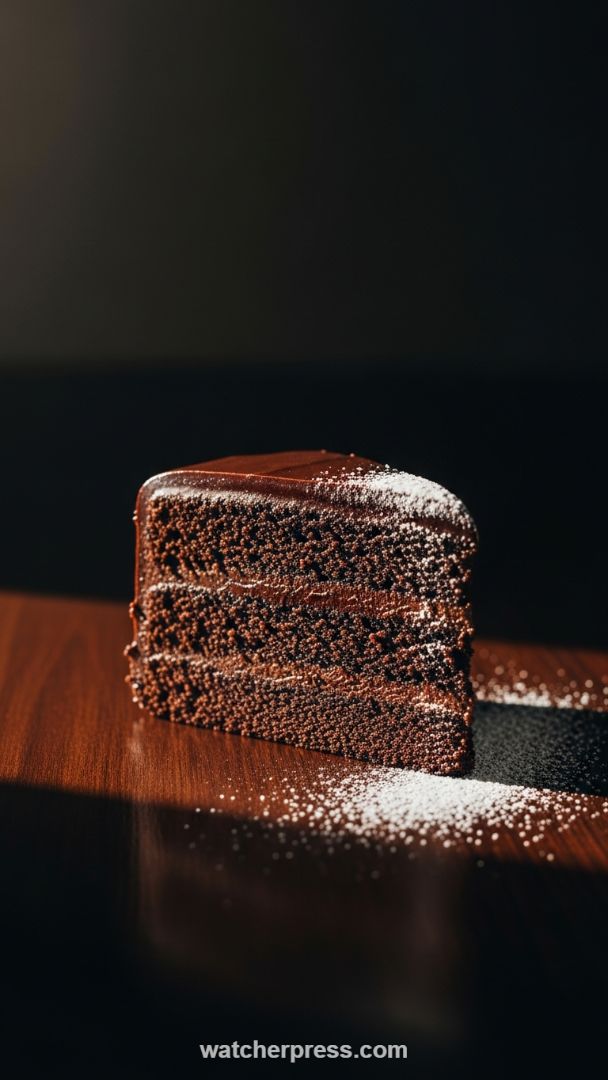
This stunning example of food photography utilizes dramatic low-key lighting to emphasize texture and shape, transforming a simple slice of chocolate cake into a luxurious, high-contrast visual statement. By keeping the background intensely dark, the photographer successfully employs the principle of isolation, forcing the viewer’s attention onto the rich details of the cake’s layers and glossy ganache.
- Chiaroscuro Lighting: The use of intense, directional side light against a deep black background creates a dramatic chiaroscuro effect, enhancing the subject’s three-dimensionality and mood.
- Texture and Detail: Sharp focus captures the porous, moist texture of the chocolate cake layers, which is beautifully contrasted by the smooth, reflective quality of the thick glaze coating.
- Negative Space and Leading Elements: The expansive dark negative space minimizes distraction, while the scattered powdered sugar on the polished wooden surface acts as a subtle leading element, guiding the eye directly to the main subject.
This image serves as a perfect demonstration of how controlling light and utilizing negative space can create powerful, evocative food portraits suitable for high-end editorial or commercial work.
Mastering Atmosphere: Leveraging Crepuscular Rays for Dramatic Vertical Composition
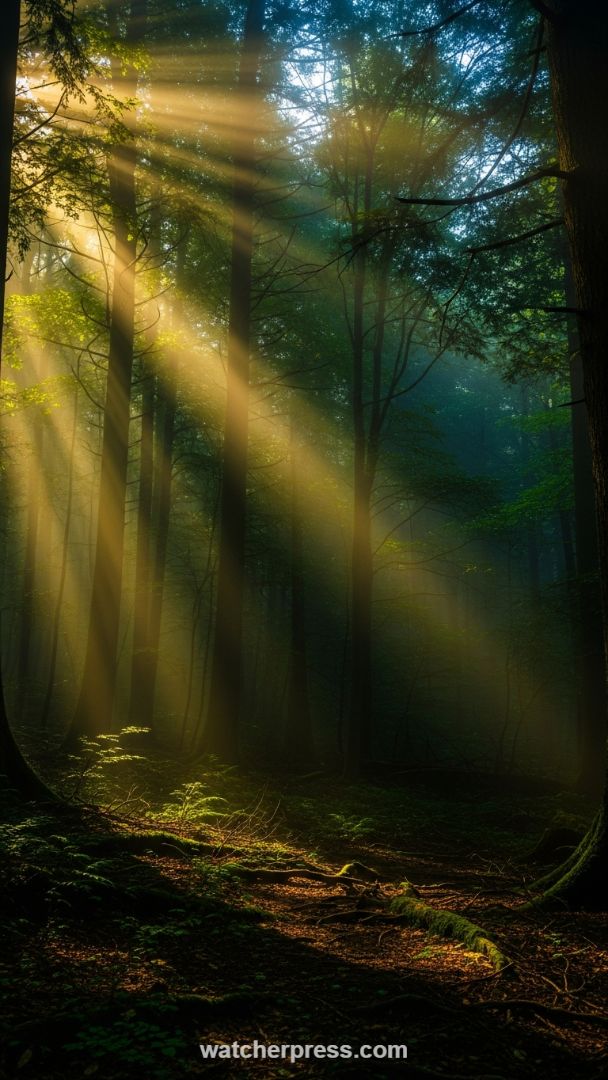
This stunning photograph exemplifies how mastering natural light—specifically the phenomenon of crepuscular rays—can transform a simple forest scene into an ethereal, high-impact composition. The successful execution here relies on balancing an extremely high dynamic range while using the light itself as the primary compositional element to create exceptional depth and atmosphere.
- Dynamic Leading Lines: The golden shafts of sunlight function as powerful diagonal leading lines, guiding the viewer’s eye from the bright source at the top through the dense, atmospheric forest to the illuminated moss and roots in the foreground.
- High Contrast and Mood: Exceptional management of dynamic range captures the extreme difference between the brilliant, warm highlights and the deep, saturated cool shadows, enhancing the sense of mystery and depth essential for creating a dramatic mood.
- Vertical Framing: Utilizing the vertical aspect ratio effectively emphasizes the towering scale of the trees and the sheer length of the light beams, reinforcing the majestic and immersive quality of the deep woods.
This image serves as a powerful reminder that maximizing atmospheric conditions and controlling light are fundamental techniques for elevating landscape photography.
Mastering High-Contrast Isolation in Urban Portraiture
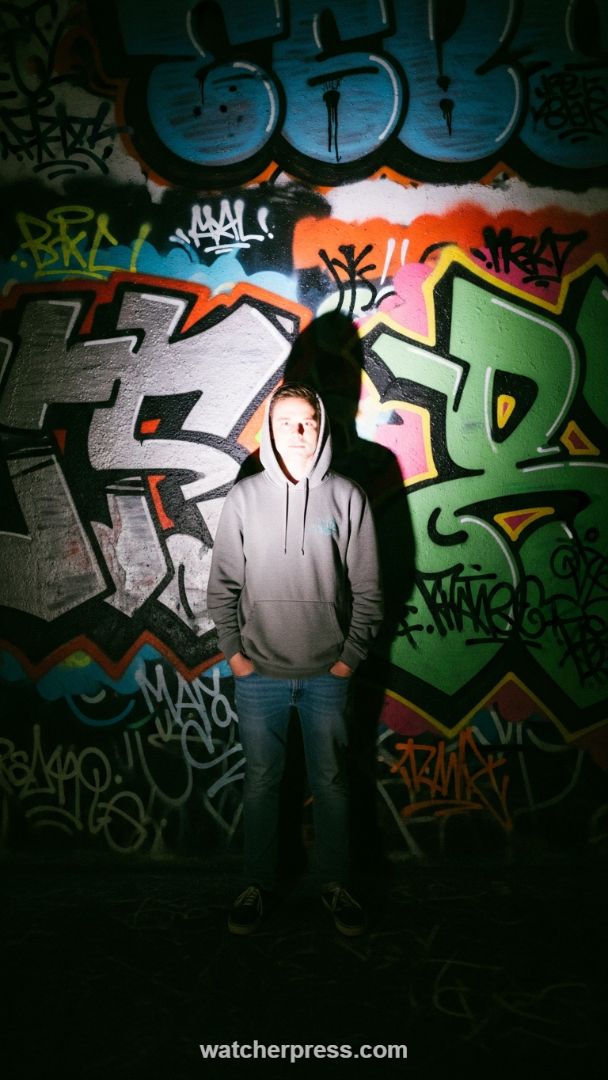
This urban portrait masterfully utilizes focused light to isolate the subject against a vibrant, busy background. The dramatic high contrast immediately draws the viewer’s eye to the centered figure, showcasing how effective flash or artificial lighting can be in overwhelming dark settings and creating a powerful, moody atmosphere. This composition demonstrates how to use light not just for exposure, but as a primary tool for emotional impact and subject isolation.
- Flash Isolation Technique: The intense, frontal light source (likely a speedlight) creates a pronounced spotlight effect, separating the subject from the deep shadows and transforming the colorful graffiti wall into a dynamic, textured backdrop.
- Centered Symmetry: Placing the subject squarely in the middle of the frame utilizes centered symmetry, lending a sense of stability, directness, and powerful dominance to the portrait, perfectly balancing the visual weight of the complex background.
- Dramatic Chiaroscuro: The deliberate use of high-key lighting on the subject combined with deep, low-key shadows and a pitch-black foreground enhances the three-dimensionality of the scene, adding depth and narrative tension to the street setting.
This image serves as a powerful reminder that controlling light, even in chaotic environments, is the key to creating compelling and moody street portraits that truly pop.
Mastering Motion: Utilizing the Rule of Space in Wildlife Photography
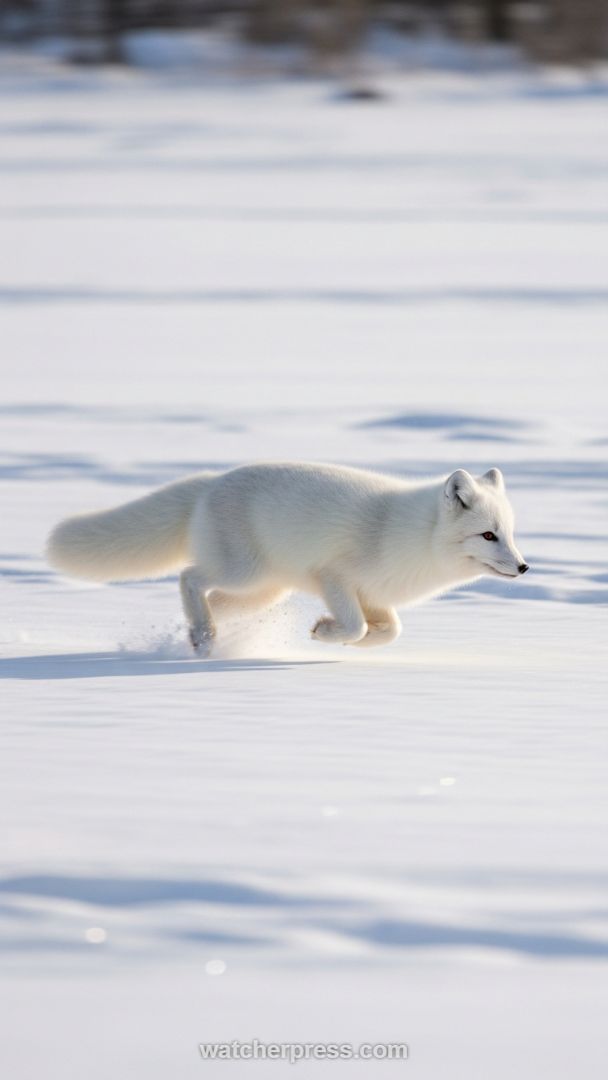
This stunning example of wildlife action photography demonstrates how critical composition is when capturing a moving subject. The image successfully freezes the Arctic Fox mid-stride against a stark, high-key winter environment, drawing attention immediately to the animal’s dynamic movement and focused posture.
- Rule of Space and Leading Room: The subject is strategically positioned on the left side of the frame, leaving significant negative space on the right. This “leading room” enhances the sense of motion, suggesting the fox is actively moving into the frame and giving the viewer’s eye a clear direction to follow.
- Stop Action and Shutter Speed: The moment of impact and motion is perfectly frozen—note the crisp detail on the fox’s fur and the small spray of snow kicked up by its paws. This demanding technique required a very fast shutter speed to isolate the subject from the blur of movement, emphasizing the power of the stride.
- High-Key Exposure Management: Shooting a white subject on white snow demands precise exposure control. The photographer managed to retain texture and detail in the bright fur and the snow’s subtle undulations, avoiding complete blow-out while utilizing the stark, clean environment for visual impact.
By expertly applying the Rule of Space and utilizing precise exposure settings, this photograph transforms a simple sighting into a powerful study of dynamic arctic wildlife.
Harnessing Drama: Compositional Use of Lens Flare and Texture
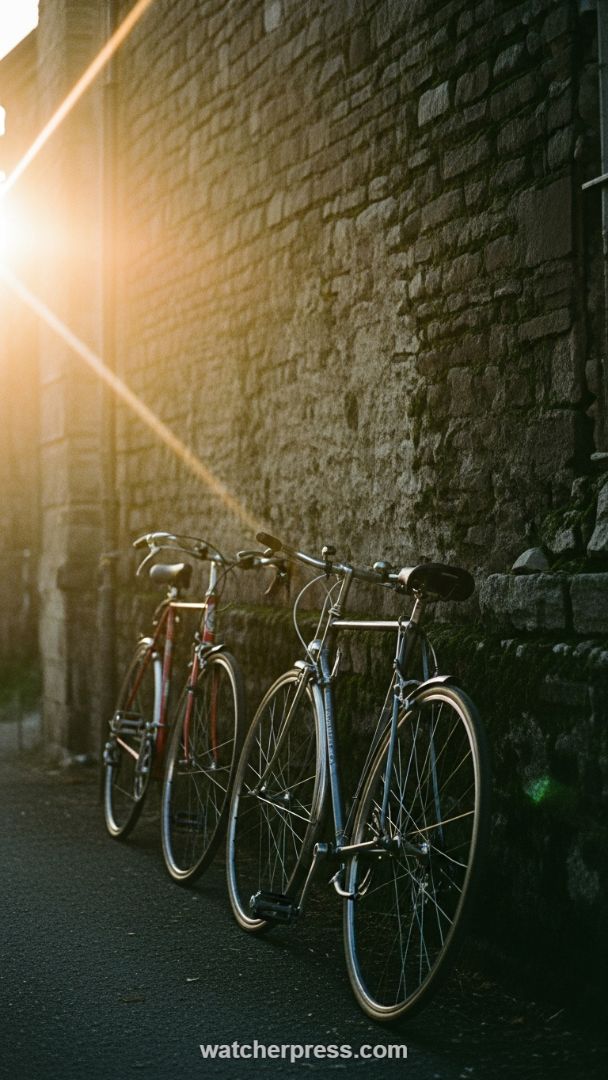
This street scene masterfully utilizes dramatic light and texture to turn a simple subject—two parked bicycles—into a cinematic moment. The image is a compelling study in contrast, pitting the harsh, golden sunlight and its resulting lens flare against the deep, earthy tones of the ancient stone wall. This photograph demonstrates how intentional use of extreme light and textural juxtaposition can elevate an everyday setting into powerful, story-driven visual art.
- Dramatic Backlighting and Lens Flare: The light source is positioned strategically off-frame in the upper left, casting intense rays that slice diagonally across the composition. This extreme lens flare serves not as a distraction, but as a powerful leading line, guiding the viewer’s eye into the scene and enhancing the vintage, film-like aesthetic.
- Texture Contrast: The composition thrives on the juxtaposition of materials. The fine, cold, metallic lines of the bicycle spokes and frames stand in sharp relief against the rugged, uneven, and moss-covered texture of the medieval-style stone wall, adding significant depth and tactile interest to the frame.
- Effective Use of Depth of Field: By utilizing a relatively shallow depth of field, the photographer ensures the nearest bicycle is sharply focused, while the background and the second bicycle softly fall away. This separation isolates the primary subject and reinforces the three-dimensional quality of the narrow alleyway.
This photograph is a prime example of how harnessing harsh, natural light and strong contrast can transform mundane objects into high-impact, story-driven visual art.
Mastering the Split-Level Shot: Compositional Harmony Between Air and Water
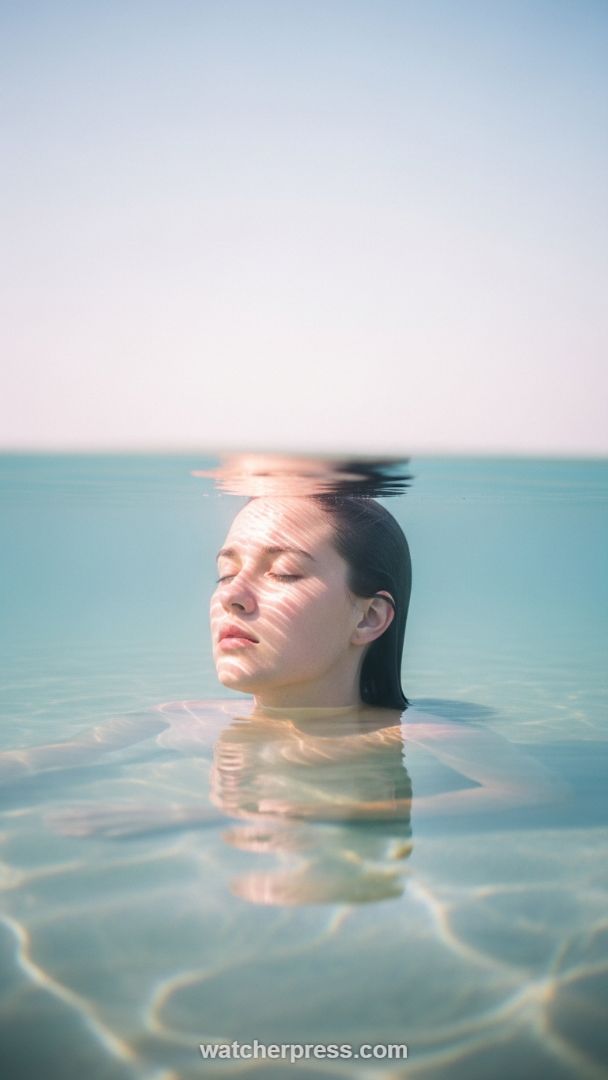
This stunning portrait exemplifies masterful control over natural light and the unique compositional potential of the split-level perspective. The serene expression of the subject, combined with the clear, cool tones of the water, creates an ethereal and meditative mood. The photograph expertly uses the contrasting textures of the flat sky and the rippled water to draw the viewer into the scene, showcasing how environmental dividers can enhance visual storytelling.
- Precise Waterline Division: The horizontal plane of the water serves as a powerful compositional element, separating the vast, soft negative space of the sky from the textured, intimate space of the water, lending crucial balance and depth to the vertical frame.
- Dynamic Light Caustics: The refraction of sunlight through the water creates mesmerizing, shifting light patterns (caustics) across the subject’s face and shoulders, transforming a simple portrait into a sophisticated study of light texture and form.
- High-Key, Minimalist Palette: The use of soft, high-key lighting and a restricted color palette (pale cyan and white) emphasizes tranquility and focuses the viewer’s attention entirely on the interplay between the subject and the natural elements.
This image is a perfect demonstration of how controlling the plane of focus and leveraging environmental elements—like light refraction and the horizon line—can transform a simple scene into a captivating piece of photographic art.
Intentional Detail: Utilizing Leading Lines and Contrast for Dramatic Floral Macro
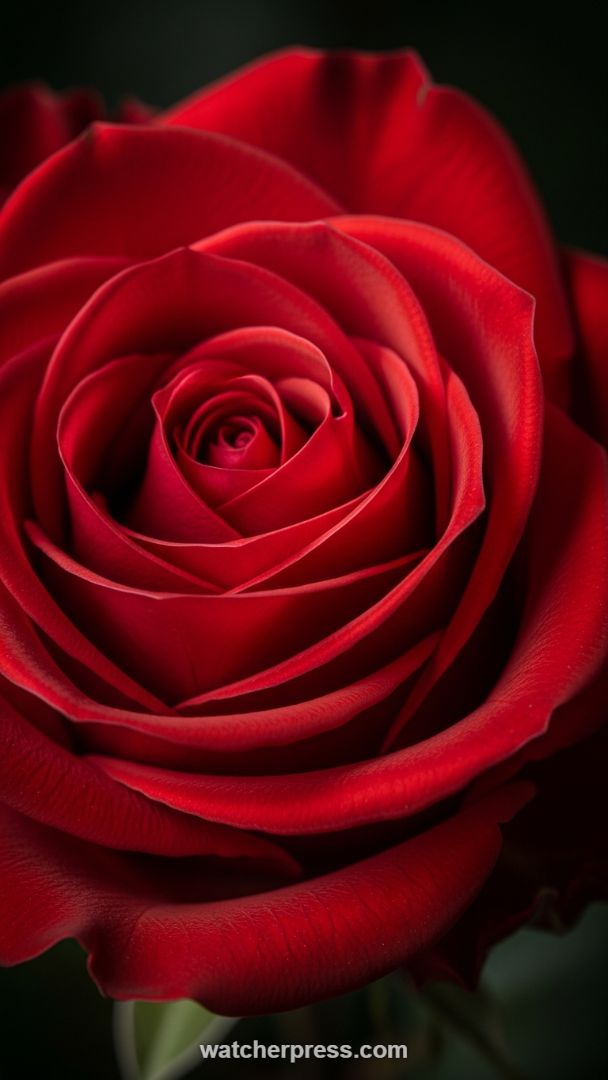
This stunning macro photograph of a crimson rose is a masterclass in utilizing depth and contrast to create emotional impact. By filling the frame entirely with the subject, the photographer forces the viewer to confront the intricate textures and curves of the petals, demonstrating the effectiveness of extreme close-up composition combined with dramatic lighting.
- Leading Lines & Flow: The natural spiral of the rose petals acts as powerful leading lines, guiding the viewer’s eye seamlessly from the outer edges toward the tightly coiled, focused center, creating depth and dynamic movement.
- Fill the Frame Technique: By eliminating all unnecessary background elements, the composition maximizes the visual impact of the rich texture and velvety surface of the petals, turning the subject into an abstract study of form.
- High Contrast & Negative Space: The intentional low-key lighting isolates the vibrant, saturated red against the deep, dark background, utilizing negative space to create a powerful sense of drama and visual weight.
This image proves that attention to detail, coupled with a deliberate use of compositional rules like dramatic contrast and natural flow, can transform a simple subject into a work of photographic art.
Dramatic Contrast and Geometric Framing: Elevating Fashion Photography with Architecture
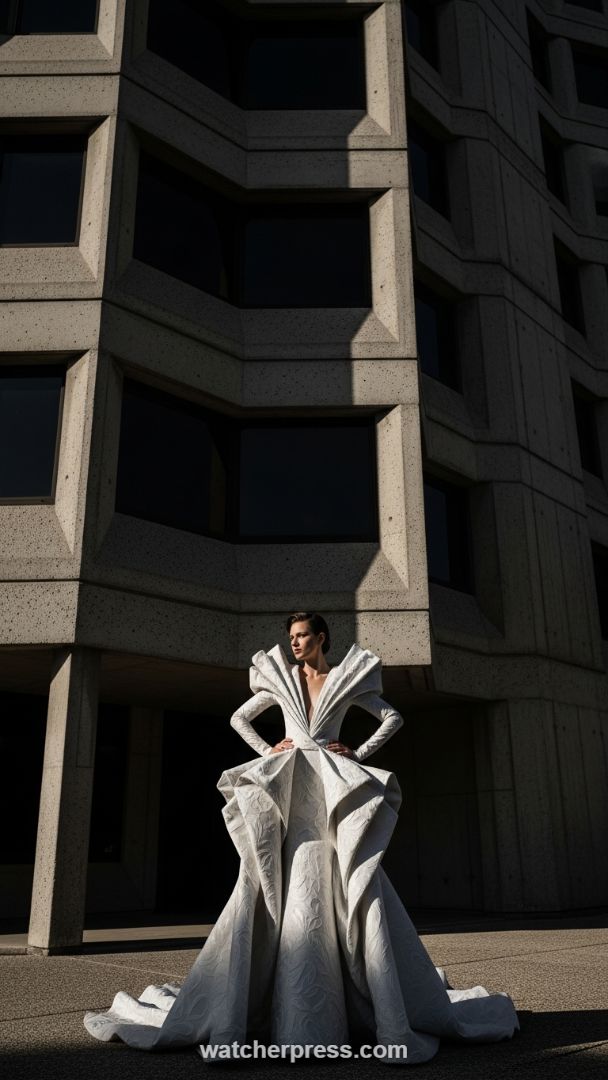
This striking fashion photograph expertly uses a stark brutalist architectural background to amplify the drama of the subject. The composition is a masterclass in controlled contrast, pitting the voluminous, organic curves of the white gown against the harsh, geometric lines of the concrete structure. The directional sunlight carves the scene into distinct planes of light and shadow, defining the model and creating an intense, moody atmosphere.
- Geometric Framing and Repetition: The repeating, angular windows of the brutalist building serve as a powerful backdrop, creating strong vertical and horizontal lines that anchor the subject and add visual weight to the upper half of the frame.
- Chiaroscuro Lighting: Directional sunlight is meticulously used to isolate and illuminate the model and parts of the background, utilizing deep shadows (negative space) to draw all attention to the texture and form of the high-fashion garment.
- Juxtaposition of Form: The composition deliberately contrasts the soft, voluminous, and curved texture of the white fabric with the rough, gray, and angular concrete, enhancing the visual impact and narrative tension of the image.
By integrating high fashion with unforgiving architecture and dramatic light, the photographer creates a visually arresting image that transcends standard environmental portraiture.
Mastering Mood: Using Wet Surfaces and Neon to Enhance Depth and Color
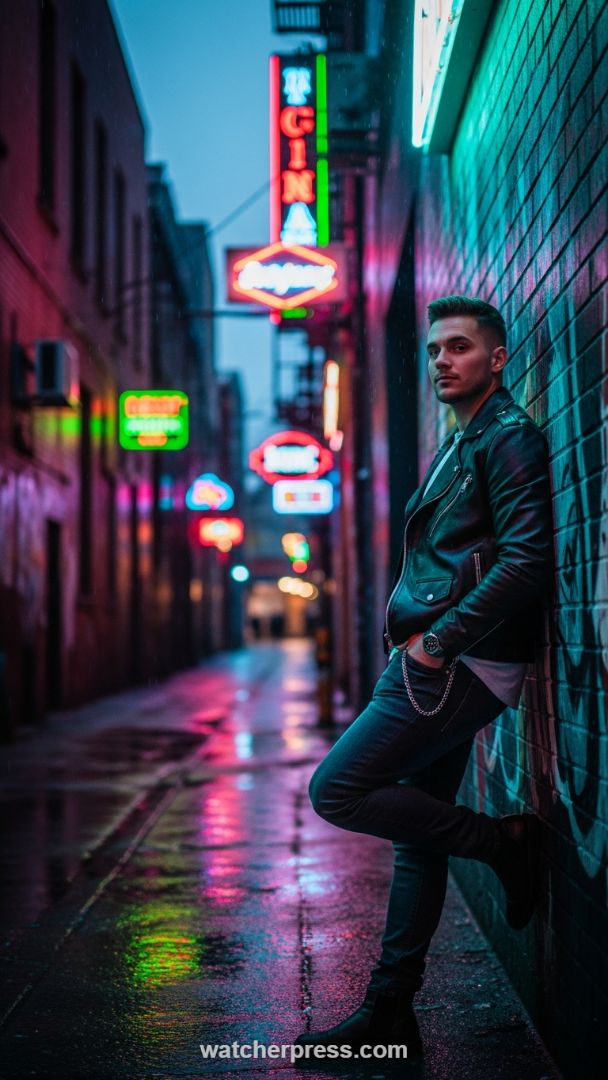
This image perfectly encapsulates the dramatic potential of urban portraiture captured during twilight or night, skillfully blending high-contrast color palettes with environmental elements like rain-slicked streets. The composition utilizes the narrow alleyway, complemented by the subject’s deliberate pose, to draw the viewer deep into the scene, emphasizing atmosphere and a brooding, cinematic aesthetic. This example is a masterclass in utilizing available light and reflections as primary compositional tools.
- Leading Lines and Depth: The wet pavement acts as a mirror, creating strong reflective leading lines that converge toward the distant, blurred neon signs. This technique dramatically enhances the sense of depth of field and environmental immersion.
- Dynamic Color Contrast: The composition relies heavily on the juxtaposition of complementary colors—cool ambient cyan/blue light washing the brick wall and warm magenta/green reflections saturating the street—to create visual tension and a vibrant cyberpunk mood.
- Framing and Subject Placement: The photographer employs the Rule of Thirds, positioning the subject along the right vertical line, balanced against the visual weight of the colorful alleyway and the high-contrast lighting on the left side of the frame.
This masterful use of ambient light, reflection, and urban geometry transforms a simple portrait into a compelling, narrative-driven visual experience.
High-Key Simplicity: Harnessing Directional Light and Texture for Detail Shots
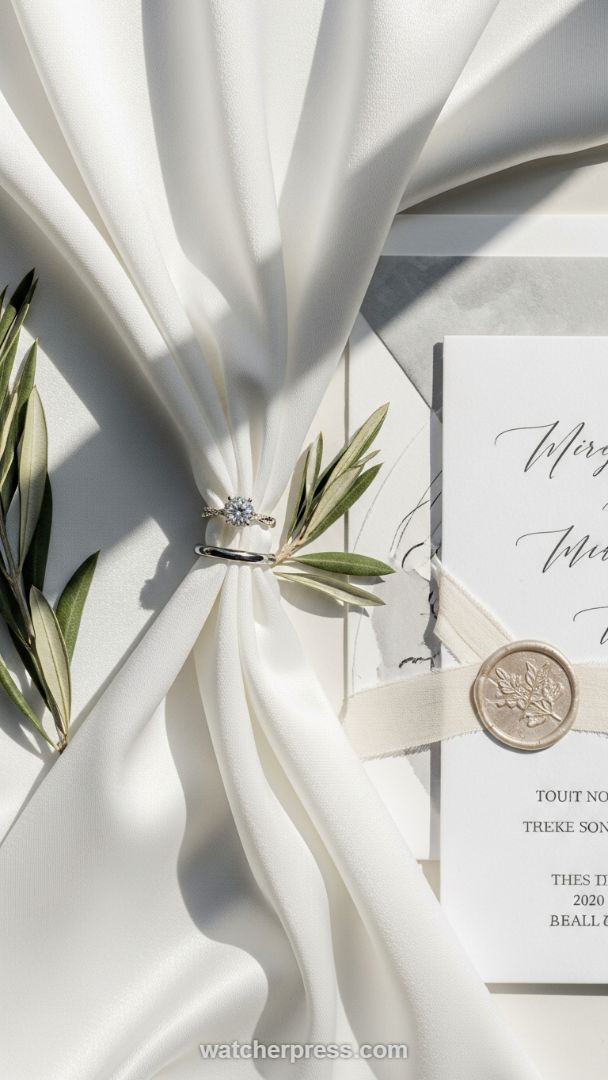
This image serves as a masterclass in detail photography, prioritizing elegant composition and the interplay of light and shadow. The subject—a collection of wedding essentials—is elevated far beyond a simple flat lay through the intentional use of luxurious textures and a high-key color palette. The composition skillfully uses flowing lines and stark contrast to draw the viewer precisely to the central focus: the diamond engagement and wedding bands.
- Dynamic Leading Lines: The cascading folds of the white silk drapery act as powerful curvilinear leading lines, converging perfectly at the central subject (the rings and olive sprig), ensuring immediate visual focus.
- High-Key Shadow Definition: Directional sunlight is expertly utilized to create crisp, defined shadows against the bright white background, adding essential depth and three-dimensionality that prevents the high-key setup from appearing flat.
- Textural Contrast and Focal Point Isolation: The smooth, brilliant metal of the rings and the glossy fabric are juxtaposed against the matte paper of the invitation and the organic texture of the olive leaves, isolating the delicate jewelry through textural variance.
This detailed setup demonstrates how meticulous arrangement and thoughtful lighting can transform everyday objects into a sophisticated and emotionally resonant photograph.
Mastering Depth of Field: Intricate Macro Study of Dew-Covered Silk
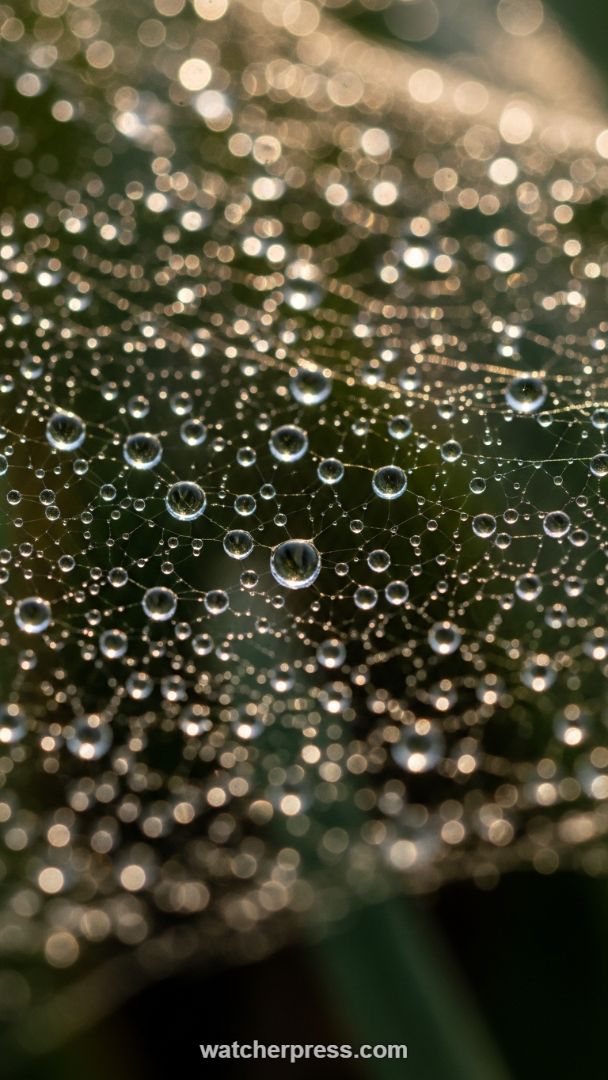
This stunning macro photograph transforms a simple spiderweb into a canvas of light and liquid geometry. The composition expertly utilizes an extremely shallow depth of field to isolate the delicate silk structure and the myriad of captured water droplets against a richly blurred, dark background. It is a masterful study in texture, light, and the power of selective focus to create abstract beauty from nature.
- Shallow Depth of Field: The narrow focus plane draws the eye directly to the crisp clarity of the central web and the larger droplets, highlighting the dramatic contrast between sharp detail and soft, dreamy abstraction.
- Backlit Bokeh Effect: The warm, golden light filtering through the background foliage is rendered into beautiful, shimmering circles of bokeh, adding significant depth and visual rhythm to the overall composition.
- Pattern and Texture: The repetition of perfectly spherical water droplets acts as a natural, complex texture, emphasizing the fragility and intricate geometric pattern of the spider’s silk lines.
This image serves as a powerful reminder that even the smallest subjects can yield breathtaking abstract beauty when composition and light are meticulously controlled.
Item 18
Description unavailable.
Item 19
Description unavailable.
Item 20

Description unavailable.