Beef Carbonnade

Are you looking for a meal that feels like a warm hug? Beef Carbonnade is exactly what you need. It is a famous stew from Belgium. While most stews use wine, this one uses beer. The beer makes a dark, thick sauce that tastes a little sweet and a little salty. It is the perfect dinner for a cold night when you want something filling.
I first tried this dish at a small cafe on a rainy day. I was amazed at how soft the beef was. It practically fell apart when my fork touched it. Since then, I have made it many times at home for my friends. It always makes the whole house smell amazing. I am going to show you how to make it so your family can enjoy it too.
In this guide, you will learn the best beef to buy and which beer works best. I will take you through every step so you don’t get confused. You do not need to be a pro chef to get this right. Just follow along and you will have a big pot of comfort food ready in no time. Check out the steps below to get started!
What Makes This Stew So Special?
Beef Carbonnade is different from the beef stew you might know. In America or France, people often use red wine. But in Belgium, they love their beer. Using beer gives the gravy a deep flavor that you cannot get any other way. It is not bitter if you cook it long enough. Instead, it becomes rich and smooth. It is a very humble dish that uses simple things like onions and bread to create something fancy.
The secret is the balance of flavors. You have the savory beef, the sweet onions, and a tiny bit of sour vinegar. When these cook together for a long time, they turn into magic. It is a great meal for someone who wants a fancy taste without spending too much money. Most of these items are likely in your kitchen right now. Let’s look at what you need to grab from the store.
The Ingredients You Need

To make a great stew, you need the right tools. I always say that the food is only as good as what you put in. For this recipe, the beef is the star. You want a cut that has some fat in it. If the meat is too lean, it will get dry and tough. I usually look for chuck roast because it gets very soft after cooking for a few hours. Here is your shopping list for this tasty meal.
- 2 pounds of beef chuck roast, cut into big cubes
- 4 large yellow onions, sliced thin
- 2 tablespoons of butter
- 1 bottle of dark Belgian beer (about 12 ounces)
- 2 cups of beef broth
- 2 tablespoons of brown sugar
- 1 tablespoon of cider vinegar
- 2 slices of crusty bread
- 2 teaspoons of Dijon mustard
- Fresh thyme and 2 bay leaves
- Salt and black pepper
- 2 tablespoons of flour
Choosing the Right Beer

The beer you pick changes everything. This is a lesson I learned the hard way. One time, I used a very bitter beer with lots of hops. The stew came out tasting like medicine! I felt so bad because I had worked on it all day. Now, I only use dark beers that are a bit sweet. Look for a Belgian Dubbel or a brown ale. These have notes of caramel and dark fruit that make the sauce taste like heaven.
If you do not want to use alcohol, you can use more beef broth and a splash of prune juice. It sounds weird, but it adds that dark sweetness you need. However, if you can use the beer, please do. Most of the alcohol cooks away, leaving just the yummy taste behind. This dish is meant to be dark and cozy, so the darker the beer, the better the color of your gravy will be in the end.
Recipe Quick Info
- Prep Time: 25 minutes
- Cook Time: 3 hours
- Servings: 6 people
- Difficulty: Easy
Prepping Your Meat and Onions

Before you start the heat, make sure everything is ready. Slice your onions thin. You might think four onions is too many, but they shrink a lot. They turn into a jam-like texture that thickens the sauce. This is a key part of the recipe. While the onions are the base, the beef needs a good crust. Dry the meat with a paper towel before you start. Wet meat will not brown; it will just steam and look grey.
I like to season the beef with plenty of salt and pepper right before it hits the pan. Do not crowd the pot. If you put too much meat in at once, the temperature drops. Cook the beef in small groups. You want a dark brown crust on the outside of every cube. That brown stuff on the bottom of the pot is full of flavor. Don’t wash it away! We call that ‘fond,’ and it is the secret to a professional-tasting sauce.
Step by Step Cooking Instructions

Now it is time to put it all together. This part takes patience, but it is very easy. Once the meat is browned and set aside, you focus on the onions. This is where most people rush, but I beg you to slow down. The onions should take about 15 minutes to get soft and golden. If they burn, the stew will taste bitter, so keep the heat at medium. Here is exactly how to finish the dish.
- Brown the beef cubes in butter and oil, then take them out of the pot.
- Add more butter and cook the onions until they are very soft and brown.
- Sprinkle the flour over the onions and stir for one minute to cook the raw flour taste away.
- Slowly pour in the beer while scraping the bottom of the pot with a spoon.
- Add the beef broth, brown sugar, vinegar, thyme, and bay leaves.
- Put the beef and any juices back into the pot.
- Spread mustard on your bread slices and place them on top of the liquid, mustard side down.
- Cover and simmer on low heat for about 2.5 to 3 hours.
Why We Use Bread and Mustard

You might think putting bread inside a stew is strange. I thought so too when I first saw it! But this is the traditional Belgian way. The bread slowly melts into the sauce. It acts as a thickener and adds a nice tang from the mustard. By the time the beef is done, the bread will have disappeared completely. It makes the sauce creamy and thick enough to coat a spoon.
Make sure you use a strong mustard like Dijon. Honey mustard is too sweet for this. The mustard cuts through the richness of the beef fat and the sugar. It provides a balance that makes you want to keep eating. If you are worried about gluten, you can skip the bread and use a cornstarch slurry at the end. But IMO, the bread version tastes much more authentic and has a better mouthfeel.
Best Ways to Serve Carbonnade

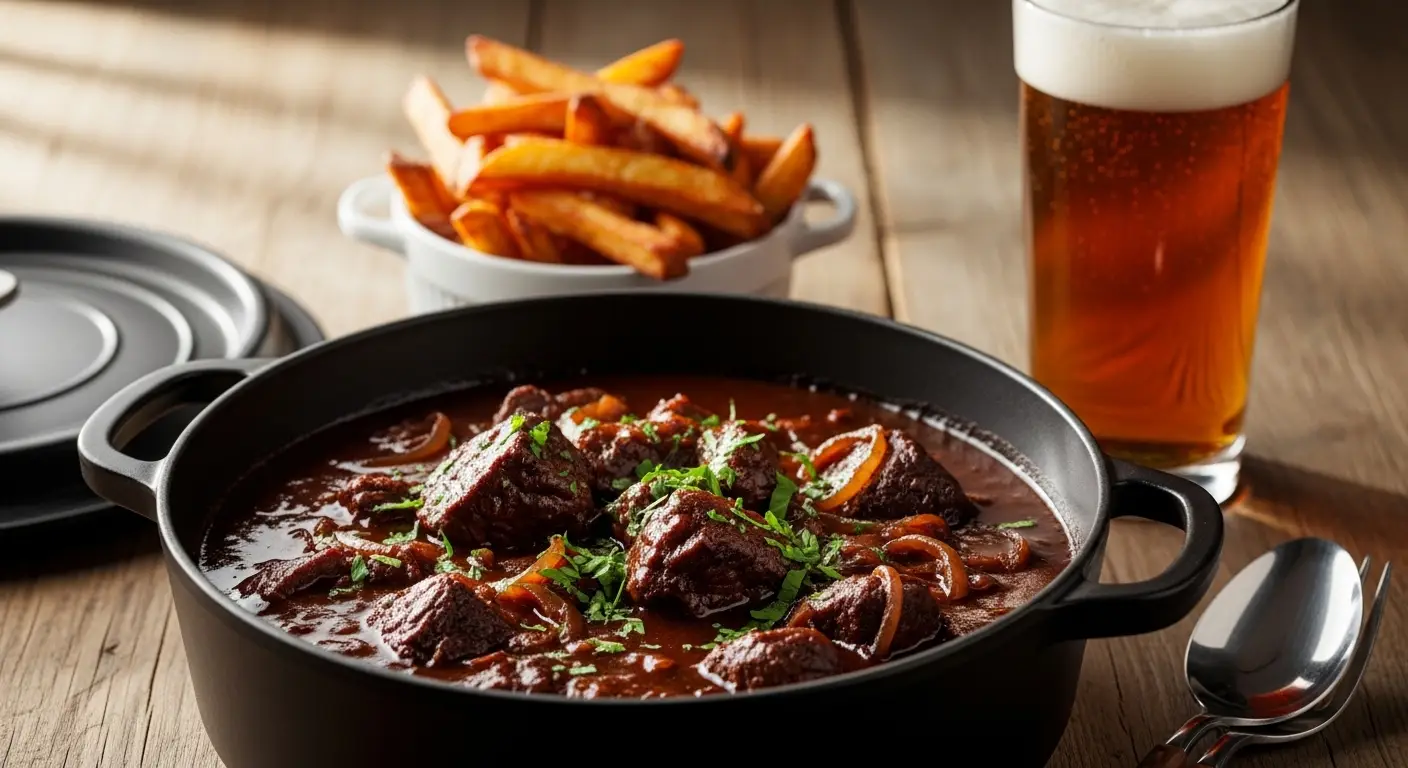
In Belgium, there is only one way to eat this: with fries! They call them ‘frites.’ The salty, crispy potatoes are perfect for soaking up the gravy. If you don’t want to fry potatoes at home, wide egg noodles are a great second choice. The flat noodles catch the sauce perfectly. Some people also like it over mashed potatoes for the ultimate comfort meal. I personally love a side of green beans or a simple salad to add some crunch.
Don’t forget a nice piece of fresh bread on the side. You will want to wipe your bowl clean. This stew actually tastes even better the next day. The flavors sit and get to know each other in the fridge overnight. If you are hosting a party, I suggest making it a day early. Just heat it up slowly on the stove when your guests arrive. It saves you stress and tastes twice as good!
Pro Stew Tips
- Don’t Rush: If the meat is still tough, it just needs more time. Give it another 30 minutes.
- Check the Salt: Taste the sauce at the very end. Beer can be salty, so don’t add too much salt at the start.
- Vinegar Trick: If the stew tastes too heavy, add one more teaspoon of vinegar right before serving.
Common Mistakes to Avoid

I want your dinner to be perfect, so let’s talk about what can go wrong. The biggest mistake is high heat. If you boil the stew too hard, the beef will turn into rubber. It needs to be a very tiny simmer. You should only see a few bubbles popping up now and then. Also, watch out for the onions. If you don’t cook them long enough, they will stay crunchy and won’t thicken the sauce. They should be like jam.
Another tip is about the flour. If you add flour directly to the liquid, you will get lumps. Always stir it into the buttery onions first. This creates a paste that blends smoothly. Lastly, don’t forget to take out the bay leaves and thyme stems before you serve. Nobody wants to bite into a hard leaf! If you keep these small things in mind, your Beef Carbonnade will be a huge success every single time.
Your Questions Answered
Cooking with beer and slow-cooking meat can lead to some questions. I have heard many of them over the years from people trying this recipe. Here are the most common things people ask me when they make this Belgian classic. I want to make sure you feel confident when you step into the kitchen to start browning that beef.
Can I make this in a slow cooker?
Yes! Brown the meat and onions in a pan first. Then put everything in the slow cooker for 7-8 hours on low. It works great.
What if I don’t like beer?
You can use beef stock instead. Add a tablespoon of balsamic vinegar to keep that deep flavor. It won’t be exactly the same, but still yummy.
Can I freeze Beef Carbonnade?
Yes, it freezes very well for up to 3 months. Let it cool completely before putting it in a freezer bag. Thaw it in the fridge overnight.
Why is my sauce too thin?
Take the lid off for the last 30 minutes of cooking. This lets the water evaporate so the sauce gets thick and shiny.
What beef cut is best besides chuck?
Beef shank or brisket also work well. Just make sure it is a tough cut meant for braising. Do not use sirloin or steak.
Enjoy Your Belgian Feast
Beef Carbonnade is more than just a meal. It is a slow, cozy process that rewards you with the most tender beef you have ever had. I hope this recipe brings warmth to your table. Just remember to pick a good beer and take your time with the onions. You are going to love the rich, sweet sauce! Happy cooking and enjoy every bite of your homemade Belgian stew.