Chicken Korma

Making a great curry at home can feel like a big job. You might think you need a million spices or a fancy kitchen to get it right. I used to think the same thing until I tried making chicken korma for the first time. It is a very special dish because it is not too spicy and feels very rich. If you like food that is creamy and smells amazing, you are in the right place. Today, I am going to show you how to make this classic meal without any stress.
In this article, you will learn how to pick the right chicken and how to make a sauce that is smooth like silk. I will walk you through the steps of cooking the onions just right and using yogurt to make things creamy. We will also talk about the best sides to serve with your meal. By the end, you will feel like a pro in the kitchen. Grab your apron and let us get started!
Check out my favorite steps for making this yummy dinner below.
Getting Started with Your Ingredients
The secret to a good korma is the quality of what you put in the pot. You do not need to spend a lot of money, but you do need to pick things that work well together. Korma is different from other curries because it focuses on being mild. This means we use things like cream, yogurt, and nuts instead of lots of hot chili peppers. It is the perfect meal for people who do not like their mouth to feel like it is on fire.
I remember when I first tried to make this, I used way too much water. My sauce was thin and sad. I learned that the magic happens when you let the onions and yogurt do the work. You want a thick gravy that sticks to the chicken. To get that, we have to be careful with our measurements. Let us look at what makes this dish so special and how you can get it right on your first try.
Choosing the Right Chicken
Most people ask if they should use chicken breasts or chicken thighs. For a korma, I really think thighs are the way to go. Thigh meat stays juicy even if you cook it for a long time. Breasts can get dry and tough if the heat is too high. If you do use breasts, make sure to cut them into even pieces so they all finish cooking at the same time.
When I cook for my family, I usually buy boneless chicken. It makes it much easier for kids to eat. However, chicken on the bone actually gives the sauce more flavor. If you are not in a rush, try using drumsticks or bone-in thighs. Just remember that bone-in meat takes a few extra minutes to cook all the way through. No matter what you pick, make sure the chicken is fresh and cleaned well before you start.
The Power of Fried Onions

You cannot have a real korma without fried onions. This is where the deep, sweet flavor comes from. You want to slice your onions very thin. Then, you fry them in oil until they are golden brown and crispy. Be careful here! Onions go from perfect to burnt very fast. I once turned my back for a second and had to throw the whole batch away. It smelled terrible and ruined my mood.
Once the onions are brown, you take them out of the oil. Let them cool down on a paper towel. This makes them stay crispy. Later, we will crush them or blend them into a paste. This paste is what makes the korma sauce look brown and taste sweet. It is a step you should never skip. FYI, you can buy pre-fried onions at some stores, but the fresh ones taste much better.
Working with Ginger and Garlic

Fresh ginger and garlic are the heartbeat of this dish. You can buy the stuff in a jar, but it usually has a weird sour taste. I always peel my ginger with a spoon and then grate it. For the garlic, a simple press works great. When these two hit the hot oil, the smell is enough to make anyone hungry. It is the best part of the whole cooking process.
You only need to cook them for about a minute. If you cook them too long, the garlic will turn bitter. We want them to smell sweet and strong. This base layer of flavor sits underneath the spices and the cream. It adds a little bit of a zing that balances out the heavy cream. Even if you are not a big fan of garlic, do not leave it out. It blends in so well you won’t even see it.
Pro Tips for a Better Sauce
- Yogurt Temp: Make sure your yogurt is at room temperature before adding it to the pan. Cold yogurt often curdles and makes the sauce look lumpy.
- Slow Heat: Always turn the heat down to low when adding dairy. High heat is the enemy of a smooth korma.
- Nut Pastes: If you want a richer taste, blend a few cashews with a little water and stir it in at the end.
The Cooking Process Step by Step
Now that we have our ingredients ready, it is time to put them together. Cooking a korma is all about layers. You start with the aromatics, move to the meat, and finish with the creamy liquids. It is a slow process, but it is not hard. You just need to stay near the stove and keep an eye on things. I like to put on some music and enjoy the time in the kitchen. Cooking should be fun, not a chore!
The most important thing to remember is patience. If you try to rush the chicken or the sauce, the flavors won’t have time to get to know each other. You want everything to meld into one delicious bite. Most of the work happens in the first twenty minutes. After that, you just let it simmer while you relax. Here is how I handle the actual cooking part of the recipe.
Toasting Your Whole Spices

Before you add anything else to your pot, you should toast your whole spices. I use green cardamom, cloves, and a cinnamon stick. When you put them in hot oil, they start to pop and release their oils. This makes the oil taste like the spices. It is a small step that makes a huge difference in the final taste of your chicken korma. It makes the dish taste like it came from a five-star restaurant.
Keep the heat on medium so you don’t burn them. You will know they are ready when you can smell them from across the room. I love the smell of cardamom. It is sweet and spicy all at once. Once the spices are toasted, you can add your ginger and garlic paste. This creates the foundation for the entire meal. If you don’t like biting into a whole clove later, you can fish them out before serving.
Searing the Chicken

Once the spices are ready, it is time for the chicken. You want to cook the chicken until the outside is no longer pink. You are not trying to cook it all the way through yet. You just want to sear the edges. This helps lock in the moisture so the chicken stays soft. If you just boil the chicken in the sauce, it won’t have as much flavor. Searing creates a little bit of a crust that tastes great.
Make sure the pot is not too crowded. If you put too much chicken in at once, it will start to steam instead of fry. If you have a lot of meat, do it in two batches. This keeps the temperature of the pan high. I learned this the hard way when I tried to cook three pounds of chicken in a tiny pot. It turned into a grey, watery mess. Lesson learned: give your chicken some space to breathe!
Adding the Creamy Elements

This is the part where the dish really turns into a korma. After the chicken is browned, you add your yogurt and fried onion paste. Turn the heat down very low. If the sauce boils too hard, the yogurt will separate. You want to stir it gently until the sauce is one solid color. It will turn a beautiful light brown or golden yellow. This is the stage where the house starts to smell amazing.
IMO, the best yogurt to use is full-fat Greek yogurt. It is thicker and less likely to break apart. You can also add a splash of heavy cream at the very end if you want it to be extra decadent. Some people like to add a pinch of sugar or some ground almonds here too. This adds a little bit of texture and a whole lot of richness. This is the part where you can really customize the dish to your own taste.
The Final Simmer

Now we wait. Put a lid on the pot and let it simmer on low heat for about 15 to 20 minutes. This gives the chicken time to get tender and soak up all those spices. You should check on it every few minutes to make sure nothing is sticking to the bottom. If the sauce looks too thick, you can add a tiny bit of water or chicken broth. But remember, a korma should be thick, not runny.
While the chicken is simmering, the flavors are getting deeper. The onions are melting into the sauce, and the spices are softening. This is a great time to clean up your kitchen or set the table. I usually use this time to make some rice or warm up some bread. When the chicken is so soft that it almost falls apart with a fork, you know it is done. It is a very satisfying feeling to see it all come together.
Serving and Enjoying Your Meal
You have done the hard work, and now it is time for the best part: eating! How you serve your chicken korma can make the experience even better. It is a rich dish, so you want to pair it with things that can soak up that delicious sauce. Presentation also matters. A little bit of green garnish on top makes the dish look much more appetizing. It shows that you put care into every detail.
I usually serve this for Sunday dinner or when friends come over. It is always a hit because it is so comforting. It feels like a big hug in a bowl. Even people who say they don’t like “spicy” food usually love korma. It is the gateway curry! Here are my favorite ways to bring the meal to the table and make sure everyone leaves the table happy and full.
Perfect Side Dishes

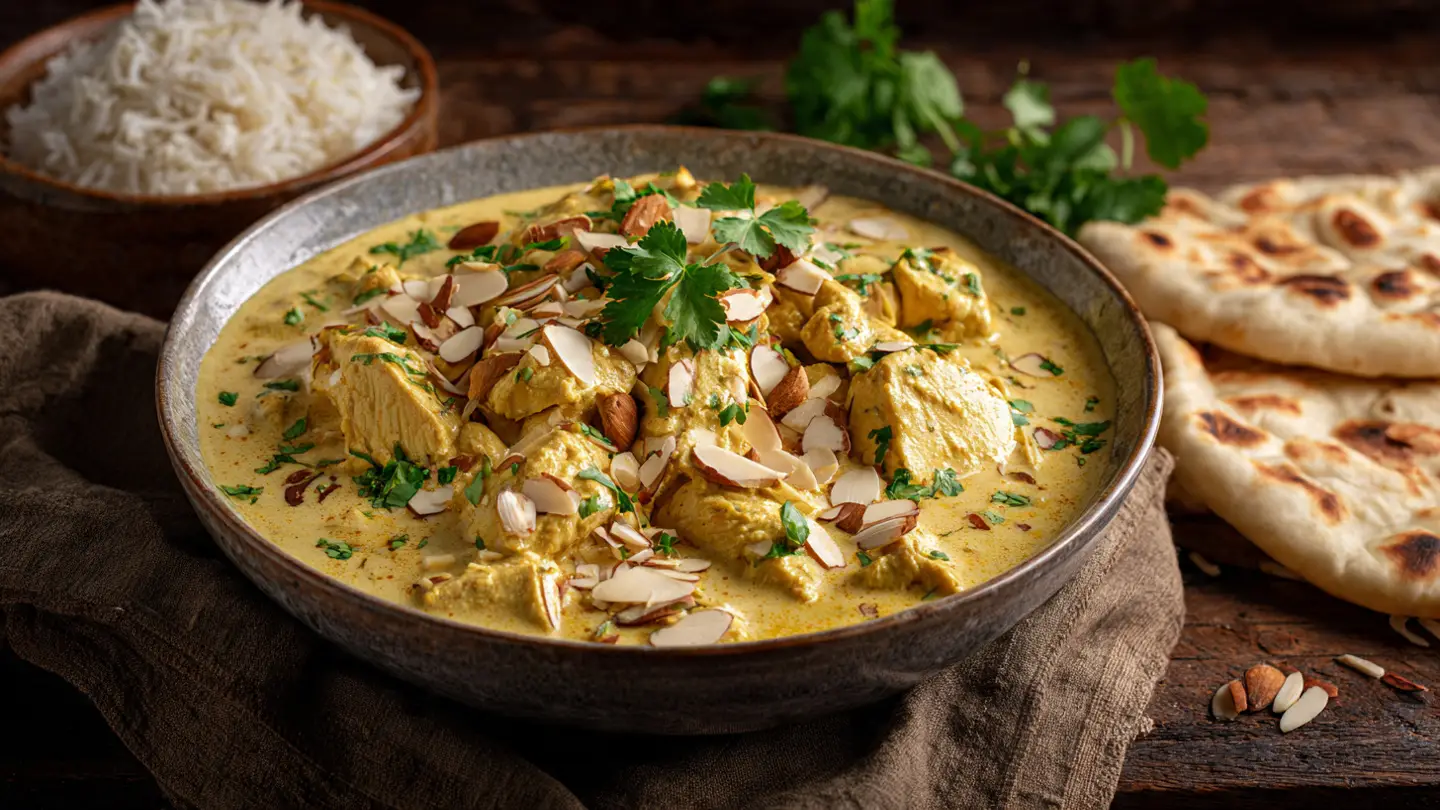
The classic choice for korma is basmati rice. The long, thin grains are perfect for catching the gravy. I like to add a few cumin seeds or a piece of star anise to my rice water to give it a little extra scent. If you want to go the extra mile, you can make some garlic naan. Dipping warm, buttery bread into korma sauce is one of the best things in the world. It is a match made in heaven.
If you want something lighter, a simple salad with cucumbers and tomatoes works well. The crunch of the fresh veggies cuts through the richness of the cream. You could also serve some roasted cauliflower on the side. This is a good option if you are trying to eat fewer carbs. No matter what you choose, make sure you have plenty of it. People always want seconds when korma is on the menu!
Garnishing for Extra Flavor

Don’t just serve the korma plain. A few toppings can change the whole vibe. I love to use fresh cilantro. It adds a bright, herbal note that wakes up the dish. If you don’t like cilantro, you can use fresh mint or even just some sliced green onions. Another great topping is slivered almonds or raisins. They add a little bit of crunch and sweetness that fits the korma style perfectly.
A little squeeze of lime juice right before you eat can also be a game changer. The acid in the lime cuts through the fat of the cream and yogurt. It makes the whole dish taste fresher. I always put a bowl of garnishes in the middle of the table so everyone can add what they like. It makes the meal feel more interactive and fun. Plus, it looks great for photos if you are into that kind of thing!
Storing Your Leftovers

If you have any korma left over, you are in luck. Like many stews and curries, korma actually tastes better the next day. The spices have even more time to develop while it sits in the fridge. I always make a big batch just so I can have some for lunch on Monday. Just put it in a sealed container and it will stay good for about three days. It is a great way to save time during a busy week.
When you go to reheat it, do it slowly. You can use a microwave, but a stovetop is better. Add a tiny splash of water to loosen up the sauce. Heat it on low until it is steaming. Avoid boiling it too hard again, or the chicken might get rubbery. This dish also freezes fairly well, though the texture of the yogurt might change a little. It is a very forgiving meal that keeps on giving.
Common Korma Questions
People often ask me about the details of this recipe. Here are the most common questions I hear when I teach people how to cook this dish.
Is chicken korma always spicy?
No, it is usually very mild. It focuses on creamy and sweet flavors from nuts and onions rather than heat from peppers. You can add chili if you want, but it is not traditional.
Can I make this dish vegan?
Yes! You can use cauliflower or chickpeas instead of chicken. Swap the yogurt and cream for coconut milk or a nut-based cream to keep it plant-based and delicious.
What if my sauce is too thin?
You can let it simmer uncovered for a few more minutes to reduce the liquid. Alternatively, stir in some ground almonds or cashews to help thicken it up quickly.
Do I have to use a blender for the onions?
You don’t have to, but it makes the sauce smoother. You can just crush the fried onions with your hands or a spoon if you prefer a more rustic and chunky texture.
How do I stop the yogurt from curdling?
Whisk the yogurt well before adding it. Make sure it is at room temperature and turn the stove heat to low. Stir constantly as you slowly pour it into the pot.
Wrapping Up the Kitchen Fun
Chicken korma is a wonderful dish that anyone can master. It teaches you how to balance rich flavors and handle delicate ingredients like yogurt. I hope this guide helps you feel confident enough to try it out tonight. Remember to take your time and enjoy the process. There is nothing like the smell of fresh curry filling your home. Happy cooking and enjoy every single bite of your homemade feast!