Red Curry

Red curry is one of my favorite things to eat. It is warm, a little spicy, and very creamy. I love how the smell of ginger and coconut fills my kitchen. Many people think Thai food is too hard to cook at home, but that is not true. I am going to show you how to make a great red curry that tastes like it came from a shop. You do not need to be a pro cook to get this right. We will use simple steps to make a bowl of food that feels like a big hug.
I remember the first time I tried to make this myself. I used way too much chili paste and my mouth felt like it was on fire! It was a big mistake, but it taught me a secret. You have to taste as you go. In this post, you will learn what items you need and how to mix them. You will also find out how to fix the flavor if it is too salty or too spicy. Let’s get our pans ready and start cooking this yummy meal together.
Check out the steps below to make your new favorite dinner tonight.
The Basics of a Good Red Curry
Before we start chopping, we need to talk about why red curry is so good. The star of the show is the red curry paste. It is made of red chilies, garlic, and special herbs. When you fry this paste in a pan, it starts to smell amazing. This is the base for all the other flavors. If you skip the frying part, the curry will taste flat. I learned that the hard way when I was just starting out in the kitchen.
The next big part is coconut milk. This makes the sauce thick and smooth. It also helps cool down the heat from the peppers. Some people use milk or cream, but coconut milk is the best choice for that real Thai taste. You want to use the full-fat kind from a tin. Low-fat coconut milk is often too watery and won’t give you that rich feeling. Let’s look at what else we need to grab from the store.
What You Need to Buy

To make this red curry, you will need a few key items. Most of these are easy to find at any grocery store. You will need a jar of red curry paste. Look for one that does not have too many odd chemicals. You also need two tins of coconut milk. For the protein, I like to use chicken breast or tofu. Both soak up the sauce really well. If you like seafood, shrimp is a great choice too.
Next, grab some veggies. Red bell peppers, bamboo shoots, and green beans add a nice crunch. For the extra flavor, you need fresh ginger, garlic, and a bit of sugar. A splash of fish sauce adds a salty kick. If you do not eat fish, you can use soy sauce instead. Don’t forget a lime! Squeezing fresh lime juice at the end makes the whole dish pop. FYI, keeping these items in your pantry makes it easy to cook this any night of the week.
Preparing Your Ingredients
Preparation is very important when you cook fast meals. You want everything ready before you turn on the stove. Start by cutting your meat or tofu into small bite-sized pieces. If the pieces are too big, they won’t cook evenly. I once left the chicken chunks too large, and the outside was dry while the inside was still cold. Make sure they are all about the same size so they finish at the same time.
Next, wash and chop your vegetables. Slice the peppers into long strips and trim the ends off the green beans. Peel the ginger with a spoon and grate it finely. Mince the garlic so there are no big chunks. Having everything in little bowls makes the cooking part much less stressful. This is a great tip that most big blogs forget to tell you. It keeps you from burning the sauce while you are busy chopping a pepper you forgot about.
Recipe Quick Info
- Prep Time: 15 minutes
- Cook Time: 20 minutes
- Servings: 4 people
- Difficulty: Easy
How to Cook the Perfect Curry
Now comes the fun part where everything hits the pan. Cooking red curry is all about building layers of flavor. You don’t just throw everything in a pot and boil it. That would make the meat tough and the veggies mushy. Instead, we follow a simple order. This ensures the spices wake up and the coconut milk stays creamy. You will see the oil start to separate from the cream, and that is a good sign.
I like to use a large pan or a wok. A wok is great because it has high sides and lots of room to stir. If you don’t have one, a deep frying pan works just fine. Just make sure it is hot before you start. Heat is your friend here because it helps the curry paste release its oils. If the pan is cold, the paste will just sit there and won’t smell as good. Let’s walk through the steps to get that perfect texture.
Making the Sauce Base

Start by putting a little bit of the thick coconut cream from the top of the tin into your hot pan. Add two tablespoons of the red curry paste. Use a spoon to mash the paste into the cream. Stir it constantly for about two minutes. You will know it is ready when it smells very strong and you see little red bubbles. This step is called frying the paste. It is the most important part of the whole recipe.
If you find that the paste is sticking to the pan, add another splash of coconut milk. Do not let it turn black! If it burns, the whole curry will taste bitter. Once it smells great, pour in the rest of the first tin of coconut milk. Stir it until the red paste is all mixed in and the sauce is a pretty pink or light red color. Now your base is ready for the meat and veggies to join the party.
Cooking the Protein and Veggies

Add your chicken or tofu to the bubbling sauce. Turn the heat down to medium so it does not boil too hard. Let the meat cook for about five minutes. Then, toss in your vegetables. I add the peppers and beans now because they take a few minutes to get soft but still stay a bit crunchy. If you like very soft veggies, you can put them in earlier. I think a little crunch makes the meal much better.
Keep stirring every now and then. You want the sauce to coat every single piece of food. If the sauce looks too thick, you can add a little bit of water or chicken broth. If it looks too thin, just let it simmer for a few more minutes without a lid. The water will evaporate and leave you with a thick, yummy gravy. This is the part where your house starts to smell like a fancy restaurant.
Adding the Final Flavors

Once the meat is cooked through, it is time for the finishing touches. This is what makes your curry taste professional. Add a teaspoon of sugar and a tablespoon of fish sauce. Stir it well and then take a small spoonful to taste it. Does it need more salt? Add a tiny bit more fish sauce. Is it too spicy? Add another splash of coconut milk. This balance of sweet, salty, and spicy is the heart of Thai cooking.
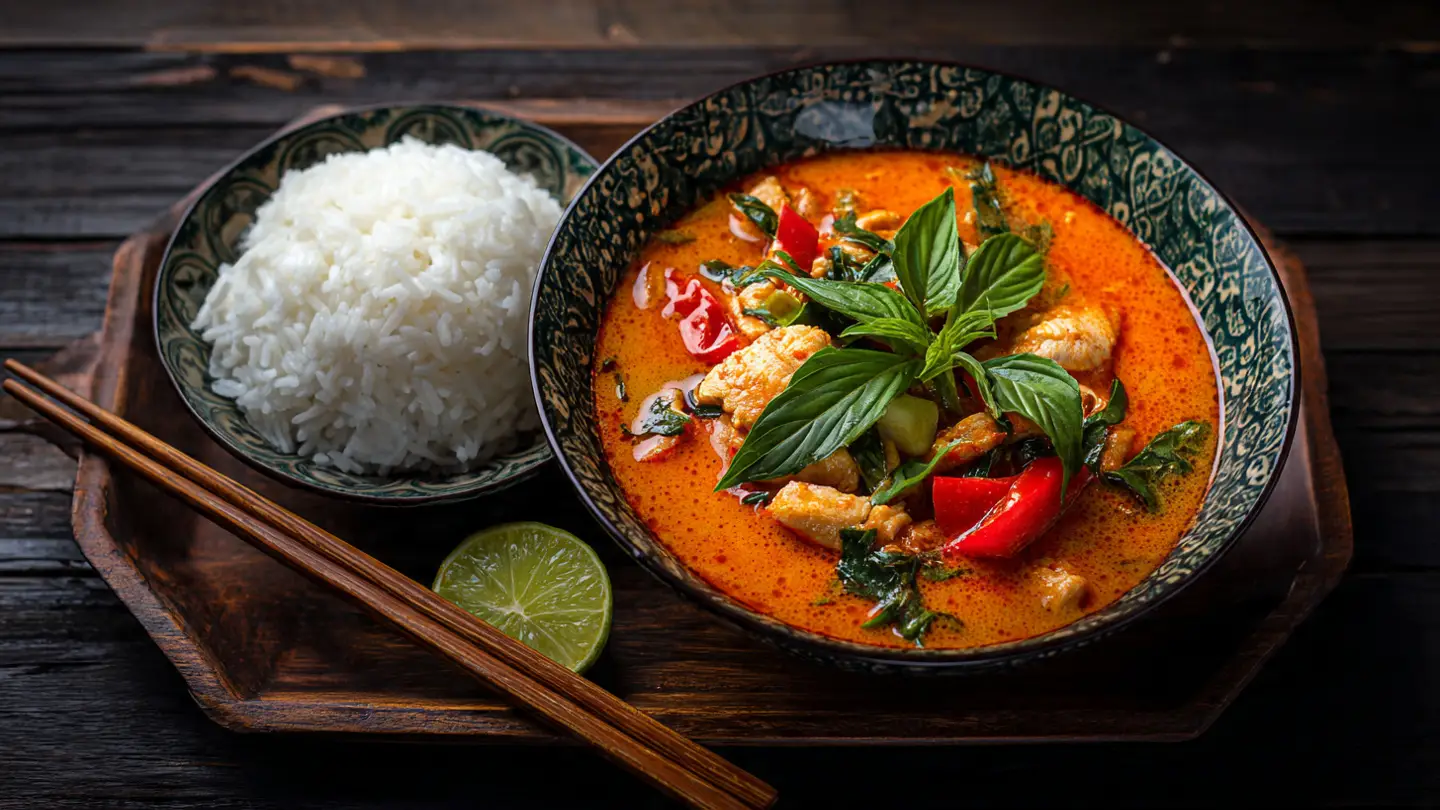
Turn off the heat and squeeze in half of a lime. The acid from the lime cuts through the heavy coconut milk and makes it feel light. If you have fresh basil leaves, tear them up and throw them in now. They will wilt slightly in the heat and add a lovely herbal smell. IMO, fresh herbs are the best way to make a cheap meal feel expensive. Now you are ready to serve your masterpiece to your hungry family.
Pro Tips for Success
- Don’t Shake the Tin: Use the thick cream at the top of the coconut milk tin to fry your paste first.
- Rice is Key: Serve this with jasmine rice to soak up all that extra sauce.
- Control the Heat: Start with less paste if you don’t like spicy food. You can always add more later.
Serving and Storing Your Curry
How you serve your curry is just as important as how you cook it. I always suggest serving it in deep bowls. This keeps the sauce warm and makes it easy to mix with your rice. Red curry is also great for meal prep. In fact, it often tastes even better the next day. The flavors have more time to sit together and get stronger. It is like magic in the fridge!
However, there is one thing to watch out for. If you reheat it too fast in the microwave, the coconut milk can separate and look oily. It still tastes good, but it doesn’t look as pretty. I find that heating it slowly in a small pot on the stove works best. Just add a tiny splash of water to loosen the sauce up. Let’s talk about the best ways to enjoy your hard work and how to keep it fresh for later.
The Best Side Dishes

White jasmine rice is the classic partner for red curry. It has a soft smell that goes perfectly with the spicy sauce. If you want to be different, you can try brown rice or even quinoa. Some people even like to eat it with thick noodles. If you choose noodles, cook them separately and then pour the curry over them. This stops the noodles from getting too soggy in the pot.
A simple cucumber salad on the side is also a great idea. The cold, crisp cucumbers help cool your tongue if the curry is a bit spicy. I also like to put a few extra lime wedges on the table. That way, anyone who wants more sour flavor can add it themselves. This meal is very filling on its own, so you don’t need many other sides to feel full and happy.
How to Save Leftovers

If you have leftovers, let the curry cool down to room temperature first. Do not put a hot pot straight into the fridge. Once it is cool, pour it into an airtight container. It will stay good in the fridge for about three to four days. If you made a huge batch, you can even freeze it! It lasts for about two months in the freezer. Just remember that the vegetables might get a little softer after being frozen.
When you are ready to eat it again, let it thaw in the fridge overnight. Heating it up is easy. Like I mentioned before, the stove is best, but a microwave works if you are in a rush. Use a medium power setting and stir it every minute. This keeps the sauce smooth. Leftover curry makes the best work lunch because everyone will be jealous of how good your food smells in the break room.
Common Questions About Red Curry
Is red curry very spicy?
It can be! The heat comes from the red paste. If you want it mild, use only one tablespoon of paste. You can always add more at the end if you want more kick.
Can I make this without meat?
Yes, you can. Tofu is a great choice. You can also just use more veggies like broccoli, carrots, and potatoes. It is still very filling and tastes just as good.
What if I cannot find fish sauce?
No problem! You can use soy sauce instead. It gives the curry the salt it needs. The taste is a little different, but it is still very yummy.
Why is my sauce too thin?
You might have used low-fat coconut milk or added too much water. Let it simmer without a lid for 5 or 10 minutes. This helps the extra liquid go away so the sauce thickens.
Can I use ginger powder instead of fresh ginger?
Fresh is always better for the smell and taste. But if you only have powder, use about half a teaspoon. It won’t be exactly the same, but it will work in a pinch.
Enjoy Your Homemade Meal
Making red curry at home is a great way to save money and eat better. You know exactly what is going into your food, and you can make it as spicy as you like. This recipe is simple, fast, and very satisfying. I hope you have a lot of fun cooking it and even more fun eating it with your friends or family. Enjoy your warm bowl of delicious red curry tonight!