
Discover 20 stunning interior design ideas for every room, from modern living spaces and cozy bedrooms to functional home offices and laundry rooms. Transform your home!
Design Tip 1: The Art of Linear Living – Maximizing Narrow Footprints
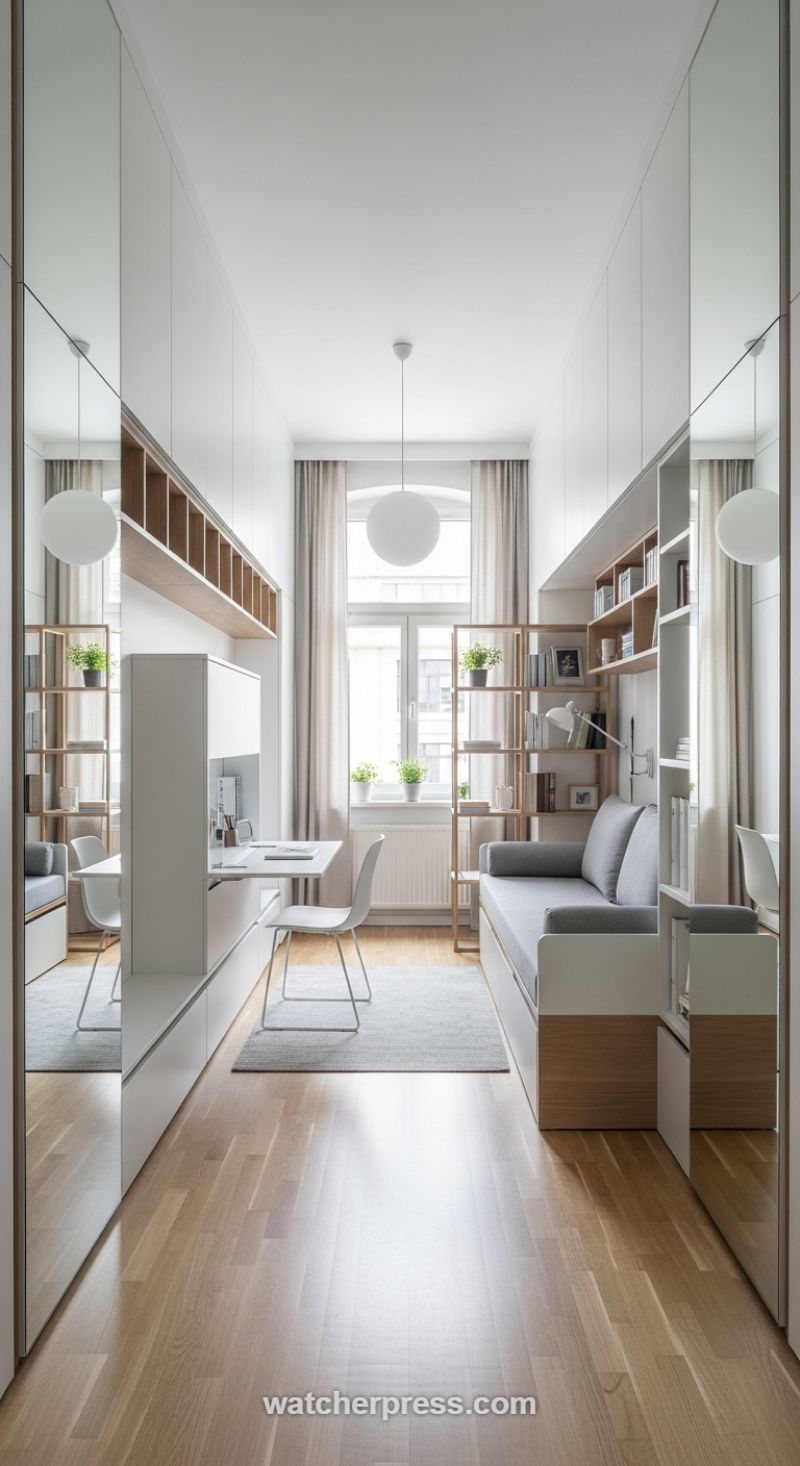
When dealing with extremely narrow footprints, such as studio apartments or specialized multifunctional rooms, the key to success lies in linear organization and strategic visual expansion. The foundation of this design concept involves treating the walls not as boundaries, but as integrated systems of storage and function. To execute this, install bespoke, floor-to-ceiling cabinetry running the full length of the room on both sides. Opt for shallow depths (no more than 12–15 inches if possible) to preserve the central corridor space. Crucially, replicate the visual strategy seen here: use seamless, handleless white fronts to create a continuous, non-distracting envelope. To immediately double the perceived width of the room, incorporate full-length mirrored panels into the closet doors on at least one side. These mirrors bounce light and trick the eye into seeing expansive depth, counteracting the claustrophobic nature of a corridor space.
The instructional next step is the precise integration of multifunctional zones within these established storage walls. In a linear space, furniture must be integrated rather than placed freestanding. Dedicate sections of the central run to specific functions. For the sleeping/lounge area, utilize a custom daybed or sofa that fits perfectly within the allocated slot, often utilizing the storage units as the headboard or side supports. For the workspace shown here, incorporate a pull-out or fold-down desk system. This ensures the desk only occupies floor space when actively in use, maintaining the clear flow of the central pathway. To break up the monolithic white storage, introduce elements of warmth and visual interest—like the open, light-wood shelving units—which provide accessible storage for books and decor while adding necessary texture and height.
Finally, maximize verticality and light to complete this airy, modern look. Because the room is narrow, you must draw the eye upward and toward the natural light source at the end. Use sheer or semi-sheer floor-to-ceiling drapes to frame the window, enhancing the height of the room and diffusing natural light softly across the reflective surfaces. The flooring should be light-colored hardwood or laminate, ideally with a high-gloss finish, as the reflective quality helps distribute light and adds to the illusion of depth. Choose a single, substantial spherical light fixture, suspended centrally, to act as a visual anchor and prevent the room from feeling too sparse. By maintaining a minimalist color palette (whites, light grays, and natural wood) and prioritizing sleek lines, you create an efficient, elegant, and surprisingly spacious environment out of the tightest dimensions.
Bold Minimalism: Designing a Striking High-Contrast Bedroom
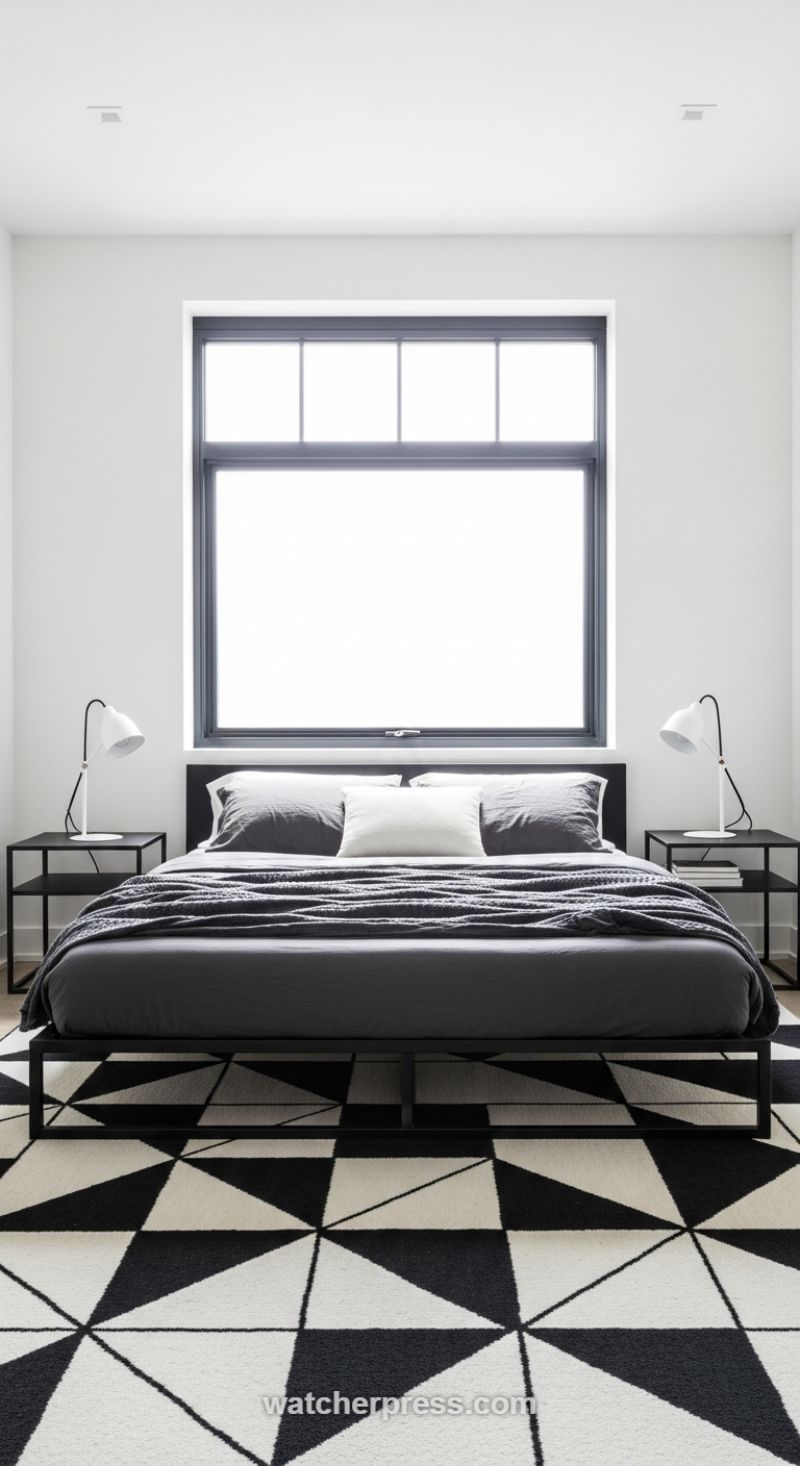
To successfully execute a bedroom design that relies solely on a high-contrast black, white, and gray palette, the key is mastering texture and layering. Begin by establishing a bright foundation; crisp white walls not only maximize light reflection but also act as a clean canvas that allows the darker elements to truly pop. Anchor the room with the bed, opting for a dark, matte metal platform frame. The bedding should then introduce various shades of gray, starting with deep charcoal or slate gray for the duvet and sheets. To prevent the look from falling flat, introduce contrasting textures—a weighty, woven gray throw blanket provides softness and depth, while pillows should vary between crisp cotton and perhaps a single, lighter off-white textured cushion to break the visual monotony at the head of the bed. This strategic layering ensures that even without color, the space feels rich, inviting, and architecturally defined.
Once the foundational elements are established, integrate graphic pattern through a single, powerful statement piece. In a minimalist setting, the area rug serves this function perfectly. Select a rug featuring a large-scale, high-contrast geometric pattern, such as the interlocking triangles or checkerboard seen here. The generous scale of the pattern is critical; small, repeating prints can look busy, whereas large-scale geometry feels architectural, structured, and intentional, successfully grounding the entire room and complementing the straight lines of the furniture. When selecting ancillary pieces, maintain the visual lightness by choosing open-frame furniture, like the slim, black metal nightstands. These pieces provide necessary function without consuming excessive floor space or blocking the view toward the striking rug. Furthermore, the dark, defined window framing enhances the room’s overall contrast, acting as a natural, pre-existing focal point that draws the eye toward the light.
For the finishing touches, prioritize functional symmetry and sculptural lighting. Flanking the bed with identical, simple task lamps reinforces the clean lines and balanced structure of the design. Choosing lamps with white shades and minimal exposed hardware ensures they adhere to the monochromatic scheme while adding a necessary layer of height and practical illumination. In a minimalist space, every object must earn its place; avoid decorative clutter and focus on curated simplicity. The storage beneath the nightstands should be minimal—perhaps a small stack of visually pleasing books—to maintain a sophisticated, uncluttered appearance. This approach ensures that the design remains true to the tenets of bold minimalism, proving that limiting the color spectrum allows the impact of form, texture, and pattern to shine through.
Elevated Neutrals: Mastering the Modern Minimalist Living Room
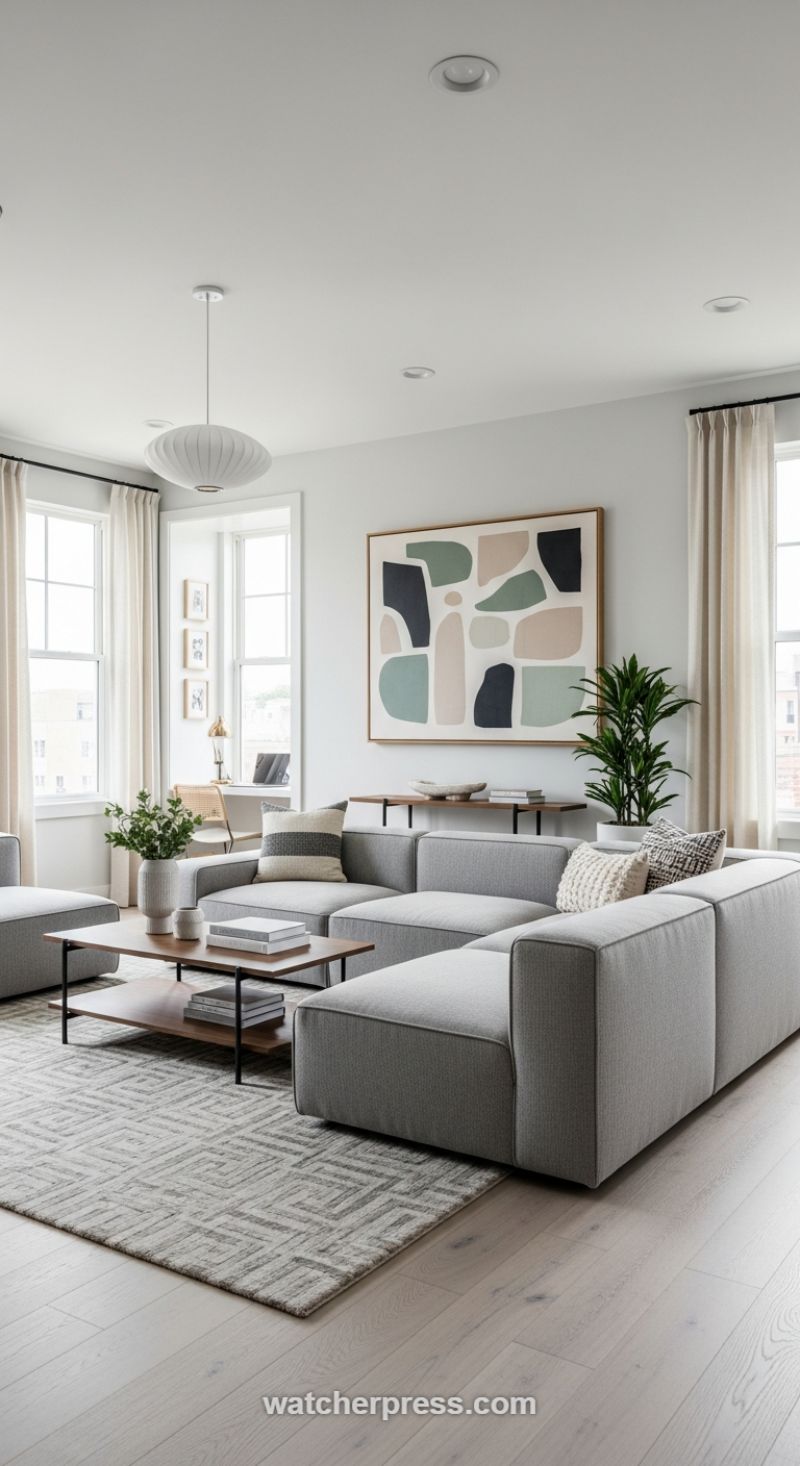
This living space is a masterclass in using light, texture, and abstract color to create a serene, yet visually compelling environment. The foundation is built upon bright, light-washed wood flooring, which maximizes natural light reflection and establishes an airy, expansive feel. To anchor this lightness, select a robust, low-profile modular sectional in a sophisticated heather grey or greige fabric. The key to this look is the modularity and clean lines of the sofa, ensuring the piece feels sleek and contemporary without overwhelming the room’s footprint. Underneath, a subtle geometric patterned rug in coordinating tonal greys is essential; this layer prevents the extensive use of neutrals from feeling flat or sterile, introducing crucial textural depth beneath the main seating area. When selecting large pieces, always prioritize quality fabrics and structured forms to maintain a high-end, uncluttered appearance.
Successfully implementing a minimalist scheme requires careful and intentional introduction of color. In this design, the visual focal point is the large-scale abstract painting, which acts as the sole, deliberate source of saturated color. The art introduces a harmonious palette of muted sage green, dusty blush, and deep navy—colors drawn from nature that perfectly complement the neutral base. Carry this color story into the accessories subtly; avoid matching, instead layering textural elements like throw pillows. Integrate a mix of materials such as chunky knits, linear stripes, and graphic mudcloth-style patterns to ensure the seating area feels curated and cozy. Expert advice dictates the integration of natural materials to introduce organic warmth: choose coffee and console tables crafted from rich, dark walnut or black metal to contrast the light floors, and always include thriving potted plants to add dynamic height and essential vitality.
Beyond furniture and art, the overall sophistication of this design relies heavily on lighting and architectural flow. Notice the elegant balance between ambient and accent lighting: soft recessed lights provide general illumination, while a sculptural, mid-century modern pendant lamp (such as a George Nelson Bubble style) acts as functional art, diffusing a warm glow over the seating arrangement. To maximize the room’s connection to the outdoors, utilize sheer, floor-to-ceiling drapery in a creamy natural hue. This softens the hard lines of the windows without obstructing the flow of light. Finally, when integrating functional zones—like the small, sunlit work nook visible through the window frames—ensure all pieces, including small desks and chairs, are low-slung and visually light. Maintaining a low horizon line across all furnishings ensures the eye sweeps through the room unimpeded, reinforcing the modern, open, and tranquil design blueprint.
Creating a Moody, Luxurious Reading Nook
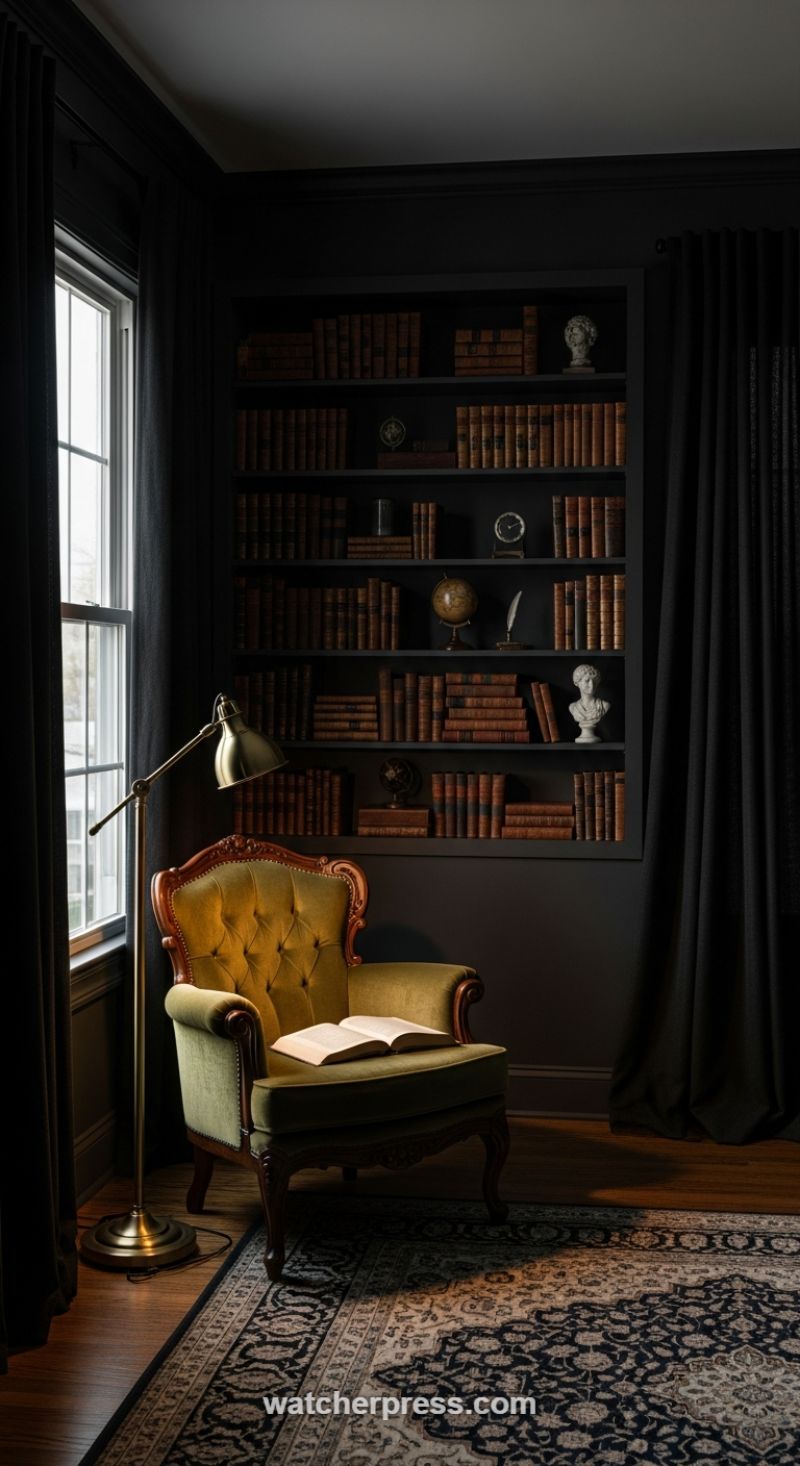
This design encapsulates the ‘Dark Academia’ aesthetic, proving that deep, enveloping colors can create intimacy rather than confinement. To replicate this look, start with a rich, uniform color palette for the walls and built-ins—a deep charcoal gray or true matte black works best. The key is applying the same tone across the walls, trim, and the interior of the recessed shelving unit to create a seamless, sophisticated backdrop. This monolithic color strategy highlights objects placed within the space, especially the rich brown tones of antique books and the luminous surface of the focal armchair. When selecting your paint, opt for a flat or matte finish, as high gloss in such a dark color can reflect too much light and disrupt the room’s intended brooding atmosphere. Ensure crown molding and baseboards are painted the same dark color to fully emphasize the height and depth of the room.
Once the foundational color is set, introduce intentional textural and color contrasts to provide visual relief and luxury. The centerpiece, the armchair, should be upholstered in a jewel-toned material like velvet, here seen in a rich olive or chartreuse green, offering a pop of saturated color against the dark walls. Look for antique or traditional elements, such as button-tufting and carved wooden legs, to anchor the classical feel of the library. Juxtapose these heavy, historical elements with sleek metallic finishes; the brass adjustable floor lamp not only provides critical task lighting but also adds a warm, reflective glow that prevents the dark space from feeling cold. Similarly, the warm, leathery spines of the books lining the shelves act as essential visual texture, breaking up the uniformity of the dark shelving.
Finally, layer in accessories and ambient elements to complete the narrative. A large area rug, typically a complex Persian or Oriental pattern featuring dark blues, blacks, and creams, grounds the space and adds comfort underfoot while muffling echoes. Ensure your lighting plan includes focused task lighting from a directional lamp, which draws the eye directly to the reading chair, and soft ambient lighting (perhaps low-wattage lighting strips tucked into the bookshelves) to gently illuminate the decorative objects like classical busts, globes, and timepieces. These functional and decorative layers are crucial for achieving the refined, lived-in feel characteristic of a high-end, academic sanctuary.
Creating a Worldly Retreat: Master the Travel-Inspired Bedroom
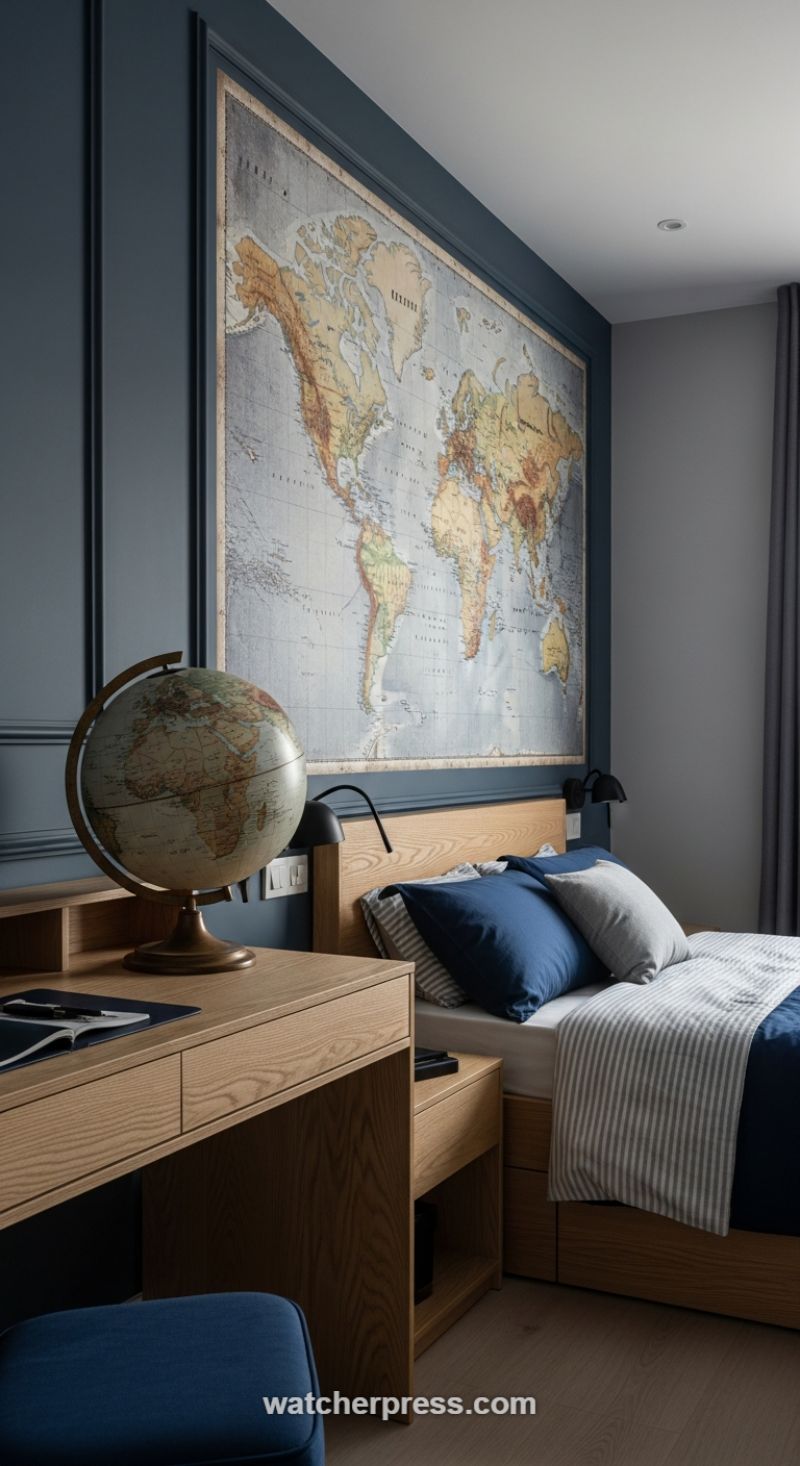
To successfully execute a bedroom design centered around a massive graphic element like a world map, the key is thoughtful framing and layering of architectural detail. Start by selecting a rich, moody wall color—the deep slate blue/navy shown here serves as the perfect grounding hue, providing a sophisticated backdrop for the distressed, antique tones of the map (sepia, ochre, and pale green). This intense color choice should be applied to the surrounding walls, ideally incorporating recessed wall paneling or wainscoting. The paneling adds depth, texture, and a classic structure that prevents the oversized map mural from feeling like cheap wallpaper. Ensure the map itself is bordered by clean, crisp trim painted in the same deep blue, making the map feel less like a mural and more like a carefully curated piece of monumental artwork. This deliberate framing elevates the entire space, transforming a simple themed room into a refined, immersive retreat.
Balance the cool saturation of the blue walls with the warmth of natural wood elements. The furniture selection here—light-toned oak or ash used for the bed frame, desk, and nightstand—is critical to achieving a balanced Scandinavian-meets-Transitional aesthetic. When implementing this design, favor clean-lined, built-in or modular furniture that maximizes storage and minimizes visual clutter. Notice how the custom desk seamlessly integrates into the structure next to the bed; this high level of functionality is essential in maximizing small or mid-sized spaces. For the bed, opt for a simple wooden headboard that visually anchors the bedding without competing with the map’s scale. Pairing the warm, light wood with the cool blue tones creates contrast and prevents the deep wall color from making the room feel heavy or cave-like.
Finalizing this look requires careful attention to textiles and strategic thematic accessories. The bedding should maintain the room’s refined simplicity; use solid navy or deep blue accents paired with neutral textures like a striped gray-and-white duvet. Avoid overly complex patterns that would clash with the large map mural. For task lighting, select minimalist, highly functional pieces, such as the matte black, wall-mounted adjustable sconces placed over the headboard. These fixtures provide necessary light without introducing distracting decorative elements. Lastly, reinforce the travel theme with one or two powerful, classic accessories—the large, antique-style globe placed on the desk is the perfect example. It reinforces the adventure motif without being overwhelming, completing the visual narrative of a sophisticated, worldly explorer’s sanctuary. Ensure all electrical fixtures, such as outlets and switches near the bed, are subtle (white or light gray) to keep the focus squarely on the dramatic wall treatment.
Parisian Elegance: Mastering High-Contrast Luxury with Emerald and Gold
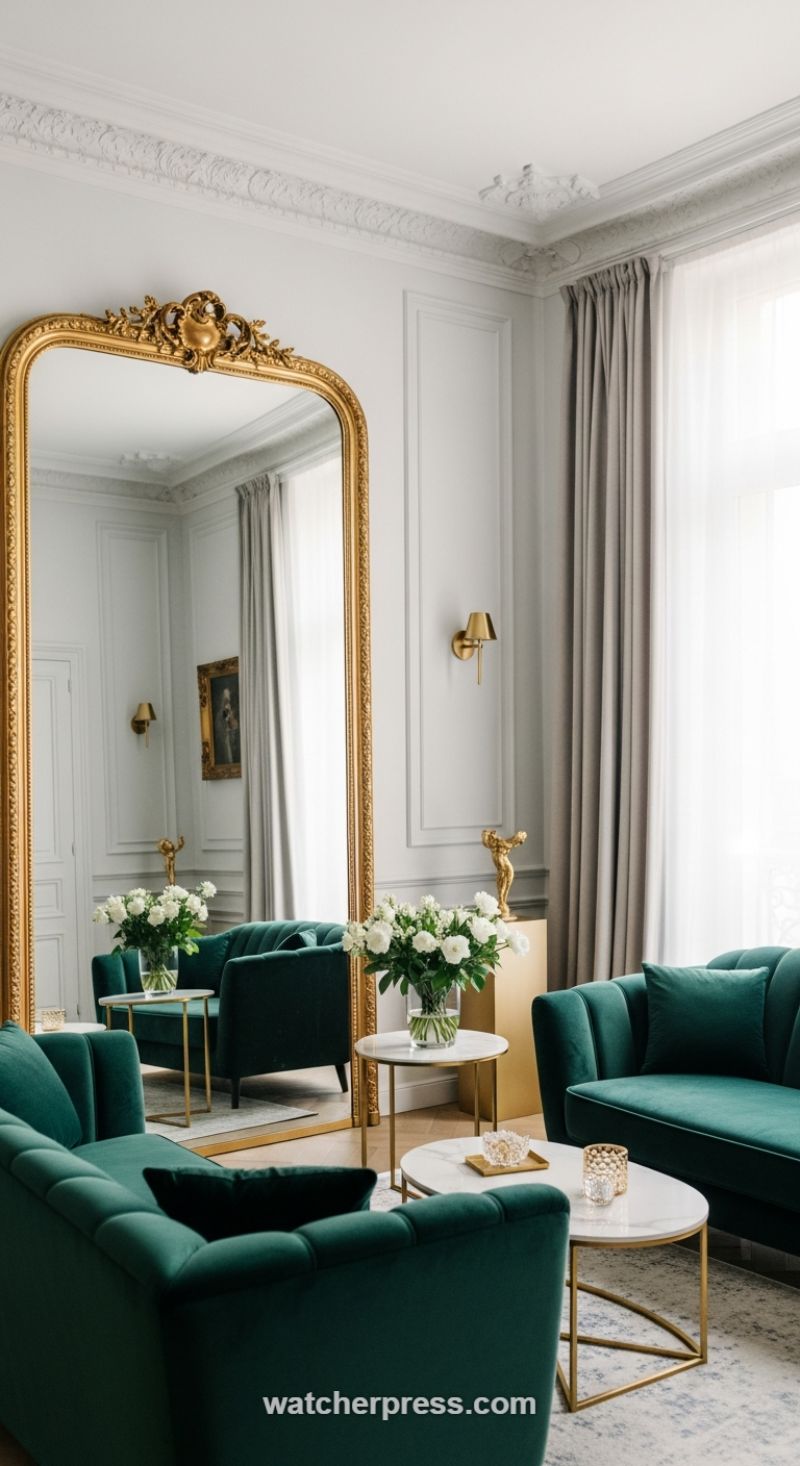
Achieving this level of high-contrast glamour requires a deliberate balance between ornate classical elements and richly saturated textures. The foundation of this design is the architectural envelope, typically characterized by tall ceilings and intricate wall paneling. To replicate the chic Parisian look, utilize elaborate white or light-gray picture frame molding (wainscoting) and decorative crown molding. Keeping these architectural details painted a bright, clean neutral (such as crisp white or pale dove gray) ensures maximum reflectivity and creates a sophisticated stage for the dramatic furniture. This neutral backdrop is essential, as it prevents the saturated colors of the upholstery and the heavy ornamentation of the mirror from overwhelming the space. Lighting choices should follow this principle of understated sophistication; simple, brushed brass sconces mounted directly onto the wall panels offer functional illumination while providing a metallic highlight that complements the gold accents elsewhere in the room without distracting from the main focal point.
The strategic use of saturated color and reflective metals is what elevates this aesthetic from classical to truly luxurious. The centerpiece of this design is not just the sofa, but the oversized, gilded floor mirror (often referred to as a Trumeau or Louis-style mirror). Leaning the mirror against the wall, rather than hanging it, increases the sense of scale and casual elegance, while its ornate frame serves as the primary statement piece and focal point. To contrast this heavy historical element, introduce deep jewel tones through upholstery. Emerald green velvet, utilized in the deep channel-tufted sofas, provides incredible depth, texture, and visual weight. The high sheen of velvet absorbs and reflects light differently than other fabrics, enhancing the feeling of opulence. When selecting seating, look for designs that feature structured, slightly modernized classical shapes to maintain the refined feel, ensuring the dark furniture provides a dramatic, grounding contrast to the bright white walls and ceiling.
To seamlessly integrate the disparate elements—classical gold, light marble, and dark velvet—masterful layering of accessories and metallics is necessary. Ensure that all secondary metal finishes consistently use brass or polished gold; this includes the slim bases of the side tables, the small decorative sculpture, and any candle holders or trays. Using two-tiered, nested tables or multiple small side tables (rather than a single large coffee table) keeps the floor space open and airy, mitigating the heaviness introduced by the large sofas and mirror. Opt for white marble tops on these tables, as the veining echoes the texture of the walls and provides a clean surface for arrangements. Finish the space with soft, textural elements: a plush, faintly patterned area rug adds warmth underfoot, while voluminous floor-to-ceiling drapes (a sheer layer paired with a heavier gray or taupe fabric) soften the strong geometry of the room. Finally, the inclusion of fresh white floral arrangements introduces organic form and brightness, providing the final touch of fresh, sophisticated life necessary for true Parisian glamour.
Mastering Bold Color and Pattern Mixing in Youthful Spaces
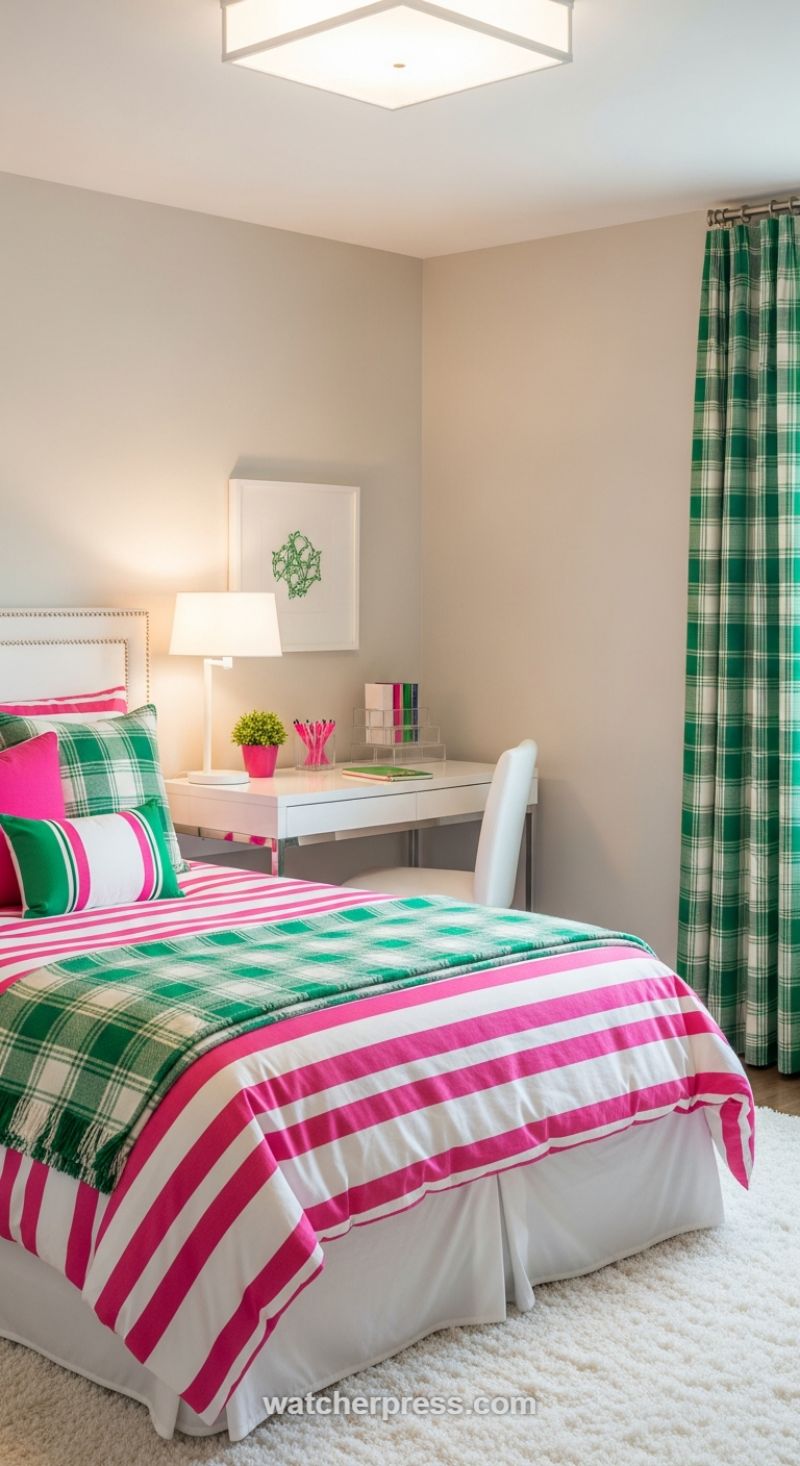
This inspiring bedroom design demonstrates a masterful approach to color blocking and pattern mixing, proving that energetic hues like shocking pink and emerald green can coexist harmoniously when anchored by clean whites and tailored finishes. The foundation of this vibrant aesthetic is the high-contrast color scheme, where the broad hot pink and white stripe of the duvet cover immediately draws the eye, establishing a playful and modern mood. To prevent the stripes from dominating, the designer introduced a secondary pattern—a traditional green and white plaid—through the throw blanket and accent pillows. The success of this pairing lies in the deliberate juxtaposition of scales and genres: the wide, graphic stripe is inherently modern and relaxed, while the tight, structured plaid introduces a preppy, classic element. This careful tension between modern dynamism and traditional texture is key to elevating the look beyond standard dorm decor, making it sophisticated yet fun.
To successfully replicate this bold pattern clash, interior designers advise focusing on balance and repetition. Firstly, ensure your chosen patterns differ significantly in scale; the large scale of the stripes should contrast with the medium scale of the plaid. Secondly, utilize a consistent grounding color, which here is the brilliant white found in the bed skirt, lamp shade, headboard, rug, and the negative space within both fabric patterns. This generous use of white prevents the strong colors from feeling overwhelming and provides visual rest. Notice how the core colors are intentionally repeated throughout the small accessories: the green from the plaid is mirrored in the framed artwork and potted plant, while the pink is repeated in the solid toss pillow and the collection of desk supplies. By ensuring the accent colors are strategically placed around the room, the entire space feels cohesive, rather than dominated solely by the textiles.
Functionality and clean lines are essential when dealing with high-energy decor. The furniture selections, such as the minimalist white desk with slim chrome legs and the button-tufted upholstered headboard, are streamlined and contemporary, offering a sophisticated counterpoint to the busy patterns. This design approach highlights the importance of providing designated workspaces even in bedrooms, ensuring the desk area is integrated seamlessly by matching the overall bright white aesthetic. Finally, incorporating texture is vital for grounding the space. The thick, shaggy white area rug introduces a soft, luxurious element underfoot that contrasts sharply with the smooth textiles and crisp furniture lines. Similarly, the substantial weight of the plaid throw blanket adds a cozy, tactile dimension, ensuring that while the colors are bright and energetic, the room still feels warm and inviting.
Designing a Cozy, Moody Retreat with Biophilic Accents
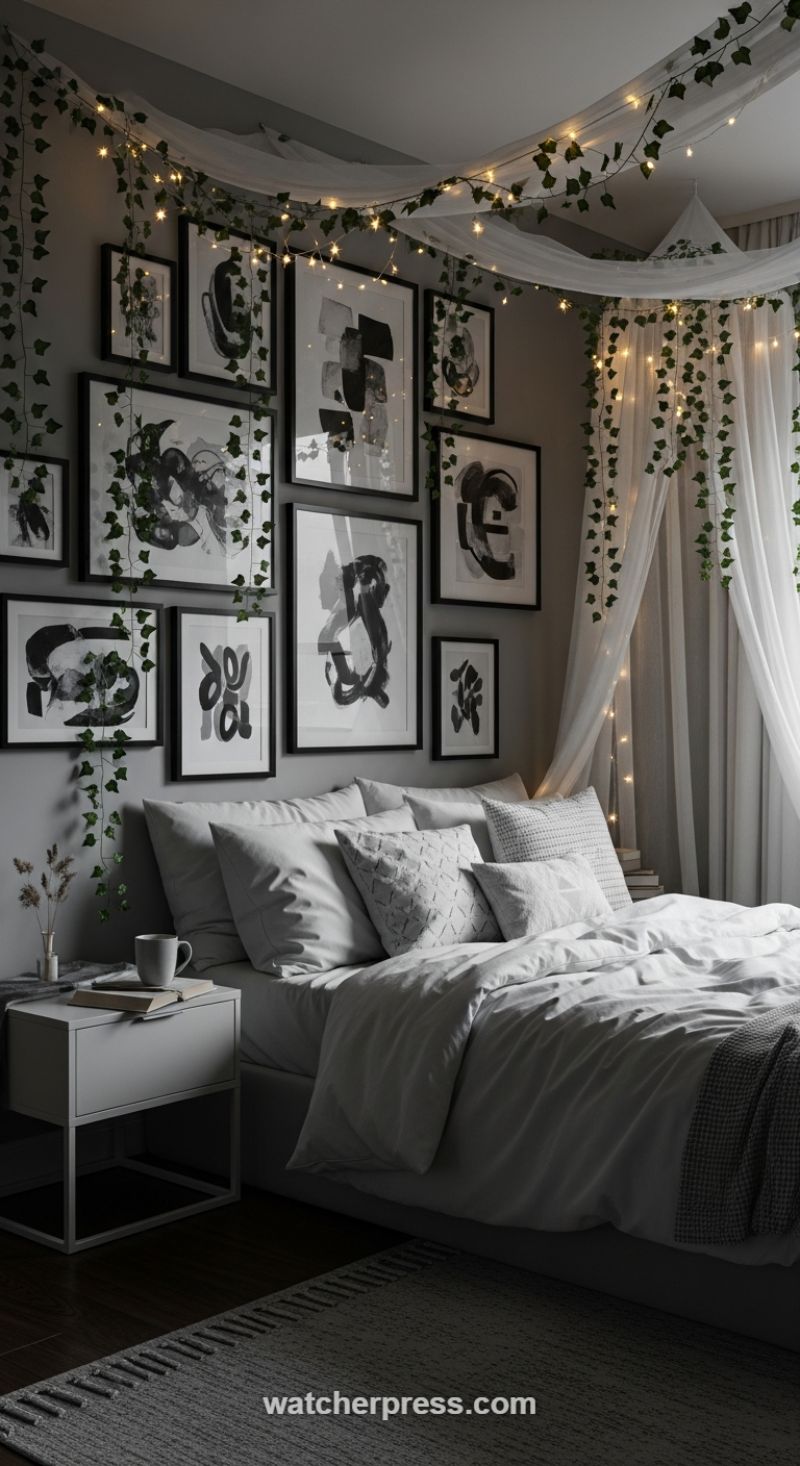
To recreate this dramatic, whimsical bedroom atmosphere, the foundational step is establishing a moody backdrop, which is skillfully utilized here to amplify contrast and depth. Begin by selecting a sophisticated, deep gray paint for the wall behind the headboard; this serves as the perfect canvas for the high-contrast gallery wall installation. The wall art should consist exclusively of monochromatic (black and white) abstract expressionist prints, featuring bold brushstrokes and fluid shapes. The secret to making this extensive collection feel cohesive rather than cluttered is strict uniformity in framing—use matching thin black frames for every piece, regardless of size or orientation. Crucially, the placement should feel organic: cluster the pieces tightly and allow the biophilic element (faux ivy vines) to cascade down and across the frames, blurring the lines between the art and the architecture. This maximalist approach to art, when paired with muted wall color, immediately elevates the space, drawing the eye and establishing a rich visual texture.
Next, focus on transforming the bed area into an ethereal sanctuary using soft textiles and strategic lighting. The canopy effect is achieved by draping generous lengths of sheer, lightweight fabric—such as voile or fine muslin—from points on the ceiling, creating a soft swag that frames the headboard and filters light. Intertwine warm-toned LED fairy lights throughout this sheer fabric and the accompanying ivy vines; opt for lights with a soft, yellowish glow rather than harsh white to maintain the cozy, evening mood. This layering technique provides a diffused, ambient light source that highlights the depth of the drapery and the sheen of the greenery, defining the sleeping area as a private, intimate retreat. The lighting should be supplementary to ambient room light, used primarily for visual effect rather than functional illumination, thus enhancing the overall sense of enchantment and low-light drama.
Finally, ground the dramatic wall treatment with a foundation of layered textures in the bedding and minimal, functional furniture. While the color palette remains strictly gray and white, complexity is achieved through material variance. Dress the bed with a matte cotton or linen duvet and pile on pillows that feature different tactile elements, such as geometric embroidery, woven grids, or fluffy, textured fabrics. This prevents the neutral color scheme from appearing flat or sterile. Anchor the room with practical, modernist elements like a clean-lined, gray nightstand, maintaining visual balance against the whimsical canopy. Ensure the biophilic element—the faux ivy—is intentionally draped to interact with both the ceiling treatments and the art display, serving as a unifying organic thread that ties the moody backdrop to the dreamy bedding, successfully fusing modern minimalism with cottagecore aesthetics for a uniquely soothing and stylish bedroom experience.
Creating a Coastal Retreat with Layered Neutrals
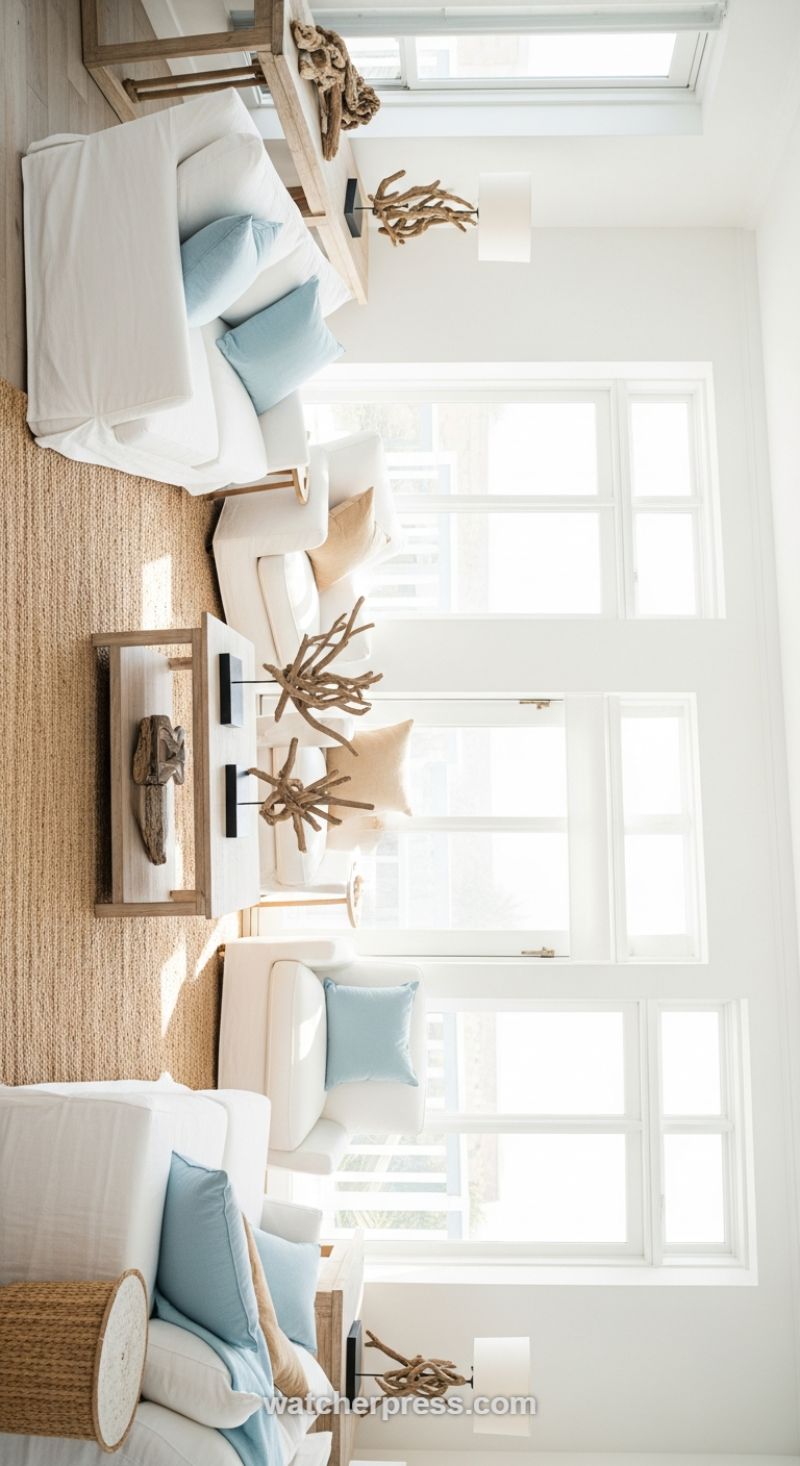
Achieving the pristine, light-drenched coastal look demonstrated here requires a disciplined approach to color and a mastery of layered texture. The foundation of this design is the strategic use of white. To replicate this airy atmosphere, begin by treating your walls and ceiling with a pure, bright white paint, maximizing light reflection. Next, select large, comfortable seating pieces, opting for deep, low-slung profiles that encourage relaxation. The expert technique here is the use of white slipcovers on all upholstered furniture. Linen or heavy cotton slipcovers provide an inherently casual, rumpled texture that immediately evokes a beach house feel, and they offer unparalleled practicality, as they can be easily removed and washed. When employing an all-white scheme, avoid sterility by integrating subtle variations—mix warm whites (with creamy undertones) for seating cushions and cooler, crisp whites for the main sofa structure. This variation adds necessary visual depth and keeps the room from feeling flat.
Once the white canvas is established, the key instructional step is introducing warmth and grounding the space through organic texture. The most crucial element is a large area rug made from natural fibers, such as jute or sisal. The strong, coarse texture and natural tan color of the rug serves as the perfect counterpoint to the soft white upholstery, preventing the room from appearing too delicate. Next, incorporate weathered wood elements in your tables. Look for light-toned woods with a pronounced grain or a driftwood finish for coffee tables and console tables, ensuring the structural lines remain simple and clean. Accent colors should be kept extremely minimal—no more than two soft hues. Here, pale blue (mimicking the sky and sea) and sandy beige/tan are used strictly for throw pillows. This sparse use of color reinforces the clean, tranquil aesthetic and allows the natural textures and light to take center stage.
Finally, the sophistication of this style hinges on the artful curation of natural accessories. Avoid overtly themed nautical decor; instead, focus on sculptural, organic elements. Source pieces of highly weathered driftwood or gnarled roots and display them on minimalist modern bases (often black metal) to elevate them into art pieces, creating a striking contrast between raw nature and sleek design. The rule of thumb for styling is functional minimalism: use woven baskets (like the rattan side table seen here) for discreet storage and place lamps that incorporate organic materials, such as a base made from coiled rope or found branches. These final touches must feel intentional and unforced, completing the coastal narrative without ever allowing the space to feel cluttered or overly decorated.
Rebellious Maximalism: The Poster Wall Aesthetic
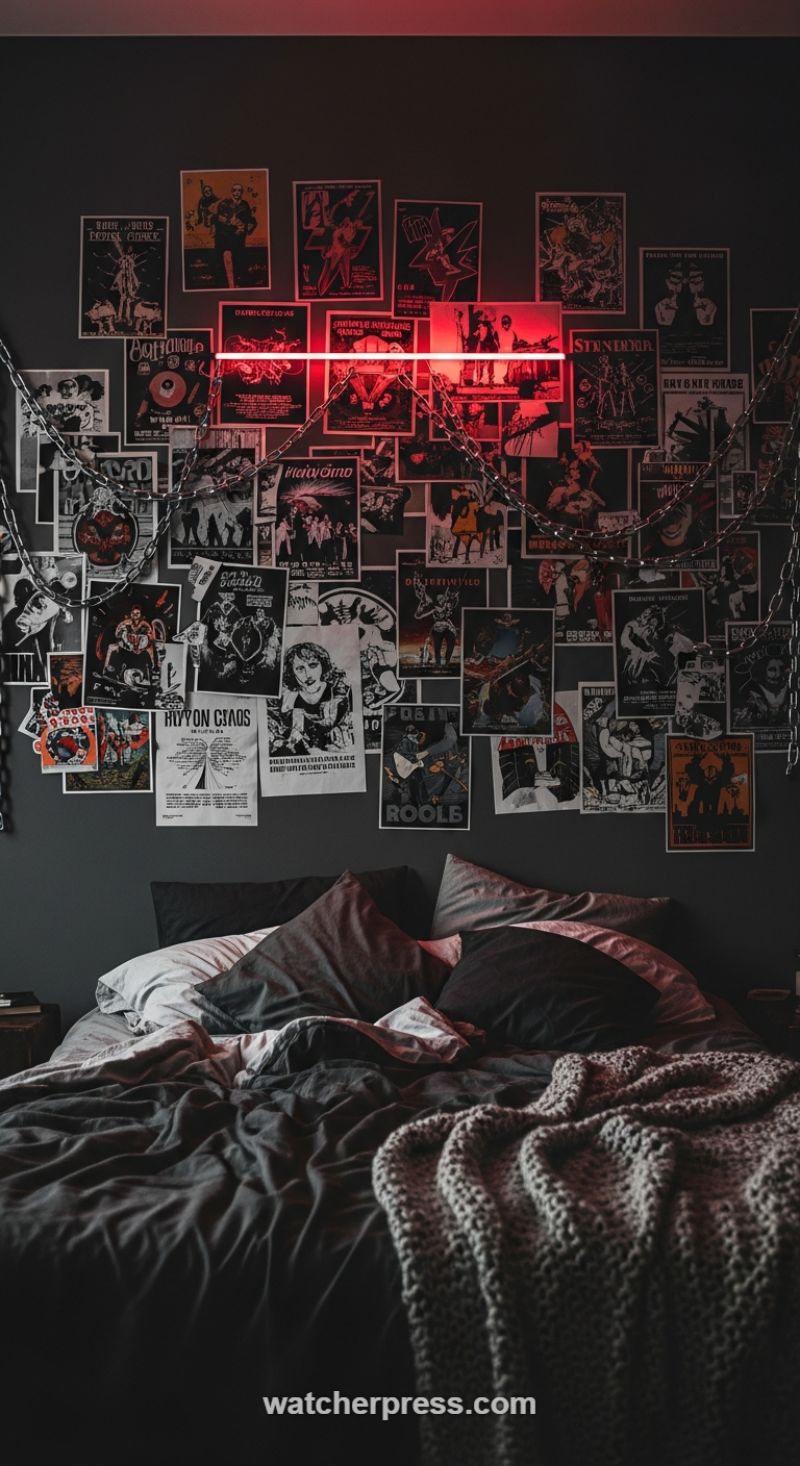
This design concept thrives on organized chaos, transforming a simple bedroom wall into a high-impact, mood-driven focal point. To recreate this industrial grunge aesthetic, start with a deeply saturated base color—a matte charcoal, slate gray, or true black—which provides the necessary backdrop for the maximalist display. The key is to commit fully to the collage: collect varied sizes of posters, predominantly concert flyers or monochromatic art, focusing on black, white, and red graphics to maintain a cohesive color narrative. Begin layering the posters densely, allowing them to overlap significantly. The visual success lies in avoiding uniformity; placement should feel impulsive and organic, filling the entire space above the headboard right up to the ceiling line. Since this is an evolving art piece, use low-tack adhesives like poster putty or mounting tape, which allows for easy replacement and adjustment as your personal tastes shift.
The essential elements that elevate this look beyond a typical dorm room are the calculated use of hard, industrial texture and dramatic lighting. The central feature is the sleek, horizontal neon light—in this case, a sharp, contrasting red. This single fixture provides a powerful focal point, slicing through the visual noise of the collage while washing the wall in a moody, ambient glow that enhances the dark aesthetic. Introduce rugged, industrial accents, such as the thick, draped metal chains visible on both sides of the wall. These chains inject a raw, cold texture that juxtaposes the paper materials, reinforcing the grunge theme. When installing chains or heavy accents, ensure they are safely secured to wall studs or heavy-duty anchors to prevent accidents, maximizing the visual impact by allowing them to drape loosely across the posters rather than hanging taut.
To balance the intensity of the wall treatment, the bedding must prioritize comfort and nuanced texture. Opt for deep, dark textiles—charcoal gray, midnight blue, or black linen and washed cotton—which achieve a relaxed, slightly rumpled look that complements the room’s lived-in atmosphere. Layering is crucial here; use varied shades of dark gray across the pillows and duvet to prevent the bed from appearing as a single, flat mass. Finally, introduce a soft, contrasting texture to provide warmth and visual relief. The chunky, light gray knit throw draped across the foot of the bed serves this purpose perfectly, offering a comforting element that counters the coldness of the metal and the harsh graphics, ensuring the space feels moody and curated, yet ultimately welcoming and habitable.
Elevating Cozy Corners with Organic Textures and Hygge Layers
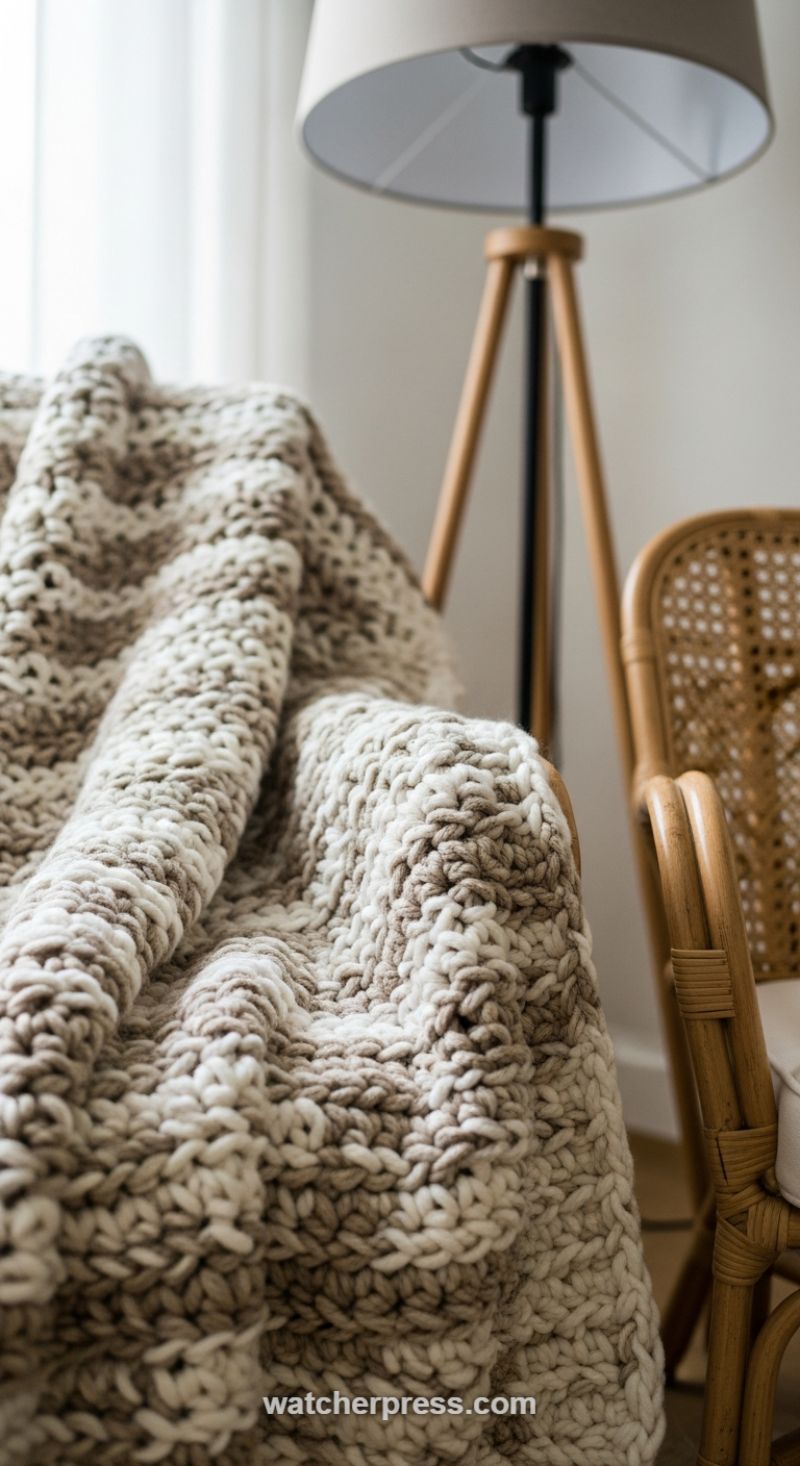
Creating an inviting, restful corner in a living room or bedroom hinges on the strategic layering of natural, comforting textures. The core element here is the chunky, marled knit throw, which acts as the focal point, instantly communicating warmth and approachability. To replicate this look, select an oversized blanket made from thick, roving yarn—ideally in a bi-color neutral palette (like taupe and cream) to add subtle depth without introducing clutter. Instead of folding it neatly, adopt the ‘Hygge drape’ method: casually toss the blanket over the arm or corner of a chair, allowing its substantial weight and volume to create soft, inviting folds. This technique not only emphasizes the blanket’s luxurious texture but also signals that the space is meant for immediate relaxation and use, making the chair look irresistibly cozy.
The success of this design aesthetic lies in balancing the plush softness of the textiles with grounding, organic structural elements. The visible furniture pieces—a tripod floor lamp and a rattan or cane-backed chair—introduce angular and woven textures that complement the chunky knit. When choosing accessories, ensure the materials are disparate but harmonizing; the smooth wood and clean lines of the tripod lamp stand provide a necessary contrast to the dense, rugged yarn texture. Expert advice suggests keeping the surrounding walls and primary furniture in soft, pale neutrals (creams, whites, pale grays) to allow the natural wood tones and rich texture of the blanket and rattan to stand out prominently. The light source itself should be warm (a soft white bulb) and functional, defining the reading or resting area.
To perfect this highly textured, modern-organic look, pay close attention to the principle of visual contrast. While the color palette remains unified (muted neutrals), the textures vary drastically: the dense knotting of the blanket, the open weave of the rattan, and the sleek finish of the lamp’s metal and wood components. These varying surface qualities prevent the monochrome scheme from falling flat. This arrangement is perfect for small nooks, as the focus on rich texture, rather than vibrant color, adds depth without overwhelming the space. When positioning the elements, place the high-contrast furniture (like the woven chair) adjacent to the softest layer (the blanket) to maximize the visual impact and craft a sanctuary designed for maximum comfort and tactile appeal.
Maximizing Style and Functionality: The Monochromatic Mint Gaming Hub
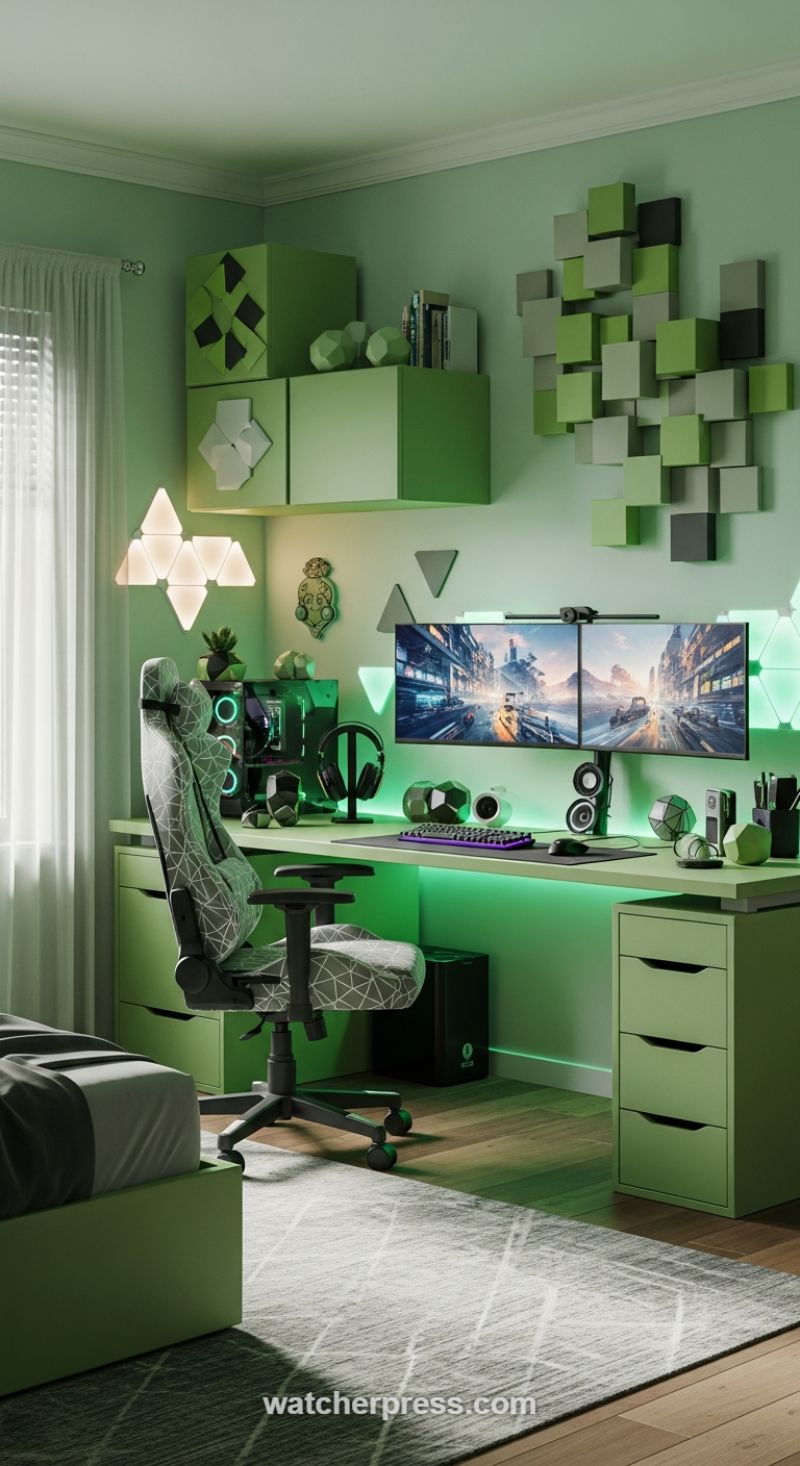
Creating a dedicated gaming or high-tech workspace requires a careful balance between aesthetics and extreme functionality, as demonstrated by this refreshing monochromatic mint design. The core design principle here is the strategic use of a single, calming hue across major surfaces—walls, desktop, and storage units—which immediately establishes a cohesive and immersive environment. To prevent the single color from feeling flat, varying shades of green (from light pistachio on the walls to deeper lime on the lighting accents) are employed. Key to this setup is the implementation of layered lighting. Ambient backlighting, particularly the neon green LED strips mounted beneath the desk, provides critical bias lighting that reduces eye strain during extended use, while custom, modular lighting panels (like Nanoleaf) serve as artistic accents and dynamic mood setters. When replicating this, focus on integrating lighting directly into the architecture and furniture pieces rather than relying solely on overhead fixtures; this elevates the setup from a simple desk to a full experience.
The functional heart of the space is the robust, clean-lined desk configuration. This design maximizes desktop real estate, crucial for managing peripherals, a dual monitor setup, and keeping the PC tower visible (an aesthetic necessity in modern gaming builds). The use of drawer units (often referencing IKEA’s practical Alex drawers) as desk legs provides heavy-duty support and essential concealed storage, which is vital for maintaining a clean aesthetic and excellent cable management—a non-negotiable step in high-tech interiors. Ergonomics are equally prioritized; note the large, high-backed gaming chair. While its design contrasts the desk’s solid green with a geometric grey and white pattern, it remains harmonious by incorporating neutral tones that ground the setup. For replicating optimal workflow, ensure monitors are mounted at eye level, allowing the desktop to remain clear for immediate access to peripherals like the headphone stand and speakers.
To ensure the room avoids becoming visually overwhelming or sterile, textural variation and dimensional décor are used brilliantly. The 3D cubic wall art installation serves as the primary focal point, introducing varying depths, shadows, and subtle color shifts (incorporating deep charcoal and muted grey alongside the greens). This sculptural element breaks up the flat wall space. Soft furnishings, such as the textured grey rug featuring a subtle geometric pattern, add warmth to the wood flooring and define the workspace zone, contrasting the hard edges of the hardware. When finishing the look, incorporate subtle, organic elements—like the small potted plant or the soft daylight filtering through sheer curtains—to balance the highly artificial, glowing nature of the technology. Every element, from the dedicated peripheral organizers to the shape of the decorative objects, reinforces the precise, modern, and dedicated nature of this specialized interior.
Elevating the Master Suite: Romantic Layering and Texture
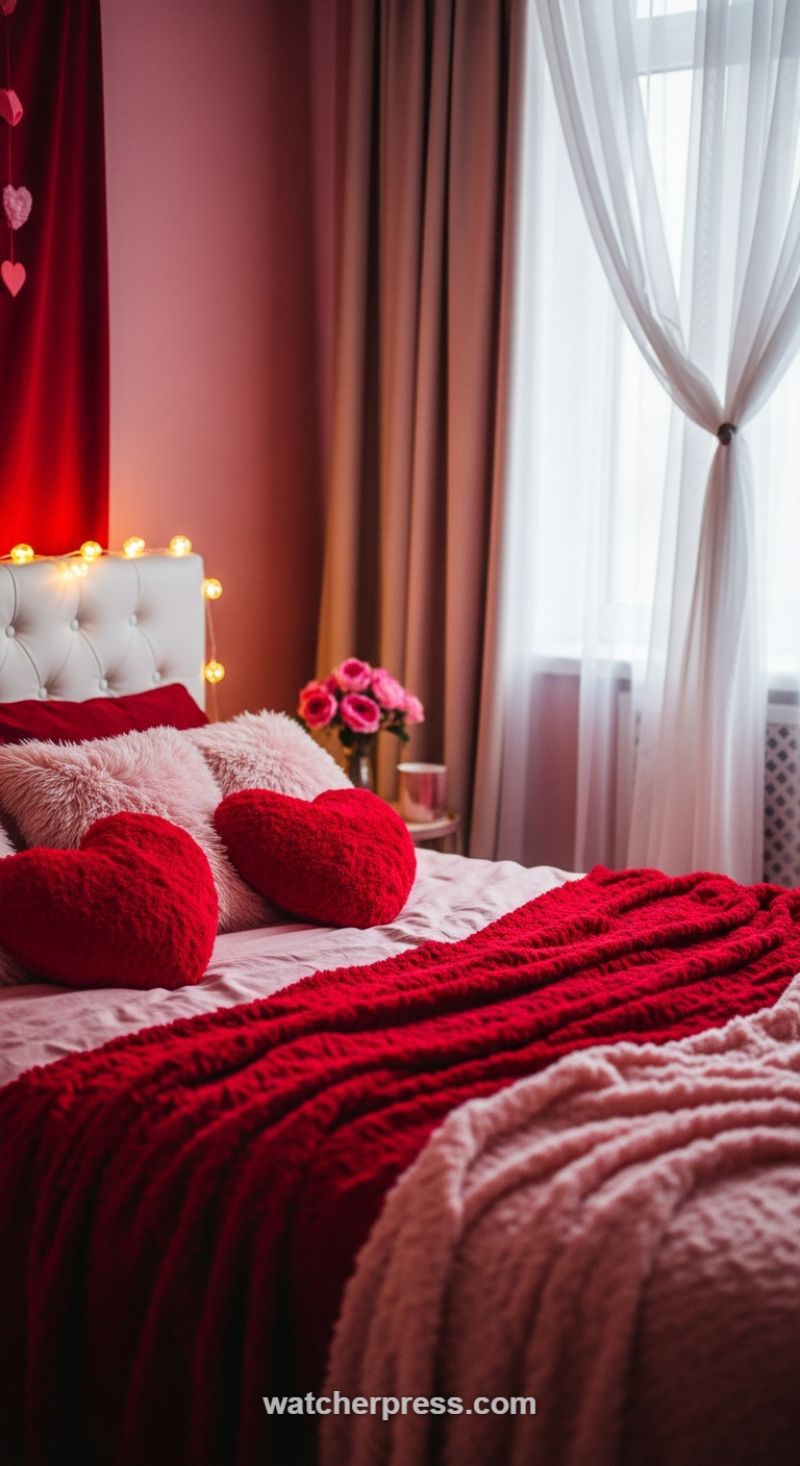
Creating an intimate and luxurious bedroom retreat relies heavily on a strategic use of color and texture, transforming the space into a sanctuary of warmth and romance. This design scheme leverages a plush, soft palette anchored by deep reds and blush pinks. To replicate this look, begin with the wall color—a muted blush or soft rose tint that serves as a warm backdrop without being overwhelming. The key instructional move is the integration of dual lighting sources: maximize natural light by using sheer, white flowing curtains, which diffuse daylight beautifully. Complement this soft illumination with warm-toned ambient lighting, such as delicate string lights draped over the headboard, casting a gentle glow that instantly elevates the mood and highlights the tactile qualities of the textiles.
Mastering the art of bedding layers is essential for achieving this high-texture, inviting aesthetic. Start with smooth, high-quality base sheets, then introduce a duvet in a complementary soft neutral or light pink. The decorative impact comes from the throws and pillows, which should feature sharply contrasting textures. Here, the use of ultra-plush, shaggy fabrics—such as the large pink faux-fur pillows and the deep crimson, woven chenille throw—adds immediate depth and tactile appeal. When selecting accent pieces like the heart-shaped pillows, ensure they are oversized and crafted from an equally rich material (like velvet or shaggy fleece) to prevent them from looking juvenile. Expert advice dictates balancing the symmetry of stacked sleeping pillows with the organic, draped placement of the final layer, the throw blanket, allowing it to pool naturally at the foot of the bed.
Finally, focus on the details that solidify the romantic narrative. The headboard should offer structure, such as the classic white tufted style seen here, which provides a clean visual break from the intense color scheme. Windows treatments should ideally include both sheer panels for daytime privacy and heavy blackout curtains (like the taupe panels) for light control and thermal insulation, reinforcing the feeling of being cocooned. Complete the bedside tableau with fresh florals—soft pink roses are perfect—placed near the bed. This decorative strategy moves beyond just holiday decor; by selecting high-quality, durable textures in deep, luxurious colors, this romantic atmosphere can serve as a year-round template for a cozy, sophisticated master bedroom design.
Laundry Co. (A Functional & Stylish Washroom Retreat)
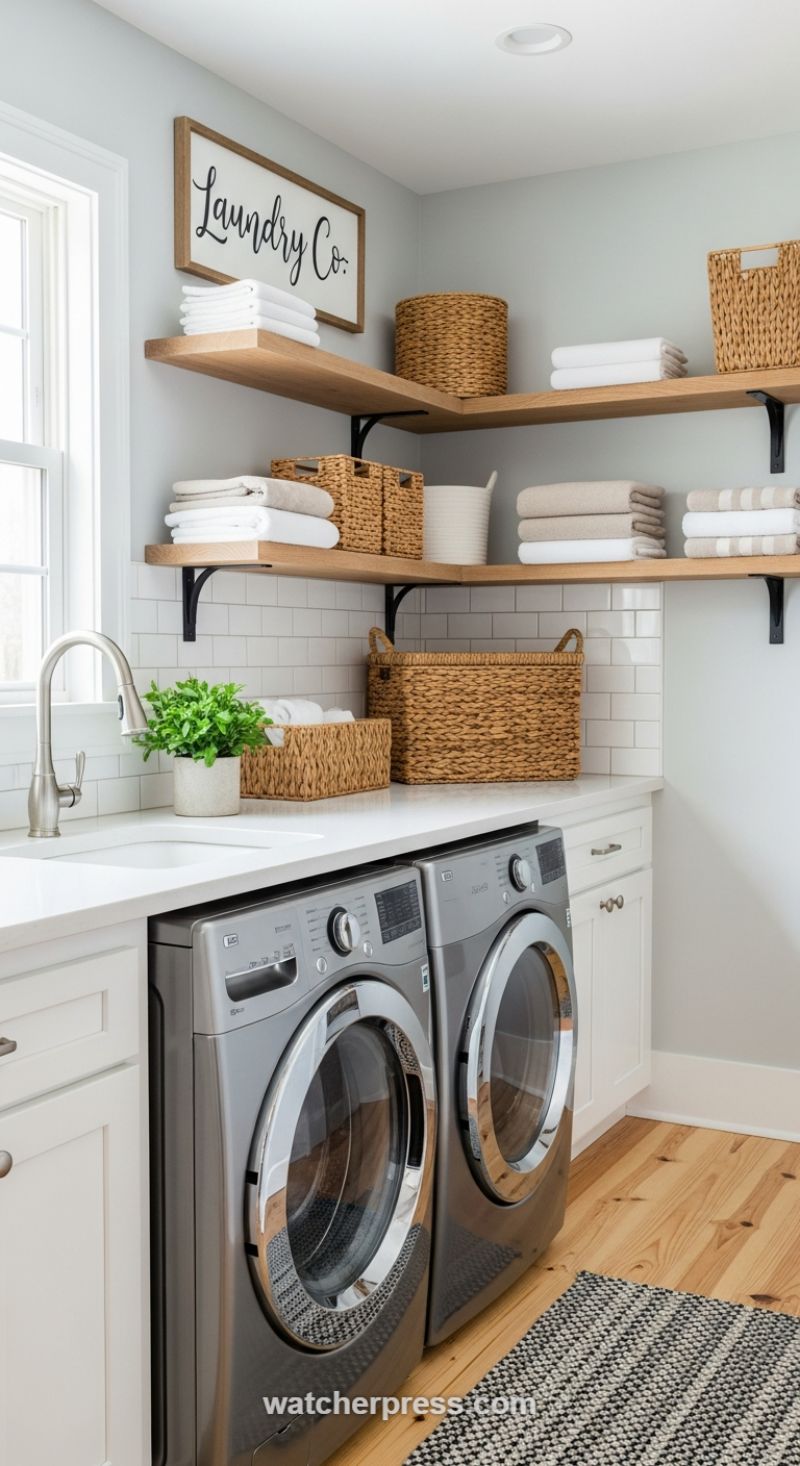
This stunning laundry room perfectly demonstrates how utilitarian spaces can blend high functionality with sophisticated design, moving beyond basic utility and embracing a desirable Modern Transitional aesthetic. To establish this foundation, begin with durable, resilient materials. The choice of a crisp white, seamless countertop over the front-loading washer and dryer is key, providing essential folding and working space. Integrating a deep under-mount utility sink with a high-arch, brushed stainless faucet is a practical necessity, allowing for handwashing and pre-treatment of stains. The backdrop utilizes classic white subway tile for the backsplash, laid in a running bond pattern. This tile choice is inexpensive, easy to clean, and adds subtle texture, perfectly contrasting the clean lines of the white cabinetry below. When planning your layout, ensure sufficient clearance for the washer and dryer doors, and if placing them beneath a counter, remember to account for necessary ventilation gaps to maximize the lifespan of your appliances.
Maximizing vertical storage through open shelving is crucial in achieving this room’s signature airy feel. Rather than heavy upper cabinets, install thick, natural-toned floating wood shelves, secured with minimalist black metal brackets to introduce a modern industrial touch. The corner shelf configuration maximizes storage without overwhelming the visual space. To replicate this organized look, embrace strategic containment: use various sizes of woven rattan or wicker baskets to house unsightly essentials like detergent bottles, dryer sheets, and cleaning rags. Only display items that enhance the aesthetic, such as neat stacks of freshly laundered towels (varying textures and neutral tones, like crisp white and soft beige, add depth). This method keeps clutter hidden while ensuring supplies remain easily accessible, elevating the entire room from mere storage to a curated display.
Finalizing the space involves careful attention to color, lighting, and texture to create a harmonious atmosphere. The wall color here uses a soft, cool neutral (a light grey or pale blue-grey) that brightens the room, complemented by the warm contrast of natural wood flooring and shelving. The simple framed ‘Laundry Co.’ sign provides a charming focal point and reinforces the casual farmhouse appeal. Incorporate natural elements—like the small potted greenery beside the sink—to inject life and color into the predominantly neutral palette. Finally, ground the space and add comfort underfoot with a textured runner or rug, preferably in a durable, tight weave (like the black and white stripe shown) that can withstand heavy traffic and potential moisture, completing a design that transforms the daily chore of laundry into a refined, enjoyable task.
Mastering the Rustic Industrial Look with Layered Textures
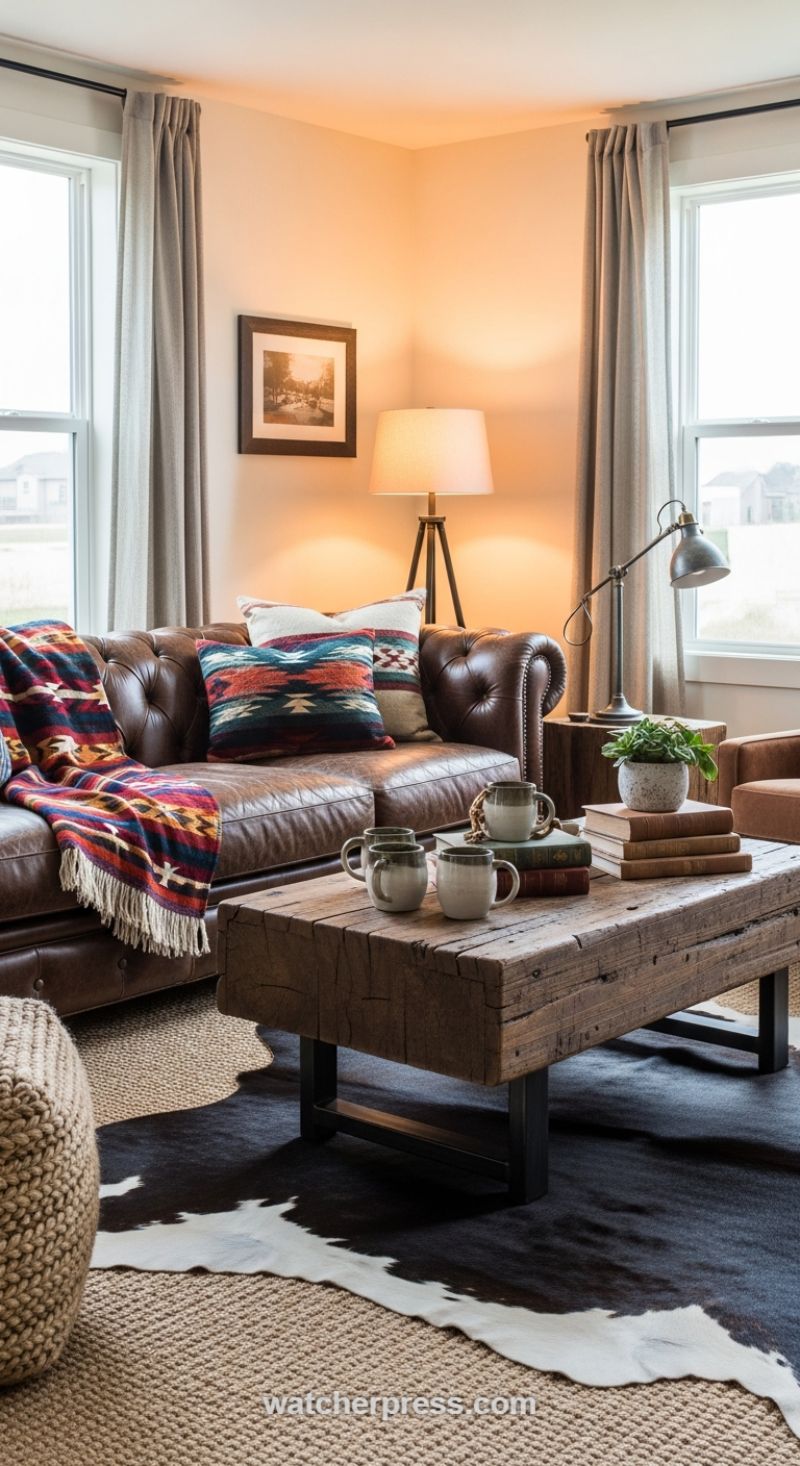
The key to successfully executing a Rustic Industrial or Modern Cabin aesthetic, as beautifully showcased here, lies in deliberately contrasting refined elements with raw, unfinished materials. Start with your anchor furniture: the tufted leather Chesterfield sofa provides a classically masculine, polished foundation. To prevent the space from feeling too formal or stuffy, pair this piece with a weighty, highly textured coffee table crafted from thick, reclaimed wood beams set atop simple, dark industrial metal legs. This stark contrast between the smooth, tailored leather and the distressed, raw wood is the core tension that defines this style. When selecting these primary pieces, prioritize quality and visual heft; the substantial scale of the wood table demands an equally substantial sofa to maintain balance. Finally, ensure surrounding architectural elements—like simple window treatments in neutral tones—recede slightly, allowing the furniture and textiles to take center stage.
To inject warmth and depth into what could otherwise be a visually heavy space, meticulous layering of textiles is essential. Begin at the floor by anchoring the room with a foundational rug, such as the woven jute or sisal seen here. This neutral base adds foundational texture while defining the seating area. Overlay this rug with a smaller, organically shaped hide (like the black and white cowhide) to introduce soft curves, rich color variation, and a touch of rugged luxury that softens the industrial edges of the furniture. On the sofa, ditch monotone pillows for rich, patterned textiles, such as Southwestern or tribal-inspired motifs. These patterns introduce saturated, warm colors—teals, reds, and deep yellows—that stand out sharply against the brown leather, providing necessary visual interest. Drape a coordinating fringed blanket over the arm to encourage a cozy, lived-in feel, inviting guests to settle in.
Finish the space by focusing on functional accessories that elevate the mood and reinforce the cozy, collected narrative. Lighting should be layered and warm; incorporate a tall floor lamp with a simple shade (like the tripod base shown) to provide ambient glow, and complement it with an adjustable metal task lamp placed on a side table made from natural wood or a raw stump. This blend of ambient and task lighting creates focal points and prevents the room from relying solely on harsh overhead fixtures. On the coffee table, style with purpose: stack well-worn vintage books to introduce texture and height, and group rustic ceramic mugs and a simple potted succulent or greenery. These small, organic elements prevent the massive wood table from feeling too monolithic and complete the balanced design blend of rustic charm, industrial edge, and tailored comfort.
Mastering the Art of Layered Romance and Soft Lighting in the Bedroom
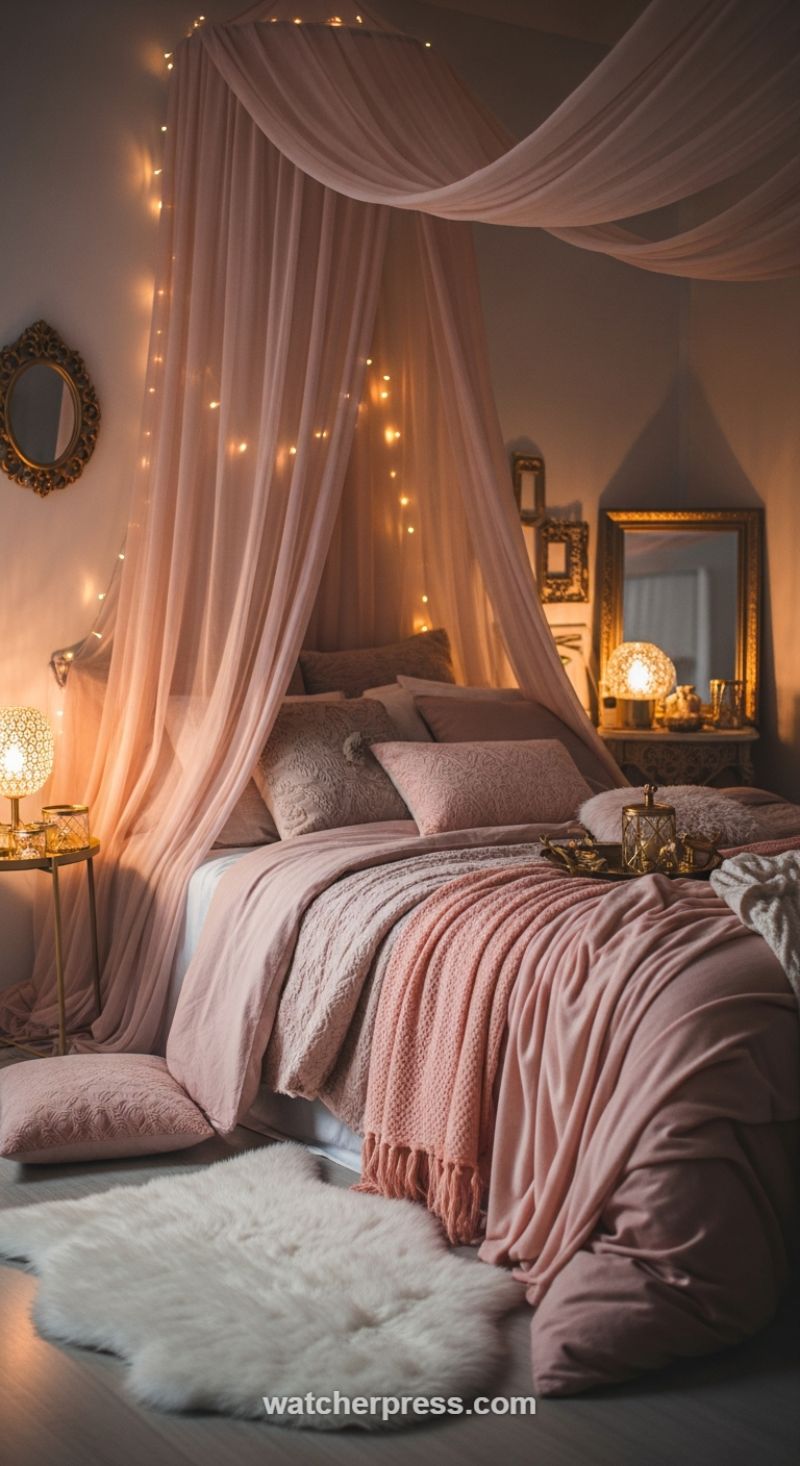
To achieve this deeply romantic and comforting aesthetic, the design relies heavily on monochromatic layering and strategic textural contrast. Begin by establishing a soft blush or dusty rose color palette, using varying shades of the same hue across all primary surfaces. The key here is texture: instead of using one type of fabric, incorporate several distinct tactile elements. Start with a smooth, breathable duvet, then layer it with a heavy cable-knit throw and a lighter, fringed blanket draped casually across the foot of the bed. For pillows, mix materials like velvet, textured cotton, and embroidered patterns (as seen in the image) to create visual depth and tactile interest. This deliberate layering prevents the monochromatic scheme from falling flat and ensures the bed appears overwhelmingly plush and inviting, essential for creating a true sanctuary.
The defining feature of this look is the ethereal canopy and atmospheric lighting. Install a lightweight, sheer fabric—such as chiffon or tulle in a soft pink hue—suspended from a ceiling-mounted ring or draped dramatically over a canopy frame. This creates a psychological separation, enhancing the feeling of intimacy and retreat. Next, integrate the ambient lighting by stringing tiny, warm-toned LED fairy lights (the smaller the better) along the walls and behind the sheer fabric. This technique diffuses the light, eliminating harsh shadows and casting a universally flattering, golden glow across the entire space. Complement this atmospheric light with strategic task lighting provided by ornate, perforated table lamps on the nightstands; these fixtures not only provide necessary illumination but also cast intricate patterns of light and shadow, elevating the overall romantic ambiance.
Finally, accessorize with warm metallics and contrasting textures to complete the look. Opt for antique gold or brass finishes for side tables, mirror frames, and decorative trays. The use of ornate, vintage-style mirrors—such as the oval or rectangular frames seen—adds depth and reflects the soft light, making the room feel larger and brighter. Ground the airy, soft quality of the bedding with a contrasting floor element, such as a plush, off-white faux fur or shag rug. Placing this rug directly bedside introduces a final layer of soft texture and provides a visual break from the wood flooring, marrying the luxurious linens of the bed with the overall design scheme for a cohesive, deeply cozy, and elegant result.
Designing a Chic and Organized Glamour Vanity Station
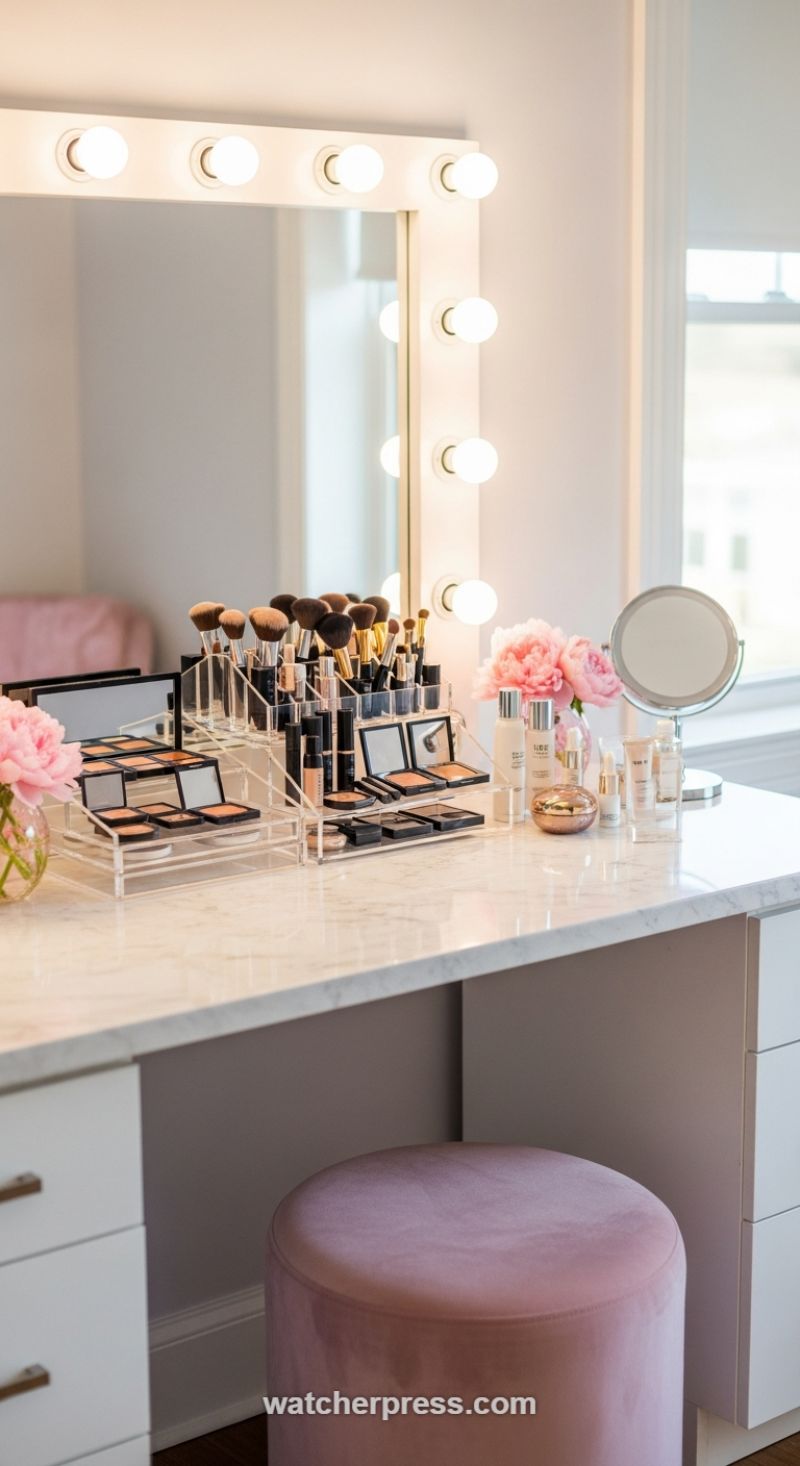
The vanity station is more than just a place to apply makeup; it’s a dedicated self-care zone that should blend high functionality with luxury aesthetics. The featured design perfectly executes this balance, centered around the foundational element: lighting. To replicate this look, prioritize a Hollywood-style mirror equipped with evenly spaced globe bulbs. Expert advice dictates using daylight-balanced LED bulbs (ideally 4000K to 5000K) that provide soft, frontal illumination, eliminating harsh shadows and ensuring accurate color representation for flawless application. Set this mirror atop a substantial countertop, such as the elegant marble surface shown, which not only reflects light beautifully but also provides a durable, easy-to-clean workspace. The entire setup is grounded in a clean, soft color palette—white drawers, light countertop, and a subtle wall color—to maintain a bright and airy atmosphere conducive to detailed tasks.
Organization is paramount in maintaining this high-end look, and the use of clear acrylic organizers is the perfect solution for keeping products accessible yet visually neat. To achieve the streamlined display pictured, invest in tiered and modular acrylic systems. Use tall, divided sections to neatly group makeup brushes by function, preventing them from mixing and protecting their bristles. Tiered risers are excellent for displaying compacts, powders, and palettes, allowing easy viewing without having to shuffle items. Reserve a dedicated area for skincare bottles, serums, and fragrances, perhaps placing them alongside a small decorative element, like the fresh pink peonies shown, to introduce natural color and texture. By utilizing transparent organizers, the focus remains on the beautiful products themselves, minimizing visual clutter and creating a polished, boutique-like display.
Finally, complete the setup by selecting comfortable and stylish seating that complements the overall aesthetic. The blush pink velvet stool seen here adds a textural, feminine touch, providing a comfortable place to sit without taking up excessive floor space. When choosing seating, ensure the height is appropriate for the counter level to avoid strain during use. If your vanity incorporates built-in drawers, like the white cabinetry pictured, maximize their utility by adding internal dividers to separate tools, overflow products, and less frequently used items. This design strategy effectively combines luxurious materials (marble, velvet) with hyper-functional organization and optimal lighting, transforming a standard dressing area into a glamorous and highly efficient personal retreat.
Organic Modern Retreat: Mastering Warm Neutrals and Textured Walls
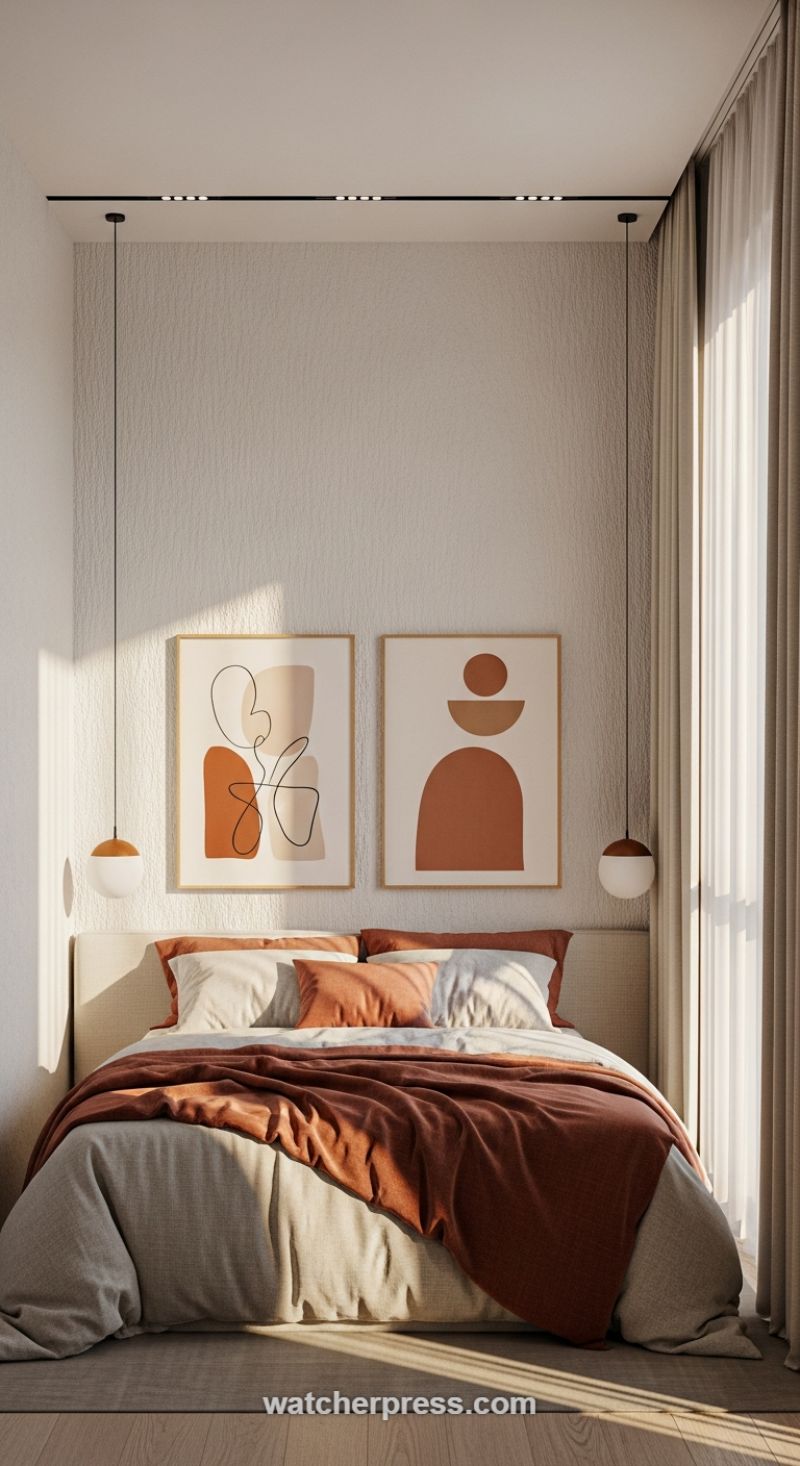
Creating a bedroom sanctuary that feels both contemporary and deeply comforting hinges on mastering the balance between clean lines and tactile materials, a design strategy perfectly embodied by the Organic Modern style seen here. To replicate this look, begin by establishing a foundation of warm, off-white or light beige tones for the walls and large furniture pieces, such as the upholstered headboard. The key instructional element is the introduction of controlled texture—notice the subtle, woven or stucco-like finish on the wall, which prevents the neutral space from appearing sterile or flat. Next, define your palette using rich earth tones, specifically terra cotta, rust, and burnt orange. These colors should be introduced strategically via textiles and artwork, acting as sophisticated accent colors that ground the airy neutrality of the room. When selecting paint or wallpaper, avoid stark white; instead, choose shades with subtle yellow or red undertones to maximize the feeling of warmth, especially when bathed in natural light.
The aesthetic success of this space relies heavily on the curated layering of textiles and focal art. For bedding, employ a three-layer approach: start with a simple, high-quality neutral duvet (taupe or warm gray), overlay it with a heavy, textured throw in the primary accent color (the rust-toned blanket), and finally, stack pillows that transition between cream, light gray, and solid rust tones. This layering strategy adds depth and comfort, inviting relaxation. Above the bed, the pairing of large abstract prints serves as the primary focal point. Choose artwork that features organic shapes, soft color blocking, and delicate line work. Crucially, the colors in the art must echo the bedding palette, ensuring visual cohesion. Select thin, light-wood frames to maintain the Scandinavian-inspired lightness of the overall design, contrasting sharply with the rich, deep colors inside the frame but harmonizing with the neutral walls.
Finally, elevate the design through thoughtful architectural details and lighting selection, which often dictate the room’s modern credibility. Ditch traditional bedside table lamps in favor of minimalist pendant lights suspended from the ceiling—a perfect solution for maximizing space in compact rooms. Here, small globe pendants with natural wood accents are hung from a discreet black track lighting system mounted flush to the ceiling. This track system itself is an expert touch, providing versatile ambient illumination across the ceiling while providing a structure for the hanging pendants. Ensure the pendants hang low enough to serve as functional reading lights but high enough to clear the headboard. To complete the tranquil atmosphere, install floor-to-ceiling sheer curtains that diffuse natural light, creating soft, elongated shadows that further emphasize the room’s peaceful, textural quality, resulting in a perfectly balanced modern retreat.
Vertical Zoning: Mastering the Loft Bed Nook for Small Spaces
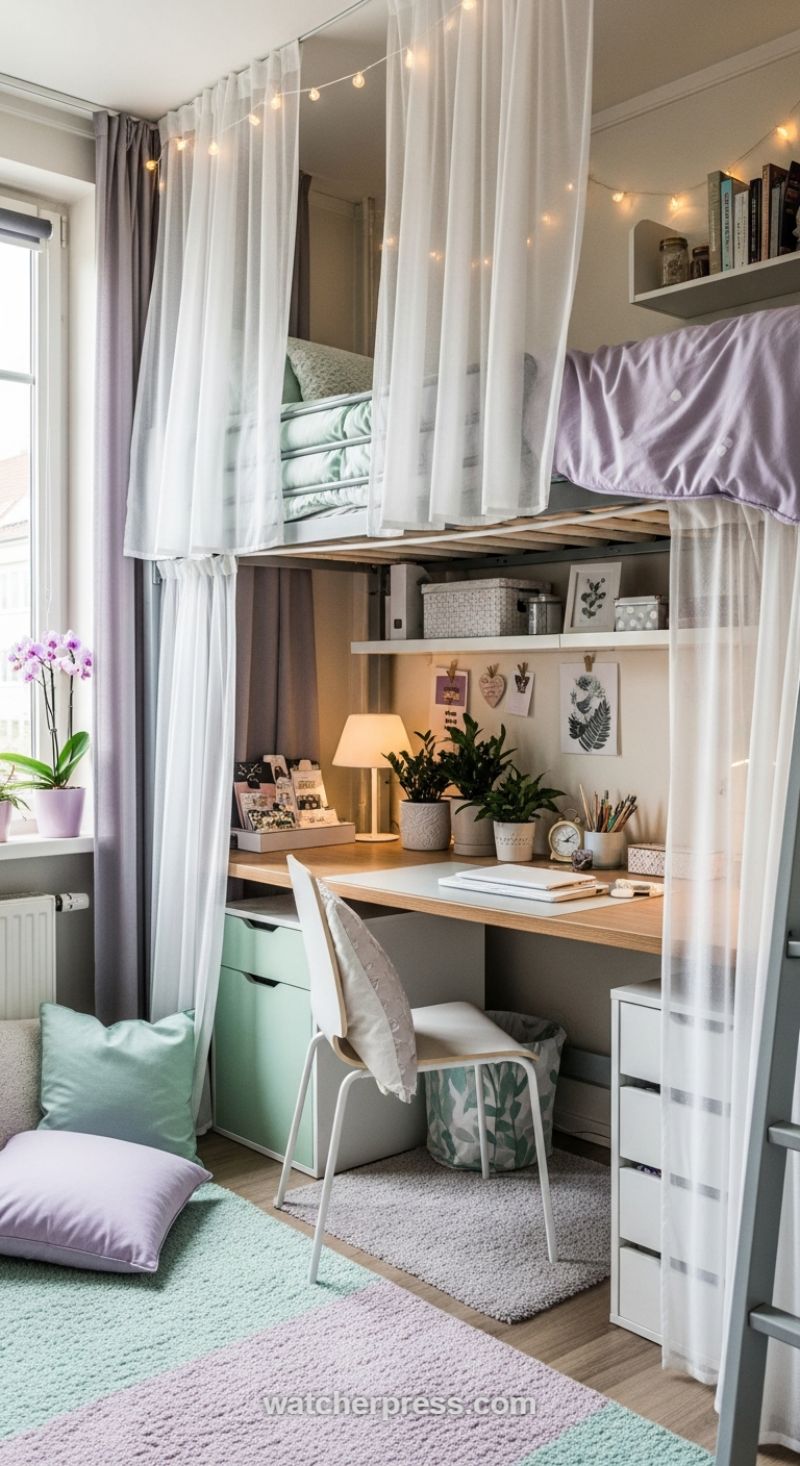
This design masterfully solves the perennial problem of limited square footage by maximizing vertical space, transforming a single footprint into highly functional dual zones. The primary innovation lies in utilizing a sturdy loft bed structure to elevate the sleeping area, freeing up the space beneath for a dedicated study or home office nook. To implement this technique, select a bed frame with ample clearance—at least 60 inches—to ensure comfortable seating and head height below. Crucially, soften the hard utilitarian lines of the metal frame by installing ceiling-mounted curtain tracks for sheer, floor-length drapery. These flowing white panels serve several critical functions: they delineate the sleeping zone as a private sanctuary, diffuse natural light, and introduce a soft, ethereal texture that elevates the overall aesthetic from practical to cozy. Complete this upper level with warm ambient lighting, such as battery-operated string lights or globe bulbs, hung inside the curtain line to create a truly inviting and intimate cocoon.
Beneath the bed, the design focuses on creating an organized, distraction-free workspace. Expert execution involves selecting a desktop that spans the full width of the area, providing maximum surface area. Integrate a mix of open and closed storage solutions; here, white modular drawers flank the desk, while a floating shelf directly above offers immediate vertical organization. This is prime real estate for personalization and focus-enhancing elements. Incorporate biophilic design by introducing small, easy-care potted plants, which have been proven to reduce stress and improve concentration. Maintain visual calm by sticking to a unified palette of light wood, white ceramics, and woven organizational bins. Task lighting is essential in this enclosed area—a simple, elegant table lamp provides necessary localized light, balancing the warmer glow provided by the ambient lighting overhead.
To tie the vertically segmented space together, intentional use of color and texture is key. This room employs a cohesive pastel scheme—soft mint green and lavender—that is strategically repeated throughout the textiles. Note the diagonal color-blocked rug on the floor, which instantly anchors the lower half of the room and defines it as a separate lounge area for reading or relaxation, complemented by oversized pastel throw pillows. Furthermore, the window treatments layer heavier, lilac-toned curtains over light sheers, managing privacy while echoing the room’s core accent colors. When implementing this aesthetic, ensure accessories like storage drawers, pillows, and even the magazine holder adhere to the designated color family. This cohesive repetition prevents the multi-zoned area from appearing cluttered or disjointed, delivering a youthful, harmonious, and highly efficient living environment.
Elevate Neutral Living Spaces with Oversized Macrame Texture
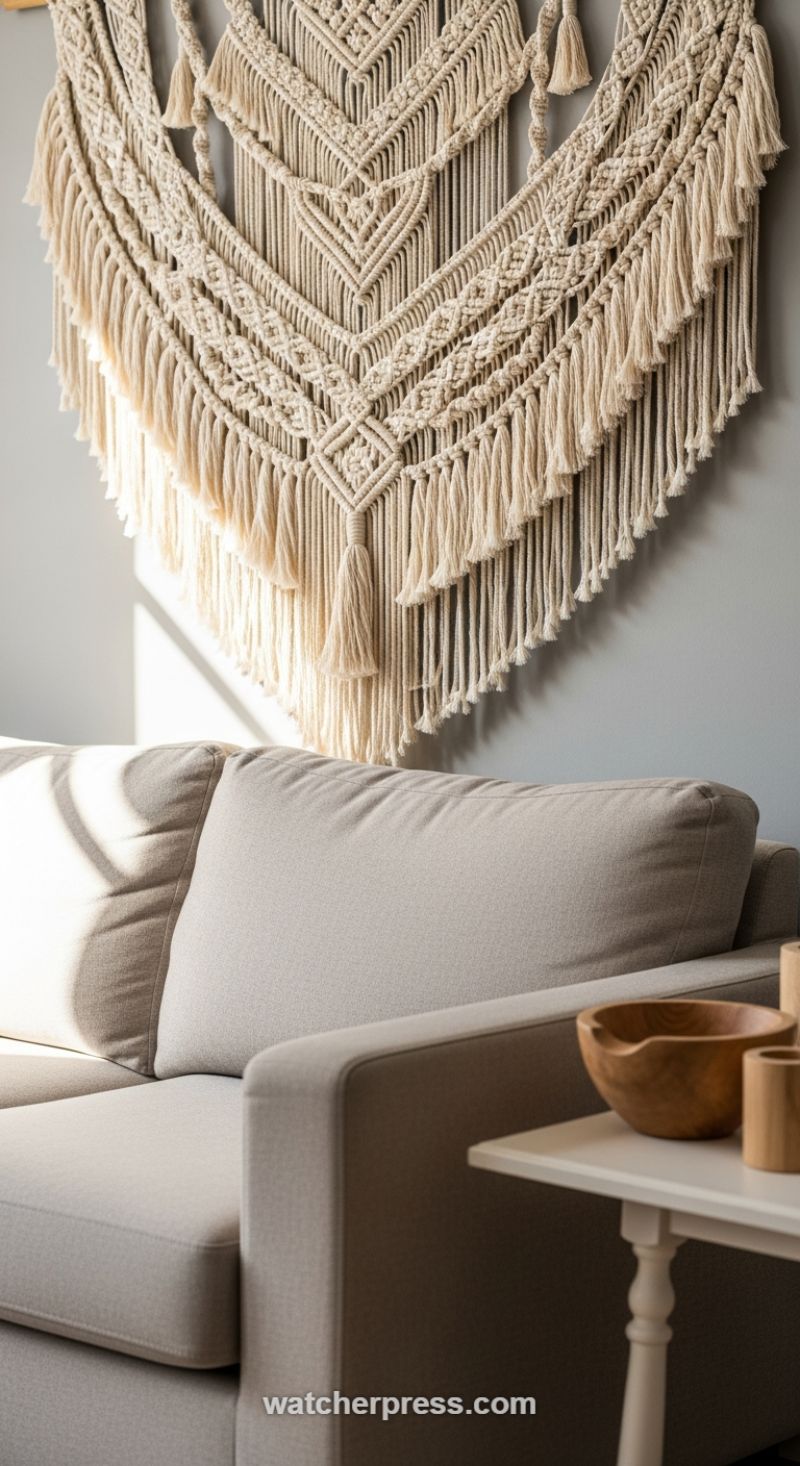
Creating visual interest in a minimalist or monochromatic living room hinges entirely on the strategic use of texture and scale, transforming what could be a bland space into a sophisticated, cozy haven. As seen here, the primary design strategy involves positioning an oversized textile piece, specifically a large, intricate macrame wall hanging, as the definitive focal point directly above the main seating area. When executing this design, ensure the textile art is substantial—it should command attention and be wide enough to visually anchor the sofa below it, extending at least two-thirds the length of the furniture. The raw, organic texture of the knotted cotton thread acts as a crucial contrast to the smooth, refined lines of the modern sofa and the flat, muted gray wall, adding an essential layer of bohemian warmth. Opt for complex knotting patterns, such as the combination of square knots, half hitches, and diamond shapes shown, as these details become highly visible textures that capture light and shadow, defining the area’s aesthetic without introducing busy colors.
The foundation of this look relies on a strictly neutral, layered palette that promotes serenity and maturity. When selecting furniture, look for pieces with strong, simple silhouettes, like the low-profile sofa pictured, upholstered in a durable, subtly textured fabric (think linen blends or tightly woven wool in shades of taupe, beige, or pale gray). Expert advice for maintaining visual harmony in a neutral scheme is to treat texture as if it were color. Varying the weights and finishes of materials—from the heavy, raw texture of the macrame, to the soft weave of the sofa, to the smooth, cool surface of the wall—prevents the room from feeling flat. Furthermore, the deliberate use of natural light is paramount; positioning the seating area where sunlight can cast dramatic diagonal shadows enhances the depth and dimension of both the textile art and the sofa’s texture, adding a dynamic, temporary design element throughout the day.
To fully realize this modern organic style, accessories should be sparse, functional, and reinforce the commitment to natural materials. For instance, the small side table should maintain a clean, understated profile, allowing it to support organic accents without becoming a distraction. Accessorize tables with handcrafted items like raw, natural wood bowls, simple terracotta vessels, or smooth ceramic candle holders. The objective is to keep the material palette limited to textiles, wood, and simple metals, further emphasizing the focal macrame piece. When applying this idea to your own living room, remember the rule of visual simplicity: avoid competing patterns in the rug or cushions. By keeping the floor and smaller accessories simple and non-patterned, the intricate knotwork of the oversized macrame tapestry will retain its visual power and successfully elevate the entire room’s design profile.
We’ve journeyed through 20 stunning, yet practical, interior design ideas, proving that exceptional style is achievable in every corner of your residence—from the welcoming living room to the functional laundry space. The true measure of successful design is not adherence to trends, but rather the creation of a home that genuinely reflects your personality and improves daily living. Start small, trust your instincts, and take the first deliberate step toward transforming the room that needs it most.
Ready to elevate your space? Don’t let these ideas just live on the screen; download our complimentary Room-by-Room Checklist to organize your project, and subscribe to our weekly newsletter for exclusive budget-friendly design tips delivered straight to your inbox. Let’s make your design vision a reality.