
Transform your home for Valentine’s Day with 15 elevated minimalist decor ideas. Ditch the tacky hearts and create subtle, sophisticated romance that looks chic long past February.
Valentine’s Day often calls for decor that is overwhelmingly red, glittery, and frankly, a little tacky. If your aesthetic leans toward clean lines and sophistication, integrating seasonal romance can feel impossible without disrupting your carefully curated space. But what if you could celebrate the holiday with style that complements, rather than clashes with, your minimalist design? This is where intentional, elevated styling becomes essential.
In this guide, we dive into 15 elevated decor ideas designed to bring subtle warmth and undeniable romance into your home. You need these tips because they solve the universal problem of seasonal decor burnout: they focus on pieces, textures, and classic color palettes that feel chic, not cheap, ensuring your celebratory decor looks stunning not just on February 14th, but for every season to come without adding unnecessary clutter.
15 MINIMALIST VALENTINE’S ROOM DECOR IDEAS THAT AREN’T TACKY
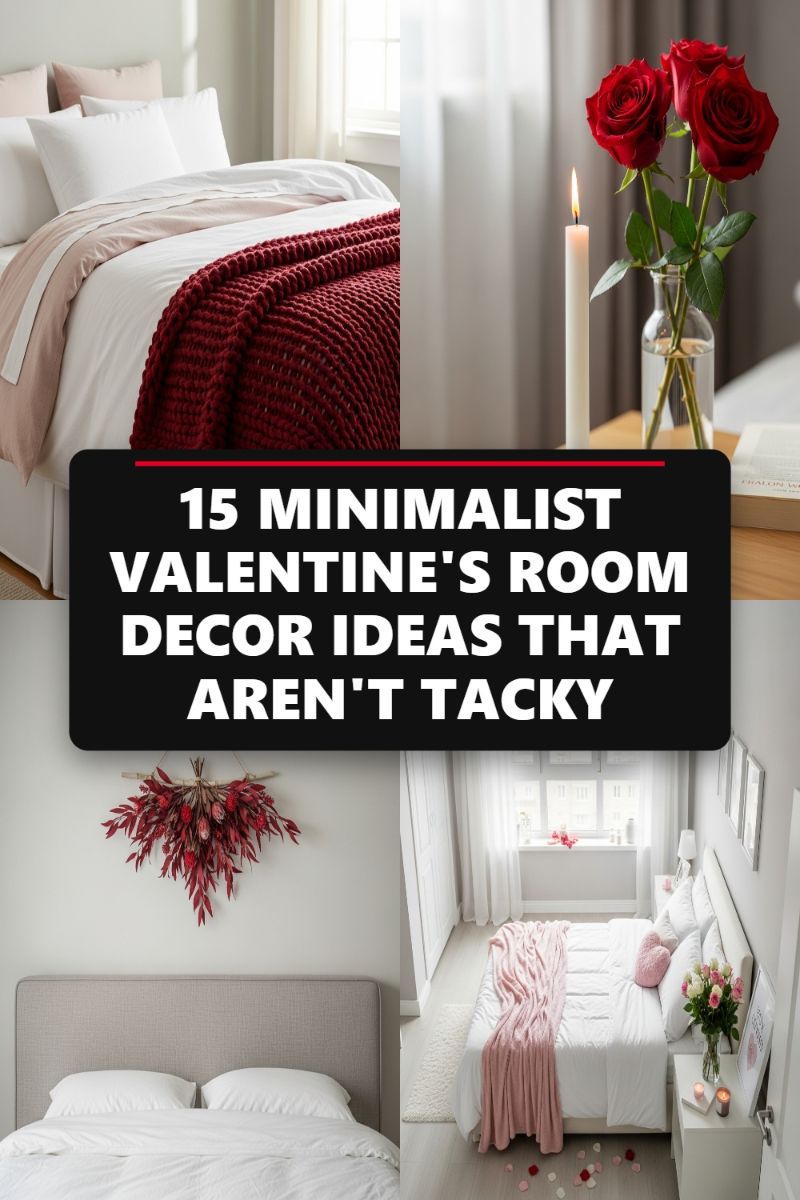
Achieving a romantic, Valentine’s Day-inspired bedroom without crossing the line into cliché requires a focus on quality textiles, sophisticated color placement, and strategic atmosphere building. Start with a clean, neutral foundation, typically crisp white or soft beige bedding and walls, as seen across all these examples. The key to the ‘minimalist’ approach is using the core romantic colors—deep reds and blush pinks—as intentional, high-impact accents rather than primary colors. Introduce warmth through rich textures like a heavy, chunky knit throw blanket in deep cranberry or burgundy (as shown draped across the white duvet). If opting for pink, choose muted, dusty rose or blush tones in soft materials like linen or cashmere throws, ensuring they layer cohesively with the existing neutral scheme. The elegance stems from the tactile quality of the materials; swapping out standard synthetic bedding for high-thread-count cotton or natural linen elevates the entire look instantly. When curating the color palette, treat red and pink as precious commodities—a single, deeply saturated piece can provide all the thematic flair you need without cluttering the space.
Transforming the ambiance hinges on careful lighting and incorporating natural elements that appeal to the senses. Ditch overhead fixtures and rely instead on soft, indirect lighting from bedside lamps and, most importantly, candles. Choose tall, slender taper candles in simple, matte white or off-white to create a dramatic, elongated flame without introducing scent competition. For floral arrangements, adopt a less-is-more philosophy: forgo massive, mixed bouquets in favor of a small grouping of perfectly formed, long-stemmed red roses displayed in a clear, unadorned glass vase. This approach emphasizes the structural beauty and saturated color of the flowers themselves. If you choose to scatter petals for a classic romantic touch, use them sparingly—perhaps a light dusting on the floor near the bedside table or windowsill—to suggest romance rather than overwhelm the scene. The goal is to build a mood of soft intimacy and quiet luxury.
To ensure the decor transcends the holiday and remains elevated, pay attention to non-traditional wall elements and functional styling. Instead of traditional heart signs or banners, consider sophisticated, organic wall hangings, such as a dried floral arrangement or a deconstructed wreath utilizing deep red and burgundy foliage (as pictured above the neutral headboard). This provides texture and color impact while maintaining a natural, mature aesthetic. Finally, style the bedside table purposefully: combine your elegant vase and candle setup with functional items, like a small stack of stylish reading material or a curated piece of art in a simple frame. If incorporating overtly romantic shapes, such as a heart pillow, ensure it is small, textural (like velvet or knit), and used as a singular accent piece rather than part of a cluster. By focusing on rich textures, clean lines, muted supplementary colors, and a strategic use of lighting, you achieve a Valentine’s decor scheme that feels luxurious, minimal, and timeless.
YOU’RE DOING IT WRONG! THE MINIMALIST GUIDE TO KITCHEN COUNTERTOP DECOR
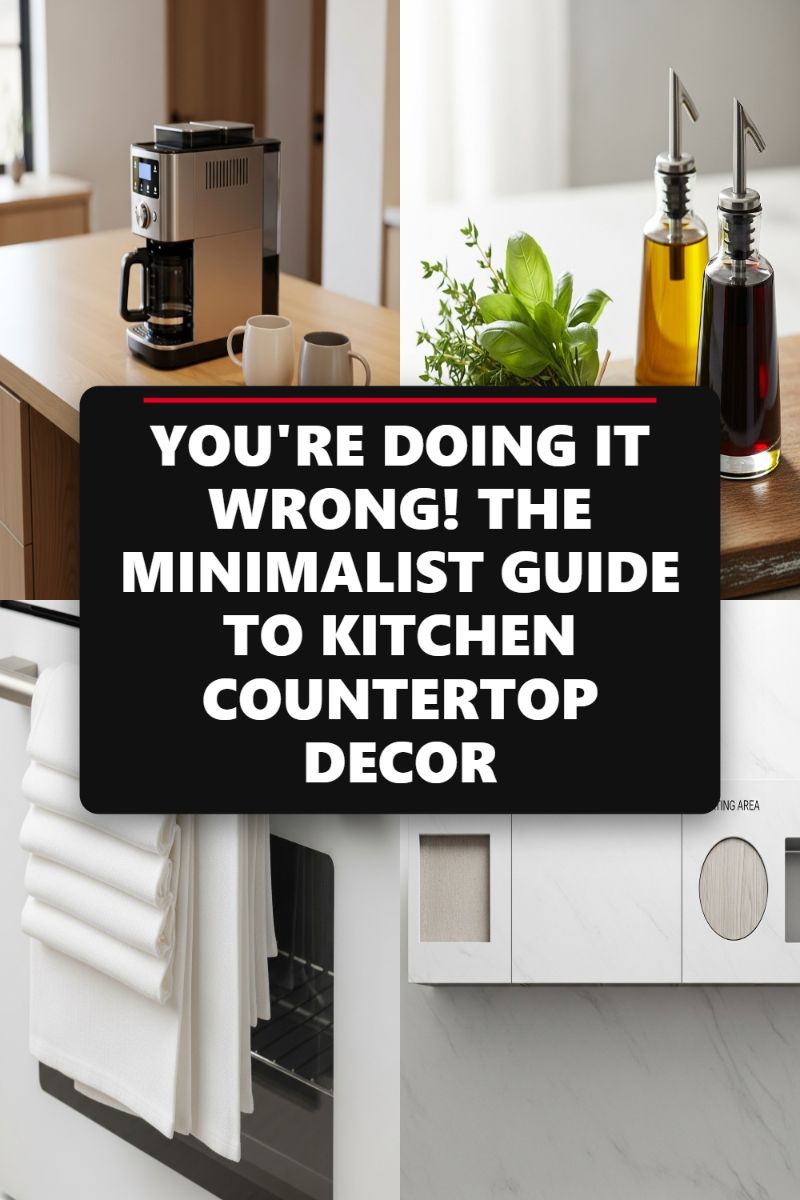
The biggest misconception about minimalist kitchen design is that it requires sacrificing utility for aesthetics. In reality, true minimalism demands that the few items occupying your countertop must serve both purposes seamlessly. Stop letting small, specialized appliances accumulate and focus instead on curating high-design versions of your absolute daily essentials. For most homes, this means restricting permanent counter items to a maximum of three functional zones: the beverage station, the cooking prep zone, and a single piece of organic texture. As demonstrated in the visual, choose appliances—like a sleek stainless-steel coffee maker—that possess clean lines and match your hardware palette. Furthermore, elevate humble necessities, such as cooking oils and vinegars, by decanting them into matching glass vessels with uniform pour spouts. This simple act transforms messy, branded bottles into cohesive decorative elements, demonstrating a commitment to form and function that is central to an elevated aesthetic.
To prevent the minimalist kitchen from feeling sterile or cold, expert designers rely heavily on organic texture and living elements to introduce warmth. The rule here is quality over quantity: substitute kitschy ceramic accents for a curated selection of materials that ground the space. This is often achieved by employing a handsome wooden cutting board or a slab of marble, which should remain stationed on the counter, acting as a visual anchor and a practical landing pad for other essentials. Integrating living decor, such as a small pot of fresh herbs (like basil or thyme shown here), not only offers incredible utility for cooking but also introduces necessary color and life. Ensure textiles, like hand towels, are neatly folded or draped in matching, neutral tones—crisp white or charcoal grey are ideal—to avoid creating unnecessary visual noise. These elements provide textural depth without adding true clutter, maintaining the streamlined flow that defines luxury minimalism.
Achieving the ultimate minimalist counter requires a rigorous commitment to negative space. The goal is to leave the vast majority of your countertop visually clear, maximizing the apparent working area and enhancing the beauty of your stone or composite materials. Begin by conducting a ruthless audit of all items currently residing on your counters: if an appliance is used less than three times per week (think blenders, toasters, or specialized mixers), it belongs in a cabinet, pantry, or appliance garage. Once only essentials remain, create defined zones to prevent visual creep. For instance, cluster your coffee maker and matching mugs on one side of the counter, and your oil/vinegar set on the other. By honoring these distinct areas and maintaining 80% clear counter space, you harness the power of visual breathing room. This disciplined approach ensures that every item left on display is seen as an intentional, chosen element of high-end design, proving that you don’t need to decorate a space when the architecture and utility items are beautiful enough to stand on their own.
DITCH THE RED HEARTS! RUSTIC CHIC VALENTINE’S PARTY DECOR
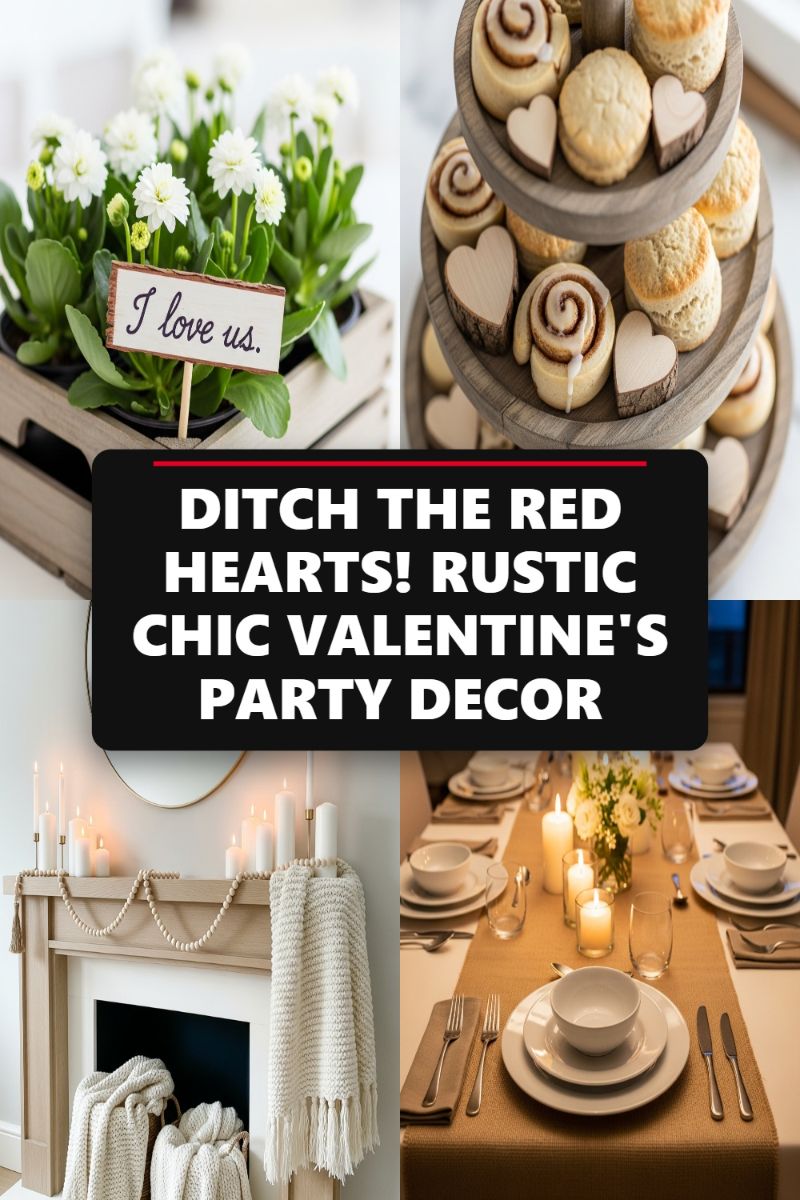
Elevate your Valentine’s celebration by moving away from predictable clichés and embracing a sophisticated rustic chic aesthetic rooted in natural textures and a serene, neutral palette. The key to mastering this look is prioritizing warmth and tactile comfort over artificial color. Begin by setting a monochromatic stage using whites, creams, natural wood, and taupe tones. Introduce essential elements like chunky knit blankets and textured throws, draped casually over chairs or nestled in baskets near the fireplace, instantly signaling coziness. For the dining experience, anchor the tablescape with an organic material like a burlap or natural linen runner. This raw texture provides a perfect, earthy contrast for crisp, classic white china and simple glassware, ensuring the setting feels both grounded and refined. Ambient lighting is paramount: rely heavily on pillar candles and unscented votives of varying heights, placing them generously down the center of the table and across any available mantelpiece.
To create captivating focal points, apply the principle of layered simplicity. The mantel, if available, should become a gallery of gentle light and soft texture. Group ivory pillar candles (using brass or wooden holders) and intersperse them with organic decorations, such as a natural wood bead garland that drapes loosely across the surface. This look is amplified by ensuring the surrounding elements, like wall mirrors or fireplace accessories, maintain the same neutral wood or metallic finishes. On the dining table, maintain the theme by choosing understated white florals, such as delicate roses, anemones, or baby’s breath, clustered simply in a clear glass vase. The overall effect should feel like a cozy, intimate cabin retreat, where texture—not color—is the primary source of visual interest and romance.
Finally, integrate the theme into your refreshments using subtle, meaningful accents rather than overt holiday iconography. Utilize multi-tiered serving platters crafted from natural, distressed wood to present baked goods like cinnamon rolls, scones, or biscuits. Instead of relying on red heart candies, scatter small, unfinished wooden heart cutouts (especially those retaining bark edges for extra rustic appeal) among the treats. This small detail provides a nod to Valentine’s Day without sacrificing the overall minimalist aesthetic. For living decor, replace cut flowers with potted white blooms, like cyclamen or white daisies, displayed in a simple wooden crate. These living arrangements, paired with a small, handwritten wooden sign bearing a sincere message like “I love us,” offer a charming and enduring sentimental touch that extends the joy of the holiday beyond a single evening.
SKIP THE CHEESY BANNER: HOW TO HOST AN ELEVATED SUPER BOWL PARTY
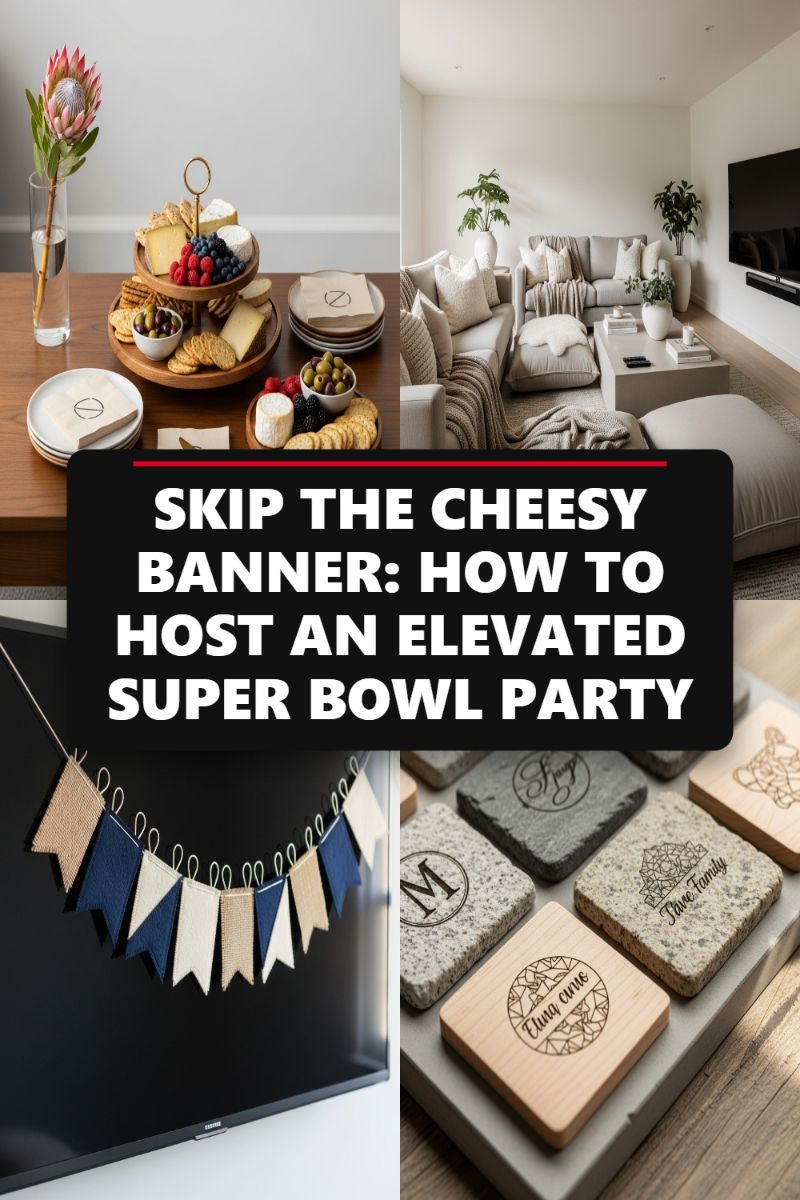
To elevate any gathering, whether it’s a major sports event or an intimate holiday cocktail party, the primary rule is to reject temporary clutter in favor of permanence and texture. Instead of drowning your space in loud team colors or event-specific plastic decor, focus on enhancing your existing aesthetic. Begin by ensuring your main gathering area, like the living room shown, adheres to a neutral, inviting palette. Layered textures—think chunky knit throws, plush pillows in linen or wool, and natural wood accents—create depth and comfort without sacrificing sophistication. By prioritizing a minimalist backdrop, any small, quality decorative elements you introduce will feel intentional and high-end. The “how-to” here is to ensure maximum functionality: arrange comfortable, open seating, keep sightlines clear to the TV or focal point, and use indirect lighting to create a warm ambiance, making the space feel ready for high-traffic entertaining rather than just temporarily decorated.
Elevated entertaining revolves around presentation and utility, starting with the food service. Ditch the disposable trays and plastic serving dishes for a curated charcuterie board or tiered stand made of quality wood. As seen in the top left, a sophisticated arrangement of cheeses, fresh fruits, olives, and crackers acts as a functional centerpiece, replacing the need for overly festive table decorations. Crucially, replace standard paper or plastic cups with glassware, and utilize durable, personalized accessories that serve dual decorative and practical roles. Consider custom coasters made of materials like slate, granite, or engraved wood, as pictured. These items absorb condensation, protect surfaces, and add a thoughtful, bespoke layer to the decor that reflects a mature sense of style, making them perfect investments that can be used long after the event.
Finally, if you feel the need for a festive touch, apply the minimalist principle of ‘less is more’ to your accessories. The instructional move is to swap large, brightly colored vinyl banners for subtle, textile-based bunting, like the small burlap and navy pennants shown. These smaller, textural accents can be discreetly draped across a sideboard or mantlepiece, offering a nod to celebration without dominating the space. Avoid cluttering surfaces with small, cheap novelties; instead, use singular, natural elements as centerpieces—a high-quality vase featuring a statement flower, a simple potted plant, or unscented pillar candles. By focusing on natural materials (wood, stone, natural fabrics) and maintaining a cohesive, edited color scheme, you achieve a hosting style that feels sophisticated and welcoming, successfully bridging the gap between everyday elevated living and festive celebration.
BLACK HISTORY MONTH DECOR IDEAS THAT HONOR, INSPIRE, AND ELEVATE

While the foundational context of this image is tied to honoring Black History, the aesthetic approach provides a masterclass in using color, texture, and intentional layering to create elevated, year-round decor. The key to moving past seasonal kitsch and achieving true minimalism lies in focusing on enduring cultural elements and grounding textiles. To replicate this rich, yet uncluttered look, start by curating a literary collection. A stack of meaningful, spine-out books instantly provides intellectual weight and sophisticated color blocking. Notice the selection here leverages deep blues, reds, and purples—colors that can be easily pulled and reflected in the floral arrangement. Choose a mix of blooms like cheerful sunflowers and deep purple hydrangeas to contrast the straight lines of the books, using a simple clear glass vase to maintain an airy, minimalist feel, ensuring the focus remains on the color and shape of the foliage itself.
Achieving an ‘elevated’ look relies heavily on the quality and placement of focal art. Instead of large, overwhelming galleries, select one powerful piece—such as a framed historical figure—and place it strategically to anchor a transitional space, like a hallway or entry point. The intentional use of white matting around black and white portraiture provides necessary contrast against dark or rich wooden finishes, immediately drawing the eye without visual clutter. Ensure the frame itself is simple and clean (thin profile, perhaps a subtle gold or black) to avoid detracting from the subject matter. This technique turns everyday architecture, like a built-in door panel, into a deliberate display niche, proving that meaningful decor doesn’t require dedicated wall space but rather intelligent placement.
Finally, integrate global textiles and natural textures for depth and warmth, a move that pushes minimalist decor far beyond sterile white boxes. The grapevine wreath serves as a textural anchor, incorporating pinecones, acorns, and deep-hued berries, perfect for transitioning between seasons. The essential element is the bow: using a Kente-style textile introduces powerful geometric patterns and vibrant colors (red, green, black, yellow). This rich fabric acts as a high-impact color punch, infusing cultural significance and luxurious texture into the organic materials of the wreath. When selecting textiles for permanent display, gravitate toward authentic, high-quality prints—be it African geometrics, Asian block prints, or Native American patterns—as these items possess an inherent story and visual depth that elevates the entire room, making the decor meaningful and inspirational year-round.
Your Ultimate Guide to Elevated Boho Spring Table Decor
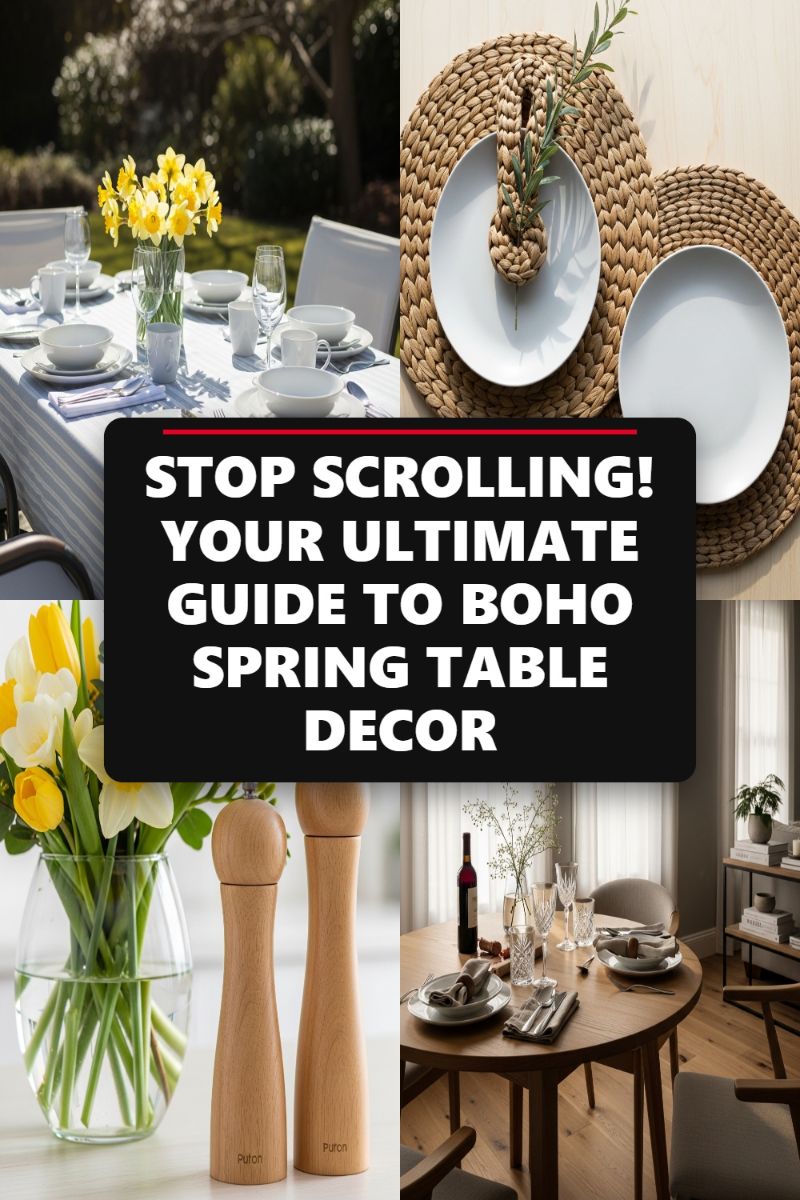
To successfully integrate the rustic, textural richness of Boho style with a refined minimalist aesthetic, the key lies in restraint and the strategic use of natural materials. As spring emerges, shift your focus away from heavy, cluttered settings toward airy, grounded design. Begin by selecting foundational elements that speak to nature’s simplicity: think woven placemats crafted from jute, raffia, or seagrass, which immediately inject tactile warmth and organic shape. Contrast these earthy textures with crisp, white ceramic dinnerware. The white serves as a necessary clean backdrop, preventing the natural fibers from feeling too heavy or overwhelming. To achieve this elevated look, avoid overly busy patterns or bright, synthetic colors. Instead, utilize light wood tones—like the tall, streamlined beechwood salt and pepper mills seen here—to introduce subtle curves and functional elegance. This technique grounds the setting in neutrals, allowing the seasonal greenery to provide the necessary color.
Crafting the centerpiece requires a minimalist approach to florals and foliage. Ditch large, formal arrangements in favor of clear glass vessels filled with simple, impactful spring blooms, such as bright yellow daffodils or clean white and yellow tulips. The transparency of the glass keeps the visual line low and ensures the setting remains modern. For a sophisticated touch, incorporate single sprigs of foliage, such as olive or eucalyptus, layered directly onto the plates or tied around a napkin, adding an artisan feel without the need for excessive clutter. When choosing glassware, opt for clarity and unique texture; sleek, clear wine glasses paired with subtly patterned crystal tumblers elevate the drink service while maintaining a light, reflective quality on the tabletop. If using a table cloth, choose a muted stripe or solid white linen to complement the fresh spring palette, or for true minimalism, allow the warm wood of the dining table to serve as the primary textile.
This elevated Boho approach is inherently versatile, making it an excellent investment that lasts far beyond spring. To ensure the decor stays fresh and transitions seamlessly from a February gathering to a late May brunch, focus on monochromatic layering. Maintain the foundation of natural fibers and simple white china, but rotate the accessories. Replace the early spring tulips with herbs or grasses in summer, or swap out the thin table runner for deep wood cutting boards used as serving vessels in the autumn. The enduring quality of natural wood furniture and high-quality stoneware means these pieces are not merely seasonal decorations, but long-term investment elements that define a home’s sophisticated style, allowing for endless, refined tablescaping throughout the year.
THIS CHANGED EVERYTHING: THE ELEVATED GALENTINE’S TABLESCAPE FORMULA
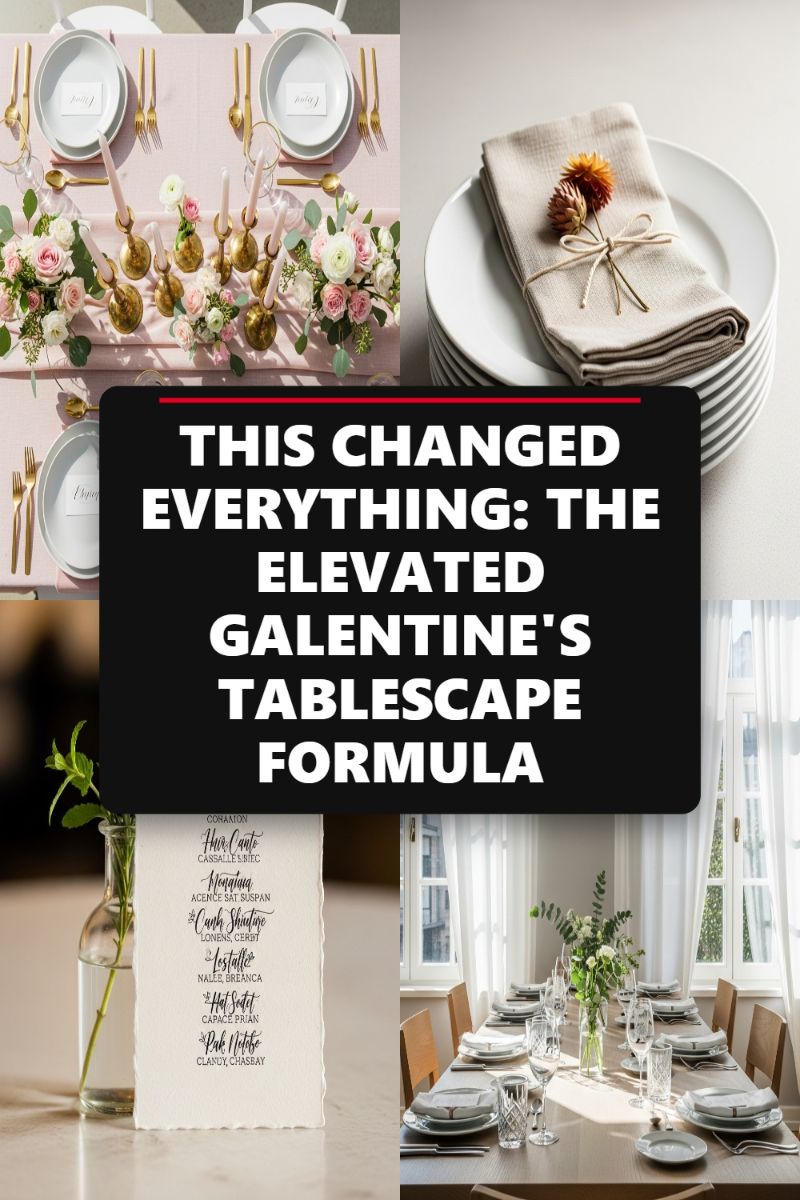
To truly elevate your Galentine’s Day gathering from tacky party to chic dinner affair, the secret lies in mastering a layered, textural formula that prioritizes sophistication over overtly thematic decor. Begin by establishing a muted, intentional color palette. Ditch the bright red and opt for shades of soft blush, creamy white, and neutral beige, anchored by pops of metallic gold. For the foundation, use a high-quality linen tablecloth or runner in soft pink, providing a gentle wash of color that feels romantic but not juvenile. The place setting should feature simple, crisp white plates—layering is key here. Introduce the gold element through flatware, selecting a contemporary or matte finish for a modern look. Crucially, replace standard cotton napkins with textured linen in a calming taupe or ecru, then bind them artfully with natural jute twine and tuck in a petite dried floral accent, adding an organic, handcrafted touch that instantly communicates luxury and attention to detail. This foundation ensures the overall aesthetic remains bright, airy, and grounded.
Next, focus on transforming the centerpiece into a curated ‘tablescape valley’ rather than a single tall arrangement. The goal is uninterrupted sightlines for conversation. Achieve this by clustering low, sculptural elements down the center of the table. Instead of massive vases, utilize several small, mismatched gold or brass bud vases and candle holders. Integrate short taper candles in muted tones (like ivory or pale pink) to introduce warmth and vertical interest. The floral arrangements themselves should be small but impactful, composed of lush, full blooms like ranunculus or garden roses in varying shades of pink and cream, interspersed with abundant greenery like eucalyptus. The repetition and scattering of these clustered elements create a dynamic, yet harmonious, flow across the table, ensuring that visual appeal is maintained from every seat. Remember that lighting is essential; the glow of the low candles combined with natural window light softens the entire environment.
The final tier of this elevated formula involves personalized, artisanal finishing touches. These small details are often the difference between a simple dinner and a memorable event. Invest in high-quality, deckle-edged paper goods for your menus or place cards. Using calligraphy or a handwritten font instantly elevates the perceived quality. Place a menu card—perhaps featuring a simple sprig of greenery tucked into the top corner—at each setting. For drinks, skip chunky glassware and opt for delicate stemmed wine glasses and cut-crystal water glasses, which reflect the candlelight beautifully. Finally, integrate subtle, unexpected elements, such as placing a single stem of fresh mint in a tiny bud vase at the corner of the table for an aromatic accent. By meticulously choosing natural textures, soft colors, and metallic accents, you construct a tablescape that feels bespoke, warm, and sophisticated—the ultimate expression of elevated minimalist entertaining.
THIS IS WHY EVERYONE IS OBSESSED WITH COASTAL MASTER BEDROOMS RIGHT NOW

To transition a bedroom into an elevated coastal minimalist retreat, begin by mastering the foundation: light and air. The key to this aesthetic is utilizing white space and natural illumination to create an immediate sense of spaciousness and calm. If you are blessed with expansive windows, maximize the view by opting for barely-there window treatments, such as sheer white linen or cotton voile curtains that diffuse sunlight without blocking it entirely. For rooms lacking a stunning ocean view, employ a strict, bright color palette—think crisp whites, pale ivory, and soft sand tones—across walls and large furnishings to simulate the brightness of a seaside setting. This aesthetic relies on quality materials over quantity; therefore, choose solid wood pieces and ensure that all textiles are high-grade, prioritizing natural fibers like organic cotton or high-thread count linen for that essential relaxed, barefoot luxury feel. The entire room should feel breathable and unfussy, setting a tone of year-round serenity that naturally lends itself to romantic relaxation.
Once the neutral canvas is set, the coastal element should be layered in using texture and subtle, muted color, avoiding anything overtly themed or kitsch. Introduce the primary accent color through the bedding, selecting a subdued, mineral-rich hue like slate blue, dusty seafoam green, or a muted terracotta. This color should mimic the natural tones found at the water’s edge and pair beautifully against stark white sheets, achieving the contrast visible in the image. Integrate natural textures generously but intentionally: replace a standard headboard with a rattan or woven design, or incorporate a comfortable, tactile element like the woven hanging chair pictured near the window. Furniture should prioritize raw, natural finishes—the light, unfinished pine dresser and wood-accented lighting fixtures are perfect examples—as these materials inherently lend an organic, beach-found quality that elevates the minimalist design without needing artificial adornment.
Finally, the true mastery of coastal minimalism lies in curated styling. Instead of decorating with numerous small items, focus on single, sculptural natural elements that draw the eye and maintain a sense of quiet sophistication. For instance, rather than a cluttered nightstand, emulate the look of the wooden dresser by featuring a beautifully shaped piece of natural driftwood or a vase holding a single, minimalist branch of greenery. Every accent piece must serve a deliberate visual or functional purpose. Lighting should be warm and ambient, utilizing woven pendant fixtures or soft floor lamps that cast a calming glow. This approach ensures the space remains a serene sanctuary—clutter-free, luxurious, and completely focused on relaxation and tranquility—making it the ideal backdrop for a romantic retreat or simply enjoying an elevated, peaceful lifestyle every day.
7 Reasons Why Galentine’s Day is Better Than Valentine’s Day (Pink Boho Edition)

While traditional Valentine’s Day decor often leans into cliché primary reds and hearts, the Galentine’s trend offers a perfect opportunity to embrace a sophisticated, elevated aesthetic that integrates seamlessly with a minimalist, boho sensibility. The key to successfully executing the “Pink Boho Edition” is focusing on muted, earthy tones—think dusty rose, blush, terracotta, and nude—paired with rich natural textures. Start by ditching shiny satin or heavy velvet in favor of woven linens, chunky knits, and raw wood elements. For a dining setting, like the one pictured, utilize a simple wooden table without a full tablecloth. Instead, layer a crinkled pink linen runner down the center to introduce color, complemented by crisp white or gray stoneware and thin, elegant gold flatware. The centerpiece should be understated: opt for tall, dried pampas grass plumes in a matte vase, flanked by thin, taper candles in soft pink or off-white. This approach provides visual softness and warmth while keeping surfaces clean and uncluttered, adhering perfectly to a minimalist ideal.
Extending the theme beyond the tablescape requires emphasizing cozy, functional areas. The minimalist boho style prioritizes comfortable gathering spaces. Take inspiration from the image’s lounge area by creating tiered seating using stacked, tufted floor cushions in varied neutral tones like cream, tan, and charcoal gray. Draping a large, cable-knit throw over an armchair or a corner of the seating arrangement instantly adds depth and a welcoming texture. This approach is highly instructional: it shows readers how to create temporary, flexible seating for entertaining without investing in bulky furniture. Furthermore, for those looking to create a statement backdrop for photos or an entryway arch, select a DIY macrame piece as the focal point, framed by an organically shaped balloon garland crafted from matte, earthy pink and peach balloons. Avoiding glossy finishes and maintaining a monochromatic color story ensures the display remains chic and avoids the childish feel of conventional party decor.
Finally, the true hallmark of elevated entertaining lies in the details, particularly food presentation. For a celebratory Galentine’s brunch, swap out heavy, ornate serving ware for simple, hand-finished wooden boards. To maintain a sophisticated aesthetic while serving sweet treats like donuts, utilize a uniform color palette—such as varying shades of pink and lavender frosting—and finish with simple, thoughtful garnishes. Edible flowers or a light dusting of white sprinkles maintain the delicate, ethereal feel established by the decor. By focusing on clean lines, natural materials, and restricting the color palette to softer, muted variations of pink, the “Pink Boho Edition” demonstrates how to successfully host an event that feels joyful and festive, yet remains entirely consistent with an elevated, minimalist lifestyle that extends far beyond the February holiday.
DIY Galentine’s Decor on a Dime: Elegant Wreaths and Cozy Settings
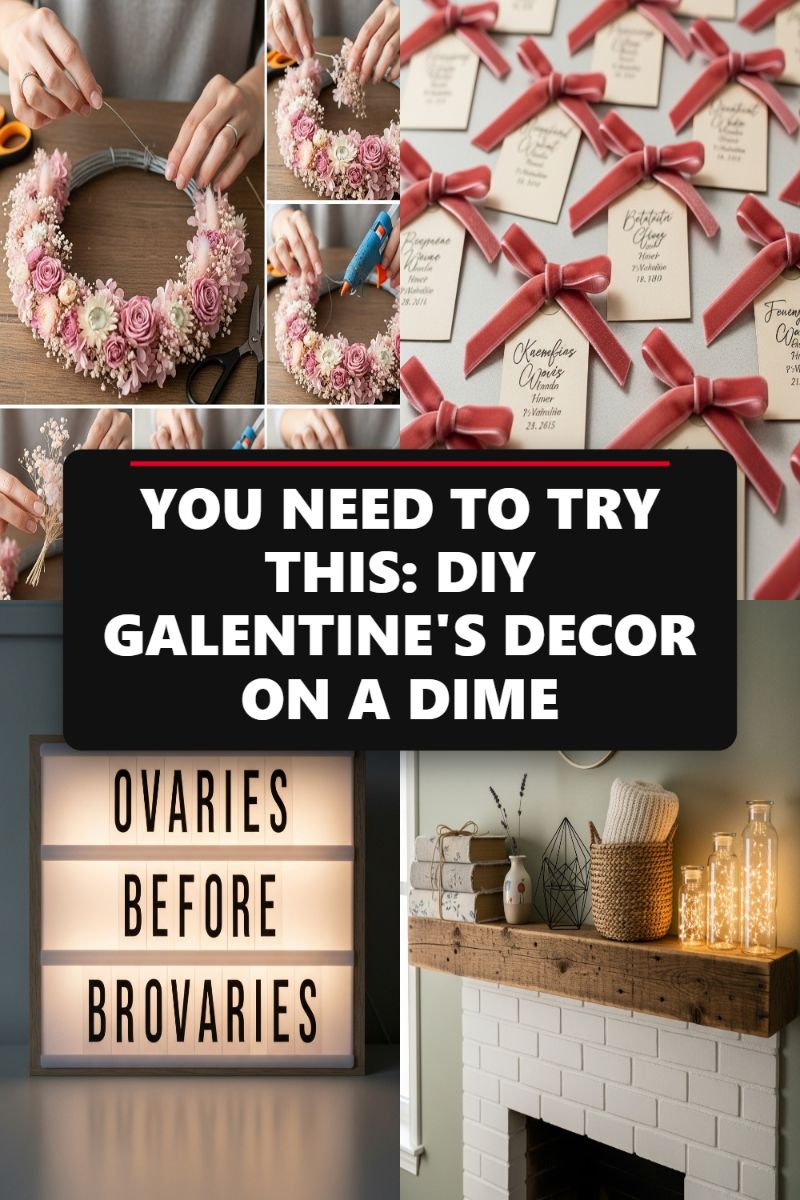
Elevating your Galentine’s Day celebration requires steering clear of standard plastic hearts and opting for enduring, texture-rich DIYs. The centerpiece of this elevated look is a preserved floral wreath, which delivers a sophisticated, long-lasting touch of pink without looking cheap. To execute this minimalist masterpiece, start with a simple wire wreath frame. Acquire high-quality preserved or dried flowers—focusing on muted, dusty colors like soft pinks, cream, and beige. Ideal selections include small clusters of dried baby’s breath (gypsophila), tiny preserved roses, and filler blossoms, as these offer delicate texture and excellent stability when glued. Expert advice suggests clustering your blooms rather than scattering them uniformly; this asymmetrical placement, as seen in the inspiration image, provides a modern, designer finish. Always utilize a low-temp glue gun to prevent damage to the delicate dried materials, working in small sections to ensure precision and a clean bond to the wire base.
To construct the wreath, begin by preparing small, dense bundles of the filler flowers, such as baby’s breath, using floral tape or fine wire to secure the stems. These initial bundles are applied first to build the foundational volume around the wire frame. Once the base is established, introduce your statement flowers—the preserved roses and larger blossoms. Instead of covering the entire ring, focus the denser floral placement on approximately two-thirds of the circle, allowing the simple wire frame to peek through in the remaining sections. This negative space is crucial for the minimalist aesthetic, preventing the piece from appearing heavy or overly cluttered. Ensure the flowers are layered, with smaller pieces tucked slightly under the larger ones, creating depth and a natural, organic flow. Once complete, this durable wreath can transition seamlessly from Valentine’s or Galentine’s decor into general spring decor, maximizing your time and investment.
True Galentine’s decor extends beyond a single DIY project; it’s about curating a cozy, celebratory atmosphere. Pair your elegant floral elements with inviting textures and subtle humor, as demonstrated by the surrounding visuals. Incorporate elements like velvet ribbon bows on place cards (using dusty rose or marsala tones) to add a luxurious tactile feel to practical details. For lighting, ditch bright overhead fixtures and rely on ambient glow: utilize glass bottles filled with micro fairy lights, which cast a warm, non-commercialized romantic radiance. Finally, integrate personalized touches like a marquee lightbox displaying playful, feminine slogans such as “Ovaries Before Brovaries.” When juxtaposed against natural materials like a reclaimed wood mantle and cozy knit throws, these elements strike the perfect balance between heartfelt humor and polished, elevated design.
DIY ROOM DECOR FOR TEENS THAT *ACTUALLY* LOOKS GOOD (MINIMALIST BOHO)
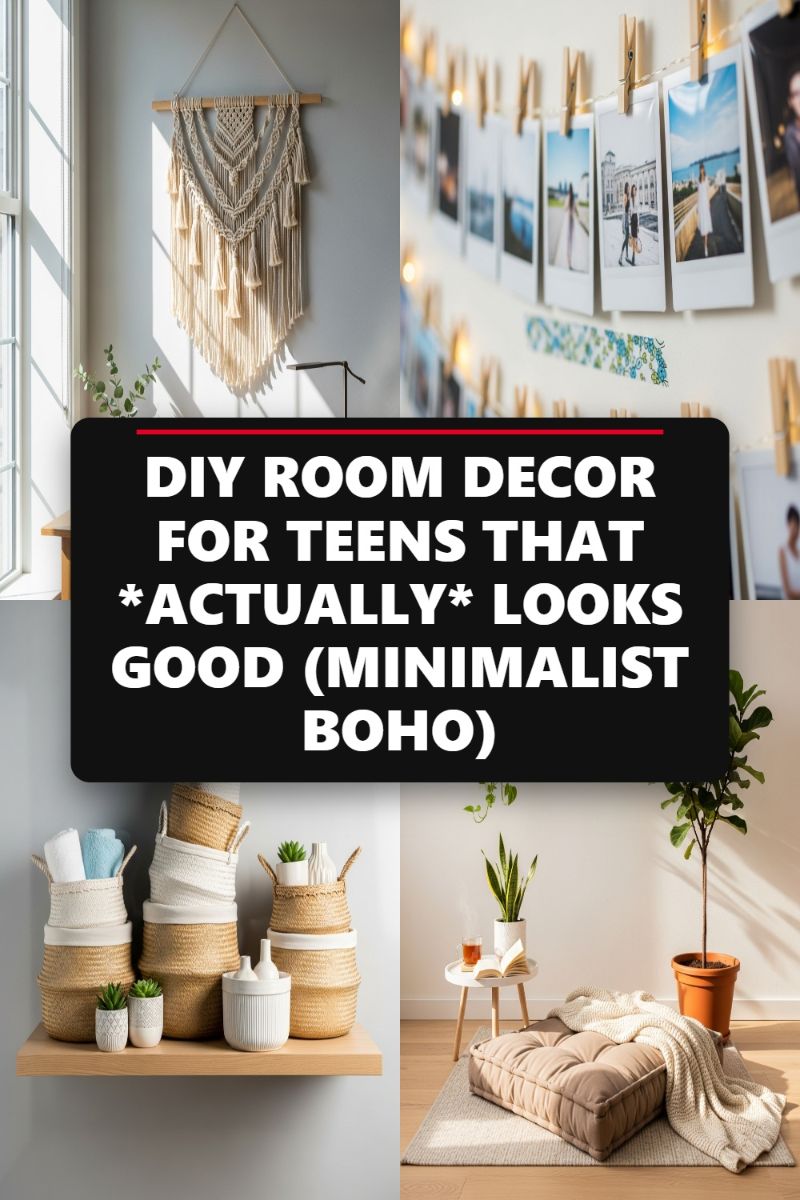
The secret to incorporating DIY elements into a minimalist space without resulting in a cluttered or juvenile look lies entirely in texture and restraint. This elevated style, often called ‘Minimalist Boho,’ focuses on natural materials, a strictly neutral palette, and handmade items that serve as true statement pieces rather than generic craft projects. To achieve the aesthetic seen here, start with substantial textile work, such as a large-scale macrame wall hanging. This piece, typically made from thick, unbleached cotton cord knotted onto a simple wooden dowel, provides immediate visual warmth and dimension against a stark wall. The neutral cream color ensures it remains sophisticated and avoids the overly busy feeling associated with traditional Bohemian clutter. When crafting or sourcing these pieces, prioritize clean, geometric patterns (like chevrons or diamonds) rather than overly intricate designs, which keeps the look aligned with the minimalist principle of simplicity.
Functionality is paramount in maintaining the ‘minimalist’ aspect of this style, particularly when dealing with teen storage needs. Implement floating shelves accessorized primarily with natural fiber storage solutions, such as stacked, nesting woven baskets made from jute or seagrass. The textural contrast between the light wood shelf and the woven containers is visually appealing, but their primary purpose is organization—they hide clutter like cosmetics, charging cables, or small school supplies. For personalized elements, ditch the tack of mismatched posters and create a curated photo memory wall. This involves using uniform, small-format prints (like Instax or faux-Polaroids) clipped with wooden clothespins to delicate string lights. The warm glow of the lights adds a crucial layer of ambiance, transforming everyday snapshots into a sophisticated, gently lit art installation that respects the clean lines of the wall space.
To complete the elevated Minimalist Boho vibe, integrate subtle, inviting elements that maximize comfort without sacrificing floor space. Low-profile floor cushions, particularly those with deep tufting in linen or cotton canvas, offer flexible seating for reading or socializing. Pair these with a simple, round side table—preferably one with light wood legs—to hold essentials like a book or a cup of tea. Finally, use strategically placed greenery to inject life and a pop of organic color. Choose low-maintenance, tall-reaching plants (such as a Fiddle Leaf Fig or Snake Plant) housed in simple terracotta or white ceramic planters. This careful curation ensures that even the most personalized DIY space feels cohesive, mature, and perfectly aligned with a clean, contemporary aesthetic, proving that DIY doesn’t have to mean downgraded decor.
IS THE BLANKET LADDER TREND OVER? 5 WAYS TO USE YOURS LIKE A PRO
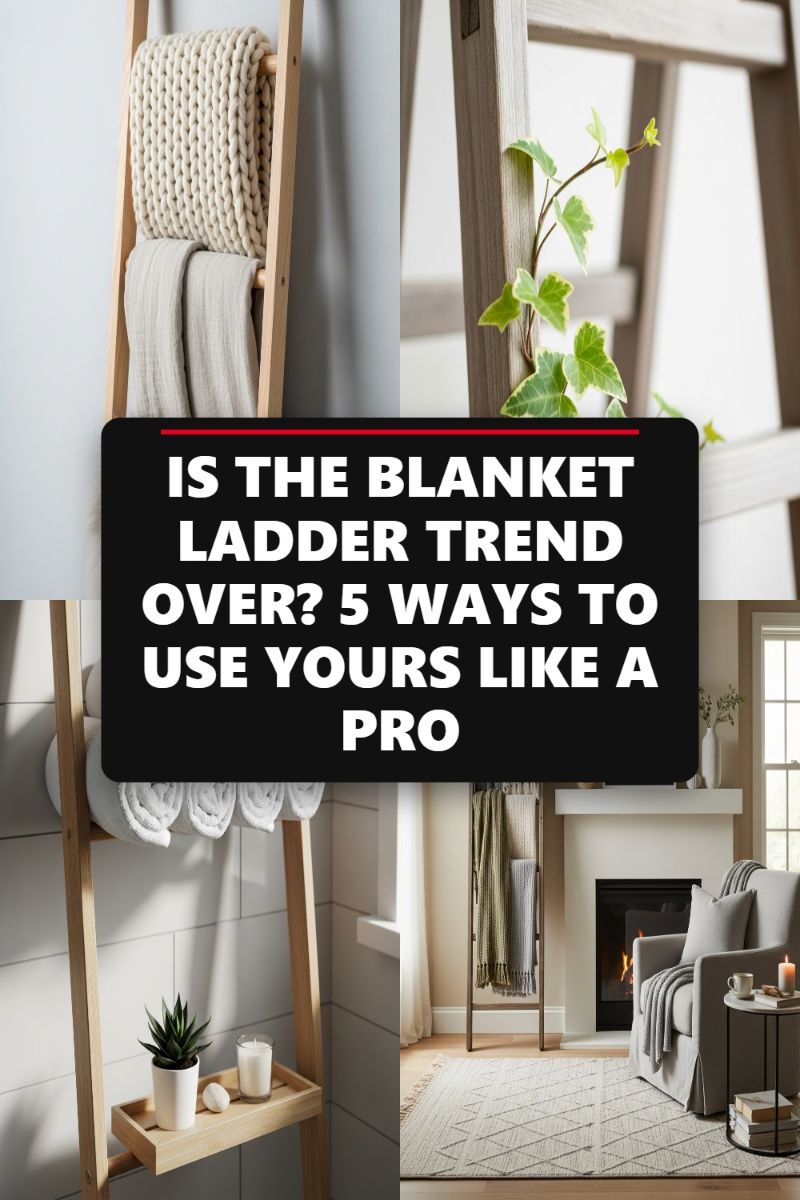
While the ubiquitous blanket ladder might feel like a decor trend that peaked several seasons ago, this versatile vertical storage piece is far from obsolete. Its minimalist structure and ability to use height make it an essential tool for elevated decor, especially when space is at a premium. To use yours like a professional stylist, focus on curated texture and strategic placement. Traditionally, the ladder serves as a functional display for throws in a living area, as seen tucked near a cozy fireplace. When styling blankets, resist the urge to simply drape them; instead, fold one throw neatly to anchor the top rung and loosely fold a second, contrasting throw underneath, allowing the texture (like a chunky knit or fringe) to be the star. The key to keeping this look modern is maintaining a neutral, sophisticated palette—think charcoal gray, rich oatmeal, slate blue, or sage green—ensuring the item contributes to a calm, uncluttered atmosphere rather than acting as a textile catch-all.
To truly elevate the blanket ladder beyond its intended purpose, integrate it into functional areas that require vertical organization. The simple A-frame structure makes it perfect for the bathroom, transforming from a blanket holder into a chic spa-towel rack. For this application, roll your towels tightly and tuck 3-4 rolls neatly onto a lower rung. Further enhance the functionality by adding custom wooden trays or baskets that rest on the rungs, creating tiered display shelves for items like succulents, artisanal soaps, or scented candles—a perfect way to incorporate subtle aromatherapy and greenery into your routine. This repurposing is especially effective in minimalist bathrooms where wall space for traditional shelving is limited, providing necessary storage without visual bulk.
Finally, the ultimate way to use a blanket ladder like a pro is to shift its function entirely from utility to pure sculpture. In a truly minimalist space, a ladder can stand empty, becoming an architectural element itself, particularly if the wood is uniquely stained or the structure is made of interesting material like black metal or weathered teak. For a softer, biophilic touch, take inspiration from the imagery and weave a trailing faux or real houseplant, such as ivy or string of pearls, through the upper rungs. This turns the functional item into a permanent, vertical focal point that brings life and movement into the room. Whether used in a bedroom to display scarves and jewelry, in a laundry room for drying delicates, or as a sophisticated trellis, the blanket ladder remains a powerhouse of minimalist design—provided you focus on quality materials and intentional styling.
THIS IS HOW VIRAL KITCHEN COUNTER CORNERS GET THAT COZY, SUNNY LOOK
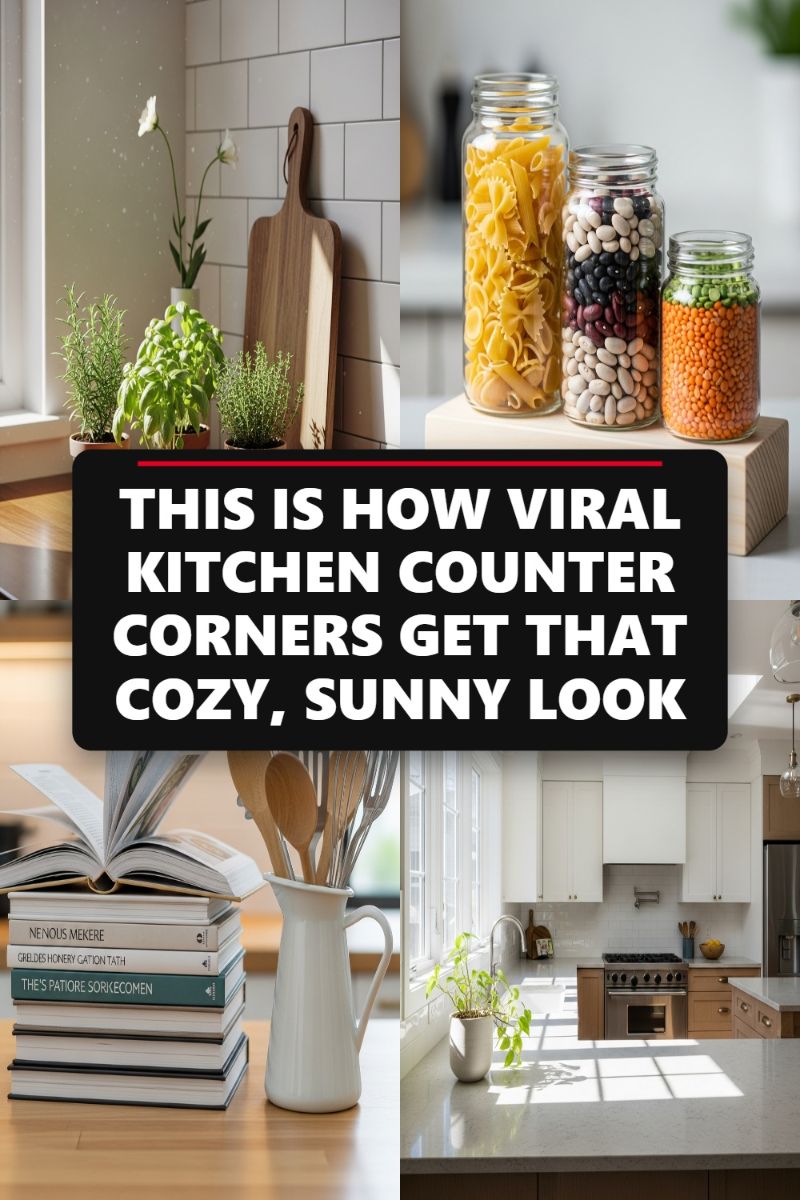
The secret to achieving this highly coveted, airy kitchen aesthetic lies in the strategic manipulation of light, texture, and functional greenery. To replicate the ‘cozy, sunny look,’ begin by maximizing natural light exposure. If your kitchen utilizes light, neutral elements—such as white subway tile backsplashes, light gray countertops, or white cabinetry—the sun’s rays will bounce and diffuse, instantly enlarging the space and creating those bright, inviting high-contrast shadows seen in the images. Introduce layered, tactile elements to avoid sterility; a sturdy wooden cutting board leaning vertically against the wall not only saves space but adds a critical warm, organic counterpoint to the clean tile. Finally, elevate the corner by incorporating living elements. A trio of potted herbs, such as rosemary, basil, and thyme, serves a dual purpose: they add immediate vibrant color and texture, making the space feel alive, while providing fresh ingredients just steps away from your prep area. Look for simple terra cotta or neutral ceramic pots to keep the visual language consistent and minimalist.
Achieving kitchen minimalism doesn’t mean hiding every item; rather, it requires embracing ‘decanted display’—making everyday necessities part of the decor through uniformity and intention. Focus on clear, vertically oriented storage, as seen with the layered glass jars. By transferring pantry staples like pasta, beans, or lentils into matching glass containers, you reduce the visual noise of mismatched packaging while simultaneously transforming the varied colors and textures of the ingredients into natural art. This method is aesthetically superior and highly efficient, as you can instantly inventory your stock. Continue this organized vertical stacking with accessories like cookbooks. Select books with neutral or complementary spine colors, stacking them neatly with an open recipe book on top to suggest culinary activity. This verticality is key to keeping the majority of your valuable counter space clear while maintaining visual interest and height variation.
To ensure the look remains elevated and timeless, the principle of ‘functional beauty’ must guide your curation. Every displayed item should ideally serve a purpose, eliminating the need for purely decorative clutter. For instance, the white ceramic pitcher filled with wooden spoons and silver utensils is both a practical storage solution for cooking tools and a grounding visual element that adds clean, structured height. When styling your window area, ensure your chosen plant (perhaps a trailing ivy or small succulent) complements the light conditions while sitting in a simple, heavy pot that anchors the corner. By selecting high-quality, durable materials—natural wood, thick glass, and ceramic—you create a resilient foundation that transcends fleeting trends. This foundational, clean look allows for effortless seasonal shifts (like adding a single, pale pink rose for Valentine’s Day) without requiring a complete overhaul of your design.
I FOUND THE SECRET TO PERFECT DIY BOHO DECOR (YOU’LL SAVE THOUSANDS)
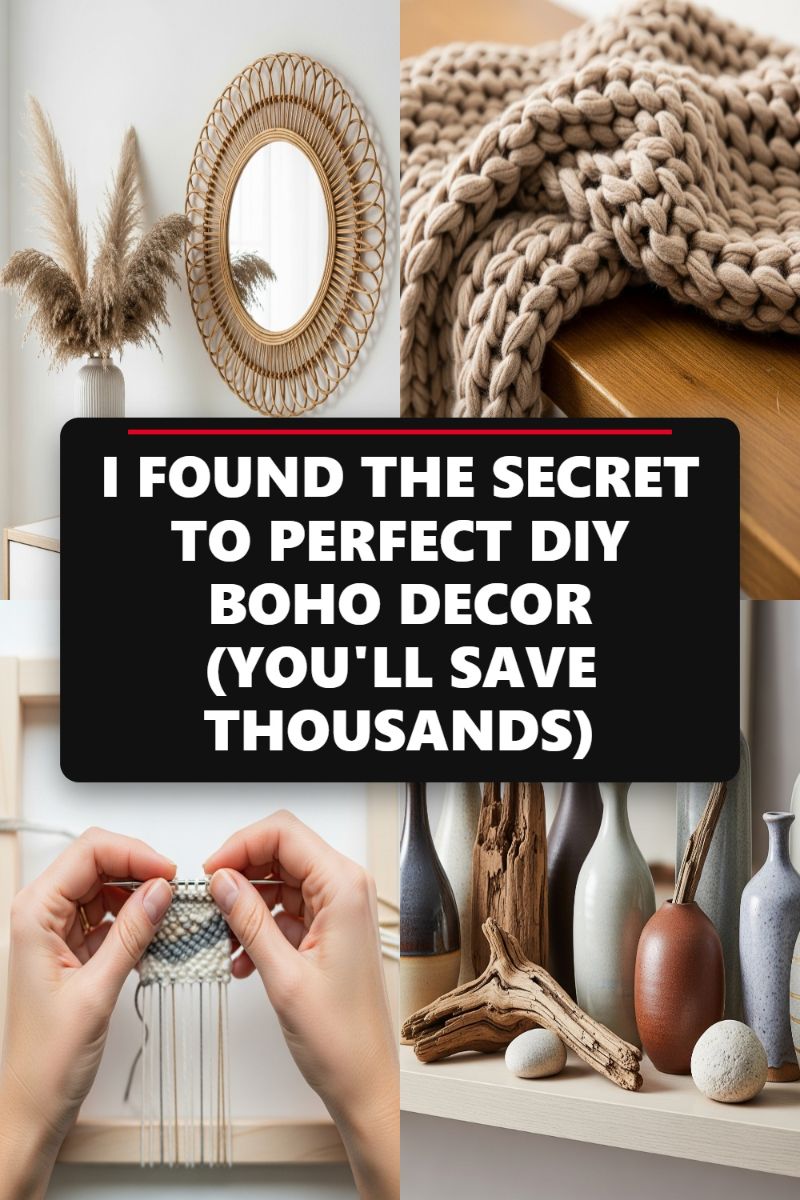
The true secret to elevating budget-friendly DIY boho decor beyond the typical collegiate aesthetic and into a high-end minimalist sphere lies in strategic material choice and texture density. The goal is to maximize visual warmth and complexity while strictly adhering to a neutral, monochromatic palette—a concept we term ‘Minimalist Maximalism’ in texture. To begin, focus your efforts on substantial textile projects. The chunky knit blanket, prominently featured, is an excellent candidate for this approach. By sourcing inexpensive, super-thick roving yarn or arm-knitting with bulky chenille, you can replicate this expensive, high-impact textile in just a few hours. This single DIY piece introduces significant hygge appeal and anchors the room, immediately setting a tone of casual luxury. When DIYing, always opt for matte finishes, organic shapes, and natural tones like raw linen, terra cotta, bone white, or taupe, ensuring every handmade piece integrates seamlessly rather than fighting for attention.
Once the foundational textiles are established, shift focus to smaller, highly curated elements that showcase craftsmanship. The image depicts small-scale weaving—a perfect opportunity to create unique wall hangings or decorative mats that introduce subtle pattern without overwhelming the space. Instructional focus here should be on warp tension and fiber selection; use undyed cotton or wool yarn, varying the thickness within the piece to create sophisticated textural contrast. For the styled shelves, the key is curation, not collection. Aim to recreate the organic, found-object aesthetic by displaying objects in groupings of odd numbers. Contrast the smoothness of ceramics and river stones with the roughness of driftwood or dried grasses (such as pampas). When choosing vessels, look for minimalist forms in matte glazes or raw clay finishes, ensuring that the height and shape variations create visual rhythm across the shelf, preventing a cluttered look that undermines the minimalist ethos.
To ensure these layered textures do not devolve into clutter, always introduce strong, clean architectural elements. The rattan mirror, a classic DIY material, serves as a crucial balancing agent. While the material is inherently natural and textured, its function as a reflective surface provides necessary negative space and bounces light, preventing the neutral tones from falling flat. When designing and placing these handmade decor pieces, remember that every item must earn its place by either serving a function or adding essential texture. Expert advice dictates creating focal points—allow the chunky blanket to drape carelessly on a simple wooden bench, or place the woven art next to a large expanse of white wall. By prioritizing scale, raw materials, and strategic placement, your DIY efforts will not only save thousands but will also achieve that elevated, layered aesthetic that defines sophisticated minimalist design.
9 WAYS TO INSTANTLY MAKE YOUR HOME FEEL LIKE A LUXURY SUMMER RETREAT

The secret to transforming a domestic space into a luxury retreat lies not in grand, dramatic gestures, but in elevated, sensory minimalism—a principle that serves beautifully for creating subtle romance for occasions like Valentine’s Day and maintaining serenity year-round. Start by prioritizing texture over color. As demonstrated by the pristine, light-filled living area, choosing a foundational palette of creams, bleached woods, and soft grays instantly opens up a room and provides a sophisticated backdrop. Invest in high-quality, slipcovered linen or cotton seating, which offers a casual yet undeniably luxe feel. Layering is key: incorporate textural accents like natural jute rugs, chunky woven blankets, and subtly patterned pillows (think tone-on-tone stripes or subtle ribbing) stored in organic woven baskets. This approach minimizes visual noise while maximizing tactile comfort, ensuring the space feels both clean and deeply inviting, moving far beyond the realm of ‘tacky’ seasonal decor.
To truly capture the essence of a tranquil retreat, focus intensely on light and natural elements. Sheer, flowing window treatments are essential; they diffuse direct sunlight into a soft, ethereal glow, instantly softening the architectural lines of the room. Introduce fresh greenery strategically. Rather than using large, demanding floral displays, opt for substantial single plants, such as a tall fiddle leaf fig, or delicate arrangements of monochrome botanicals like the lime-green hydrangeas shown. Place these in simple glass or ceramic vases that let the natural beauty of the plant take center stage. This technique harnesses the revitalizing power of nature without introducing clutter, making it the perfect elevated touch for a minimalist setting—offering life and vibrancy that lasts well beyond any holiday.
Finally, extend the sense of luxury outdoors, or at least acknowledge the transition space. Even a small balcony or patio can become a private sanctuary with minimalist staging. Use comfortable, durable seating paired with simple wooden side tables, ensuring cushions are kept in neutral, weather-resistant fabrics. The ultimate tool for establishing a retreat atmosphere is ambient lighting. String simple, warm-toned festoon lights (bistro lights) overhead to create a soft, flattering glow for evening use. This simple addition transforms the exterior into a defined destination—a perfect spot for a quiet, elevated evening celebration. By focusing on these tactile materials, diffused light, and intentional botanical placement, you establish a permanent sense of tranquil luxury that requires minimal effort to adapt for any occasion.
10 COTTAGECORE DECOR SECRETS TO MAKE YOUR HOME FEEL LIKE A FAIRYTALE
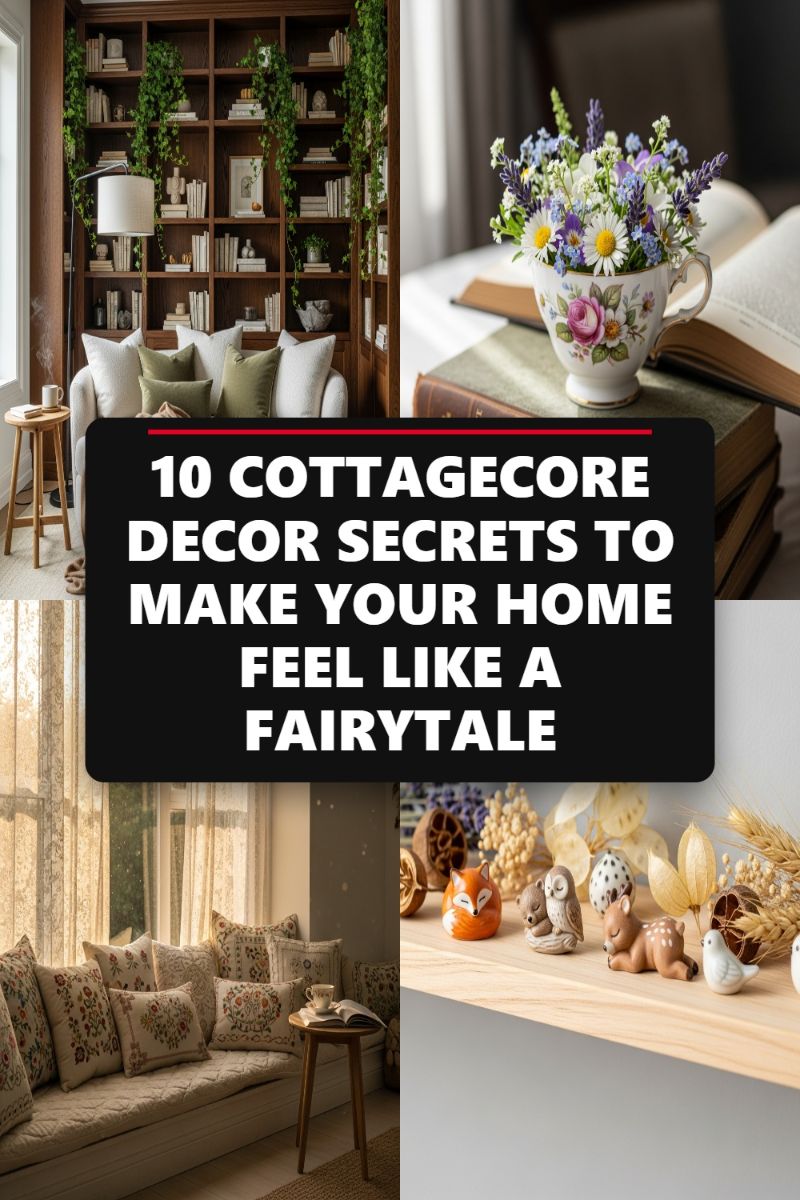
While Cottagecore often embraces maximalism—piles of vintage books, layers of floral patterns, and collections of charming clutter—its true secret lies in creating an environment that feels deeply rooted, natural, and utterly comforting. To translate this aesthetic into an elevated, minimalist setting, the focus must shift from quantity to highly curated, high-quality natural elements. Begin by grounding your space with rich, deep wood tones, reminiscent of the built-in bookshelves pictured above. Instead of filling every shelf with objects, strategically incorporate vertical greenery. Choose one or two long, trailing plants, such as Pothos or English Ivy, allowing them to cascade down the shelving units. This brings the crucial element of life and softness into the room while maintaining clean lines. Complement these natural accents with highly textured, neutral seating—think a crisp white linen sofa accented only by two or three high-end throw pillows in deep olive, sage, or cream. The use of natural light, diffused through gauzy, sheer curtains, is paramount; this golden hour glow instantly imbues the space with that desired whimsical, fairytale ambiance.
To capture the romantic nostalgia visible in the detail shots, integrate unexpected, refined vintage accents. Instead of purchasing an expensive, elaborate bouquet, gather wild-looking florals (daisies, lavender, sprigs of rosemary) and arrange them artfully in a single, beautiful vintage teacup or a small, weighty ceramic pitcher. This approach utilizes everyday objects as functional art, making the floral arrangement feel intentional and organic rather than overwhelming. The literary element, central to both dark academia and cottagecore, should be achieved by curating a small stack of beautiful, leather-bound or textured books—used as a pedestal for your floral accent, or simply displayed spine-out. This minimizes the visual noise of a large collection while emphasizing the tactile beauty and history of the objects themselves. This technique provides the feeling of a cozy reading nook without requiring expansive libraries or excessive volumes.
Finally, introduce the element of refined whimsy seen in the use of small woodland figures, ensuring they are executed with the restraint required for elevated minimalism. Ditch plastic or overly painted novelty items and invest in a single, high-quality ceramic or hand-carved figurine—a resting fawn, a stylized fox, or an abstract ceramic mushroom. Place this singular item on a simple floating wood shelf alongside dried organic materials, such as bleached wheat stalks, preserved lunaria (silver dollar), or textured pods. This creates a tiny, delicate nature vignette that serves as a quiet focal point, rather than a busy collection. The principle is simple: use natural materials, muted earth tones, and focus on superior craftsmanship. By limiting pattern intensity and prioritizing texture and organic shapes, you distill the essence of the fairytale into a sophisticated, highly livable interior design statement.
NO BUDGET? TRY THESE 5 DIY VALENTINE’S DECOR IDEAS THAT LOOK EXPENSIVE
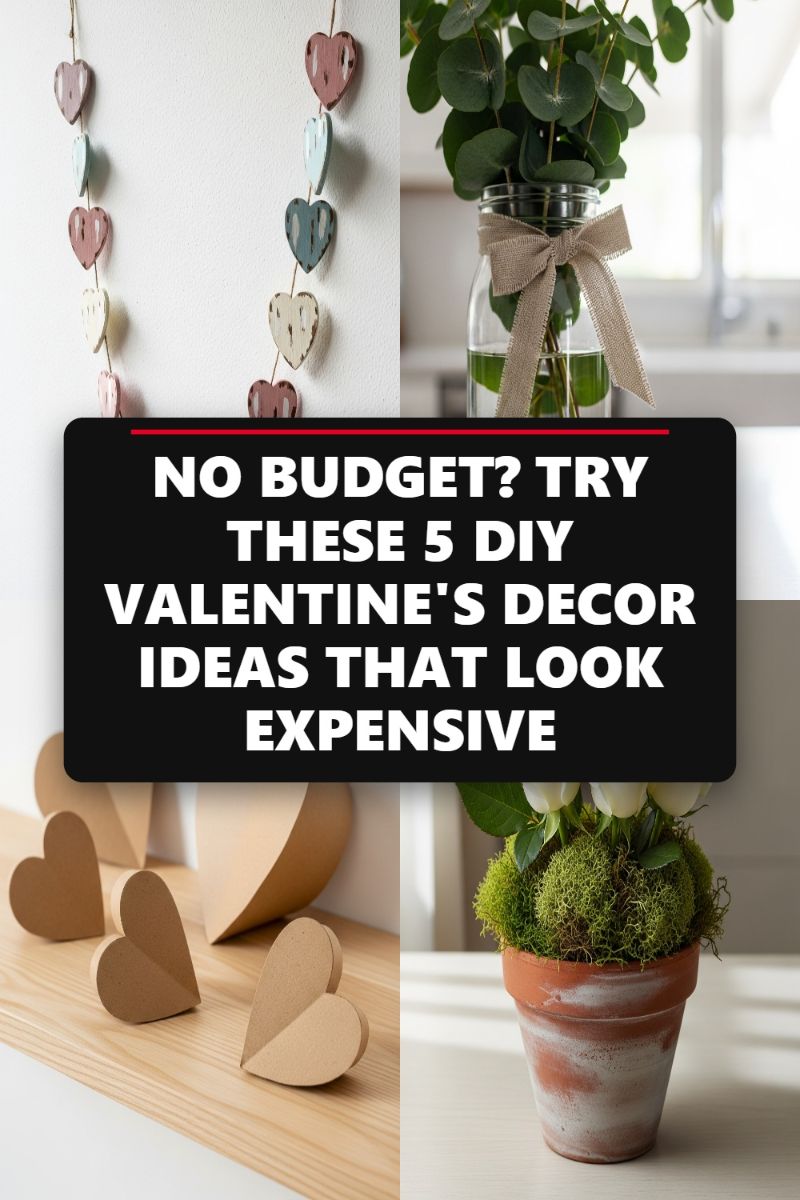
Achieving an elevated, expensive look for Valentine’s Day doesn’t require high-end store purchases; it requires an intentional focus on texture, muted color palettes, and natural materials. The key principle here is ditching glossy, mass-produced plastic elements in favor of tactile items like wood, paper, glass, and burlap. Start by creating an elegant centerpiece with an upcycled glass jar. Select a clean jar (mason or pickle jar works well) and fill it with fresh eucalyptus branches, which offer a beautiful, long-lasting sage green that complements minimalist spaces. Instead of using shiny satin ribbon, tie a large, structured bow around the neck using natural jute twine or rough burlap ribbon. This immediately adds organic texture and grounds the piece, transforming a simple bouquet into a sophisticated rustic arrangement. Similarly, if creating a garland, opt for natural materials: paint small wooden hearts (or cut them from thin MDF) using chalk paint in muted shades of blush, pale sage, and ivory. Once dry, lightly distress the edges with fine-grit sandpaper. This technique mimics the look of vintage, well-loved pieces, avoiding the cheap, overly saturated effect of standard craft paint.
To create truly sculptural accents that feel architectural rather than cutesy, focus on 3D paper crafts and structured botanicals. For the 3D hearts shown, use high-quality, thick cardstock or kraft paper in a matte brown or taupe. Cut out two identical heart shapes for each piece, score them perfectly down the middle, and glue the backs together while leaving the outer edges slightly open, allowing them to stand upright. Arranging these simple, monolithic shapes in a cluster on a mantle or shelf adds depth and a professional, store-bought feel. For tabletop florals, avoid loose bouquets that can look messy. Instead, opt for a moss topiary arrangement. Begin with a distressed terracotta pot—if yours is new, quickly whitewash it with diluted white paint and wipe away the excess for a lovely aged look. Secure white roses (or high-quality faux roses) into a floral foam sphere and cover the exposed foam completely with preserved sheet moss, using hot glue to create a lush, velvety surface. This structured approach makes the entire piece feel tailored and substantial.
The secret to making these low-cost DIY projects look expensive lies in curation and restraint. Avoid mixing more than three different materials in one display, and maintain a consistent color story rooted in neutrals and gentle pastels (blush, terracotta, cream, sage). Expert advice suggests focusing heavily on texture—the rough weave of the burlap next to the smooth glass, or the jagged edges of the distressed wood against a stark white wall. Finally, placement matters: arrange these items in asymmetrical groupings, allowing ample negative space around them. This technique ensures that each handmade piece reads as an intentional piece of decor rather than cluttered craft work, maintaining the sleek, elevated aesthetic your minimalist home demands.
ST. PATRICK’S DECOR THAT FEELS CHIC, NOT CHEESY (AESTHETIC GREENERY)
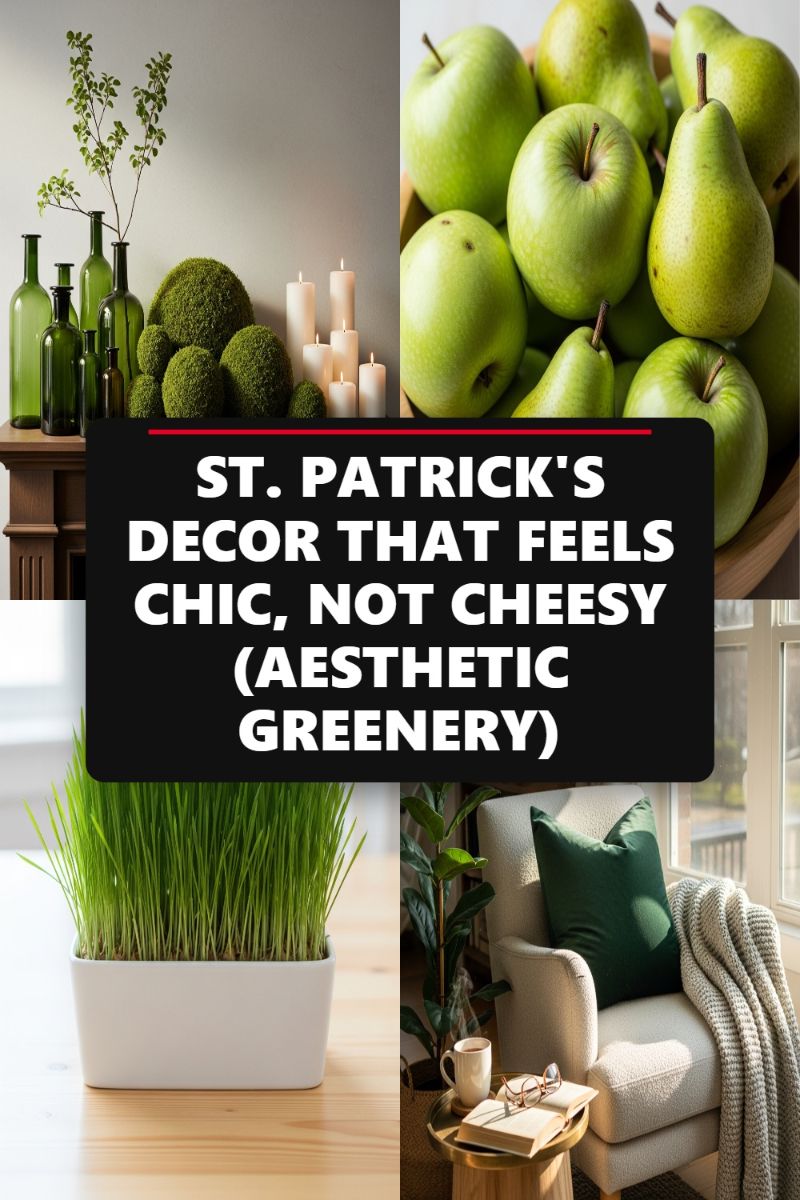
Transitioning from the deep reds of Valentine’s Day to the vibrant greens of spring and St. Patrick’s Day offers an opportunity to refresh your space with elevated, minimalist color accents that feel grounding and sophisticated. The key to achieving ‘chic’ greenery, as opposed to ‘cheesy’ novelty decor, is prioritizing natural textures, varying shades of green, and sculptural simplicity. Rather than leaning on overt symbols like printed shamrocks, focus on incorporating deep emerald, soothing sage, and vibrant lime tones through textiles, living plants, and unique vessel pairings. To create a captivating vignette, emulate the mantel setup shown: gather objects of varying heights, such as dark green glass bottles (apothecary jars or recycled wine bottles), and pair them with textural elements like white pillar candles and preserved moss balls. The juxtaposition of smooth glass, flickering candlelight, and organic, fuzzy moss creates depth and visual interest without relying on clutter. This arrangement keeps the aesthetic refined and ensures the green accents serve as architectural features that can remain stylish long after March is over.
For temporary, high-impact centerpieces, utilize natural edible elements that are inherently simple and stylish. Skip the dyed foods and focus instead on the natural beauty of green fruits. A large, shallow wooden bowl filled to the brim with bright Granny Smith apples and chartreuse pears instantly adds a refreshing pop of color to a kitchen island or dining table. This method is the epitome of minimalist decor: functional, seasonal, and effortlessly vibrant. Similarly, incorporating freshly sprouted wheatgrass or oat grass in stark white rectangular planters provides a clean, modern line (as seen in the bottom left visual). Growing this type of lush grass is an easy, affordable DIY project that provides an intensely saturated color block that contrasts beautifully with neutral wood or white surfaces, evoking the feeling of a fresh spring lawn indoors without the fuss of complex floral arrangements.
Finally, make strategic textile swaps to integrate green into your long-term decor strategy. The most enduring way to introduce seasonal color is through permanent or semi-permanent soft furnishings. Anchor a neutral reading nook or seating area with one key piece, such as a rich velvet throw pillow in forest or emerald green, paired with a warm, textured neutral blanket. When incorporating living houseplants, choose varieties known for their architectural silhouettes and deep green foliage, like a Fiddle Leaf Fig or a snake plant, placed in understated ceramic planters. These elements work year-round, adding necessary saturation and visual weight to minimalist spaces. By focusing on texture and material—think green glassware, brass accents, lush velvet, and natural wood—your nod to seasonal color remains elegant, intentional, and perfectly integrated into a high-end, contemporary home aesthetic.
THIS VIRAL EASTER FRONT PORCH IDEA IS PURE COTTAGECORE MAGIC
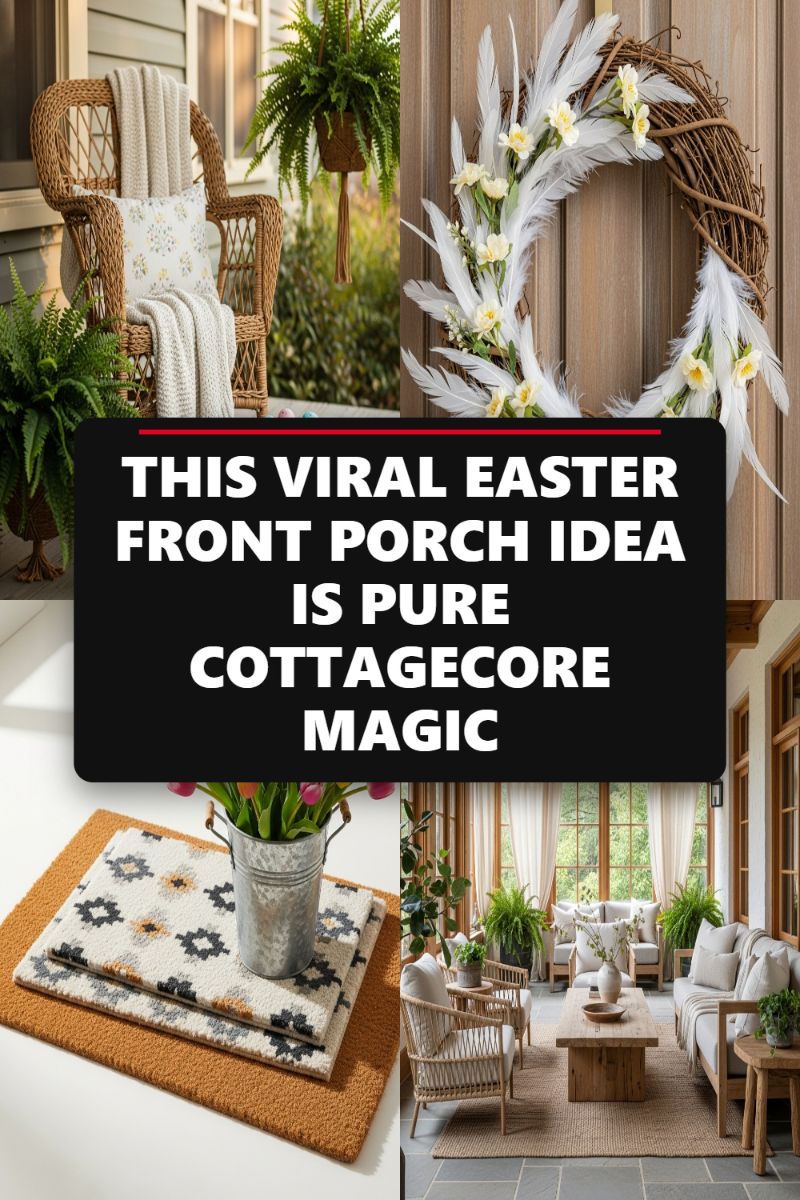
To transition the inherently cozy and rustic ‘cottagecore’ aesthetic into an elevated, minimalist year-round look—perfect for celebrating intimate holidays like Valentine’s Day or simply welcoming spring—the focus must shift from kitsch to curated texture. Begin by establishing a strong foundation built on natural, light-filled materials. As demonstrated in the image, furniture pieces should emphasize organic fibers like rattan, wicker, and light-toned unfinished wood. These materials offer sculptural interest and warmth without requiring heavy ornamentation. Expertly anchor your space, whether a covered porch or a sunroom, with a large natural fiber rug, such as jute or sisal. This crucial layering element defines the area, absorbs light, and grounds the furniture, creating a sense of resort-like serenity. Maintain a strictly neutral palette for permanent textiles—think white or cream slipcovers, linen cushions, and chunky knit throws. This intentional restraint prevents the abundant textures from feeling chaotic, ensuring the overall look remains elevated and easy to adapt seasonally.
Next, elevate your entryway or front door with mindful, layered accents that celebrate nature without being overtly thematic. The key to successful minimalist holiday decorating is using subtle, sculptural pieces rather than mass-produced figurines. For the front door, replace high-color plastic wreaths with a simple, sophisticated grapevine wreath. Adorn it minimally with natural elements like white feathers or sparse, pale faux florals (such as narcissus or white hellebores), capturing the ethereal quality of early spring while avoiding visual noise. Similarly, transform the welcoming mat area by using the technique of layered rugs. Start with a solid, rust-toned coir mat for functionality, and top it with a smaller, patterned rug featuring muted geometric designs in black, cream, and soft gold. This pairing adds depth and high-end detailing. Use metal or ceramic containers (like the galvanized bucket shown) for small seasonal plantings, such as early tulips or paperwhites, rather than highly colored plastic pots, ensuring a rustic yet refined finish.
Finally, the true essence of cottagecore magic, when filtered through a minimalist lens, lies in the strategic use of living greenery. Potted plants act as natural architectural features and are essential for softening the rigid lines of modern furniture and windows. Incorporate large, lush ferns, sprawling ivies, or small trees in simple black or terracotta planters to bring life and structure indoors or onto your porch. Unlike cluttered cottage styles, focus on a few generously sized, healthy plants rather than dozens of small ones. Position seating arrangements to maximize natural light and views of the greenery, fostering a calming, biophilic environment. By focusing on texture, natural light, and intentional, living décor—and ditching high-contrast colors and overt holiday symbols—you achieve a timeless, elegant space that feels welcoming and seasonally appropriate, moving far beyond fleeting trends.
THE ONLY “BABY IN BLOOM” SHOWER DECOR YOU’LL EVER NEED (ULTRA AESTHETIC)
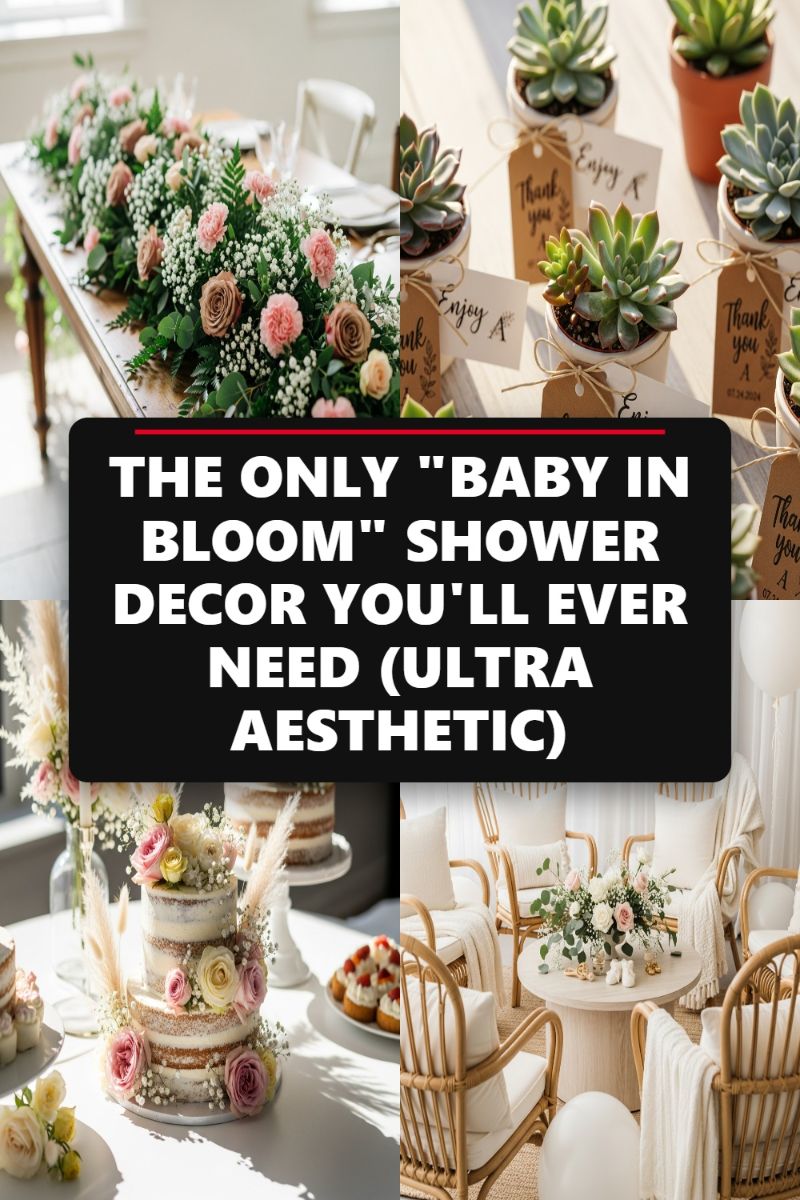
To achieve this ultra-aesthetic, elevated ‘In Bloom’ decor, the key lies in mastering the balance between organic lushness and restrained, neutral luxury. Start by establishing a sophisticated foundational palette dominated by whites, creams, natural woods, and rattan—this eliminates any risk of a childish or tacky appearance. The seating area exemplifies this perfectly: opt for woven or cane furniture paired with crisp white linens and plush textured throws, prioritizing comfort and tactile appeal. Instead of bright, contrasting hues, introduce color through soft floral elements like dusty blush, mauve, and cream roses. The ultimate goal is to create a setting that feels light, airy, and inherently romantic, making this look easily adaptable from a baby shower celebration to an elegant engagement party or a sophisticated Valentine’s Day gathering. The decor should feel curated, not collected, allowing ample natural light to accentuate the textures.
Central to this aesthetic is the integration of abundant, yet intentionally unstructured, floral arrangements. Ditch small, rigid bouquets in favor of a sprawling table runner garland, as seen on the main dining table. This garland should feature a mix of high-end blooms (like open garden roses in muted tones) interspersed generously with volume-building fillers like baby’s breath and abundant greenery, such as eucalyptus or ferns. This design choice visually lengthens the table and draws the eye without disrupting sightlines. Furthermore, embrace dried florals, a hallmark of modern minimalist decor. Integrate elements like wispy pampas grass into your dessert display, using them to frame a sophisticated ‘naked’ tiered cake. The less-is-more approach to the cake itself—minimal frosting combined with fresh florals—reinforces the natural, unfussy theme. Extend this living element to favors by gifting small succulents, tied with a simple twine tag, which serves the dual purpose of table decor and a memorable takeaway.
For a truly top-tier presentation, pay close attention to the smaller, functional details. Ensure all serving ware and dessert pedestals maintain the clean, white standard of the surrounding decor, allowing the desserts themselves to shine as artful elements. The seating area should not just look beautiful, but invite conversation. Style the low coffee table with a single, small centerpiece that echoes the main garland’s color scheme, perhaps featuring a blend of roses and greenery nestled around subtle, themed accents (like decorative wooden objects or curated candles). Finally, always prioritize natural materials; the warmth of the wood table and the tactile finish of the woven furniture provide necessary contrast against the soft white textiles and delicate flowers. This layered approach ensures the entire space feels deeply organic, effortlessly elegant, and achieves that sought-after “ultra-aesthetic” quality.