
Get the ultimate nail design bible! Explore 100+ top trends, styles, and DIY hacks for every season—from spring pastels and summer brights to festive holiday nails. Your perfect mani starts here.
12 Regal Purple Nail Inspiration
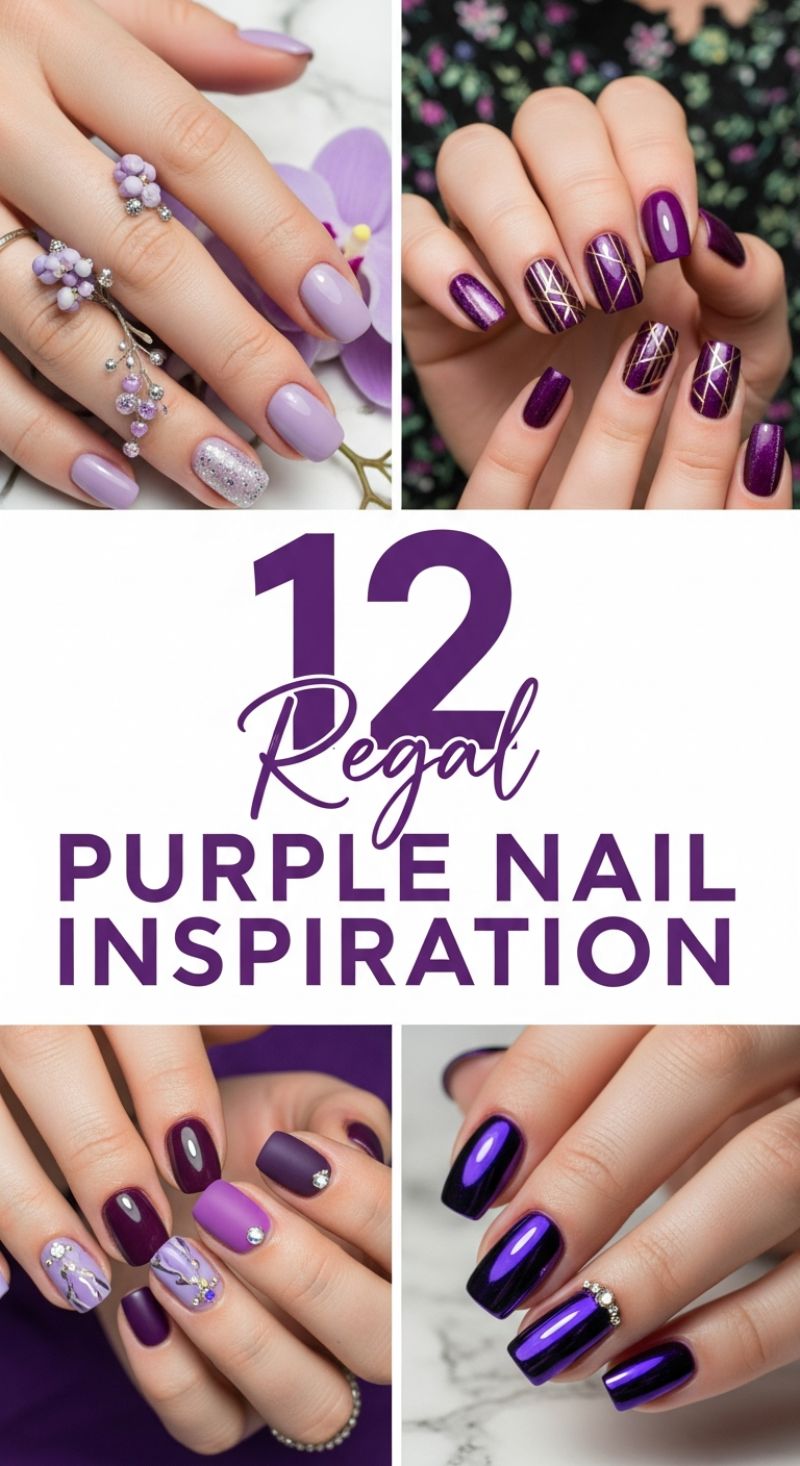
Purple, the color historically associated with royalty and luxury, offers an incredible spectrum for sophisticated nail artistry. To achieve a truly regal manicure, mastering the art of shade variation and mixing textures is essential. Start by selecting three distinct shades of purple, ranging from light lilac and medium amethyst to deep eggplant or plum. As demonstrated in the collection, combining a soft, creamy lavender with a complementary silver or holographic glitter accent nail creates an elegant, balanced look perfect for daytime chic. When integrating multiple colors, ensure continuity by using a similar tone base (e.g., all cool-toned purples) or by repeating one element across multiple nails, such as a matte finish or a strategic sparkle placement. For DIY enthusiasts, creating a feature nail using a wet-on-wet technique to blend two purples (like the sophisticated swirls seen in the lower left image) provides dynamic depth, which can be further enhanced with small, precise silver rhinestones placed along the pattern lines.
For high-impact, avant-garde styles, focus on intense finishes and precise geometric designs. The deep, shimmering manicures featuring sharp, metallic gold striping (top right) are achieved using thin nail art tape or a fine detail brush applied over a fully cured dark purple polish. To replicate this look, ensure the base coat is perfectly smooth before laying down the tape in desired diagonal or grid patterns. Seal the design meticulously with a high-shine topcoat to prevent lifting. Alternatively, for unparalleled shine and drama, embrace the mirror effect demonstrated by the brilliant, metallic violet set (bottom right). This striking “chrome” finish requires applying specialized chrome powder over a cured, no-wipe gel topcoat that has been placed over a dark base (often black or a very deep purple) to make the reflective pigment pop. The resulting mirror finish, often adorned with a simple row of high-quality rhinestones near the cuticle, elevates the design instantly, embodying true royal opulence.
Beyond polish application, strategic embellishments are key to achieving a “regal” feel. When applying rhinestones, opt for small, multifaceted crystals in clear, silver, or light amethyst hues for maximum reflective impact without overwhelming the design. Proper adhesion is critical; use a tiny dot of specialized jewelry glue or a thick builder gel to secure stones firmly before sealing the entire nail with a topcoat, carefully capping the free edge. For longer wear and a professional finish, always prepare the nail bed thoroughly and use high-quality topcoats, especially over matte or chrome surfaces, as these finishes can be prone to chipping if not sealed correctly. By thoughtfully combining different purples, integrating metallic accents, and utilizing textured finishes like matte and high-gloss, you can easily replicate these inspiring looks and bring a touch of aristocratic elegance to your manicure.
7 Chic STILETTO NAILS
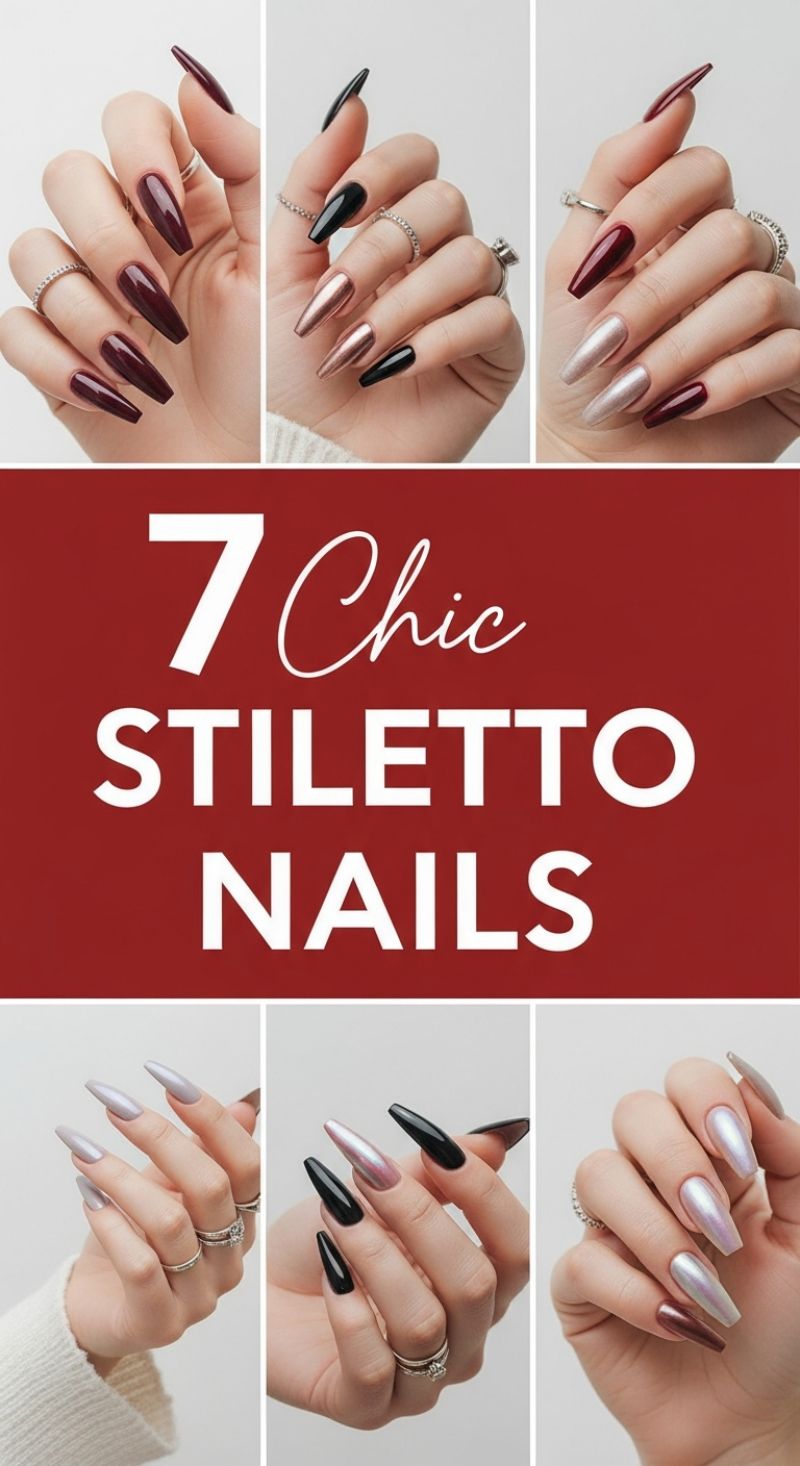
The image showcases the ultimate in sophisticated, high-drama manicures, relying heavily on extreme length and precise shaping coupled with luxurious, contrasting finishes. While the title suggests Stiletto, many of these examples utilize a highly tapered Coffin or Ballerina shape—a crucial distinction for clients seeking maximum length without the sharp, dangerous point of a true stiletto. To replicate this look, prioritize achieving a uniform, elongated canvas, often requiring nail extension methods like structured gel or acrylics. The key instructional component here is achieving the crisp, narrow sidewalls that define both the stiletto and tapered coffin look; file the sides parallel before sharply angling the tips. This specific aesthetic works best when the nails are uniformly long across all five fingers, creating a cohesive, maximalist statement that immediately commands attention.
Achieving the dual color palette—a blend of deep, high-gloss solids and dynamic metallic chromes—is essential to this chic ensemble. The solid shades (rich black and deep burgundy/maroon) serve as the grounding, elegant anchor. For these, ensure two thin, opaque coats are applied, followed by a high-shine top coat to reflect light and enhance the jewel-tone depth. The true visual punch comes from the metallic accent nails, which range from rose gold and silver to iridescent champagne shifts. To create this mirror-like effect, apply a base color (often black or white for optimal contrast), cure it, and then apply a specialized non-wipe top coat. Immediately after curing the non-wipe top coat, gently rub a quality chrome or iridescent powder onto the surface using a silicone tool or sponge applicator until the mirrored effect appears. Finish with another layer of top coat, carefully capping the free edge to prevent chipping or premature lifting of the chrome.
Expert styling advice for maintaining and wearing this bold length centers on balance and protection. Because longer nails are prone to damage, regular cuticle oil application and routine maintenance (in-fills every 2-3 weeks) are mandatory to keep the look pristine. When choosing where to place the metallic accents, consider color blocking across different fingers, as seen in the examples, to distribute the light and sparkle evenly. This nail design is inherently high-fashion and pairs exceptionally well with subtle jewelry—like the stacked, delicate rings shown—which complements the hands without competing with the bold, polished tips. This combination of deep winter colors and holiday-ready chromes makes this collection perfect for transitioning from fall sophistication into festive seasonal glamour.
11 Dainty VALENTINE NAIL ART
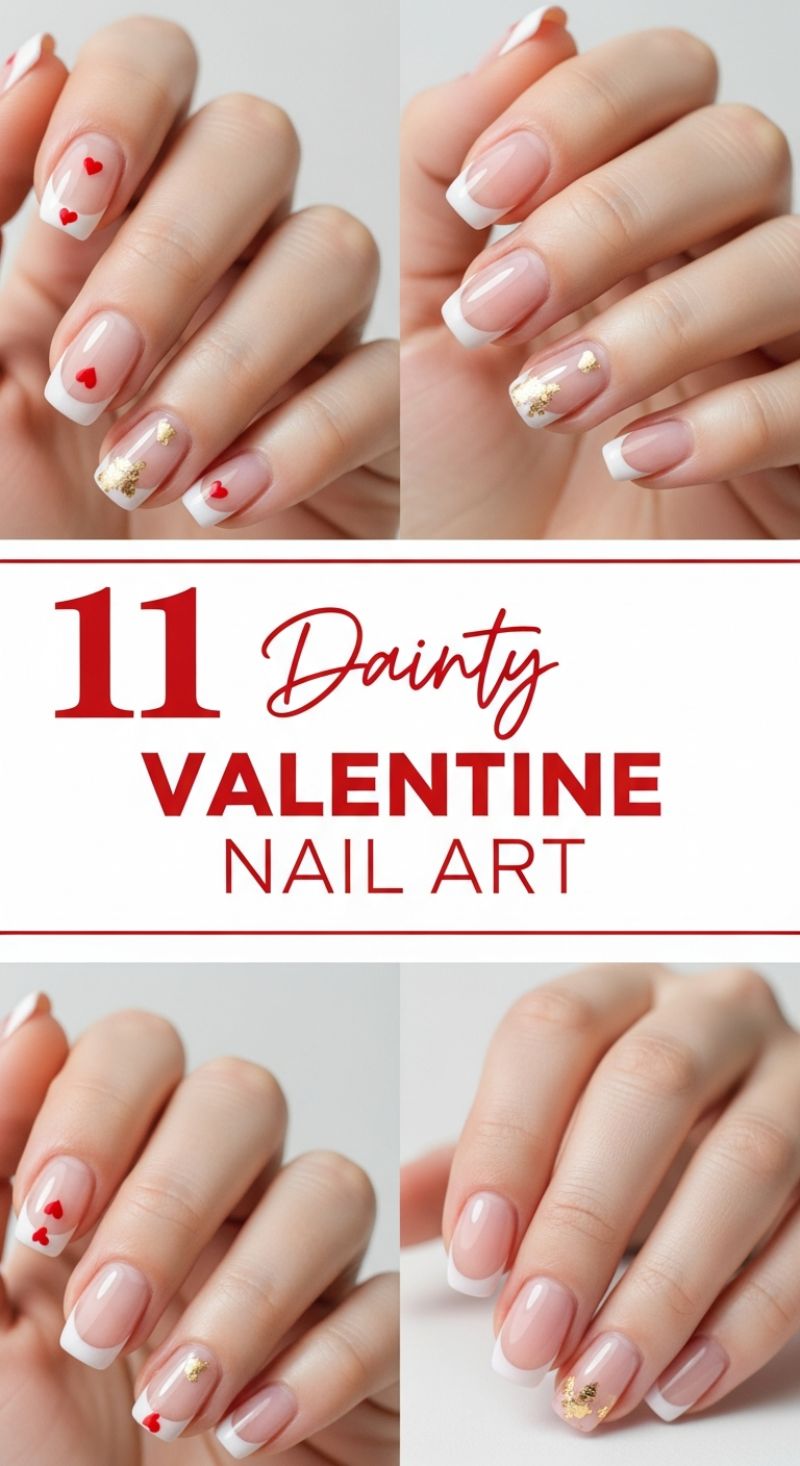
Start by perfecting the elegant foundation—a soft, updated French manicure. Achieving this dainty Valentine look requires a pristine base, typically using a sheer milky pink or nude polish applied over well-prepped nails. The white tips should be neatly defined, whether using traditional freehand painting techniques, adhesive guides, or a silicone stamper for symmetry. For this particular style, a slightly rounded square or squoval shape complements the design beautifully, offering enough surface area for the accents without looking bulky. Ensure your base coat is fully cured before proceeding to the art phase to prevent smudging and ensure maximum longevity for this sophisticated design.
The signature element is the placement of tiny, vibrant red hearts, which provides a sweet nod to Valentine’s Day without overwhelming the classic French design. For maximum precision, you can utilize small heart decals or stencils. If you are hand-painting, use a fine detail brush and a highly pigmented red gel polish. The key expert advice here is strategic placement: focus the hearts either delicately floating just above the cuticle line or situated near the smile line, ensuring they don’t touch the stark white tip. Limit the heart accents to two or three per nail, as seen on the thumb and pointer finger, to maintain the “dainty” aesthetic mentioned in the title. This careful spacing ensures the design remains subtle and highly wearable.
To elevate the manicure from simple cute to luxurious chic, incorporate metallic accents using gold leaf or transfer foil, ideally focusing this detail on just one or two accent nails (like the ring finger). Apply a thin layer of foil adhesive or a tacky layer of no-wipe gel topcoat to the desired area. Once tacky, lightly press small, irregular flakes of gold foil onto the nail surface using tweezers or an orange wood stick, focusing on clustering the foil near the base or the tip’s edge. This adds depth and visual interest, contrasting beautifully with the matte red hearts. Finish the entire manicure with two layers of a durable, high-shine top coat, capping the free edge of the nail meticulously to seal in the design and protect the delicate foils and decals from chipping.
15 Gorgeous Spring Nail Inspiration
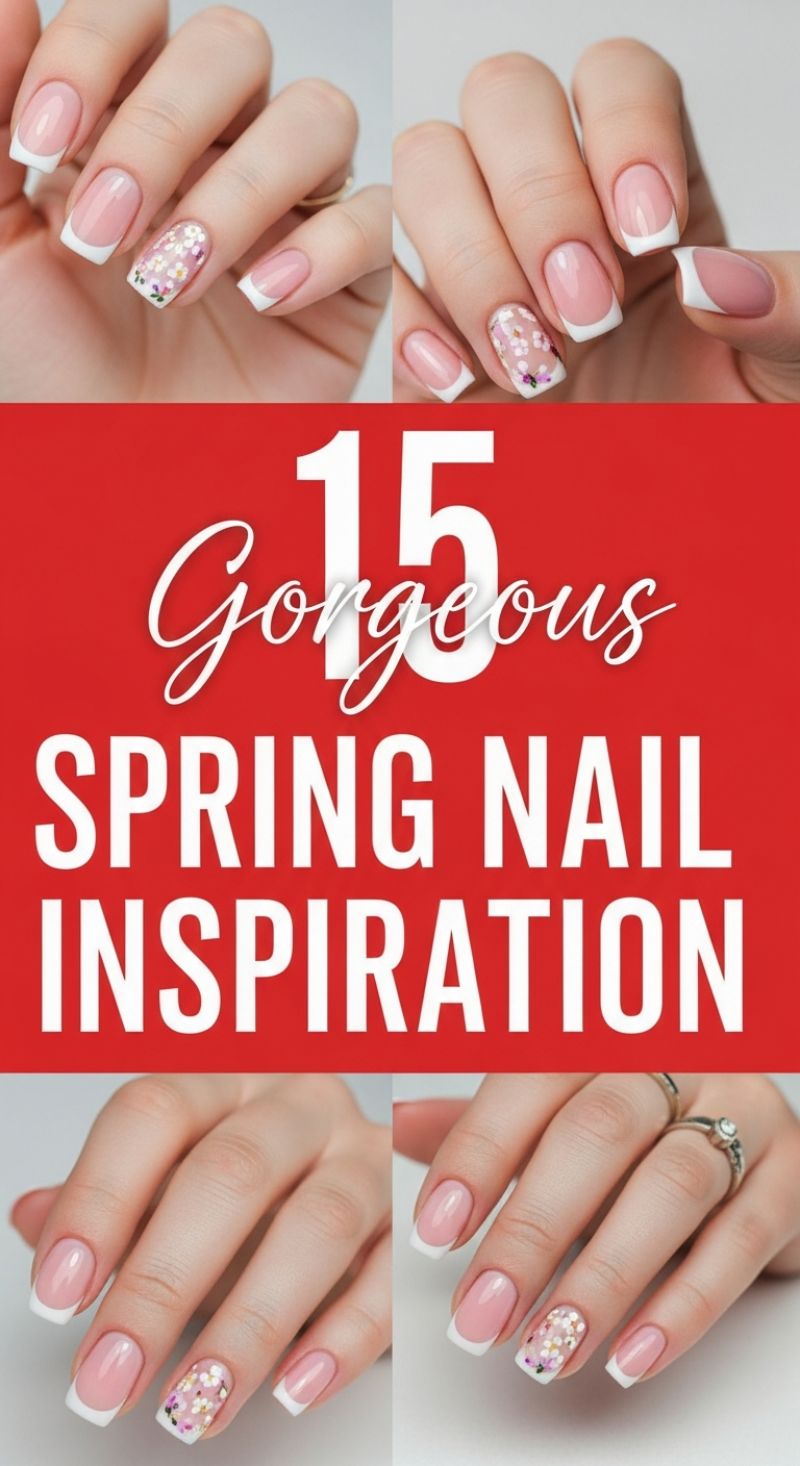
The transition into spring demands fresh, light nail art, and this design elevates the timeless French manicure with subtle botanical accents. To replicate this gorgeous look, start with a flawless base, typically a sheer pink or milky nude builder gel, ensuring a smooth, rounded apex for natural definition. The key to the elegant French tip shown here is its crisp, uniform smile line and medium width. Use a bright, opaque white gel polish and a fine liner brush to meticulously trace the curve of the free edge, or employ French tip guides for maximum precision and symmetry across all fingers. For the classic, wearable effect seen in the photo, maintain a squoval or soft square nail shape, which complements the clean lines of the white tip beautifully while offering strength and durability.
The magic of this spring inspiration lies in the accent nail, which features delicate, pressed-flower style confetti or tiny hand-painted blooms. If you opt for the realistic look of floral confetti or ultra-thin dried flowers, apply a thin layer of clear builder gel or topcoat over the cured base color on the accent finger, strategically placing the minuscule pieces using wax tweezers or a specialized silicone tool. Once the placement is perfected, it is crucial to encapsulate the art fully with another layer of builder gel to ensure a completely smooth surface and prevent any lifting or snagging. If you prefer hand-painting, utilize fine-tipped dotting tools and a micro-liner brush with white, soft pink, and muted purple polishes to create abstract, overlapping blossoms, focusing the density near the tip area for a soft, transparent fading effect. Curing each layer of color separately guarantees superior depth and vibrancy in the final design.
This specific design is highly versatile for continued seasonal wear. For a creative twist, you can introduce a subtle iridescent shimmer to the nude base coat or swap out the traditional white tip for a soft pastel color, like buttercup yellow or lavender, while keeping the miniature floral motif consistent on the accent nail. Expert maintenance requires a high-gloss, non-wipe topcoat applied generously over the entire finished design, paying extra attention to fully capping the free edge to seal the tips and prevent premature chips. As the natural nail grows out, a sheer coat of fine, reflective glitter applied near the cuticle line can help seamlessly blend the transition zone, extending the immaculate life of this gorgeous spring set until your next scheduled full refresh.
8 Fierce Valentine Nails: Mastering the Black and Red Glamour Look

The ‘Fierce Valentine’ aesthetic transforms classic romantic colors into a bold, gothic-glam statement, perfect for those seeking dramatic flair. This look is built on structure, relying almost exclusively on long, sharp shapes like the coffin or ballerina nail, which provide the ideal canvas for intricate detailing. To achieve this foundation, first ensure your extensions (or natural nails) are perfectly filed and balanced. The key color story is glossy jet black paired with deep crimson, often featuring a sparkling micro-glitter finish. Begin with a solid black base coat on most nails. For the ombré effect seen on the index and ring fingers, use a makeup sponge to dab the glittery red polish onto the tip, blending gradually upward toward the black base, ensuring the transition is smooth and high-contrast, yet seamless. A high-shine gel top coat is essential for maximizing the drama of these deep, saturated shades. Expert tip: Using a velvet matte top coat on the solid black nails next to the glossy glitter nails adds powerful textural interest.
Elevating this style involves adding intricate design work. Several nails showcase delicate, spiderweb-like lace patterns, which require precision stamping or waterslide decals. For the lace effect, start with a sheer nude or clear base coat over the nail. Once dry, use ultra-fine black stamping polish and a detailed lace plate to transfer the pattern. For the sharp, geometric designs and V-shaped tips, precision is paramount. Utilize a high-pigment black or white striping gel and a very thin liner brush (000 size) to create clean, symmetrical lines, ensuring the V-tips meet at a crisp, central point. When freehanding intricate vine or web patterns, work slowly, curing each major line segment under a UV lamp to prevent smudging and ensure the design maintains its sharpness against the deep red or black base.
No ‘fierce’ design is complete without strategic crystal placement. These styles rely on large, statement rhinestones, often placed in cascades starting at the cuticle or along the center line of the nail. To apply, use a specialized rhinestone adhesive gel or a very thick builder gel blob where the stone is to be secured. Place substantial, faceted crystals—mixing small rounds with larger teardrops or marquise shapes—to create a striking, light-reflecting cluster. Before final curing, ensure the stones are level and perfectly centered. For maximum longevity, use a fine detail brush to carefully trace a thin layer of top coat around the base of the rhinestones, sealing them into the design without coating the top facet of the crystal itself, which would dull its sparkle. This combination of deep color, detailed stamping, and blinding bling makes for a truly unforgettable nail look.
8 Must-Have April Nail Trends
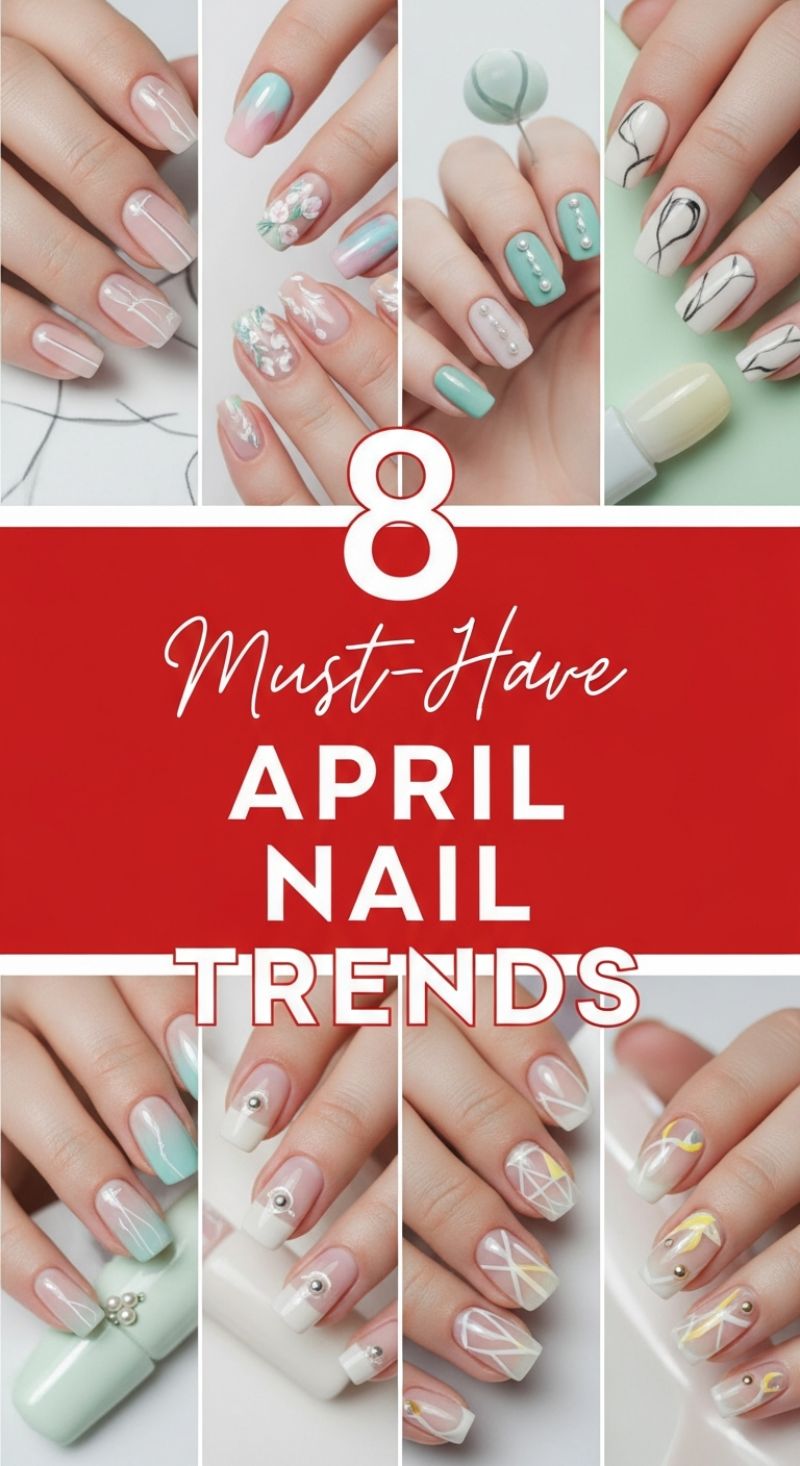
April heralds the true arrival of spring, and with it, a shift toward lighter, more playful nail aesthetics. This season’s must-haves seamlessly blend soft pastels with striking minimalism, ensuring your manicure is both seasonally appropriate and chic. To master the delicate spring ombre and floral look, begin by prepping the nails with a nourishing base coat, followed by one sheer coat of nude or milky white polish to provide a clean canvas. For the popular pastel gradient (seen prominently with soft pinks and mint greens), use a makeup sponge to dab the two colors onto the nail, blending gently in the center. Once dried, focus on the delicate floral accents. These are best achieved using a highly pigmented white polish and a detail brush. Concentrate the flowers around the cuticle or the free edge, ensuring the design breathes and uses ample negative space for an airy effect. Expert tip: lock in the painted elements with a thin layer of topcoat before applying your final seal to prevent smudging and achieve maximum dimension in the petal design.
The second wave of April trends leans into abstract geometry and refined embellishments, perfect for those who favor structured yet subtle designs. The minimalist abstract line work, often executed in stark black or white over a sheer base, requires precision and a steady hand. Use a long, fine striping brush and practice creating fluid, continuous curves and asymmetrical loops that mimic marble veining or calligraphy. For the popular geometric patterns (seen using white, yellow, and iridescent stripes), striping tape is your essential tool. Apply the tape to create clean, sharp angles, paint over the open spaces with your chosen color (or a reflective powder mixed into a clear coat), and remove the tape immediately before curing to prevent jagged edges. To incorporate three-dimensional elements like pearls or metallic studs, place them strategically along the cuticle line or the center of the nail, utilizing builder gel or a specialized adhesive to securely nestle them into place before sealing with a non-wipe topcoat, ensuring the product fully encapsulates the base of the accent for lasting wear.
Finally, the modern French manicure variations are crucial for spring 2024. Move beyond the traditional white tip by embracing the ‘floating French’ or the ‘deconstructed tip.’ This style utilizes the crisp white or pastel color not only on the very edge but also as a half-moon accent near the nail bed, or as two distinct, sharp lines running parallel down the side of the nail. For an elevated touch, incorporate subtle iridescence. Apply holographic or sheer reflective powders over the colored lines before the final topcoat to give the design an ethereal glow that catches the light beautifully. To ensure all these complex designs hold up, shaping is key—a clean square or soft coffin shape provides the ideal architecture for showcasing linear and abstract work, completing a refined, trend-forward look that transitions perfectly from cool spring mornings to sunnier afternoons.
10 Edgy Goth V-Day Nails
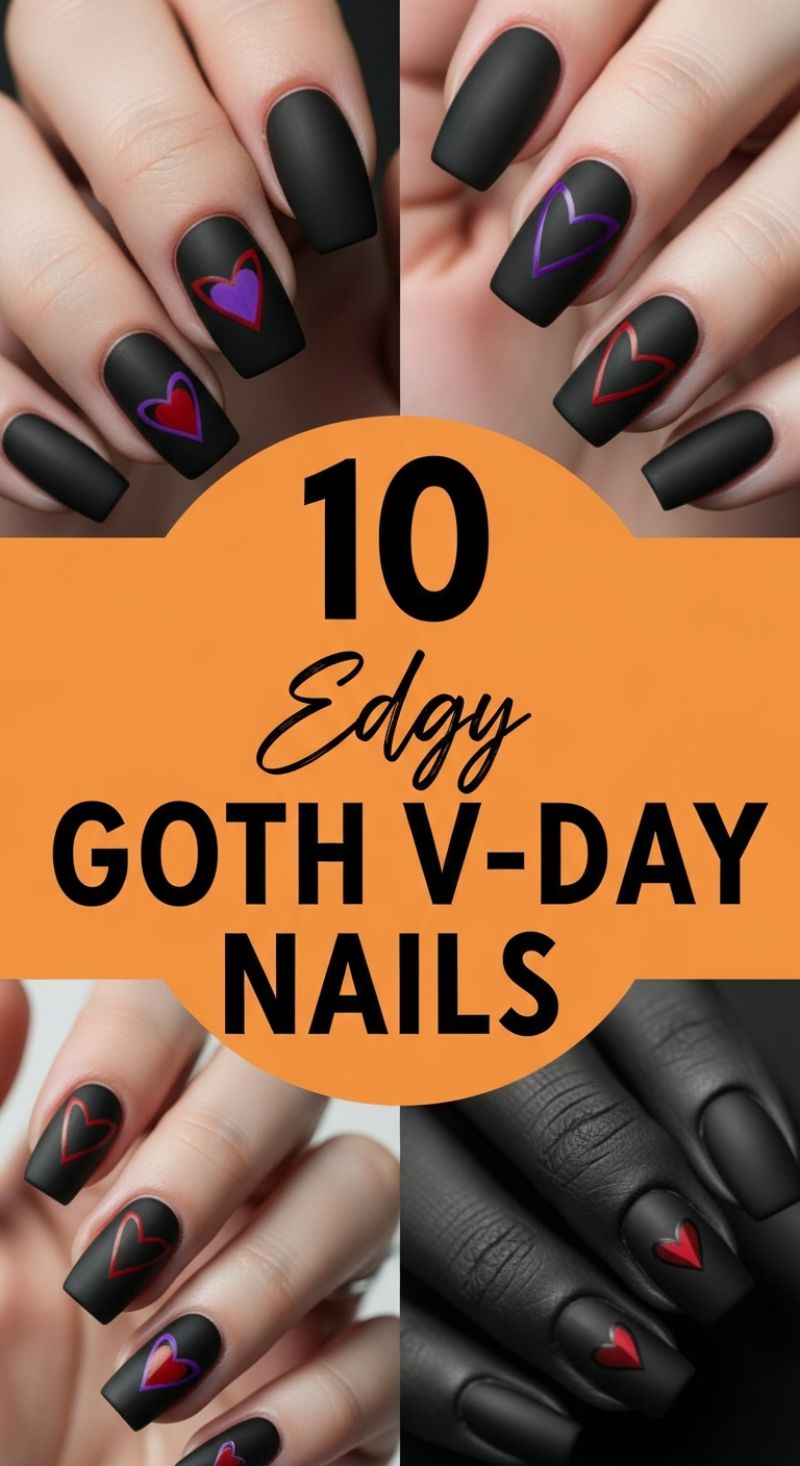
The foundation of this edgy look is achieving a deep, flawless matte black base. To replicate this style, begin by shaping the nail into a medium-length square or soft coffin silhouette, which provides ample surface area for the heart art while maintaining a sharp aesthetic. Apply a durable base coat, followed by two meticulous layers of highly pigmented black gel polish. The critical step is the application of the matte top coat; ensure the coat is applied smoothly and evenly over the entire surface. Matte finishes are notoriously sensitive to application errors, so curing under the lamp precisely according to product instructions is vital to lock in that velvety, non-reflective texture. This matte finish creates a stunning, somber backdrop, making the vibrant heart designs pop with maximum visual impact, perfect for an anti-Valentine’s Day statement or year-round dark romance.
Once the matte black canvas is cured, the heart detailing can begin. This design utilizes a mix of filled hearts and outline work in stark, contrasting shades like electric red and deep amethyst purple. For the outlined hearts, use a fine-tipped detail brush (size 00 or 000) and gently float the colored gel polish, ensuring the line work is thin and crisp. Symmetry is key here, so drawing a small dot at the center peak and the bottom tip first can help map out the shape. For the filled hearts, apply the color directly and, to add dimension as shown in the image, consider outlining the filled shape with a secondary color (e.g., a purple fill bordered by a thin red outline). The slight glossiness inherent in the colored heart polish (unless you re-matte them) provides a subtle, yet effective contrast against the velvety base, creating depth and preventing the design from looking flat.
To ensure the longevity of this high-contrast manicure, finish with a final layer of clear top coat only over the heart designs themselves if you desire that subtle glossy contrast. Expert tip: Matte polishes tend to absorb oils and show fingerprints more readily than glossy finishes. Advise maintenance by gently wiping the nail surface with a lint-free cloth dampened with rubbing alcohol between manicures to instantly restore the deep, velvety appearance. This style is not only a chic rejection of traditional V-Day pinks but is also easily adaptable; substitute the hearts with other gothic symbols like crosses, daggers, or bats to extend the edgy aesthetic far beyond February 14th.
5 Pro DIY NAIL HACKS
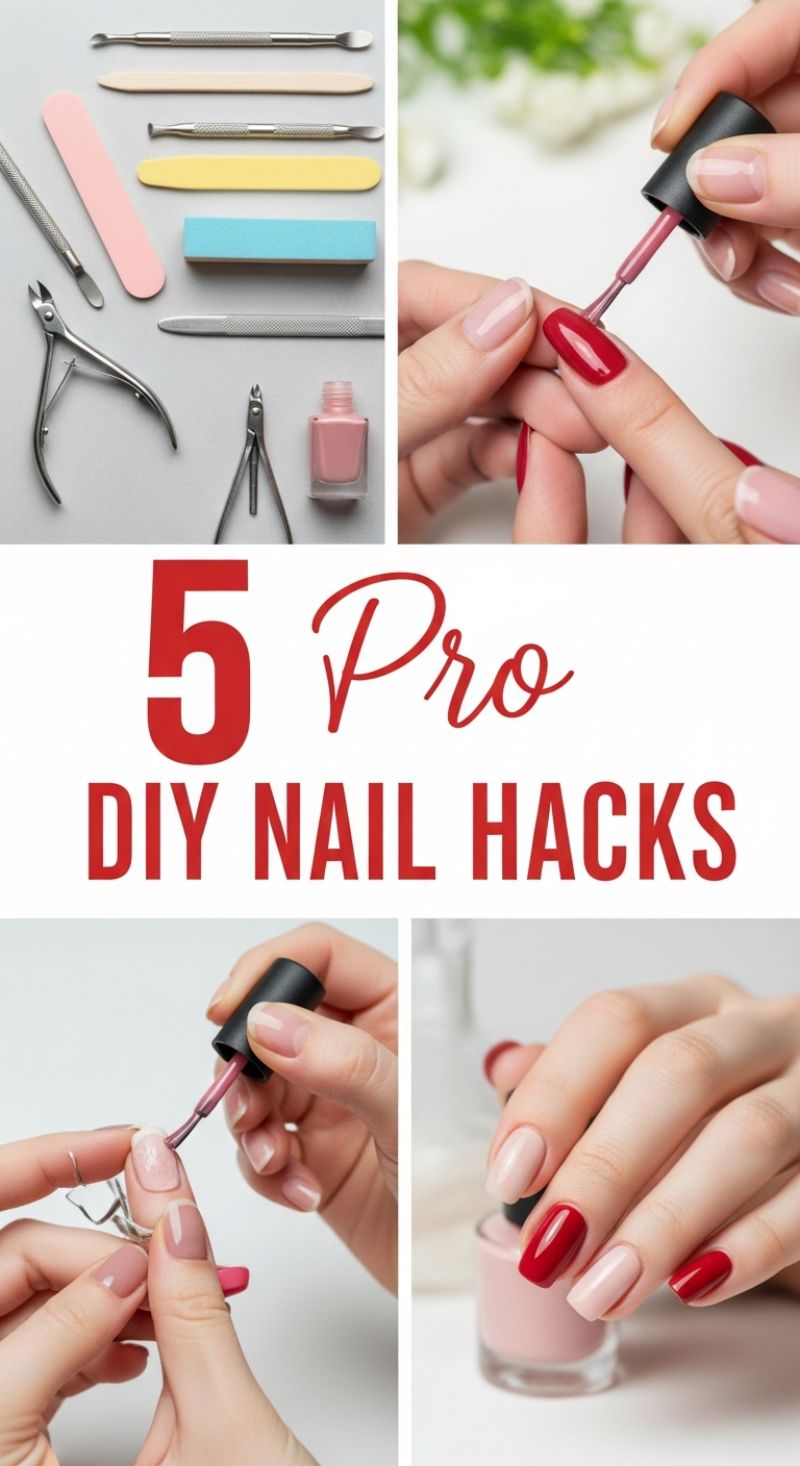
Achieving a truly professional manicure at home begins long before the first swipe of color. Your arsenal must include quality implements, clearly shown in the image: various grit nail files for precise shaping, a multi-sided buffer block for smoothing the surface, and proper cuticle tools like nippers and pushers. The core secret of longevity is thorough preparation. Start by shaping the nail, moving from coarsest to finest grit, ensuring all nails match perfectly. Follow this with gentle buffing to remove ridges, which ensures polish adheres evenly. Always use a dehydrator or swipe the nail plate with rubbing alcohol before applying a ridge-filling base coat—this essential step creates a clean, sticky canvas, preventing premature chipping and, crucially, staining of the natural nail.
The application itself is often the messiest part of a DIY manicure, but the visual cue in the bottom left corner demonstrates a key pro technique for perfect edges: perimeter protection. To prevent polish from flooding the cuticles, utilize a liquid latex barrier (a popular DIY hack) or adhesive shields placed precisely around the nail bed, leaving only the nail plate exposed. Once the barrier is secured, apply your color using the classic three-stroke method—one swipe down the center, followed by a stroke on either side. This technique provides maximum coverage and control. If you prefer to skip the barrier, remember to use a small, stiff cleanup brush dipped in acetone *immediately* after painting each nail to meticulously clean up the perimeter before the polish fully sets. This instant cleanup is critical for achieving that flawless, ‘just left the salon’ precision.
Modern nail artistry often involves strategic color choices, moving beyond monochromatic looks. The alternating palette shown—a sophisticated neutral paired with a striking classic red—is a simple yet powerful design hack that adds visual interest without requiring complex techniques like stamping or freehand art. When building your manicure, apply two to three thin, even coats, allowing sufficient drying time between each layer (ideally 2-3 minutes) to prevent bubbling and premature chipping. The final, non-negotiable step is the topcoat. Use a high-quality, quick-dry topcoat not only to seal the color and add magnificent shine but also to increase durability. Expertly cap the free edge of the nail with the topcoat to ‘wrap’ the color, preventing shrinkage and tip wear, guaranteeing your DIY pro manicure lasts the full seven days.
6 Easy Funky Nail Art
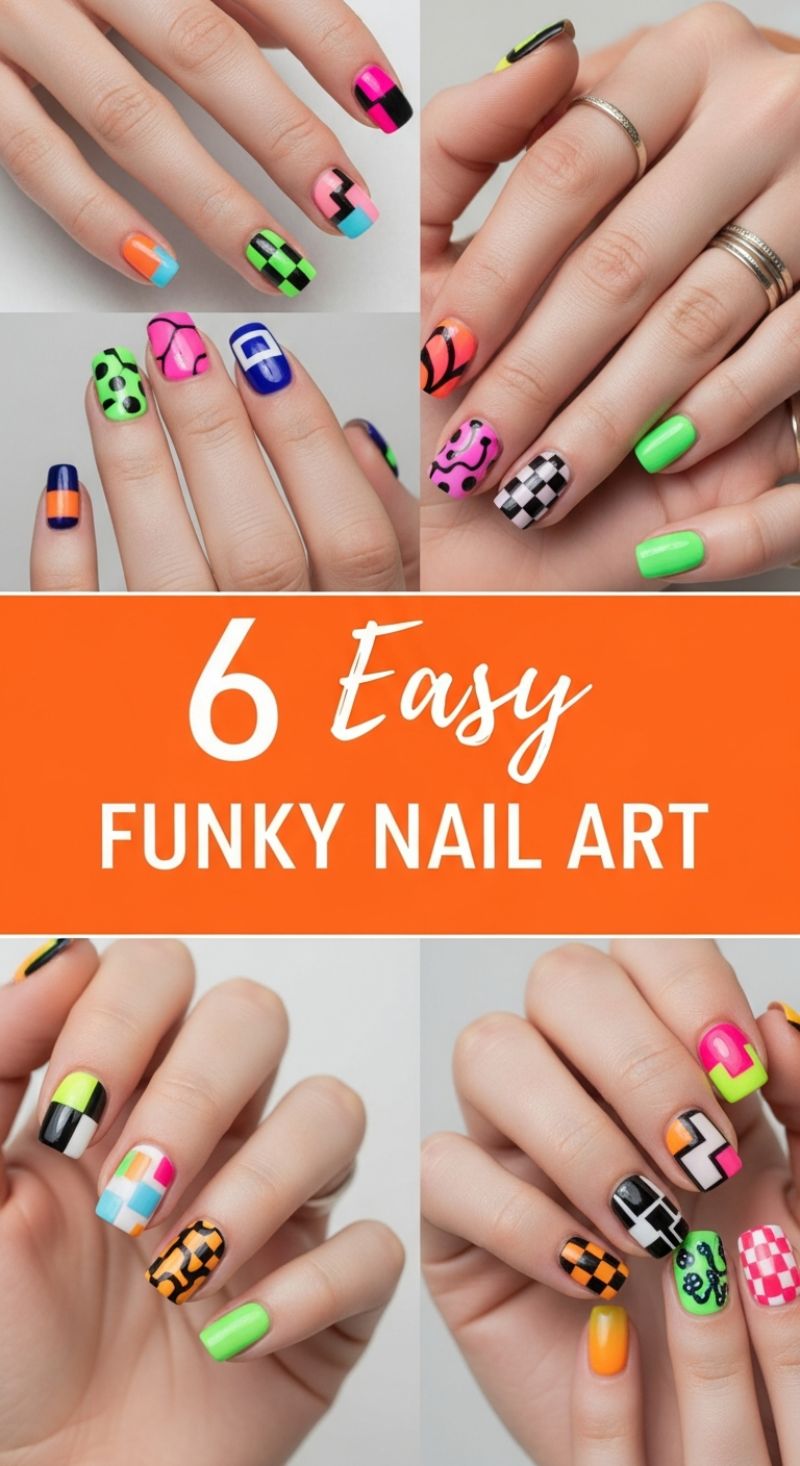
Embracing the spirit of bold, vibrant self-expression, the “Funky Nail Art” trend showcased here is a masterclass in controlled chaos, mixing high-saturation neon hues with striking graphic patterns. To recreate this aesthetic, preparation is paramount. Start with a crystal-clear base coat to protect the natural nail and ensure maximum color vibrancy, particularly when using intense pigments like the hot pink, electric green, and blazing orange featured. This style relies heavily on precision tools, so gather thin striping brushes for creating straight lines and sharp corners, and various sized dotting tools for perfect polka dots and curved elements. The overall look is achieved by treating each nail as an individual canvas, allowing for completely different, yet coordinating, designs across the entire hand, ranging from simple color blocks to intricate micro-patterns like the popular checkered flags, abstract squiggles, and geometric color divisions. This playful asymmetry is central to the funky style’s appeal, demanding confidence in clashing colors and patterns.
Two primary techniques dominate this funky collection: Geometric Color Blocking and Abstract Patterning. For the geometric nails, such as the two-toned tips or the complex four-quadrant designs (seen in neon green/black or orange/black), precision layering is key. Apply the lightest base color first (e.g., white or light neon), cure or dry completely, and then use nail vinyls, tape, or a fine striping brush to block off and paint the subsequent colors. When executing the iconic checkerboard, paint the base color (e.g., black) and then use a thin brush to meticulously paint the intersecting grid lines in the contrasting color (e.g., white or neon orange), ensuring the squares are uniform in size. For the abstract and whimsical patterns—like the pink nail with black squiggles or the green nail with black smiley faces/clovers—the dotting tool and freehand striping brush are essential. Apply a bright, opaque base coat and, once dry, use a contrasting black or white polish. For clean, defined swirls, load a small amount of polish onto the striping brush and maintain a light, steady pressure as you trace the curves. Always allow each layer of pattern to dry fully before adding fine details or a topcoat to prevent smudging or dragging the intricate artwork.
To truly elevate these funky designs, consider the finish and application consistency. While a super-glossy topcoat naturally enhances the brilliance and reflectivity of neon colors, a matte topcoat can lend a sophisticated, velvety texture to the graphic elements, making the colors pop in an unexpected way—this works particularly well on the checkerboard and color-block designs. Expert application requires planning the pattern density; aim for one or two highly complex nails per hand (like the full checkerboard or the multi-color patchwork) and balance them with simpler designs, such as a solid neon feature finger. This intentional contrast prevents the overall look from appearing too busy while maximizing the visual impact of the more complex designs. Remember that the current trend embraces mismatching, so don’t feel obligated to mirror the exact design on both hands; instead, focus on using the same core color palette (e.g., neon pink, neon green, black, white, orange) to maintain vibrant cohesion across your entire nail set, ensuring every manicure is a unique, eye-catching piece of art.
7 Perfect Spring Designs
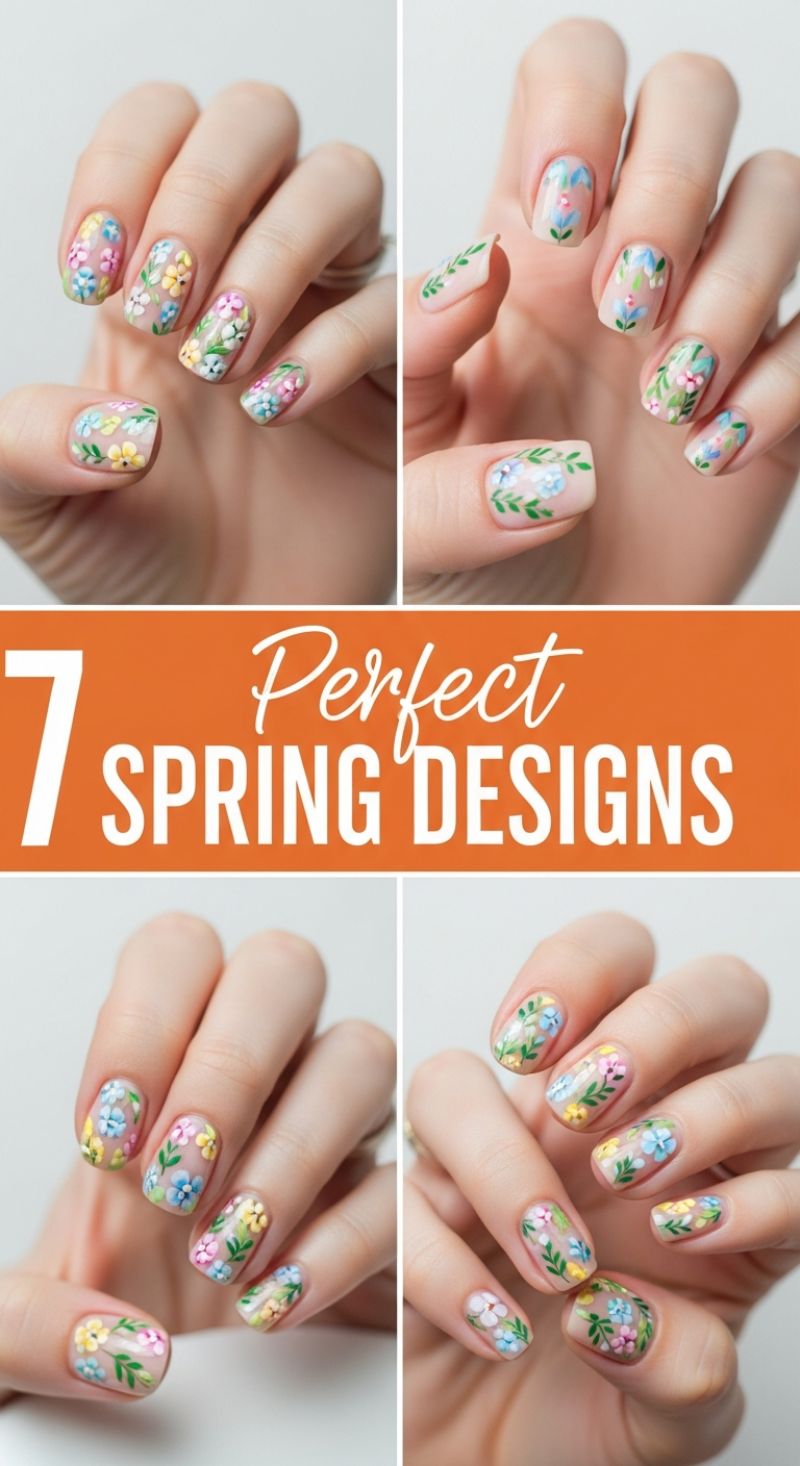
The quintessential spring manicure marries delicate artistry with effortless wearability. This design focuses on creating a lush, miniature floral meadow across a nearly bare nail, utilizing a soft-focus, watercolor effect that is both sophisticated and cheerful. To achieve this ethereal look, begin with a high-quality sheer base coat—a milky white, pale nude, or jelly pink polish works perfectly, allowing the natural nail bed to peek through. This transparency is key, as it prevents the design from looking heavy or cluttered. Once your base is cured or dry, prepare a palette of highly pigmented yet soft pastel shades: buttercup yellow, pale sky blue, blush pink, and mint green. Keep your colors light and bright to truly capture the essence of blooming spring florals. The goal is depth through layering, not opacity.
The instructional phase requires precision and the right tools. We recommend a fine detail brush (000 size or similar) for the stems and leaves, and a slightly rounded detail brush or even a small dotting tool for the petals. Start by mapping out the foliage: use a deep emerald or forest green polish to paint delicate, wispy stems and small, comma-shaped leaves. These should weave organically across the nail, framing where the larger flower clusters will sit. Next, using your pastel polishes, apply the flowers. You can create simple five-petal shapes using the ‘dot and drag’ method, pulling four or five small dots of color inward slightly toward a central point, allowing the polish to blend slightly into the sheer base coat. Vary the size and color of the flowers across each nail, ensuring some clusters overlap or tuck behind the green leaves for a natural, three-dimensional appearance. Expert tip: Add a tiny white or contrasting yellow dot at the very center of each flower to make the bloom pop and add an element of realism.
Longevity and finish are crucial for maintaining this intricate design. After all painted elements are completely dry, seal the artwork with a thick layer of high-shine top coat. A glossy finish magnifies the sheer base and gives the tiny florals a dewy, freshly-sprung look, while simultaneously smoothing out any texture from the multiple layers of paint. For a subtle variation, consider using a matte top coat over the base color *before* painting the flowers; then, use a glossy top coat only over the floral elements to make them appear wet and vibrant against a muted backdrop. This floral garden design works beautifully on short, rounded, or squoval nail shapes, reinforcing the clean and natural aesthetic of the spring season. This technique is highly adaptable, allowing you to swap out colors to match any seasonal wardrobe or event.
9 Fresh Spring Colors
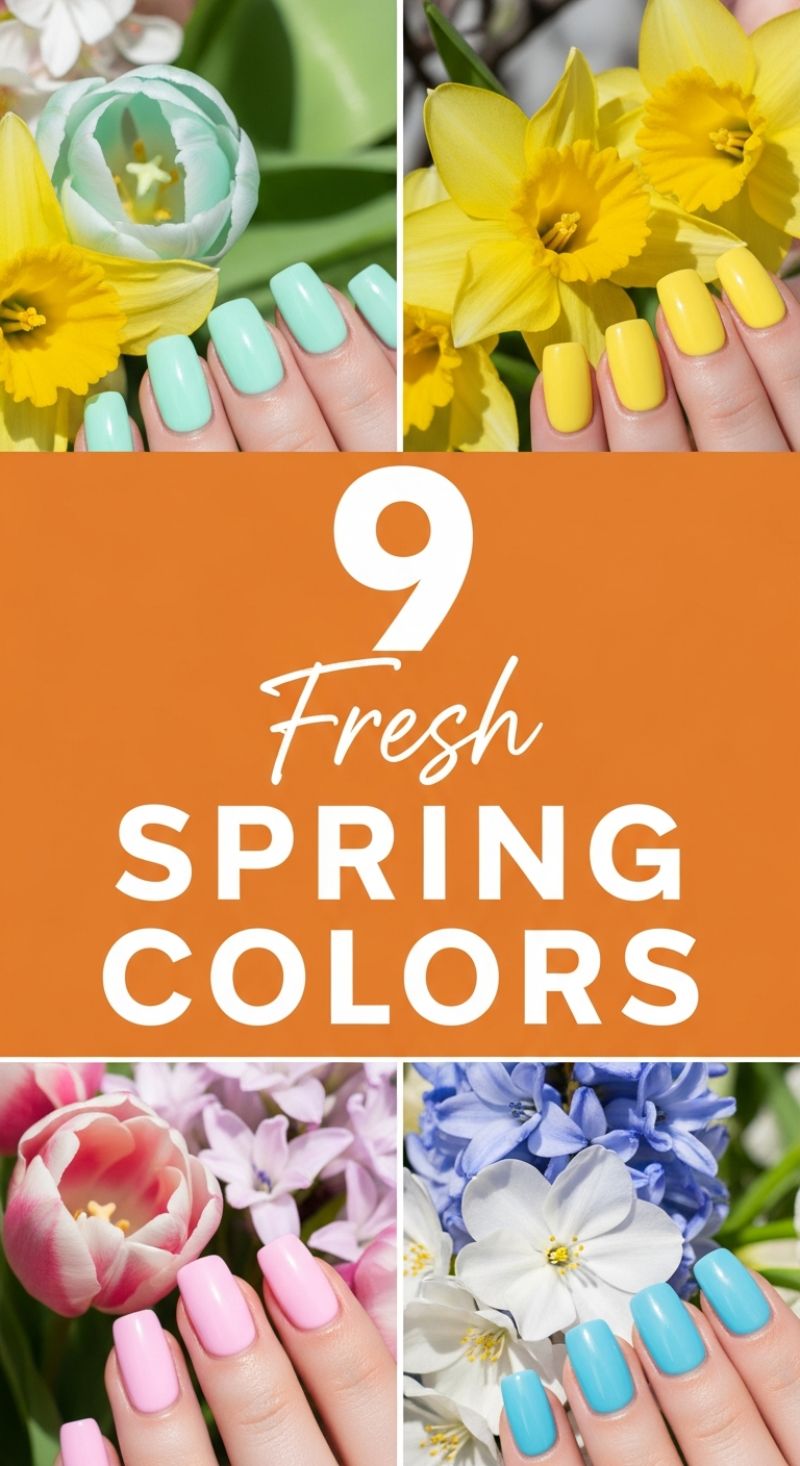
Transitioning from the deep, rich hues of winter to the vibrant palette of spring necessitates a complete overhaul of your nail arsenal. The featured image perfectly captures this seasonal shift, highlighting four essential springtime shades that anchor the full nine-color trend forecast: sunny yellow, bright aqua blue, soft pastel pink, and refreshing cool mint. When working with these light, opaque colors, selecting a high-quality crème formula is paramount, as it provides the necessary full coverage without appearing chalky or streaky. For an expert finish, ensure your nail plate is meticulously prepped and oil-free. Apply two thin coats of your chosen color, utilizing the professional three-stroke application method—one down the center, followed by one on each side—to guarantee streak-free saturation that truly embodies the fresh, clear feeling of the season’s first bloom.
Achieving flawless coverage with light pastels, particularly soft yellows and mints, presents a unique challenge that requires specific technical prowess. A top-tier application hack involves first laying down a single, translucent coat of a nude or sheer white base polish before introducing the primary spring color. This specialized base neutralizes any natural yellowness in the nail plate and acts as an anchor for the brighter pigment, making the subsequent color coats pop dramatically and reducing the need for a third, potentially thick layer. Remember, thin coats cure better, dry faster, and dramatically minimize the risk of bubbling or chipping, which is crucial for achieving a long-lasting, smooth finish. After reaching full opacity, seal the look with a high-gloss top coat to mimic the wet, dewy shine of springtime petals, ensuring the vibrancy of the color lasts up to two weeks.
While a solid spring color is classically chic, integrate these shades into simple, fresh nail art to elevate your look. Use the bright yellow and blue for delicate, curved abstract waves, or combine the pastel pink and mint in a sophisticated half-moon negative space design that catches the light beautifully. Alternatively, commit to a modern color-blocking manicure, strategically placing the four key colors shown in the photo across your fingers, allowing the palette itself to be the main visual feature. For the ultimate longevity and to maintain that freshly painted brilliance, always conclude the service with a rich, floral-scented cuticle oil to emphasize the health of the skin and ensure the vibrancy of your fresh spring manicure takes center stage, connecting your style directly to the natural beauty of the season.
12 Quick Simple Spring Ideas
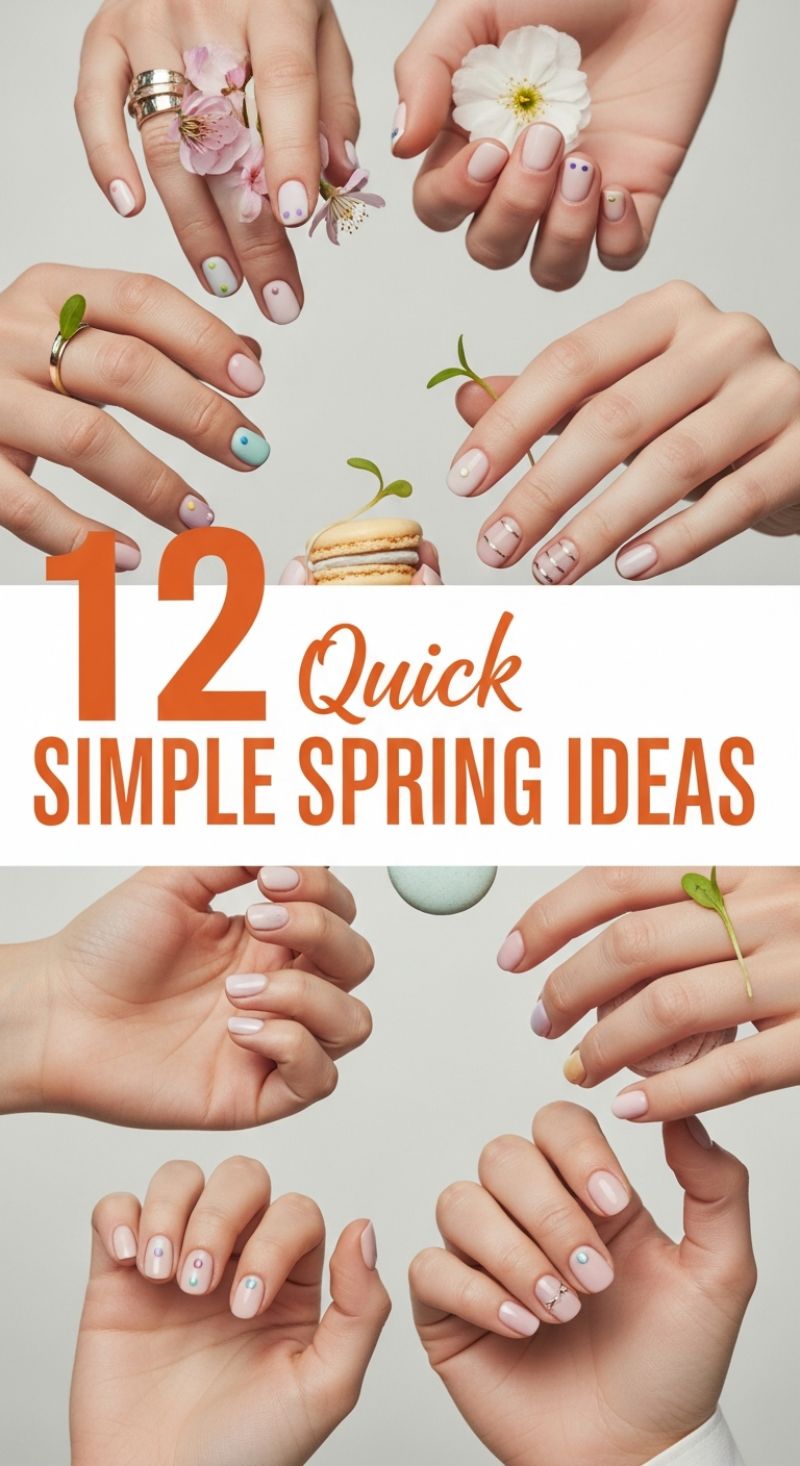
Spring nail designs thrive on simplicity, delicacy, and a fresh color palette. The key to mastering these quick, minimalist looks is starting with a flawless foundation and maintaining a practical, short to medium nail length (oval or squoval shape is recommended). Begin by applying a high-quality base coat, followed by one to two sheer coats of a milky nude, pale blush pink, or soft pastel color. This approach utilizes the natural nail space as a clean canvas, allowing the small, precise details to truly stand out. The muted base prevents the overall design from looking childish, keeping the aesthetic sophisticated and effortlessly chic. Ensure each base layer is fully cured or dried before attempting any detailed artistry, as this prevents smudging and ensures crisp lines.
The majority of these spring designs rely on precise placement of color and shape, easily achieved using simple tools. For the popular polka dot designs showcased, ditch the large, messy dots and opt for a fine dotting tool (or even a straightened paperclip end) to place tiny, single dots of contrasting pastel colors near the cuticle or centered slightly above the free edge. For a more geometric look, like the metallic band designs, invest in fine gold or silver striping tape. Cut the tape to size and lay two or three parallel lines across the nail plate for an instant, modern flair. Alternatively, use a high-pigment metallic polish and a very thin striping brush, pulling the brush lightly across the nail in one smooth motion for the cleanest line possible. Precision is key—less is always more when tackling minimalist trends.
To elevate the look further and capture the delicate, dewy essence of spring, integrate small pieces of nail jewelry. Tiny rhinestones, micro-pearls, or crystal studs can be strategically placed at the base of the nail, mimicking a dewdrop. To secure these small embellishments, apply a small drop of specialized nail glue or a thick builder gel exactly where the jewel is intended to sit, then use a wax pencil or tweezers to gently set the element. Expert tip: Press the jewel slightly into the tacky layer of polish for enhanced adhesion before sealing the entire manicure. Finish every design with a durable, high-shine topcoat, paying extra attention to wrapping the free edge to protect the meticulous artwork and ensure your quick spring manicure lasts for weeks without chipping.
Aesthetic Western Nail Art: Mastering the Cowgirl Chic Look

The Western aesthetic is an enduring trend, bringing together the rustic charm of the ranch and sophisticated design elements. To successfully execute this look, the foundational step is selecting a robust, earthy color palette. Focus on rich browns (chocolate, mahogany), warm caramels, matte terracotta, crisp white, and deep nude bases. Nail shape is crucial here; medium-length coffin, rounded square, or squoval shapes provide the perfect canvas to showcase the intricate detail typical of Western designs. Start by ensuring a flawless base coat application followed by two opaque coats of your primary solid colors. For added authenticity, consider finishing the solid-colored nails (especially the browns and nudes) with a matte topcoat, which provides a suede-like texture reminiscent of fine leather goods, instantly elevating the entire set. Remember, this trend thrives on deliberate inconsistency, allowing you to treat each nail as a distinct, yet cohesive, piece of art.
Mastering the key motifs requires precision and the right tools. The highly popular cow print requires a stark contrast: start with a fully cured white base. Using a fine detail brush and black polish, create irregularly shaped patches. The trick is to avoid perfect circles; aim for organic, kidney-bean-like shapes, varying their size and ensuring some patches run off the edges of the nail to mimic a genuine hide pattern. For the iconic bandana or paisley design, apply a red, black, or deep indigo (denim-look) base. Use a dotting tool or a fine liner brush with white polish to gently freehand simplified paisley swirls and dots, or utilize a dedicated stamping plate for a flawless, intricate pattern transfer. When applying these detailed prints, always wait for the base layer to be fully dry to prevent smudging, which is the most common pitfall when layering complex designs.
No Western manicure is complete without strategic hardware and embellishments. The horseshoe is the central charm for this aesthetic, often applied over a caramel or tan accent nail. These charms are typically 3D and metal, sometimes bordered with small rhinestones; secure them near the cuticle line using a strong adhesive like builder gel or thick resin nail glue, ensuring the cure is complete for maximum longevity. Beyond the horseshoe, look for small silver or gold star studs, teardrop-shaped rhinestones to simulate stitching or buckles, or even small metal feathers. A sophisticated application technique is using tiny dots of metallic polish (gold or rose gold) to create a subtle constellation pattern on a dark accent nail. When incorporating 3D elements, remember to apply a glossy topcoat to the rest of the set, while keeping the background of your cow print or solid colors matte, creating a compelling mix of textures that truly captures the spirit of rugged Western glamour.
9 Vibrant MULTICOLOR NAILS
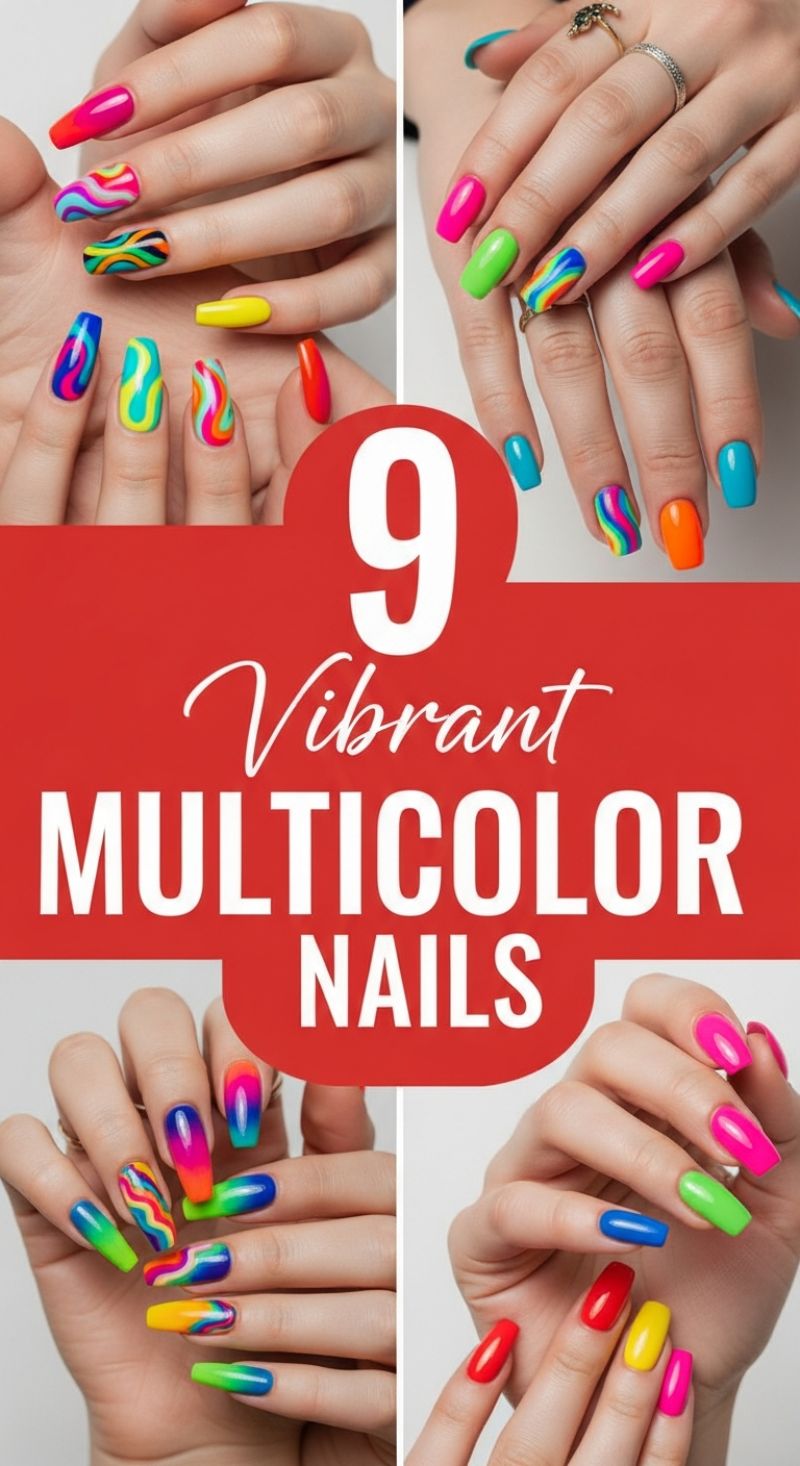
The vibrant multicolor nail trend showcased here is a maximalist approach to summer style, celebrating high-saturation pigments and playful graphic elements. Moving far beyond the simple single-accent nail, these designs utilize every finger as a canvas, often employing five unique color combinations or patterns across a single hand. To master this look, you must commit to highly opaque, often neon or intensely bright primary/secondary colors—think electric pink, lime green, cobalt blue, and sunny yellow. The key to execution lies in deliberate contrast and balanced placement. For instance, pair the complexity of abstract psychedelic swirls on the ring and middle fingers with solid, single-color coats on the remaining nails. The solid shades should still be highly contrasting (e.g., electric pink and neon green) to maintain the overall energetic aesthetic. These designs are ideally suited for longer nail shapes, such as medium-to-long coffin or tapered square, as the extended length provides ample real estate for the intricate patterns and seamless color transitions.
Two primary complex techniques define this trend: the Abstract Swirl and the Vertical Neon Ombré. To achieve the coveted Abstract Swirl (the wavy, retro pattern), start with a cured solid base coat. While the next coat of color is still wet, apply small dots or stripes of 3-4 contrasting colors using a fine dotting tool or detail brush. Before curing, gently use a clean, ultra-fine striper brush or stylus to drag through the wet colors, manipulating them into flowing, marble-like waves. Work quickly, as this is a wet-on-wet technique. For the high-impact Vertical Neon Ombré, as seen blending deep blue into bright green/yellow, utilize a dense makeup sponge. Load the sponge with the two or three colors, ensuring a slight overlap where they meet. Lightly dab and roll the sponge onto the nail surface, repeating the process 2-3 times to build opacity and achieve a seamless gradient transition. Always clean up the surrounding skin with acetone and a clean brush before the final cure.
Expert application requires careful attention to product quality and preparation. Due to the high visibility of these saturated colors, any chipping or dullness is immediately noticeable. Always start with a strong base coat appropriate for your chosen medium (gel or acrylic). When working with neons, applying a layer of white polish beneath the colors will help the shades truly pop and prevent the bright pigments from looking muted or transparent. Finally, a durable, high-shine UV top coat is non-negotiable. This not only protects the intricate artwork but also ensures the neon brightness remains glossy and true for weeks. Consider using a non-wipe top coat formulated with UV inhibitors to prevent the neon pigments, especially pinks and oranges, from yellowing or fading under prolonged sun exposure, securing a flawless, long-lasting finish for your vibrant summer look.
10 Festive Mardi Gras Nails
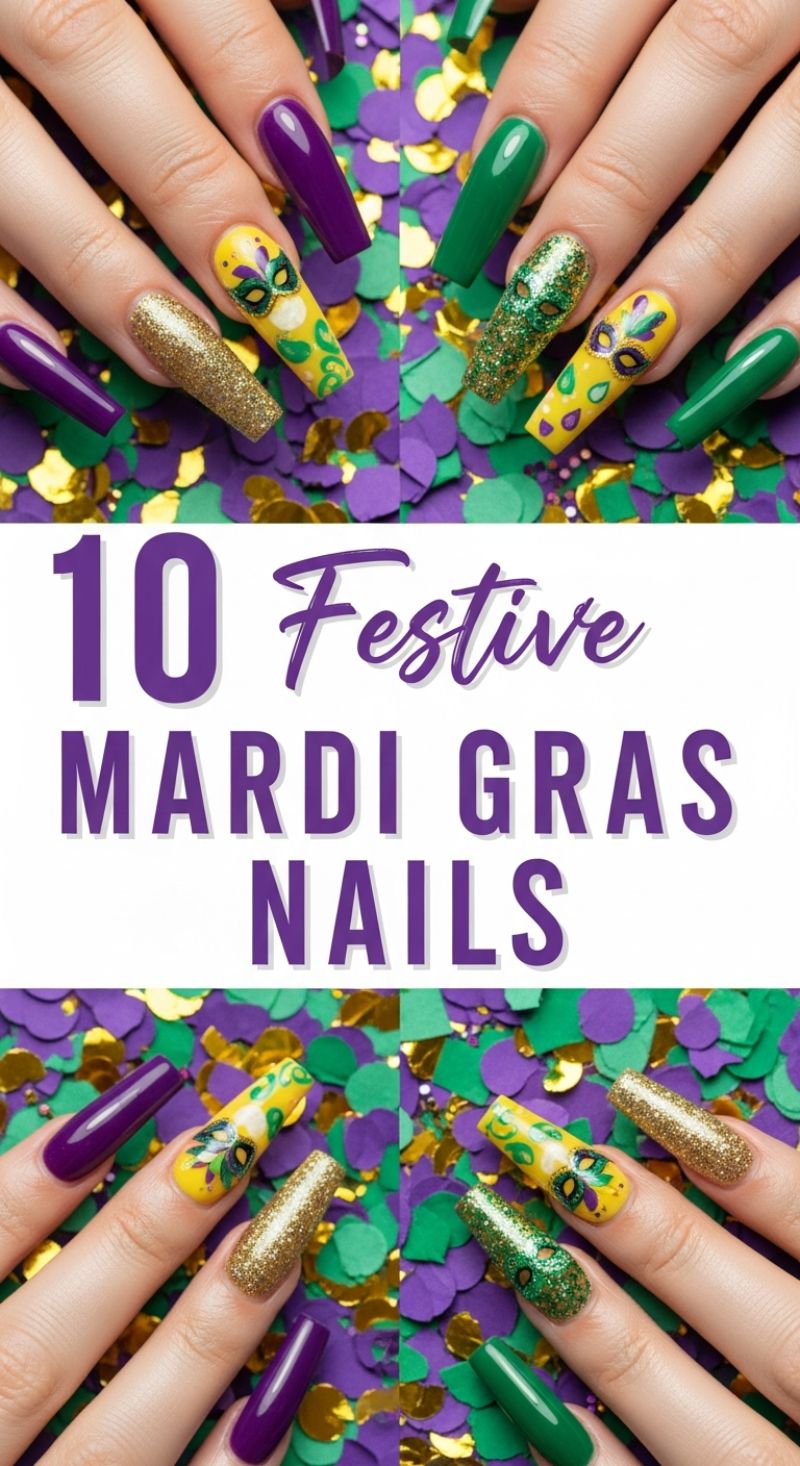
The Mardi Gras color palette—comprising rich purple (justice), lush green (faith), and dazzling gold (power)—offers an unparalleled opportunity for high-impact seasonal nail art. To recreate this opulent, celebratory look, start by selecting a long, structured shape, such as the coffin or ballerina style, as shown here. This shape provides the maximum canvas necessary for the intricate mask work. Begin by painting your base colors, aiming for perfect opacity. For the solid purple and green nails, apply two to three thin coats of highly pigmented gel polish to achieve that deep, mirror-like shine. For the accent nails, use a full coverage gold glitter polish, ensuring the particles are densely packed. Expert tip: When using glitter, apply a layer of clear builder gel or a specialized glitter base coat first; this allows the glitter polish to lay flatter and reduces the gritty texture, making the final topcoat smoother and ensuring the manicure lasts through the entire carnival season.
Crafting the iconic masquerade mask accent nail requires precision and layering. On a base of bright yellow or the dense green glitter, use a very thin detail brush (size 000 or a liner brush) and black or dark purple paint to carefully sketch the outline of the mask—focusing on the eye holes and the decorative wings. Once the outline is set, fill in the mask with small, vibrant pops of contrasting color, such as teal, magenta, and gold dots or stripes, to simulate jewels and feathers. If freehanding is challenging, utilize a stamping plate featuring a baroque or carnival mask pattern. Next, add visual movement to the yellow background by stippling small purple and green dots, resembling scattered confetti or doubloons. The final step before sealing is to apply fine gold foil flakes or small micro-rhinestones along the perimeter of the mask for a genuine 3D jewel effect, elevating the design from simple art to true celebratory statement piece.
Maintaining visual balance is critical when executing such a complex and colorful design. The success of this specific style lies in the strategic alternation of solid colors with textured and detailed accents. The hands shown feature two solid nails flanking the more complex, mask-adorned fingers, preventing the overall look from becoming overwhelming. Ensure all nails receive a thick, durable layer of high-gloss topcoat, which is vital for protecting the delicate artistry of the masks and magnifying the sparkle of the gold and green glitter nails. For professional results, cure your topcoat thoroughly under a UV/LED lamp and follow up with cuticle oil, as the extreme length and intense polish color draw significant attention to the health of the surrounding skin.
10 Obsession-Worthy Pink Nail Looks
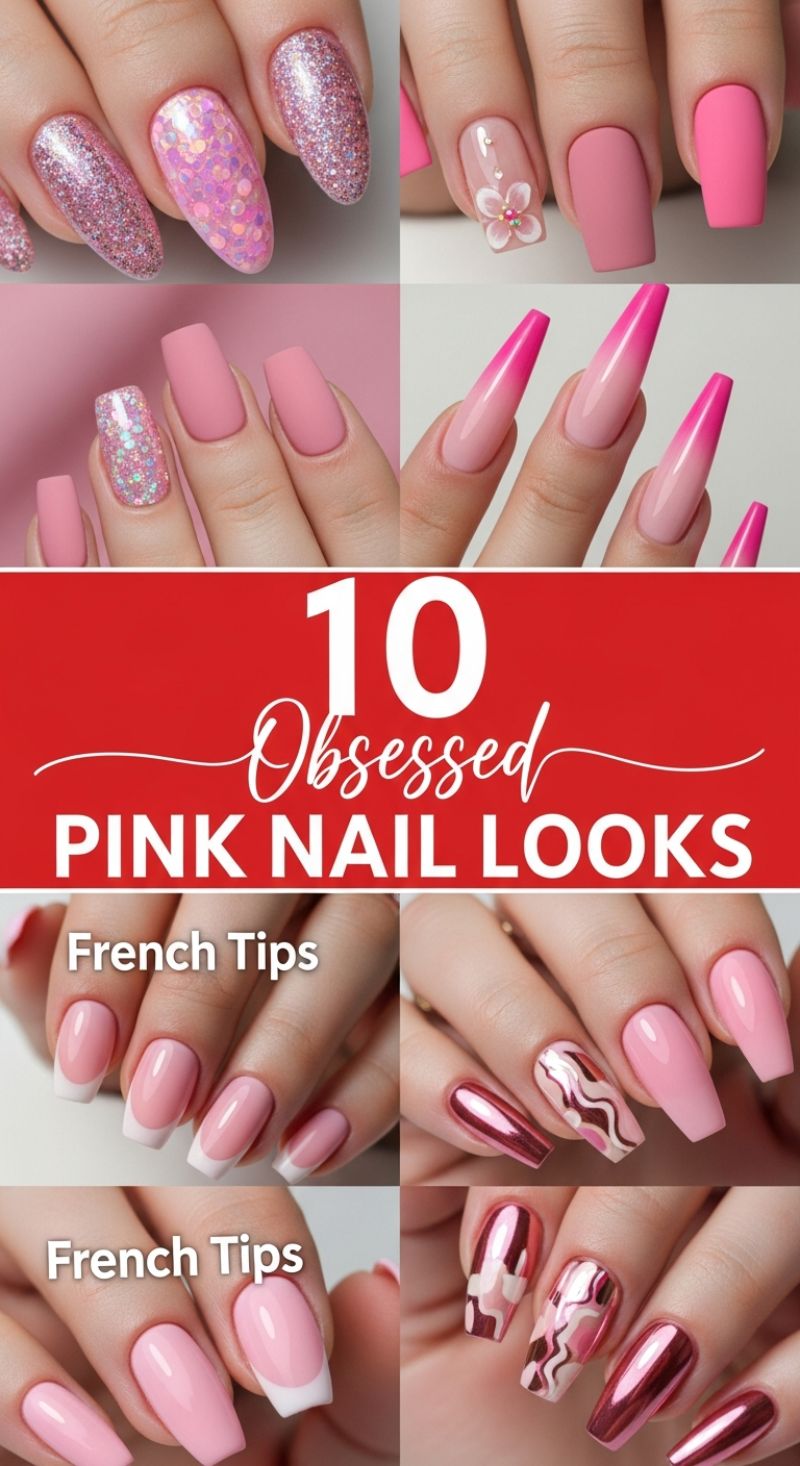
Pink is the universal language of femininity and sophistication in nail art, and this collection showcases its immense versatility, moving seamlessly from subtle elegance to high-impact glamour. To achieve the sophisticated matte looks featured, flawless nail preparation is essential, as the non-reflective finish highlights every imperfection. For the dusty rose matte nails, ensure you are using a true matte top coat—not a satin—to get that velvety texture. Contrast this softness by incorporating glitter or chunky iridescent flake polish on accent nails. When applying chunky glitter, use a dabbing motion rather than brushing to ensure even distribution and encapsulate the flakes completely with a clear builder gel or two layers of top coat to ensure a smooth, durable finish. Alternatively, elevate your look with structural elements like the 3D floral accent nail shown, which is often created using sculpting gel or acrylic powder mixed with monomer for dimension, finished with tiny rhinestones secured with nail glue or thick top coat for long-lasting wear.
For those seeking striking length and high-fashion aesthetics, mastering the pink ombre and classic French tip styles is key. The hot pink gradient look requires a precise technique, typically involving sponging the darker color onto the tip and gently blending it into the lighter base using a dedicated blending brush or fine-pore makeup sponge. This style works best on longer shapes like coffin or stiletto to maximize the fade effect. In contrast, the classic French tips—shown in both square and squoval shapes—require a flawlessly executed smile line. Expert tip: use a thin striping brush or a specialized silicone tool to achieve that perfect, uniform curve on the white tip, keeping the pink base sheer and natural-looking. For a soft, modern French look, choose a pale pink or milky base color to enhance the healthy appearance of the natural nail bed.
Finally, integrate cutting-edge trends by embracing high-shine chrome and abstract metallic art. The mirror-like finish of the chrome nails is achieved by burnishing superfine chrome powder onto a cured, non-wipe gel top coat, which allows the pigment to adhere flawlessly for that intense metallic glow. The abstract wavy designs, often referred to as ‘wavy lines’ or ‘liquid art,’ require a fine liner brush and opaque pink or white gel polish to create the pattern before applying the chrome powder to only specific sections, leaving other areas matte or glossy for dramatic contrast. These high-shine finishes require meticulous maintenance; always cap the free edge completely with the top coat to prevent chipping and ensure the mirror effect lasts, guaranteeing a dynamic and modern mani that catches the light from every angle.
15 Cute Short Nail Inspiration
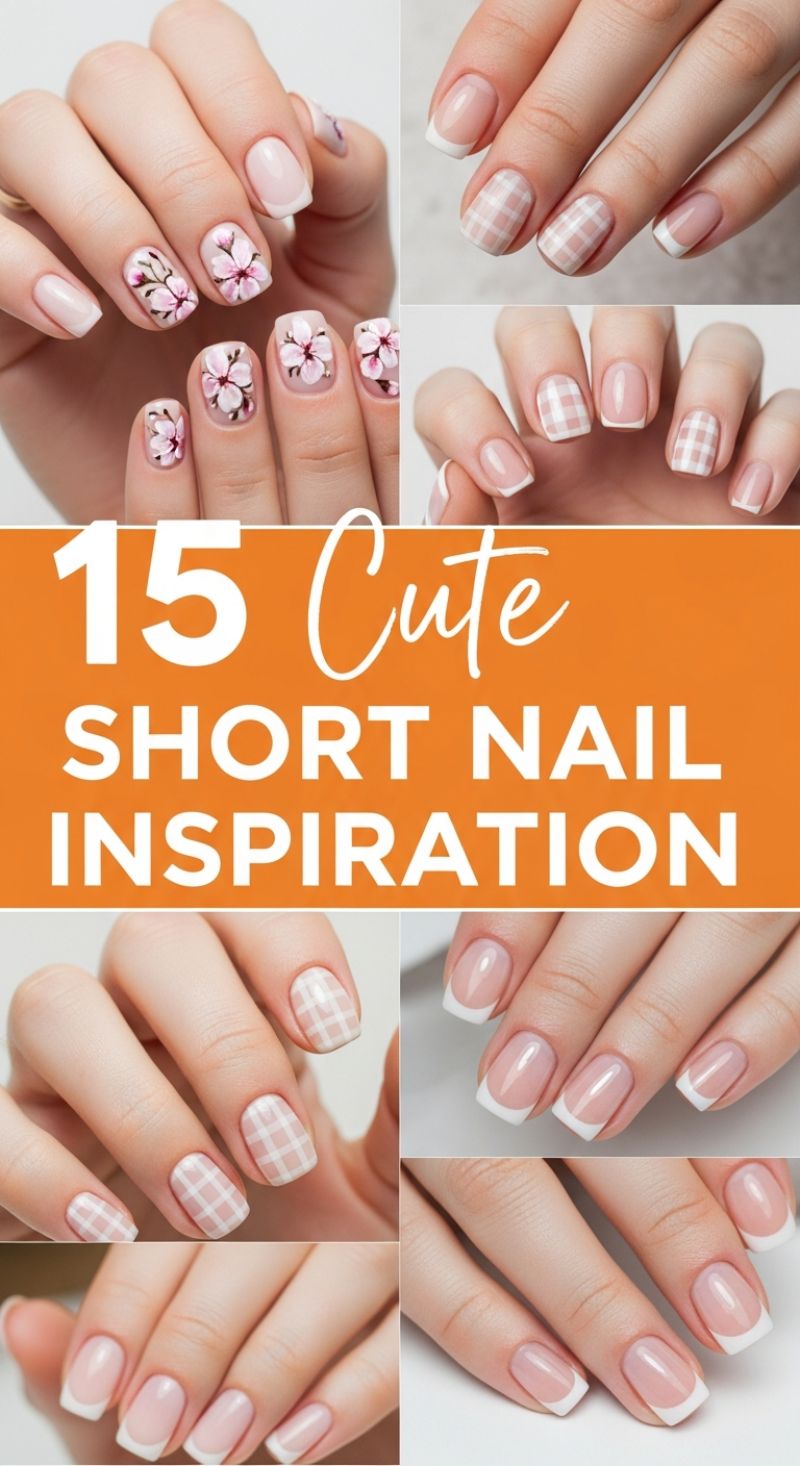
Short nails are the ultimate canvas for practicality and chic minimalism, offering a sophisticated look without the maintenance required by lengthy extensions. The designs featured here prove that brevity doesn’t mean boring; it demands precision and thoughtful use of space. To recreate the delicate floral design, start with meticulous nail preparation, shaping the nails into a soft squoval or rounded square for an elegant foundation. Apply a sheer, milky pink or neutral nude base coat to all nails. The floral design, often applied as an accent on the ring or middle finger, requires highly pigmented white or light pink gel polish and a fine detail brush (a 000 size is ideal). Begin by painting abstract, overlapping petals, allowing them to dry or cure fully. Use a contrasting deeper pink or mauve shade, applied with a dotting tool or the tip of your detail brush, to create the centers and subtle leafy accents. The key is balance; ensure the design complements the free edge without overwhelming the short nail bed, finishing with a high-gloss top coat to seal and protect the intricate artwork. For a playful yet refined pattern, the subtle plaid or gingham design is perfect for short lengths. This look utilizes a pale, opaque base—think a soft taupe, beige, or dusty rose—with thin, perfectly straight white lines layered over top. Achieving this requires either professional striping tape, which guarantees crisp edges, or a steady hand with a long-bristled striping brush. Apply the vertical lines first, ensuring even spacing, and cure. Then, apply the horizontal lines, creating the signature crisscross pattern. On short nails, it is crucial to keep the line density low; too many intersecting lines will appear busy. Limit the pattern to two or three accent nails per hand, keeping the remaining nails finished in a solid color or a clean French tip, as demonstrated in the image, to maintain visual harmony and elegance. The classic French Manicure is universally flattering on short nails, provided the application respects the limited nail plate. The French tip requires a shallow smile line and a significantly thinner white band than typical designs. When working with short nails, aim for the white tip to cover no more than 15-20% of the visible nail plate. A common mistake is making the white tip too thick, which can shorten the appearance of the fingers. Use a specialized French tip brush or a stenciled guide to create a precise, clean arc. For the base, select a high-quality builder gel or sheer pink polish that enhances the natural color of the nail bed. Expert advice for short nail longevity always centers on cuticle care; pushing back or gently trimming the cuticles maximizes the visible length of the nail bed, making even the shortest nails appear longer and healthier. Always cap the free edge of the nail with your top coat to prevent premature chipping.
10 Hot Summer Nail Predictions
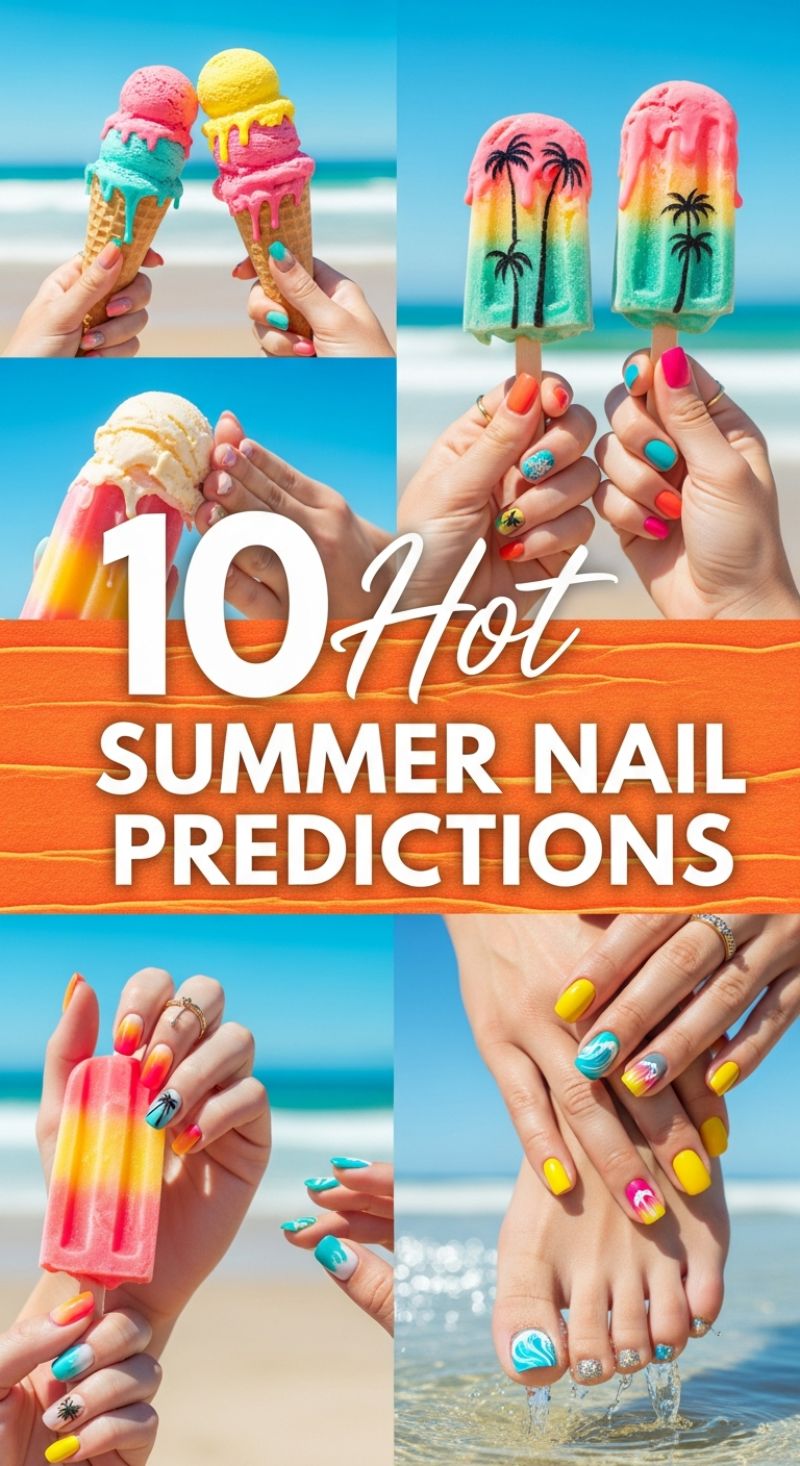
The cornerstone of this summer prediction collection is the fearless use of ultra-bright and neon pigments, moving beyond pastels into saturated pinks, electric yellows, vibrant oranges, and oceanic teals. The primary technique dominating these hot trends is the gradient or ombre effect, which seamlessly blends two or more high-contrast colors, often mimicking sunsets or tropical drinks, as evidenced by the melting ice cream and popsicle designs. To replicate this flawless transition, start with a sheer white base coat to maximize the luminosity of the overlying colors. Apply a light layer of both selected polishes side-by-side onto a small makeup sponge, then gently dab and roll the sponge onto the nail, repeating the process two to three times until the blend is smooth and opaque. Because these vibrant colors can easily stain the skin, ensure you use a clean-up brush dipped in pure acetone immediately after each nail to keep the cuticles pristine, which is essential for making these bold, highly saturated looks appear polished and professional.
Elevating the base color trends are intricate, playful motifs that directly channel beach vacation vibes. The tropical palm tree silhouette is a must-try design, often executed in black polish over a multi-colored sunset gradient background (yellow, orange, and pink). To achieve the precise, delicate silhouettes, utilize a high-pigment black gel polish and the finest detail brush available (typically size 000 or a specialized striping brush). Start by defining the trunk with a steady line, then create the fronds with delicate, short, flicking strokes radiating outward. Alternatively, for those seeking quicker, more uniform execution, investing in specialized stamping plates featuring tropical scenery is a highly effective expert hack. Another key trend is the abstract “ocean wave” or swirl design, perfect for accent nails or pedicures. This fluid look is created by applying a base color, then using a striper brush or dotting tool to drag contrasting white or blue polish through the still-wet color, allowing the polishes to marble and blend naturally before curing. Finish all detailed artwork with a thick, highly glossy, non-wipe top coat to fully encapsulate the design and protect the fragile fine lines from wear.
To fully embrace this summer aesthetic, it is highly advised to coordinate your manicure and pedicure, though they do not need to be identical. For instance, the hands can feature complex detailed artwork like palm trees and gradients, while the feet use a mix of solid neon bases (like the electric yellow shown) complemented by one or two accent toes featuring bold waves, metallic glitter, or simple color blocking. When prepping for a summer vacation where your nails will face harsh elements like chlorine, saltwater, and strong UV rays, product durability is paramount. Always use a specialized UV-blocking top coat to prevent bright pigments from fading, yellowing, or shifting color in the sun. Furthermore, remember that exposure to oils, such as those found in chemical sunscreens, can compromise the edge wear of your polish; combat this by applying a layer of high-quality cuticle oil after sunscreen application. This technique nourishes the surrounding skin while keeping the nail plate flexible and hydrated, significantly reducing the likelihood of premature edge chips during active summer months.
Future Nail Trends: Sculptural Chrome Armor (The 2026 Look)

The image showcases the extreme future of nail art, moving far beyond polish and into the realm of wearable sculpture. Dubbed ‘Sculptural Chrome Armor,’ this trend—highlighted as one of the 5 key looks for 2026—blurs the line between nail extension and high-fashion jewelry. The core aesthetic is defined by fluid, organic chrome and gold metallic forms that wrap and extend dramatically over the natural nail bed. Key visual elements include extreme stiletto or spiked extensions (often reaching several inches), integrated functional art pieces resembling miniature weapons or futuristic tools, and delicate embedded accents like opalescent stones or tiny polished spheres. This look draws heavily from cyberpunk, dystopian high-fashion, and haute couture runway concepts, requiring flawless execution and a fearless attitude. Achieving this level of detail involves advanced fabrication techniques, typically utilizing 3D printing in resin, custom metal casting, or complex hard gel sculpting finished with specialized liquid chrome pigments to achieve that mirror-like, seamless reflection seen across all the pieces.
For the ambitious nail technician or DIY enthusiast looking to replicate this futuristic armor, a full sculptural set requires structural integrity that traditional acrylic or soft gel cannot provide. Start by securing a robust, pre-sculpted full-coverage tip, preferably a stiletto or coffin shape, to act as the base. The ‘how-to’ involves using thick, non-leveling builder gel (like polygel or hard gel) to create the elevated, flowing, three-dimensional elements. Unlike standard nail art, these elements are built off the surface of the nail, sometimes looping into cages or extending into detached spikes, requiring multiple curing stages and meticulous carving to refine the organic lines. Once the sculpture is perfect, the magic lies in the metallic finish. Apply a non-wipe black top coat, cure fully, and then aggressively rub in a high-quality liquid chrome powder or pigment. This step must be executed perfectly to achieve the flawless, reflective sheen that gives the pieces their expensive, metallic appearance, finishing with a hard, non-yellowing gel top coat to protect the chrome from chipping and fading.
While the full-metal armor pieces are typically reserved for editorial shoots, performance art, or high-concept events, adopting elements of this trend can be functional. Expert advice dictates focusing on one or two statement nails—perhaps the index and ring finger—while keeping the others a simple, contrasting chrome or a deep matte black. Functionality is severely limited with extreme lengths and sharp points, so proper application using high-strength nail resin is crucial for temporary wear, ensuring the safety of the wearer and longevity of the piece. When styling, treat these nails as the primary accessory; pair them with clean lines, minimalist clothing, and muted tones to allow the futuristic metalwork to command the spotlight. Remember that maintenance is key: avoid household chemicals and abrasive materials, and always use an oil-based makeup remover (never acetone) to clean the surfaces of the metallic art.
10 Sweet V-Day Nail Designs
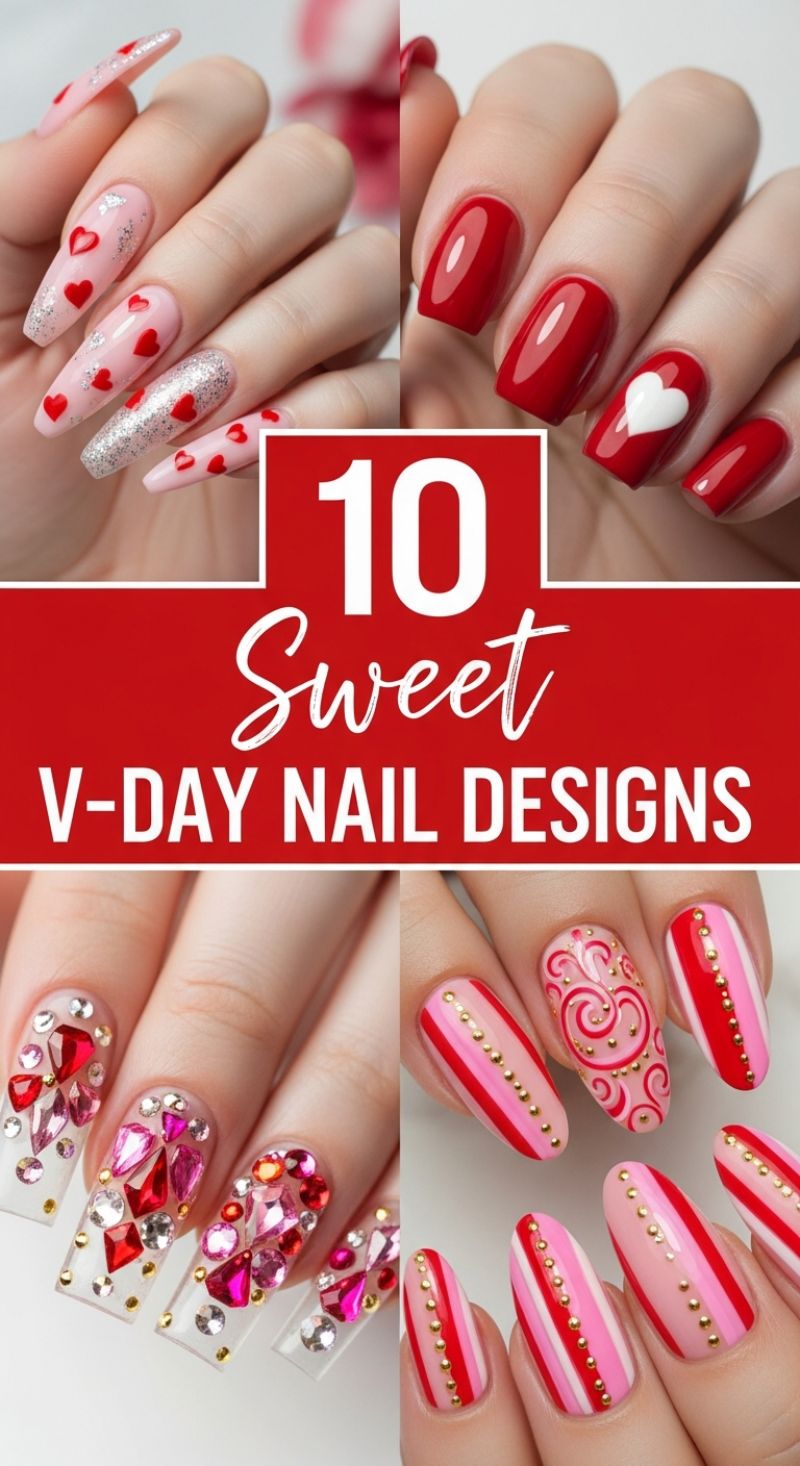
Valentine’s Day nail art is defined by the romantic interplay of pink, red, and white, coupled with classic symbols like hearts and opulent embellishments. To achieve the timeless classic looks shown, start with a rich, high-gloss cherry red polish. For the simple accent heart (Design 2), cure your base color, then use a white gel polish and a fine detail brush or a specialized dotting tool to create two small, adjacent dots; drag the brush from the center of the dots downwards to meet in a point, forming a flawless heart shape. Alternatively, for a whimsical, playful vibe (Design 1), coat long coffin nails in a sheer rosy nude or pale pink. Apply scattered red hearts using a stamping plate or vinyl stencils for uniformity. Elevate the look by dedicating an entire accent nail to shimmering silver glitter or applying a delicate glitter gradient near the cuticle or tip. Always seal your art with a UV-protective top coat to prevent fading, especially when working with bright reds and pinks.
For those seeking a show-stopping, high-drama manicure (Design 3), the technique centers on maximalist gemstone application. This look requires structural integrity, so clear acrylic or builder gel tips are recommended. Select a variety of flat-back rhinestones and shaped jewels in shades of ruby red, hot pink, and clear crystal. The key to lasting adhesion is embedding the gems in a medium-viscosity builder gel or a dense rhinestone adhesive rather than standard top coat. Work in small sections, using a wax pencil or specialized tweezers for precise placement, clustering the largest stones near the cuticle and allowing smaller, scatter gems to cascade down the free edge. After all stones are placed and cured, use a thin detail brush to apply a layer of no-wipe top coat *around* the bases of the gems, being careful not to coat the facets, which dulls the sparkle. This meticulous sealing ensures longevity and prevents snagging.
To master the sophisticated striped and swirled romance look (Design 4), precision is paramount. Start with a pale, milky pink base coat. For the striped nails, use striping tape or a very thin liner brush to apply clean, parallel lines of varying thickness in alternating shades of deep red and light pink. For the opulent accent nail featuring filigree, use a pigmented red or gold gel paint and a fine line brush to execute delicate scrollwork. Start with a central heart or oval shape and build outwards, creating symmetrical spirals that mimic Victorian lacework. The final touch for the striped nails involves adhering small gold micro-studs or beads along one stripe line. Cure a layer of top coat, place the studs while the polish is still tacky, and then fully encapsulate the studs in a second, sturdy layer of top coat to ensure they remain secured and flush with the nail surface.