
Unlock the secrets to the Modern Organic Home aesthetic. Master the use of warm wood, rich textures, and fresh green accents to create a stunning, sophisticated, and naturally inviting interior design.
The Power of High-Contrast Texture and Warm Wood Tones
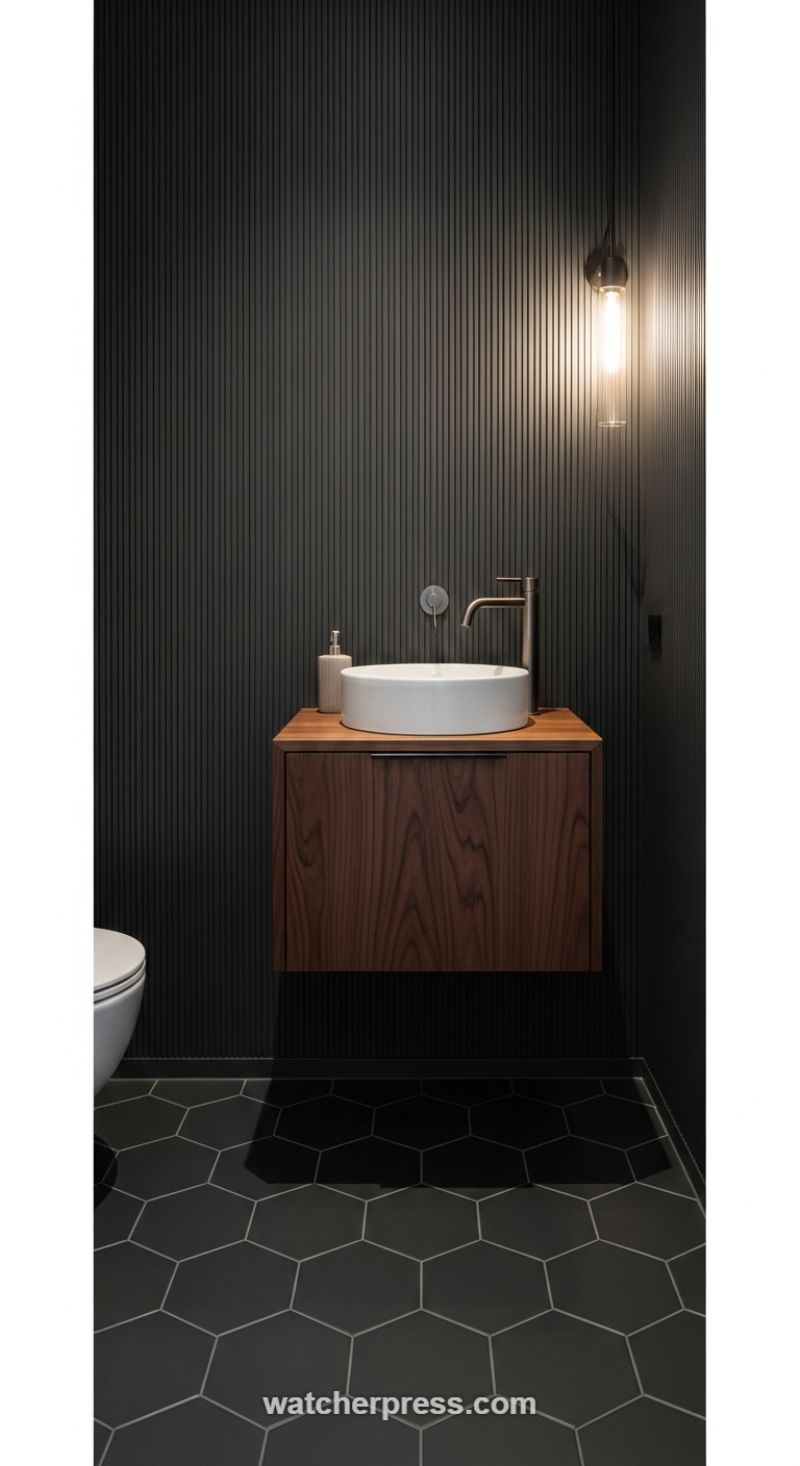
Achieving a modern organic aesthetic requires thoughtful layering of materials, and in small, high-impact spaces like a powder room, this means using dramatic texture to prevent dark colors from falling flat. Start by introducing strong verticality. The dark, nearly black ribbed paneling seen here is a brilliant design choice; the deep grooves catch the light from the sconce, creating dynamic shadow lines that make the wall appear deeper and far more complex than a smooth painted surface ever could. This tactile vertical element automatically draws the eye upward, subtly enhancing the perception of ceiling height—a crucial trick in compact rooms. Balance this powerful wall treatment with a contrasting floor texture, such as the large hexagonal matte tiles. The large-scale geometric pattern of the flooring provides a solid, grounding element that visually anchors the floating vanity, while the subtle grout lines introduce a third layer of fine texture.
The essential counterpoint to this dramatic, dark background is the introduction of natural wood. In a high-contrast palette, choose woods with a deep, rich hue, such as walnut or dark mahogany, as lighter woods may appear washed out. The floating vanity not only provides necessary functionality but acts as a visual anchor, its warm grain injecting the vital organic component into the modern design. The cantilevered nature of the vanity maintains the clean, minimalist lines characteristic of contemporary design while allowing the full texture of the floor to be appreciated. When selecting fixtures, opt for materials that complement the wood’s warmth—brushed metals like brass or bronze soften the severe black backdrop and connect seamlessly with the organic material.
Finally, master the art of illumination to sculpt the finished space. In rooms dominated by texture, lighting should be functional and atmospheric. A single, focused wall sconce featuring an exposed filament bulb provides a warm, golden glow that intentionally highlights the three-dimensional quality of the ribbed walls. This warm light prevents the dark palette from feeling cold or sterile, creating an intimate and luxurious atmosphere. Furthermore, keeping the faucet and sink accessories minimalist and wall-mounted ensures that the visual emphasis remains strictly on the interplay between the wood grain, the textural walls, and the vessel sink, transforming a utilitarian space into a sculptural moment within the home.
Elevating Texture with High-Contrast Flooring and Classic Trim
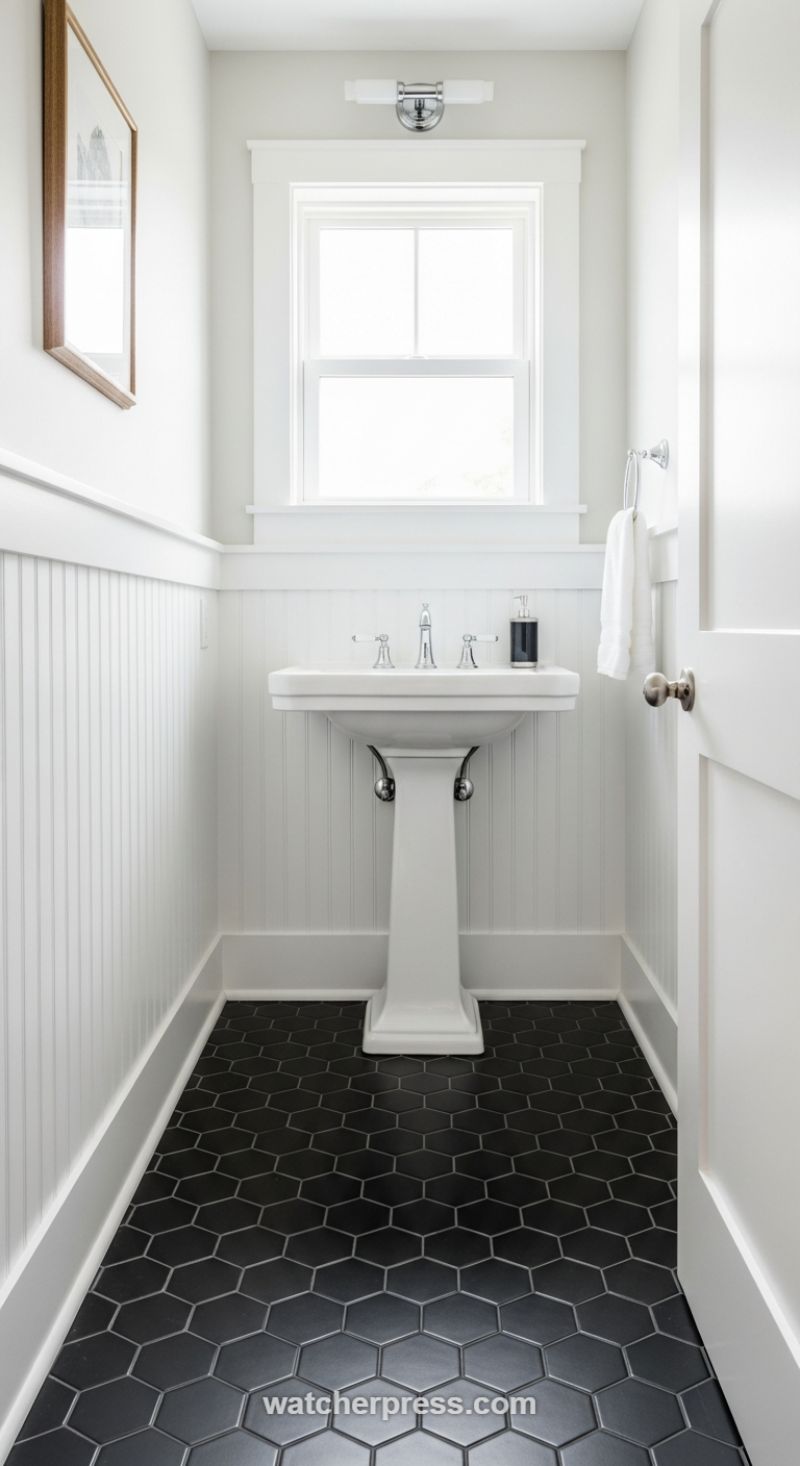
The modern organic aesthetic thrives on tactile surfaces and deliberate simplicity, making texture your most crucial tool in high-contrast spaces. As seen in this pristine powder room, the walls are not merely painted white; they are clad in crisp, vertical beadboard wainscoting. This classic, often-overlooked element immediately adds depth and visual interest without needing loud colors or complex patterns. When implementing this look, ensure your wainscoting rises at least two-thirds up the wall to maximize its heightening effect on a smaller room, lending it an air of traditional craftsmanship. Couple this wall treatment with substantial, architectural baseboards and window casings, all painted in the same unifying shade of bright white, which allows the natural shadows cast by the vertical lines to create an organic rhythm that elevates the entire design. The goal is to make the walls feel dimensional, reflecting light softly and preventing the high-contrast design from feeling flat or sterile.
To successfully ground a room dominated by light textures, you must introduce a strong anchor, typically achieved through flooring. This space brilliantly utilizes matte black hexagonal tiles, which provide essential contrast while maintaining a subtle organic connection. The hex shape, a vintage pattern, softens the modern drama that high-gloss black tile might introduce. When selecting this feature, opt for a low-sheen or matte finish; this choice reduces glare, makes the floor appear richer, and visually connects better to natural materials. For a powerful instructional application, use a light or charcoal gray grout, rather than black, to etch the geometric pattern clearly. This fine outline serves as an intricate layer of texture that works in dialogue with the vertical lines of the beadboard, ensuring that every surface contributes to the curated, organic feel. This high-contrast floor choice not only defines the room but also provides the necessary weight to support the clean, bright pedestal sink and large window above.
Finally, the modern organic home requires intentional material mixing to avoid a sterile outcome. Though the primary palette is black and white, warmth must be introduced through natural accents. In this setting, the small, framed piece of artwork, encased in a warm, natural wood frame, acts as a crucial thermal element, offsetting the cool, reflective surfaces of the chrome fixtures and white porcelain. When finishing your own high-contrast space, instruct yourself to introduce organic materials sparingly but deliberately: a wooden soap tray, a linen hand towel, or a small plant on the sill. The chrome fixtures themselves, while modern, should maintain a timeless profile, such as the period-appropriate faucet and towel ring shown here. By balancing the crisp geometry and texture of the walls and floor with these subtle injections of natural wood and soft textiles, the space achieves a complex, layered aesthetic that is both clean and inherently inviting.
Layering Luxury: Mastering Soft Texture in the Modern Organic Bedroom
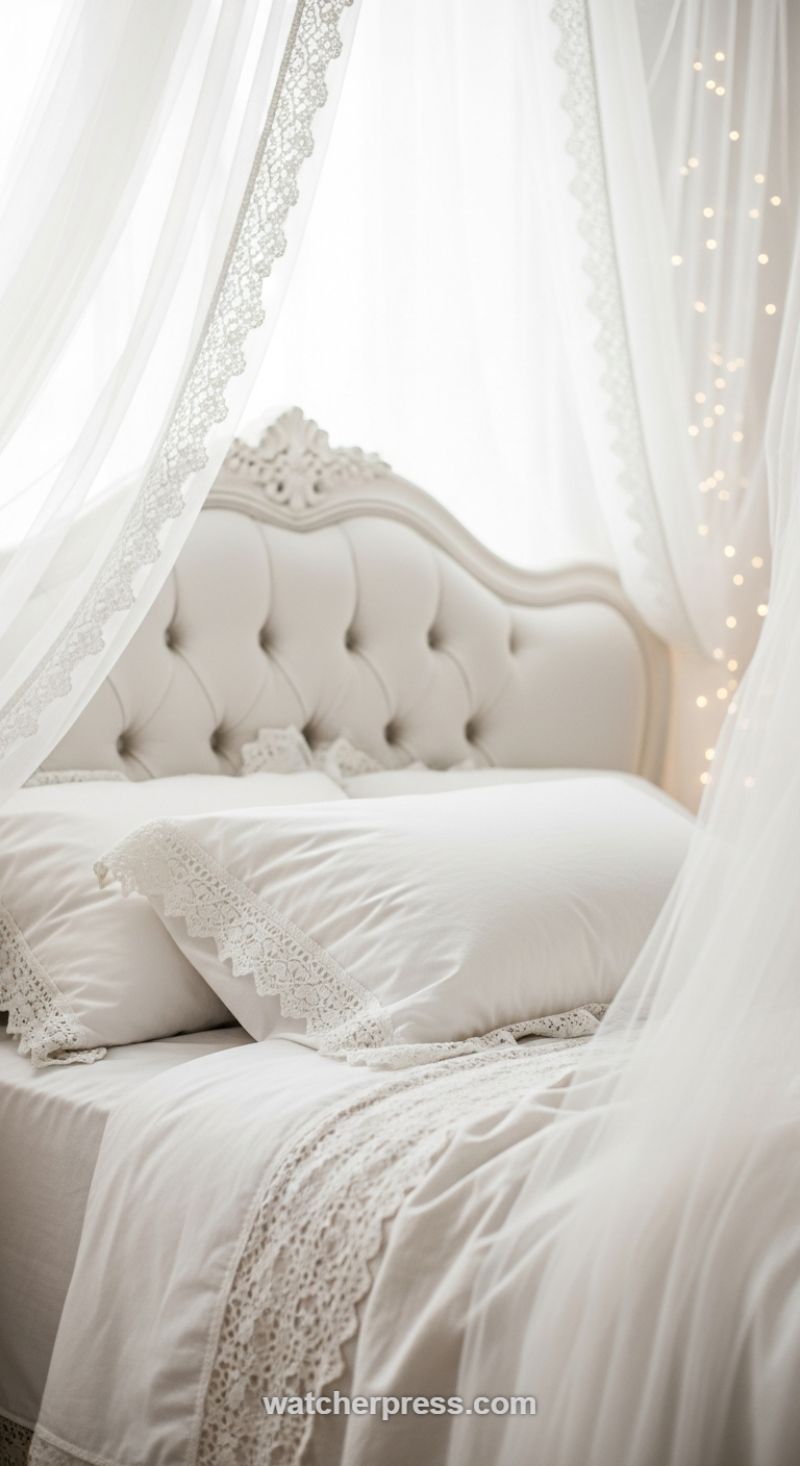
The modern organic aesthetic thrives on tactile diversity, and nowhere is this more critical than in the sanctuary of the bedroom. The visual impact of this space relies almost entirely on the strategic layering of monochromatic textures. To replicate this look, begin with the structural foundation: a deeply tufted, upholstered headboard, preferably in matte linen or a brushed velvet, which provides immediate, rich depth and anchors the entire scene. The next step is selecting bedding that contrasts heavily detailed elements with smooth, primary fabrics. Notice the use of thick, antique-style crocheted lace bordering the pillows and the top sheet; this intricate, almost vintage texture plays against the simplicity of the smooth, white cotton sheets, ensuring the all-white palette feels luxurious and curated rather than sterile. This deliberate contrast is the key to mastering high-end, textured layering, giving the room a historical warmth essential to the organic feel.
Enhancing the softness further requires controlling light flow, which is achieved through sheer canopy draping. Utilizing lightweight fabrics like voile or delicate linen as sheer curtains diffuses natural light, bathing the room in a gentle, atmospheric glow reminiscent of filtered sunlight through foliage. This approach highlights the individual textures of the bedding and upholstery. For a modern organic interpretation, ensure these sheers have a subtle border or trim (like the delicate lace seen here) rather than being entirely plain, adding another nuanced layer of pattern that catches the light. The placement of soft, background lighting, such as subtle fairy lights intertwined within the sheers, provides a warm, golden counterpoint to the bright whites, introducing a sense of cozy, ethereal magic that elevates the space beyond simple minimalism.
While this image focuses on textiles, integrating this level of soft texture into a true modern organic home requires thoughtful grounding elements. To prevent the room from feeling too airy or delicate, counterbalance the sheer fabrics and intricate lace with materials that bring visual weight and earthiness. Introduce a reclaimed or raw wood nightstand or dresser nearby, ensuring its grain and imperfections provide a necessary roughness. Furthermore, incorporate green accents in a muted, sophisticated way; instead of a large, vibrant houseplant, opt for a simple ceramic vase holding a few textural eucalyptus branches or dried grasses. This completes the trifecta of the modern organic home—soft textures, grounding wood, and subtle green accents—allowing the bedroom to feel both romantic and fundamentally connected to nature.
Layering Wood and Green for Organic Kitchen Warmth
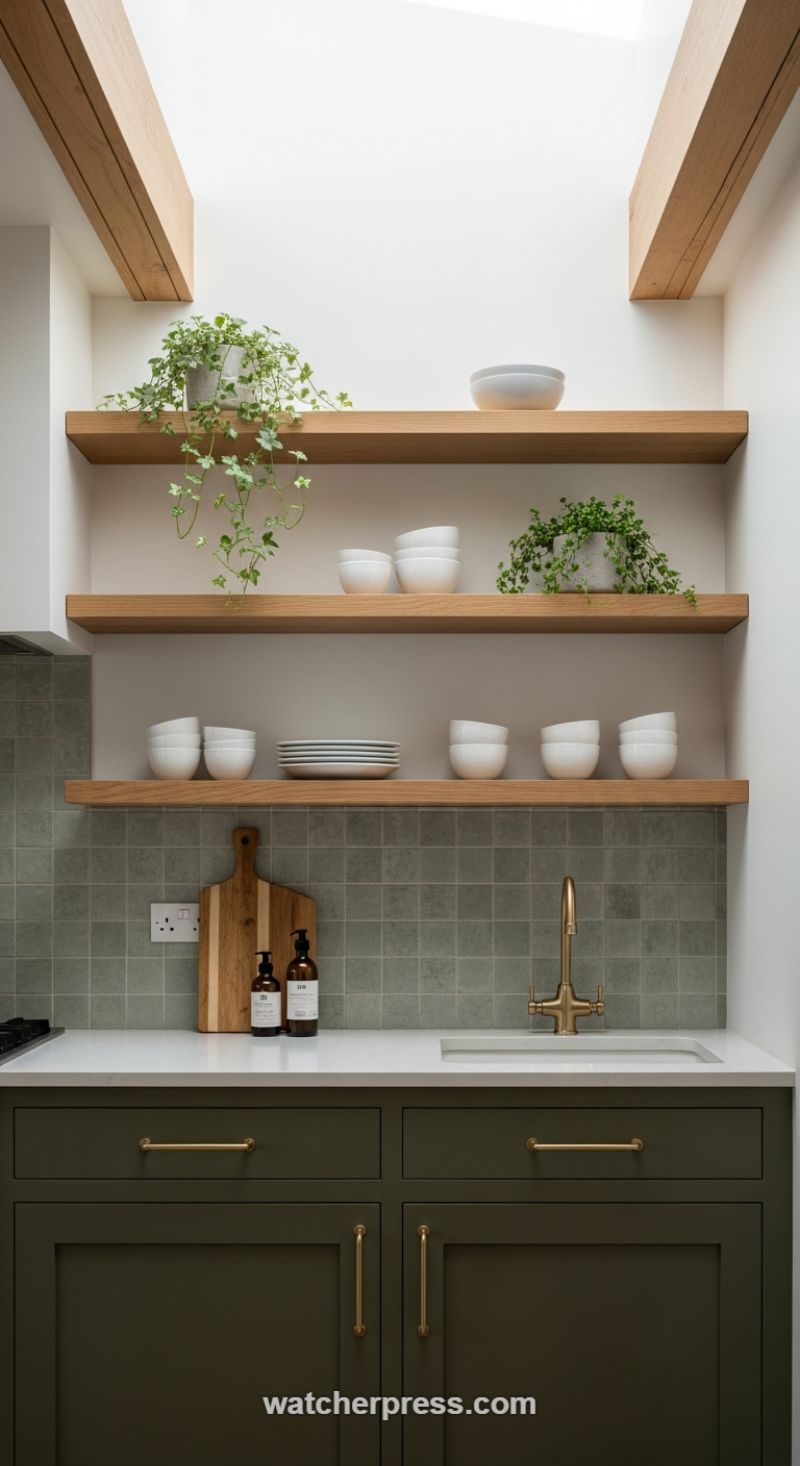
The foundation of a successful modern organic kitchen lies in establishing a rich, nature-inspired color palette for the built-in elements. Start by selecting a deep, sophisticated muted green for the base cabinetry, as seen here in a dark olive tone. This color choice grounds the room, providing immediate warmth and visual depth. To prevent the space from feeling too heavy, balance this deep tone with textural, subtle backsplash material—the small, square, dusty sage-green tiles used in this design offer visual texture and continue the green theme without competing with the main cabinetry color. Hardware is key; choose simple, elongated brass pulls and a matching faucet, as the warm metallic tones flawlessly complement both the earthy greens and the natural wood accents, elevating the design from rustic to refined contemporary. Expert advice dictates pairing this setup with a crisp, bright countertop and white walls, which reflect the copious natural light streaming in from the overhead skylight, keeping the atmosphere fresh and expansive.
The use of thick, floating wood shelves (light oak or ash) in place of traditional upper cabinets is central to achieving this open, organic aesthetic. These shelves serve both a functional and decorative purpose, providing necessary storage while showcasing the beauty of the wood grain. To maintain a clean, intentional look, style the shelves with matching, simple white ceramics; this ensures that dishes act as a cohesive backdrop rather than visual clutter. Crucially, notice how the natural wood theme is repeated structurally above, framing the light source with exposed wooden beams. This deliberate repetition of material ties the entire vertical space together, drawing the eye upward and emphasizing the light, airy quality of the room, which is a hallmark of truly integrated modern organic design.
Finally, integrate live green accents to introduce texture and dynamism. Trailing houseplants, such as the Pothos and Ivy shown cascading over the top shelf, provide soft lines that contrast beautifully against the hard geometry of the shelves and cabinetry. These live elements fulfill the essential
The Power of Contrasting Textures: Wood and Minimalist Ceramics
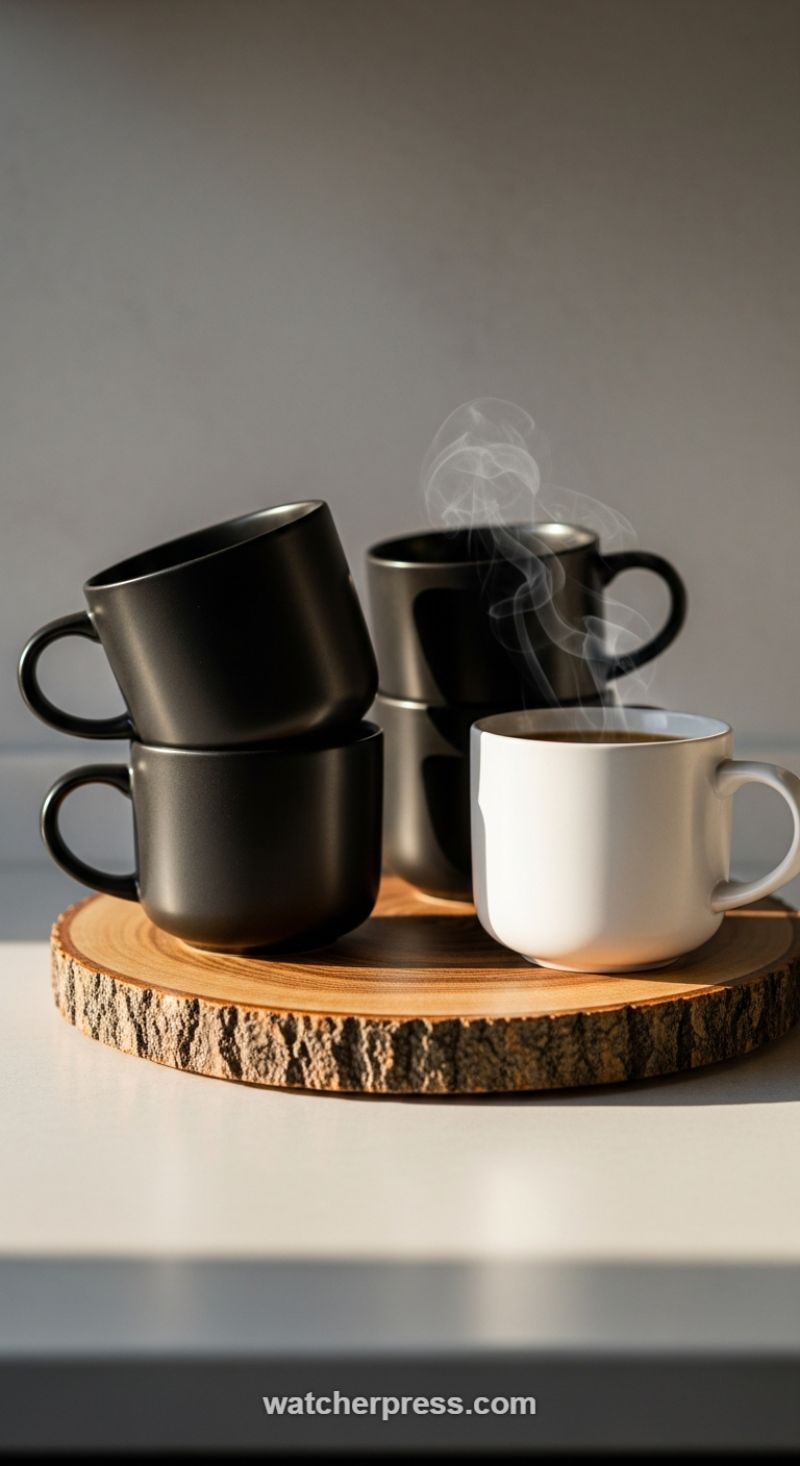
To successfully integrate organic design into a modern setting, focus on grounding elements with natural wood that retains its inherent texture. As demonstrated by the raw, live-edge wood slice used as a serving tray, the goal is to introduce a visceral element that counters the sleekness typically found in contemporary interiors. The pronounced bark and visible grain of the wood immediately convey warmth and history, acting as a crucial anchor for the entire vignette. When selecting these wood accents—whether coasters, cutting boards, or shelving—opt for pieces that highlight imperfection, such as burl or knots, and avoid overly processed, finished surfaces. This ensures the organic component feels authentic rather than manufactured, which is key to achieving a truly modern organic aesthetic. Layering these rough, natural forms with smooth objects creates a necessary visual and tactile friction that defines sophisticated design.
Once the textural foundation is set, utilize high-contrast accessories to inject modern sophistication. The stark palette of matte black and crisp white ceramics showcased here is a prime example of balancing rustic warmth with sharp edge. The smooth, rounded profile of the mugs provides a necessary geometric simplicity that prevents the scene from becoming overly rustic. Crucially, the use of matte finishes on the ceramics softens the contrast and absorbs light beautifully, adding another layer of tactile interest compared to glossy alternatives. When placing these contrasting items, arrange them dynamically; stacking the black mugs introduces height and depth, while positioning the solitary white mug forward draws the focus. This visual interplay ensures the setup is engaging and intentional, leveraging monochromatic color schemes to maintain a clean, contemporary feel while utilizing shape for softness.
The final layer in mastering this look is utilizing natural light to elevate the inherent textures and warmth. Notice how the side lighting catches the steam rising from the white cup, instantly adding a sense of life, comfort, and movement to the static composition. This directional light also sculpts the rough edges of the wood and highlights the subtle curvature of the matte mugs, intensifying the material contrast. In your own space, arrange vignettes near windows where the light can throw dramatic shadows across textured wood grains or woven fabrics. By ensuring your organic accents—like the raw wood base—are hit by direct sunlight, you naturally emphasize their depth and character, transforming a simple collection of items into a dynamic and welcoming display that speaks directly to the comfort and simplicity of the modern organic home.
Elevating Relaxation Zones: Mastering Organic Texture and Warm Lighting
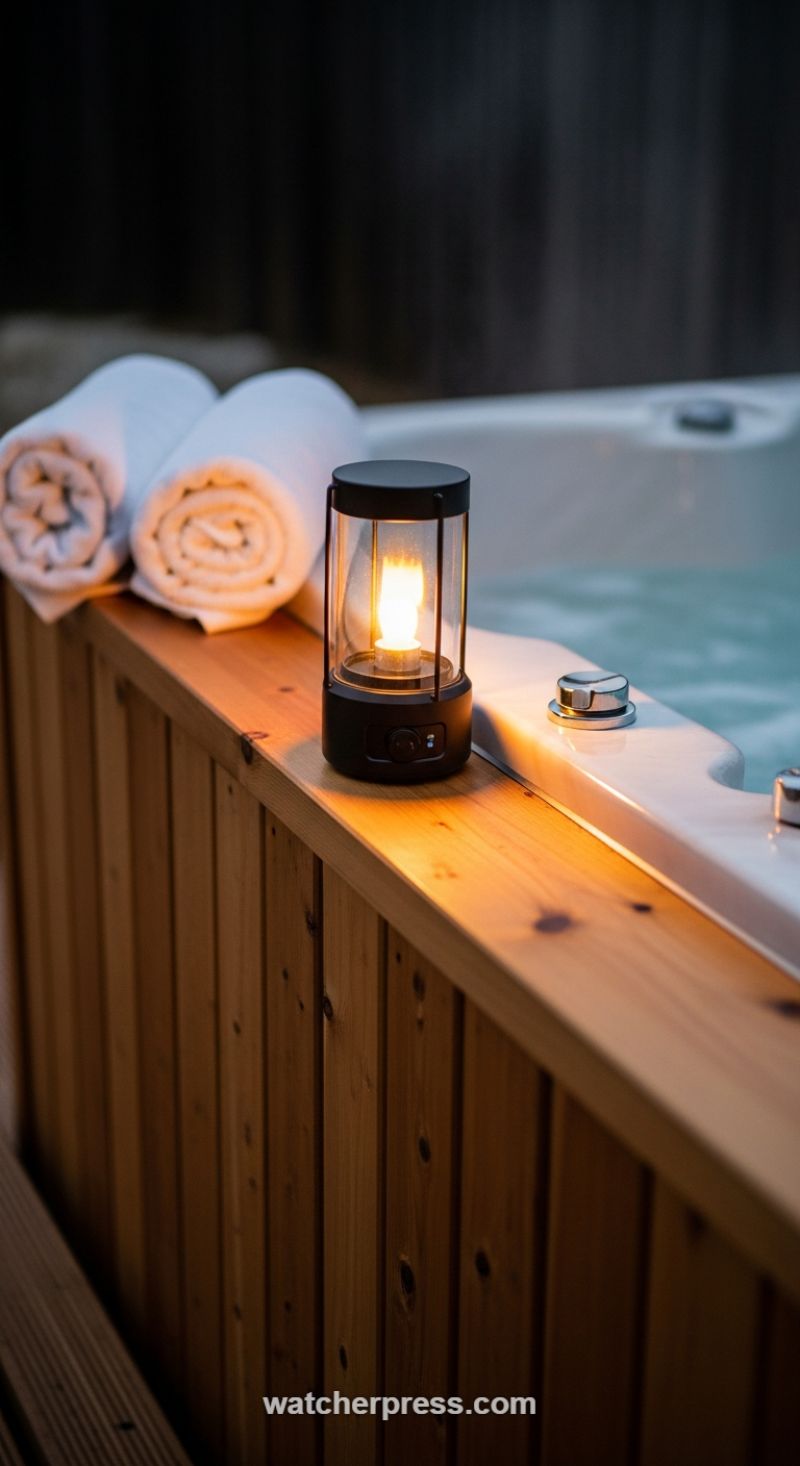
The modern organic aesthetic thrives on the balanced contrast of natural textures, a principle beautifully exemplified in the integration of wood and smooth synthetic materials, particularly in areas dedicated to wellness and relaxation like a spa or hot tub zone. The key instructional takeaway here is intentional juxtaposition: utilize the linear, rough-hewn quality of vertical wood paneling, such as cedar or teak, to provide a warm, earthy foundation. This natural element should sharply contrast with the highly smooth, often white or neutral, porcelain or fiberglass surfaces of the tub itself. This friction between rustic and refined is what defines modern organic style, ensuring the space feels grounded and luxurious simultaneously. When designing, ensure the wood is treated or naturally water-resistant to maintain its integrity against steam and moisture, keeping the environment low-maintenance and high-impact. The structural warmth provided by the wood visually deepens the space, creating a sense of enclosure and intimacy.
Accenting the space with functional, yet plush, textiles is crucial for completing the sensory experience. Note how the crisp, white, rolled towels introduce a texture of softness and purity, breaking the dominance of the hard wood and smooth tub edge. In organic design, soft accents should be natural and minimally dyed—think high-quality cotton or linen in pure white, cream, or light grey—to maintain the clean, spa-like feeling. Position these practical elements symmetrically to enhance the sense of order and serenity. While this specific image lacks visible green accents, the principle of introducing ‘life’ remains: the presence of moving, vital water and the suggestion of fresh air fulfills the organic requirement. If this were an indoor spa area, incorporating a low-light tolerant, deep-green plant, like a peace lily or fern, would serve the same purpose of grounding the area in nature.
Finally, the mastery of ambiance relies heavily on accent lighting, which must be carefully curated to enhance the organic mood. Avoid harsh, overhead fixtures, opting instead for portable, low-Kettle warm lights that mimic natural elements. The rechargeable lantern shown here, featuring an LED flame effect, is an expert choice because its light temperature (usually below 2200K) casts a deep, golden glow that dramatically highlights the grain of the wood. This warm light not only fosters immediate relaxation but also interacts with the natural materials, making the wood tones richer and more saturated. Furthermore, portable lighting is safer and more flexible near water. When planning your organic home, always prioritize sensory layering: ensure the textures (wood, cotton, water) are tactile, and the lighting is soft, warm, and strategically placed to enhance, rather than overwhelm, the natural materials.
The Seamless Synthesis: Mastering Wood Grain, Minimalist Lines, and Natural Accents
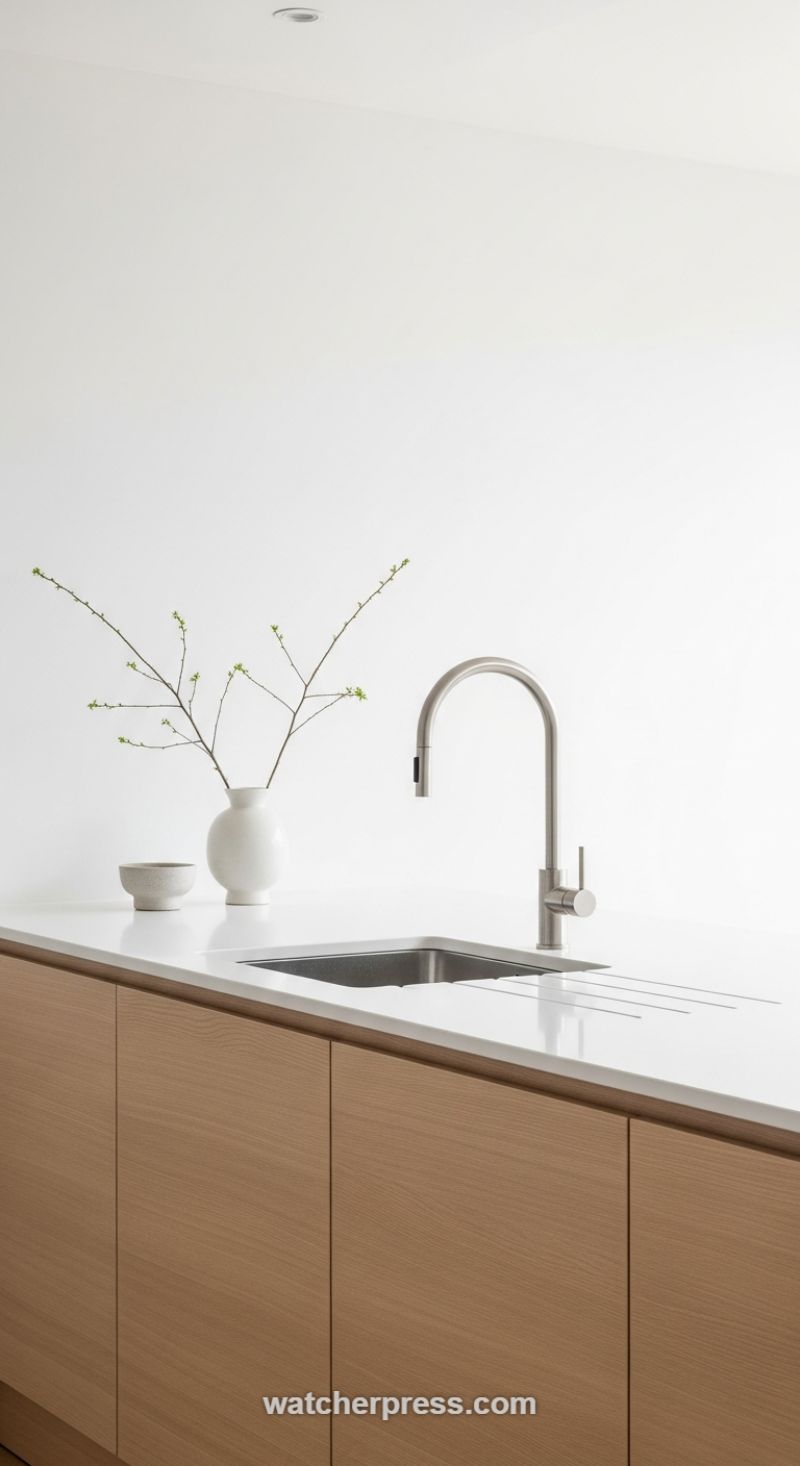
Achieving the modern organic aesthetic hinges on creating a dialogue between warmth and rigor. In the kitchen, this means selecting architectural materials that are both clean-lined and tactile. As seen here, the foundation is built upon frameless, flat-panel cabinetry executed in a light, natural wood veneer, such as white oak or ash. This choice introduces immediate texture and warmth without the visual disruption of traditional hardware; the handleless design reinforces the overall minimalist structure. Contrast this wood warmth with a starkly bright white solid surface countertop (like quartz or a seamless composite). The key is visual consistency: ensure the countertop material extends cleanly to the walls, and opt for integrated features, such as the undermount sink and subtle carved drain grooves, which offer utility while maintaining a pristine, monolithic appearance. This contrast of warm, horizontal wood grain and cool, vertical white surfaces is the defining element of organic minimalism.
The selection of fixtures is crucial for bridging the gap between natural materials and modern function. Choose finishes that lean towards matte or brushed rather than high-polish chrome, as these surfaces absorb light and feel inherently softer and more integrated into the organic palette. The tall, gooseneck faucet shown here, likely in brushed stainless steel or nickel, is both sophisticated and ergonomic, offering the height needed for function while its simple, cylindrical base complements the streamlined environment. When integrating metal elements, ensure they share a consistent tone (e.g., all warm brushed gold or all cool brushed nickel) to avoid clutter. Remember that the sink area is the utilitarian heart of the kitchen, so selecting durable, high-quality materials ensures the longevity and integrity of this highly-used design zone.
Finally, the organic accent is what transforms a clean, minimalist space into a modern organic home. The inclusion of delicate, asymmetrical greenery—like the slender, budding branches placed in a simple, curved white ceramic vase—introduces life and unexpected softness. These natural elements act as vital visual breaks against the hard, straight lines of the built environment. To replicate this effect, use seasonal clippings or simple potted herbs rather than elaborate floral arrangements; the goal is raw, low-effort beauty. The subtle use of textural accessories, such as the small, rough-textured ceramic bowl next to the vase, reinforces the organic theme by providing a contrast in material finish against the smooth white countertop, making the space feel curated, lived-in, and deeply serene.
Harmonizing Glossy Tiles and Rustic Wood for Organic Kitchen Appeal
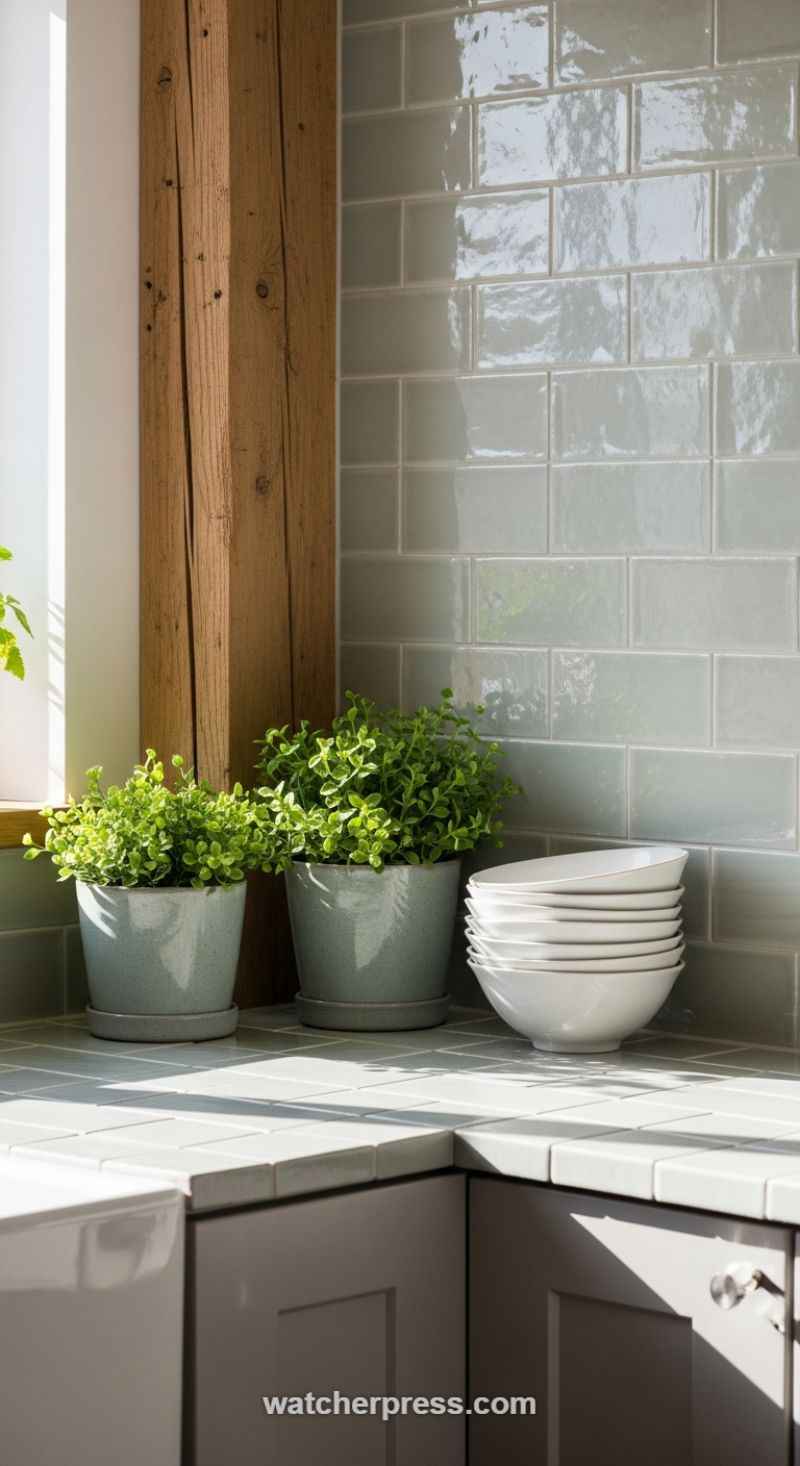
The modern organic aesthetic thrives on the strategic juxtaposition of opposing textures, a principle perfectly illustrated by contrasting materials in a high-utility space like the kitchen. Here, the sleek, highly reflective quality of the pale sage subway tiles on the backsplash meets the rugged, deeply textured nature of the adjacent natural wood structural beam. This pairing is crucial for success: the glossy tile reflects light, keeping the space airy and clean, while the wood introduces essential warmth, grounding the design and preventing the tiled surfaces from feeling overly sterile or cold. When executing this design, select subway tiles with subtle variations or an intentionally irregular edge (often called ‘artisan’ or ‘undulated’ tiles); this small imperfection helps bridge the gap between the modern geometric layout and the natural, raw character of the accompanying wood element. Ensure the tile grout is a similar neutral tone to maintain focus on the texture and shine, not the grid pattern itself.
To solidify the ‘organic’ half of the equation, integrate vibrant, natural green accents strategically. The placement of simple, full potted plants near the light source (a window ledge) maximizes their visual impact and ensures their health. The key is using greenery to soften the hard edges inherent in kitchen design. Notice how the plants here are housed in speckled, muted ceramic planters that echo the light sage color family of the surrounding tiles, demonstrating a thoughtful continuation of the color palette. Furthermore, the countertop itself continues the tiled theme, but shifts to smaller, square, matte tiles. This subtle change in scale and finish (from glossy large rectangles on the wall to matte small squares on the horizontal surface) provides a textural break while maintaining chromatic harmony. This layered approach ensures that every surface contributes meaningfully to the overall textural narrative.
Finally, expert organic design requires neutral foundations to let the main textural components shine. The cabinetry, featuring clean Shaker-style fronts in a deep, matte grey-taupe, anchors the lower half of the space without competing with the vibrant wood and glossy tilework above. Similarly, functional accessories, such as the stack of simple white ceramic bowls, are essential elements of the decor. Their smooth, uniform finish provides a necessary visual pause and reinforces the clean, modern component of the design. When replicating this look, remember that balance is paramount: allow one natural element (like the wood) to be profoundly rustic, and complement it with refined, subtle textures (like the varying tiles and simple ceramics). The resulting aesthetic is sophisticated, functional, and deeply rooted in natural inspiration.
Mastering Luxurious Layers: The Soft Side of Organic Design
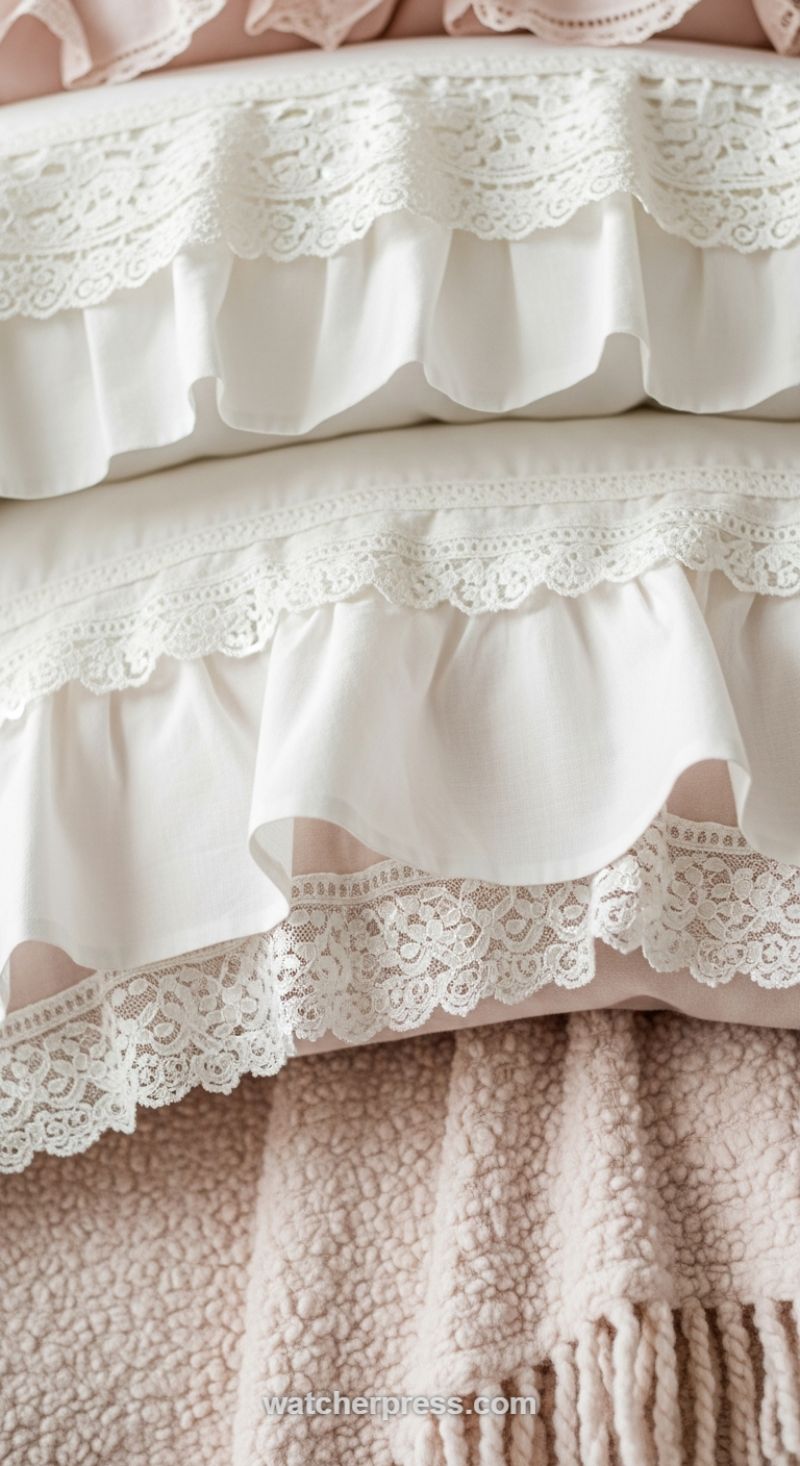
The modern organic home thrives on tactile complexity, moving beyond simple minimalism to embrace warmth and depth. The key to mastering this look, particularly in textiles, is the thoughtful juxtaposition of textures. As seen in this close-up, highly refined elements—such as crisp, ruffled cotton and delicate, intricate lace—are paired directly against a dramatically rougher, more raw texture, like a chunky sherpa or boucle wool throw in a muted blush tone. This technique is essential for creating high sensory appeal. The contrast between the smooth, structured fabrics and the nubby, unprocessed pile ensures that the layers feel intentional and dynamic, adding a bespoke, lived-in quality that elevates the organic aesthetic beyond mere rustic simplicity. When curating your layers, think about the weight and density of each material; the goal is to provide visual and physical cushioning while maintaining an airy, natural feel.
To ensure these luxurious, textured layers feel integrated into a modern organic setting, maintain a strictly neutral and earth-toned palette. The dominance of soft white and ivory ensures that the highly decorative details, like the lace and ruffles, do not feel outdated or overly formal. These light, foundational colors reflect natural light beautifully, enhancing the dimensionality of the varied textures. Furthermore, prioritize natural fibers: linens and high-quality cottons for your bedding provide breathability, while the use of materials like shearling, untreated wool, or chunky knit fabrics for throws introduces that vital element of organic authenticity. The subtle use of color—such as the soft nude or blush tone visible beneath the white fabrics—serves as a grounding accent, offering warmth without distracting from the overall textural narrative.
Implementing this layered approach requires a strategic build-up, starting with the sleekest, most utilitarian pieces and ending with the dramatic accents. Begin with smooth, high-quality sheets and duvets that serve as a clean backdrop. Next, introduce the decorative elements, such as pillows with structured ruffles and detailed lace edges, placing them in the mid-ground. Finally, drape the raw, heavy texture—the chunky throw—casually over the foot of the bed or arm of a sofa. This final layer is crucial; its rough, voluminous nature provides the perfect counterpoint to the more delicate linens, grounding the arrangement and inviting touch. By consistently balancing delicate refinement with raw, natural texture, you achieve a harmonious and deeply comforting look that defines the contemporary organic interior.
Mastering Soft Texture and Ambient Lighting
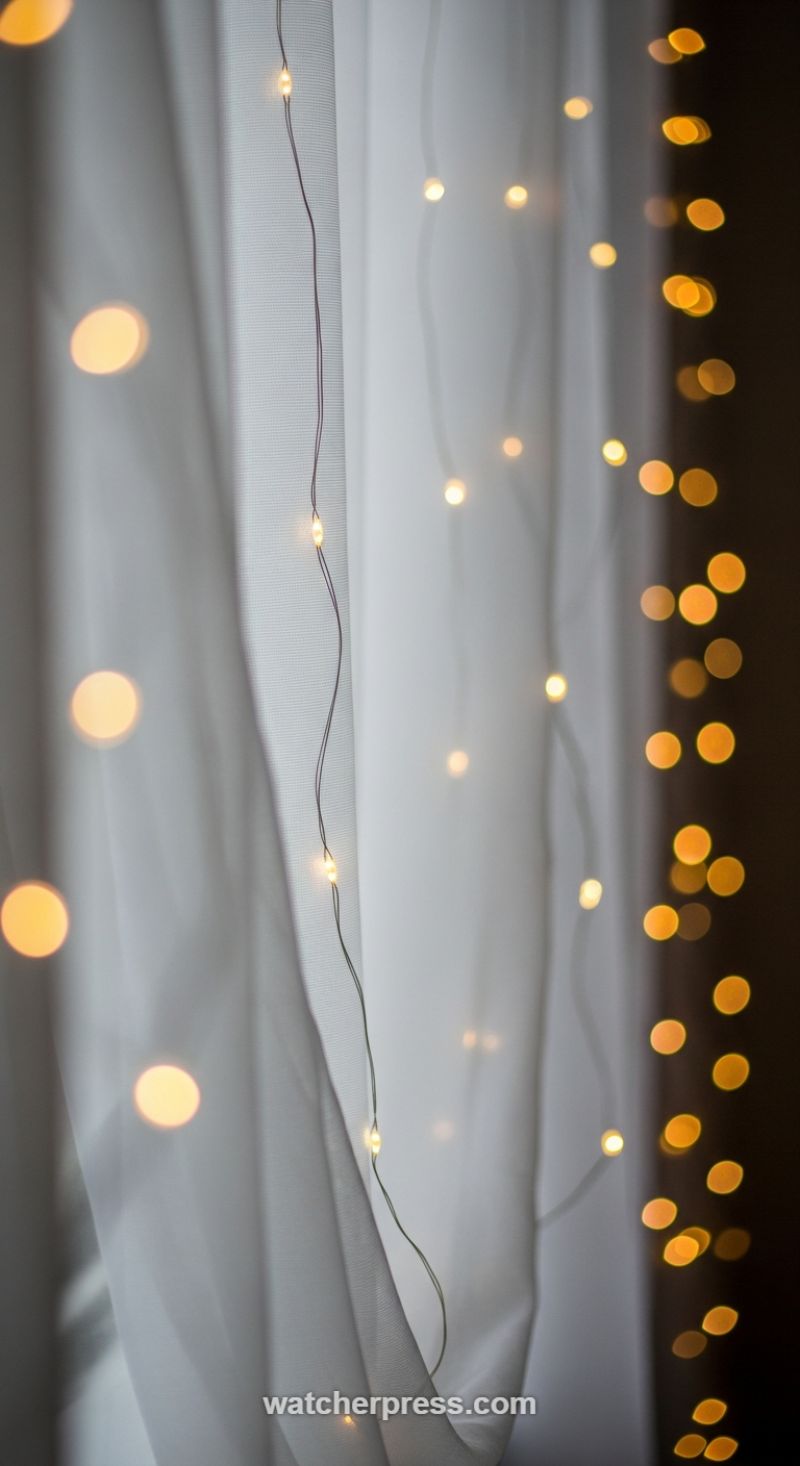
The modern organic home thrives on layered textures that feel effortless and approachable, and sheer drapery, as seen in this visual, is a crucial component in mastering this softness. When selecting window treatments, opt for materials like linen blends or voile in natural, muted tones (creams, off-whites, soft grays). These fabrics do more than just provide privacy; they act as powerful light filters, diffusing harsh daylight into a soft, uniform glow that reduces visual contrast and makes interiors feel immediately calmer and more spacious. For an expert touch that ensures the sheer fabric contributes maximum textural impact, ensure your curtain rod is hung high and wide. This trick elongates the windows and allows the delicate material to either pool slightly at the floor or fall cleanly in soft, voluminous folds.
The second critical element captured here is the strategic deployment of warm, ambient lighting to enhance the feeling of coziness. In modern organic design, harsh overhead fixtures are often minimized in favor of layered, low-level light sources. Delicate string lights, often referred to as ‘fairy lights’ when micro-LEDs are used, are exceptional for creating both depth and warmth. To replicate the stunning visual effect shown, choose warm-toned LEDs (specifically those around 2200K to 2700K color temperature) to mimic candlelight or firelight, thus avoiding the harsh blue-white tones common in cooler LEDs. Weave these delicate strings either behind or subtly through sheer fabric layers near a window or backdrop.
This technique elevates decorative lighting by creating soft, out-of-focus pockets of light, known as bokeh, which add a magical, ethereal dimension. This subtle glow transforms an otherwise flat wall or window into a dynamic, textural focal point after dusk. When integrating these elements, remember that the visual interaction is key; the delicate wires offer a subtle contrast against the voluminous folds of the curtain. To ensure a high-end execution, prioritize meticulous wire management by opting for discreet USB-powered or slim plug-in versions, concealing all cords completely within the curtain folds or behind trim. This careful placement ensures the final look is sophisticated, permanent atmospheric lighting, rather than temporary holiday decor.
Layering Organic Texture and Warmth for Ultimate Comfort
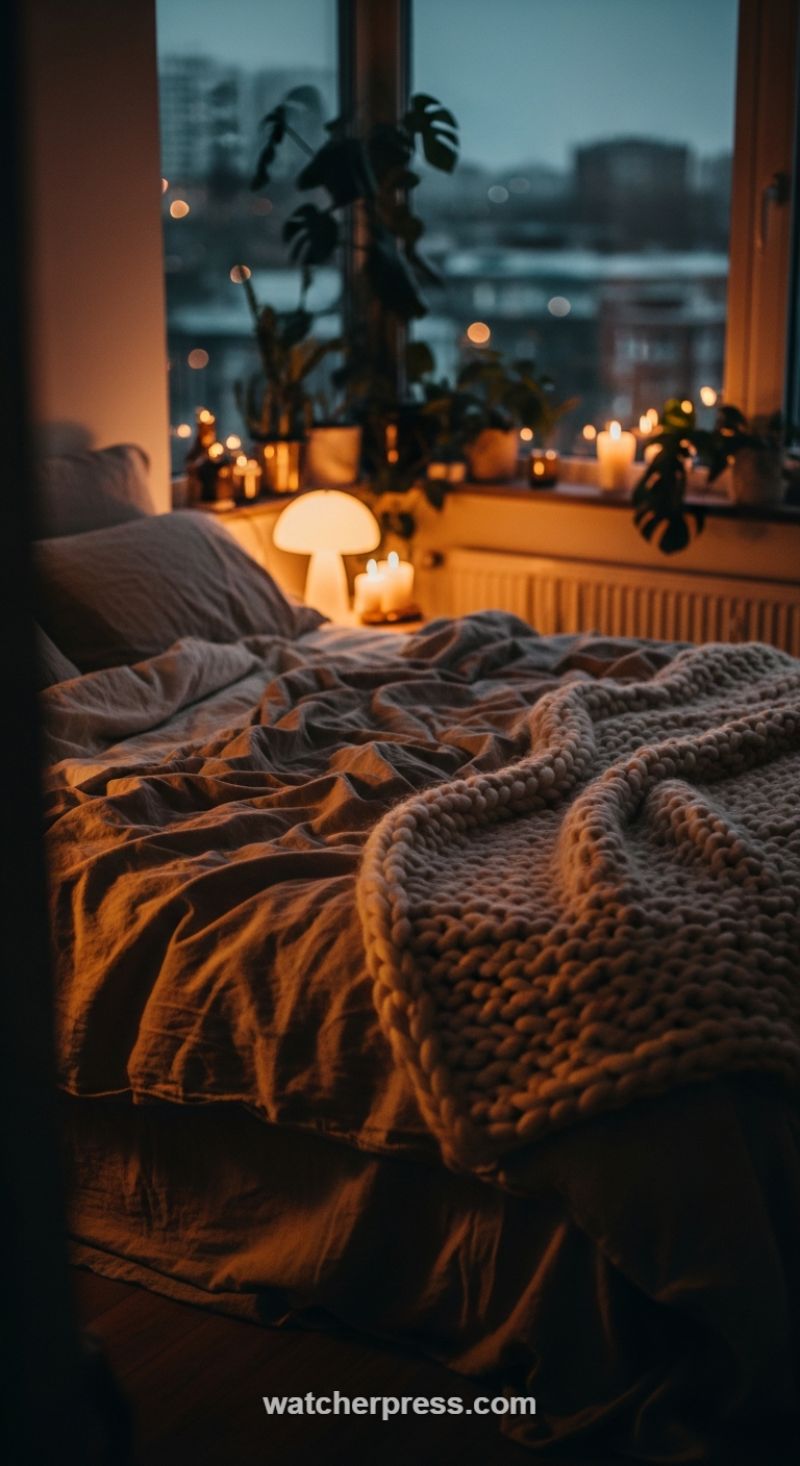
The modern organic aesthetic hinges on utilizing natural fibers and varied textures to create an inviting, multi-sensory retreat. As illustrated in this cozy scene, the bed serves as the primary canvas for textural exploration. Start with foundational textiles, opting for laundered linen or organic cotton bedding in muted, earthy tones—taupes, sage, or soft stone colors work perfectly. The key instructional element here is contrast: pair the relatively flat, casually wrinkled texture of the duvet with a high-relief, chunky knit throw. This oversized, loosely woven blanket provides crucial visual weight and depth, ensuring the space feels both plush and visually dynamic. Expert advice suggests mixing natural materials of varying softness (e.g., smooth linen sheets, a cotton duvet, and a thick wool or high-quality acrylic throw) to achieve the coveted ‘unfussy’ yet sophisticated look that defines the modern organic style. Allow the bedding to look naturally rumpled and lived-in; perfection is the enemy of coziness in this design philosophy.
Beyond textiles, mastering ambient lighting is non-negotiable for achieving this level of warmth, often referred to as ‘hygge.’ The modern organic style avoids bright, sterile overhead fixtures, instead relying on layered light sources to bathe the room in a soft, amber glow. Install multiple sources at varying heights: string lights draped along the window frame provide playful background sparkle, candles on the sill offer moving, natural light, and a minimalist side lamp serves as functional task lighting. Note the selection of the mushroom-shaped lamp, a modern, organic design piece that fits seamlessly into the nature-inspired theme. When selecting bulbs, opt for color temperatures between 2000K and 2700K to mimic the warmth of candlelight or sunset. This intentional low-level illumination not only softens the room’s edges but also successfully contrasts the cool, deep blues of the outside window view, reinforcing the feeling of sheltered comfort and intimacy.
Finally, integrate the ‘green accents’ essential to the modern organic home by cultivating a window sanctuary. The windowsill becomes a small indoor greenhouse, utilizing large-leafed plants like the visible Monstera to introduce striking organic structure. These plants draw a direct connection between the natural world and the interior, softening the lines of the window and blurring the division between inside and out. For a cohesive look, house the greenery in simple, neutral pots (terracotta, white ceramic, or concrete) to prevent distraction from the foliage itself. This technique of juxtaposing raw, living elements (the plants) with layered, comforting textiles and warm, modern lighting creates a balanced design that feels both effortless and deeply restorative—the ultimate goal of a well-executed modern organic interior.
Elevated Contrast: Harnessing Glimmering Accents to Ground Natural Textures
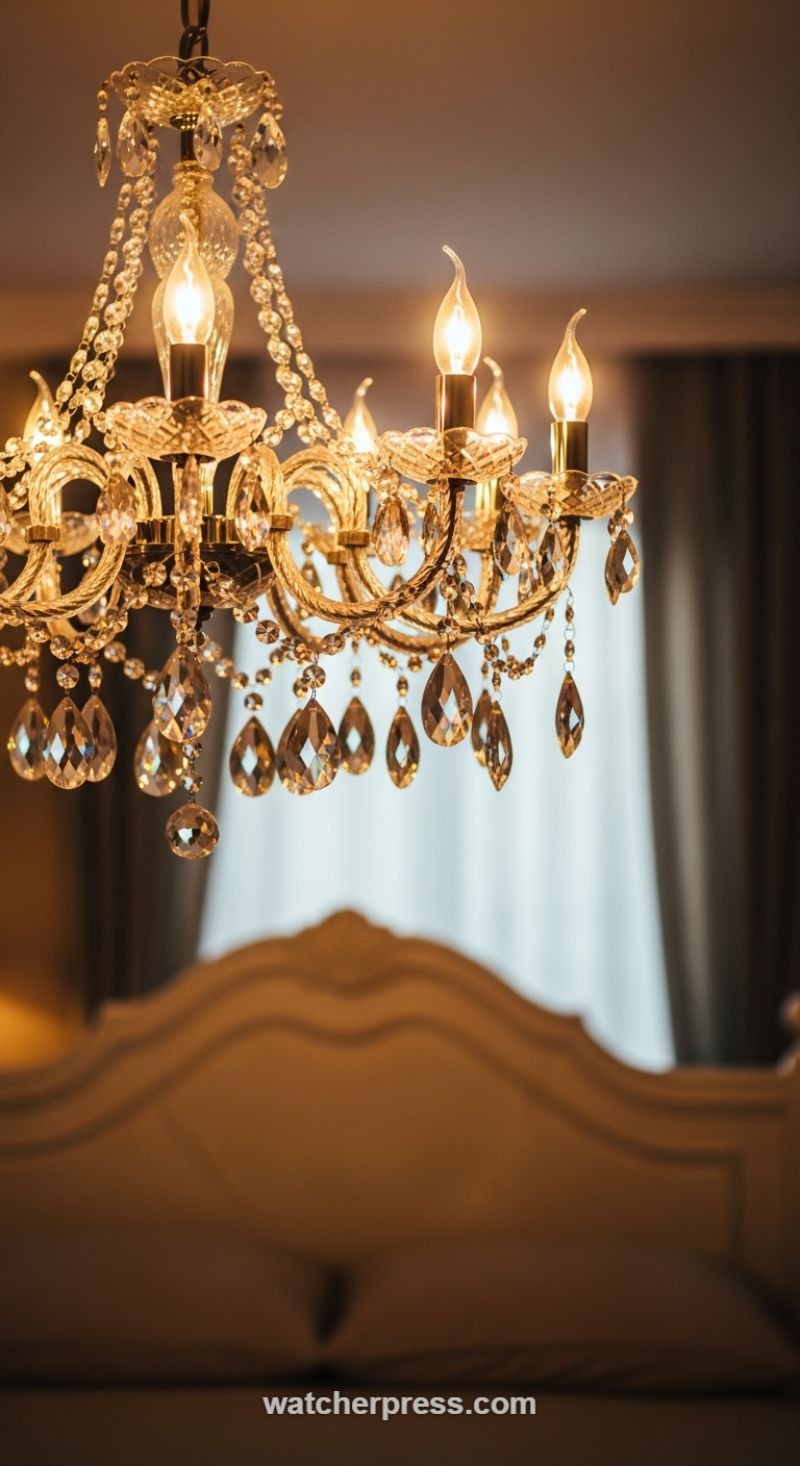
While the core of modern organic design revolves around raw materials, earthy palettes, and matte finishes, introducing high-contrast, polished elements—such as a tiered crystal chandelier—can elevate the space and introduce necessary sculptural texture. The key is balance: treat the fixture not as a competing style, but as an intentional textural foil to the surrounding simplicity. The complex faceting of the crystal prisms and the reflective quality of the polished brass or gold framework work to capture and multiply the light, creating visual movement that contrasts beautifully with the stability of wood, linen, and wool. Crucially, the light temperature must remain warm. As seen in the image, the amber glow from the candle-style bulbs ensures that the reflective surfaces feel inviting and soft, aligning the illumination with the inherent warmth of an organic design scheme rather than making the fixture feel cold or overly formal.
Successful integration of such an opulent piece requires careful consideration of the surrounding environment. The visual elements paired with the chandelier must be deliberately subdued and soft to prevent the room from becoming overwhelmingly busy. Notice how the chandelier is suspended above a simple, cushioned headboard and framed by heavy, matte curtains. These elements provide a neutral, absorbent backdrop, allowing the shimmering fixture to function as the sole, dazzling focal point. When implementing this design strategy, pair the polished metal and crystalline structures with materials that are fundamentally textural and low-luster: hand-loomed rugs, unbleached linens, rift-sawn oak, or deeply brushed matte wall paints. This juxtaposition ensures the organic elements ground the design, providing comfort and stability, while the fixture offers a moment of reflective luxury.
From a practical standpoint, the quality and control of light are paramount to merging glam and organic styles. The fixture shown utilizes exposed, flame-tip LED bulbs which expertly mimic the soft, flickering appeal of traditional candlelight, avoiding the harshness of modern white illumination. For a sophisticated organic atmosphere, this chandelier must be placed on a dimmer switch. Expert designers understand that light quality is a powerful texture in itself; dimming the crystal fixture softens the shadows and amplifies the complex light reflections, transforming the atmosphere into one that is intimate and layered. By mastering this controlled glow, the high-end accessory becomes an element of coziness, proving that polished elegance and natural comfort can coexist seamlessly within the modern organic home.
Extending Organic Flow: Mastering Al Fresco Texture and Ambiance
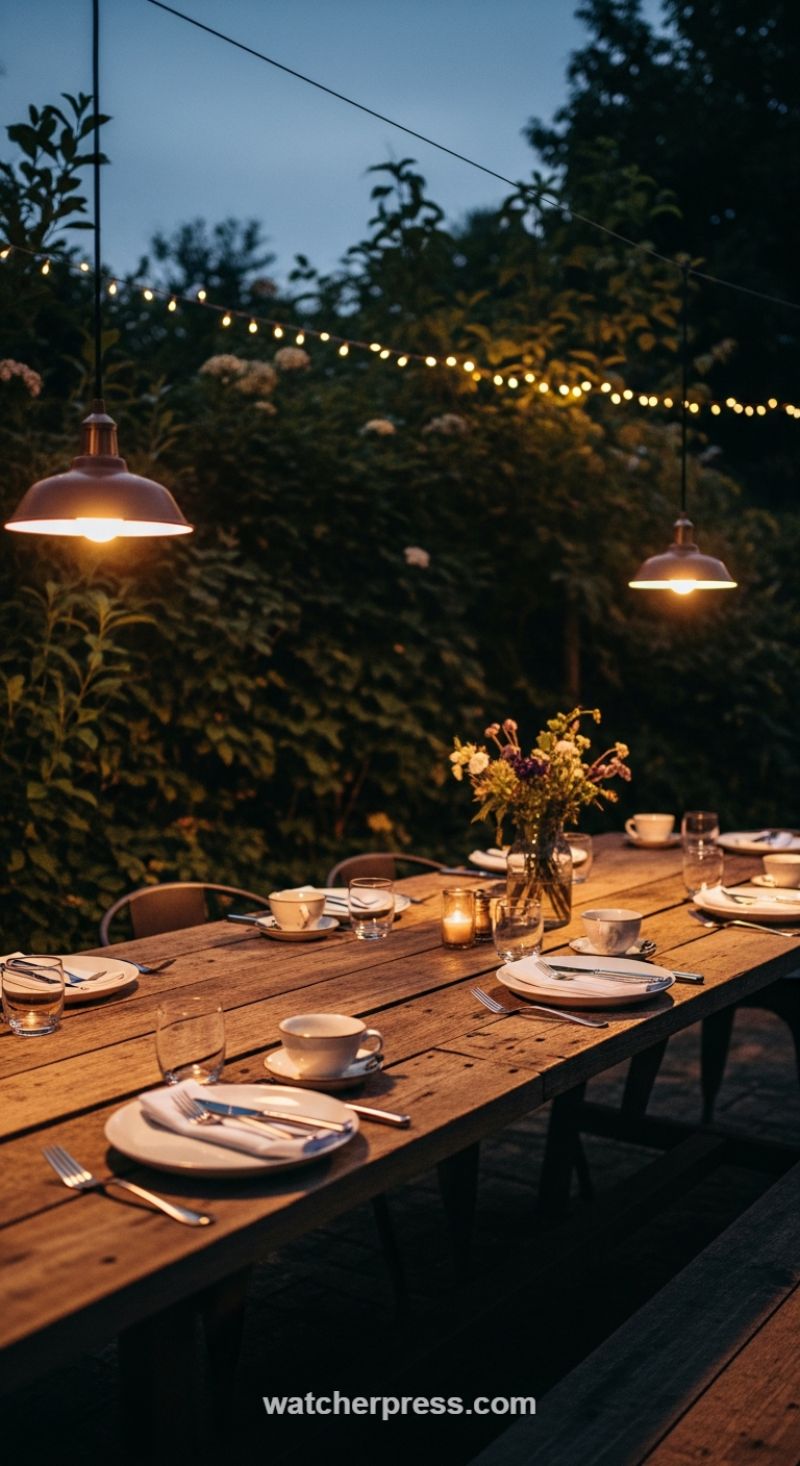
The organic home aesthetic thrives on the seamless blend of natural textures, and this twilight setting provides a perfect template for mastering the use of wood and greenery, whether indoors or extending the dining experience outdoors. The foundation of this design relies on heavily textured, reclaimed wood. Unlike polished, modern surfaces, the deep grooves, knots, and weathered planks of this table introduce essential history and grounding weight. To replicate this effect in a modern organic interior, always prioritize wood furniture that retains its natural character—think live-edge tables, salvaged barn wood shelving, or richly textured flooring. This rough, honest texture should serve as the anchor point against which all other elements are measured. The warm, dark tone of the wood also beautifully absorbs and reflects the soft light, ensuring the space feels instantly cozy and intimate, rather than overly exposed or stark. Expertly pairing this raw foundation with delicate place settings—simple white ceramics, thin silverware, and clear glassware—creates the necessary visual contrast that elevates the rustic into something truly sophisticated and modern.
Integrating the ‘green accent’ is crucial for achieving that authentic organic flow. Here, the dense, untamed wall of foliage acts as a dramatic, textural backdrop that absorbs sound and defines the space with overwhelming natural energy. Indoors, this visual power is translated through large-scale, statement greenery—consider tall fiddle leaf figs, cascading pothos, or even small indoor citrus trees placed strategically to mimic a natural boundary or focal point. Furthermore, the centerpiece avoids formality; a loose arrangement of wildflowers and various sprigs, casually placed in a clear glass vase, maintains the effortless, collected feel. When selecting soft furnishings or accent décor, echo these natural, muted tones found in the flora—deep forest greens, sage, and subtle mauves—to ensure continuity with the organic materials. The goal is to make the decorated space feel less like a structured room and more like a carefully curated clearing within nature itself.
Finally, the skillful mastery of layered lighting transforms the basic components into a captivating atmosphere, essential for any modern organic home. The lighting should always be warm, ideally between 2000K and 2700K, mirroring the glow of candlelight or a fireplace. This scene utilizes three distinct lighting layers: functional task lighting via the hanging industrial pendant lights (which feature metal shades for an essential touch of modern/industrial texture); ambient sparkle provided by the strung fairy lights, which widen the visual scope and draw the eye upwards; and accent lighting from small candles on the table, which casts warm, flattering shadows across the wood and guests. To apply this principle: place one dominant light source (like a sleek, low-hanging pendant) over the primary functional area (the dining or coffee table), and then supplement with multiple, smaller, dispersed light sources (floor lamps, sconces, or even battery-operated candles) around the periphery to ensure the rich wood grain and textured foliage are beautifully illuminated without being harshly exposed.
Mastering Material Harmony: Juxtaposing Industrial Sleekness with Organic Texture
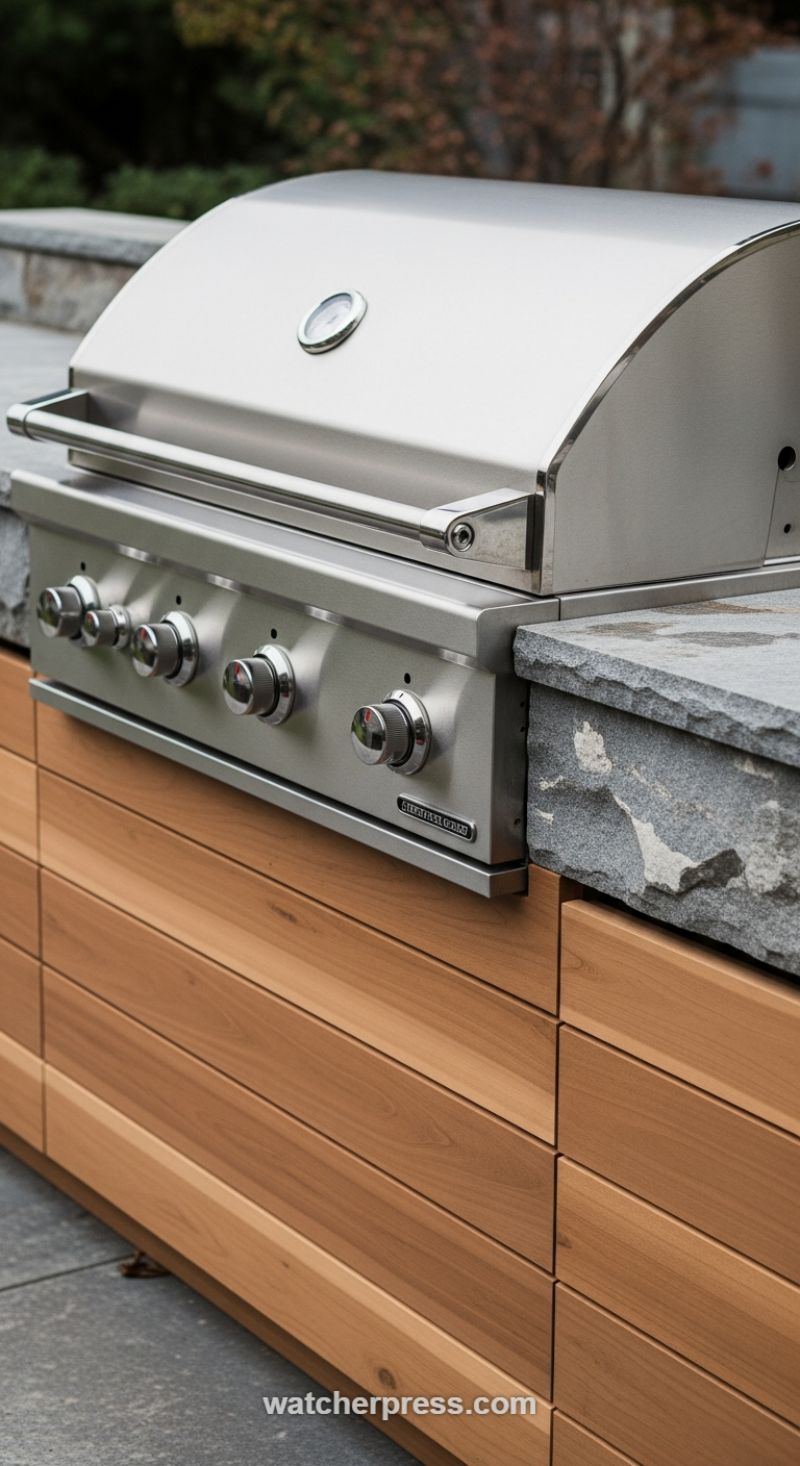
The core principle of the Modern Organic style is successful contrast, and this built-in culinary station serves as a perfect blueprint for achieving sophisticated material harmony in any interior space, especially the kitchen or bathroom. To replicate this look, begin by isolating the primary opposing elements: the warm, natural texture of the wood and the cool, pristine precision of the stainless steel. Select rich, horizontal slatted wood paneling, such as cedar, teak, or walnut, for your cabinetry or accent walls. The horizontal orientation here is key; it creates a sense of visual movement and maximizes the perceived texture, drawing the eye across the grain patterns. This organic warmth immediately grounds the space. You must then introduce a high-contrast element, typically a major appliance or high-end fixtures in brushed or polished stainless steel. The sleek, reflective quality of the metal sharply delineates the ‘modern’ component of the aesthetic, creating a dynamic visual tension that prevents the wood from feeling overly rustic or dated.
The next crucial step is incorporating the rugged, grounding element—the stone. Notice how the thick, chiseled edge of the natural stone countertop in this design introduces an almost untamed layer of texture. Unlike polished quartz or marble, this material choice features substantial topographical variation and a muted, earthy grey palette, effectively bridging the gap between the refined steel and the warm wood. To adapt this element indoors, consider using rough-hewn stone or slate for a kitchen backsplash, a fireplace surround, or even a statement island base. When choosing the stone, prioritize texture over uniformity; materials with visible natural inclusions, fissures, or uneven edges will inject that necessary element of raw, palpable texture. Expertly blending these three disparate elements—the smooth metal, the structured wood, and the rugged stone—ensures that the final design is complex, layered, and visually exciting, offering a holistic sensory experience that defines the modern organic aesthetic.
For successful execution, focus heavily on the integration and continuity of the materials. While the textures are disparate, the installation must be meticulous. Notice how the stainless steel grill is built flush with the cabinetry and countertop, maintaining clean, uninterrupted lines despite the material switch. When applying this principle to interior design, ensure that your built-in appliances and custom millwork have tight, clean joinery where the different materials meet. Furthermore, unify the composition by keeping the overall color palette muted and sophisticated, primarily relying on the varying depths of texture and tone rather than saturated hues. The wood provides the primary warmth, while the stone dictates the cool neutral grounding color, allowing the stainless steel accents (like control knobs and handles) to serve as elegant, functional jewelry. This balanced approach to texture and material selection results in a cohesive design that is sophisticated, functional, and deeply rooted in the natural world.
Mastering Organic Texture: Functional Storage with Woven Baskets
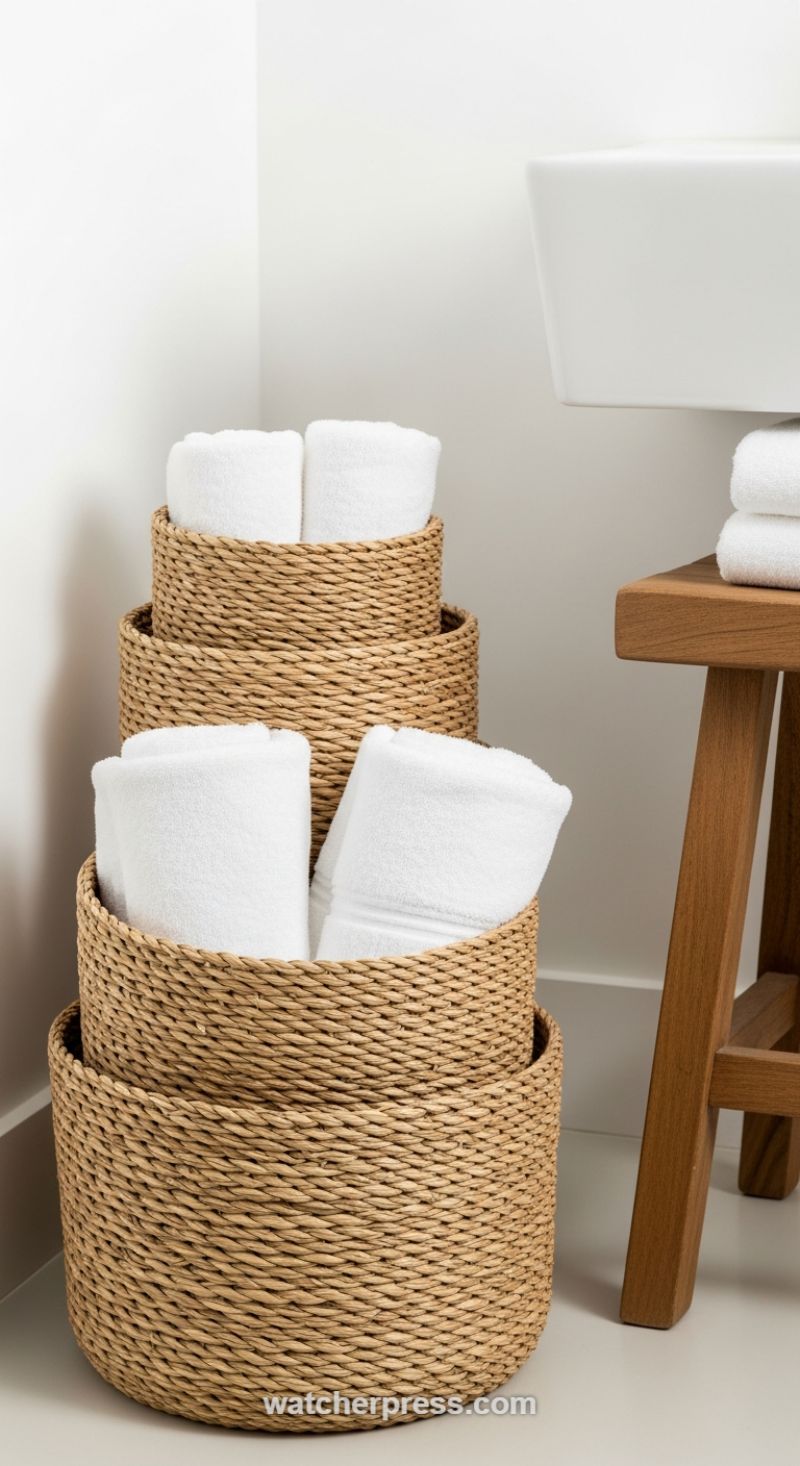
Integrating organic elements is essential in creating a Modern Organic Home, and one of the most effective ways to achieve this is through textured storage solutions like the woven baskets featured here. When working with neutral, minimalist backdrops—such as bright white walls and modern fixtures common in bathrooms—it’s crucial to introduce depth using natural fibers like seagrass, water hyacinth, or rattan. The braided pattern of these baskets offers a tactile, earthy contrast that immediately softens the hard lines of contemporary design. To emulate this look, choose baskets of varying diameters and stack them vertically. This technique not only maximizes floor space, which is often limited in bathrooms, but also creates a compelling visual hierarchy, drawing the eye upwards and turning basic storage into a decorative focal point.
The effectiveness of this design relies heavily on strategic contrast. The dense, natural texture and rich, warm tones of the baskets are purposefully paired with stark white, plush towels. This high-contrast pairing ensures the space feels neither too sterile (like an all-white modern space) nor too rustic (like a room overwhelmed by wood and fiber). Expertly rolled towels maintain the clean, spa-like aesthetic and offer immediate accessibility for guests. When styling, ensure the colors of the contents complement the woven material. Opting for clean whites or soft neutrals prevents visual clutter and allows the texture of the basket itself to remain the star element. If you choose to store toiletries or cleaning supplies, keep those items discreetly tucked away to maintain the elevated, organized appearance.
Finally, solidify the organic modern theme by repeating the use of natural materials throughout the space, as demonstrated by the partial view of the smooth wooden stool. The combination of fibrous texture (baskets) and refined wood grain (stool) provides necessary diversity while keeping the material palette cohesive and grounded in nature. Use the baskets functionally—for guest towels, laundry, or even discreetly housing a small waste bin—and pair them with simple, geometric wood pieces that lean modern, rather than rustic. This careful balance of rough texture and sleek form is the key to mastering the comfortable yet highly refined aesthetic of the Modern Organic Home.
Mastering Tactile Contrast: The Essential Role of Chunky Knits

The modern organic home thrives on sensory depth, and nothing achieves this faster than the strategic layering of high-contrast textures, even within a monochromatic or neutral color palette. As illustrated by the sculptural wool throw resting against the fine linen bedding, the key principle is juxtaposition: pairing a smooth, matte foundation with an oversized, highly dimensional element. This thick, arm-knitted or roving wool provides significant visual weight and structural interest, ensuring that the neutral space never feels flat or uninspired. To replicate this effect, select foundational fabrics—such as linen, Tencel, or organic cotton—that have a soft drape and subtle wrinkles, then introduce your tactile anchor. This anchor should feature exaggerated scale, such as chunky cable knits, deep bouclé, or faux fur, placed where natural light can strike it, utilizing the shadows to emphasize the depth of the weave and enhance the overall perception of coziness and quality.
Selecting appropriate materials is crucial for mastering this organic texture story, as fibers must appeal to both sight and touch. Focus on natural, minimally processed textiles: think raw silk, hemp, or, as featured here, undyed wool that retains its natural lanolin sheen and slight fuzziness. The sensory experience is paramount; the blanket should invite touch, signaling warmth and comfort. When integrating these elements, utilize variations in stitch size and density to build complexity. For instance, if your base bedding is fine linen (a high-density, low-loft fiber), introduce a middle layer of mid-weight texture, such as a waffle weave or slub cotton, before culminating with the thick, low-density, high-loft chunky knit. This three-tiered approach to texture layering prevents visual clutter while maximizing the plush, inviting nature of the space, turning a simple bedding arrangement into a curated, tactile sanctuary.
Styling these pieces requires intentional relaxation; the aim is not perfection but lived-in elegance. When draping a chunky knit throw, allow it to fall naturally, creating soft pools of texture rather than perfectly folded edges. The contrast between the organic, free-form shape of the throw and the structured lines of the furniture or bed enhances the overall flow of the room. Furthermore, ensure these highly textured, neutral elements serve as the soft counterbalance to the other primary pillars of the organic home design. Pair these creamy textiles with unpolished wood tones (such as salvaged oak or teak) and vibrant green accents (like potted Fiddle Leaf Figs or simple ferns) to complete the aesthetic. The soft, neutral textile layer acts as the calming intermediary, bridging the ruggedness of the wood with the vibrancy of the plant life, establishing a balanced, deeply layered, and truly modern organic interior.
Blurring Boundaries: Extending Organic Luxury to the Outdoor Deck
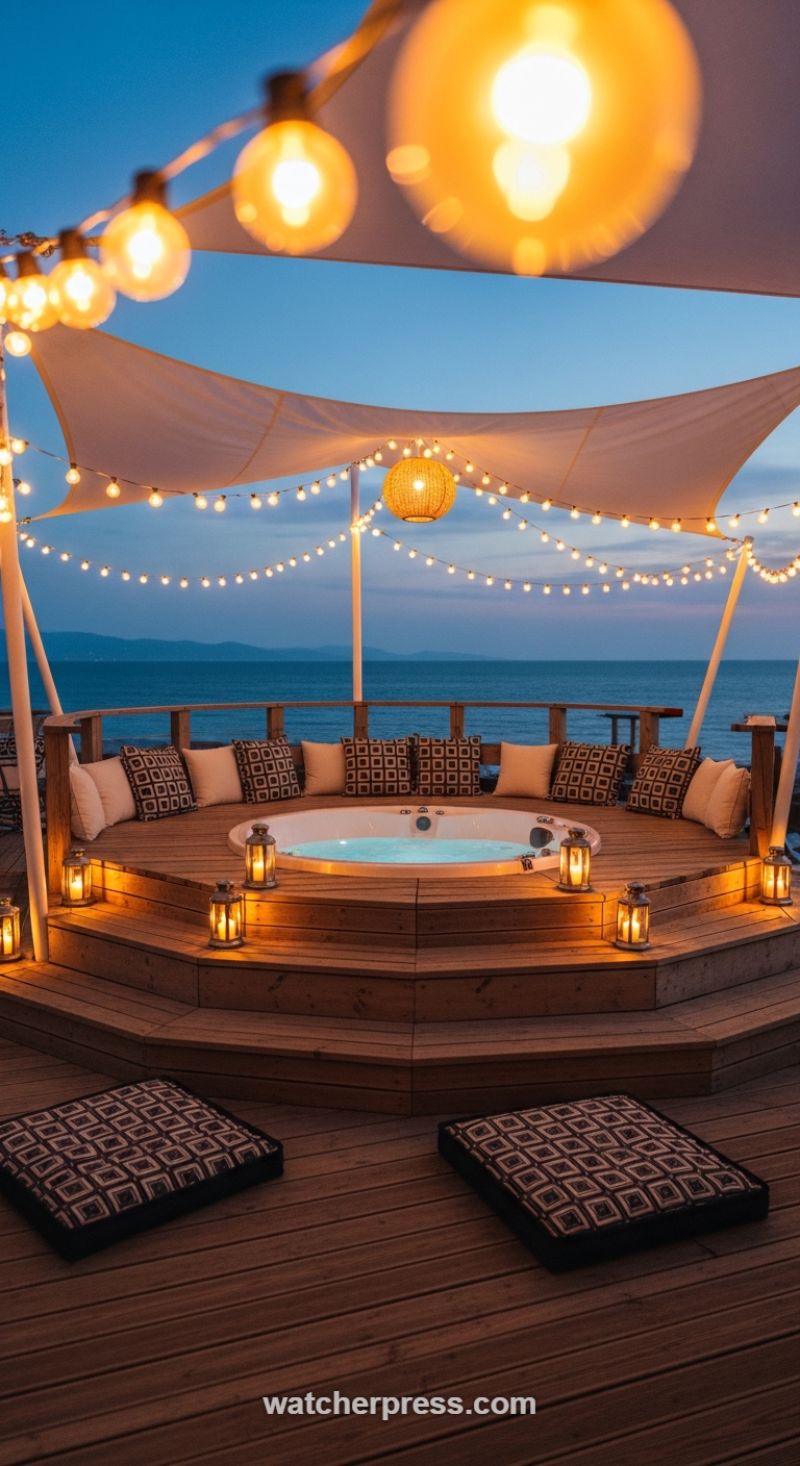
The principles of modern organic design—rich texture, warm wood tones, and intentional lighting—should extend seamlessly from your interior spaces to your outdoor sanctuaries. This image perfectly illustrates how an elevated wooden deck can transform a simple hot tub into a luxurious, architecturally significant retreat. The key is in the layering of wood elements: instead of a flat surface, utilize tiered steps and platforms to define the space, creating a natural amphitheater effect around the central water feature. This multi-level approach introduces significant structural texture through the repetition of horizontal wood planks and vertical risers. Select durable, naturally resistant wood species that age beautifully (like teak or cedar) to ensure the organic warmth remains intact despite exposure to the elements. The contrast between the rough, tactile warmth of the wood and the smooth, modern curve of the spa is a hallmark of successful organic modernism, marrying rustic foundational elements with sleek comfort.
Ambiance is primarily achieved through a masterful three-tiered lighting strategy. Firstly, soft, diffused general illumination is provided by draped fabric shade sails and strung bistro lights, creating a comforting, low canopy effect that visually lowers the ceiling and promotes intimacy. Secondly, introduce a textural focal point, such as the woven rattan pendant light shown, which casts warm patterns and anchors the center of the seating area. Crucially, the third layer involves perimeter accent lighting: placing flickering candle lanterns on the steps and around the edges provides functional pathway lighting while adding unmatched romance and depth. This warm, amber glow should be meticulously selected to complement the wood tones, ensuring all light sources operate on the yellow-red spectrum rather than harsh white or blue, maximizing the cozy, organic atmosphere.
To complete this look, textural textile accents are essential for injecting indoor comfort into the outdoor setting. The surrounding seating area features plump pillows in two distinct textures: solid cream linens that provide softness and geometric patterned cushions that deliver a necessary modern edge. These repeating patterns prevent the space from feeling too rustic or simplistic, aligning the design with a contemporary aesthetic. Furthermore, incorporating floor cushions enhances versatility and maximizes the sense of grounded comfort. Finally, remember that the environment itself is your ultimate accent. The cool blue of the spa water and the expansive ocean view provide the natural color contrast needed to balance the overwhelming warmth of the wood and light. By keeping the perimeter open and railings low, the design intentionally frames the natural vista, integrating the surrounding landscape into the organic experience.
Layering Textures: The Foundation of Organic Modern Comfort
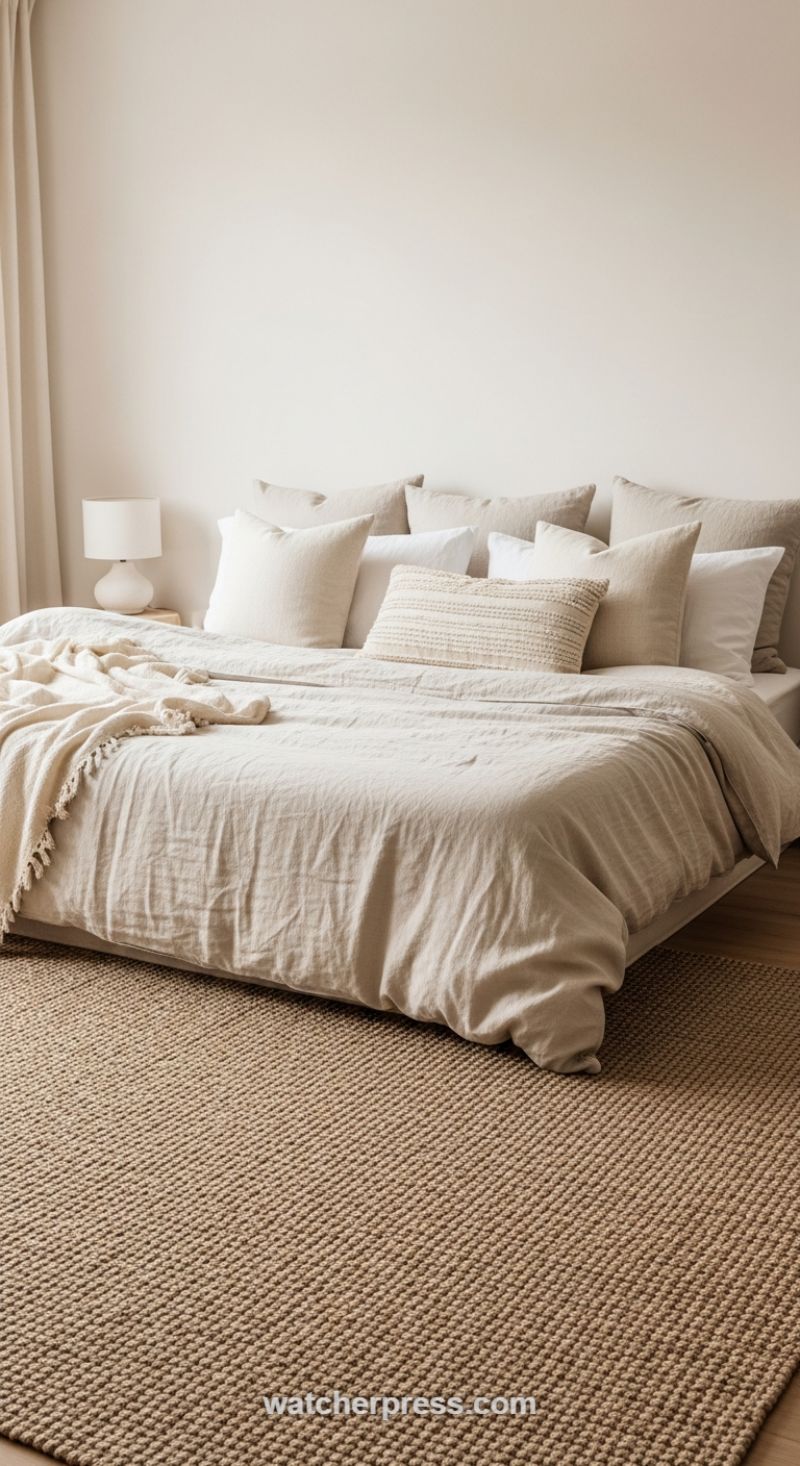
The organic modern aesthetic achieves its signature calm by meticulously layering natural textures within a restrained, monochromatic color palette. As demonstrated here, the foundational colors are variations of sand, linen, beige, and cream. The critical how-to step is avoiding flatness; achieve this by ensuring every textile has a distinct character. Start with the largest element: the bedding. Use heavily textured, slightly rumpled washed linen for the duvet cover, which provides a lived-in, relaxed feel. Contrast this with smooth white or cream cotton pillowcases for visual relief, then introduce secondary throws made of chunky knit or fringe-detailed material. This variation in texture, even within the same color family, creates depth and a highly inviting sensory experience, preventing the neutral scheme from becoming bland or sterile.
Anchor the entire room with a substantial area rug made from natural fibers like jute, sisal, or wool. The dense, chunky weave of this rug provides essential visual weight and a rugged, earth-connected contrast to the softness of the bedding. When selecting a rug, look for patterns created by the weave itself—such as the tight diagonal basket weave shown—rather than dyed patterns. Expert advice dictates that the rougher, coarser textures (like the rug) should occupy the lower plane of the room, while the softest, most luxurious textures (like the plush throw draped over the bed) should be most accessible. This interplay of hard and soft, rough and smooth, is the cornerstone of successful organic modern design, providing balance and sophisticated complexity.
To complete the Modern Organic Home mandate—which requires integrating texture, wood, and green accents—you must introduce grounding elements. While the walls and bedding are intentionally light, incorporate warm, unfinished wood through side tables, a slatted headboard, or a simple wooden bench at the foot of the bed. This natural wood tone provides the necessary visual warmth that prevents the room from reading too cool. Finally, introduce the required green accent through large, sculptural plants placed in textured ceramic pots (think Fiddle Leaf Figs or Strelitzia). Because the rest of the palette is quiet, a single, dominant plant offers a vibrant, organic splash of color that breathes life into the space without disrupting the serene, tranquil atmosphere.
Layering Natural Textures and Lush Greenery
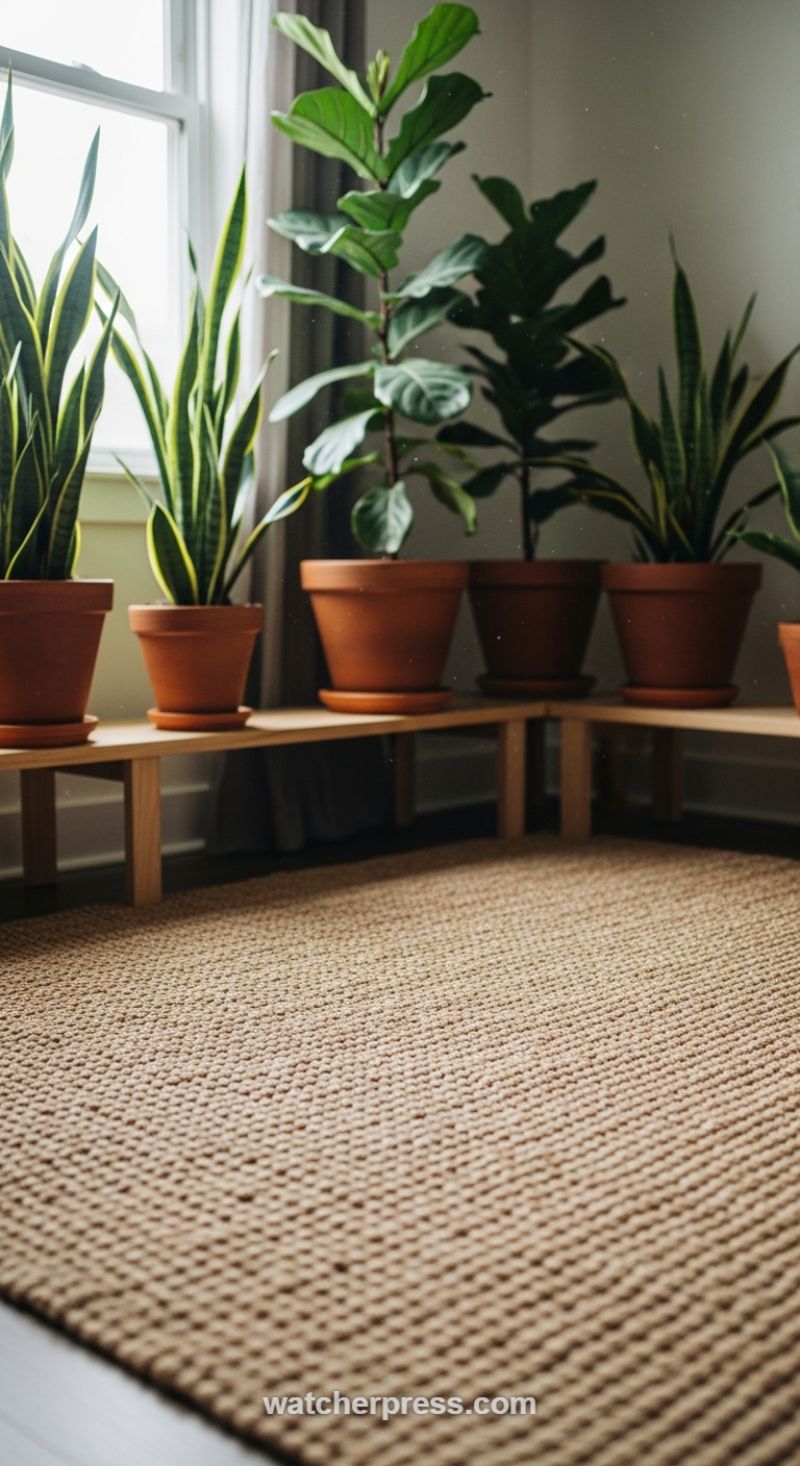
Achieving the Modern Organic look begins with establishing a highly textural foundation, which acts as a quiet counterpoint to the lively green accents. As demonstrated in this space, the primary grounding element is a dense, woven natural fiber rug, likely jute or sisal. This choice is critical because its nubby, matte texture absorbs light rather than reflecting it, providing an immediate sense of warmth and handmade authenticity. When selecting furniture to support your green collection, opt for low-profile, simple wood structures. The light, unstained wood shelving seen here serves to elevate the plants to the window line, maximizing light exposure, while its minimalist design ensures the focus remains on the organic shapes of the plants and the coarse texture of the rug below. The use of natural materials throughout this layer ensures the transition between the floor and the plant display is seamless and visually calming, key characteristics of successful organic design.
To master the ‘green accent’ component, focus on variation in height, leaf shape, and color saturation, always unifying the look with consistent container selection. The pairing of architectural Fiddle Leaf Figs (Ficus Lyrata) with the spiky, vertical lines of variegated Snake Plants (Sansevieria) introduces dynamic contrast and visual interest. The Ficus offers broad, glossy surfaces that catch the light, while the Sansevieria provides sharp lines and a high-contrast yellow edge. Crucially, all these plants are housed in simple terracotta pots. Terracotta is the quintessential organic container—its porous, matte earth tone complements the wood and fiber textures perfectly and allows the brilliant greens of the foliage to pop without competition from distracting colors or glossy glazes. Grouping plants closely, as shown here, creates a lush, jungle-like micro-climate and emphasizes the biophilic element, making the space feel deeply connected to nature.
Finally, the success of an organic modern display relies heavily on leveraging natural light to enhance depth and texture. Position the display near a large window, utilizing soft, diffused light (perhaps through sheer curtains, or facing a north/east exposure). The natural light dramatically highlights the texture of the woven rug, reveals the subtle imperfections in the terracotta, and creates essential shadow play. Notice how the light casts dramatic, soft-edged shadows of the larger Ficus leaves onto the background wall and floor. These shadows add a layer of dimension that glossy surfaces cannot replicate, cementing the warm, inviting atmosphere. By thoughtfully controlling the interplay between raw textures, varied plant life, and quality natural light, you create a holistic environment that is both visually stunning and intrinsically comforting.
The Biophilic Bathroom: Integrating Deep Hues and Natural Wood
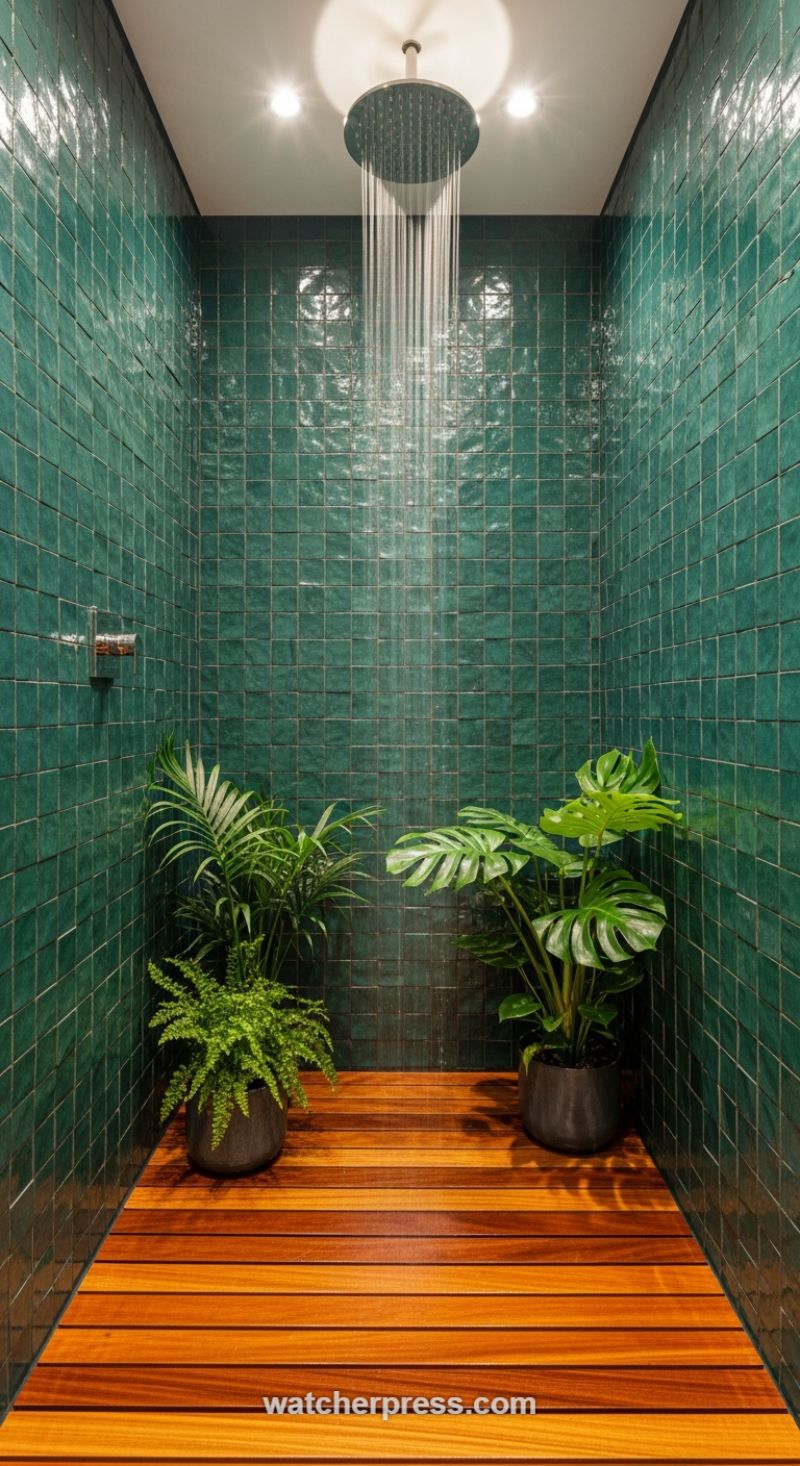
To truly master the modern organic aesthetic, move beyond simple accents and integrate natural elements structurally, especially in high-sensory areas like the bathroom. The core principle demonstrated here is high-saturation color paired with raw texture. Start by cladding the walls in an evocative jewel tone, such as this deep emerald or teal green. Opt for tiles that have significant variation and an uneven surface—like hand-pressed zellige or small square quarry tiles—to ensure that the light plays across the surface, providing subtle dimension and depth. This rich, textured backdrop instantly evokes a rainforest or hidden grotto, setting the foundation for a biophilic design approach. The intensity of the color should be balanced by the simplicity of the hardware; minimalist, brushed metal fixtures prevent the space from feeling cluttered or overly rustic.
Expertly incorporate the element of wood to bring warmth and sophisticated contrast to the cool tones of the tile. While wood might seem counterintuitive in a wet area, a slatted floor made from naturally water-resistant hardwoods like teak, ipe, or cedar is ideal for a true spa experience. The rich reddish-brown tone of the wood provides necessary visual relief against the deep green, enhancing the organic feel and offering a superior tactile experience underfoot compared to cold stone or ceramic. When designing this feature, ensure the slats are properly spaced and elevated above the actual floor pan to allow for efficient drainage and air circulation. This structural commitment to natural materials elevates the shower from a mere utility space to a full-fledged sanctuary, embodying both modern design sensibilities and organic warmth.
Finally, maximize the green accent through biophilic design—the direct integration of living plants. This is the simplest yet most transformative step. Potted tropical species, such as ferns, philodendrons, or Monsteras, thrive in the high humidity of a shower room and reinforce the jungle-like atmosphere created by the green tiles. Select robust, dark planters that recede into the wood flooring, letting the foliage take center stage. For plant longevity and aesthetic appeal, ensure overhead lighting includes sufficient illumination to mimic daylight. The combination of the sound of running water, the steam, the deep green textures, and the living plants transforms the daily routine into a rejuvenating sensory retreat, perfectly capturing the essence of a modern organic home.