
Transform your space from ordinary to extraordinary. Discover the 10 essential home decor principles covering lighting, texture, color theory, and balance for a truly stylish home.
Embrace Textural Contrast for a Spa-Like Sanctuary
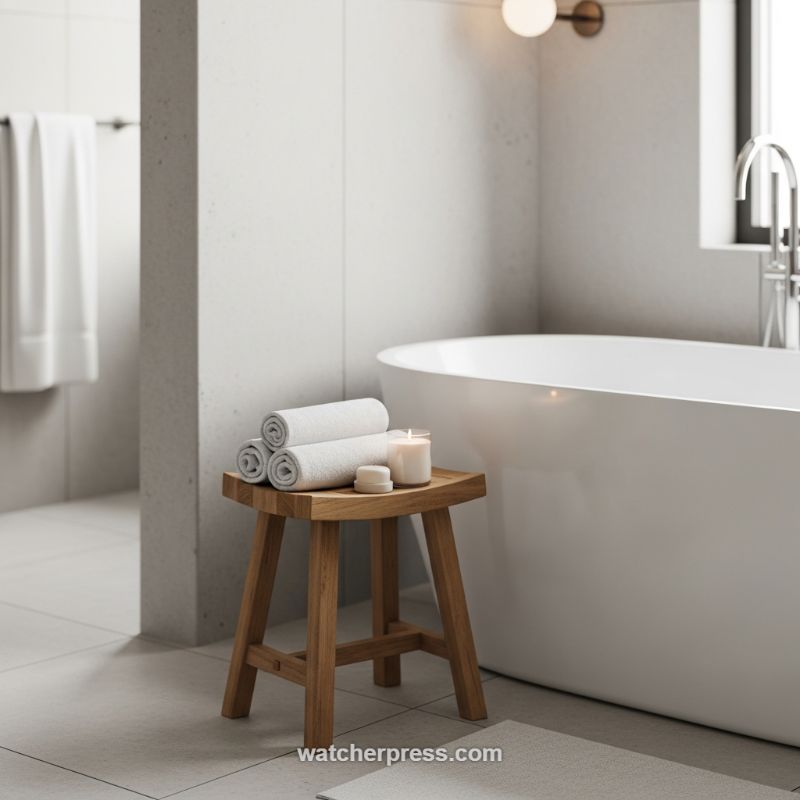
A stylish home understands that true luxury lies in sensory experience, particularly in private spaces like the bathroom. The core principle illustrated here is the skillful combination of contrasting textures against a clean, neutral backdrop. Begin by establishing a monolithic, uncluttered foundation. Use large-format, matte grey tiles or finished concrete on walls and floors to create visual continuity and a feeling of solidity and calm. This neutral shell allows the key design elements—the smooth, organic curve of the freestanding tub and the architectural column—to stand out as sculptural forms. The ‘how-to’ here is deliberate restraint: keep the permanent fixtures minimal and geometric, ensuring the space feels more like a serene retreat than a busy functional room. This simplicity prevents visual noise, making the subtle accessories impactful.
To prevent the minimalist structure from feeling cold or sterile, strategically introduce elements of warmth and softness. The natural wooden stool acts as a crucial grounding element, bridging the gap between the hard, cool surfaces (tile, porcelain) and the desired warmth of a spa. When selecting accessories, prioritize natural, water-resistant materials like teak or bamboo. On this functional pedestal, stacked white towels, neatly rolled, add essential texture—the soft loop of cotton providing a tactile invitation. Expertly, the visual weight of these elements draws the eye, turning utilitarian necessities into decorative accents. This technique ensures that every item serves a purpose while contributing to the overall aesthetic harmony, emphasizing that even in a minimalist design, texture is paramount to comfort.
The final step in crafting this sanctuary is mastering ambiance through layered light. Functional lighting, necessary for tasks, must be complemented, or replaced entirely, by soft, localized mood lighting during relaxation. Notice the simple, brass-accented wall sconce providing warm, downward-focused light rather than harsh overhead illumination. This low-level glow is further enhanced by the flickering light of a candle. The candle is not just decor; it’s a sensory anchor that introduces scent and movement into the space. For homeowners, this means installing dimmers and integrating tertiary lighting sources. Utilize portable elements like scented candles to complete the experience, transforming a well-designed bathroom into a truly immersive, luxurious home spa by appealing to sight, touch, and smell.
The Art of Ambient Lighting: Mastering Mood and Intimacy
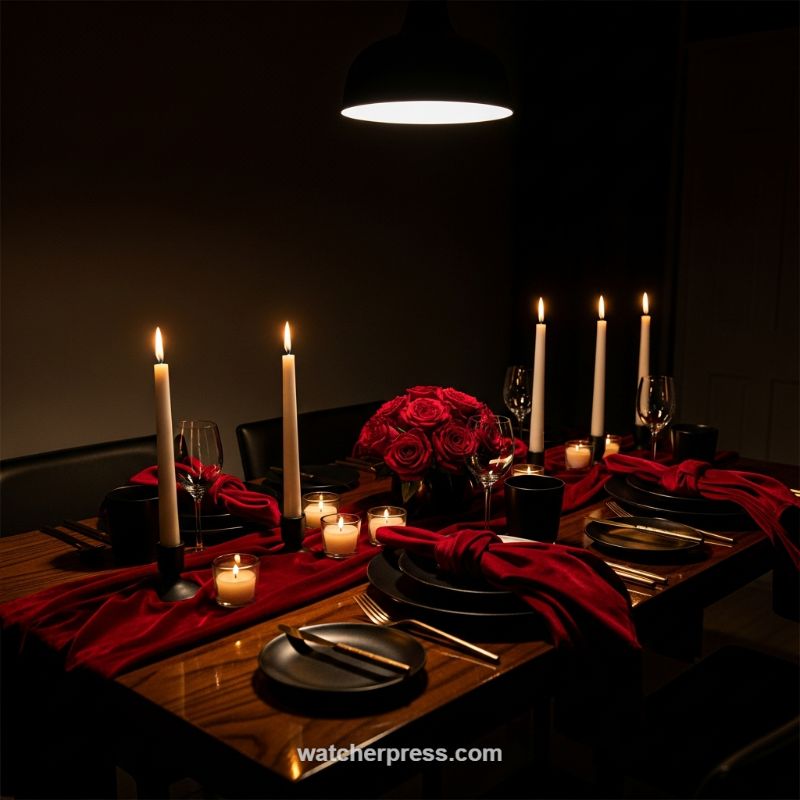
Creating a deeply atmospheric and stylish setting relies heavily on the principle of layered, low-intensity lighting, as exquisitely demonstrated by this intimate dining scene. To replicate this level of warmth and sophistication, you must move beyond sole reliance on harsh, overhead fixtures and embrace tertiary light sources. The primary focus should be on candlelight, which provides a unique, dancing warmth that flatters every element on the table and every person seated. Strategically layer your candles using varying heights: incorporate tall, elegant taper candles for vertical drama and classical flair, while scattering small votives or tea lights across the runner to create pockets of soft, low-level illumination. This multi-level approach ensures the entire surface glows, emphasizing textures and colors, rather than creating bright spots and deep shadows. The overhead pendant light in this setting serves merely as a subtle anchor, proving that the most successful ambient lighting strategy shifts the focus downward and inward toward the gathering itself.
Beyond lighting, the mastery of high-contrast color and texture is vital for achieving this luxurious aesthetic. The palette employed here—deep velvet red paired with sleek matte black—is inherently dramatic and evocative. When aiming for mood, choose rich, highly textural materials, such as velvet runners and napkins, which absorb light beautifully and lend a weighty sense of opulence to the table. Conversely, the choice of matte black dinnerware is intentional; it reduces reflectivity, allowing the food and the candle flames to become the brightest points of focus, thus adding restraint and sophistication. Introduce metallic accents, such as the gold or bronze cutlery shown, sparingly. These details act as tiny, elegant reflectors, catching the candlelight and providing flashes of luxury without overwhelming the scene. Finally, a lush, dense centerpiece of saturated color, like the bouquet of red roses, grounds the arrangement and reinforces the theme of intimacy and passion.
To execute this decor principle successfully, focus intensely on the principle of focal contrast and intentional placement. Ensure the background remains dark and uncluttered (as seen with the dark walls) so that the entire emphasis falls squarely on the illuminated table setting. This strategic use of negative space amplifies the glow of the candles, making the entire experience feel more curated and exclusive. When placing your elements, ensure that the light sources directly highlight the most textural items—the velvet, the rose petals, and the metallic cutlery. Maintain symmetry with the candle holders for balance, but allow the scattered votives to break the line, creating a natural, organic flow of light across the runner. This combination of rich color, tactile texture, and intentionally dimmed, layered lighting transforms a simple dining room into a high-style, unforgettable sanctuary.
The Power of Organic Minimalism: Layering Texture and Nature
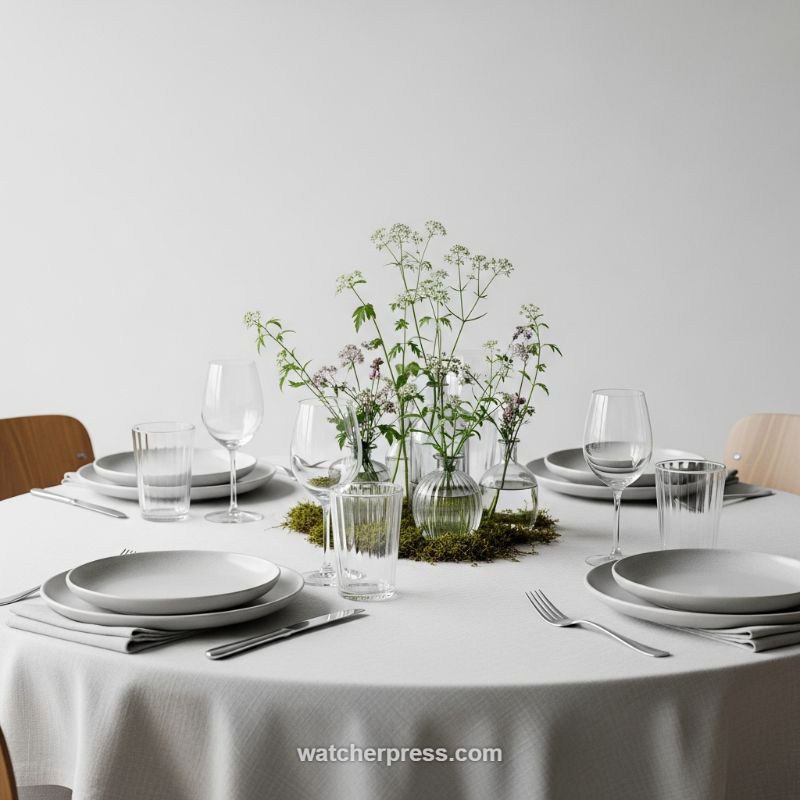
The secret to elevating a neutral tablescape from boring to breathtaking lies in the skillful layering of subtle textures and the introduction of delicate, organic elements. This setting exemplifies a sophisticated organic minimalism, starting with the foundation: a soft, monochromatic palette of light greys, stone, and white. To prevent the setting from appearing sterile, prioritize textiles with a rich hand-feel, such as the textured linen tablecloth draped loosely over the round table. When selecting dinnerware, opt for matte or slightly textured ceramics instead of glossy porcelain, choosing pieces in similar yet distinct shades of grey or beige. Layering the dinner plate and salad plate creates immediate depth and signals thoughtfulness, while the cutlery should remain sleek and understated, favoring clean stainless steel lines to maintain the modern, uncluttered aesthetic.
The centerpiece is where the principle of ‘controlled wildness’ is fully realized. Rather than utilizing one large, formal floral arrangement, group a cluster of small, clear glass vases of varying shapes and textures (some smooth, some ribbed) to display native or wild-looking, delicate flowers. Using blooms like Queen Anne’s lace, yarrow, or other airy flora creates height without blocking sightlines across the table, maintaining an open and inviting feel. Crucially, the base of the arrangement is grounded by a ring of dark, preserved moss or lichen. This addition is a masterful stroke; it introduces a deep, rich natural texture that contrasts sharply with the light linens, truly simulating a small, organic meadow captured on the tabletop, elevating the arrangement beyond standard floral display.
Finally, integrate function with aesthetics through careful selection of glassware and attention to light. The setting incorporates a pleasing variety: classic stemmed wine glasses stand beside sturdy, vertically ribbed tumblers. This mixing of glass textures adds another visual layer and keeps the setup dynamic, avoiding the formality of perfectly matched sets. To fully achieve this airy, serene look, presentation is paramount. Ensure the surrounding environment, as suggested by the bright white background, is free of visual clutter and maximizes natural light, allowing the subtle textures and the delicacy of the centerpiece to take precedence. Every element, from the neatly folded napkin to the position of the fork, contributes to an atmosphere of effortless elegance and natural calm.
The Art of Functional Glamour: Maximizing Light and Organized Luxury
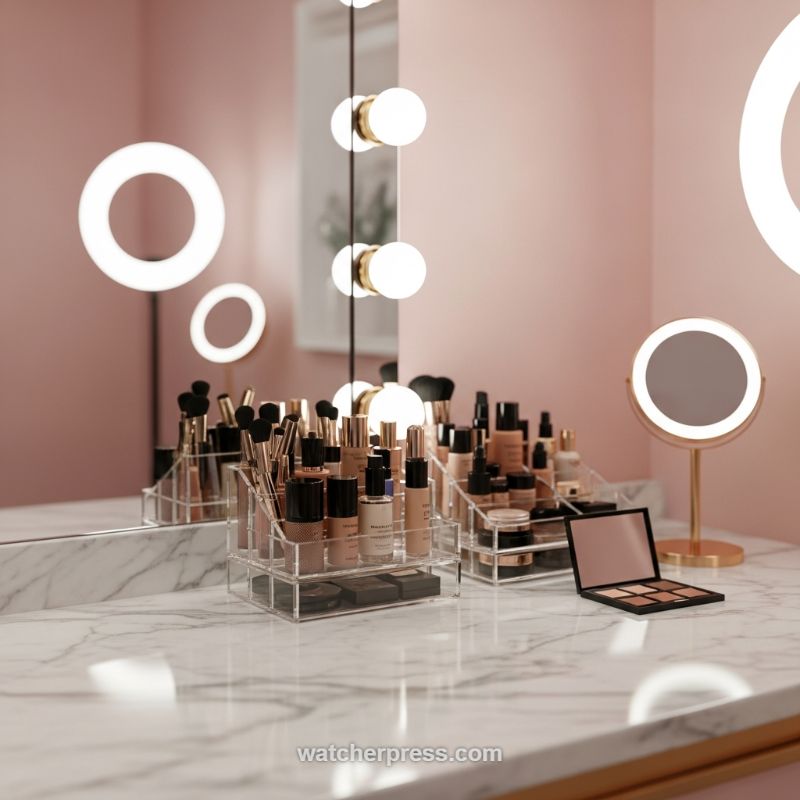
The most crucial element in any functional vanity space, and a principle applicable across all home design, is mastering purposeful lighting. As demonstrated here, effective vanity lighting utilizes symmetrical placement of soft, globe-style bulbs (often LED) that run vertically alongside the mirror. This “Hollywood” style ensures even illumination across the face, eliminating harsh shadows that often plague overhead lighting. To maximize brightness and create an expansive feel, embrace highly reflective surfaces. The large mirror is fundamental, but note how the polished marble countertop and the clear acrylic organizers also bounce light around the room, compounding the brightness and giving the space a luminous glow. Expert advice dictates using soft, 3000K-3500K temperature light bulbs to mimic warm daylight, ensuring accurate color rendering for meticulous tasks, and always layering lighting with a combination of ambient and dedicated task sources.
Achieving truly stylish décor means marrying function with luxury, often realized through high-quality materials and intelligent organization. This setting uses sleek, clear acrylic organizers—a critical choice—as they allow necessary clutter (the makeup products) to remain visible yet neatly contained without adding visual weight. The clarity maintains the sophisticated aesthetic established by the pairing of soft, blush pink walls and the bold, veined marble surface. The marble serves as a grounding element of permanence and luxury, contrasting beautifully with the soft femininity of the walls. When designing your organizational strategy, ensure that containers are modular and grouped by purpose (brushes together, liquids together). Incorporate metallic accents, such as the warm brass detailing on the light fixtures and the freestanding circular mirror base, to act as jewelry for the room, elevating the overall design from merely functional to intentionally glamorous.
Every stylish home needs dedicated zones that elevate everyday rituals. Here, the vanity is treated as a meticulous self-care sanctuary. The design ensures efficiency and flow: all tools and products are placed within arm’s reach, reinforcing a smooth, uninterrupted routine. For detailed tasks, integrate a secondary, magnifying task mirror—ideally a lighted, standing model—to ensure precision without disrupting the main visual composition. When setting up a dedicated ritual zone, prioritize clean lines and integrate technology seamlessly; ensure any power cords for lighted mirrors or accessories are managed or hidden behind the vanity to maintain the polished, high-end look that defines true interior sophistication and elevates the self-care experience.
The Art of Styling a Mantelscape: Achieving Balance and Seasonal Appeal
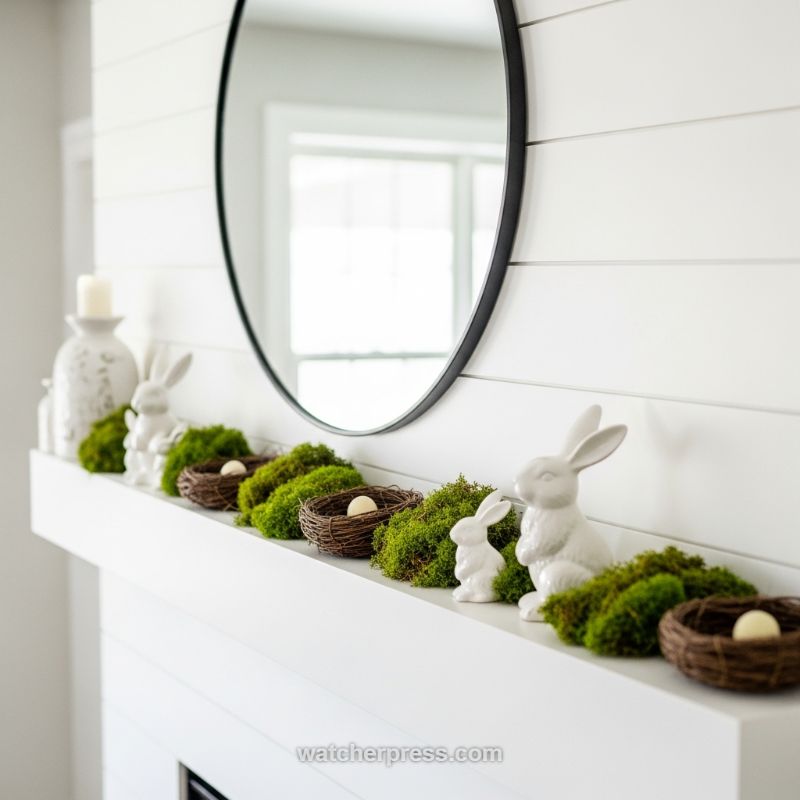
The mantelpiece or floating shelf is a crucial horizontal plane in modern decor, serving as a primary stage for seasonal vignettes and curated displays. The key to mastering this space is establishing a clear focal point and employing the design principle of repetition to create visual flow. In this example, the large, black-framed circular mirror acts as the anchor, providing high contrast against the white shiplap wall and drawing the eye upward. When styling a long shelf, begin by selecting 2-3 key decorative motifs—here, white ceramic animals and natural elements (moss, nests). Repetition of these forms (multiple bunnies of varying sizes, multiple clusters of moss) generates a cohesive visual rhythm, ensuring the eye travels smoothly across the entire length of the surface without getting stuck on a single item. Always consider the backdrop; the simple, crisp white palette of the wall and shelf allows the textures and seasonal colors to pop without overwhelming the space.
Texture is the backbone of dynamic shelf styling, especially when adhering to a restricted color scheme. To elevate a monochromatic base, focus on juxtaposing dissimilar materials. Notice how the slick, glossy finish of the white ceramic bunnies and the smooth glass of the mirror play against the rugged, organic texture of the preserved bright green moss and the rough weave of the small vine nests. These layers prevent the display from feeling sterile or flat, lending instant depth and warmth. When incorporating natural elements like moss or greenery, arrange them in uneven mounds or clusters rather than a straight line. This technique mimics organic growth and allows the heavier structural items, like the ceramic pieces and the candle holder on the far left, to nestle convincingly into the base layer, creating a scene that feels naturally composed rather than simply placed.
Achieving successful balance on a mantel doesn’t necessarily require strict symmetry; often, asymmetrical balance is more visually engaging. Start by placing your tallest elements (the mirror and the vase/candlestick) to define the boundaries and center of the composition. Then, work outward, grouping items in odd numbers (the rule of three or five is ideal) and varying their scale. Notice the contrast between the large bunny and its smaller counterpart, which adds narrative interest and dimension. The scattered eggs in the nests serve as diminutive accents, strategically placed to fill negative space and provide final visual punctuation. Ensure your groupings overlap slightly, avoiding excessive space between items, which can make the arrangement look sparse. By prioritizing texture, maintaining thematic repetition, and utilizing varied scale, you can transform any simple shelf into an expert-level, seasonally-appropriate focal point.
Elevate Everyday Function through Curated Groupings
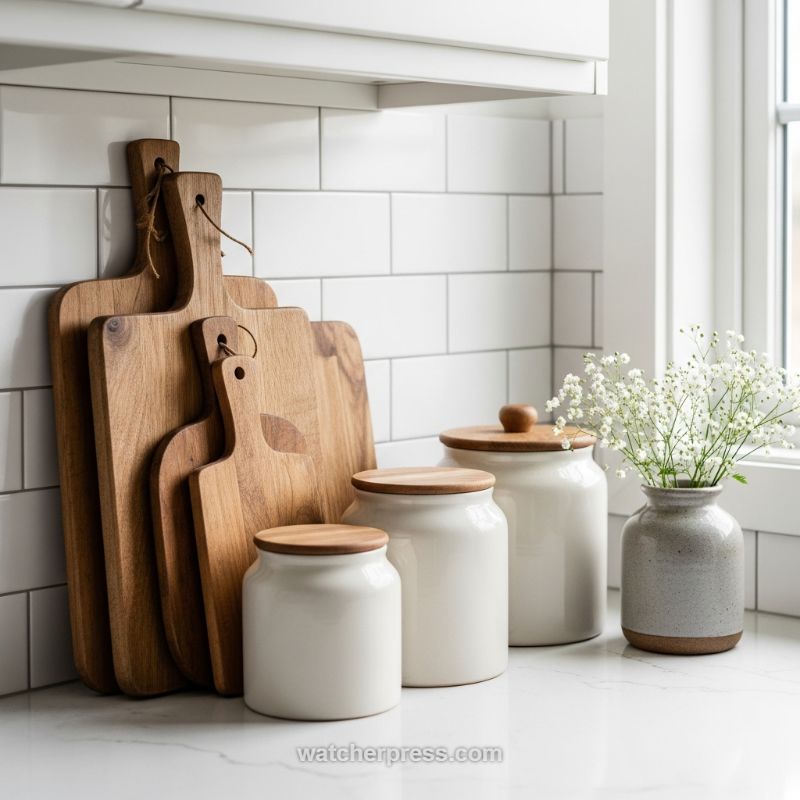
The secret to a truly stylish home lies in transforming functional necessity into aesthetic display. This vignette perfectly illustrates how common kitchen tools, often relegated to drawers or cabinets, can become powerful design features when properly grouped and selected. To implement this principle, choose items that share a uniform material or color palette, even if their shapes and sizes vary dramatically. Notice the stack of wooden cutting boards: the repetition of the rich, natural wood tone creates immediate visual cohesion, while the varying heights and widths introduce essential depth and layering. When staging such a grouping, lean the largest piece against the vertical surface (the backsplash) first, then layer smaller items in front, ensuring each piece is still partially visible. This technique of intentional stacking and overlapping prevents the display from looking like a haphazard pile and instead frames it as a curated collection, essentially treating your countertop space like a small gallery wall.
Beyond just the materials, mastering texture is key to making a neutral palette feel rich and interesting, rather than monotonous. The palette here is predominantly white and natural wood, yet the arrangement avoids feeling flat because of the careful contrast between surfaces. The creamy, high-gloss finish of the ceramic canisters reflects light beautifully, offering a strong juxtaposition to the matte, grainy surface of the wooden lids and cutting boards. This contrast is further emphasized by the speckled, rougher finish of the small vase and the delicate, organic texture of the baby’s breath. When styling your own functional groupings, always ensure you incorporate at least three distinct textures—for instance, combine hard stone or glossy metal with soft linen or porous wood. This creates a tactile experience that draws the eye and registers as luxury, even if the individual items are inexpensive.
Finally, use the principle of grouping in odd numbers to ensure visual balance and dynamism. While there are three canisters and four cutting boards, the overall composition works because the items are clustered in distinct odd-numbered groups (three canisters, one main group of four boards, and one singular vase). The small, organic element—the vase of flowers—acts as a soft anchor, breaking the structure of the harder objects and injecting life into the arrangement. When styling any countertop or shelf, the “rule of three” is your most powerful tool. Combine items of varied height (tall canister, medium vase, small canister) and material within that cluster. Remember that while aesthetics are important, the placement should still respect the item’s function; ensure these displays are situated away from the primary chopping or prep area, making them easy to access, clean, and maintain.
Embrace Lightness: The Principle of Maximizing Natural Illumination
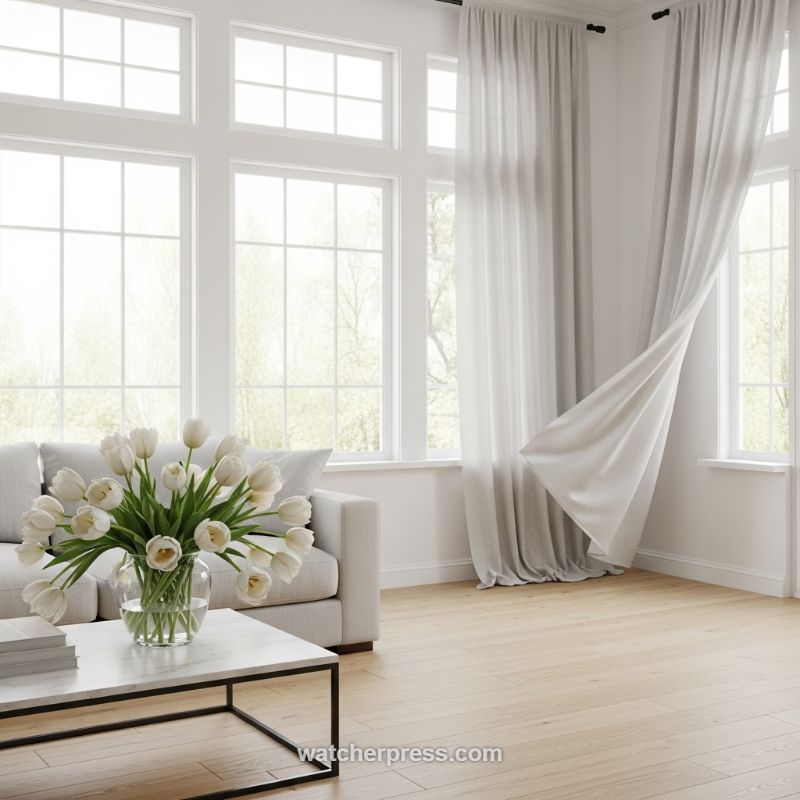
This image perfectly illustrates the principle of maximizing natural illumination to create an airy, expansive environment. To replicate this effect, start by addressing your windows. If your home allows for large, grid-style windows as shown, ensure they are kept pristine. For window treatments, avoid heavy, opaque fabrics that block precious sunlight. Instead, opt for lightweight, sheer linen or voile curtains in soft neutrals, like the muted white or greige demonstrated here. Hanging curtains high and wide (extending beyond the window frame) ensures that when they are drawn back, they don’t obscure the glass, maximizing the view and light ingress. Furthermore, the gentle movement of the fabric, caught by a slight breeze, introduces a dynamic, living element to the room, enhancing the feeling of freshness and movement, transforming the ambiance from static to serenely lively.
The second critical step is establishing a minimalist, light-reflective color palette. Notice how the walls, window frames, sofa upholstery, and even the tulips are variations of white and soft cream. This monochromatic foundation prevents the space from feeling cluttered or visually heavy, allowing the natural light to bounce around the room effectively. Select key furniture pieces that complement this lightness. The structured, light gray sofa maintains clean lines, while the coffee table, featuring a sleek white marble top and a thin black metal base, provides a necessary grounding element without sacrificing sophistication. When working with such a dominant light palette, textural variation becomes paramount—the smooth marble, the soft woven sofa fabric, and the flowing sheer curtains ensure the room feels rich, not sterile, adding layers of visual interest that a flat, single-texture design lacks.
Finally, complete the look by choosing materials that enhance warmth while maintaining brightness. The light blonde or natural oak wood flooring provides a subtle, organic warmth that contrasts beautifully with the stark white walls and cool marble, anchoring the design and preventing the overall effect from feeling cold or institutional. When introducing accessories, adhere to the principle that less is more. A simple stack of carefully curated books and a clear glass vase filled with fresh, white tulips are the only decorative elements required on the coffee table. Expert tip: Fresh florals instantly elevate any space and reinforce the natural, organic feeling fostered by the large windows and open environment. This entire composition emphasizes flow, tranquility, and understated elegance—a masterclass in achieving sophisticated simplicity through careful consideration of light, texture, and minimal detail.
Principle #5: Master the Art of Textured Table Layering and Ambient Lighting
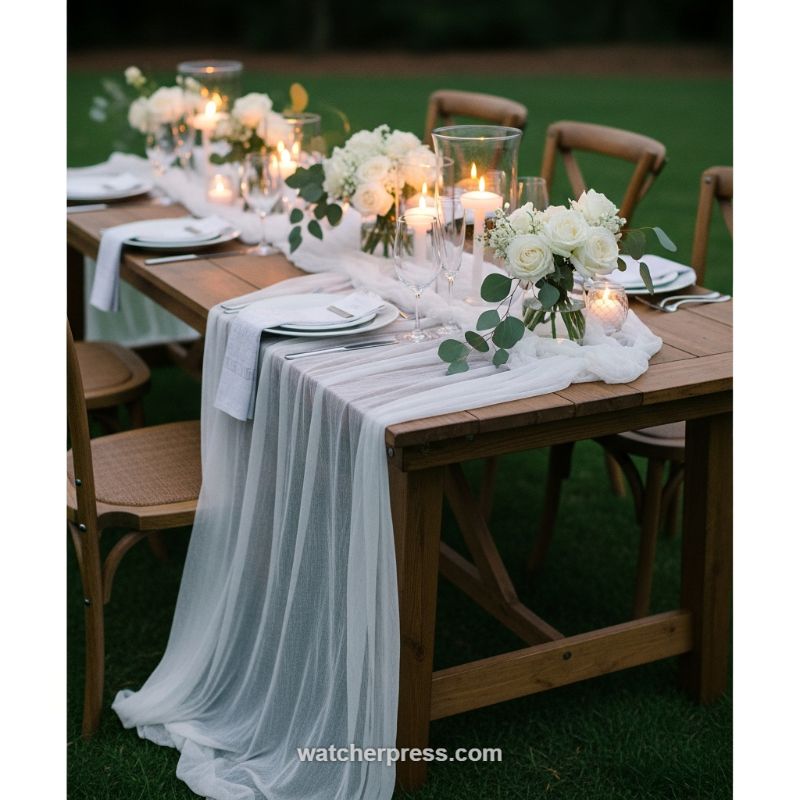
Creating an emotionally resonant atmosphere, especially in an outdoor setting, hinges on the skillful use of texture and light. Start with a foundational element that contrasts yet complements your setting. Here, a rustic, natural wood table provides a grounded, warm base. The key textural element is the sheer, gauzy table runner, which serves multiple functions: it instantly softens the strong lines of the wood, introduces romantic movement as it drapes and pools, and acts as a canvas for the centerpieces. When recreating this look, choose a high-quality sheer fabric—such as chiffon or fine tulle—and ensure you use enough material to allow for significant, cascading drape off the ends of the table. This exaggerated length is crucial for achieving that effortless, editorial look, giving the setting a sense of relaxed luxury.
Next, focus the centerpiece design using a refined, monochromatic palette. The choice of all-white florals (like roses and hydrangeas) ensures elegance and sophistication, preventing the tablescape from feeling cluttered or visually overwhelming, even with numerous elements. Instructional advice for the high-end homeowner is to pair the soft, rounded forms of the flowers with structured, trailing greenery, such as eucalyptus or olive branches. This provides essential contrast and visual depth. Arrange your florals in simple, clear glass vases of varying heights and spread them loosely along the runner. Avoid rigid symmetry; instead, cluster elements naturally, allowing the greenery to spill onto the table, connecting the centerpieces to the table runner below. The repetition of white and green maintains consistency while the varying forms create energy.
The final, and arguably most essential, layer is ambient lighting. In evening decor, layered candlelight is the secret to ultimate ambiance. Do not rely on a single light source; instead, scatter multiple points of warm light along the entire length of the table. This setting effectively uses three distinct candle types: tall pillar candles in hurricane glass vases (providing height and protection from drafts), medium-sized floating candles or large votives, and small scattered tealights. This layering maximizes the reflective quality of the glass and the sheer runner, creating a soft, golden glow that bathes the faces of your guests. Remember, low, warm candlelight (a color temperature below 3000K) is necessary to achieve this intimate, cinematic atmosphere, transforming an ordinary meal into an unforgettable experience that speaks directly to the principle of emotional decor.
Elevating Everyday Function with Thoughtful Groupings (The Power of Vignettes)
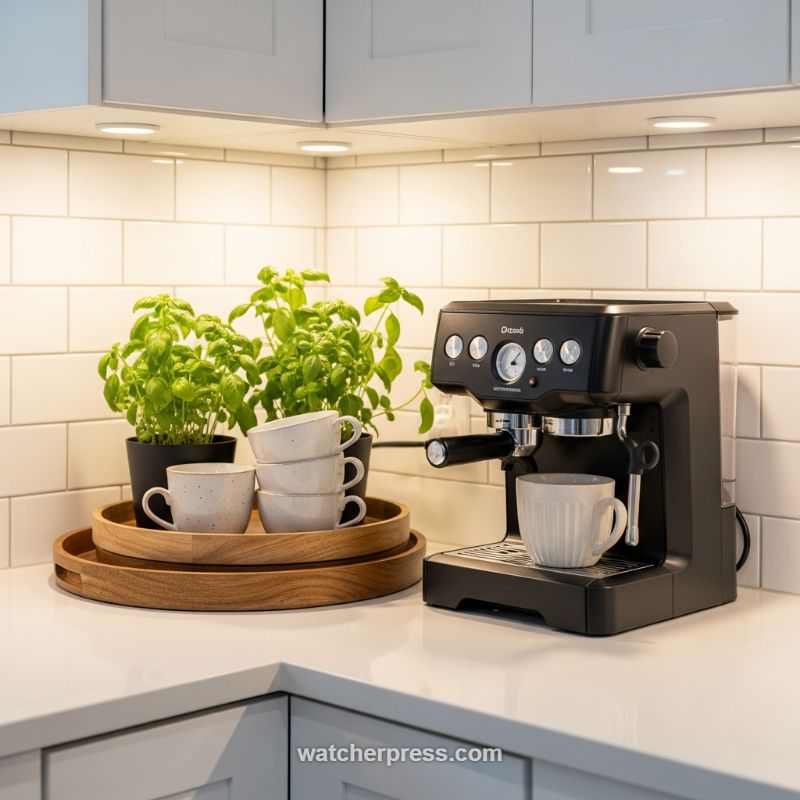
A truly stylish home masterfully integrates aesthetics with practicality, a concept best executed through the use of functional vignettes. A vignette is a small, intentional decorative display that typically serves a purpose. In the kitchen, this translates to creating dedicated stations that keep essentials readily available while adding significant visual appeal. To replicate the success of this setup, begin by selecting a specific counter area and defining its purpose—in this case, a premium coffee and culinary hub. Start with the anchor piece, the black espresso machine, and organize supporting elements around it, such as cups or storage. The key instructional takeaway is to group items based on their shared function (e.g., all coffee elements together) and then introduce elements from a completely different category (e.g., the fresh basil plants) to prevent the area from feeling purely utilitarian. This combination of necessary tools and living elements creates a balanced display that feels welcoming and dynamic.
Mastering material contrast is crucial for adding visual depth and avoiding a flat presentation. Examine the elements in this image: the sleek, modern black metal of the espresso maker, the cool, hard surface of the white quartz countertop and subway tile backsplash, and the warm, organic texture of the nested wooden trays. This juxtaposition is deliberate. When setting up your own vignette, ensure you incorporate at least three disparate materials. Use natural woods and textiles to soften hard appliances and stone surfaces. The round wooden trays not only provide a unifying base that grounds the collection of cups and plants but also instantly elevate them from scattered items to a cohesive collection. Expert advice suggests always grouping smaller, repeated items (like the mugs) onto a single large anchor piece (the tray) to reduce visual clutter and make the entire arrangement feel intentional and polished.
Finally, pay close attention to scale, layering, and color control. Notice how the plants and the stacked cups introduce vertical height, balancing the horizontal span of the espresso machine and the trays. Utilize the principle of odd numbers, particularly the ‘Rule of Three,’ for groupings—seen here in the two separate pots of basil and the stack of three visible mugs, plus the one mug ready for use. Stick to a tight, monochromatic base color scheme (white, grey, and black) for the foundational items (the machine, cups, and tiles). This allows the natural element—the vibrant green of the basil—to serve as the single, powerful accent color, providing a refreshing pop that prevents the neutrals from becoming dull. Lastly, always consider lighting; the warm under-cabinet spots in this image highlight the textures and make the entire station glow, emphasizing its importance as a focal point in the room.
Layering Texture and Contrast for Curated Style
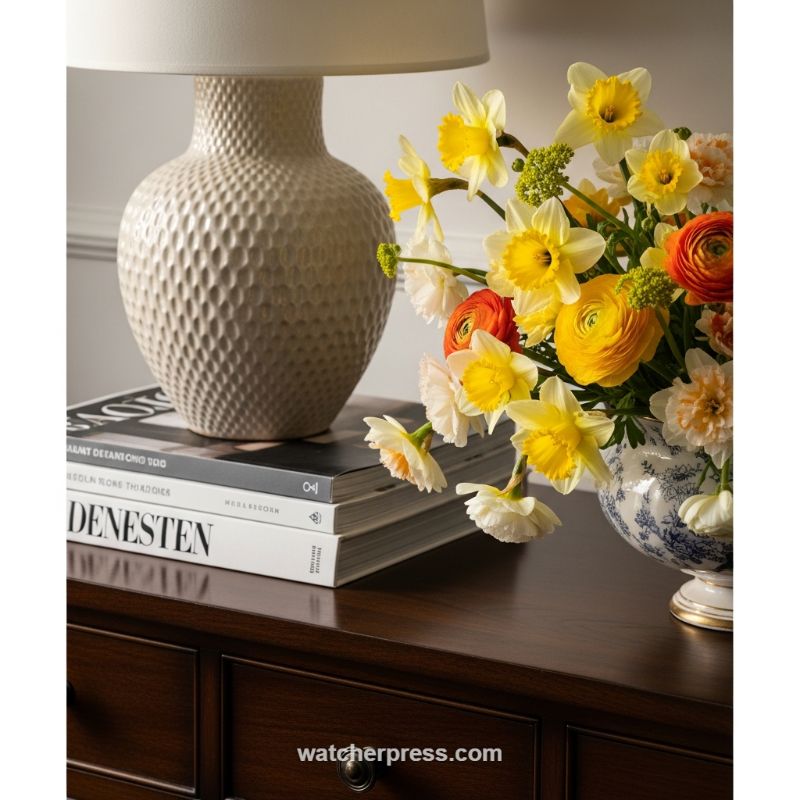
A truly stylish home excels at the art of the layered vignette, transforming a flat surface into a high-impact moment brimming with personality and depth. To recreate this sophisticated effect, begin by establishing a strong foundation of contrasting textures and scales. Notice how the substantial dark mahogany console provides a grounding, weighty base for the lighter elements above. The table lamp, often overlooked, becomes a central textural anchor here; its highly dimpled ceramic surface breaks the monotony of smooth finishes found on the stacked design books and the polished wood. When selecting your pieces, ensure a wide variation in scale—a tall, voluminous object like the lamp should sit adjacent to shorter, dense stacks of items, such as carefully chosen hardcover books, to create architectural interest and prevent the display from feeling sparse.
The next crucial step is introducing dynamic color and organic life to energize the neutral backdrop. While the lamp and books offer structure and muted tones (cream, beige, black, and white), the floral arrangement provides an explosion of warmth. This arrangement brilliantly employs complementary contrast: the rich, cool browns of the furniture are instantly lifted by the vibrant yellows and hot oranges of the daffodils and ranunculus. When crafting your own floral display, choose an ornate vessel—like this traditional blue and white chinoiserie vase—to add a layer of historic pattern and preciousness. The flowers themselves should be arranged loose and organically, allowing a few stems to cascade naturally, which softens the rigid lines of the lamp and book stacks and signals effortless, sophisticated living.
Finally, focus on creating a visual narrative through strategic object placement and height variation. This vignette utilizes the classic technique of grouping elements to create triangular compositions, drawing the eye across the display rather than solely to a single point. The tall lamp, the middle-height flowers, and the lower, stacked books form three distinct planes. To achieve that coveted ‘curated’ look, select items that speak to your passions—the design books are a clear indicator of aesthetic interests, making the space feel personal rather than merely decorative. Remember, every item in a vignette must contribute meaningfully to the scene, balancing weight, texture, and color to tell a cohesive, stylish story.
Creating Visual Interest Through Texture and Layered Styling
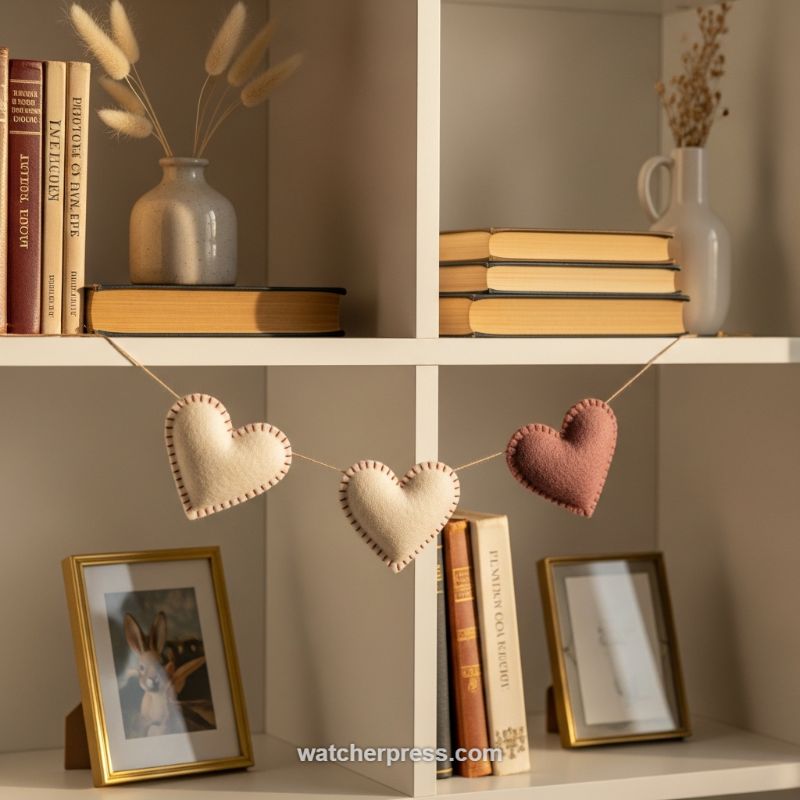
Mastering the ‘shelfie’ requires treating each compartment not as a storage bin, but as a miniature vignette, balancing depth and height. Start by establishing structure using foundational items like books. Notice how the stylist utilizes books in two distinct ways: vertically for visual height (on the far left and bottom right) and horizontally as pedestals (top left). Using a thick, flat book as a base immediately elevates the object placed upon it, in this case, a textured ceramic vase, defining its importance and providing necessary negative space around it. To further enhance depth, employ layering. Place the larger, more structural elements (vases, book stacks) toward the back, and smaller, lighter objects (picture frames) toward the front, allowing them to lean slightly. This technique prevents the display from looking flat, guides the eye through the composition, and transforms standard shelving into a curated, three-dimensional display space. Expert advice: Use heavy objects to anchor corners and lighter, more delicate items to soften the center spaces. The arrangement should feel effortless, not crowded, leaving breathing room around key groupings.
The vertical and horizontal dividers create distinct zones, but the consistent use of cream, natural wood tones, and soft accent colors (like the dusty rose) unifies the overall aesthetic, proving that variety in arrangement can coexist with harmony in color. The repetition of gold frames and the soft, neutral fabric of the hearts also serve as unifying visual anchors. Furthermore, utilize delicate accents, such as the heart garland, to personalize the space seasonally or thematically without creating permanent clutter. This temporary piece of decor, strung across the vertical divide, effectively uses the open space to connect the lower and upper sections of the display. This is a crucial element of advanced styling: leveraging the negative space to draw lines and create narrative, rather than just filling shelves. The garland adds a soft pop of color (mauve) against the predominantly cream and brown palette, introducing an element of playful softness without sacrificing the overall sophisticated, minimal tone.
The use of varied textures is paramount to achieving a sophisticated, cozy aesthetic, particularly in a neutral space. The image beautifully contrasts rough, matte textures like the felt hearts and the dried grasses with smoother elements like the ceramic vases and the glossy metallic finish of the gold frames. When selecting accessories, always prioritize material contrast; for example, if your books have worn paper covers, introduce metal or glass. If you have smooth, modern shelving, soften the lines with organic shapes and woven textures. Finally, look beyond strict symmetry; aim for calculated balance. The visual weight of the three stacked books and the tall vase on the top right is offset by the combination of the thick horizontal book and the substantial vase on the top left, ensuring the whole shelving unit feels grounded and harmonious.
Principle #4: Elevate Your Space with Rich Textures and Strategic Layering
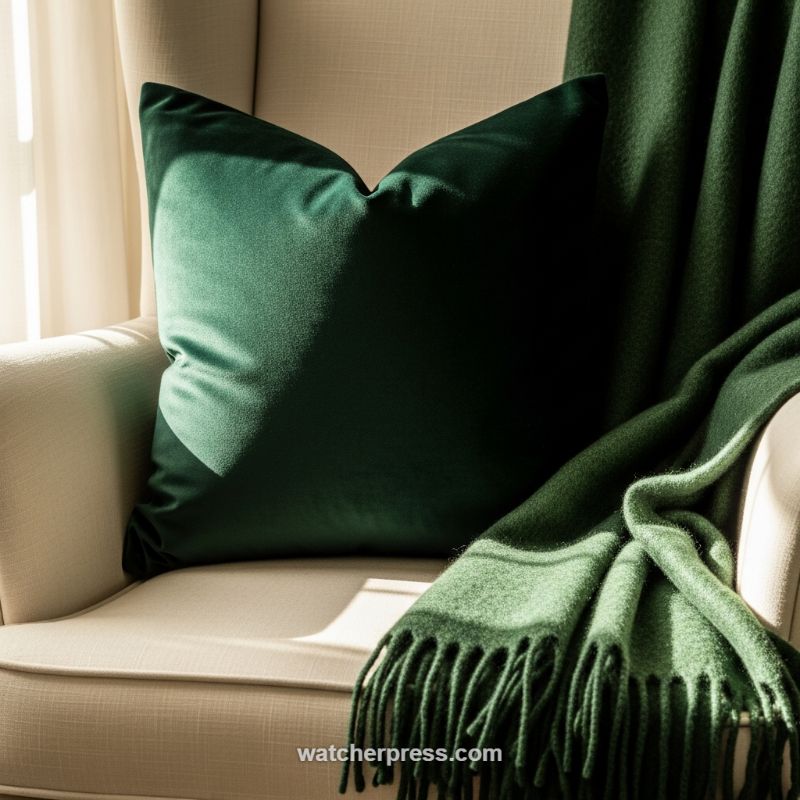
The foundation of truly stylish decor lies in mastering the interplay of texture, often achieved through intentional textile layering. As demonstrated by the pairing of lush velvet and soft, fringed wool in this image, contrasting surfaces dramatically heighten the sensory experience of a space. The deep, rich emerald velvet pillow absorbs and reflects light differently than the matte, slightly coarser finish of the wool throw. When selecting textiles for a comfortable seating area, move beyond single-note materials. Combine slick, reflective fabrics (like high-pile velvet, silk, or sateen) with cozy, absorbent ones (like chunky knit wool, cashmere, or mohair) to create immediate visual interest and tactile complexity. This sophisticated juxtaposition signals luxury and depth, inviting occupants to interact with the materials while elevating the overall design narrative.
Color placement is critical when employing rich textures. Notice how the striking jewel tones —here, a deep forest green —are anchored against a clean, neutral canvas, such as the creamy beige wingback chair, allowing them to become the undisputed focal point. When incorporating saturated colors via textiles, ensure the surrounding permanent elements are subdued to let the fabrics take center stage. Furthermore, recognize that natural light is an essential decor element, especially when working with materials like velvet, which possesses a strong pile. The direct sunlight slicing across the pillow creates dynamic highlights and dramatic shadows, demonstrating how texture itself can manipulate light into art. Position seating strategically near windows to utilize this effect; the resulting contrast deepens the perceived richness of the fabric, transforming a simple pillow and throw into sculptural elements.
Achieving the perfect layered look is less about absolute neatness and more about calculated casualness. When styling a chair or sofa, throws should appear effortlessly draped rather than folded precisely. Start by loosely gathering the throw lengthwise, allowing the fringe or tassels to fall naturally near the floor or over the armrest, emphasizing movement and inviting warmth. Ensure the size and proportion of the accessories complement the furniture; a large, plump square pillow provides excellent lumbar support and structural grounding, as seen here. Remember that strategic layering adds essential functionality; these pieces aren’t just decorative but offer warmth and comfort, fulfilling the core principle of stylish, livable design.
Mastering the Art of Organic Color Layering and Texture
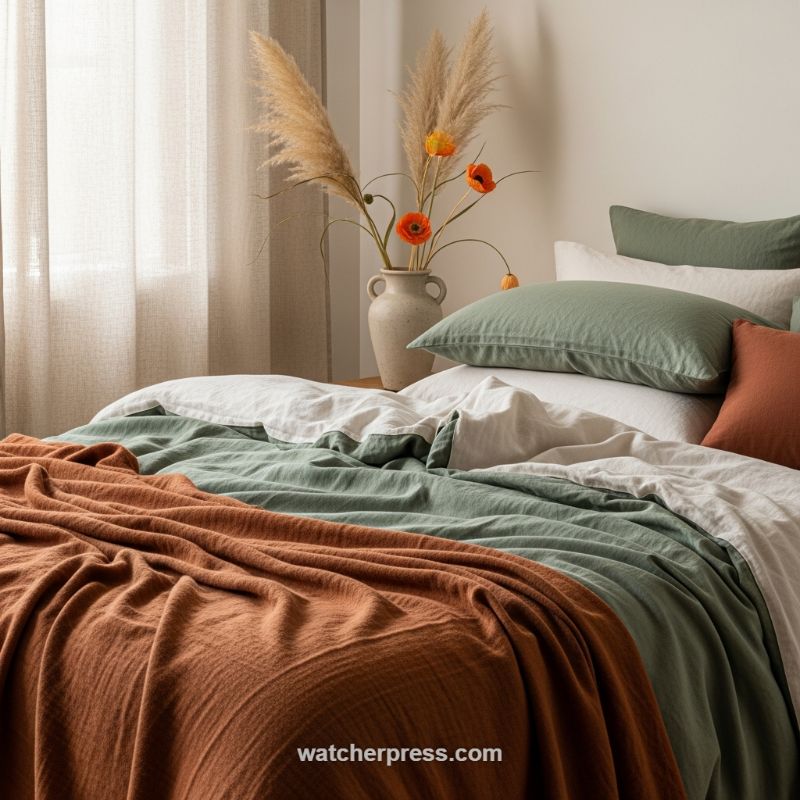
The secret to creating a bedroom that feels both sophisticated and inherently soothing lies in mastering the principle of organic color layering. This visual example perfectly showcases how to use deeply saturated, yet muted, earthy tones to evoke warmth and natural harmony. Start by selecting a grounding neutral
—here, a creamy, off-white linen serves as the canvas, preventing the overall palette from becoming too heavy. Next, introduce your main anchor color, like the prominent sage green duvet and pillows. This cool shade provides a necessary contrast to the warm hues. The final, crucial layer is the accent color: the rust or burnt orange throw blanket. Expertly chosen, this terracotta shade, which sits across the color wheel from green, creates a dynamic, balanced tension. The key takeaway is to choose colors that look like they belong in nature, moving away from bright primaries toward desaturated, complex shades.
Beyond color, textural variety is what elevates this setup from merely styled to irresistibly inviting. When decorating any space, especially a bed, focus on combining at least three distinct textures to achieve depth. Notice how the bedding incorporates the structured, slightly rumpled look of washed linen for the main duvet and pillows, contrasted sharply by the gauzy, loosely woven texture of the oversized rust throw. This mix ensures visual interest and reinforces the cozy, lived-in aesthetic. To replicate this effect, begin with flat sheets, fold your main duvet cover down halfway to expose the sheet edge, and then drape a heavy, textured throw blanket diagonally across the lower third of the bed. This method of layering mimics the imperfect comfort found in high-end styling, providing functional warmth while appealing aesthetically.
The successful execution of this organic modern aesthetic hinges on the supporting accessories and ambiance. To complete the natural story, integrate botanical elements that are textural and slightly wild, such as the tall pampas grass arrangement paired with vibrant faux or dried poppies in a speckled ceramic vase. This vertical height draws the eye up and prevents the focus from staying entirely on the low, horizontal plane of the bed. Furthermore, pay critical attention to light; the use of sheer, linen-look curtains diffuses harsh sunlight into a soft glow, illuminating the rich colors and textures without washing them out. This soft, filtered light is essential for highlighting the richness of the natural fabric colors and creating a perpetually serene atmosphere, transforming the bedroom into a true sanctuary.
Layering for Comfort: The Key to Depth and Contrast
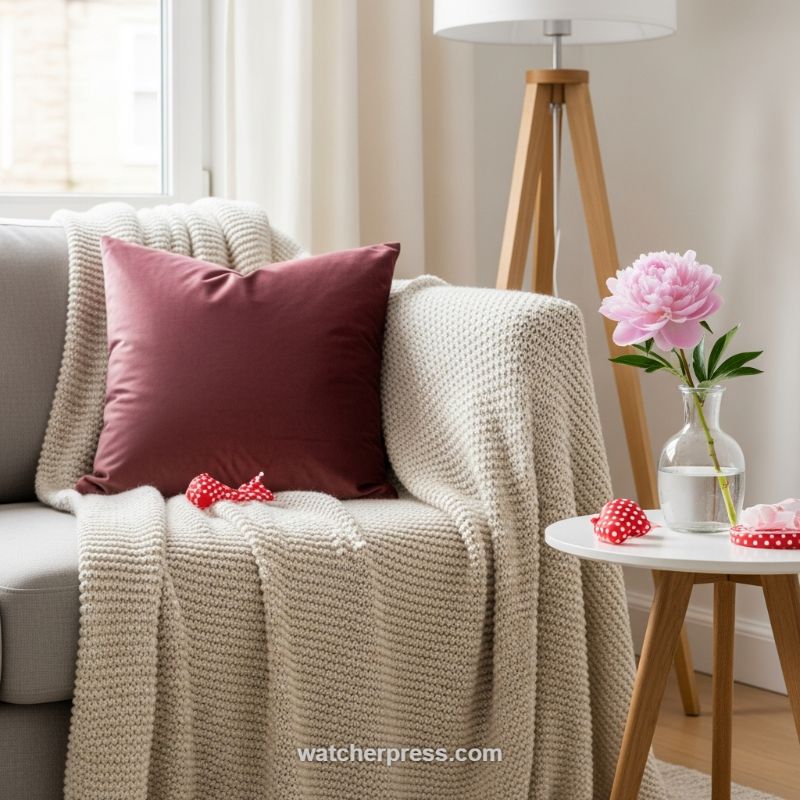
Start by building a foundational palette of neutrals, like the soft grey sofa and the expansive, creamy knit throw seen here. This image expertly showcases how layering texture is paramount to creating depth and tactile richness in a living space. Notice the powerful contrast between the substantial, chunky garter stitch of the blanket and the soft, smooth velvet finish of the deep cranberry cushion. This tactile variety is essential; without the heavily textured knit, the setting would appear visually flat and less inviting. When executing this principle in your own home, choose at least three distinct material weights—such as fine linen, thick wool, and polished silk or velvet—to drape and place across seating areas, ensuring they complement, rather than compete with, the primary upholstery fabric. The goal is a sensory experience that begs the user to sink in and relax, achieved purely through varied material selection.
Once the neutral, textured backdrop is established, introduce strategic, saturated color to anchor the design. The deep, almost autumnal shade of the primary throw pillow provides necessary visual weight and prevents the light neutrals from becoming too washed out or sterile. Following this, note the intentional scattering of smaller, brighter color pops, such as the vibrant pink peony and the playful red-and-white polka dot accessories nestled on the side table. These small, high-contrast elements echo the primary pillow’s undertones but provide a delicate, refreshing lift that draws the eye. Expert tip: For maximum impact and cohesion, ensure your accent colors appear in at least three different spots within the grouping (e.g., cushion, flower, side table trinket). This technique creates a cohesive visual triangle that leads the eye around the styled area seamlessly.
The final layer involves integrating natural elements, wood tones, and optimizing ambient lighting to complete the hygge-inspired aesthetic. The minimalist wooden tripod lamp introduces an architectural, organic shape that prevents the soft furnishings from feeling overwhelming, adding a crucial vertical structure to the scene. Crucially, the single, lush pink peony in the clear glass vase serves as the ultimate touch of fresh vitality. Always include living elements—whether a simple bloom or a small, potted plant—to infuse energy and life into a styled setting. Position your arrangement near a source of natural light, allowing the interplay of light and shadow to highlight the rich textures and colors you have meticulously layered, culminating in a balanced, inviting, and effortlessly stylish vignette.
The Principle of Elevated Entertaining: Styling a Functional Bar Cart
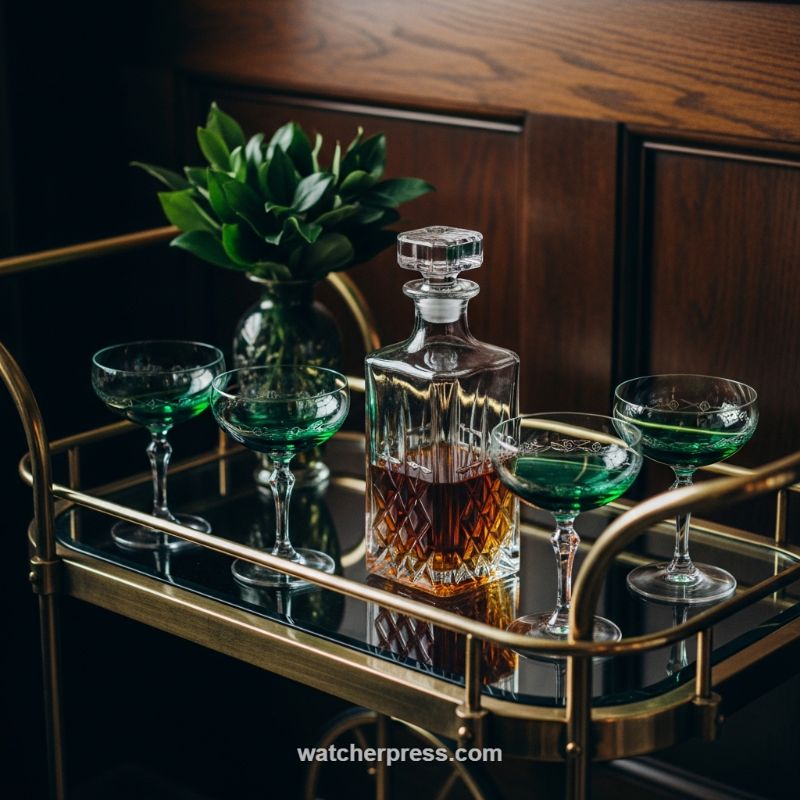
A truly stylish home must incorporate dedicated, beautifully curated stations for entertaining, and the bar cart serves as the ultimate expression of functional luxury. To execute this principle flawlessly, start with the foundation: select a cart that functions as a piece of furniture, not merely storage. The pictured antique brass or gold finish combined with a reflective mirrored surface is ideal, as the metallic sheen and the mirrored tray amplify light, making the entire setup feel more expansive and expensive. When arranging the cart, adhere to the rule of three for grouping: the main spirit (represented by the impressive, weighty decanter), the primary glassware (the vintage emerald coupes), and a natural element (the simple vase of deep green foliage). Ensure the decanter is crystal-cut, adding the necessary textural contrast to the smooth metal frame and the sleek glassware, anchoring the entire display with its substantial height.
Achieving depth and visual interest requires thoughtful layering of color and texture. Notice how the rich, warm amber tone of the whiskey within the crystal decanter plays dramatically against the cool, saturated emerald green of the coupe glasses. This deliberate contrast creates a sophisticated mood instantly, far surpassing the look of standard clear glassware. To elevate your presentation, invest in unique, vintage, or specialty glassware—like these etched coupes—rather than mass-market options; these small details suggest a collector’s eye and transform a simple drink into an event. Furthermore, the inclusion of live greenery is non-negotiable. The organic, vibrant green of the leaves cuts the hardness of the metal and glass, softening the aesthetic and bringing essential life to the vignette. Position taller items toward the back (the foliage and decanter) and lower items (the glasses) toward the front, maintaining an organized flow that encourages effortless use.
Finally, the placement and atmosphere surrounding the bar cart are paramount to integrating it successfully into your decor scheme. In this instance, the cart is set against rich, dark wood paneling, which emphasizes its brass detailing and allows the liquor and glassware colors to pop dramatically. When styling your own home, avoid placing the cart in harsh, direct light; instead, opt for a location that benefits from moody, ambient lighting (like a nearby floor lamp or dim wall sconce) to enhance the reflective qualities of the metal and mirrored trays. Ensure that your selection of spirits is edited and high-quality, reflecting your taste. The cart should be kept perpetually ready for use, but always styled—meaning no clutter, no empty bottles, and all accessories (stirrers, jiggers, ice bucket) kept close but neatly concealed or artfully displayed.
Principle 4: Elevate Ambiance Through Thoughtful Layering and Lighting
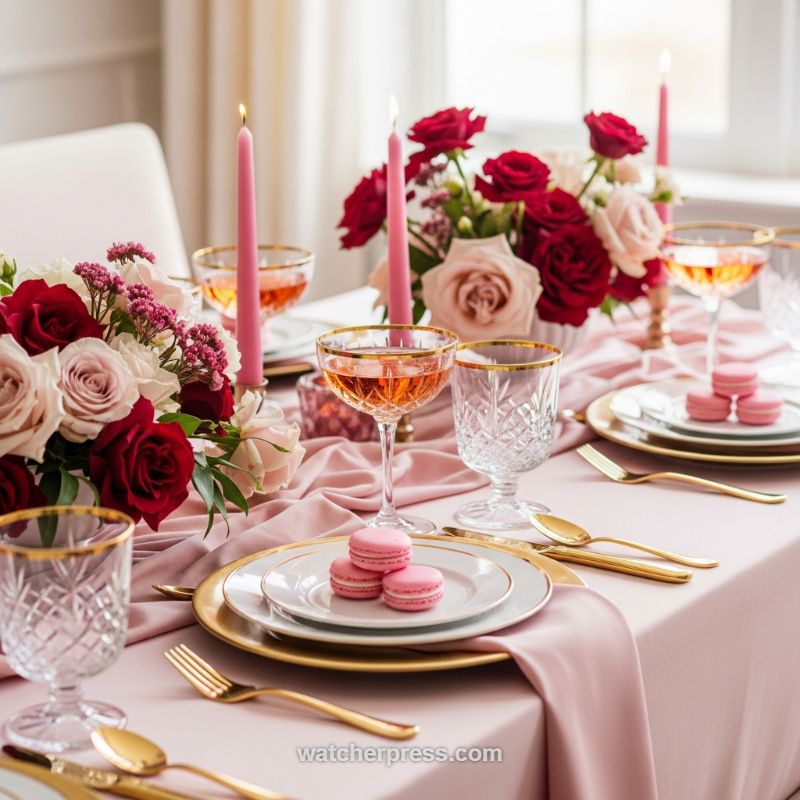
The hallmark of a truly stylish space, whether a living room or a formal table setting, is the mastery of layering—a technique that uses texture, depth, and contrast to build visual interest. In this romantic setting, the foundation starts with a cohesive, monochromatic color base (blush pink) layered with a high-impact secondary color (Bordeaux red) and grounded by a consistent metallic accent (gold). To replicate this principle, begin your design with textiles, opting for contrasting textures: a matte, floor-length tablecloth overlaid with a shimmering, soft runner, creating instant visual depth. Next, introduce the dominant color theme via substantial anchors, such as lush floral arrangements featuring deep red and pale pink roses. The key is to distribute color strategically; the flowers and the textiles handle the reds and blush, leaving the plates and glassware crisp and clean, acting as negative space to let the other elements pop. This balanced layering prevents the theme from becoming overwhelming and ensures every element feels intentional rather than cluttered.
Formal place settings are the ideal canvas for mastering vertical layering. Start with an oversized metallic charger (here, gold) to anchor the setting, providing essential contrast against the soft pink textiles. Stack traditional white porcelain plates on top, ensuring each plate size is distinct to reveal the layers beneath. This technique adds height, formality, and structural definition to the space. Pay close attention to mixing glassware; a common professional trick is juxtaposing delicate pieces with heavily textured ones. Here, a refined, gold-rimmed coupe glass (for a cocktail or champagne) is paired with a sturdy, cut-crystal water or wine glass. This blend of styles adds complexity and personality, signaling that the space is curated, not purchased as a matching set. Finally, treat your flatware as jewelry for the table, selecting a polished metallic finish—in this instance, bright gold—that matches the charger and the gold rims of the glassware, ensuring every metallic element harmonizes.
The final, and perhaps most crucial, layer is ambiance, driven entirely by lighting. Avoid relying solely on harsh overhead light; instead, introduce multiple points of warm, diffused light. Tall, slender tapered candles are essential for drawing the eye upward and providing a flattering glow at eye level. Select candles that reinforce the color story, such as these pale pink tapers, placing them in elegant metallic holders that match your primary accent color. The light should be soft enough to highlight the textures of the fabric and the brilliance of the glassware without casting harsh shadows. For a final expert flourish, integrate small, intentional details that repeat your color motif, like placing three pink macarons on the dessert plate. These finishing touches demonstrate attention to detail and seamlessly tie the decorative scheme together, transforming a simple dining experience into an elevated, romantic event.
Mastering High-Contrast Symmetry for an Inviting Entryway
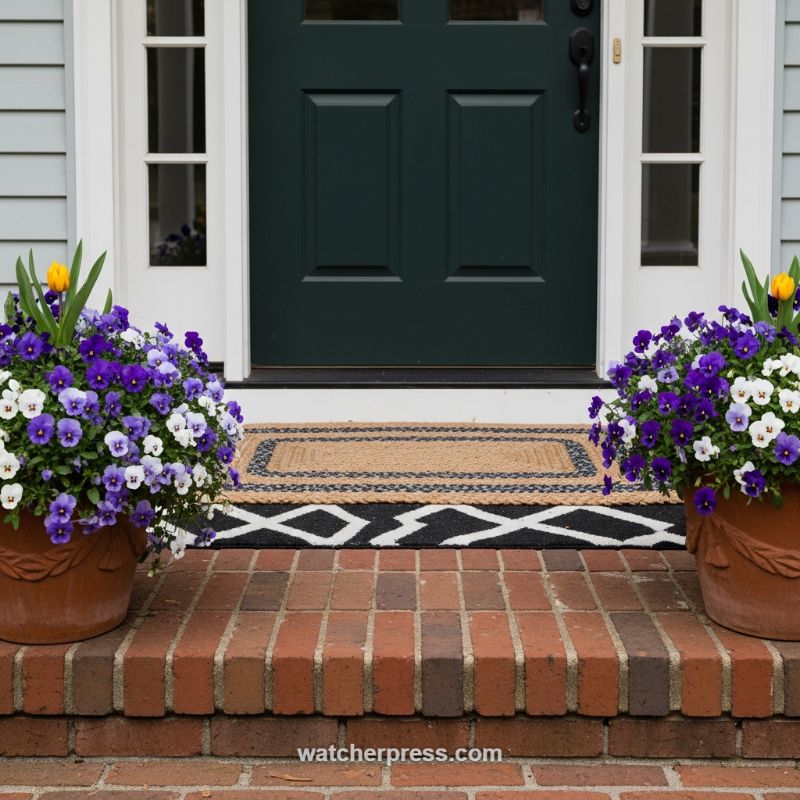
The front entry is the first impression of your home’s style, and executing this space successfully relies on leveraging symmetry, texture, and controlled contrast. The essential principle demonstrated here is using architectural features—specifically the front door—as the anchor point for a balanced composition. To replicate this look, start by treating the door color as your primary focal point. A deep, sophisticated shade, such as this hunter green, provides crucial depth and high contrast against crisp white trim and light-colored siding, instantly defining the entry portal. When selecting your exterior paint palette, ensure the door color complements the underlying hardscape, like the rich red brick steps seen here; the cool green works harmoniously with the warm red earth tones, preventing the entrance from feeling one-dimensional. Expert tip: Ensure your hardware (like the black handle shown) also ties into the darker color scheme to maintain a cohesive, grounded look.
Next, elevate your welcome by embracing the layered rug trend. A single, small doormat often looks weak and disproportionate against a wide entryway. Instead, select a large foundation rug that extends well beyond the width of the door—in this case, a black and white geometric pattern that introduces a bold, modern edge. This foundation layer anchors the space and defines the ‘threshold’ area. On top of this, place a smaller, textured mat, preferably one made of natural fibers like jute or coir, with subtle accent colors (like the dark blue/black detailing). This layering technique instantly adds visual richness, dimension, and softness, turning a functional necessity into a high-impact design feature. The mix of bold pattern (geometric) and organic texture (braided jute) provides a sophisticated tension that prevents the area from looking flat.
Finally, utilize planters to achieve perfect balance and inject essential seasonal color. Symmetry is key here: place matching terracotta containers equidistant on either side of the door. The terracotta material itself is important, as its warm, earthy tone naturally complements the red brick foundation, seamlessly connecting the soft decor elements to the permanent architecture. Fill these pots abundantly with lush, brightly colored seasonal plantings—such as pansies and tulips—ensuring the blooms provide a visual ‘pop.’ The vibrant purples, whites, and yellows don’t necessarily need to match the dark green door, but they must complement it. This strategy allows homeowners to easily refresh their entryway aesthetic with changing seasons, always guaranteeing a fresh, vibrant, and perfectly balanced welcome for guests.
Principle #7: Balance Textural Contrast for Welcoming Comfort
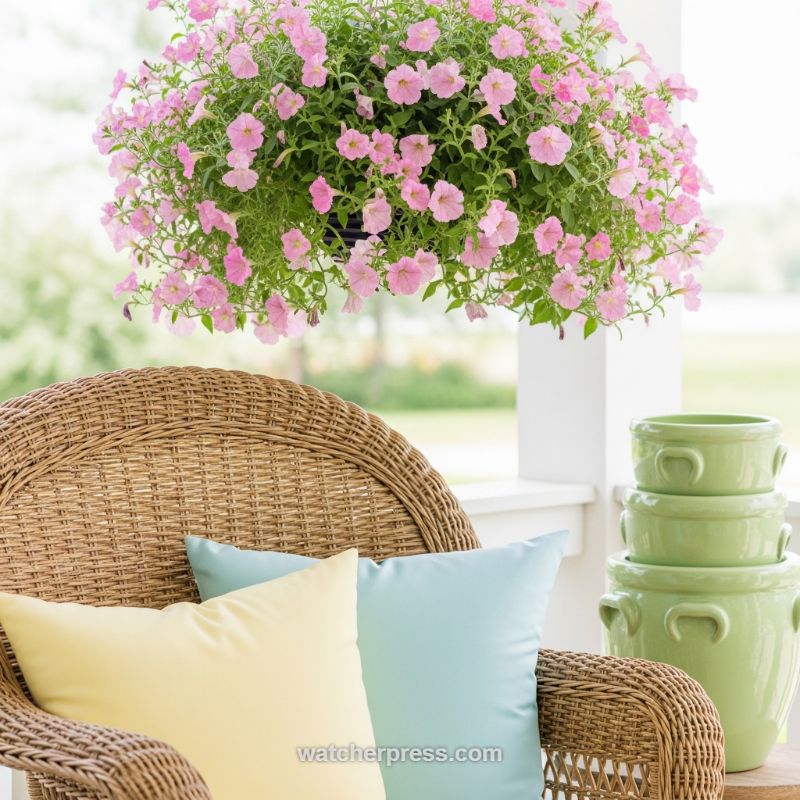
Creating a truly stylish and welcoming space—even outdoors—relies heavily on balancing contrasting textures. As illustrated by this serene porch scene, the foundation of comfort is established by the heavy, organic texture of the woven wicker chair. Rattan and wicker provide an immediate sense of warmth and natural grounding, essential for counteracting potentially sterile hardscaping. Expert designers utilize this sturdy, open weave as a foil for softer elements. Notice how the smooth, light-reflecting fabrics of the pale yellow and robin’s egg blue throw pillows are layered onto the chair. This interplay between rugged, natural texture and soft, refined smoothness is what elevates a seating area from merely functional to inherently inviting, encouraging guests to relax and settle in. Always prioritize at least three distinct textures in any single vignette to achieve this sophisticated depth.
The strategic use of a soft, restrained color palette is critical for achieving a tranquil atmosphere. The primary color source in this design is the overflowing hanging basket of delicate pink petunias, which immediately introduces life and movement. This living color is echoed by the carefully selected accents: the pale blue and yellow of the pillows, and the unifying soft lime green found in the stack of glazed ceramic pots. This specific palette—dominated by cool pastels and neutrals—promotes serenity and cohesion. When selecting accessories for a transitional space, choose pieces (like the glossy green pots) that offer a controlled, refined pop of color to prevent the organic elements (the wicker and the flowers) from becoming overwhelming. The glossy finish of the ceramics, for example, provides a necessary shine that contrasts with the matte finish of the wicker.
Finally, maximize visual impact through careful layering and utilization of vertical space. Do not confine your decor solely to the horizontal plane. The hanging basket draws the eye upward, maximizing the perceived volume of the space while framing the view. Similarly, the accessories on the right—a stack of three differently sized, yet identically styled, pots—create a strong sculptural moment. This technique of stacking or grouping objects in varying heights (often in odd numbers, like three) creates dynamic visual interest and prevents the scene from feeling flat. Always use accessories to build deliberate vignettes that guide the eye through the composition, ensuring that the soft textures, the natural elements, and the thoughtful color choices harmonize seamlessly.
Incorporate Whimsical Contrast with Unexpected Planters
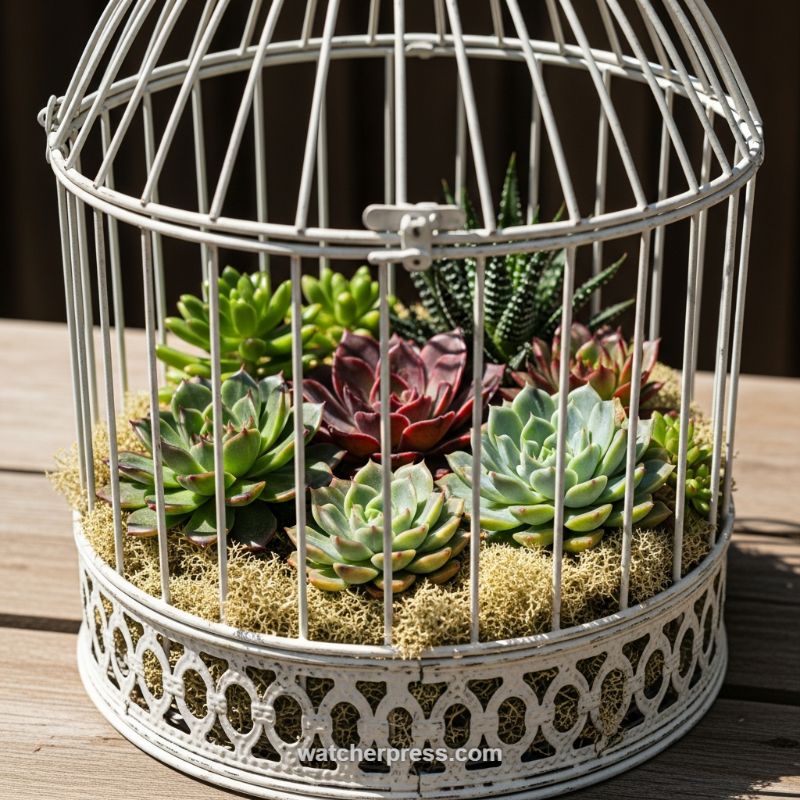
One of the hallmarks of truly sophisticated home design is the ability to introduce unexpected elements that juxtapose texture, age, and function. The principle demonstrated here involves repurposing an item, like this vintage white birdcage, into a stunning botanical display. The visual appeal stems from the dramatic contrast: the rigid, geometric, often rustic structure of the weathered metal cage frames and protects the soft, organic, vibrant geometry of the succulent collection inside. Use a distressed finish, as seen here, to add character and depth; the chipped white paint instantly lends an antique, found-object sensibility that elevates the entire arrangement from a simple craft project to a curated centerpiece. Note how the various shades—from dusty green Echeverias to deep crimson Aeoniums and the spiky texture of the Haworthia—are amplified by the simple white background, creating an incredible visual focal point.
To replicate this look, start with an open, decorative cage or container that has a solid base, or line a porous base thoroughly to contain the planting material. Since these arrangements often lack true drainage holes, selecting drought-tolerant plants like succulents or cacti is crucial. Use a well-draining succulent and cactus soil mix, ensuring the root ball sits just below the rim of the base. The key to creating a rich, full composition is variety: choose plants with different growth habits (spiky, rosette, trailing) and contrasting colors. After planting, cover the soil surface with dried moss—the light tan variety shown here provides a beautiful, soft blanket texture that covers the soil line and further enhances the vintage aesthetic. Be extremely mindful of watering; without drainage, overwatering is fatal, so mist sparingly or use a dropper to water only the soil near the plant roots once the soil is completely dry.
This type of display is powerful because it works across multiple design styles, bridging the gap between farmhouse charm and refined modern sensibility. Place the finished piece strategically where its unique form can be appreciated—it functions perfectly as a dining table centerpiece, a focal point on a mantle, or an accent piece on a bookshelf or console table. For long-term health, ensure the arrangement receives bright, indirect sunlight, especially if placed indoors. When incorporating such a unique item into your décor, remember the principle of scale: the object should be large enough to command attention but not so large that it overwhelms the surface it rests upon. By repurposing familiar items into functional art, you signal that your home is not just furnished, but thoughtfully curated, demonstrating an advanced mastery of design principles.
Elevating Entertaining: The Principle of Intentional Table Scaping
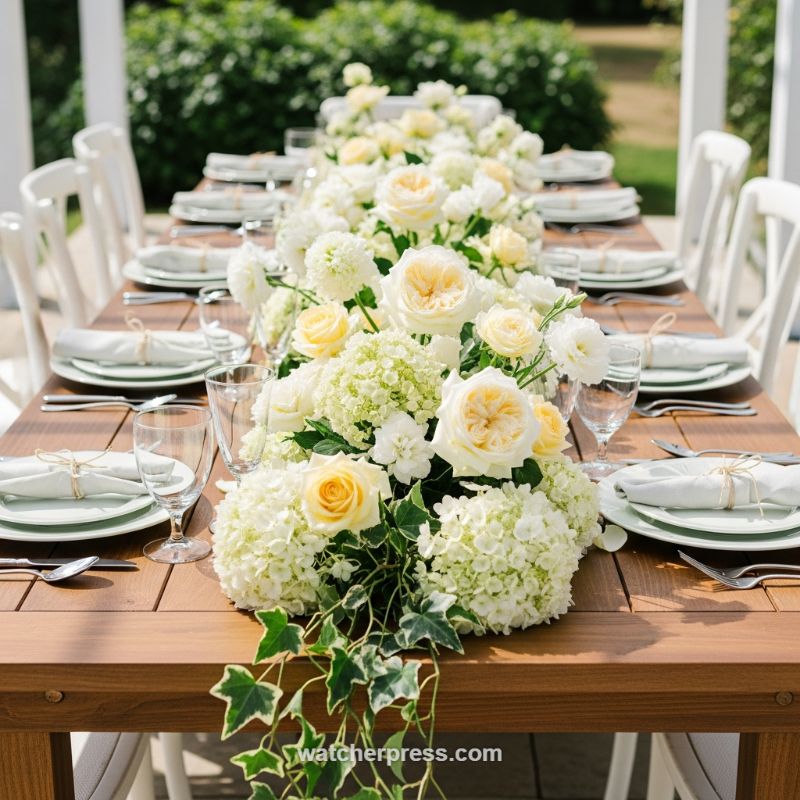
The art of tablescaping elevates a simple meal into an immersive experience, a principle essential for stylish homeowners who frequently entertain. As demonstrated in this setting, the first step is mastering the central element: the floral runner. Instead of grouping small, isolated bouquets, create a continuous, lush stream that maximizes impact and provides visual continuity down the length of the table. For an elegant, timeless aesthetic, adhere to a tight color palette—here, whites and creamy pale yellows—and rely on texture for depth. Expertly mix structural blooms, such as large garden roses or dahlias, with softer, volume-building elements like hydrangeas. Crucially, ensure the height remains low enough that guests can maintain eye contact across the table. Incorporating trailing greenery, like the variegated ivy seen draped over the table edge, adds dynamic movement and a necessary connection to the natural setting, grounding the entire design.
Beyond the centerpiece, the intentional layering of the place setting defines sophistication. On a warm, rustic wood table, the contrast of crisp white linen and simple china prevents the look from becoming overly rustic. To introduce subtle complexity, utilize a layering technique that incorporates minor color variance—such as the pale sage or mint green accent plates shown here—to break the stark white without introducing distracting hues. For the linen, choose quality, substantial napkins and tie them simply with natural twine or delicate ribbon. This small detail provides a tactile, handmade feel that beautifully juxtaposes the formality of the glassware and silverware. Remember that glassware should be appropriate for the occasion; simple, clean-lined stemmed glasses are versatile and do not compete with the elaborate floral arrangement. Every piece, from the flatware placement to the choice of plate color, contributes to a cohesive, high-end design narrative.
Finally, successful tablescaping must integrate seamlessly with its architectural and natural surroundings. When designing for an outdoor space, leverage the existing environment rather than fighting it. The backdrop of lush greenery and the clean lines of the white pergola and X-back chairs provide a perfect, natural frame, allowing the warm wood table and the monochromatic floral arrangement to truly pop. This principle emphasizes the use of natural light and materials. White and cream palettes are particularly effective outdoors because they reflect light beautifully and allow the organic greens of the foliage to serve as the main background color. By adhering to a restrained color scheme and focusing on rich textures and intentional material contrasts—like the smooth china against the rugged wood—you ensure the setup feels classic, inviting, and truly harmonious, regardless of the occasion.