
Ready to level up your space? Learn 15 simple decor swaps that instantly elevate your home, giving it that luxurious, professionally designed finish without the hefty price tag.
Swap Flat Paint for Architectural Texture and Integrated Display Niches
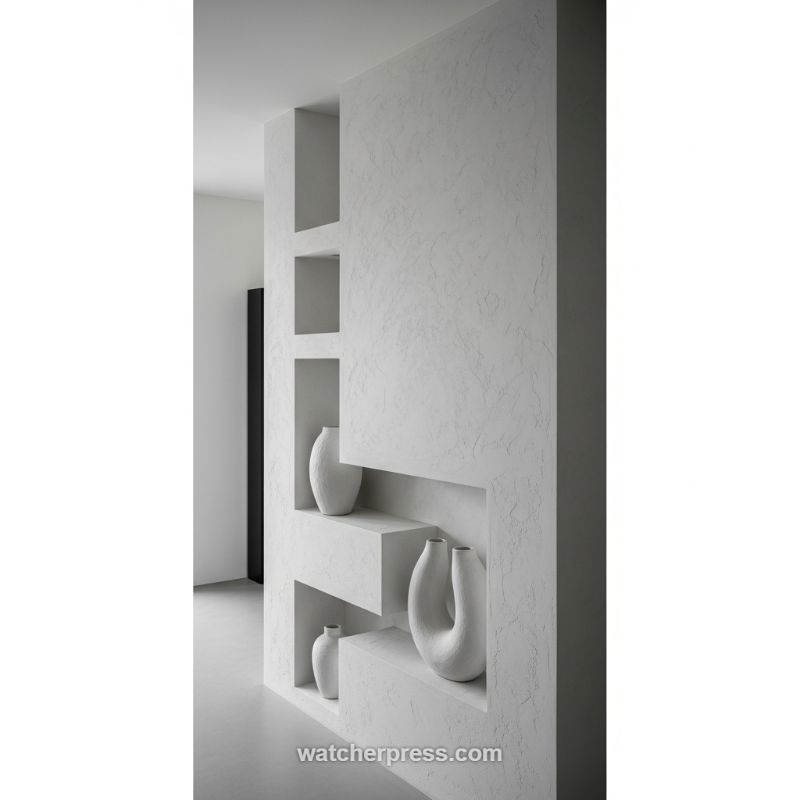
One of the most immediate indicators of a professionally designed space is the deliberate use of architectural elements that move beyond standard drywall and paint. Instead of relying on traditional floating shelves or standalone bookcases, professional designers often opt for built-in, recessed shelving niches, as perfectly demonstrated here. This approach integrates storage and display directly into the structure of the wall, making the items feel like curated artifacts in a gallery rather than simply decorative pieces placed on a shelf. To replicate this, consider utilizing a non-load-bearing partition wall, perhaps between a living and dining area, to carve out staggered, custom niches. The varying depths and heights of these openings add a dynamic visual rhythm to the wall, transforming a plain vertical surface into a three-dimensional design feature that commands attention and elevates the perceived value of the room.
Crucial to the success of this monochromatic, minimalist look is the wall finish itself. Notice how the textured, light-colored plaster (likely stucco or Venetian plaster) prevents the white color scheme from feeling sterile or flat. In spaces dominated by pale neutrals, texture is the primary source of depth and warmth. The rough, irregular surface catches light and shadow beautifully, providing visual interest that a smooth painted wall simply cannot offer. If a permanent plaster installation isn’t feasible, you can achieve a similar tactile quality through high-quality textured wallpaper or by experimenting with specialized troweled paint finishes. The goal is to add an organic, hand-crafted feel that softens the stark lines of modern architecture and provides a subtle, sophisticated backdrop for your chosen decor.
Finally, the objects placed within these niches must uphold the minimalist, sculptural standard set by the architecture. This is where the decor swap comes into play: replace mass-produced trinkets with highly sculptural, monochromatic objects that act as quiet works of art. The vases shown here, uniform in their matte white color and subtle texture, but highly unique in their abstract, organic shapes, are curated perfectly. Limit your display to a few key pieces per niche, utilizing the “Rule of Three” or arranging objects in varying scale to create visual balance. Ensure the color palette of the objects matches or complements the wall finish to maintain a cohesive, sophisticated flow. This strategic selection ensures the focus remains on the form and texture, making the entire display feel intentional and expertly styled.
Elevate Your Styling with Curated Vessel Groupings
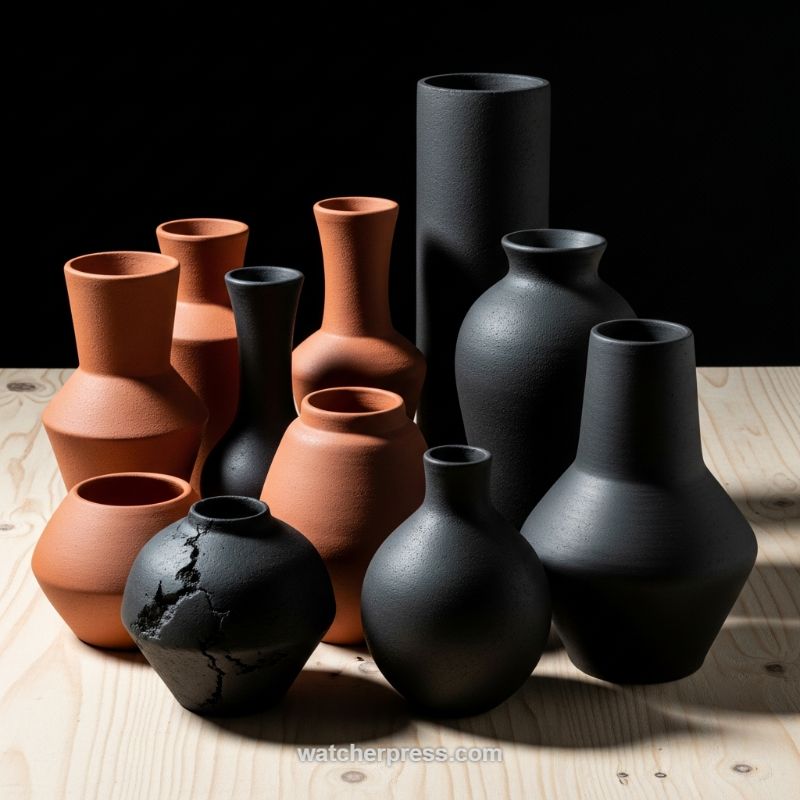
A common mistake in home styling is placing single decorative items in isolation. Professionals, however, understand the power of clustering similar objects to create visual impact and narrative. Instead of one lonely vase on a mantle or shelf, swap it for a curated grouping of five to eleven vessels, as demonstrated here. The key to making this decor swap look expert-level is the deliberate use of high contrast. Notice how the arrangement expertly mixes warm, natural terracotta tones with stark, sophisticated matte black ceramics. This opposing color palette creates immediate visual tension and ensures the display reads as intentional art rather than random clutter. Furthermore, utilize varying heights and widths—from tall, narrow cylinders to wide, squat amphoras—to build a dynamic “skyline” that guides the eye through the composition.
The selection of finish is also a critical element for achieving a professional aesthetic. Move away from glossy, reflective ceramics and embrace raw, tactile textures. The vessels in this display feature unglazed or matte finishes, suggesting handcrafted, natural origins. This porous, slightly rough texture interacts dramatically with light, creating deep shadows and highlighting the unique forms, which is essential for adding dimension and depth to the setup. Expert tip: Ensure that the textures complement the color contrast. The smooth, absorbent finish of the matte black vessels prevents them from reflecting glare, lending an air of weight and seriousness, while the earthy, slightly coarse terracotta adds warmth and a grounded connection to nature. Look for unique pieces, like the intentionally cracked or heavily textured black vessel shown here, to inject an element of organic imperfection and historical authenticity into your grouping.
To execute this arrangement flawlessly, start by selecting pieces that belong to the same material family (e.g., all ceramic or clay) but vary their color, size, and form significantly. When arranging the cluster, always adhere to the design principles of using odd numbers (three, five, seven) for maximum visual appeal. Position the tallest pieces toward the back or center, establishing visual anchors, and then cascade the smaller, more bulbous forms around them to fill out the base and create a cohesive whole. Pay close attention to the surface on which the grouping rests; the light, raw wood platform in this image provides a clean, neutral ground that allows the deep, contrasting tones and textures of the vessels to truly stand out. This calculated presentation transforms simple pottery into a gallery-worthy vignette, instantly signaling professional design intent in your space.
Strategic Contrast: Elevating Neutrals with Black Accents
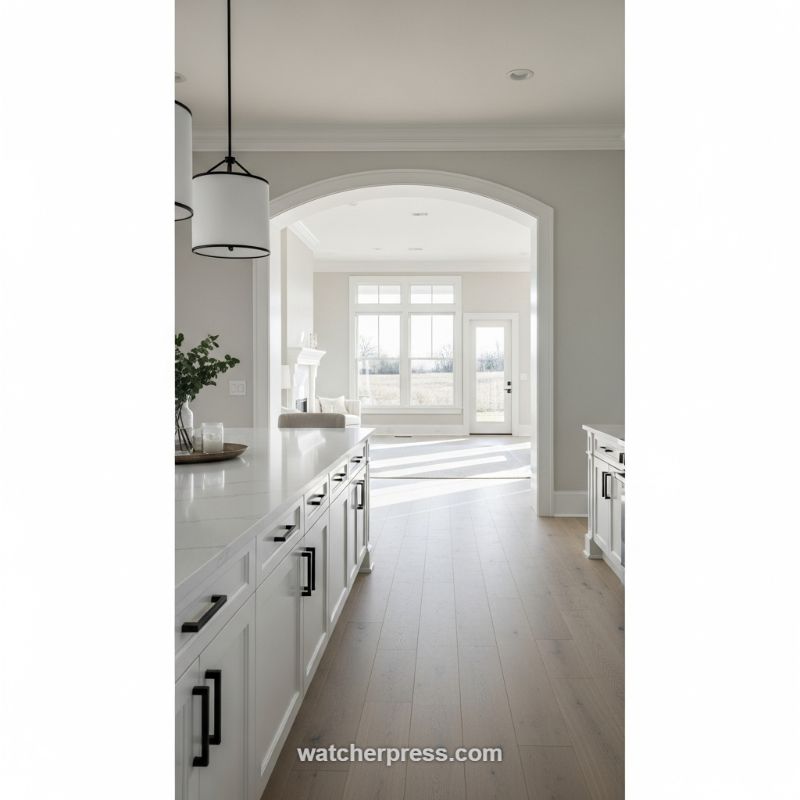
One of the quickest and most impactful decor swaps professional designers use is leveraging high-contrast hardware and lighting to define a space. In this bright, neutral interior, the extensive use of matte black cabinet pulls and the sleek framework of the pendant lights instantly draws the eye, providing necessary visual weight against the expansive white cabinetry and walls. To replicate this look, prioritize consistency: if your cabinets are modern Shaker style, choose minimalist, straight-line pulls, opting for a dark finish like matte black or oil-rubbed bronze. This simple change transforms standard white or wood cabinets into custom-feeling fixtures. Crucially, coordinate this finish across primary accent points—ensure the metal tone of your cabinet hardware matches the base or stem of your overhead lighting fixtures, unifying the room’s metallic scheme and making the design feel deliberate and tailored rather than accidental.
Beyond hardware, study the power of flow and architectural detailing showcased here. The successful transition from the kitchen/hallway space into the adjacent living area is achieved through continuous, light-toned wood flooring and the dramatic, cased archway. When planning your layout, treat transitional elements like archways and doorways as opportunities to enhance architectural interest; substantial trim and gentle curves add inherent value without requiring complex structural changes. Furthermore, professionals maximize natural light by maintaining a cohesive color palette that reflects brightness. Notice how the large windows are framed by minimal white trim, and the neutral walls and flooring bounce sunlight deep into the interior rooms, making the entire home feel larger, airier, and flawlessly connected. If you have older, darker flooring, swapping to a wide-plank, light-washed engineered wood or laminate floor is an investment that yields immense returns in perceived space and brightness.
The final step to achieving a professionally designed space lies in curated styling. Once the architectural framework and contrast elements (hardware/lighting) are established, keep surface styling simple and organic. In this image, the kitchen island is grounded by only a few thoughtfully chosen elements: a simple glass vase with vibrant green foliage and a tray holding understated, light-colored candles. This minimal approach prevents clutter while introducing necessary texture and life. The greenery provides the only pop of intense color, which is a technique known as ‘intentional minimalism.’ To elevate your space, remove all unnecessary items from countertops and surfaces, grouping your remaining decorative pieces—such as books, plants, or candles—onto a dedicated tray or decorative cutting board. This small act of curation maintains the room’s crisp, clean lines while adding warmth and personality, signaling a carefully considered design hand.
Infuse Character with Vintage Travel Layers

One of the quickest ways to elevate a space from DIY amateur to professionally designed is by incorporating unique, high-impact storage that doubles as a statement piece. Instead of relying on a generic MDF side table or modern storage basket, replace it with a vertical stack of vintage luggage. This simple swap instantly introduces layers of history, rich texture, and a defined narrative into the room. To achieve this look successfully, focus on selecting pieces that offer visual contrast—mixing materials such as aged leather, rough canvas, and worn metal hardware, as shown here. The natural wear and tear, or patina, on these items is crucial; it prevents the display from looking like a staged retail collection and gives the impression of well-traveled, treasured heirlooms. Always ensure the stack is sturdy and placed against a supportive wall, using heavier, darker cases as the foundation for stability and visual grounding.
The execution of the vignette on top is just as important as the stacking itself. Professional designers utilize the ‘Rule of Three’ or other odd numbers for staging, ensuring dynamic visual movement. In this example, the two dark brown cases sandwich a lighter tan one, creating a clear break and highlighting the contrast in texture and color. On the uppermost surface, treat the suitcase like a small mantle or pedestal. Stage items that complement the vintage theme, but that vary significantly in height and shape. A small, sturdy globe on a bronze stand provides vertical lift and reinforces the travel motif, while a potted plant (like the lush fern shown) adds essential organic texture and life, counterbalancing the hard edges of the luggage and hardware. The contrast between the antique metal clasps and the soft, vibrant green of the foliage provides a sophisticated interplay of elements.
When considering placement, this curated luggage stack functions best in areas where you might need an accent table, such as beside a reading chair in a den, in a spacious entryway, or as a unique nightstand replacement. Expertly integrate this feature by ensuring the color palette coordinates with your existing decor—for instance, if your room features warm neutrals and bronze accents, choose luggage and accessories with matching undertones. The overall effect should be intentional and collected, not cluttered. If the luggage is functional, use the stacked cases to store seasonal items or extra linens, transforming a decorative element into practical, hidden storage, a key hallmark of a professionally organized space.
Swap Basic Planters for High-Impact, Artisanal Pottery
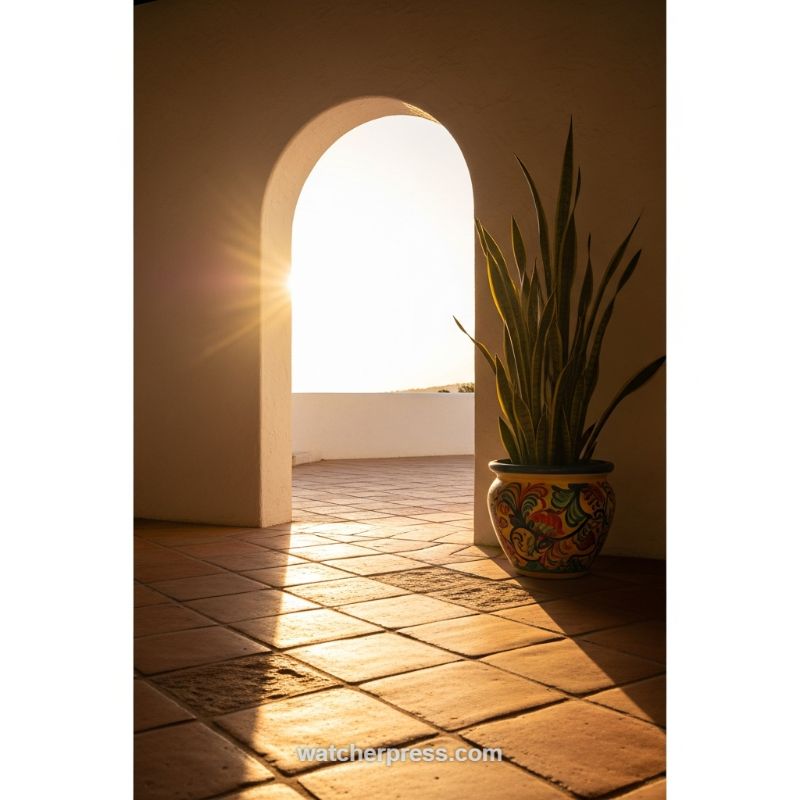
The quickest way to move a space from amateur to appointed is by replacing generic plastic or plain ceramic pots with truly statement-making artisanal vessels. In this Mediterranean-inspired vignette, the towering snake plant (Sansevieria) is beautiful, but the true focal point is the boldly painted, folk-art-style planter. This piece introduces an instant infusion of color, culture, and texture that contrasts beautifully with the stark white walls and rustic terracotta floor. A professional designer understands that decor elements, even functional ones like planters, should be treated as curated artwork, elevating common houseplants into architectural features that command attention and depth. Notice how the vibrancy of the red, yellow, and green pattern prevents the scene from becoming overly monochromatic despite the neutral surrounding structure, proving that a single, carefully chosen accessory can transform an entire visual field.
To replicate this sophisticated effect, start by evaluating the scale and style of your space. For areas with strong architectural features, like archways or large windows, select planters that are robust enough to anchor the visual field. If your existing architecture is simple or neutral, use the planter to introduce a vibrant color story, perhaps echoing a secondary shade found in your textiles or existing artwork. When pairing the plant with the pot, ensure the vessel’s height is at least one-third the height of the plant for stability and visual balance. Look for materials that add richness
Finally, placement is critical for maximizing the impact of your new statement piece. Observe how the intense, late-afternoon sun in the image casts dramatic, geometric shadows across the tiled floor, deliberately highlighting the texture of both the rough-hewn tiles and the bold pot pattern. Professional staging often involves placing key decorative items directly in paths of strong natural light (a technique known as chiaroscuro in art) to deepen the mood and emphasize texture. Use the plant to frame a desirable architectural element, such as a doorway or fireplace mantel, creating a visual invitation and providing necessary contrast against harsh backlight. By leveraging natural light, incorporating rich texture, and choosing artisanal pottery over plain options, you instantly move past basic decorating and into the realm of custom, thoughtful design.
Upgrade Flat Surfaces with Sculptural Gilded Accents
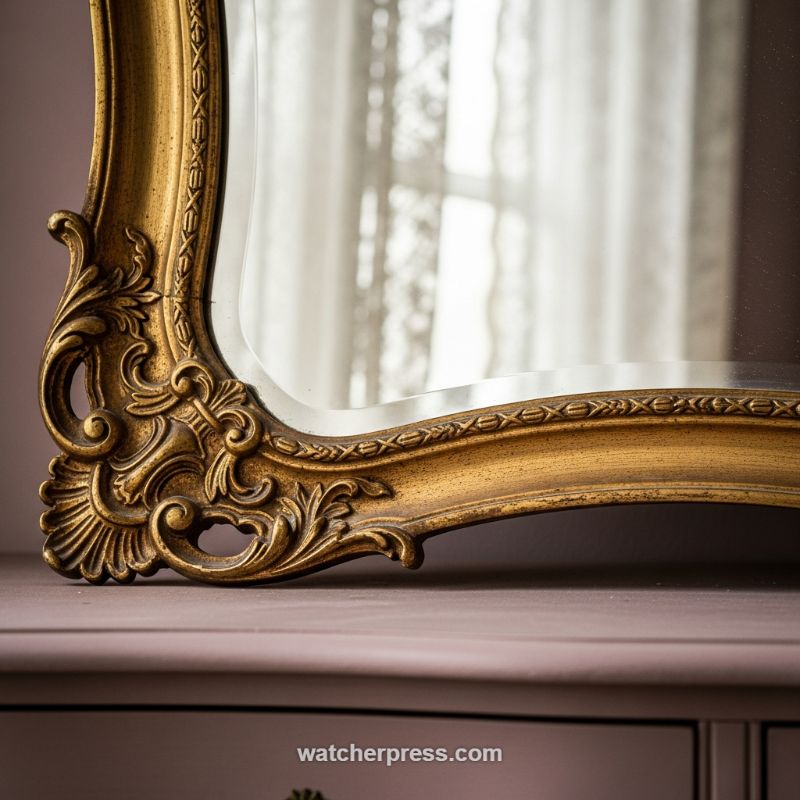
The quickest way a designer signals luxury and history in a space is by introducing texture and dimensionality through unexpected accessories. Ditch the streamlined, plain mirror or artwork for a piece featuring sculptural, heavily detailed framing, such as this stunning antique-style gilded mirror. The professional difference lies in the contrast: a highly ornate, antique gold frameften in a Rococo or Baroque styleplaced against a simple, contemporary matte surface, like the dusty mauve dresser shown here. This juxtaposition prevents the space from feeling stale or overly traditional, instantly adding depth and visual weight that transforms a standard piece of furniture into a curated focal point. When executing this swap, look for frames with deep carving and a rich, slightly aged gold finish; the texture catches the light beautifully, drawing the eye and making the entire arrangement appear layered and expensive. The frame should act as architectural ornamentation, not just a border for the glass. The swap is not about size, but about impacta smaller, highly detailed piece often reads as higher quality than a large, plain one. To integrate this successfully, ensure the warm gold tone complements the existing metals in the room, creating a cohesive visual narrative. To truly replicate this professional look, sourcing and placement are crucial. If a genuine antique isn’t feasible, look for high-quality reproductions that focus on texture and depth rather than relying on a flat, shiny paint job. Estate sales, high-end consignment shops, or specialist vintage retailers are excellent hunting grounds. When styling, allow the gilded piece to stand alone as the primary dramatic element on its surface. Avoid cluttering the surrounding area with too many competing accessories; a single, ornate item requires breathing room to maximize its impact. The mirror’s generous scale and curves should complement the furniture’s silhouette without completely overpowering it, ensuring a harmonious balance. Furthermore, remember that scale is critical: the piece should feel substantial enough to anchor the surface, demonstrating intent rather than appearing as a simple afterthought. A high-quality sculptural mirror ensures that even when viewed from an angle, the dimension of the frame remains a primary point of interest. Beyond the aesthetic value of the frame, the mirror itself is a vital tool for professional ambience creation. A designer leverages the reflective surface to capture and distribute light, dramatically increasing the perceived size and brightness of the room. Notice how this mirror reflects a window diffused by sheer white curtains; this is intentional, as it maximizes soft, natural light rather than harsh direct glare. When positioning your new statement mirror, strategize what it reflects. Aim to capture beautiful, textural elementslike the flow of light from a window, a luxurious chandelier, or a piece of interesting opposite artworkand avoid reflecting areas of clutter or blank walls. This careful placement ensures that every glimpse into the mirror enhances the room’s overall mood and luxury. By combining the textural richness of the gilded frame with strategic light reflection, this simple swap elevates the entire space from DIY decorated to professionally designed.
Mastering Scale and Texture: The Banquette and Chandelier Combo
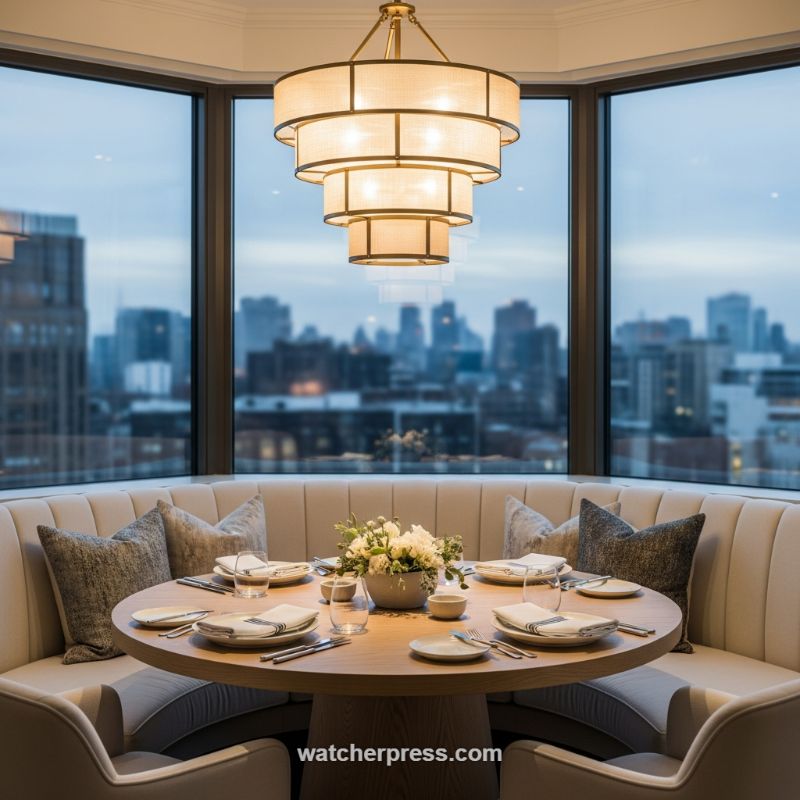
The biggest indicator of a professionally designed space is the confident use of scale, especially in lighting. Forget small, builder-grade pendants; elevate your space instantly by swapping it out for an oversized, tiered chandelier, much like the linen and brass fixture seen here. This piece serves as both a functional light source and a sculptural focal point. When choosing a size, ensure the diameter is at least half the width of your dining table, if not slightly larger, to properly anchor the entire dining area. The layered drum shade provides essential diffusion, eliminating harsh shadows and bathing the entire nook in a warm, flattering glow—a crucial trick designers use to make every meal feel special. Pairing a custom fixture with structural seating is paramount for creating a tailored, high-end atmosphere.
Introducing structural elements, such as a custom banquette, is the ultimate design swap for transforming a simple dining area into an architectural focal point. Unlike standalone chairs, a curved banquette—especially one positioned to capture a sweeping view—maximizes seating while creating an intimate, cozy boundary. The key design detail here is the channeling or vertical tufting on the upholstery. This texture swap instantly elevates the seating from utilitarian bench to luxurious, high-design architecture, adding visual depth without introducing a chaotic pattern. When implementing this swap, select a durable, stain-resistant performance fabric in a sophisticated neutral, such as light taupe or cream. This material choice ensures longevity and maintains a clean aesthetic that acts as a quiet canvas against which your statement lighting and curated table settings can shine.
To complete this polished look, attention must be paid to soft finishes and subtle textural contrasts. Notice how the designer intentionally broke up the monochromatic upholstery with oversized, textured accent pillows. Swapping standard cushions for weighty throws in a contrasting, tactile material—like a slub linen or heathered wool blend in a deep charcoal or gray—introduces necessary visual gravity and depth, preventing the large neutral seating area from feeling flat. Finally, ensure the tabletop itself is treated as an integrated design element. Use intentional, curated place settings, including weighty flatware and crisp, striped linen napkins. Always opt for a low, dense floral centerpiece; this maintains an effortless elegance while ensuring sight lines remain completely unobstructed, allowing guests to appreciate both the refined interior setting and the panoramic exterior view without leaning or straining.
Embrace Dramatic Depth with a Moody Palette
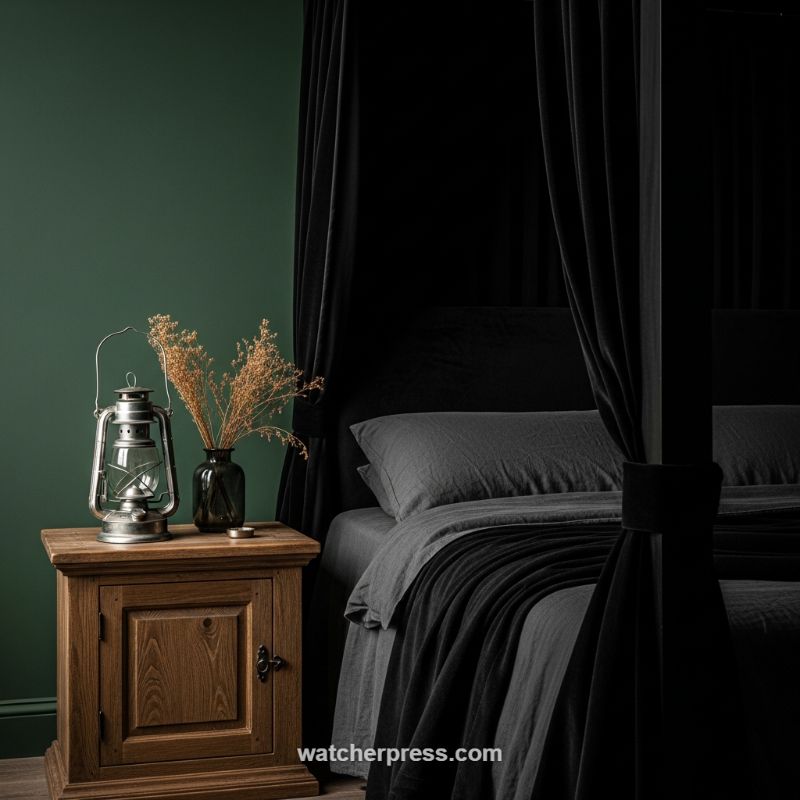
The single most impactful decor swap you can make to professionalize a bedroom is abandoning safe, bright neutrals in favor of a deep, moody, and saturated color scheme. This image perfectly illustrates the power of using colors like deep forest green or hunter green on the walls, paired with rich charcoal or black furnishings. This dramatic shift instantly provides an intimate, sophisticated envelope for the space. To execute this swap successfully, avoid using only one dark tone; instead, layer contrasting dark textures. Notice how the matte finish of the green wall plays against the plush, light-absorbing quality of the black velvet canopy and the soft, slightly wrinkled texture of the gray linen bedding. This careful layering of saturation and finish prevents the room from feeling heavy or flat, instead creating architectural definition and an enveloping, luxurious atmosphere that signals intentional design.
The second vital swap is diversifying the materials and replacing generic accessories with unique, high-impact finds. A professionally designed room relies heavily on tactile elements. Here, the designer mixes the coarse, rustic grain of the wooden nightstand with the cool, smooth metal and glass of the vintage lantern, juxtaposed against the multiple textile weights of the bedding. This strategic pairing of hard and soft, cold and warm materials adds immediate visual and physical richness. Furthermore, replace a standard, often unremarkable nightstand lamp with an antique or unexpected industrial element, such as this hurricane lantern. This specific choice functions as both atmospheric lighting and sculptural art, elevating the nightstand vignette beyond generic store-bought uniformity and signaling a curated aesthetic.
To complete this professional transformation, ensure the dark color scheme is anchored and balanced by considered composition. Use the darkest elements—in this case, the striking black canopy bed—to ground the design and draw the eye. When working with intense colors, it is crucial to introduce organic softness to keep the space inviting rather than oppressive. The delicate, earthy tones of the dried grasses provide a soft counterpoint to the rigidity of the bed structure and the intense color palette. This expert strategy ensures that the room feels intentionally crafted, deep, and supremely cozy, successfully transforming a standard bedroom into a magazine-worthy, evocative space.
Swap Out Bland Throws for Global-Inspired Textured Textiles

Professionally designed spaces rarely rely on generic, mass-produced accessories. If your current decor features a simple, solid-colored cotton throw carelessly draped over a sofa, you are missing a massive opportunity for high-impact styling. The easiest “swap” that instantly elevates your room is replacing that bland textile with a piece that features intentional, complex texture and vibrant global patterns, much like the Andean-style woven blankets shown here. Notice how the rich color saturation extemdash deep magenta, brilliant emerald green, and burnished orange extemdash contrasts sharply with the dark, heavy wood of the chest. This combination creates immediate visual weight and draws the eye, turning a functional item (a blanket) into a foundational art piece. The tightly woven geometric patterns, characteristic of traditional weaving, lend an air of cultural depth and sophistication that a plain knit throw can never achieve.
When integrating highly patterned textiles, the key is controlled boldness. Don’t be afraid of saturated colors; they are necessary counterpoints in a balanced room, especially if your walls or main furniture pieces are neutral. To achieve the layered look seen here, select two different textiles that share a common visual denominator, typically color or motif style. In this example, both blankets utilize bold geometric patterns and incorporate striking white and green elements, which unify the pairing despite the stark contrast between the magenta and orange bases. Expert designers understand that stacking or layering different patterns adds depth and richness, simulating the effort and curation of a well-traveled individual. Furthermore, presentation matters: ensure the folds or rolls are crisp and deliberate; this structure maximizes the visual impact of the pattern repeat and prevents the fabric from looking sloppy or accidental, demonstrating intentional styling.
The secret to this image’s luxurious feel lies not just in the textiles themselves, but in their intentional juxtaposition against the base object. The soft, complex fibers of the blankets provide a luxurious counterpoint to the rugged, nail-studded texture of the dark wooden trunk. This strategic use of textural contrast extemdash smooth against rough, bright against dark, intricate pattern against solid structure extemdash is the hallmark of professional staging. Apply this principle in your own space: lay a high-texture, patterned throw over a smooth leather chair, or fold one neatly onto the foot of a bed with crisp white linens. This type of deliberate styling transforms accessories from mere afterthoughts into focal points, instantly communicating that the space was curated with an expert eye for detail and tactile experience.
Integrating Architecture and Built-in Furniture for Seamless Flow

One of the quickest ways to signal custom, professionally designed interiors is by moving beyond off-the-shelf pieces and integrating furniture into the architectural structure of the room. This image beautifully demonstrates the power of a sunken seating area, or conversation pit, which inherently feels bespoke and luxurious. To replicate this effect as a simple swap, focus on anchoring your furniture pieces. Instead of a typical sectional floating aimlessly, create the illusion of a built-in component by utilizing low, custom-sized platforms or benches along the perimeter of the room, or by choosing extra-low profile seating that visually recedes into the floor plan. This technique maximizes the visual height of the room and draws the eye directly toward the outdoor view, ensuring the furniture complements the volume of the space rather than competing with it. Professional design hinges on seamless transitions; when the furniture looks like it was conceived simultaneously with the architecture, the space immediately reads as high-end and cohesive.
The second major swap is the strict commitment to a textural monochromatic palette. Highly sophisticated design often employs visual restraint, allowing light, shadow, and texture to provide the dimension that contrasting colors usually deliver. Notice how the walls, the deep archways, the modular seating, and the throw pillows all exist within a narrow spectrum of neutral tones—creams, bone whites, and warm taupes. To achieve this, select one core neutral and use it as your foundation for 80% of the room. The instruction is then to layer textures aggressively within that color family: swap shiny synthetics for rough, tactile materials like plaster or stucco finishes (if painting/texturing walls), coarse linen or cotton for upholstery, and matte, porous stone or natural wood for accent tables and accessories. This intentional restriction of color forces the viewer to appreciate the quality of the materials and the subtle interplay of light and shadow, resulting in an atmosphere that is deeply calming and undeniably refined.
Finally, maximize the impact of natural light and exterior views by treating them as the room’s focal point. In this design, the massive, minimally framed windows serve as dynamic artwork, beautifully contrasted by the interior’s dim, deep archway, which acts like a camera lens focusing the view. Your simple swap involves decluttering the window area. If you have heavy drapes, swap them for recessed shades, sheer linens, or no coverings at all if privacy allows. Ensure the lighting sources inside are subtle—recessed LEDs rather than large chandeliers—so the focus remains on the window during the day. Furthermore, use the architecture to your advantage. If your room lacks built-in features, utilize large, carefully placed structural elements, such as oversized floor lamps or tall planters, to frame the main seating area, drawing the eye down and inward, thereby enhancing the sense of a dedicated, conversation-focused space.
Integrate Cultural Richness with Hand-Painted Accent Tiles

Patterned, hand-painted tiles, like the beautiful blue, yellow, and white Talavera style shown here, are one of the most effective ways to introduce immediate character and depth into an otherwise sterile environment. Standard, neutral backsplashes often fall flat, but the integration of an artisanal tile swap instantly signals customization and high-end design intent. The eye is immediately drawn to the intricate detail and rich colors—the cobalt blue provides a sophisticated anchor while the sunny yellow acts as a vibrant accent, all set against a clean white field. This intentional use of color and texture creates a visual narrative that mass-produced materials simply cannot replicate, turning a functional wall surface into a captivating piece of architectural art, often referred to by designers as ‘architectural jewelry’.
When incorporating such a visually demanding element, strategic placement is key to ensuring the space looks professionally curated, not cluttered. Instead of tiling an entire room, select a primary focal area—the kitchen backsplash behind the range, the vanity wall in a powder room, or the interior of a built-in niche or fireplace surround. Expert designers use these tiles as punctuation marks within the greater design scheme. To maintain balance, pair the high-intensity pattern with subdued, foundational elements. For example, if you opt for this vibrant blue and yellow motif, keep surrounding cabinetry and major fixtures in neutral tones (e.g., crisp white, light gray, or natural wood). This deliberate contrast is essential; it allows the intricate tilework to command attention and serve as the undeniable focal point without visually overwhelming the overall room design.
Choosing the correct patterned tile involves closely studying the existing aesthetic you wish to enhance. If your home leans coastal, Mediterranean, or Spanish Colonial, styles rich in blues and yellows, like Azulejos or Talavera, are perfect for evoking that sunny, handcrafted feel. For more modern or industrial spaces, swap the traditional floral design for a graphic, geometric pattern in a strictly monochromatic or bi-chromatic palette (such as deep slate and white) to achieve a similar high-impact effect with a contemporary edge. Furthermore, the installation details matter immensely: using a contrasting grout color (like a dark taupe or even black) will emphasize each individual tile and highlight the grid structure, adding another layer of complexity. Conversely, choosing a closely matched white or light gray grout will allow the overall pattern to flow more seamlessly, creating a unified mural effect. This simple material swap instantly moves the design conversation from basic function to bespoke craftsmanship.
Introduce Organic Texture with a Statement Chandelier
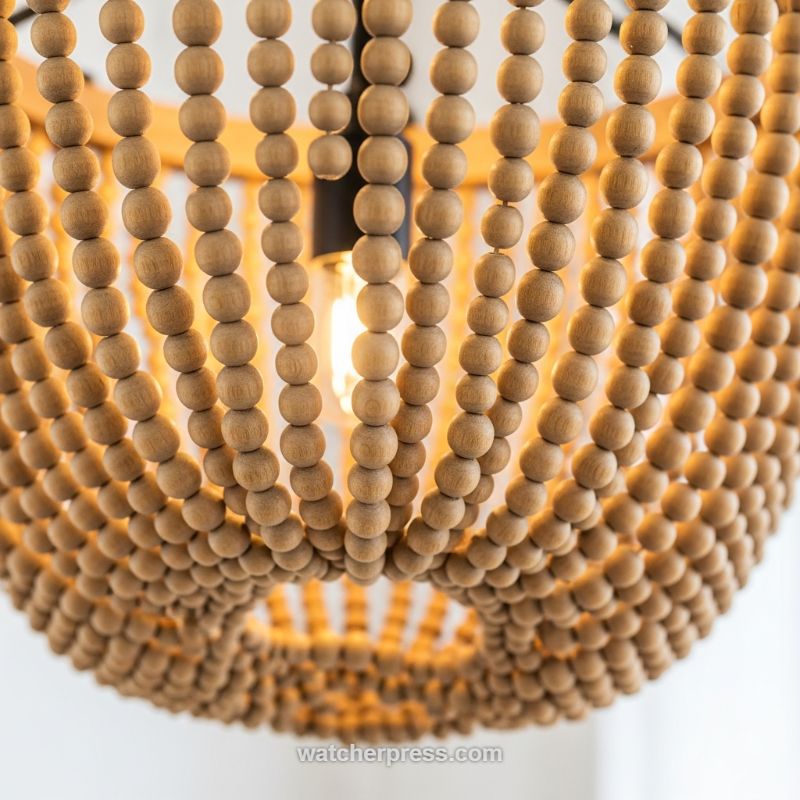
The single most impactful yet often overlooked swap in interior design is upgrading builder-grade light fixtures to statement pieces. A common mistake is relying on plain recessed lighting or simple drum shades, which fail to add personality or visual weight. Instead, view your lighting as hanging sculpture. The beaded fixture pictured here demonstrates this beautifully: the natural wood tone and repetitive spherical texture instantly draw the eye, providing organic warmth and a layer of visual interest that a flat shade cannot replicate. This specific style works exceptionally well in transitional, modern farmhouse, or coastal aesthetics, instantly grounding the room and providing a counterpoint to cleaner lines and synthetic materials, signaling that the space was curated, not just furnished. When selecting a statement chandelier, scale and placement are paramount. For dining rooms, the fixture width should generally be one-half to two-thirds the width of the table to ensure proper proportion. For entryways, ensure the bottom is at least seven feet above the floor to avoid obstruction. More importantly, pay close attention to the bulb choice—it dramatically affects the overall mood conveyed by the fixture’s material. For natural materials like these wooden beads, opt for warm, soft white (2700K to 3000K) or amber-toned filament bulbs, which enhance the wood’s richness and cast a cozy, inviting glow rather than a harsh white light. The warm light filtering through the intricate bead pattern creates beautiful, subtle shadows that add crucial depth to the ceiling plane, a signature element of professional design. To ensure this “swap” reads as professionally designed, integrate the fixture’s material throughout the rest of the space subtly. If you choose a natural wood bead fixture, ensure there are other warm wood elements in the room, such as a salvaged wood picture frame, visible legs on an upholstered chair, or natural flooring, to create material continuity. This cohesiveness prevents the chandelier from feeling like an isolated accent. Furthermore, use the textured light fixture as the focal point for layering textiles; pair the intricate, organic shape with simpler, solid-colored fabrics (like linen or thick cotton) for seating and window treatments. This strategic balance of visual complexity in the lighting and simplicity in soft furnishings is a hallmark of sophisticated, expertly designed interiors.
Swap Art for Sculpture: Using Dramatic Statement Pieces and Dark Backdrops
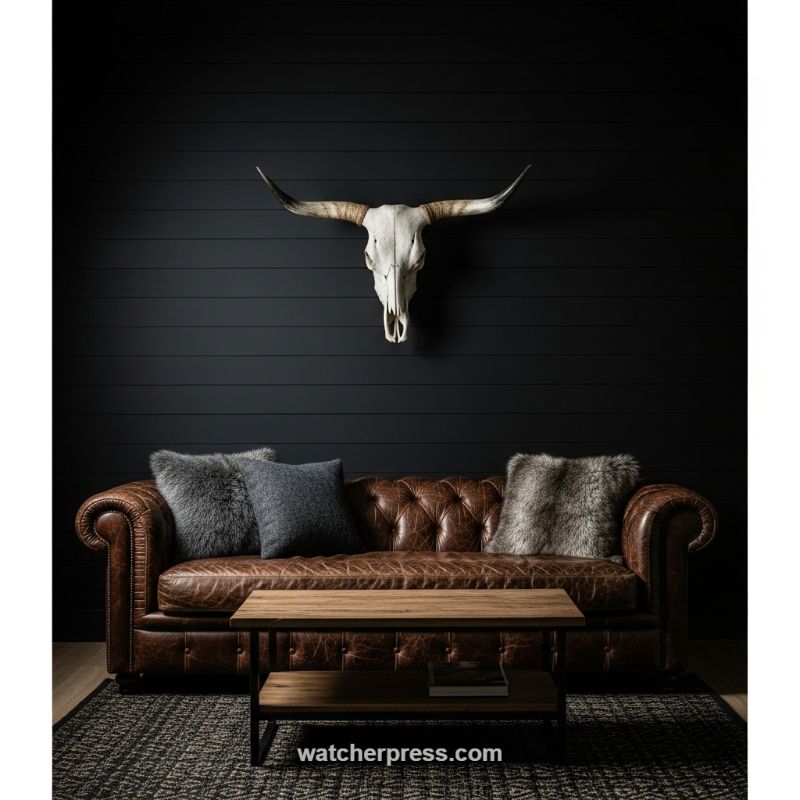
The foundational swap for creating this level of professional drama lies in the wall color. Instead of defaulting to standard off-whites or pale grays, opt for a deep, saturated hue extendash extsuch as charcoal, midnight blue, or true black extendash exton a prominent accent wall. This single color change provides an unparalleled depth that instantly makes fixtures and furnishings pop. Notice how the dark horizontal paneling here, likely shiplap or beadboard painted dark, adds a subtle architectural texture. This detail ensures the wall isn’t merely a flat void, but an integrated design element. When working with such powerful colors, ensure the lighting (both natural and installed) is balanced to prevent the room from feeling cavernous; warm ambient light will highlight the texture of the materials against the dark canvas. This moody backdrop is the first step in achieving a high-end, curated feel.
Next, rethink your focal point by swapping standard framed prints for a striking piece of three-dimensional sculpture or statement art. In this example, the longhorn skull commands attention, transforming a potentially cozy sitting area into a high-impact, curated space. A sculptural focal point like this offers textural variation and a unique narrative that flat artwork often cannot achieve. When incorporating such a powerful element, scale is paramount. The skull extquoteright s horns spread perfectly to balance the visual weight of the substantial Chesterfield sofa below it, ensuring the arrangement feels harmonious and intentional. If you’re not comfortable with taxidermy, consider oversized woven wall hangings, metal bas-relief sculptures, or vintage architectural salvage pieces. The key is to choose an item with significant mass and volume that acts as the anchor for the entire vignette.
A professionally designed room utilizes texture to keep dark color schemes from feeling dull or monolithic. This final, crucial swap involves layering materials that speak to different tactile senses. The glossy, warm patina of the deeply tufted leather sofa provides the rich, masculine foundation. This is immediately softened and contrasted by the introduction of lush, shaggy faux fur and textured wool pillows in cool gray tones. Below, the low-slung coffee table reinforces the mixed-media approach extendash extraw, natural wood resting atop a sleek, industrial black metal frame. Finally, grounding the entire vignette is a heavily patterned area rug, which provides subtle visual movement and transition between the dark floor and the lighter furnishings. This expert interplay of smooth leather, soft fur, rustic wood, and hard metal elevates the room from a simple arrangement of furniture to a meticulously layered, high-contrast experience.
Swap Visual Clutter for Intentional Focus: Mastering Depth in Design

The hallmark of a professionally designed interior, much like the stunning depth of field seen in this photograph, is the immediate clarity of the visual hierarchy. Amateur spaces often suffer from visual ‘noise’—too many small items, competing patterns, and unfocused arrangements—making the eye wander aimlessly. Your essential decor swap is eliminating this clutter to establish a primary focal point. To achieve this, swap out a wall of mismatched gallery pieces for one large, commanding piece of art or a dramatically styled architectural element, such as a redesigned fireplace mantle. This singular focus acts as the ‘subject’ of your room. Expert advice dictates that everything else in the space must support, but never compete with, this central element. Use the principle of ‘bokeh’—the soft blur surrounding the subject—by ensuring secondary decorative items, such as books and accessories, are grouped tightly and arranged with tone-on-tone colors or textures so they recede slightly, allowing your main feature to remain sharp and dominant.
Following the professional photography principle of mastering light, the next critical swap involves abandoning harsh, single-source overhead lighting. The flattering, soft quality of the ‘golden hour’ light captured here is achieved in interiors through strategic layering. Swap your single central pendant for a three-tiered lighting strategy: ambient, task, and accent. Ambient lighting (chandeliers or floor lamps) should utilize a warm color temperature (around 2700K to 3000K) to mimic that soft, inviting glow. Crucially, introduce task lighting (reading lamps) and accent lighting (picture lights or small directional spotlights) specifically designed to highlight your new focal points and textures. Install dimmers on every single layer—this is the most cost-effective swap that immediately gives you professional control over the room’s mood and saturation, allowing you to transition the space from bright, functional daylight to soft, warm evening warmth.
Finally, elevate your space by utilizing texture and controlled color contrast, echoing the visual interest created by the model’s soft, ribbed blue sweater set against the warm, golden hues of the background field. Amateur design often relies on flat, matching surfaces and high-contrast patterns that feel busy. The professional swap involves introducing textural juxtaposition and balanced, contrasting colors. If your primary furniture pieces are smooth (a velvet sofa or polished wood), swap out bland throws and pillows for textured pieces—think chunky knits, raw linens, or woven grasscloth—that reflect light dynamically, similar to the ribbing on the sweater. Regarding color, if your core palette is predominantly warm neutrals (creams, tans, and golds), swap a few small items for one significant cool element, perhaps a deep slate blue rug or a prominent piece of artwork featuring cool greens and blues. This calculated introduction of contrast provides the necessary visual tension and sophistication found in expertly curated spaces.
Swap Mixed Packaging for Uniform Storage Canisters
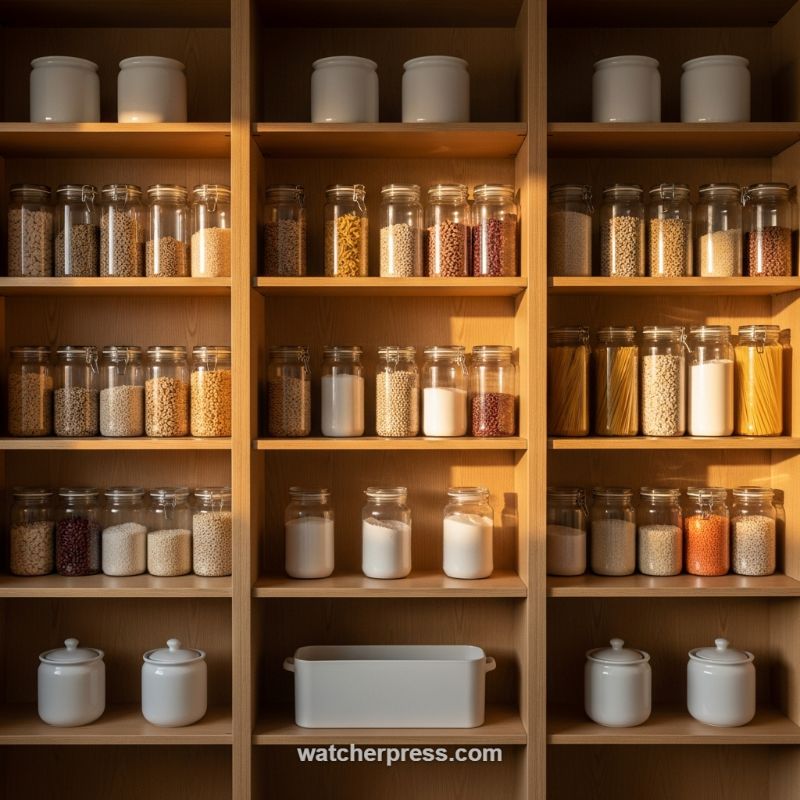
One of the quickest ways to elevate a functional space—be it a kitchen pantry, laundry room, or linen closet—from chaotic storage to a professionally designed feature is by eliminating packaging inconsistencies. Standard grocery boxes, bags, and mismatched containers create an immense amount of visual noise that detracts from the overall aesthetic of your home. The simple decor swap here is transitioning all bulk items, grains, pastas, and dry goods into a cohesive set of containers. To achieve the high-end look seen in the image, opt for uniformity in shape and size; this creates rhythmic symmetry across the shelves, tricking the eye into perceiving immediate order and intention. Choose clear glass jars for items like beans, lentils, and specialty pastas, allowing the natural color and texture of the ingredients to become part of the decor palette. For ingredients that need to be protected from light, such as flours, or for general items that may not be as visually appealing, utilize matching opaque ceramic or metal canisters, strategically placed on the upper or lower shelves.
The key to expert execution lies in selecting a material that complements your existing cabinetry. In this example, the light wood shelves are contrasted beautifully by crystal-clear glass and crisp white ceramic, maintaining a clean, neutral, and minimalist feel. When purchasing your containers, calculate the volume of your most frequently bought items and invest in corresponding sizes—avoid mixing too many different jar styles, as this undermines the goal of visual coherence. An important how-to step is strategic staging: arrange the containers by height, creating an organized skyline across each shelf. Group similar items together (all pasta, all rice, all beans) and use smaller jars as transitional elements between larger groupings. This arrangement system is not only aesthetically pleasing but also improves inventory management, allowing you to instantly scan your stock levels.
Beyond aesthetics, this swap is a significant functional upgrade. Ensure the containers you choose offer airtight seals; this professional detail is crucial for maintaining the freshness, flavor, and longevity of your ingredients, protecting them from moisture and pests. Finally, consider minimalist labeling. While the image mostly relies on the visible contents for identification, a sophisticated design often incorporates small, matching labels (such as chalkboard stickers or simple vinyl decals) placed uniformly near the bottom of each jar. This attention to detail signals deliberate design choices. By committing to this system of uniformity and high-quality containers, you transform a cluttered area into a curated display, proving that organization can be the ultimate form of luxury decor.
Swap Neutral Throws for Bold, Global Textiles
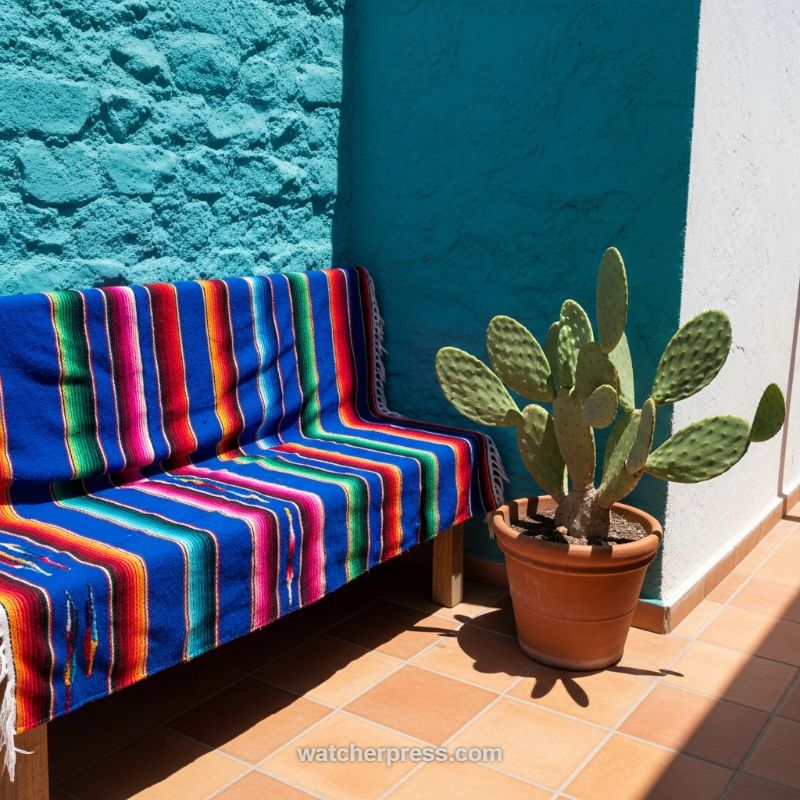
The quickest way to inject personality and sophistication into a seating area is by swapping out standard, neutral throws for a textile boasting saturated color and intricate pattern, as demonstrated by this vibrant setting. Look specifically for globally inspired textiles, such as a traditional Mexican serape or a richly woven falsa blanket. The intensity of the royal blue base paired with vertical stripes of magenta, orange, and emerald green instantly commands attention, making the bench the undeniable focal point. This single swap introduces layers of culture and warmth, transforming a simple wooden bench into a cozy yet artistic statement piece. When incorporating such bold patterns, ensure the colors within the textile coordinate with at least one major architectural element, such as the brilliant turquoise wall shown here, creating a harmonized, intentional look rather than a chaotic one.
Expert design hinges on mixing textures to create depth. Notice how the smoothness of the deeply colored, planar wall contrasts with the rough, stone texture of the adjacent wall—this provides an essential backdrop for the centerpiece: the sculptural plant. For a professional touch, select plants that offer architectural form, such as the prickly pear cactus (Opuntia). This choice not only emphasizes a resilient, desert-modern aesthetic but also breaks the rigid geometry of the corner. The soft, matte green of the succulent pads provides a necessary visual break from the high-octane colors, grounding the entire composition. Use robust terracotta pots for planting; their earthy, warm tone echoes the flooring and balances the cool intensity of the blue walls, proving that even the planter itself is a vital design element.
Mastering contrast is the secret weapon of professional designers. This space utilizes high contrast not just in color (vibrant blue vs. sunny white trim) but also in light and shadow. Positioning seating areas where natural light creates sharp, dramatic shadows adds dimension and architectural interest, making the space feel dynamic and thoughtfully curated. To replicate this effect, focus on the rule of three main color temperatures: the cool, bright wall color, the warm, earthy terracotta flooring/planter, and the vivid, patterned textile. The textile acts as the connective bridge between these elements. A final tip for achieving this level of polish: while your blanket pattern is busy, keep surrounding elements simple and solid—a plain wooden bench, unadorned walls, and simple floor tiles—to let the deliberate pattern shine without competition.
Swap Standard Clutter for Curated Library Style

To transition your shelving from mere storage to a sophisticated, library-inspired showcase, focus first on the foundation: the books. A professionally designed shelf relies heavily on texture and color depth, achieved here through aged bindings. Replace bright, modern covers with vintage volumes featuring deep jewel tones—think rich burgundy, forest green, navy blue, and black leather with gold or blind stamping. The arrangement must mix things up; avoid monotonous vertical stacking. Instead, introduce visual breaks by stacking groups of three or five books horizontally, which creates a natural pedestal for decorative objects. These horizontal stacks are essential for varying heights and breaking up the visual weight, signaling intent and curation rather than just dumping items wherever they fit.
Once the books are established, the key design swap involves integrating sculptural elements and metallic accents that introduce antiquity and history. Notice how the brass candlesticks and the intricate candelabra on the top shelf instantly elevate the entire vignette. These metallic items catch the light and provide essential contrast against the matte paper and leather bindings. Balance the shine of the brass with earthen textures, such as the tall, brown ceramic vase or the highly textured, cracked pottery piece on the middle shelf. When choosing figurines or small statues, opt for materials with significant patina, like aged bronze or gold-toned resin, which reflect the heritage aesthetic. Place larger, weighty items, like the tall vases, on the ends of shelves to anchor the composition and prevent the collection from looking top-heavy.
Finally, the professional touch lies in achieving dramatic depth and intentional balance. Use stacked books underneath smaller decorative items, like the cracked vase, to lift them to an optimal viewing height and draw the eye inward. Ensure that the objects are not simply lined up; some items should sit slightly forward (like the candlesticks), while others are recessed against the books, creating a visual plane that enhances the perceived depth of the shelf. This look requires warm, focused lighting—often built into the shelf itself, or provided by ambient room lighting—to highlight the patina on the brass and the subtle textures of the old book spines, transforming a simple bookcase into a compelling visual narrative that speaks to history and elegance.
Master the Art of Global Pattern Mixing
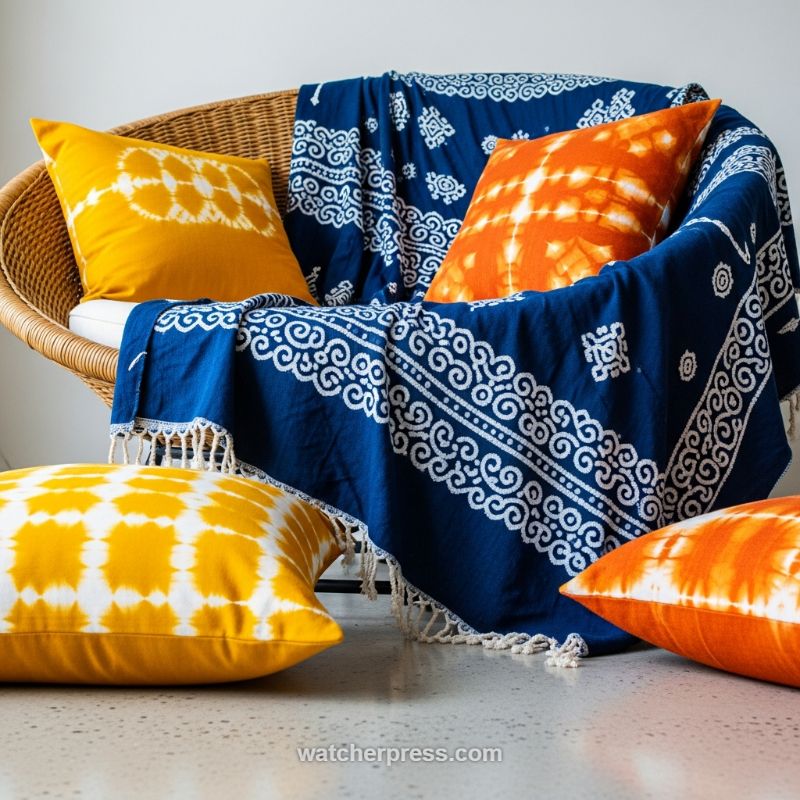
The secret to elevating a room from standard to professionally styled often lies in the intentional deployment of contrast and texture. This vignette perfectly illustrates how mixing bold, saturated colors and distinct patterns can achieve a curated, global aesthetic without feeling chaotic. Start by selecting a foundational piece with natural texture, like this woven wicker chair, which anchors the arrangement and adds warmth. Then, introduce a large textile element—such as a deep indigo mudcloth or batik throw—to establish a rich color base and an intricate pattern framework. Notice how the classic white block print on the dark blue fabric provides a crisp border and central motifs, offering crucial visual structure. The key is using this foundational piece to bridge the disparate elements that will follow, ensuring the blue acts as a unifying backdrop for the vibrant, high-contrast additions.
The simple swap that achieves this expert-level aesthetic involves replacing standard monochromatic pillows with highly saturated, pattern-rich accents. To mimic this powerful look, choose cushion colors directly opposite the foundational blue on the color wheel—specifically bright orange and mustard yellow. These complementary and tertiary colors provide maximum chromatic impact against the cool, dark indigo base. The use of shibori or tie-dye techniques introduces a soft, organic pattern that contrasts beautifully with the more geometric precision found in traditional block prints. The ‘how-to’ involves pairing cushions that share a similar pattern style (e.g., all tie-dye) but feature varied, high-impact colors. Crucially, ensure that the white resistance pattern used in the tie-dye fabrics matches the white print in the throw; this common thread of white unifies the entire color story and prevents the bright colors from overwhelming the space.
A professional finish demands close attention to supporting textures and details. When implementing this swap, consider the ratio of pattern scale: the throw uses large, repetitive border motifs, while the tie-dye pillows employ a mid-scale, softer pattern. Varying the scale keeps the composition dynamic and prevents pattern clash. Also, integrate tactile elements like the slight texture of the wicker chair and the fringed edges of the throw to add necessary physical depth. For quality, always opt for cushion covers made from high-quality, dense cotton or linen to ensure a luxurious drape and finish. This simple decor swap—moving away from predictable matching sets and embracing globally inspired, handcrafted textiles—instantly signals a discerning eye and transforms a generic seating area into a personalized, designer statement piece.
Embrace Textured Contrast: Pairing Rustic Wood with Industrial Stone

The secret to this professionally designed look lies in the deliberate juxtaposition of highly contrasting textures and materials. Instead of opting for a flat, painted mantel or smooth marble surround, this design utilizes architectural elements as the primary decor statement. The fireplace structure itself becomes an anchor by pairing rough-hewn, dark, large-format stone (like split-face basalt or slate) with a hefty, raw-edge beam of reclaimed wood for the mantel. This is a fundamental decor swap: moving from subtle, matching materials to high-impact, opposing textures. The dark, industrial roughness grounds the space, while the warm, knotty wood injects essential warmth and history, preventing the modern structure from feeling cold or sterile. To achieve this high-end tension, ensure your selected materials are distinct in scale and finish—a thick mantel demands a large, imposing surround.
Once the architectural foundation is set, elevate the styling using a strict monochromatic palette, focusing intensely on shape and texture rather than color variety. On the left, a collection of three to four matte black ceramic vases of varying heights creates a unified, grounding vignette. The matte finish absorbs light, allowing the silhouettes and sculptural handles to be the focus. The key “swap” here is moving from a collection of mismatched colorful items to a curated grouping of identical hue but varied form. The central arrangement utilizes high-contrast botanicals: dramatic, long, wispy black or deep green grasses and reeds are paired with pure white elements, such as cotton bolls or dried white flowers. This pairing adds maximum visual drama while adhering to the sophisticated black-and-white theme established by the architectural elements and the vases.
To ensure the arrangement feels intentional rather than accidental, master the principles of asymmetrical balance and generous scale. Notice how the substantial matte black grouping on the left acts as a counterweight to the expansive, spreading floral arrangement that trails across the rest of the mantel. Professionals understand that decor should feel bountiful and dramatic; stingy arrangements look cheap. When crafting your centerpiece, allow the greenery to sprawl and overshoot the edges of the mantel beam. This movement introduces a dynamic, organic element that softens the hard lines of the stone and wood. Finally, verify that every item contributes a distinct tactile quality—the smoothness of the ceramic, the softness of the cotton, the coarseness of the stone, and the rough grain of the wood—to create a layered sensory experience that is the hallmark of truly expert design.
Swap Simple Throws for Sculptural, High-Contrast Texture
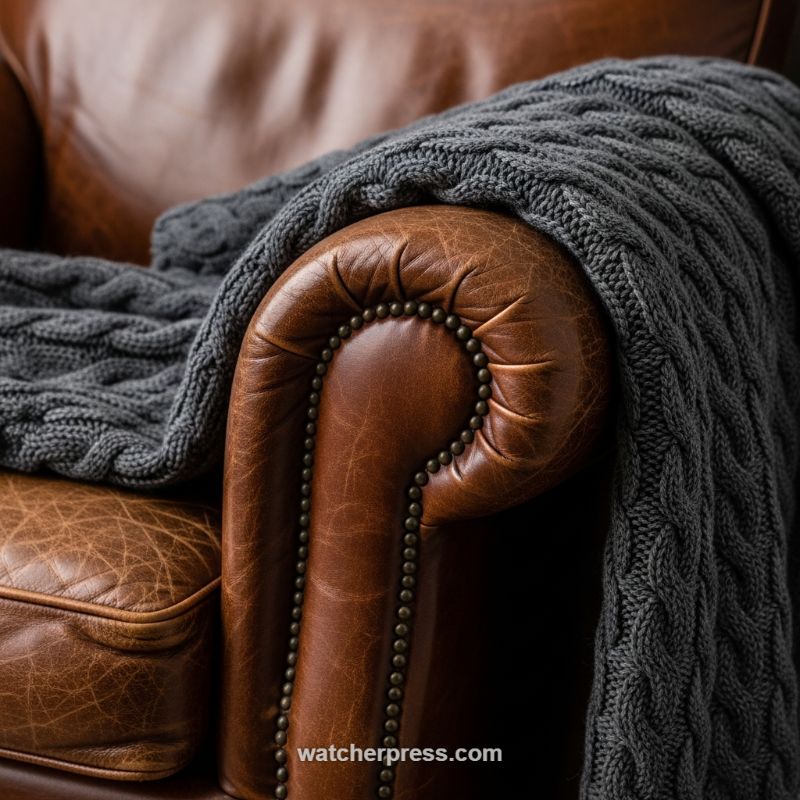
The secret to making any piece of furniture look instantly curated and expensive lies in textural contrast. As shown here, the foundation is a sturdy, masculine piece—a rich, cognac-toned leather armchair accented with classic nailhead trim. To prevent this strong piece from feeling too stiff or flat, introduce a textile with an opposing, softer texture and cooler color temperature. The oversized, charcoal gray cable-knit throw works perfectly because its depth, weight, and intricate Aran pattern stand in dramatic relief against the smooth, worn surface of the leather. This deliberate juxtaposition of hard versus soft and warm brown versus cool gray is what creates dynamic visual tension, a hallmark of professionally styled interiors.
When applying this principle in your own space, move beyond standard cotton or synthetic throws and prioritize materials that offer significant visual and physical weight. Focus on rich fibers like heavyweight wool, alpaca, or thick cotton knits, as these hold their shape better when draped and offer superior texture definition. The “how-to” of placement is equally critical: avoid neat, perfect folding. Instead, drape the throw organically over the arm or corner of the seat, allowing the material to pool naturally and show off its texture. The style goal is to look effortlessly inviting—as if you just stepped away from reading a book—not precisely staged. If your furniture is light-toned (like linen or cream upholstery), choose a throw in a dark, saturated color like forest green or deep indigo to maximize this high-contrast effect.
This simple textile exchange elevates the chair from merely functional to an inviting, sophisticated focal point—a classic vignette. By integrating a textural layer, you are immediately adding depth and complexity to the overall design scheme, signaling that every element has been thoughtfully selected. Professional designers rely on this layering technique to make spaces feel both luxurious and livable. Remember, quality textiles with rich texture are one of the most cost-effective investments you can make to achieve that coveted, high-end finished look that differentiates a beautiful room from a truly designed one.