Unlock the secrets to infusing ethereal mystery and captivating atmosphere into your still life and portrait photography. Master moody lighting and evocative composition techniques.
Chrome as a Portal: Harnessing Distortion and Reflection
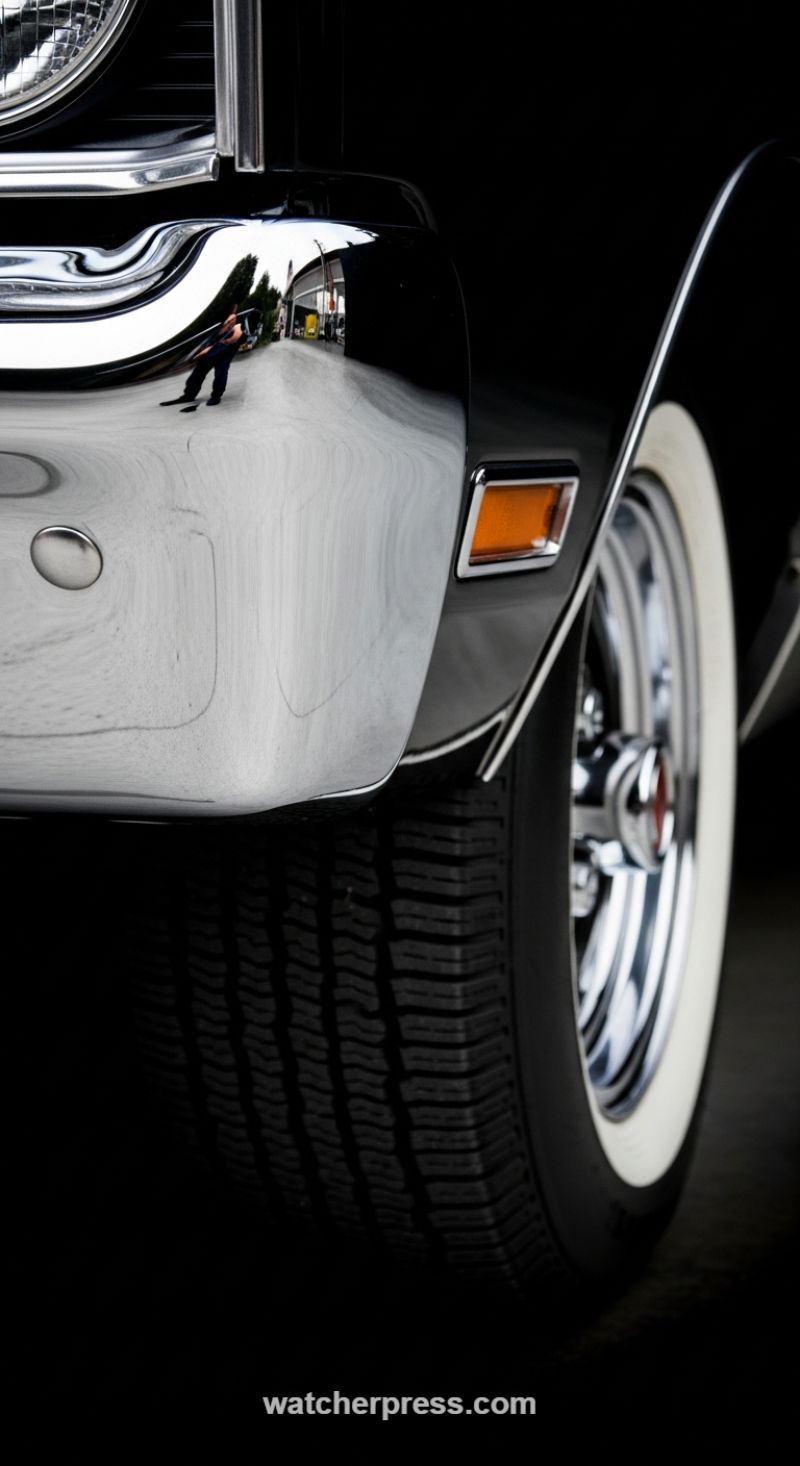
The mystery in a still life shot is often built upon a foundation of extreme contrast and intentional obscurity. Utilizing a high-contrast, low-key lighting approach, where deep blacks consume the majority of the frame, instantly focuses the viewer’s attention on the isolated areas of light—in this case, the highly polished chrome and the bright white sidewall tire. This technique, often referred to as the “black velvet” method, prevents distracting background elements from cluttering the composition and forces the viewer to confront the sculpted lines and intense reflectivity of the primary subject. Expert advice dictates that you must meter your exposure specifically for the highlights (the chrome surface) to avoid blowing them out. Allowing the surrounding areas (the car body and tire well) to fall naturally into absolute shadow dramatically transforms a recognizable object into a dramatically lit, almost abstract piece of minimalist sculpture, amplifying the sense of intrigue and drama.
The true ethereal quality in this type of photography arises from the strategic manipulation of reflections and curvature. Highly polished surfaces like chrome bumpers are not just bright; they act as warped, curved mirrors, effectively turning the familiar surrounding environment into a surreal, liquid landscape. When composing, position your camera (or strategically angle the subject) to capture reflections that include elements outside the primary frame, such as distant trees, industrial architecture, or even your own distorted figure, as seen in the cropped images. This warped, visible reality contained within the surface adds an irresistible layer of mystery, suggesting a world slightly tangential to our own. Treat the reflection itself as a secondary compositional element; ensure its captured content complements the primary structure without dominating it, thereby allowing the viewer’s eye to smoothly transition between the solid form and the captivating, mirrored illusion.
To prevent the high contrast and heavy reflections from rendering the image flat or purely abstract, you must introduce grounding textural elements and tight focus. Note how the sharp, rugged texture of the tire tread provides a gritty, tactile counterpoint to the smooth, flowing lines of the chrome bumper. Utilize a moderately shallow depth of field to ensure that these key textural details—the tread block patterns and the shine on the wheel hub—remain critically sharp, providing necessary visual anchor points against the surreal softness of the reflection. This precise interplay between the ultra-smooth (chrome) and the rugged (rubber) adds crucial complexity and depth, ensuring the viewer lingers on the composition, attempting to reconcile the real-world solidity of the car with the dreamy, reflected environment contained within its surface.
Mastering Mood: The Power of Monochromatic Geometry and Textured Contrast
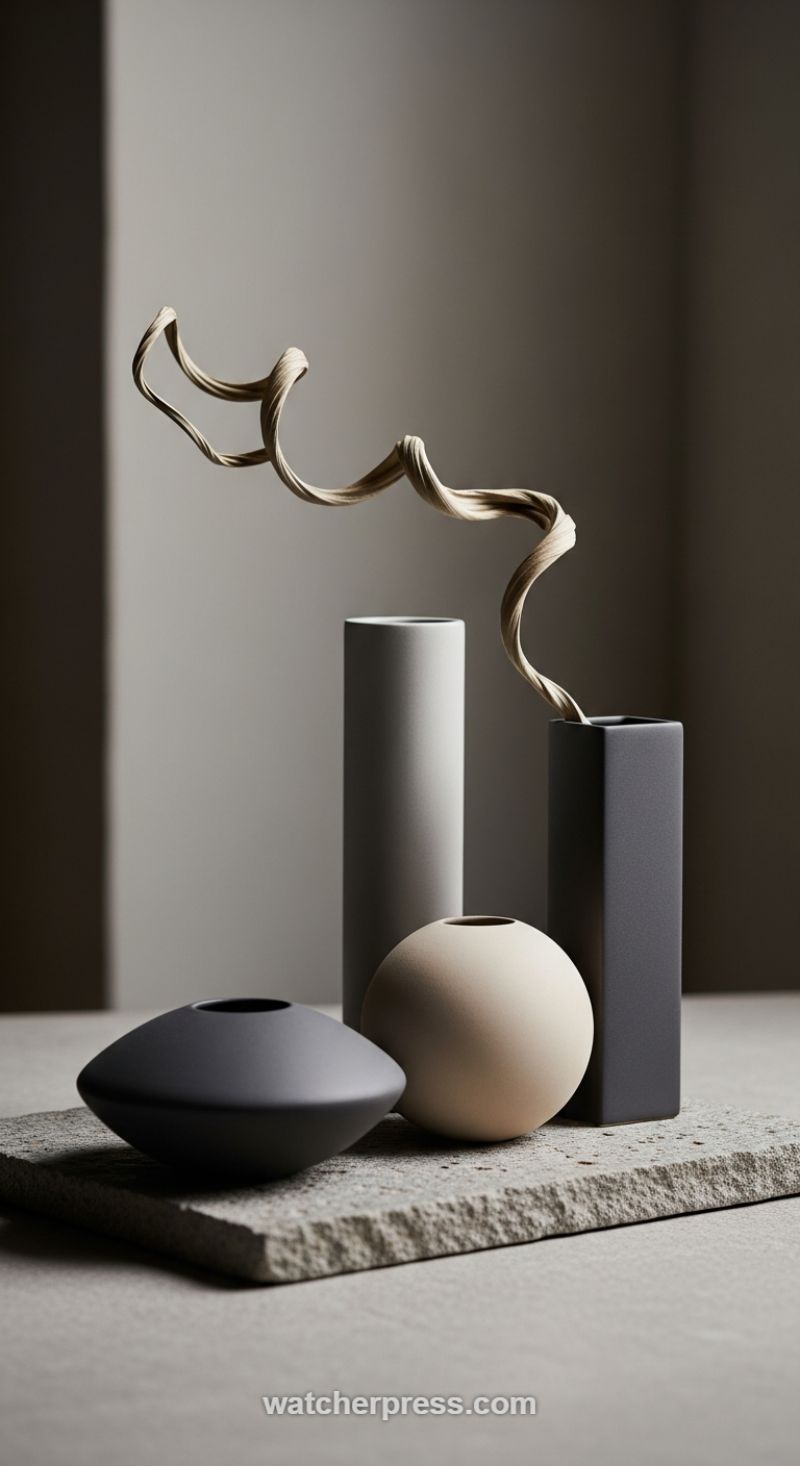
To achieve a truly ethereal and mysterious still life aesthetic, as demonstrated in this arrangement, the photographer must embrace radical restraint in color, allowing form and texture to take center stage. This look is built on a highly curated, monochromatic palette—shades of charcoal gray, light stone, black, and soft taupe—which limits distraction and heightens sophistication. Crucially, select objects with matte finishes; the matte surface absorbs light rather than reflecting it intensely, which minimizes distracting specular highlights and ensures that shadows are rich, soft, and deep. This strategic light absorption is the key to creating a mood of quiet contemplation and depth. Further enhance this effect by juxtaposing materials: setting the ultra-smooth, manufactured ceramic forms against the rugged, organic texture of the porous stone slab introduces visual friction, preventing the scene from feeling flat while cementing a high-end, gallery-worthy aesthetic.
Compositionally, mystery is generated through the deliberate contrast of forms. Observe how the scene utilizes a balanced asymmetry: sharp rectangular lines and low, wide discs provide grounding stability, while the tall cylinder and the delicate, twisted organic branch introduce verticality and dynamic flow. The branch, specifically, serves as the ethereal element—its curvilinear shape breaks the severe geometry, guiding the eye in a soft S-curve from the dark background into the primary light source. When arranging, ensure objects overlap slightly in the foreground and middle ground to create genuine depth, preventing the shot from looking like a flat cut-out. Positioning the group on a heavy, textured base like the stone slab anchors the entire arrangement and emphasizes the concept of weight and permanence, subtly enhancing the mood of timelessness and solemnity.
Expert manipulation of lighting is paramount to finalizing this look of enigmatic elegance. The light source should be large and incredibly soft (like a massive scrim or softbox) and positioned highly directional—coming from one side and slightly above—to sculpt the minimalist forms. Meter your exposure not for the brightest highlight, but for the mid-tone objects (like the light gray cylinder or the beige sphere). This technique allows the dark objects to fall into rich, velvety shadow without losing detail, creating a subtle chiaroscuro effect that deepens the visual narrative. The background should be a subtle gradient of gray, achieved either through a corner setup or a gradient paper, ensuring that the light gradually fades to darkness behind the darkest objects, maximizing the sense of depth and achieving that signature atmospheric glow inherent to ethereal photography.
Mastering Architectural Chiaroscuro for Dramatic Portraits
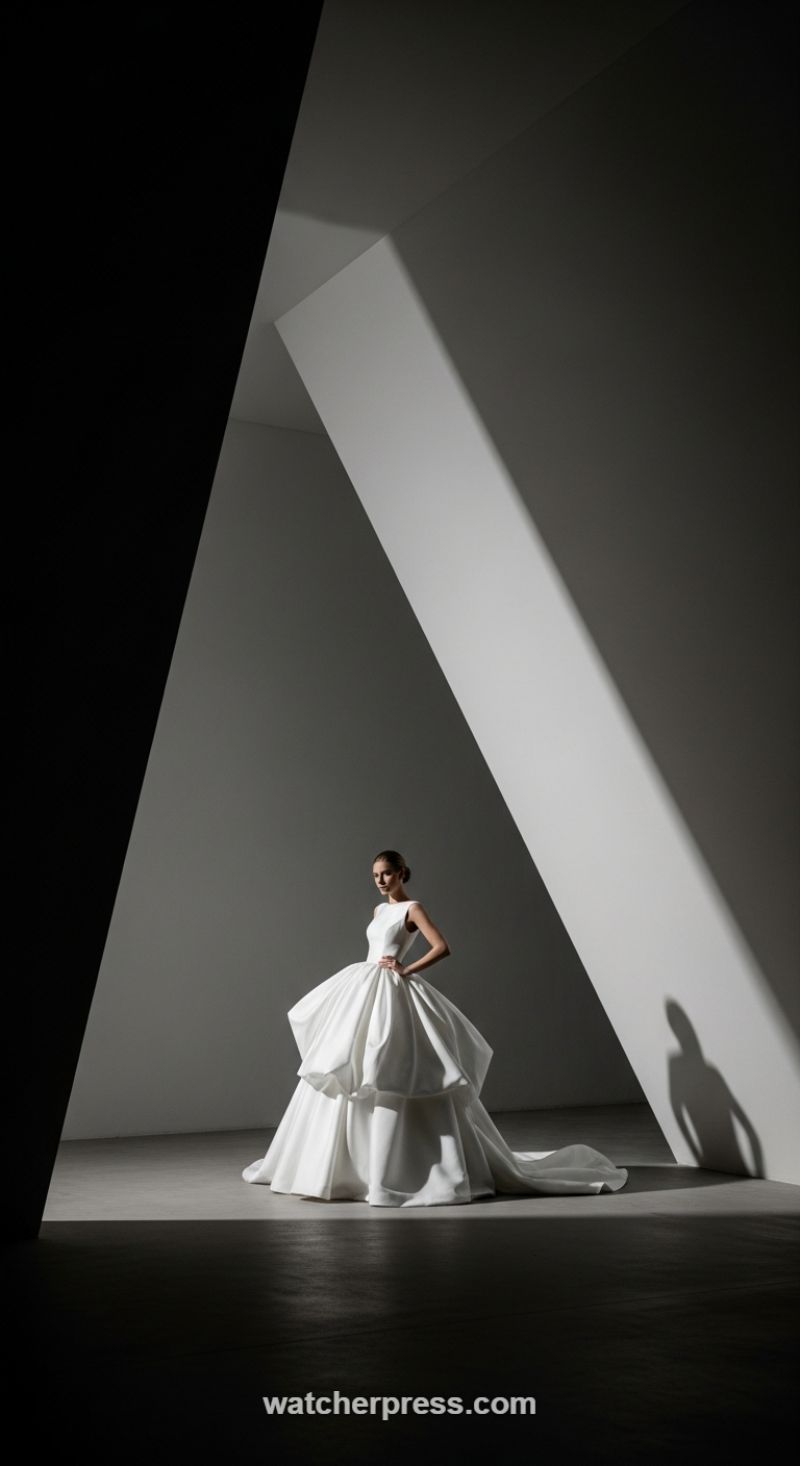
To achieve the high-drama aesthetic showcased here, the most crucial element is the deliberate manipulation of light and geometric shadow, a technique often referred to as architectural chiaroscuro. Rather than lighting the entire set evenly, use a single, powerful, highly directional light source (such as a gridded strobe or a focused hard light) placed far off-camera. This light should graze the surfaces of a stark, minimalist environment, allowing the environment itself—the corners, the planes, the walls—to become the primary source of contrast. The resulting composition must rely heavily on negative space and stark diagonals. Notice how the large black triangle on the left and the intense white diagonal beam on the right frame the subject, creating an inescapable tunnel of light that directs all attention to the model. This high-contrast staging turns a simple portrait into an exercise in abstract form and psychological tension, making the environment an equal participant in the narrative.
The strategic placement of your subject within this light geometry is paramount to infusing ethereal mystery. The model, dressed in a voluminous, architectural white gown, is positioned exactly at the juncture where the gray mid-tones transition into the highlighted strip. This tonal contrast ensures she pops dramatically off the backdrop, creating visual isolation. For a true sense of mystery, ensure the clothing choice mirrors the environment’s formality; structure and crisp lines (like the taffeta folds of this dress) work better than soft, flowing fabrics which might soften the harsh lines of the background. Crucially, pay attention to the shadows cast. The light source here creates an incredibly distinct, elongated silhouette of the model on the far right wall, serving as a ghostly echo or a dramatic double. This intentional use of a shadow-figure adds layers of depth and symbolic meaning, contributing significantly to the feeling of the unknown and the ethereal.
Compositionally, this image leverages scale and framing to enhance the dramatic mood. Shoot vertically to emphasize the height of the walls and the deep contrast created by the converging lines. Place the model relatively low and centered in the frame, but allow the massive, powerful diagonals of light and shadow to dominate the upper two-thirds of the image. This emphasizes her solitude and the vastness of the space she occupies, amplifying the sense of drama and high fashion. The overall visual effect is one of extreme sophistication through subtraction; there is no unnecessary detail, only the pure interaction between light, geometric planes, and the carefully placed silhouette. To replicate this, simplify your background setup ruthlessly and treat every plane of light or shadow as a precisely calculated compositional element, aiming for an abstract, fine-art quality over a conventional portrait setup.
Geometric Abstraction and High-Key Contrast
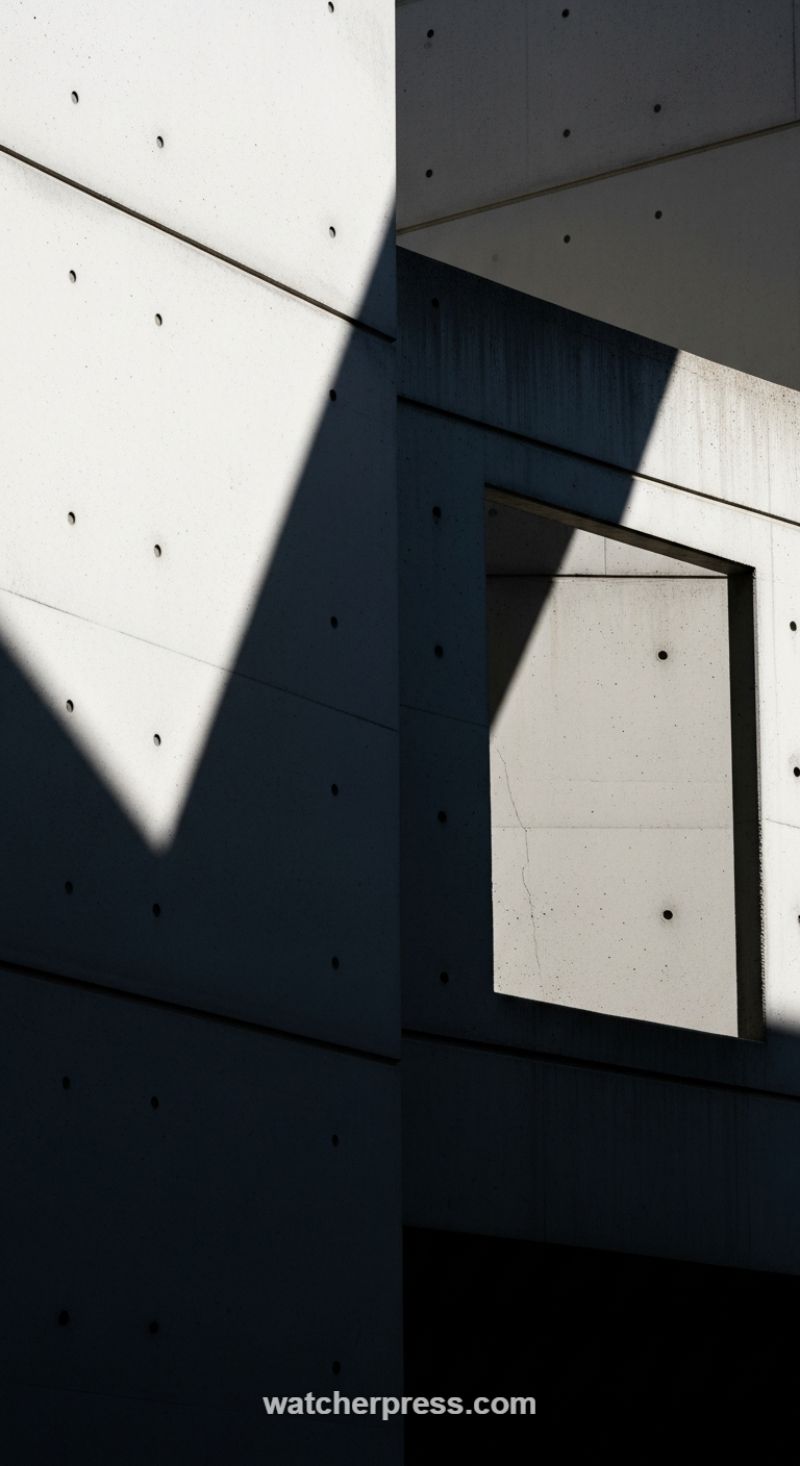
The foundation of infusing ethereal mystery often relies on aggressive visual editing—specifically, stripping away texture and color complexity in favor of stark geometry and extreme contrast. As demonstrated by the interplay of light and shadow on brutalist concrete structures, direct, hard lighting creates sharp, graphic divisions, turning surfaces into fields of positive and negative space. To apply this technique to still life or portraiture, begin by embracing a monochromatic or limited color palette; think white, grey, or deeply desaturated tones that mimic the raw, unforgiving quality of the concrete. The goal is to focus the viewer’s attention not on the subject’s surface detail, but on the powerful abstract shapes formed by the intersection of light and shadow. Use reflectors judiciously, or not at all, to ensure your shadows fall into deep, inky blacks, thereby isolating the lit portions of your subject and lending an immediate sense of drama and concealment.
To replicate the precise geometric divisions seen in the architecture, expert manipulation of light sources is crucial. In still life, use focused strobes or narrow snoots to project hard light. Instead of standard softboxes, introduce “gobos”—pattern-cutting tools, or simply use household objects like window blinds or Venetian shutters—to cast sharp, angular shadows (triangles, rectangles, or hard diagonal lines) across your backdrop or subject. When composing portraits, leverage this geometric lighting approach (often referred to as ‘split lighting’ or ‘chiaroscuro’) to partially obscure the face or body. By ensuring the transition between highlight and shadow is instantaneous and sharp, you transform the figure into an abstract form defined purely by contrast, hiding elements that might otherwise explain or ground the image, thereby elevating the sense of mystery. For even greater structural integrity, consider incorporating subtle, repetitive texture points—like the small circular anchor holes in the concrete—by using small, patterned elements or props in the frame.
Ultimately, the ethereal mystery is achieved through the intentional and powerful use of negative space. The deep, uniform shadows in this visual example function not just as background, but as abstract voids—spaces of the unknown that draw the eye deeper into the composition. In your still life arrangements, maximize the percentage of the frame that is dedicated to shadow; the exposed area should feel isolated and intentional, suggesting a narrative beyond the frame. Ensure your key light hits the subject at a steep angle (45 degrees or higher) to achieve maximum shadow length and sharpness, effectively eliminating distracting mid-tones. By adopting this architectural perspective—viewing your subject as a collection of geometric planes rather than a detailed form—you create images that are structurally strong, graphically compelling, and imbued with a palpable, minimalist isolation that transcends the ordinary and hints at the sublime.
Harnessing the Veil: Atmospheric Perspective and Mist
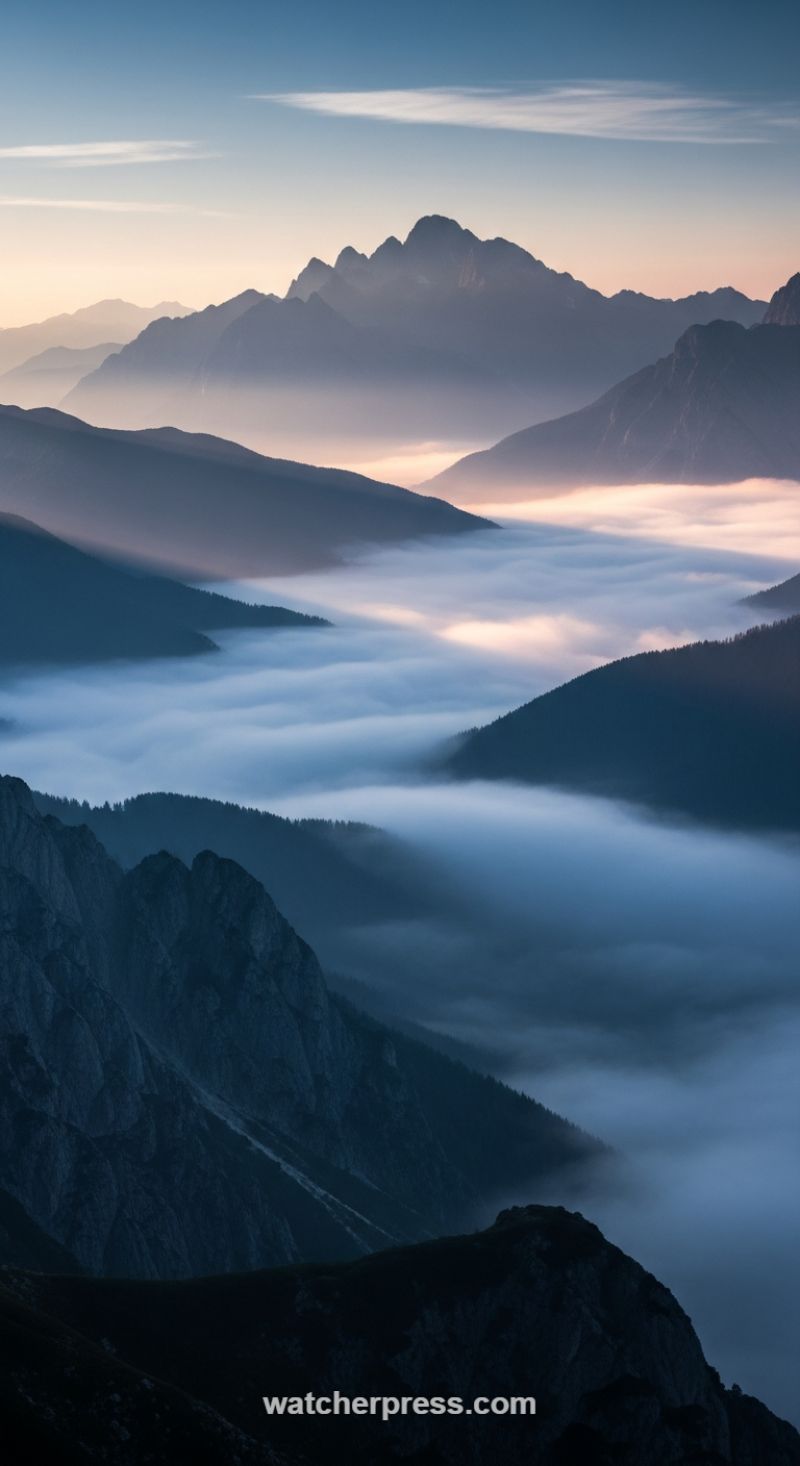
The profound sense of ethereal mystery in this image is generated by an extreme use of atmospheric perspective, where density (mist or fog) acts as a visual filter, blurring the boundaries between planes and desaturating distant elements. To translate this landscape technique into still life or portraiture, your goal is to deliberately introduce physical or simulated haze between your camera and your subject to create distinct tonal layers. For portraits, this might involve strategically placing sheer diffusion materials (like scrims, tulle, or light chiffon) between the model and the background, slightly softening the silhouette and making the transition from subject to environment ambiguous. In still life, use controlled, low-density smoke (e.g., from an incense stick or diffused dry ice) that hangs subtly, ensuring your main focus is sharp while the background elements recede quickly into a misty oblivion. The expert application of haze not only adds volume and texture to the negative space but also mimics the visual effect of distance, even if your subject is only inches away from the backdrop, inviting the viewer to look through a ‘veil’ to appreciate the hidden layers beneath.
To achieve the specific, dramatic tonal separation seen here—deep blue shadows transitioning into a warm, glowing fog—you must master split-tonal contrast management. The image relies heavily on cool tones (cyans, deep indigos) in the shadows to convey depth, mood, and the dampness of the valley floor. Conversely, the highlights are infused with subtle warmth (pink, peach, or soft amber) where the light interacts directly with the mist. Apply this principle to your editing: keep the overall exposure relatively low, pushing the shadow tones toward the cooler end of the spectrum. Then, utilize highly diffused backlighting to create the ‘ethereal glow.’ This backlight, often a softbox placed behind the subject or a small light source hidden within a still life arrangement, should be aimed at creating lens flare or halo effects within the simulated haze, mimicking the sun struggling to penetrate the valley fog. By confining warmth primarily to these extreme highlights, you prevent the entire scene from becoming brightly lit, thus preserving the overarching atmosphere of mysterious gloom.
The final crucial element is manipulating light quality to enhance the volumetric nature of the atmosphere. Notice how the light isn’t just hitting the mountains; it is illuminating the mist itself, giving the fog a palpable physical presence. For still life compositions, place materials that inherently interact with light—glass, mirrored surfaces, or wet textures—within the haze to catch and scatter the light in a similar fashion. For portraiture, use heavy diffusion on your key light and ensure the illumination appears to wrap around the subject, rather than just hitting them straight on, giving your light a soft, three-dimensional quality. Pay close attention to your framing; the dark, rocky foreground in the reference image acts as a solid anchor, framing the fragile, misty scene beyond. Incorporate a similar compositional anchor—a deep shadow, a sharp textural element, or a contrasting dark prop—to ground your ethereal subject and heighten the visual drama and perceived depth of the mysterious space you have created.
The Geometry of Intimacy: Harnessing High Contrast and Foreground Blur
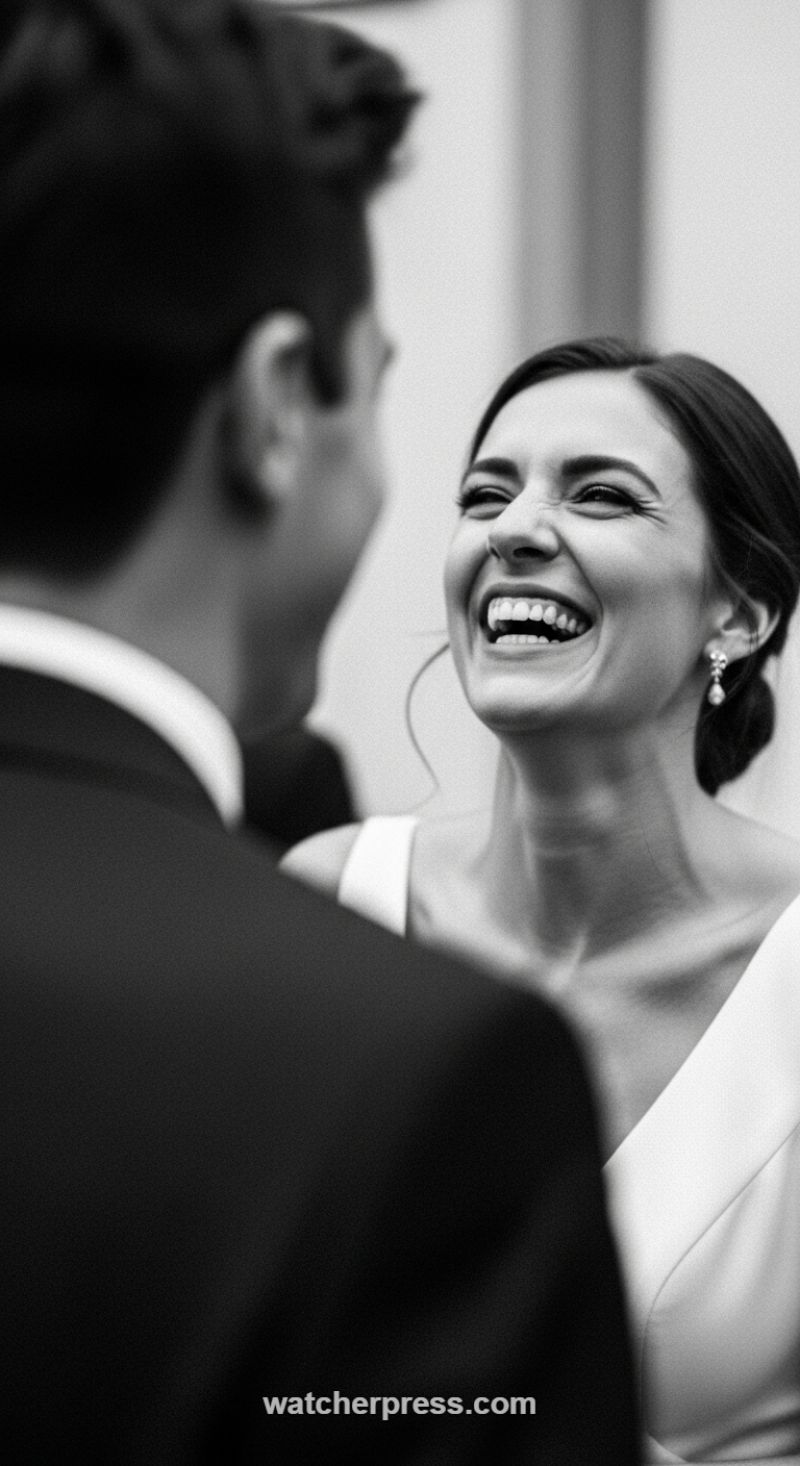
To achieve a truly ethereal and mysterious quality in portraiture, the aesthetic challenge lies in isolating raw emotion while simultaneously obscuring full context. This black and white capture demonstrates this mastery perfectly by leveraging extreme tonal separation and calculated depth of field. The stark contrast between the luminous bride and the deep, shadowy silhouette of the foreground figure (the groom) creates immediate visual drama. This approach is rooted in classic fine art photography, where reducing the world to monochrome heightens texture and emphasizes light fall-off. To replicate this effect, photographers must be meticulous with metering, aiming to slightly overexpose the highlight areas (like the bride’s dress and face) to create a glowing, almost otherworldly quality, while ensuring the deepest blacks remain rich and crushingly dark. This differential forces the viewer to focus exclusively on the illuminated subject’s expression, turning a simple portrait into an intimate, high-stakes moment.
Furthermore, the infusion of mystery is expertly managed through the strategic use of foreground blur, or ‘visual architecture.’ By positioning a major subject (the groom’s back and shoulder) drastically out of focus in the foreground, the photographer constructs a layered frame that shields the full narrative while providing necessary context. This shallow depth of field (likely achieved by shooting wide open at an aperture like f/1.4 or f/2.0) not only isolates the main subject but also introduces a palpable sense of observation and intimacy—we are close enough to witness the joy, yet the presence of the blurred figure reminds us we are viewing a private interaction. Expert photographers should practice composing shots where the foreground element, though completely blurred, contributes compositional weight, anchoring the image and pushing the viewer’s eye directly toward the emotional peak—in this case, the infectious, unguarded laughter. This technique transforms potential background noise into an intentional, narrative-building tool.
Finally, the ‘ethereal mystery’ is sealed by two key elements: spontaneity and texture. Unlike rigidly posed portraits, this image captures a spontaneous burst of emotion, which feels fleeting and precious—the definition of ethereal. Instructional advice here is to anticipate the genuine moment, shooting in a journalistic style rather than directing the subject strictly. The resulting image quality, characterized by its fine, visible film grain, further enhances the mysterious and timeless quality. Adding subtle grain in post-processing, especially within the mid-tones and shadows, imbues the photo with a classic, analogue atmosphere, stripping the image of modern digital harshness. This textured finish, combined with the extreme contrast and focused composition, ensures the portrait transcends mere documentation and achieves the status of a compelling, cinematic piece of art.
Infusing Romance and Intrigue: Low-Key Lighting and Deep Tones
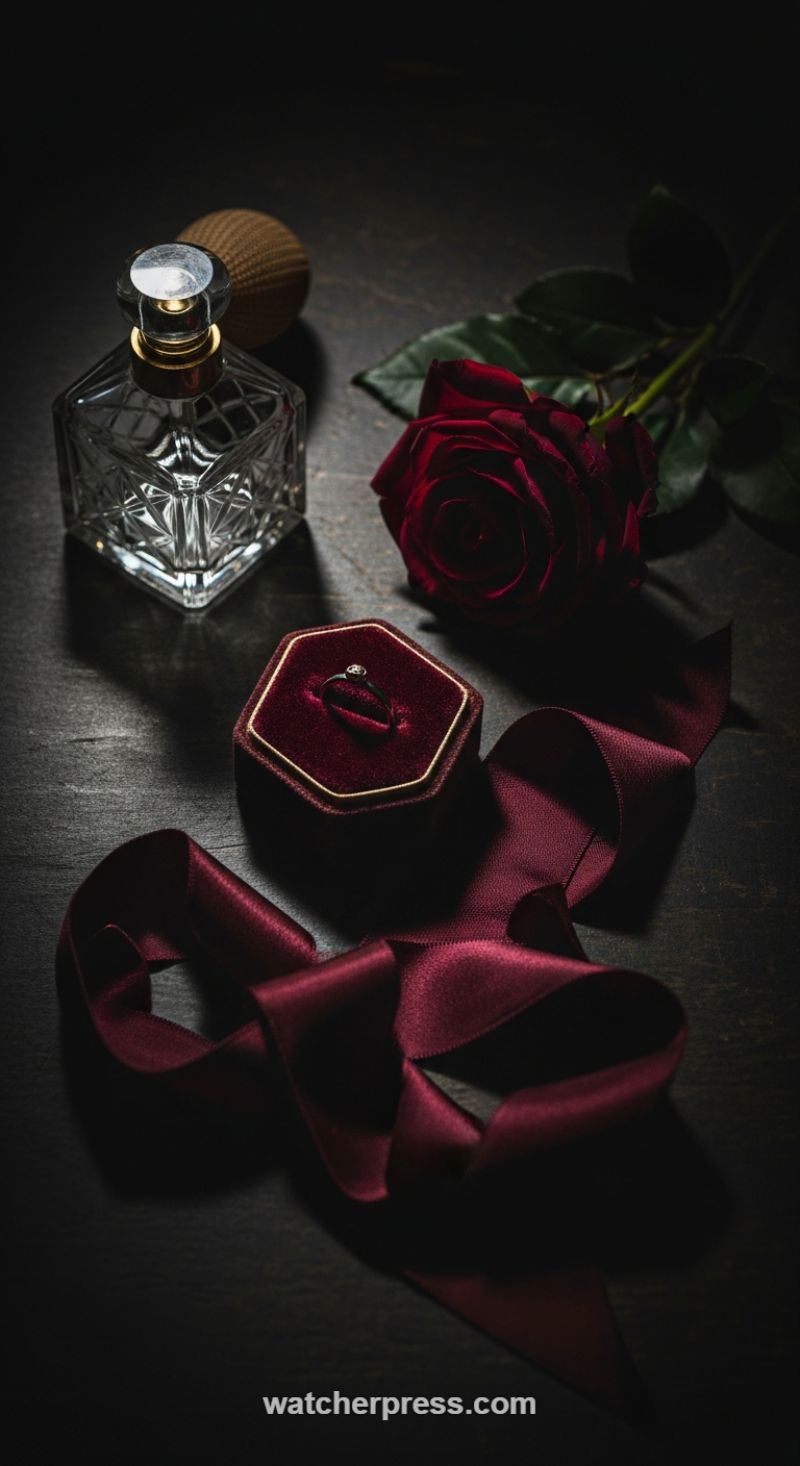
To achieve the ethereal mystery seen in this highly emotive still life, the photographer relies heavily on low-key lighting, commonly known as chiaroscuro. This technique demands the strategic placement of a single, directional light source to sculpt the scene, highlighting only the most important elements while allowing the surrounding environment to dissolve into rich, deep shadow. The objective is not merely darkness, but controlled darkness—making the viewer actively lean into the image to discover the subtle textures and volumetric shapes that are barely illuminated. Expert advice for this setup involves using a grid or snoot on your light source to create a tight beam, preventing light spill onto the background. Position the light source high and slightly to the side (short lighting) to create dramatic shadows that emphasize the facets of the crystal, the curves of the rose, and the shimmer of the satin ribbon, creating a mood that is both luxurious and deeply intimate.
The narrative power of a mysterious still life hinges on the careful selection and composition of elements that convey anticipation and luxury. In this setup, the perfume bottle, the single deep red rose, and the engagement ring resting in its burgundy velvet box tell an immediate story of romance and proposal. Compositionally, the image is anchored by the ring box, the undeniable focal point, surrounded by contrasting textures. The photographer has used the long satin ribbon as a powerful leading line, drawing the viewer’s eye from the bottom foreground, guiding it in a fluid, serpentine movement directly toward the ring box and then across to the rose. To maximize the sense of depth and luxury, ensure objects overlap slightly, creating visual layers, and utilize the principle of juxtaposition: the hard, sharp edges of the crystal glass are softened by the velvety matte texture of the rose petals and the plush ring box, adding complexity and visual interest to the dark scene.
Achieving this level of aesthetic richness requires a committed focus on deep, saturated tones, primarily within the red and burgundy spectrum, which provides a cohesive color language symbolizing passion and opulence. The background should be intrinsically dark and textured, such as a stained dark wood or slate, absorbing light rather than reflecting it. This prevents the image from looking staged in an overly bright environment. When editing, maintain a shallow depth of field to isolate the key items, ensuring the glow of the diamond and the wet look of the satin are razor sharp. Crucially, deepen the black point in your post-processing workflow; true, inky blacks are essential for the moody aesthetic. Simultaneously, use the vibrance and saturation tools sparingly, focusing on maximizing the richness of the existing red tones rather than brightening the entire image, thereby preserving the low-key, mysterious atmosphere that defines the ethereal still life.
Harnessing Golden Light and Gentle Focus for Intimate Connection
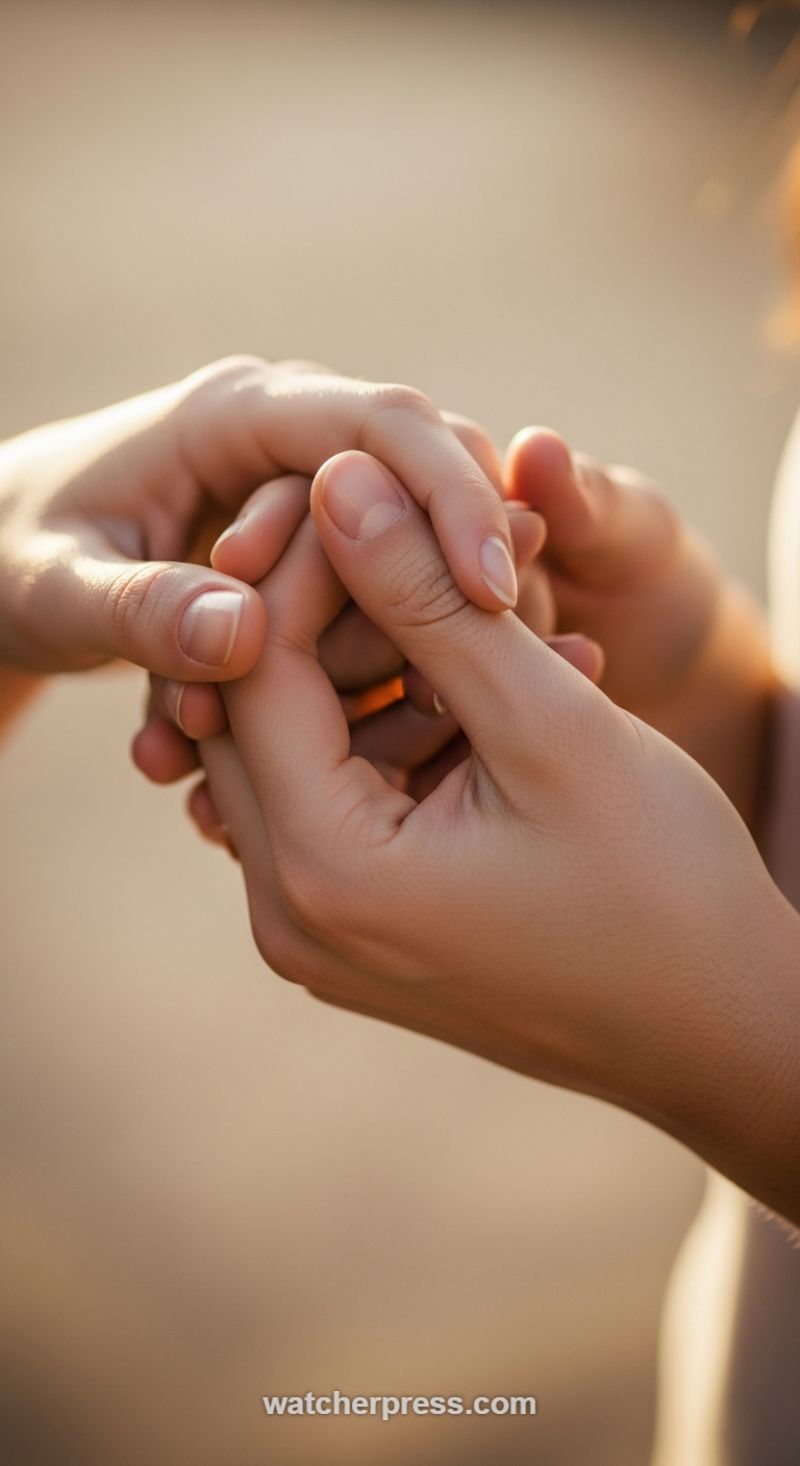
To infuse your shots with ethereal mystery, mastering backlighting during the golden hour is essential, as demonstrated by the rich, warm aesthetic in this image. The highly effective ‘halo’ effect—where the edges of the skin glow brightly—is achieved by positioning the subjects so the low-hanging sun acts as a powerful backlight. This intense rim lighting immediately separates the hands from the background, creating depth and a sense of divinity or otherworldly softness. Expert technique involves slightly overexposing the scene (or spot metering on the skin) to ensure the highlights are luminous and warm, rather than stark white. This choice of illumination transforms a simple gesture into a deeply emotional tableau, where the light itself becomes a character, symbolizing warmth, trust, and vulnerability.
Further enhancing the feeling of intimacy and isolation is the radical use of shallow depth of field. By shooting with a wide aperture (likely f/1.8 or wider), the photographer focuses exclusively on the tender interaction of the fingers, blurring everything else into a creamy, abstract bokeh. This isolation is crucial for achieving aesthetic mystery, as it removes all contextual information—we don’t know the setting or the faces involved, leaving only the pure emotion of the touch. Instructionally, position the hands slightly off-center vertically to allow the light catch on the top surface, and ensure that the hands are intertwined naturally, suggesting gentle comfort rather than a firm grip. The tight crop focuses solely on this connection, demanding the viewer’s attention and magnifying the small, complex details of the skin and nail beds.
For the final artistic polish, attention must be paid to texture and tone. While the lighting provides the foundational warmth, post-processing should maintain high color saturation in the warm tones (oranges, reds) to amplify the golden hour feel. Crucially, the texture of the hands, though soft due to the focus, should remain detailed enough to communicate genuine presence. Direct your subjects to interact with sincerity; the subtle pressure and the careful overlapping of the fingers convey trust, transforming the hands from mere anatomical objects into vessels of feeling. This combination of directed vulnerability, isolating focus, and luminous backlight elevates the photograph from a simple close-up to a profound representation of ethereal human connection.
Elevating the Subject: Mastering Zenithal Contrast and Negative Space
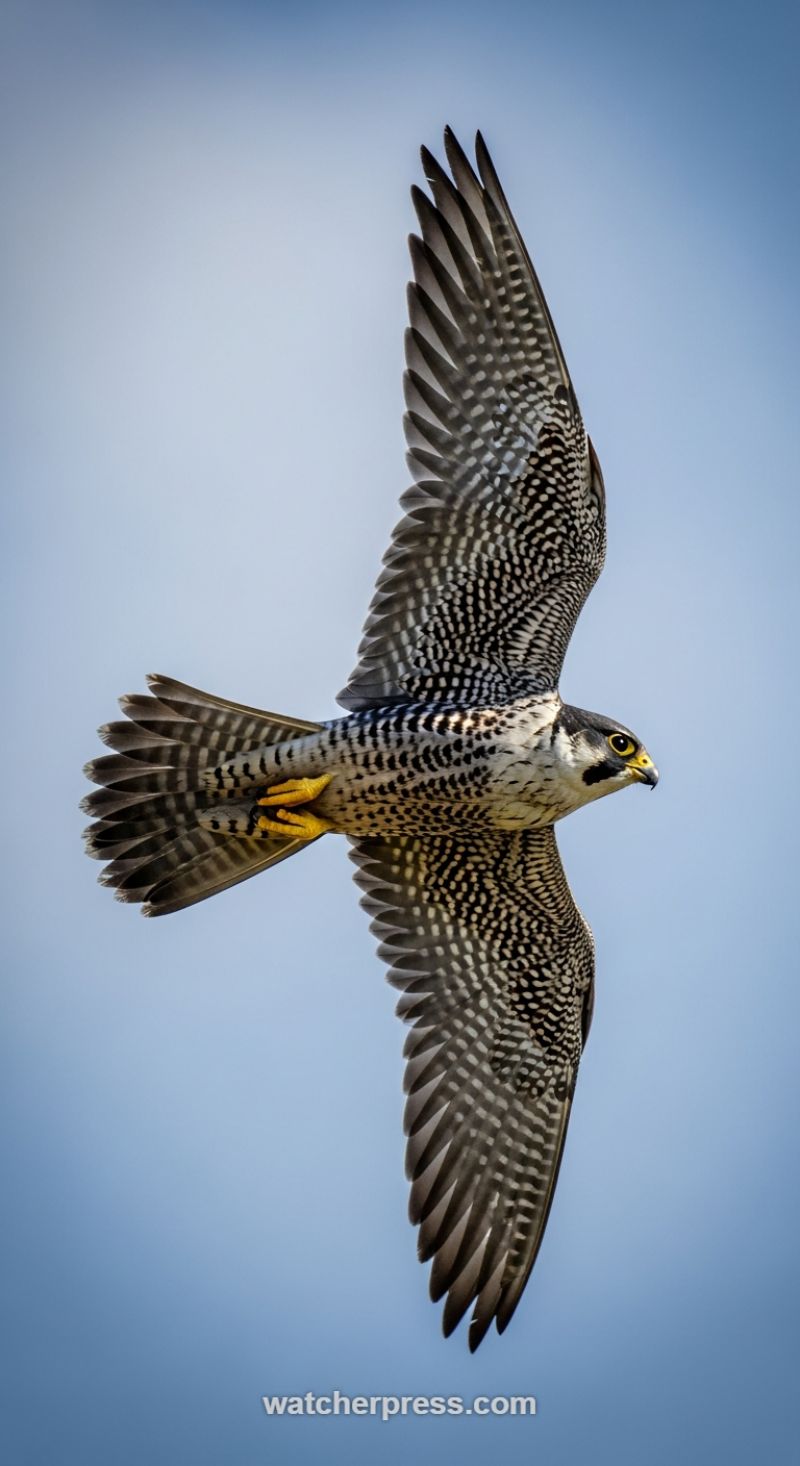
To infuse your still life or portraiture with an ethereal, almost mythological quality, study the compositional techniques used in high-impact wildlife shots taken against the sky. The primary goal here is maximizing subject isolation through perspective and managing zenithal contrast (light source directly overhead or behind). In this example, the subject—a heavily patterned raptor—is captured from a severe worm’s-eye view. This angle eliminates all ground context, replacing environmental clutter with pure, expansive negative space (the light blue sky). For studio work or portraiture, replicate this effect by positioning your subject either extremely high or low relative to the camera, using a seamless backdrop, a blank ceiling, or even a pool of water as your void. The vast, unbroken space surrounding the subject immediately lends it weightlessness and monumental scale, transforming a simple observation into an isolated, mysterious moment suspended outside of typical reality.
Achieving this mysterious isolation relies heavily on mastering light interaction with texture and edges. Notice how the bird is illuminated not just from above, but through strong natural light that accentuates the intricate, stippled pattern of the plumage. Crucially, the light is bright enough to create a distinct, high-contrast separation against the bright background, while simultaneously hinting at translucency in the thinnest parts of the wings (the primary feathers). To translate this luminous effect to portraits, utilize high-key lighting schemes or strategic backlighting (rim lighting). Place a powerful, diffused light source directly behind your subject—or aim it to skim the edges of fabric or hair—to achieve that distinctive glowing halo effect. This rim of light not only separates the subject from the background but highlights fine textures, creating a sense of internal luminescence that contributes directly to the aesthetic of the ethereal and the sublime.
Finally, exploit tonal and color control to maintain the dramatic focus. The falcon’s appearance is essentially monochromatic (black, white, gray patterning) punctuated by intense, vibrant accents (the yellow of the talons and cere). This restricted palette is key to ensuring that the viewer’s eye is drawn immediately to the structural beauty and the most vibrant emotional anchors. In still life, this means consciously reducing the number of competing colors in the frame. Opt for a limited color scheme—perhaps deep blacks and whites with a single highlight of saturated color, like the reflection on a piece of brass or the hue of a solitary flower. Use subtle dodging and burning techniques to increase the tonal contrast of the primary subject (making the textures sharper and the blacks deeper) while allowing the background negative space to remain uniformly bright and soft. This intentional drama and visual restriction elevate the image beyond a mere record, establishing the necessary air of enigmatic depth.
The Art of the Shrouded Portrait: Ethereal Mystery in the Mist
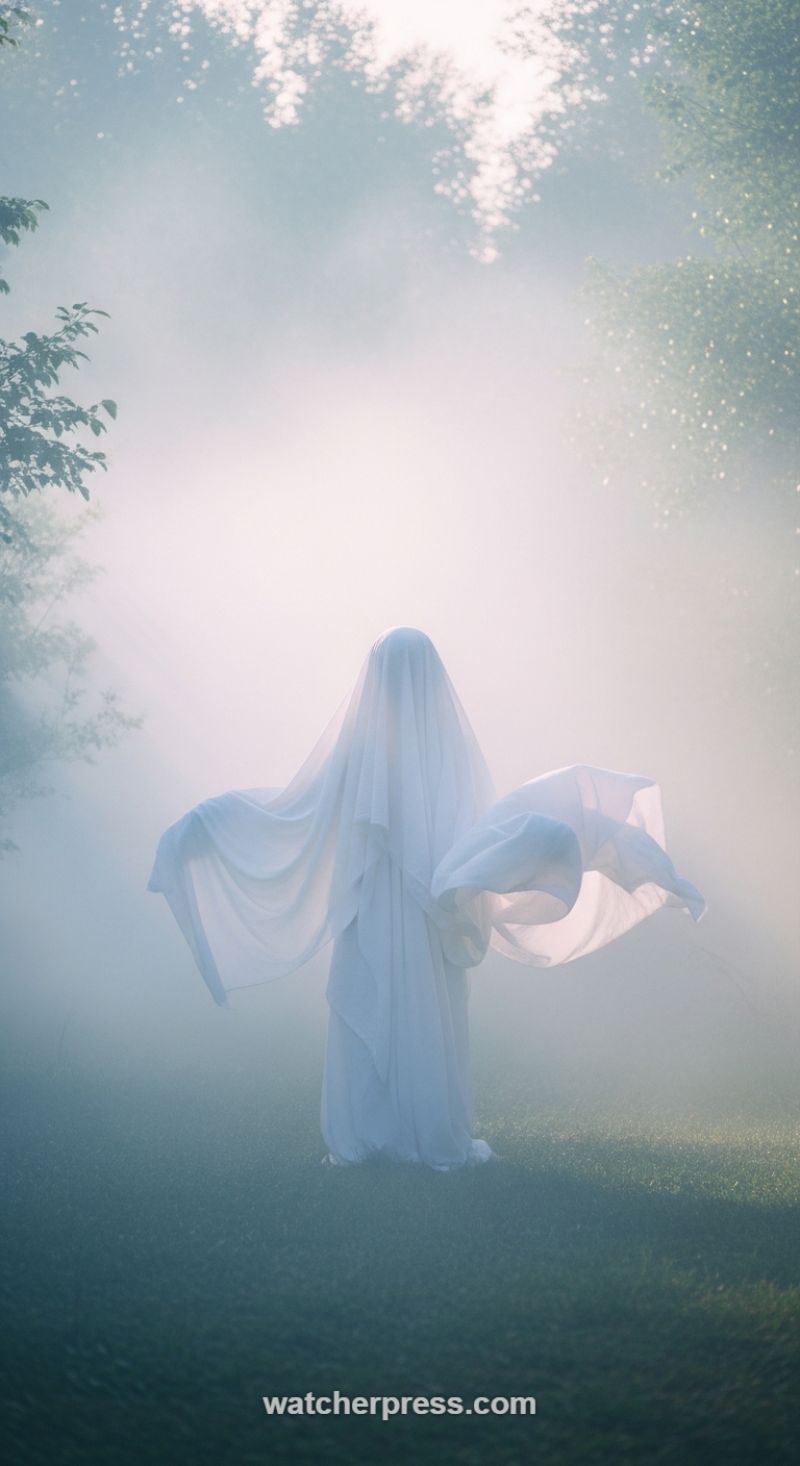
To capture a truly transcendent portrait, like the image of the veiled figure emerging from the fog, the photographer must master atmospheric conditions and controlled light diffusion. The primary element here is the heavy mist, which acts as a gigantic natural softbox, scattering the light and washing out the background details. To replicate this effect, schedule your shoot during the early morning hours when fog is naturally present, or utilize a high-quality fog machine placed strategically behind the subject and angled toward the camera lens. The goal is volumetric light—making the air itself visible. Position the subject against a darker background (like the trees framing the top) and introduce strong backlighting, ideally the rising sun, which will catch the moisture particles in the air and create pronounced light rays and a powerful halo effect around the figure. This technique immediately elevates the scene from a simple outdoor portrait to a high-contrast study in light and transcendence, forcing the viewer’s eye solely onto the glowing, central mystery.
Achieving the visual impact of the ‘shrouded’ figure relies heavily on material selection and kinetic styling. The fabric chosen must be lightweight, sheer, and possess significant movement—think chiffon, sheer silk, or fine tulle. Avoid heavy cotton or opaque linens, as they prevent light from filtering through and lack the necessary fluidity. The sheer white material should cover the entirety of the figure, obscuring identity to universalize the subject and maximize the mysterious aesthetic. Crucially, the pose must emphasize motion; even if the subject is still, use subtle movement (like holding the arms out, as seen here) or external assistance (a hidden fan or a helper gently tossing the fabric just before the shutter clicks) to give the drapery flow and life. The resulting folds, highlighted by the backlighting, create dimensional depth and suggest a figure that is floating or emerging, rather than simply standing on the ground.
From a technical standpoint, slight overexposure is your ally for achieving this bright, ethereal aesthetic. Shoot in high key—aiming to blow out the highlights slightly in the brightest areas of the fog to enhance the sense of luminosity, but ensure that details remain present in the fabric folds. Use a wide aperture (f/2.8 or wider if possible) to maintain a shallow depth of field; this ensures the background foliage dissolves into soft bokeh circles, further isolating the sharp, central figure and emphasizing the dreamy quality of the mist. In post-production, utilize split toning to refine the mood: introduce warm, soft magenta or pink tones into the highlights (enhancing the sun’s glow) and cooler cyan or teal tones into the shadows (the grass and fog pockets), which lends a subtle, painterly contrast to the composition. Finally, slightly lift the black point to reduce overall image contrast, giving the final photograph that desired low-fidelity, matte, and truly otherworldly finish.
Harnessing the Storm: Leveraging Elemental Drama for Ethereal Portraits
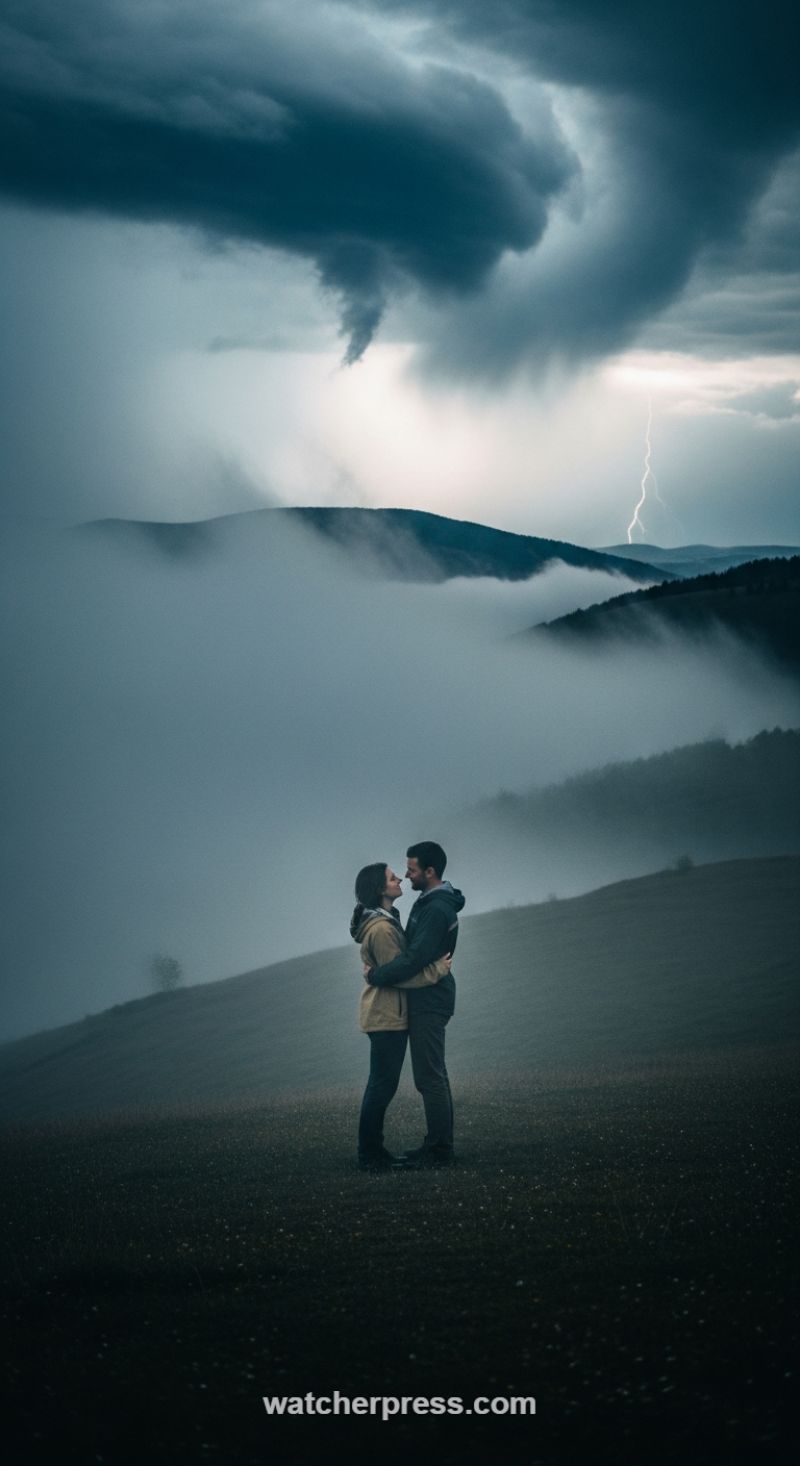
To achieve a truly epic and emotionally resonant portrait, photographers must learn to treat extreme weather not as an obstacle, but as a central character in their narrative. The defining element of ethereal mystery in this aesthetic is the use of heavy atmosphere—specifically, dense fog or low-hanging storm clouds that obscure the horizon and soften the lines of the landscape. This technique leverages atmospheric perspective, creating deep, fading layers of shadow and light that draw the eye into an infinite, muted space. Expert execution requires shooting during the ‘blue hour’ or periods of deep overcast, emphasizing a cool, desaturated color palette (deep cyans and cool grays). When composing, ensure your subjects are intentionally small within the frame (often near the lower third) to maximize the perceived scale of nature and enhance the feeling of isolation and intimacy against a formidable backdrop.
Introducing active elemental drama, such as visible rain or a lightning strike, elevates the image from merely moody to powerfully dramatic. Capturing lightning demands technical precision; safety is paramount, but the aesthetic reward is immense. A bolt of lightning acts as a raw, uncontrolled flash, instantaneously illuminating the massive cloud structure and the distant landscape, providing intense contrast and focal dynamism that manufactured light sources cannot replicate. If shooting for a lightning strike, use a sturdy tripod and experiment with longer exposures (3-15 seconds, depending on light levels) or utilize a lightning trigger system. The primary goal is to freeze the chaotic energy of the environment while allowing the fog and low light to maintain their veil of mystery.
Compositionally, the intimacy of the portrait must stand firm against the grandeur of the setting. The vertical orientation here successfully captures the towering scale of the storm clouds above and the steep drop-off of the hillside, pulling the viewer’s attention along the axis of drama. Instruct your subjects to hold a genuine, grounding embrace that contrasts with the volatile surroundings—this juxtaposition strengthens the emotional core of the shot, symbolizing connection and resilience amidst chaos. Finally, post-processing should enhance the mood without losing natural detail. Apply slight crushing of the blacks to deepen the foreground shadows, use dodge and burn techniques to emphasize the white intensity of the lightning, and ensure the overall noise profile remains clean, despite the inherently low-light conditions, maintaining the required top-tier finish.
The Ethereal Glow: Mastering Atmospheric Forest Backlighting
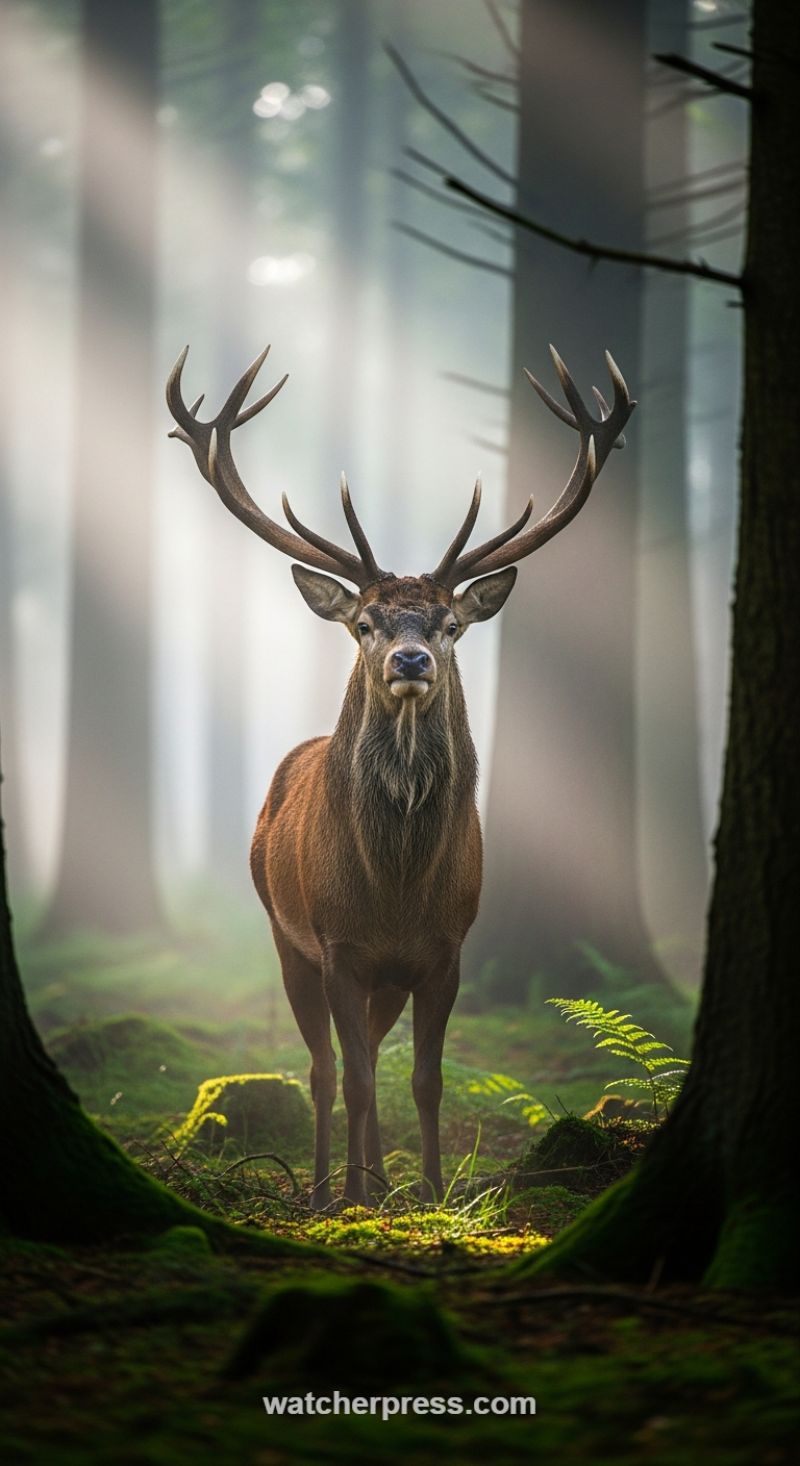
Achieving an ethereal and mystical aesthetic hinges critically on leveraging atmospheric diffusion paired with dramatic lighting, as perfectly exemplified by this image of the stag in the misty woods. To replicate this effect in your own portrait or still life work, begin by seeking out conditions featuring heavy environmental diffusion—specifically fog, mist, or soft smoke. This serves two vital purposes: first, it acts as a massive natural softbox, diffusing harsh sunlight and rendering distant background elements into soft, low-contrast washes of tone (creating the distinctive, blurred vertical bands seen behind the animal). Second, the mist provides a medium for light interaction, transforming direct beams into visible shafts of light (often called ‘God rays’ or crepuscular rays). Timing is key; these conditions are most prevalent immediately after sunrise or just before sunset when the air is cool and the sunlight hits the horizon at an oblique angle. Experiment with positioning your subject slightly into the mist, ensuring they are close enough to the lens to maintain sharp detail while the environment recedes into a soft, tonal abstraction.
The most powerful element contributing to the ethereal quality here is the intense, directional backlighting. You must intentionally place the dominant light source (the sun) directly behind the subject, allowing it to penetrate the atmosphere and strike the contours of the form. This technique creates exceptional rim lighting, where the strong light catches the edges of the stag’s mane, antlers, and back—or the hair and shoulders of a portrait model, or the outline of a still life object—separating it brilliantly from the misty background. This separation not only adds immense depth but also gives the subject a haloed, glowing appearance that feels immediately magical and three-dimensional. To manage the contrast inherent in shooting into the sun, utilize a reflector or a soft fill light (natural light bouncing off a bright surface) subtly aimed at the front of your subject to lift the shadows and ensure eye detail remains visible, preventing the subject from becoming a complete silhouette. For technical execution, a long lens (100mm+) used at a relatively wide aperture (f/2.8 – f/4.0) will compress the scene and enhance the background bokeh, further contributing to the dreamlike quality.
Finally, ground the scene with intentional framing and textural foreground elements. Notice how the dark tree trunks in the immediate foreground frame the composition, creating a natural, dark vignette that pushes the viewer’s eye toward the brightly lit center. This contrast between the dark frame and the light-filled core heightens the drama. For still life arrangements, use dark fabrics or natural textures (like weathered wood or stone) near the camera to establish this visual anchor. Furthermore, observe how the low-angle sun strikes the damp, mossy forest floor in the image, illuminating the vibrant green ferns and small patches of ground cover. This detail ensures the scene doesn’t feel entirely flat or vaporous; the strong highlights on the foreground foliage provide necessary textural interest and depth, contrasting the smooth, diffused light of the background. Always seek opportunities to incorporate light-catching textures into your fore- or mid-ground to balance the sublime mystery of the mist with tangible, grounded detail.
watcherpress.com
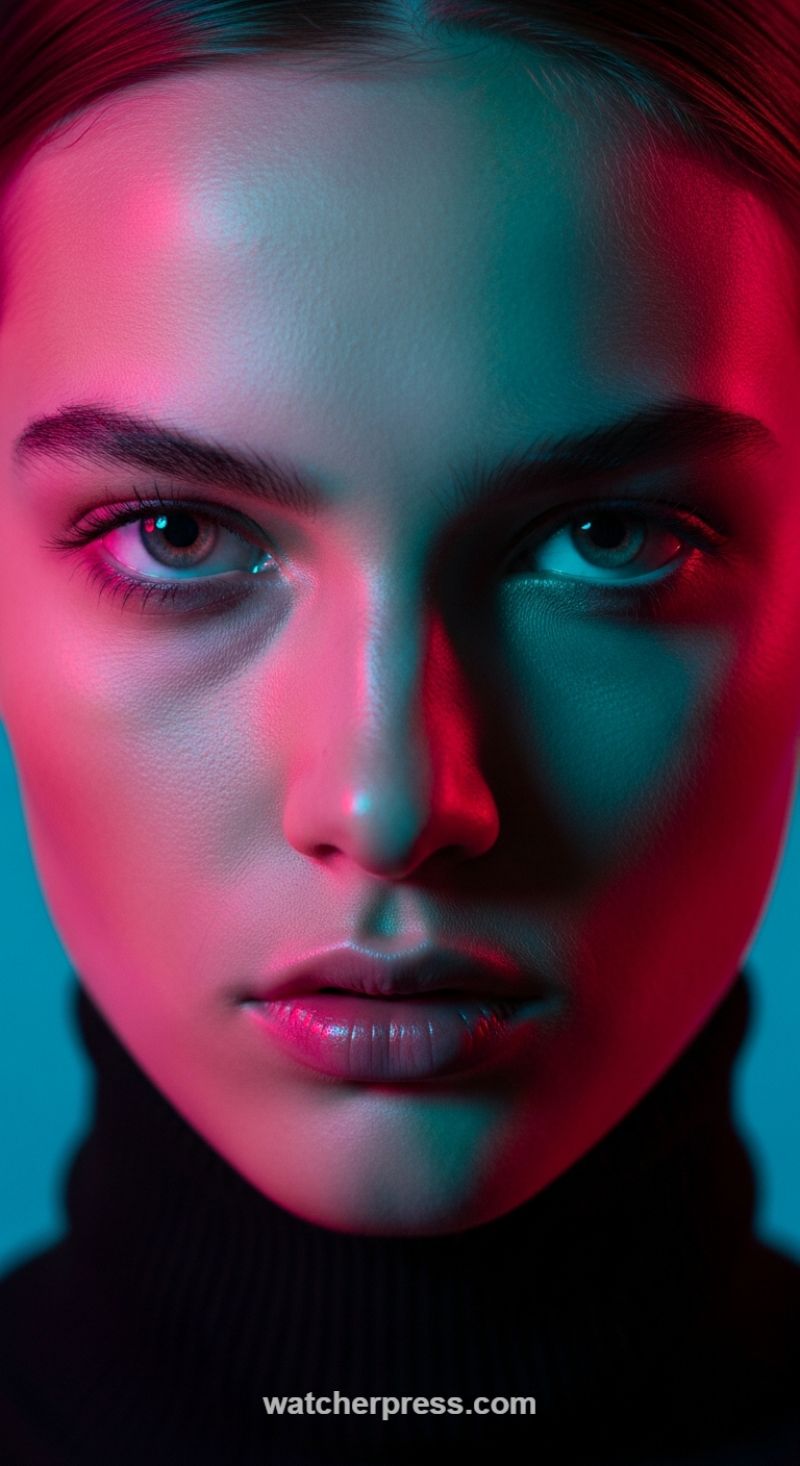
To capture the dramatic, high-contrast mood seen in this portrait, the cornerstone technique is duotone split lighting. This involves setting up two distinct, strongly-colored light sources (usually gelled strobes or high-powered LED panels) positioned on opposite sides of the subject, typically at 90-degree angles to the face. As demonstrated here with vivid magenta/pink on the left and cyan/teal on the right, choosing colors that are complementary or strongly contrasting maximizes the visual tension and impact, instantly elevating the portrait from standard mood lighting to something cinematic and futuristic. The key instructional component is controlling the spill: ensure the lights are narrowly focused or fitted with grids/barn doors so that the colors meet sharply down the midline of the face. This creates a razor-edge demarcation between light and shadow, allowing the viewer’s eye to process two separate realities simultaneously and infusing the resulting image with an immediate sense of ethereal, manufactured mystery.
The successful execution of this aesthetic relies heavily on maximizing contrast and manipulating the subject’s physical presentation. For portraits aiming for this level of drama, instruct the subject to wear dark, non-reflective materials, such as the black turtleneck shown, which helps absorb ambient light and ensures the shadows remain truly deep and impenetrable. The dark clothing isolates the brightly lit skin, forcing attention purely onto the contours defined by the duotone split. Furthermore, achieving an ethereal quality is about balancing the artificiality of the color with the reality of the texture. Use a lens that captures extremely sharp detail, especially in the eyes and skin, allowing the viewer to appreciate the subtlety of the texture even as the color saturates the scene. The eyes, catching reflections from both the pink and blue lights, become central focal points—glowing, jewel-like elements that ground the otherwise stylized reality.
In post-processing, careful calibration is essential to maintain the integrity of the duotone effect without letting the colors contaminate the neutral zones. Focus on using the curves tool to pull the black points down, ensuring the deepest shadows (like those on the neck and shoulder) are truly black, which further enhances the neon glow of the highlights. Use targeted hue/saturation adjustments only on the colored areas to maintain their purity and avoid color bleed into the mid-tones of the skin; this technique is not about achieving realistic skin tone, but about treating the face as a sculptural canvas for light and color. The final step involves a subtle application of dodging and burning to slightly enhance the light transition along the nose and cheekbones, perfecting the chiaroscuro effect and solidifying the image’s mysterious, high-end editorial feel.
Silhouette and Flare: Mastering the Ethereal Mountain Portrait
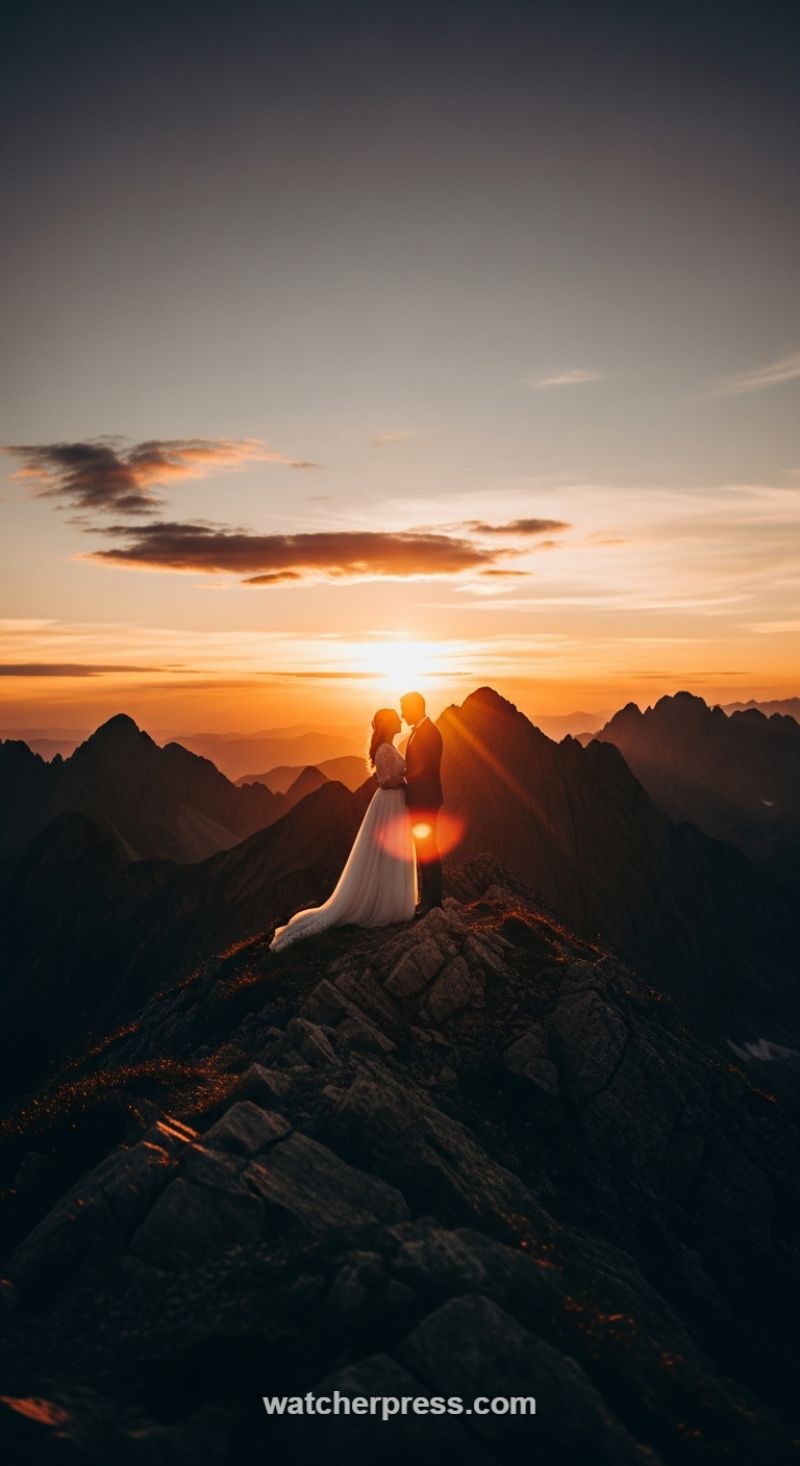
To transition a simple portrait into a display of ethereal majesty, the setting must become an active element of the composition. As seen in this dramatic mountain shot, the key is leveraging scale and environmental features. Select locations—like high, jagged peaks or layered valleys—that recede sharply, utilizing atmospheric perspective (haze or mist) to create depth and separation between planes. The subjects should occupy a critical focal point, often a ridge or pinnacle, but remain relatively small within the frame. This technique emphasizes the grandeur of the landscape and reduces the prominence of facial features, instantly introducing a sense of anonymity and mystery. For optimal drama, ensure the subjects are positioned against the brightest portion of the sky, maximizing the contrast between the environment and the couple’s silhouette, turning them into symbolic figures rather than literal individuals.
Achieving this backlit silhouette requires technical precision centered on strategic exposure during the golden hour. The primary goal is underexposure relative to the subject, ensuring the background light dominates. Metering should be focused on the brightest area of the sky immediately surrounding the sun, forcing the foreground subjects into deep shadow. This process not only guarantees the vibrant saturation of the sunset colors but also produces a clean, hard silhouette. To enhance the ethereal quality, intentionally incorporate lens flare and sunbursts by positioning the sun just skimming the edge of the subject’s heads. Using a narrower aperture (e.g., f/11 to f/16) can help create the distinct starburst effect around the sun while adding the essential bright rim light that separates the subjects from the dark foreground, providing that glowing, celestial outline.
Post-processing is crucial for defining the final mood of high-drama mystery. Start by pushing the contrast significantly, crushing the black points to eliminate detail in the shadowed areas while boosting mid-tone clarity to accentuate the rugged texture of the rocks and mountains. Pay meticulous attention to color grading; deepen the oranges, reds, and magentas in the sky to enhance the ‘fiery’ sunset effect. Often, photographers pull down the saturation slightly in the blues and greens while selectively boosting the luminosity of the sun’s immediate vicinity. Finally, use tools like radial filters or graduated filters to further darken the lower half of the frame and draw the viewer’s eye directly toward the backlit subjects, cementing the feeling that they are suspended in a realm between earth and sky.
Harnessing the Golden Halo: Mastering Sun Flare and Backlight
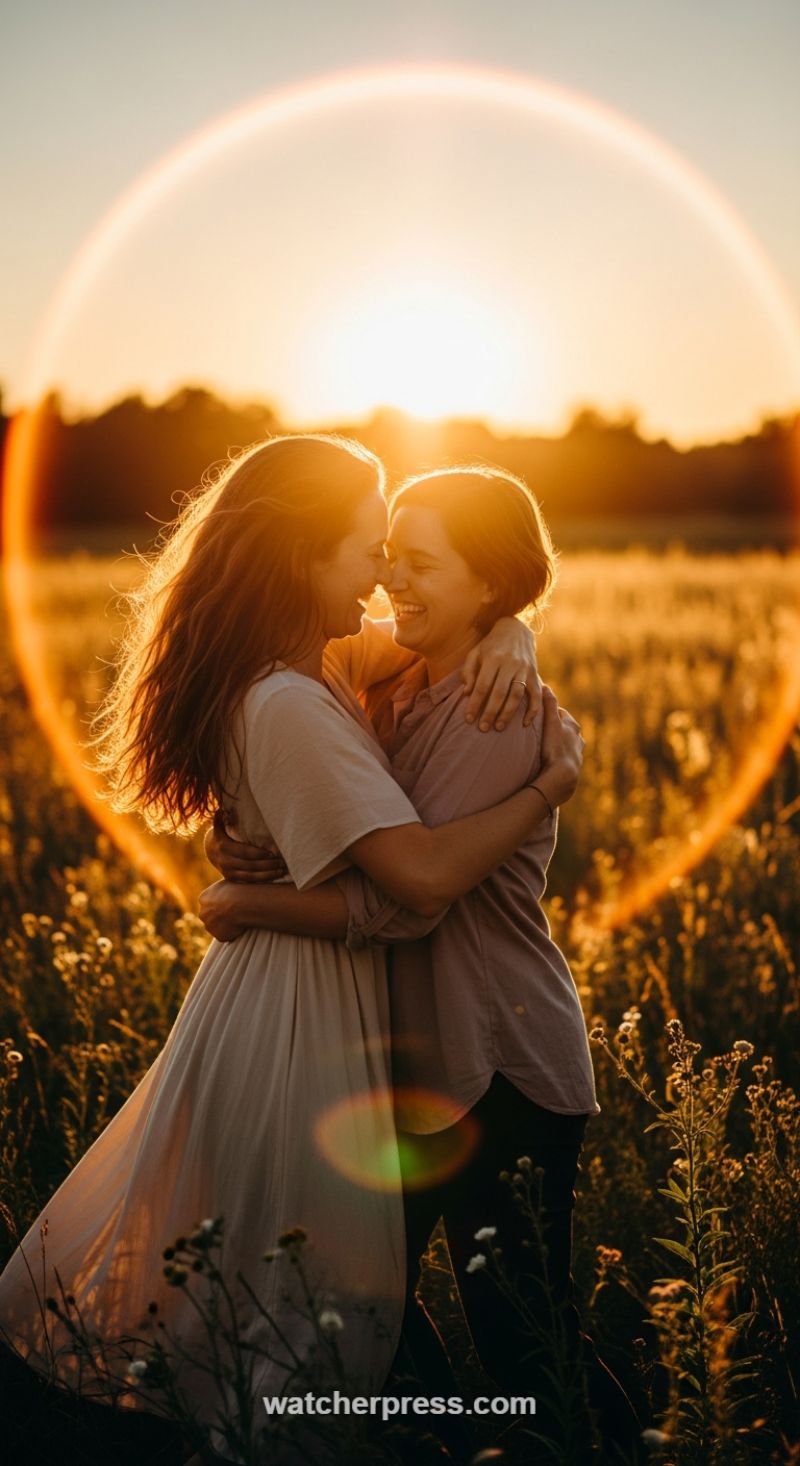
To achieve this specific aesthetic of radiant warmth and ethereal mystery, the key is aggressive backlighting coupled with controlled lens flare. Schedule your portrait session during the golden hour, specifically 15 minutes before or after sunset, when the sun is low enough to be included directly in the frame or just above the horizon line. Position your subjects directly between your lens and the light source. This technique produces powerful rim lighting, which outlines the subjects (notice the glowing hair) and visually detaches them from the darkened background, creating a distinct, angelic silhouette. Crucially, the inclusion of the bright sun introduces optical effects like circular lens flares and light leaks, which contribute significantly to the dreamy, often vintage, quality of the final image. Experiment with subtle shifts in camera angle or subject positioning to alter the size and intensity of the flare, ensuring it enhances the composition without completely overwhelming the subjects.
The setting and composition must intrinsically support the soft, intimate mood. Choose a natural location with textured, high-contrast elements like tall grasses or wildflowers that can fill the foreground and background, which, when rendered slightly out of focus by a shallow depth of field (use f/2.8 or wider), act as beautiful, subtle bokeh. When exposing for such an intensely backlit scene, you must make a strategic decision: metering for the brilliant sky will render your subjects as dark silhouettes. For this desired “ethereal glow” effect, intentionally overexpose the shot relative to the ambient light reading, usually by about +0.7 to +1.5 stops. This ensures the subjects’ faces and skin tones are appropriately bright and warm, even if it means sacrificing some detail in the brightest highlights of the sun flare, prioritizing the intimate connection and luminous warmth over technical highlight preservation. Ensure your focus locks onto the subjects’ eyes, as this sharpness provides a necessary anchor against the surrounding softness.
Post-processing is essential for pushing the image from standard warm backlight into true ethereal radiance. Begin by warming the white balance significantly to amplify the deep oranges and golds inherent in the scene. To maintain the dreamy, soft quality, lower the contrast and clarity sliders slightly, preventing the image from becoming overly sharp or harsh. If your lens flare didn’t naturally produce the dramatic halo seen in this example, utilize radial filters or brush tools in your editing software to paint in a soft, bright orange halo originating from the light source, mimicking and enhancing the natural optical effect. Finally, lift the shadow areas to prevent the subjects’ clothing or faces from falling into pure black, preserving detail and reinforcing the overall light-filled mood of intimate mystery.
Capturing the Ethereal Drama of Shadow and Light
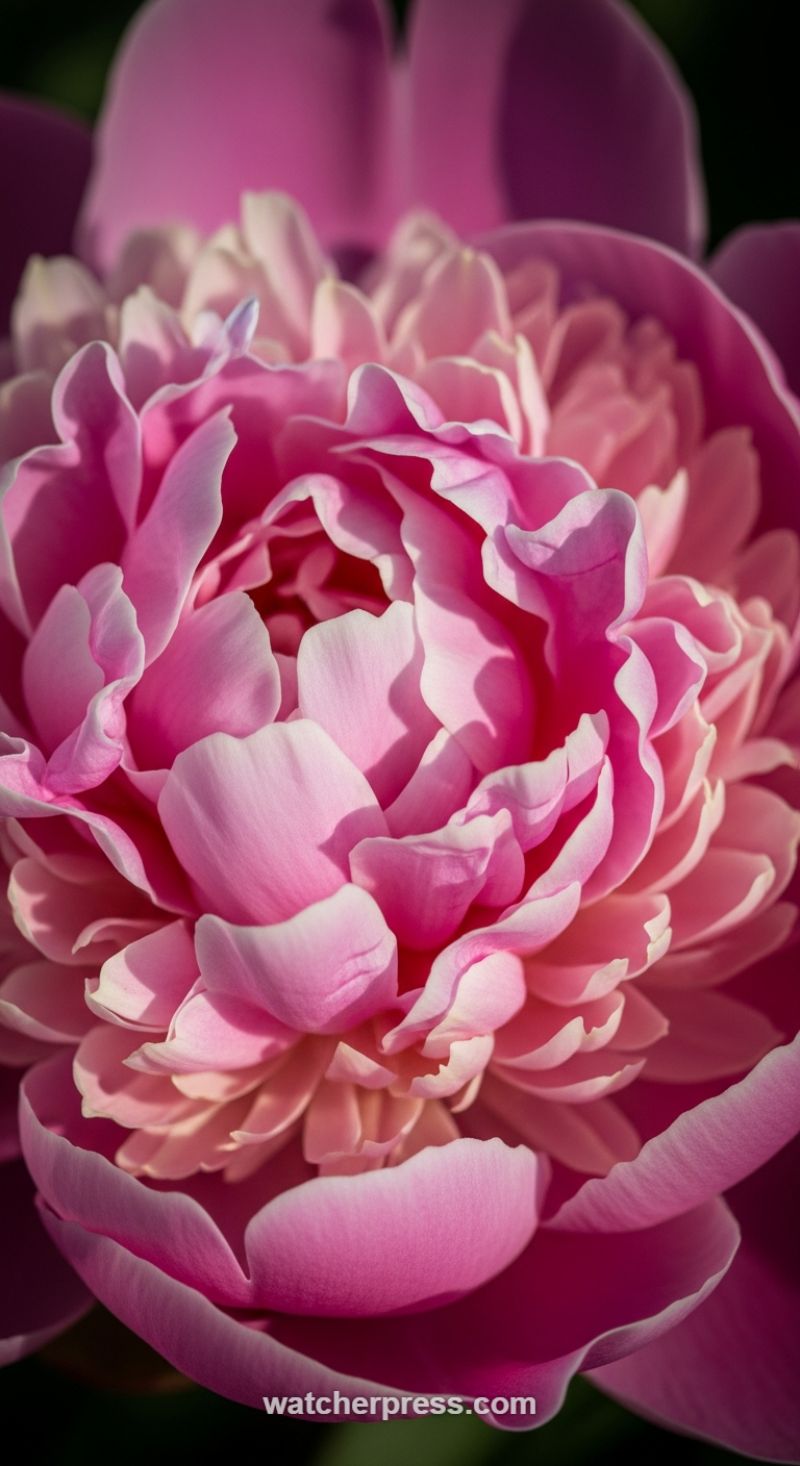
To imbue your still life or macro shots with an air of ethereal mystery, begin by obsessively analyzing the texture and intricate structure of your subject, much like the densely layered folds of this peony. Achieving this level of detail requires pushing beyond standard composition; utilize a true macro lens (1:1 magnification) or extension tubes to isolate and celebrate the subject’s hidden architecture. The density and layering of soft elements—petals, fabric folds, or draped hair—naturally create pockets of obscurity. Focus on the interplay between saturated color (like the rich magentas and deep pinks here) and translucent edges. The goal is to make the subject feel boundless and overwhelming, using light to trace the form without revealing its full shape, thereby inviting the viewer to explore the obscured, internal spaces of the flower or portrait. This technique shifts the image from a simple botanical record to a study in sculptural, sensual form.
The key to injecting ‘drama’ into ‘ethereal’ subjects lies in mastering high-contrast, directional lighting—a modern interpretation of chiaroscuro. Avoid flat, diffused light, which washes out complexity. Instead, position a single, concentrated light source (natural window light works excellently, especially during the golden hour, or a controlled studio strobe with a grid) to rake across the surface of the petals. This focused light sculpts the subject, creating deep, defined shadows that recess into the intricate folds. These shadows are crucial; they are the physical manifestation of the mystery, concealing certain edges and enhancing the sense of depth and volume. Notice how the bright highlights catch the thin, ruffled edges of the pink petals, sharply separating them from the softer shadows beneath. This extreme juxtaposition of luminance values convinces the viewer that the subject possesses profound three-dimensionality, regardless of how flat the photograph ultimately is.
Finally, the technical execution of depth of field (DOF) is paramount for isolating the moment of focus and enveloping the rest of the image in a soft, dreamlike atmosphere. When shooting macro, even a slight shift in aperture can dramatically alter the mood. Use a very wide aperture (e.g., f/2.8 or wider, depending on magnification) to ensure only a thin plane of the subject—perhaps the apex of a few perfectly sculpted petals—remains tack-sharp. The resulting bokeh should be lush and painterly, bleeding the background into abstract fields of color and transforming the foreground elements into soft, suggestive shapes. This shallow DOF technique effectively abstracts the scene, pulling the subject away from reality and suspending it in a moment of emotional intensity. By filling the frame with this abstracted beauty, you move the photograph away from documentation and firmly into the realm of suggestive, atmospheric art.
watcherpress.com
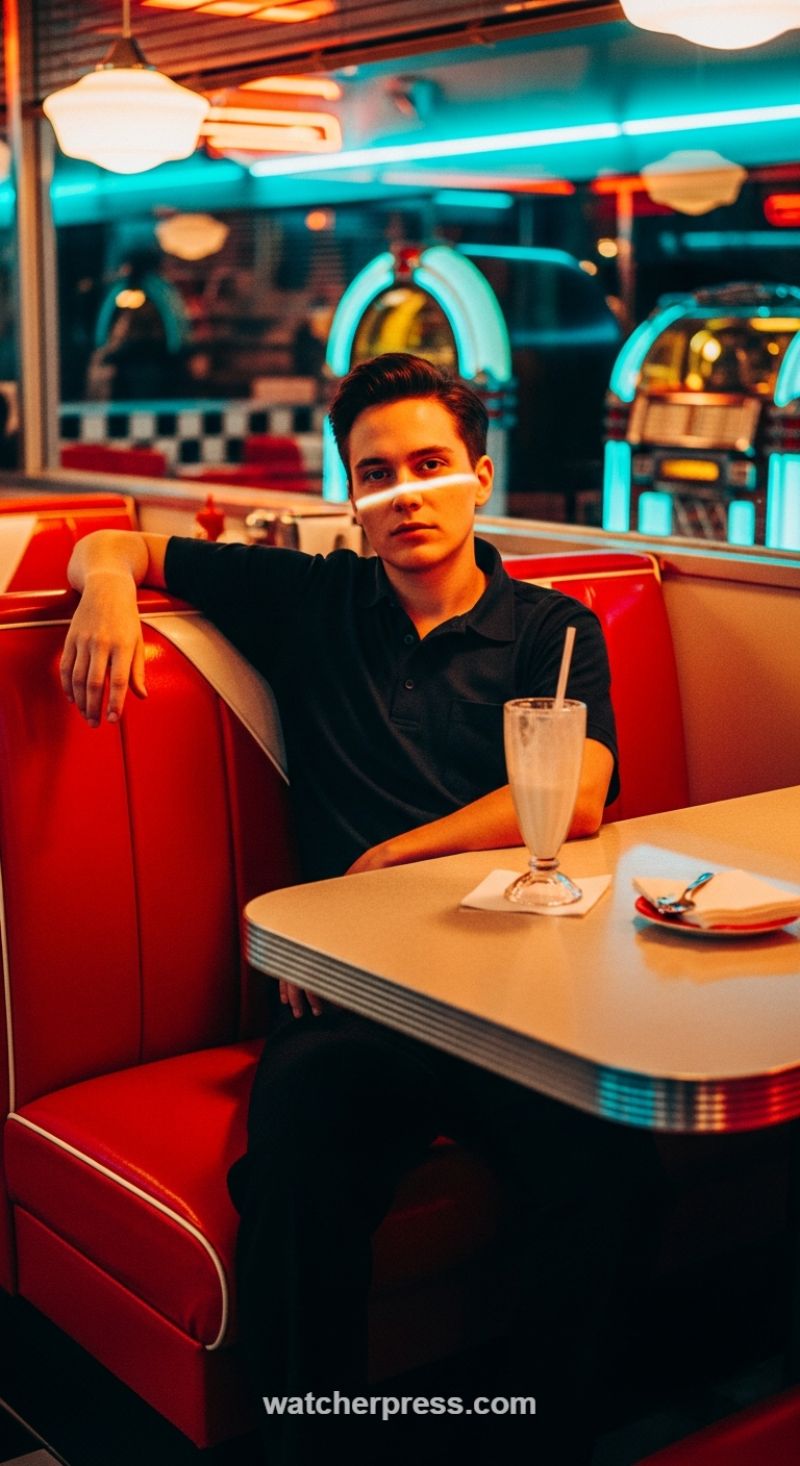
To capture this specific blend of retro atmosphere and futuristic luminescence, location selection is paramount. The choice of a classic 1950s-style diner setting works perfectly because its inherent design features highly saturated colors (cherry red vinyl, polished chrome) and powerful artificial light sources. The primary aesthetic technique employed here is manipulating color temperature contrast: position your subject in a pool of warm, incandescent or orange ambient light, while ensuring the deep background is dominated by cool tones—specifically electric cyan or teal neon. This opposing warm/cool color scheme instantly generates visual tension and dramatic depth, allowing the subject to pop against a dreamlike background that evokes a vaporwave or neo-noir feel. Crucially, the light sources should be highly visible in the frame, such as the overhead globe fixture and the reflections of the background juke boxes, as these elements are integral to establishing the high-key, stylized environment.
The true element of ethereal mystery in this shot lies in the intentional inclusion of the stark, horizontal light beam precisely bisecting the subject’s eyes and forehead. This is not merely ambient light; it is a strategically placed graphic element that serves as both a luminous highlight and a partial visual obstruction, deepening the enigma. To achieve this signature effect, photographers must employ highly precise light modification. If shooting with controlled flash or continuous lighting, use a narrow snoot, a barndoor setup, or even a piece of black tape over a thin speedlight to restrict the light output into a razor-thin strip. Alternatively, if relying on the environment, carefully identify a high-intensity reflection source—like a thin overhead strip light reflecting off glass or the chrome edge of the table—and adjust the camera or the subject’s position until the reflection falls exactly where desired, creating a luminous, cinematic mask. This technique adds an immediate layer of symbolic distance and narrative tension, making the viewer question the subject’s identity or state of mind.
Finally, composition and subtle props must enhance the reserved, mysterious mood. Instruct the subject to adopt a slightly disengaged, contemplative pose, such as leaning back with an arm resting on the booth, which conveys quiet isolation rather than direct interaction with the camera. Props, like the nearly empty milkshake glass, serve as still-life anchors that hint at a broader, unfinished story without revealing crucial details. For post-production, amplify the established mood by focusing on hyper-saturation, particularly boosting the luminance of the reds and the blues. Apply split toning to push highlights toward warm amber and shadows toward teal. To maintain detail while ensuring depth, slightly crush the black points—avoiding true shadows but maintaining richness in the dark areas of the subject’s clothing. A final, fine layer of digital film grain can soften the edges of the neon light and finalize the image’s characteristic vintage yet futuristic sheen.
Harnessing Liquid Dynamics: The Ethereal Abstract
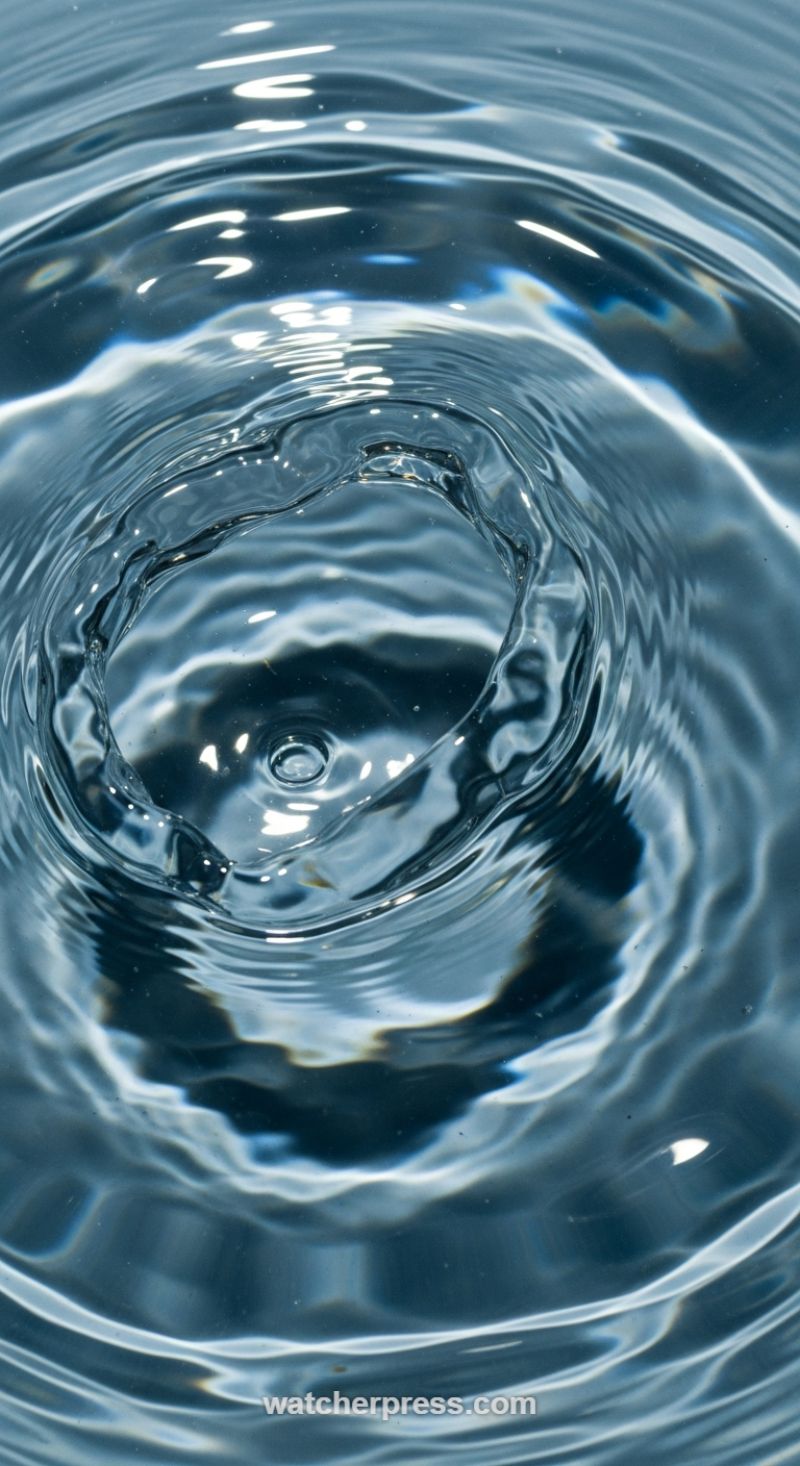
The key to achieving this specific aesthetic of frozen, ethereal mystery lies in mastering ultra-high-speed liquid photography, transforming chaos into sculptural elegance. This process demands absolute precision in timing, relying not on a fast mechanical shutter, but on the flash duration itself, which must be brief enough (typically 1/15,000th of a second or faster) to freeze the ephemeral movement of water droplets and ripples. To replicate the dramatic vortex seen here, photographers must employ specialized droplet control systems—often using a solenoid or a sound-triggered sensor—to ensure the drop impacts the water surface exactly when the flash fires. The setup requires a macro lens capable of tight focus and high magnification, allowing the chaotic energy of the impact to fill the frame, eliminating distracting environmental context and isolating the pure, abstract form of the splash dynamics. Controlling the environment, specifically using a dark, non-reflective container for the water, helps absorb ambient light, ensuring the final image maintains the deep, moody saturation necessary for the mysterious blue tones.
The visual element that truly infuses this image with an ethereal quality is the strategic use of specular highlights and complex refraction. Unlike flat, diffused lighting, which would flatten the texture, directional and often hard light is essential to define the three-dimensional curves of the ripples and the central vortex. Positioning strobe lights high and to the side ensures that the light catches the peaks of the waves, creating those bright, sharp streaks that act almost like metallic veins across the water’s surface. These highlights contrast starkly with the deep shadows created in the troughs of the waves, maximizing depth and giving the water a reflective, glass-like appearance. Furthermore, incorporating subtle blue or cyan gels on the background or backlighting the water through a slight amount of milk (or specialized liquid thickener) enhances the coolness and depth, transforming ordinary water into an abstracted, jewel-toned medium. This careful manipulation of light and refraction elevates the photograph from a technical exercise to an exploration of liquid sculpture.
Integrating this technique into broader aesthetic goals, such as still life or portraiture, requires looking beyond the splash itself and considering the principle of dynamic abstraction. For still life subjects, these frozen water patterns can serve as a highly textured, unstable backdrop, suggesting movement or emotional fragility behind a static object. Alternatively, the water surface can be used as a primary visual element in a complex still life arrangement, positioning small objects beneath or within the refracting surface to capture distorted, mysterious reflections. For portraits, while shooting droplets directly is impractical, the underlying concept—using light on highly reflective, curved surfaces—can be translated. Consider projecting abstract water ripple patterns onto a subject or using highly reflective, curved objects near the subject to create similar high-contrast, dynamically lit textures that contribute to the sense of mystery and fleeting beauty inherent in the ‘ethereal’ aesthetic. The goal is always to utilize light and liquid curves to make the transient feel permanent, lending gravity and deep complexity to the composition.
Saturating the Shadows: Creating Ethereal Motion Blur in Urban Portraits
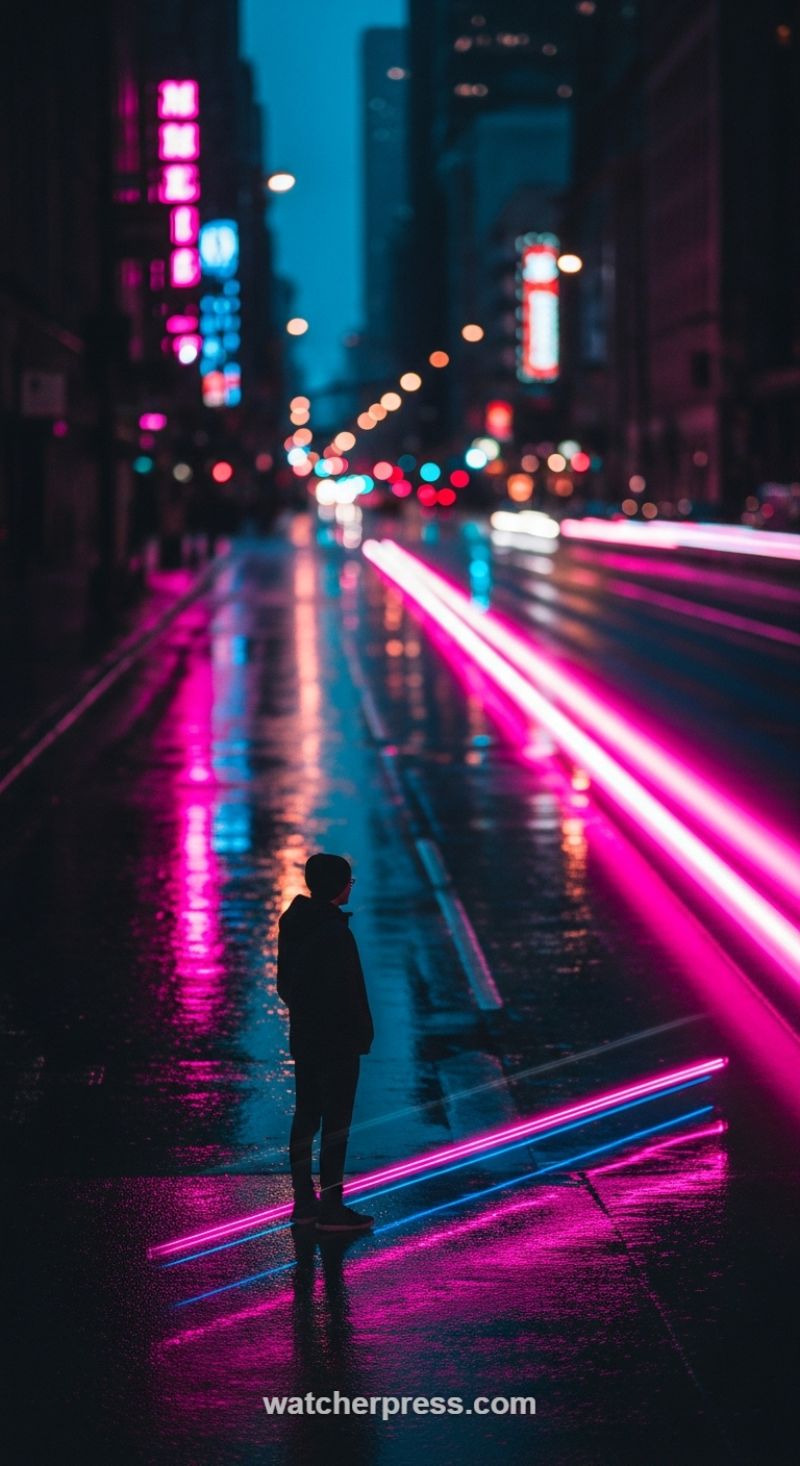
To capture the dramatic, high-contrast, neon-drenched aesthetic seen here, the photographer must master the synergy between motion blur and reflective surfaces. This look is achieved almost exclusively using long exposure photography, typically ranging from 1 to 3 seconds, making a sturdy tripod essential. The primary technical instruction is to shoot on a wet night; the rain-slicked asphalt acts as a powerful reflector, essentially doubling the light output of the surrounding city, turning ordinary streetlights and signs into vibrant pools of color. Set your camera to a low ISO (50-200) to minimize noise in the deep shadows and use an aperture between f/8 and f/11 to maintain clarity on the reflective foreground pavement. The ethereal light trails, which are the hallmark of this style, are created by passing traffic during the long exposure. Positioning the subject slightly off-center and having the motion blur streak directly past them creates an illusion of speed, urgency, and transient beauty, perfectly embodying the ‘ethereal mystery’ goal.
Compositionally, the success of this image lies in the stark contrast and the use of the silhouette technique against a dichromatic color scheme. The primary colors utilized here are intense neon magenta/pink and deep cyan/teal, a palette that instantly evokes the ‘cyberpunk’ or ‘neon noir’ aesthetic. To achieve a perfectly dramatic silhouette of your subject, you must consciously expose for the brightest highlights—in this case, the luminous pink light trails and the vibrant reflections on the street. By doing this, the subject, standing in the foreground, is deliberately underexposed and swallowed by shadow. This removes any distracting detail from the figure, transforming them into an anonymous, mysterious human form against a sea of overwhelming urban light. Expert photographers should use the environment as their main light source, ensuring that the pink and cyan reflections geometrically frame the standing figure, drawing the viewer’s eye into the emotional narrative of the lone individual immersed in a vibrant, yet lonely, world.
In post-production, fine-tuning the dichromatic split tone is critical for intensifying the otherworldly glow. Use your software’s HSL (Hue, Saturation, Luminance) sliders to selectively push the blue/cyan and magenta channels. Specifically, increase the saturation and luminance of the magentas to make the light trails burn brighter, and deepen the hues of the blues in the background and surrounding reflections. Furthermore, utilize the Split Toning panel to introduce a subtle cool tone (cyan) into the shadows and a warm/pink tone (magenta) into the highlights—this heightens the separation and depth between the lit elements and the vast, dark cityscape. Finally, apply a slight Gaussian blur to the distant background lights (bokeh) to maintain the focus on the sharp light trails and the foreground reflection, maximizing the dreamlike quality and cementing the overall feeling of atmospheric melancholy.
DETAILS
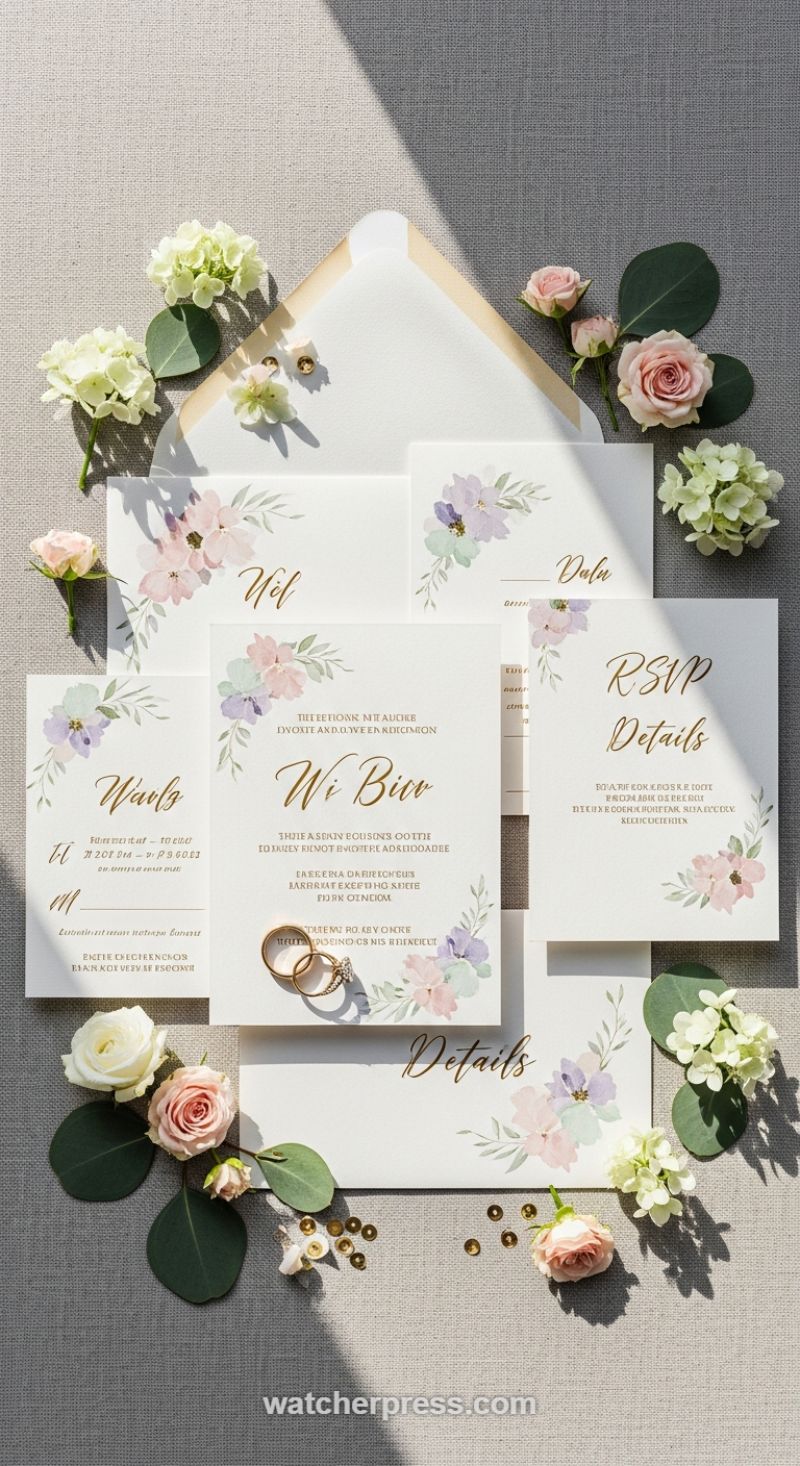
To achieve the sophisticated yet highly romantic aesthetic showcased in this flat lay, photographers must focus meticulously on color grading and material selection. The ethereal quality is built upon a foundation of soft, low-saturation pastels—blush pink, lavender, and pale mint green—which are rendered in soft focus through watercolor artwork on the stationery itself. For the backdrop, bypass harsh whites or deep blacks in favor of a textured, neutral linen or woven fabric in a beige or cool gray tone. This neutral base provides necessary depth while ensuring the delicate colors of the floral elements and paper remain the brightest visual anchors. The inclusion of lush, organic materials like fresh roses, hydrangeas, and eucalyptus leaves is essential; arrange them to frame the composition peripherally, creating a natural border that reinforces the softness and draws the eye toward the center stack of cards.
Crucially, the element that elevates this shot from merely soft to truly mysterious is the deliberate use of high-contrast, directional lighting. While a softbox might create a uniform, dreamy look, hard window light, as seen here, introduces powerful geometric shadows that cut diagonally across the scene. This juxtaposition of soft, organic subjects (flowers, watercolor paper) with sharp, architectural shadow lines is key to infusing drama and mystery into an otherwise delicate setup. Position your still life so that the sun casts defined edges; this shadow acts as sophisticated negative space, highlighting the texture of the linen and creating pockets of visual interest. Expertly managed light and shadow contrast ensures the final image feels dynamic rather than overly static or washed out.
Finally, the successful execution of this setup hinges on the strategic placement of metallic accents and layered composition. Because flat lays can sometimes appear two-dimensional, introduce varying height and visual weight by overlapping the stationery elements, such as tucking smaller cards beneath the main invitation or allowing the envelope flap to stand open. The small, high-value details—like the gold wedding bands and scattering of brass sequins—are critical for catching the light and guiding the viewer’s eye. These reflective elements provide necessary ‘glints’ of highlight, breaking up the matte surfaces and adding a touch of old-world glamour. When styling, always place the most meaningful element (in this case, the rings) near the main focal point to anchor the narrative, ensuring the entire composition feels curated, intimate, and profoundly delicate.
As we draw this exploration to a close, remember that the infusion of ethereal mystery into your still life and portraiture is fundamentally an act of intentional withholding. Mastery lies not in grand gestures, but in the nuanced control of available light, the strategic use of negative space, and the careful selection of textural elements. These techniques are merely tools; the true magic resides in translating your internal vision into tangible atmosphere.
Your journey toward the ethereal aesthetic is iterative. We encourage you to view every shoot as an experiment, focusing less on technical perfection and more on emotional resonance. The most powerful images are those that invite the viewer to linger, creating a silent dialogue between the subject’s quiet presence and the viewer’s interpretation. Allow your work to breathe, and let the unresolved nature of the mystery be its greatest strength.
Now, take these insights and apply them to your lens. We invite you to push past standard documentation and pursue profound depth. **Start today by selecting one core concept—be it directional light or subtle color grading—and dedicate your next shoot to mastering its mystical potential. Share your resulting ethereal creation with our community, and let the conversation continue.**