Low-light environments, particularly during evening wedding receptions and dimly lit events, present one of the most formidable technical challenges for photographers. The ability to capture authentic, candid moments without relying on harsh flash or introducing excessive noise is the hallmark of a skilled professional. These scenes are often rich with emotion and atmosphere, yet they demand precision in camera settings to translate that feeling into a sharp, well-exposed image. Mastering this niche not only elevates your portfolio but ensures you never miss a critical memory, even when the ambient light fades.
To help you conquer the darkness and consistently deliver stunning low-light results, we have compiled the definitive guide to 20 essential camera settings and strategic adjustments. This comprehensive list moves beyond the basic ISO, aperture, and shutter speed triangle, delving into advanced metering modes, autofocus configurations, white balance presets, and custom function controls specifically optimized for dynamic, dimly lit event photography. Implementing these ultimate settings will transform your workflow, allowing you to shoot confidently in challenging conditions and capture the beautiful, candid intimacy that defines exceptional wedding and event coverage.
The Power of Wide Apertures: Freezing Genuine Emotion in Warm Low Light
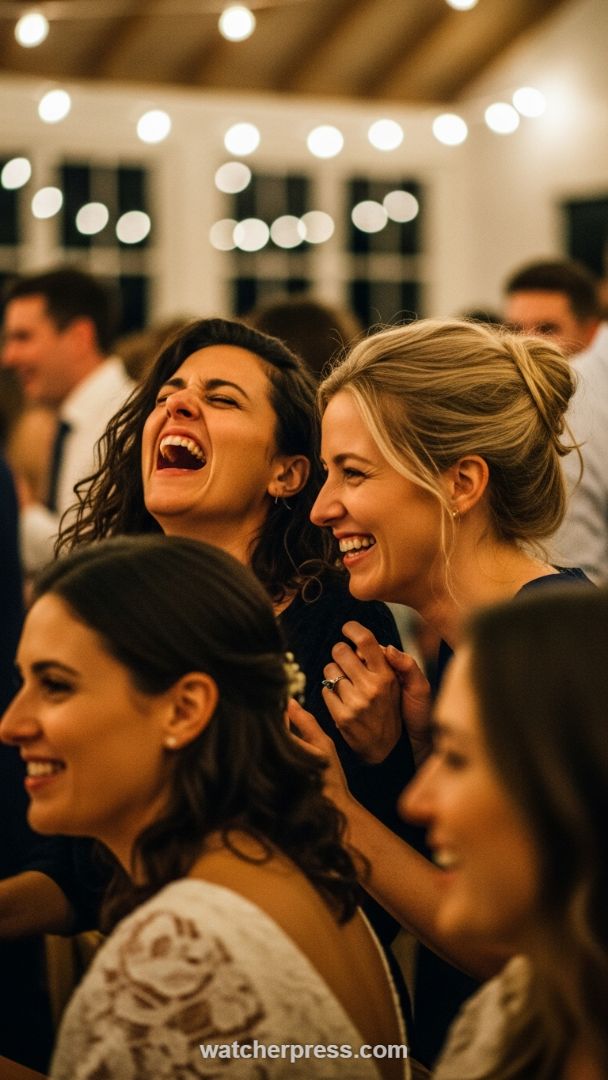
This image perfectly encapsulates the goal of candid wedding photography: capturing unscripted, genuine emotion. Shot in a challenging low-light reception environment, the photographer prioritized a fast lens and precise focusing to freeze the subjects mid-laughter, while leveraging the warm string lights to create a beautifully immersive background atmosphere. Achieving this level of clarity and ambiance requires a careful balance of the exposure triangle, favoring aperture priority to maximize light gathering and subject isolation.
- Shallow Depth of Field (DoF) achieved with a wide aperture (likely f/1.8 or wider) to isolate the primary subjects and transform the background string lights into soft, circular *bokeh*.
- Use of a sufficiently fast shutter speed (e.g., 1/100s or faster) combined with an elevated ISO (e.g., 2500-4000) to ensure the peak action of the laughter is sharp and blur-free, despite the dim environment.
- Expert White Balance calibration (or careful post-processing) to preserve the cozy, warm tungsten ambiance without introducing distracting color casts, maintaining the intimate feel of the event.
Mastering these technical settings allows the photographer to prioritize storytelling and capture the authentic, fleeting joy of the celebration.
Mastering Golden Hour Dynamics: Exposing for the Sky While Utilizing Water Reflections

This stunning low-light portrait showcases the technical skill required to balance extreme dynamic range during the critical twilight hours. Achieving this perfect mirror reflection and rich color gradient demands precise manual settings, prioritizing the preservation of highlight detail in the fading sky while maintaining a clean, noise-free exposure across the vast expanse of water. This technique is highly valuable in wedding and event photography when capturing dramatic environmental portraits just after sunset.
- Exposure Compensation for Highlights: To maintain the subtle color transition from deep indigo to warm orange at the horizon, the exposure was likely underexposed by 0.7 to 1.0 stops. This ensures the subjects become strong silhouettes and prevents the sky from clipping (blowing out).
- Maximizing Aperture and ISO Balance: Given the rapidly fading light, utilizing a relatively wide aperture (e.g., f/2.8 to f/4) is crucial for light gathering, while keeping the ISO as low as possible (ideally below ISO 800) to ensure the dark water and sky gradients remain smooth and free of visible digital noise.
- Composition and Reflection Symmetry: The photographer utilized a low camera angle and the calm surface of the water to create perfect symmetry. The subjects are positioned near the bottom third, adhering to compositional guidelines while allowing the expansive sky and water reflection to dominate the negative space.
The successful execution of these settings results in a high-impact, minimalist portrait defined by dramatic color contrast and flawless environmental symmetry.
Mastering Natural Ambient Light: Exposure Settings for Soft, High-Key Indoor Portraits

The challenge of indoor candid photography often involves balancing ambient light to maintain a soft, natural mood without blowing out highlights near windows. This image serves as an excellent case study in utilizing available window light as a primary softbox, requiring precise exposure compensation and aperture selection to achieve the desired high-key aesthetic while retaining the delicate textures of the nursery elements. Achieving this crisp, yet gentle look demands careful attention to ISO, shutter speed, and color temperature.
- Wide Aperture for Isolation: To create separation between the main subject (the crib and mobile) and the bright background elements (window and plant), an aperture in the range of f/2.8 to f/4 is ideal. This shallow depth of field softly isolates the foreground elements, drawing the viewer’s eye immediately to the wooden textures and blanket weave.
- Balanced ISO for Detail Retention: Even with strong natural light, maintaining shutter speed stability (especially if capturing movement, like a swaying mobile) requires a moderate ISO (e.g., ISO 400-800). This ensures the fine texture of the waffle-knit blanket and jute rug remain sharp and noise-free, which is critical for professional interior shots.
- Custom White Balance for Warmth: Utilizing a custom or ‘Cloudy/Shade’ White Balance setting helps counteract the cool, blue tone often introduced by large windows. This technique warms the light, enhancing the natural tones of the light wood and complementing the soft sage wall color for a cozy, inviting final image.
By prioritizing ambient light and carefully dialing in these technical settings, photographers can transform simple indoor scenes into beautifully composed, emotion-rich candid photographs suitable for any portfolio.
Optimal Settings for Managing Extreme Dynamic Range and Low-Key Silhouettes

This dramatic landscape illustrates a core challenge in low-light photography: managing extreme dynamic range when the scene includes both intense backlighting and deep foreground shadows. When capturing subjects like these jagged peaks silhouetted against a golden haze, precise exposure compensation and metering are crucial to retain the rich atmosphere of the shadows and the ethereal glow of the light source without clipping highlights.
- Utilizing Spot Metering (Setting 12) to ensure the brightest areas (the haze/sky) retain detail, allowing the mountains to fall into a powerful, low-key silhouette that emphasizes texture.
- Maintaining the lowest possible native ISO (e.g., ISO 100 or 200) to minimize noise and maximize detail preservation in the deep, dark rock texture, crucial for extreme shadow recovery later.
- Employing Exposure Bracketing (Setting 18) to capture multiple exposures, providing the necessary data for blending or HDR processing to manage the vast difference between the shadows and the intense backlighting.
These specialized settings allow the photographer to intentionally create a moody, high-contrast image where the deep shadows define the rugged terrain against the soft, ethereal light.
Capturing Extreme Detail: The Importance of Pinpoint Focus and Controlled Lighting in Low-Key Scenes

This image, while depicting an elaborate chocolate dessert, serves as a powerful illustration of the technical demands of low-light photography. The challenge here is balancing the deep, absorbing blacks of the background with the reflective, glossy surfaces of the food, mimicking the high contrast often found in dimly lit reception halls or dramatic event settings. Achieving this level of detail requires careful metering and precise control over the single, focused light source to prevent noise and maintain tonal separation across the dark spectrum.
- High-Contrast Glaze Rendition: The highly reflective, glossy chocolate surface demands careful flash positioning and feathering to prevent blown-out specular highlights while preserving the deep, rich color beneath—a technique directly applicable to managing reflections on glassware or polished surfaces at an event.
- Texture Separation at Low ISO: Despite the dark environment, the distinct textures—from the powdery cocoa dust and the matte sponge slices to the shimmering gold leaf—are perfectly separated, showcasing the benefit of maintaining the lowest possible ISO to maximize dynamic range and avoid muddy shadows.
- Shallow Depth of Field (f/2.8 – f/4): The composition utilizes a narrow plane of focus to draw the eye directly to the central elements, creating a strong visual hierarchy. This aggressive use of bokeh is a vital technique for isolating key subjects (like a wedding cake or a candid moment) in cluttered or dimly lit environments.
This visual demonstrates that mastering low-light conditions is less about brute force lighting and more about maximizing technical precision to reveal subtle details and textures within the shadows.
Setting 19: Leveraging Long Exposure to Manage Contrast and Create Ethereal Low-Light Effects
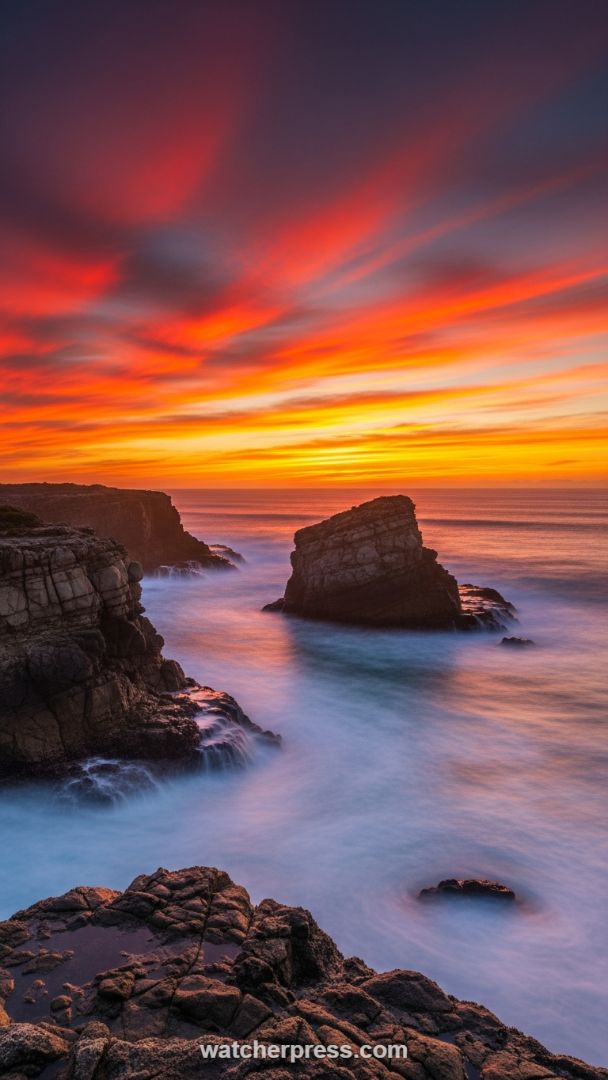
While this dramatic seascape showcases the power of long exposure photography, the fundamental settings used to achieve this effect are critical for mastering low-light event photography. Capturing the intense contrast between the vibrant, fiery sunset and the dark, textured foreground requires meticulous control over exposure time and dynamic range. This image illustrates how slowing the shutter speed allows the camera to gather maximum available light while transforming movement—whether water, light trails, or background blur—into a silky, artistic element.
- Extended Shutter Speed (2+ Seconds): The blurring of the ocean into a smooth, ethereal mist demonstrates the use of a very slow shutter speed, which is essential for maximizing light capture in deep twilight or dimly lit venues without resorting to excessively high ISOs.
- Low ISO Priority for Quality: Despite the darkness, maintaining a base or very low ISO (e.g., ISO 100-200) is necessary when using a tripod and long exposure. This minimizes noise and preserves the deep saturation and fine detail visible in the rocky textures and the gradient of the sky.
- Dynamic Range Management & Post-Processing: The extreme difference between the bright sky and the shadowed cliffs requires careful exposure bracketing or the use of Graduated ND filters (in landscapes) to ensure detail is retained in both the highlights (sky) and the shadows (rocks). This mimics the need to balance harsh stage lighting with dark ambient backgrounds in event settings.
Mastering these slow-shutter techniques in controlled environments prepares the photographer to confidently manage complex lighting and motion in real-time, high-pressure event scenarios.
Manual Precision: The Critical Gear Selection for Low-Light Film Events

While digital settings offer incredible flexibility, mastering low-light environments, especially in candid or wedding photography, often requires a return to fundamental, precise tools. This selection showcases the critical components necessary for manual control and impeccable exposure: high-speed film, fast prime lenses, and dedicated light metering, ensuring perfect results even when ambient light is scarce.
- Fast Prime Lenses: Essential wide-aperture optics (likely f/2.0 or wider) designed to maximize light capture, enabling faster shutter speeds and minimizing motion blur when shooting candidly in dimly lit venues.
- Dedicated Incident Light Meter: A crucial tool for eliminating exposure guesswork in challenging mixed lighting, providing accurate readings independent of the subject’s reflectance, which is vital for achieving perfect film exposure.
- Selection of High-Speed Film: A diverse range of 35mm film emulsions allows the photographer to choose the optimal ISO (e.g., 400 or 800) to balance desired grain structure and necessary light sensitivity for the specific event environment.
Successful low-light photography hinges not just on in-camera settings, but on the meticulous selection and preparation of high-quality, reliable manual gear before the event begins.
High-Contrast Intimacy: Harnessing Available Light for Bridal Prep Details
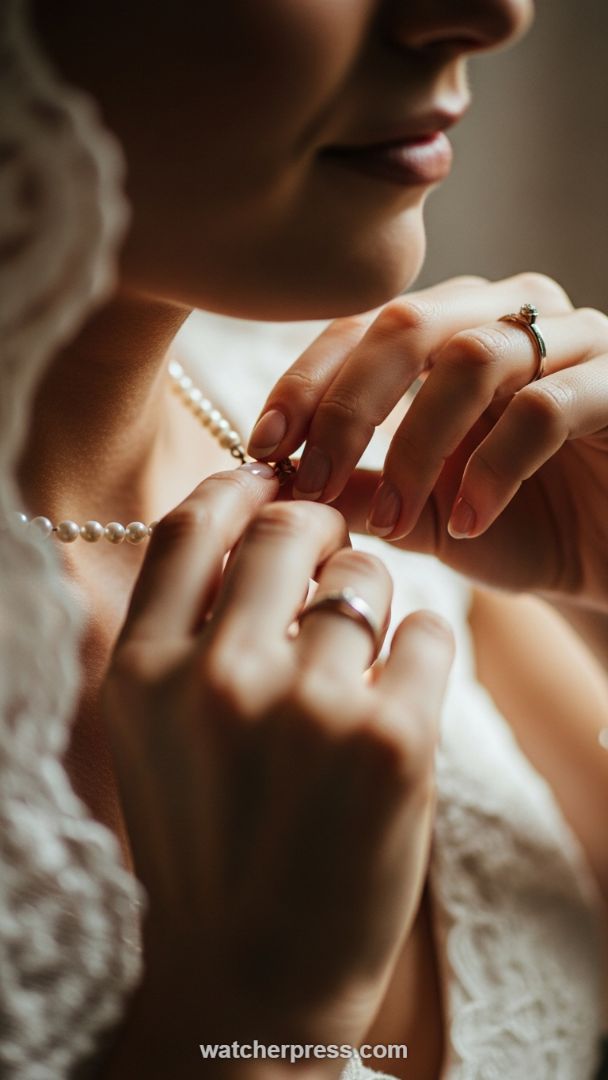
Capturing the delicate moments of preparation often means working within challenging, dynamic light sources, such as a single window or doorway. This intimate low-light portrait focuses tightly on the bride securing her pearl necklace, demonstrating the power of available light to create depth and emotion. Achieving this shot requires specific settings that prioritize light gathering and selective focus to draw the viewer directly to the hands, the pearls, and the significant wedding jewelry.
- Ultra-Wide Aperture (f/1.4 – f/2.8): Essential to maximize the scarce available light and render the background into soft, dark oblivion, isolating the subject’s hands and the intricate details of the pearl clasp.
- Spot Metering for Highlights: Crucial for reading the light specifically on the brightest element—the skin and pearls—ensuring they are perfectly exposed and retain detail, allowing the surrounding areas to naturally fall into deep, rich shadows for a dramatic low-key effect.
- Precise Single-Point Focus: Given the extremely shallow depth of field, utilizing a single focus point directly on the necklace clasp or the engagement ring ensures critical sharpness on the most meaningful elements of the composition, freezing the candid action.
This technique transforms a simple candid moment into a timeless, textural study of contrast and anticipation.
Utilizing Macro Focus and Wide Apertures for Capturing Delicate Detail
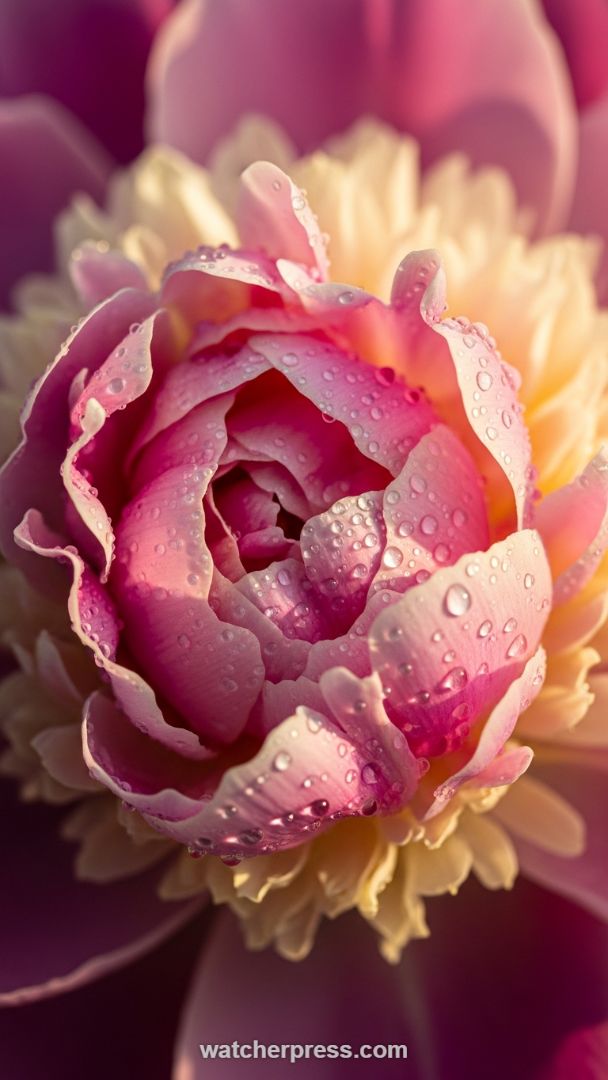
This stunning macro photograph, though not a direct event shot, perfectly illustrates the mastery required in low-light detail work—a technique vital for capturing intricate wedding elements like flowers or rings. Achieving this level of focus and separation demands precise control over aperture and exposure compensation. The heavy water droplets, acting like tiny lenses, highlight the camera’s ability to render critical sharpness even under soft, directional lighting, while the rich color gradient demonstrates careful white balance management.
- Wide Aperture Selection (f/2.8 or wider): Essential for achieving the dramatic shallow depth of field, beautifully isolating the central petals and creating the creamy, out-of-focus background (bokeh).
- Pinpoint AF-S Focus: Utilizing single-point autofocus ensures critical sharpness is achieved specifically on the water droplets and the immediate texture of the petals, preventing focus hunting in low contrast areas.
- Exposure Compensation Management: A slight positive adjustment to EC may be necessary to ensure the pink and yellow tones remain vibrant and correctly exposed, preventing the camera from underexposing due to the bright highlights reflecting off the water.
This result proves that mastering depth of field and exposure compensation is crucial for elevating both candid portraits and intricate detail shots in challenging lighting conditions.
Achieving Flawless Backlit Portraits During Golden Hour Events
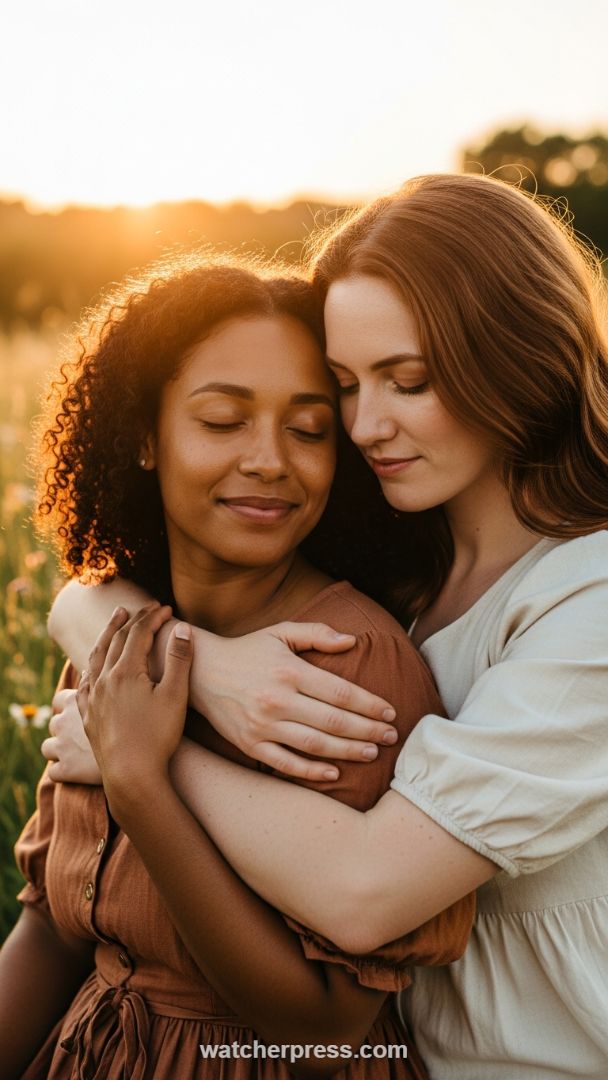
This intimate portrait showcases the power of utilizing natural golden hour backlighting to create depth and emotion. While challenging due to the extreme brightness directly behind the subjects, mastering exposure compensation and metering modes is crucial for ensuring the faces remain properly exposed and the critical rim light effect is achieved without blowing out the highlights.
- Rim Lighting & Exposure Control: Utilizing spot metering or matrix metering with slight negative exposure compensation (-0.3 to -0.7 EV) ensures the intense sun flare provides a defining rim light without clipping the crucial highlights in the sky or the subjects’ hair.
- Shallow Depth of Field (DoF): A wide aperture (f/1.8 to f/2.8) isolates the couple from the busy background, enhancing the intimacy of the moment and rendering the surrounding field into a soft, creamy bokeh.
- Optimizing Warmth via White Balance: Setting a custom or high Kelvin White Balance (around 6000K+) maximizes the natural golden tones of the sunset, amplifying the romantic and warm aesthetic essential for candid wedding and engagement coverage.
By prioritizing correct exposure for the faces in high-contrast situations, photographers can consistently capture these rich, emotionally resonant candid moments.
Utilizing Dramatic Backlight to Create Iconic Silhouette Wedding Portraits.
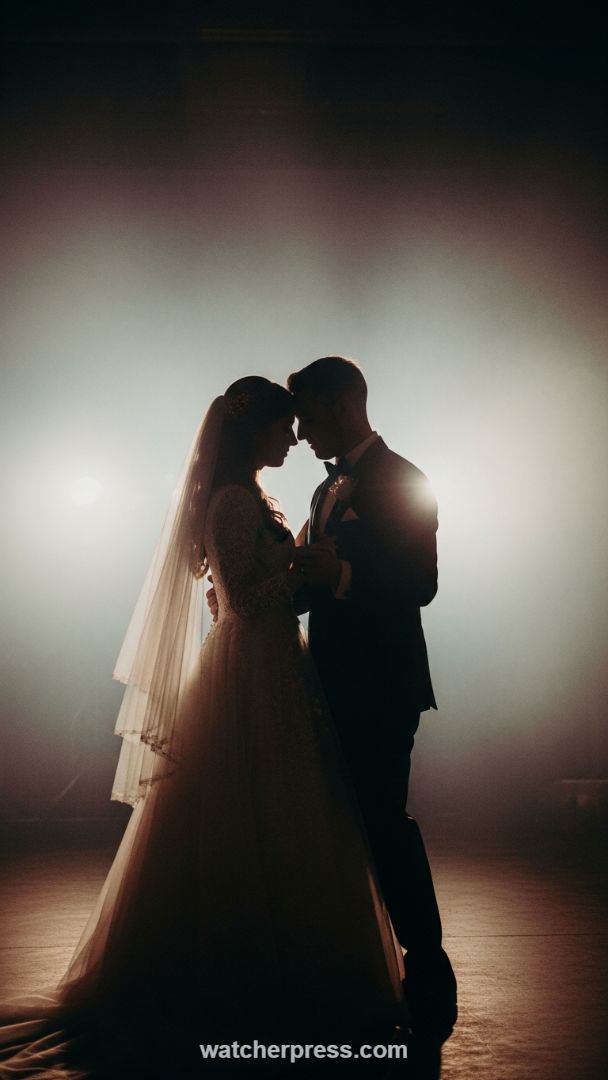
This image perfectly illustrates the power of intentional backlighting to transform a dark reception space into a dramatic portrait studio. Instead of fighting the darkness, this technique embraces it, utilizing a high-powered light source positioned directly behind the couple to separate them from the background and create a stunning, romantic silhouette effect during their first dance or a staged moment. Achieving this requires precise control over flash power and ambient light suppression.
- Strategic OCF Placement: The primary light source (often a powerful off-camera flash or continuous LED) is placed low and directly behind the couple, aimed toward the camera. This placement creates a bright, hazy halo that defines the edges of the subjects.
- Ambient Light Suppression: Camera settings (fast shutter speed, low ISO) must be dialed in to severely underexpose the ambient room light, ensuring the background detail disappears and the subjects remain dark, maximizing the silhouette contrast.
- Focus on Form and Emotion: Since detail is intentionally lost, the focus shifts entirely to the subjects’ posture, connection, and the clean lines of their profile, making the moment profoundly intimate and iconic.
This powerful lighting setup ensures emotional impact and avoids the flat, muddy look often associated with standard on-camera flash in dark environments.
Utilizing Ambient Light: Maximizing Color Saturation and Bokeh in Wet, Urban Low-Light Scenes

This image showcases the dramatic potential of maximizing ambient light sources—like neon signs and street lamps—in challenging, wet conditions. For event photographers, understanding how to use reflective surfaces to amplify color and depth of field is crucial, especially when standard flash is undesirable for candid shots. The shot highlights sharp foreground textures contrasting with distant, soft background bokeh, creating a dynamic and moody urban narrative.
- Shallow Depth of Field (DoF): Achieved via a wide aperture (f/2.8 or wider) to draw the viewer’s eye down the reflective street, transforming distant lights into soft, pleasing bokeh that isolates the environmental atmosphere.
- Reflective Color Amplification: The wet street acts as a highly effective mirror, doubling the intensity and saturation of the magenta and cyan neon sources, a strategic technique vital for adding visual drama and rich color without relying on external lighting.
- Texture and Grain Control: Utilizing a mid-range ISO (800-1600) balanced with a controlled shutter speed ensures the sharp, gritty texture of the rain-splattered asphalt is maintained while preventing excessive noise in the deep blue shadow areas.
Achieving this level of atmospheric control requires precise camera settings that prioritize both light gathering and intentional color rendition, essential skills for mastering candid low-light environments.
The Power of Contrast: Using Directional Light to Define Geometry in Low-Light Architecture
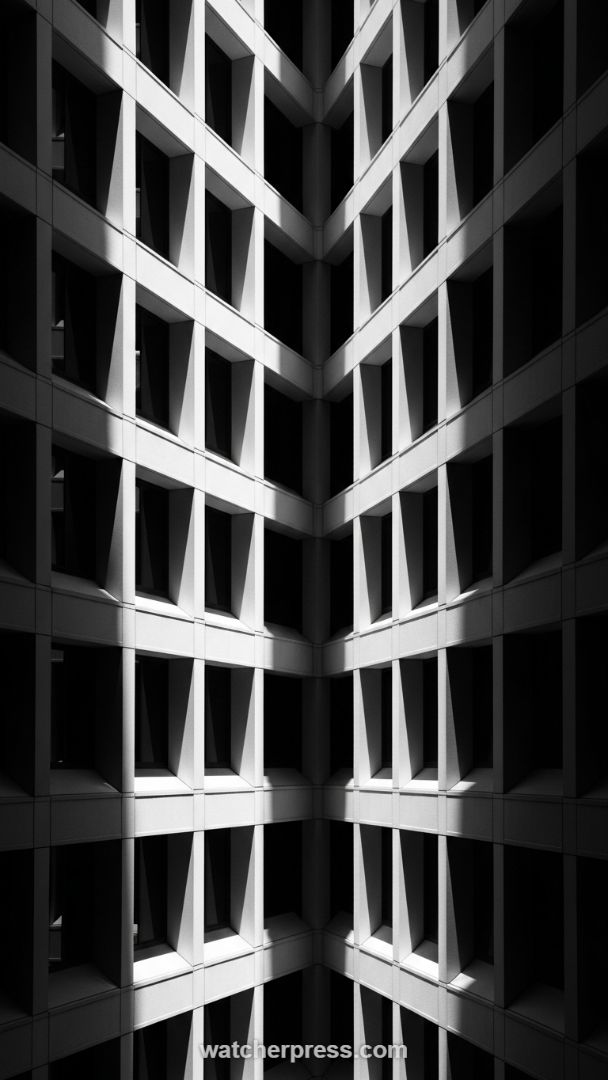
While this abstract architectural study captures static geometry, it perfectly illustrates the principles of extreme contrast management necessary for dramatic low-light and candid event photography. Mastering the interplay between deep shadows and brilliant highlights—known as chiaroscuro—is crucial when working with harsh, directional light sources often found in dimly lit venues. The settings required to achieve these deep blacks and crisp whites must prioritize dynamic range protection, ensuring the brightest areas (like window light or spotlights) don’t blow out while allowing the shadows to define the composition.
- Exposure Compensation for Drama: Achieving this level of contrast requires intentional underexposure (often -1/3 to -1 stop) to deepen the blacks and maximize the dramatic, graphic quality of the scene. This technique translates directly to candid shots where you want the subject highlighted against a dark background.
- High-Contrast Tonal Separation: The successful black and white conversion relies on meticulously separating the tones. In low-light environments, adjusting the clarity and contrast sliders in post-production is essential to turn subtle ambient light into defining geometric lines and strong textural elements.
- Utilizing Negative Space: The massive, deep black areas serve as powerful negative space, guiding the viewer’s eye toward the illuminated architectural grid. Applying this principle in event photography means allowing large areas of shadow around your subject to enhance focus and emotional impact.
By learning to meter and control these extreme light ratios, photographers can transform challenging low-light environments into opportunities for powerful, graphic storytelling.
Mastering Spot Metering for Dramatic Light Slicing in Low-Light Portraits

When ambient light is minimal, photographers must become masters of light placement and contrast. This powerful black and white image demonstrates the effectiveness of utilizing a single, hard beam of light (often achievable using a snoot, grid, or natural window slit) to create a dramatic chiaroscuro effect, isolating the subject’s eyes and expression from total darkness. Achieving this level of mood and impact in low-light wedding or event settings requires specific, aggressive camera settings to ensure the highlights retain detail while the shadows fall completely to black.
- Precise Spot Metering: To ensure the narrow band of light on the face is perfectly exposed without clipping, utilizing Spot Metering focused directly on the brightest highlight (the eye or cheekbone) is essential, overriding the camera’s tendency to brighten the overwhelming darkness.
- Utilizing Wide Apertures (f/1.4–f/2.8): While the depth of field is less critical due to the subject isolation, a wide aperture is necessary to maximize the light hitting the sensor, allowing for lower ISOs and faster shutter speeds crucial for capturing sharp candid expressions.
- Aggressive Low-Key Conversion: Post-processing involves a deliberate monochromatic conversion, often pulling the black point deep into the shadows and increasing contrast to enhance the dramatic separation between the illuminated skin and the surrounding void.
By focusing the exposure exclusively on the critical element of light, photographers can transform challenging low-light conditions into striking, emotionally resonant candid moments.
Precise Metering for High-Contrast Fashion in Overcast Conditions
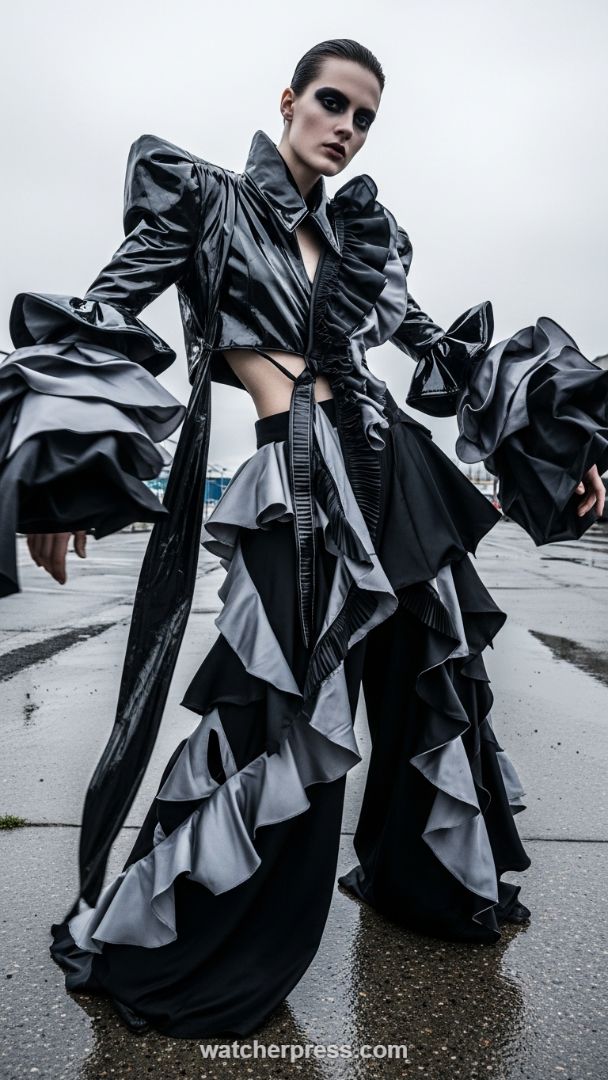
This image demonstrates exceptional dynamic range handling under challenging, diffused ambient light. While the environment is outdoors, the flat, overcast sky acts as a massive softbox, demanding precise metering to capture the highly specular reflections of the patent leather jacket without losing critical detail in the voluminous black and grey ruffles. Mastering this balance between highlights and deep shadows is a core technical skill directly transferable to complex, high-contrast event and low-light wedding scenarios.
- Spot Metering Accuracy: The successful rendition of the highly reflective patent leather jacket against the flat, bright background indicates the strategic use of spot or partial metering, preventing the camera’s meter from underexposing the main subject due to the large, bright ambient light source.
- Maintaining Shadow Detail (Exposure Compensation): Despite the dominant black tones and deep folds in the outfit’s ruffles, the image retains subtle texture and separation, suggesting careful use of manual exposure or a slight negative exposure compensation to achieve rich blacks without completely crushing the mid-tone detail.
- Managing Environmental Reflections: The wet ground provides subtle, textural reflections that add depth. Capturing these without blowing out the highlights requires careful attention to the histogram, ensuring the exposure settings (likely a lower ISO combined with a wider aperture) prioritize detail across the entire tonal spectrum.
Successfully managing contrast and texture detail in subdued natural light, as shown here, is a foundation for achieving professional results in complex indoor event and candid wedding lighting setups.
Mastering the Detail Shot: Isolating Soft Tones and Crisp Textures in Wedding Stationery Flat Lays
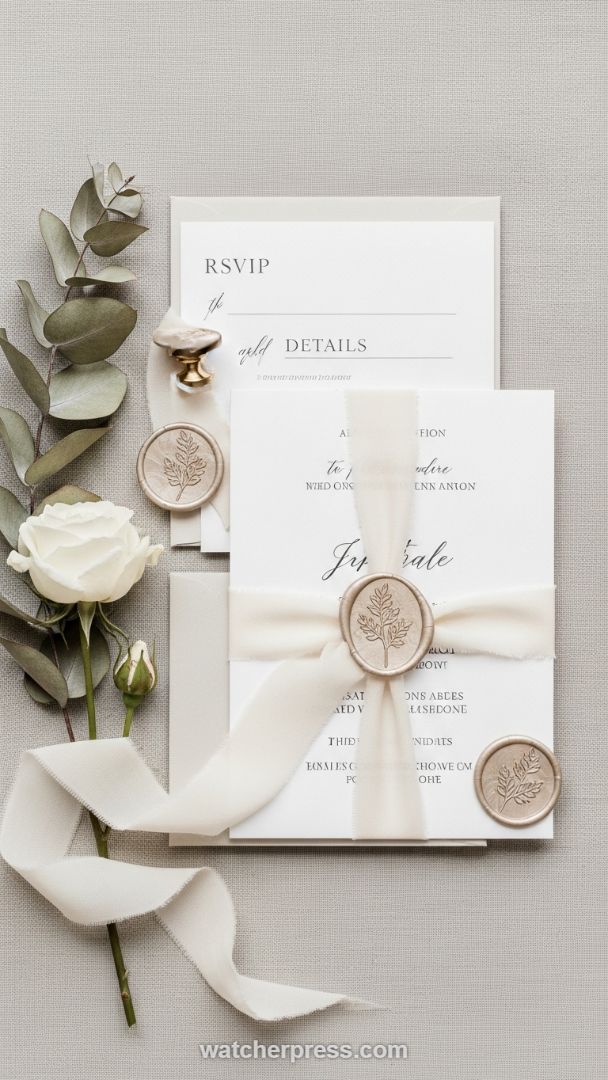
Capturing the essential wedding details, such as the stationery suite, requires meticulous attention to light and color consistency, especially when shooting indoors or in potentially dim bridal suite environments. This elegant flat lay showcases the challenge of balancing pure whites, delicate cream ribbons, and rich metallic accents without blowing out highlights or introducing distracting color casts. Achieving this clean, luxurious aesthetic demands precise control over aperture and a dedicated approach to White Balance settings.
- The subtle gradient of neutral tones, from the textured gray background to the bright white invitation stock, necessitating a custom Kelvin setting or precise White Balance correction to prevent underexposure or unwanted blue/yellow color shifts that compromise the purity of the paper.
- The shallow depth of field (DoF) used to isolate the primary invitation, the intricate wax seal, and the white rose, requiring a carefully chosen aperture (e.g., f/2.8 to f/4) to maintain critical sharpness on the focal points while beautifully softening the surrounding background elements.
- The rich textures of the raw silk ribbon and the detailed eucalyptus leaves, which require adequate sharpness and minimal noise (via controlled ISO) to ensure every tactile element is rendered clearly, emphasizing the quality of the wedding accouterments.
These crucial detail shots prove that even the most static elements require dynamic camera settings to translate their luxurious quality into a stunning visual memory.
Achieving Critical Sharpness: The Role of Tripods and Controlled Lighting in Low-Light Scenarios

When ambient light is insufficient or highly directional, maximizing camera stability is paramount to utilizing slower shutter speeds or narrow apertures without introducing shake. This dramatic studio setup, characterized by its sharp, focused light beam, illustrates the high-contrast environments often encountered in dimly lit event spaces or dance floors, necessitating deliberate exposure settings and unwavering support.
- Foundation of Stability: Utilizing a robust tripod allows photographers to leverage slower shutter speeds (e.g., 1/30th to 1/8th of a second) at lower ISOs, minimizing digital noise while capturing static elements with maximum clarity.
- High-Contrast Exposure Control: The dramatic spotlight effect demands precise metering—often spot metering—to protect highlights and manage deep shadows, requiring manual mode mastery (M) to lock in consistent exposure settings despite varying light intensity.
- Lens Selection and Vibration Reduction: While fast glass (f/2.8 or wider) is essential, pairing a telephoto lens with a stable base ensures that motion blur is eliminated, allowing the photographer to choose the optimal depth of field rather than being forced to shoot wide open due to instability.
Masterful low-light photography is a balance between optimized camera settings and the essential gear that ensures those settings translate into tack-sharp, noise-free results.
Achieving Cinematic Contrast: The Art of the Twilight Wedding Silhouette.

This striking image demonstrates the powerful impact of deliberately underexposing a subject against a dramatic, high-contrast background. Mastering the twilight silhouette requires precise metering and composition, transforming the natural low-light environment into an intensely emotional scene. By positioning the couple directly against the brilliant strip of the setting sun, the photographer maximizes the emotional resonance of the deep colors found in the sky while ensuring the couple’s profile and form remain the central focus through perfect shadow exposure.
- Exposure Compensation for Silhouette: Utilize negative exposure compensation (typically -1.5 to -2.5 stops) or spot meter directly on the brightest part of the sunset horizon. This ensures the brilliant colors are saturated and retained, forcing the subjects into a pure, high-contrast silhouette.
- Strategic White Balance: Employ a manual or preset White Balance (such as Cloudy or Shade) to exaggerate the warm orange and red tones of the sunset, while simultaneously deepening the cool, indigo hues of the upper atmosphere for a cinematic color split.
- Maximizing Depth and Detail: Use a moderate aperture (f/5.6 to f/8) combined with a low base ISO (e.g., ISO 100-400) to ensure maximum sharpness and detail retention in the textured, dramatic clouds and the vibrant color gradation of the fading light.
This high-impact technique transforms a simple portrait into a timeless, emotional piece defined by light and shadow, proving that sometimes, less light reveals more drama.
Isolating Intimacy: Utilizing Wide Aperture for Emotional Low-Light Candids

This image exemplifies how critical camera settings can transform a challenging, low-light indoor environment into a deeply emotional portrait. The masterful use of a very wide aperture (likely f/1.8 or lower) was paramount in separating the delicate subject matter from the busy, distracting background, drawing immediate attention to the profound connection captured in the hands.
- Extreme Subject Isolation: The shallow depth of field creates a beautiful, creamy bokeh effect, completely blurring the hospital or indoor background. This isolation technique ensures the viewer’s eye focuses solely on the texture and detail of the hands.
- Accurate Low-Light Focusing: Despite the extremely narrow plane of focus necessitated by the wide aperture, the focus point is critically sharp on the baby’s fingers and the adult’s hand, demonstrating precise AF calibration essential for candid moments.
- Warm Backlight Management: The soft, warm glow originating from the background (likely an artificial light source) is effectively handled, providing rim lighting and ambiance without blowing out highlights, achieved through careful exposure compensation and dynamic range management.
Mastering these aperture and focus techniques allows photographers to consistently capture the delicate, fleeting moments that define truly impactful candid event and wedding photography.
Utilizing Ambient Light to Detail Flowing Fabric on Grand Staircases
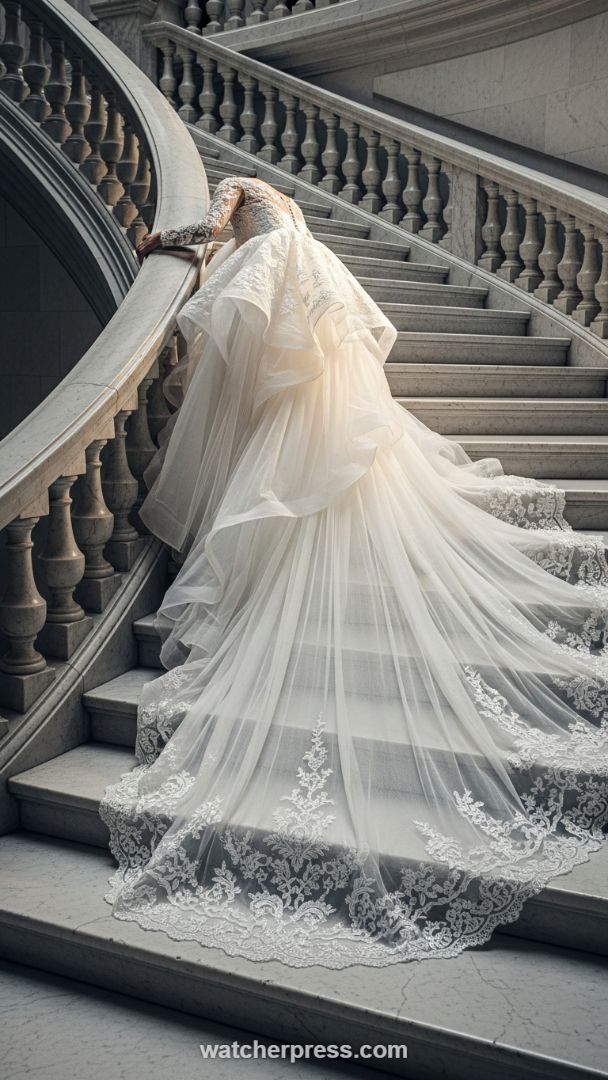
Capturing the intricate flow and texture of a wedding gown train against the muted tones of a grand marble staircase requires careful metering and maximizing ambient light. This scenario demands a setup that preserves detail in both the bright white fabric and the shadowed architectural elements without blowing out highlights or losing texture to noise. Achieving this dramatic, richly textured shot necessitates balancing a moderately high ISO with a depth of field sufficient to render the entire sweep of the fabric sharply.
- Moderate Aperture (f/4.0 – f/5.6): While low-light often demands a wide open aperture, maintaining definition across the long, flowing train requires a slightly narrower stop. This ensures the lace detailing remains sharp as the fabric cascades down the steps, preventing the foreground or background from becoming too distracting.
- Strategic Exposure Compensation (+0.3 to +0.7 EV): When shooting brilliant white fabric in a potentially underexposed environment, the camera’s meter will often attempt to render the white as mid-gray. Applying positive exposure compensation is critical to ensure the dress maintains its pure white luminosity while avoiding clipping the highlights.
- Managed High ISO (800-3200): Since flash is often distracting in these architectural spaces, reliance on ambient light is key. Utilizing an ISO setting that is high enough to allow for a sharp shutter speed (e.g., 1/125s) but managed enough to prevent aggressive noise allows the photographer to capture the movement and scale of the moment naturally.
By optimizing these settings, photographers can achieve dramatic, noise-managed images that emphasize both the grand scale of the venue and the delicate elegance of the bridal attire.