Uncover the 7 non-negotiable elements of truly luxury interior design. Master the secrets of high-end aesthetics, premium quality, and timeless elegance for your home.
The Art of Material Cohesion and Bespoke Comfort
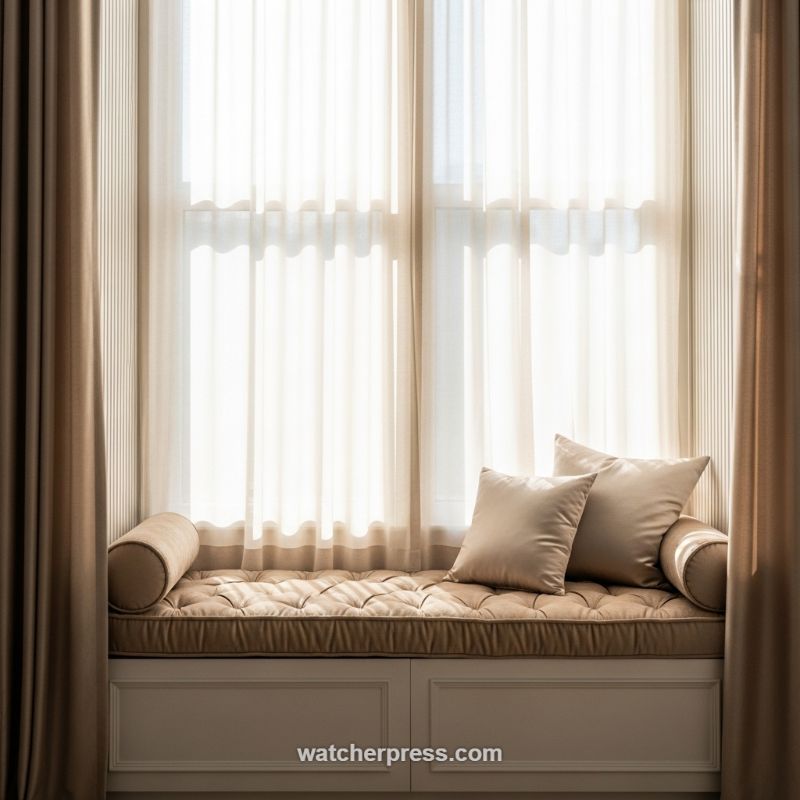
Truly luxury interiors move beyond mere aesthetics, prioritizing bespoke comfort and seamless integration. The image illustrates a non-negotiable element of this philosophy: custom, built-in millwork that serves both function and design. When planning an intimate space like a window seat or reading nook, treat the cushioning not as an afterthought but as a core piece of upholstered furniture. Opt for deep, high-density foam cushions finished with luxurious detailing, such as deep button tufting (as seen here) or expert piping, which signals high-level craftsmanship. The use of premium, tactile fabrics—like velvet, microsuede, or fine linen—in a cohesive monochromatic palette ensures the space feels calming, substantial, and architectural, rather than simply furnished. Furthermore, ensure the built-in base incorporates storage solutions, maximizing the utility of the space without sacrificing the clean, sophisticated lines necessary for a luxury aesthetic. A tailored approach elevates a common feature into a signature design moment.
Expert material layering is crucial for defining the luxurious ambiance. Note the masterful use of window treatments, which are always layered in high-end design. Sheer voiles are hung closest to the window to diffuse natural sunlight, transforming harsh glare into a soft, ethereal glow—a quality designers often seek to replicate the ‘golden hour’ light throughout the day. This soft light is vital for enhancing the rich texture of the seating area. These sheers are paired with heavy, full-length drapes, often made from substantial materials like heavyweight velvet or silk blend, providing essential acoustic dampening, thermal control, and a dramatic, grounding frame. When selecting textiles, ensure the full drapery hangs with significant fullness (ideally 2.5 to 3 times the window width) to achieve deep, rich pleats that drape sumptuously. Maintaining a consistent color family across all textiles, from the sheer curtains to the heavy drapes to the seat cushion and pillows, creates visual harmony and enduring sophistication.
Finally, the finishing textiles and accessories must reinforce the tailored comfort. For a built-in bench, bolsters are a strategic addition, providing structure and definition at the corners, making the built-in feel more like a piece of bespoke seating rather than a simple bench. Square throw pillows should complement the cushion’s fabric but can introduce subtle textural contrast—perhaps a slight sheen against a matte tufting—to add depth without disturbing the calm monochromatic scheme. For luxury execution, ensure pillow inserts are feather or down-filled to provide a lasting, soft ‘chop’ and superior support. Every textile choice, from the density of the curtain pleats to the quality of the cushion tufting, contributes to the non-negotiable feeling of enveloping comfort and quiet grandeur that defines true luxury interior design.
The Sophistication of Filtered Light: Elevating Window Treatments
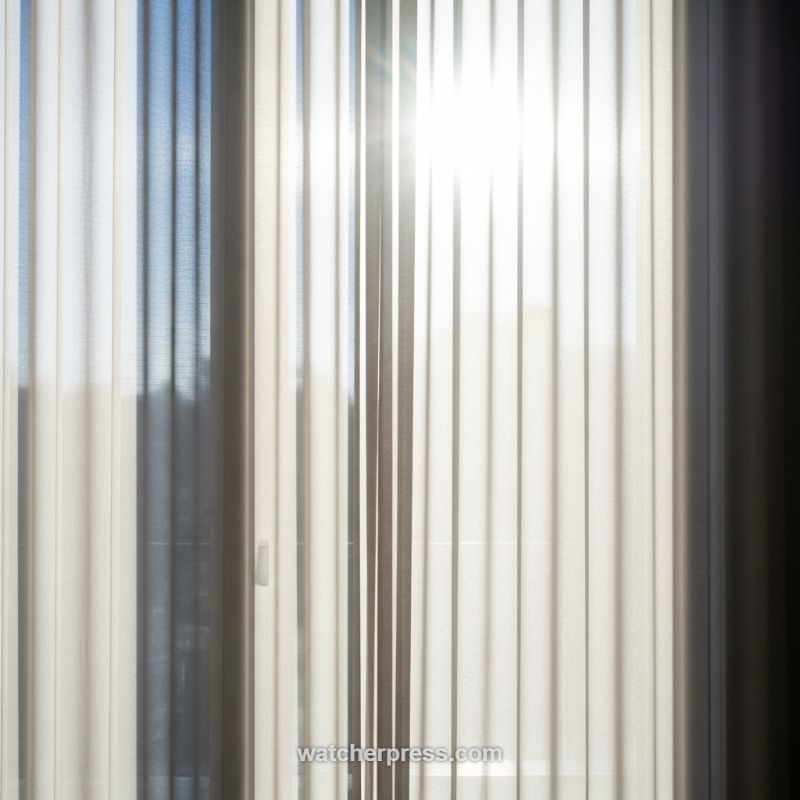
True luxury design recognizes that light is the single most powerful architectural material. The image exemplifies this through the use of sophisticated vertical window treatments—often motorized sheer drapery or high-end vertical blinds—that don’t just block the sun, but filter and diffuse it into an ambient, soft glow. This filtered light avoids harsh shadows, creating a serene, uniform illumination crucial for highlighting high-quality finishes and curated art collections. When selecting treatments, move past standard PVC or aluminum; instead, opt for woven technical fabrics, linen blends, or translucent specialty materials that offer textural depth even when flat. The visual emphasis on crisp vertical lines also serves a critical function, drawing the eye upward and subtly increasing the perceived height and volume of the space, a non-negotiable hallmark of spacious luxury.
Achieving this seamless aesthetic requires meticulous technical execution. For a truly bespoke look, the hardware must be fully integrated; tracks should be recessed into ceiling pockets or hidden behind architectural fascias to eliminate visual clutter. Automation is mandatory; luxury means controlling intense midday glare with a simple voice command or scheduled scene setting integrated into the home management system. Focus on dual-layer systems where the sheer vertical treatment (as seen here) handles daytime privacy and light quality, while a secondary, heavier drapery provides full blackout capabilities at night. When specifying the fabric, test the “openness factor”—the percentage of light that passes through. A high-end sheer often maintains a 3-5% openness factor, offering just enough connection to the outside world while protecting interiors from damaging UV rays and unwanted visibility.
The final result of this intentional approach to window dressing is a tranquil and highly personalized environment. Filtered light fundamentally dictates the mood of a room—it softens sharp corners, highlights subtle textures in upholstery and stone, and creates a sense of peaceful continuity. In luxury interiors, every detail must serve the holistic experience, and the precise control over natural light signals an environment where comfort, privacy, and aesthetic quality have been prioritized equally. This attention to how light interacts with the space—the subtle, consistent play of shadow and glow across the vertical planes—is a silent testament to the bespoke planning and investment made, transforming a simple window covering from a utility item into an architectural, mood-setting feature.
The Synthesis of Texture and Tone: Elevating Everyday Spaces
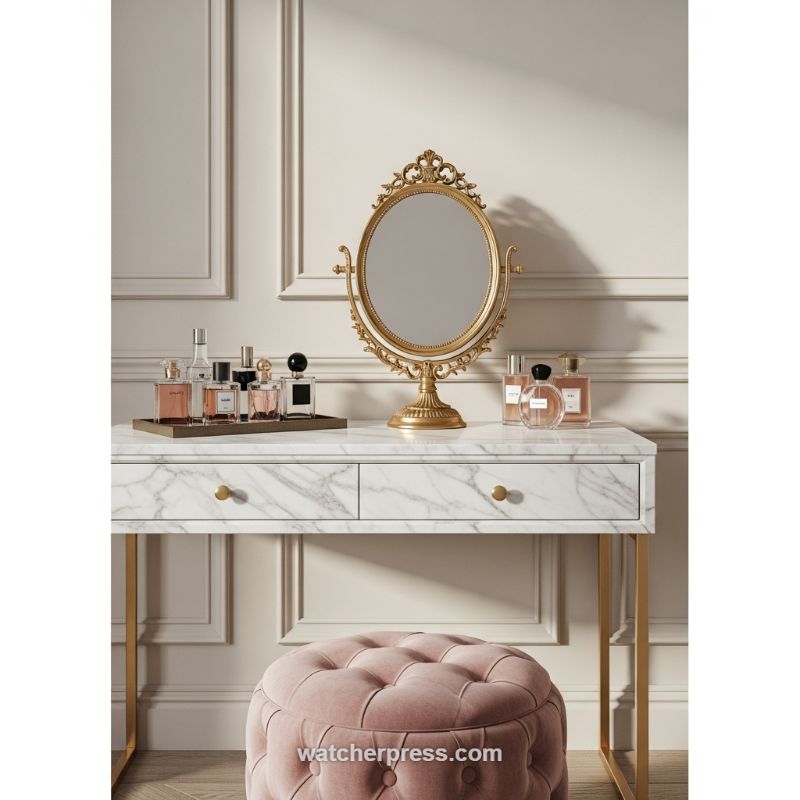
Truly luxurious interior design hinges on the deliberate juxtaposition of premium materials and varied textures. As seen in this elegant vanity setup, the crisp, cool linearity of the white-veined marble countertop creates a stunning contrast with the soft, inviting warmth of the deeply tufted blush velvet ottoman. This strategic pairing of hard and soft, cold and warm, is crucial to achieving depth and tactile richness—a key differentiator between high-end design and mere decoration. The background’s architectural paneling, or boiserie, adds a layer of subtle, timeless structure without competing for attention, while the unified use of polished gold and brass across the mirror frame, drawer pulls, and console legs introduces a regal warmth that ties the entire vignette together. When sourcing materials, prioritize authenticity: real marble, high-density velvet, and quality solid brass will provide the necessary visual weight and permanence required of luxury.
To expertly replicate this material opulence, focus on balancing the visual conversation between your surfaces. If you integrate a strong, heavily patterned surface like marble or exotic wood, soften its dominance by surrounding it with textiles that absorb light, such as silk velvet, mohair, or finely woven cashmere throws. A non-negotiable rule is consistency in metal finish; select one dominant metal tone—whether it’s the warm hue of polished brass or the cool sophistication of brushed nickel—and use it exclusively for all hardware, including furniture accents, mirror frames, and small accessories. This uniformity prevents visual noise and allows the focus to remain on the quality of the primary materials. Furthermore, ensure that the chosen textures are enhanced by proper lighting, allowing shadows to highlight the deep tufting of the seating and reflections to dance off the polished metal and stone surfaces.
Finally, luxury is often revealed in the details and the intentional curation of everyday objects. Notice how the array of perfume bottles is not haphazardly strewn but carefully organized on a sleek, dark, rectangular tray. This technique elevates utilitarian items into a focused, decorative vignette. Expert advice suggests always using trays (whether mirrored, lacquered, or metallic) to group smaller personal items on any flat surface, instantly transforming clutter into a curated display. This attention to detail communicates a level of thoughtful design and meticulous organization that is essential to the luxury aesthetic. By synthesizing rich textures, cohesive metallic accents, and focused presentation, you ensure that even personal spaces like a dressing table become non-negotiable statements of high design.
Flawless Finishes and Meticulous Hardware Selection
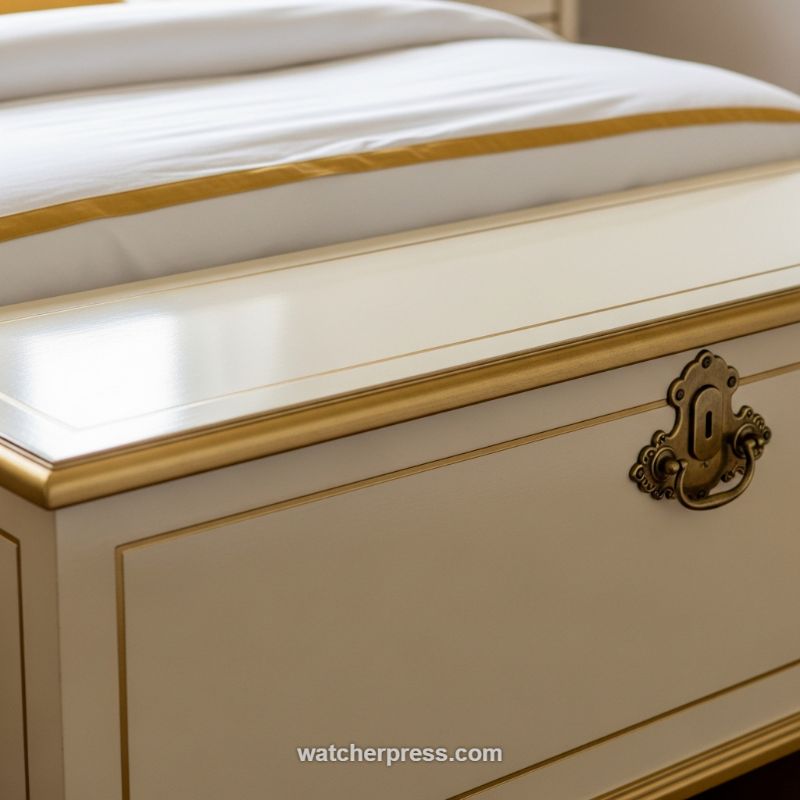
True luxury is often revealed in the finish, moving beyond mere color to focus intensely on texture, application technique, and reflective quality. As demonstrated by this piece, which features a rich, creamy base complemented by high-sheen gold trim, the selection of materials must be exacting. To achieve this standard, opt for high-quality, multi-layer lacquer finishes for wooden elements, which provide a deep, resonant shine that catches the light beautifully. The top surface here showcases a brilliant gloss that subtly contrasts with the slightly flatter, paneled sections on the side, creating visual depth without introducing new colors. When integrating metallics, ensure they are not simply painted but rather fine metallic leafing or a sophisticated metallic paint applied with precision, serving to define and highlight the architectural lines and moldings of the furniture. This level of detailing requires skilled artisans who understand how gloss and matte surfaces interact to elevate a functional item into a sculptural element of interior design.
Hardware is unequivocally the jewelry of interior design, and in luxury spaces, it must never be an afterthought. The close-up reveals an intricate, antique-style brass keyhole escutcheon plate and a coordinating pull handle that are substantial and exquisitely detailed, signifying an intentional design choice rather than a stock fitting. To follow this expert methodology, discard generic fittings immediately. Instead, source specialized hardware that matches the specific historical or stylistic period you are referencing, ensuring the weight and tactile experience of the pull feel substantial and high-quality under the hand. Crucially, the metal tone (in this case, a warm, aged brass) must perfectly harmonize with the metallic accents used elsewhere in the room—such as lighting fixtures, gallery frames, or drapery rods—ensuring a unified visual narrative. This coherence ensures the room feels cohesive and deliberately orchestrated.
The final test of non-negotiable luxury detailing is overall cohesion and integration across the space. Notice how the prominent gold trim on the footboard is deliberately mirrored in the sophisticated piping of the bedding directly above it. This cross-material synchronization signals a fully realized, integrated design vision where no element is accidental or left to chance. To replicate this effect in your own design, treat the room as a singular entity rather than a collection of isolated items. Use the primary accent metal and base color as a unifying motif across different categories: extend the creamy tone to wall paneling or millwork, and incorporate the accent metal tone through embroidery, decorative nail heads on upholstery, or base trim on lighting elements. This meticulous coordination across disparate elements is the hallmark of bespoke design, ensuring the entire room feels custom-tailored for high-level sophistication.
The Non-Negotiable Element: Achieving Depth Through Monochromatic Mastery and Integrated Architecture
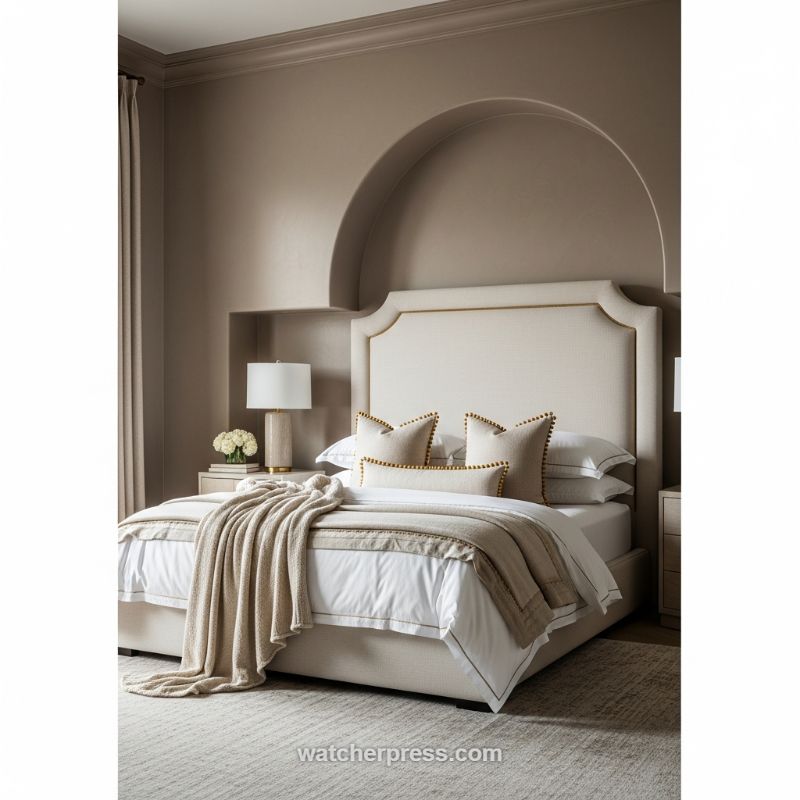
Luxury design never relies on loud statements; instead, it whispers through nuanced execution, specifically mastering depth within a sophisticated monochromatic palette. To replicate the serene sophistication evident here, begin by selecting a primary neutral base—like the deep, warm taupe or greige featured on the walls—and build outward using only tone variations of that base. The key instructional element is layering textiles with distinct textures: a smooth, tightly woven linen for the upholstered headboard, crisp white cotton for sheeting, a thick, plush knit for the throw blanket, and a subtly patterned rug. This tactile variance is crucial; it prevents a neutral room from falling flat. Expert tip: Ensure your bedding incorporates thoughtful detailing, such as contrast stitching or subtle embroidery, to frame the sleep area and establish a high-quality finish often overlooked in mass-market designs.
The transition from a decorated room to a truly luxurious space is often marked by integrated architectural elements. Notice the commanding yet understated recessed arch above the bed; this is a custom structural detail that anchors the room and eliminates the need for busy wall art. When designing your space, identify opportunities to incorporate built-ins, custom molding, or integrated niches that enhance the room’s inherent bones. This provides an elevated framework that suggests permanence and tailored design. Consider how natural light interacts with these elements; the subtle curve of the arch here creates soft shadowing, adding dimension and organic movement to the otherwise static wall color. This level of architectural commitment is non-negotiable for achieving top-tier luxury.
Finally, execute all details with precision, treating every piece as bespoke. The upholstered headboard, with its refined, gently curving silhouette and subtle gold piping, acts as the room’s jewel. The accompanying accent pillows are equally tailored, featuring neat stud detailing that introduces a small pop of metallic warmth, complementing the bedside lamp’s brass footing. When selecting accessories, favor quality over quantity—a single statement lamp with a weighty, natural material base (like marble or stone), and fresh, simple flowers add undeniable luxury without clutter. The instructional takeaway is this: every finish—from the trim on the curtains to the small studs on the cushions—must be high-quality and deliberate, proving that true luxury is found in the intentionality of the seemingly smallest components.
The Foundation of Form: Architectural Integrity and Timeless Stone
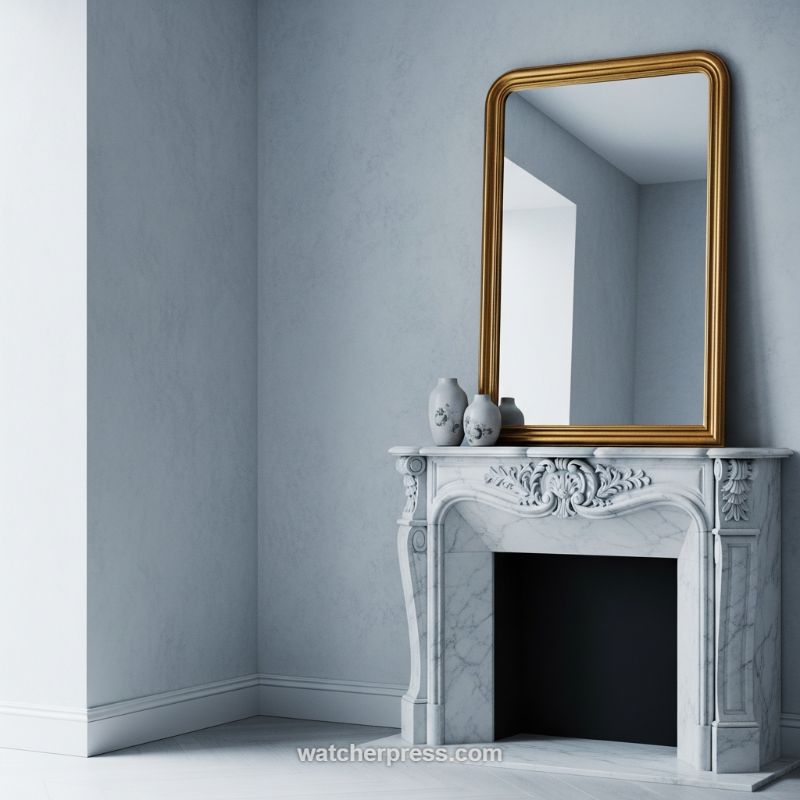
Truly luxury interior design begins not with soft furnishings, but with the immutable architectural skeleton of a space. As seen in this image, the antique white marble fireplace mantel serves as the non-negotiable focal point, immediately establishing a sense of history, permanence, and unparalleled quality. For those crafting a high-end environment, the directive is clear: prioritize fixed, structural elements crafted from natural, noble materials. This highly detailed, carved marble piece contrasts beautifully with the otherwise restrained, textured pale gray walls, illustrating the power of strategic material contrast. Expert advice dictates investing in architectural elements that speak to heritage, whether through restoring original features, or commissioning custom millwork or stonework. Unlike furniture, these elements are permanent fixtures that dictate the atmosphere and value of the property for decades; they must embody flawless craftsmanship and enduring style.
To elevate this architectural base, employ reflective surfaces that maximize light and perceived scale. The large, rounded rectangular mirror, framed in warm, aged gold, is positioned directly on the mantelpiece—a classic styling move that amplifies the impact of the room’s finest features. This mirror doesn’t merely reflect the opposite wall; it captures and distributes light across the textured walls and highlights the crisp white of the marble, adding necessary visual drama without introducing clutter. When selecting reflective pieces for a luxury setting, prioritize substantial scale and rich, patinated finishes. The gold frame, for instance, adds necessary warmth and counterbalances the cool tones of the marble and blue-gray walls, demonstrating how carefully chosen metallics can act as jewelry for a space. Furthermore, the positioning should reflect something beautiful or interesting, avoiding harsh glare and ensuring it visually lifts the ceiling height.
Finally, restraint in decorative styling is the hallmark of elevated luxury. Once the architectural foundation and primary accents (like the mirror) are set, the mantelpiece décor must be minimal and intentional. Here, two small, subtly patterned antique vases flank the mirror base. These objects d’art are chosen for their patina and their capacity to echo the room’s classical style without overwhelming the exquisite carving of the marble below. To achieve this level of refinement, strictly edit down accessories to only those items possessing historical significance, fine artistry, or exceptional material quality. The surrounding environment—the soft, textural plaster wall finish and the subtle white baseboards and light flooring—provides a serene, monochromatic backdrop that allows the high-quality materials (marble, gold, ceramic) to take center stage, proving that true luxury relies on texture and material depth rather than vibrant or competitive color palettes. This strategic simplicity creates an atmosphere of calm sophistication and curated permanence.
Mastering the Art of Layered Lighting and Tactile Luxury
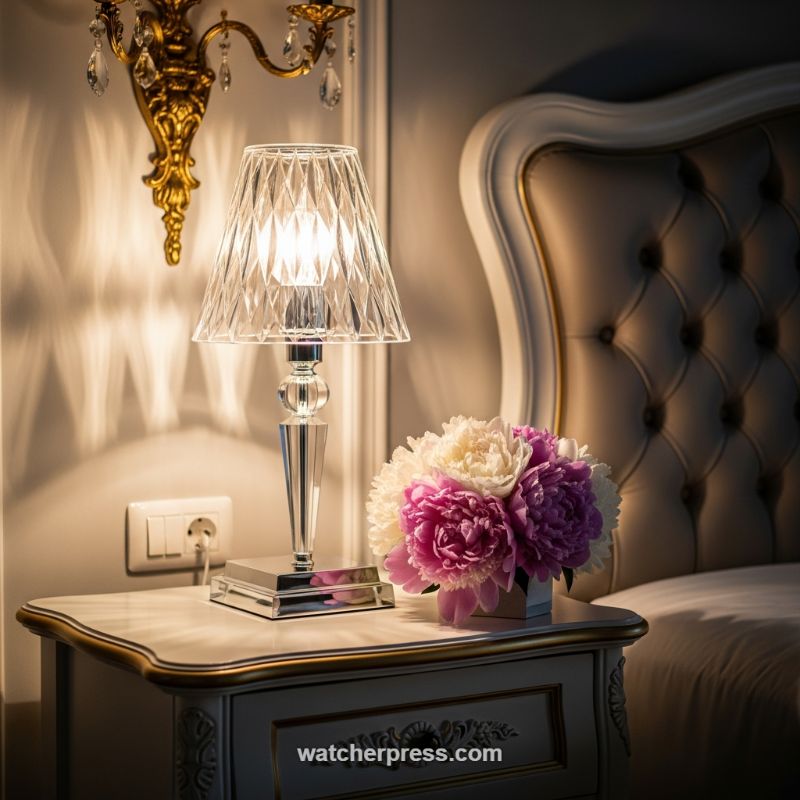
Luxury design hinges on sophisticated illumination that goes beyond mere functionality, demanding a layered approach. As seen in this opulent bedside setting, truly high-end spaces combine architectural fixtures with decorative task lighting. The golden, crystal-draped wall sconce acts as architectural jewelry, casting ambient, warm light upwards, while the bedside lamp provides a focused, yet highly decorative, glow. The expert tip here is to choose fixtures whose design creates visual interest even when off; notice how the faceted acrylic or crystal shade of the table lamp refracts the light, scattering intricate, diamond-like patterns onto the adjacent wall. This dramatic shadow play is a non-negotiable element for high-end ambiance, adding depth, movement, and a kinetic energy to static surfaces, immediately distinguishing a luxury setting from a basic one. Always ensure all light sources operate on a warm color temperature (2700K or lower) and are controlled by dimmers to allow for precise mood adjustment.
True luxury is felt, not just seen, emphasizing the critical role of integrating sumptuous, tactile textures. The image showcases this perfectly with the generous, deeply tufted, upholstered headboard. The deep buttoning and rich material (whether high-grade leather or plush velvet) signal comfort, permanence, and depth. To replicate this sensory experience, designers must prioritize natural, durable, and appealing materials while utilizing deliberate contrast. Pair the soft, enveloping textures of the bedding and headboard with the cool, reflective surfaces of the glass and polished metal lamp base and the high-gloss nightstand top. Furthermore, high-level luxury styling involves incorporating organic, fresh elements: the vibrant bouquet of white and magenta peonies introduces life, color, and natural texture, appealing not just to the visual sense but also the olfactory, effectively elevating the room from simply decorated to exquisitely lived-in elegance.
A signature mark of luxury interior design is meticulous detailing and flawless execution through intentional styling. Analyze the bespoke nature of the nightstand: it features carved detailing, subtle gilded edges, and a polished marble or high-gloss painted surface, suggesting bespoke craftsmanship over mass production. When arranging these vignettes, aim for classic symmetry and balance, which naturally conveys order and tranquility. The lamp and the floral arrangement are positioned to complement each other, maintaining visual equilibrium within the frame. Expert advice dictates that scale is critical; ensure the bedside lamp is perfectly proportional to the nightstand and does not get dwarfed by the grand headboard, while providing adequate, glare-free light. Every component, down to the subtle brass hardware on the drawers and the neat placement of the electrical outlet, must contribute seamlessly to the overall narrative of refined quality and timelessness.
Elevating the Base: Exceptional Millwork and Architectural Authenticity
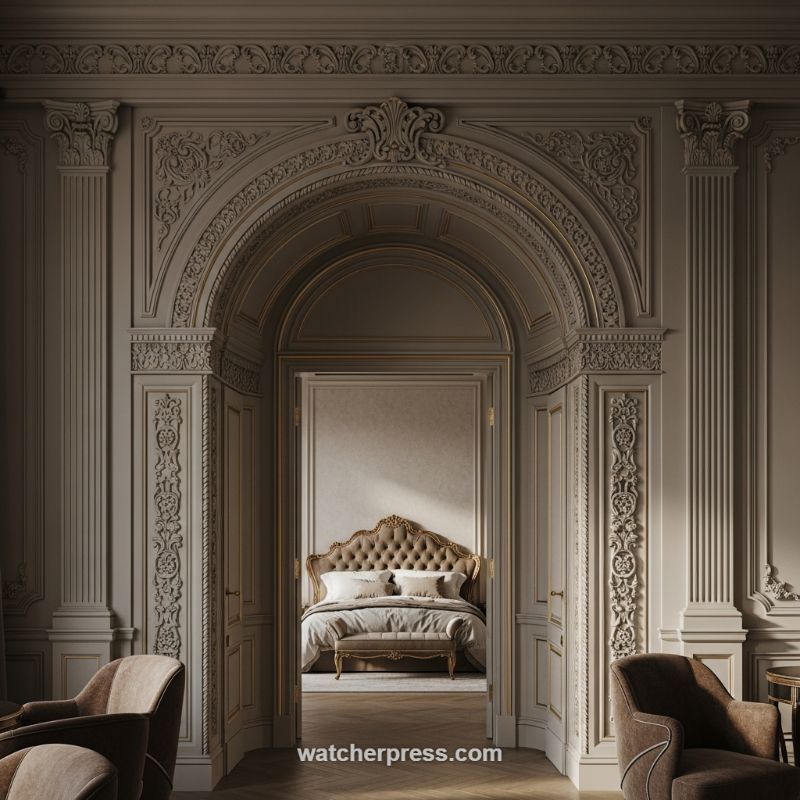
True luxury is built from the ground up, beginning with impeccable architectural elements that imbue the space with heritage and permanence. As demonstrated in this neoclassical vignette, the non-negotiable element is custom, layered millwork. Instead of simple trim, notice the intricate system of fluted pilasters, classical capitals, and the crowning glory: a grand, ornately carved archway. This level of detail elevates the room beyond mere decoration; it is structure as artistry. To achieve this, designers must move past standard stock mouldings, instead opting for high-relief carvings, multilayered cornices, and historically accurate elements. Ensure that every line and shadow contributes to a cohesive, monumental statement. The sheer scale and detailing of the arch frames the subsequent room, creating a visual hierarchy that speaks to thoughtful planning and masterful execution, defining the spatial boundaries with unmistakable opulence.nnThe success of such complex detailing relies heavily on a refined finishing strategy. A maximalist approach to architecture is balanced by a minimalist, monochromatic color palette. Here, a sophisticated greige or taupe serves as the base color, providing depth without visual clutter while allowing the texture of the carvings to stand out. The key technique for amplifying the luxury factor is the subtle application of metallic accents. Observe the careful gilding used only on the raised edges and inner curves of the trim. This strategic use of gold catches the light and emphasizes the relief of the carvings, giving the architecture a three-dimensional quality and historical depth, often associated with classic European interiors. This restraint is critical; the gold enhances the craftsmanship rather than dominates the design, showcasing refinement over flashiness.nnFinally, luxury interior design uses architectural framing to create dramatic focal points and visual continuity. The grand doorway acts as a proscenium, deliberately focusing the eye on the subsequent space—in this case, a sumptuous, tufted bedroom. This technique, known as creating a vista, adds depth and narrative to the home’s layout. Expert tip: When planning architectural elements like this, ensure alignment and symmetry are perfect. The visual line extending from the outer room, through the arch, and onto the framed object (the bed) must be impeccably balanced. Always use high-quality, dense materials for the millwork, often requiring bespoke plaster or wood fabrication, to ensure the crisp edges and deep shadow lines essential for this level of high-end design. This holistic planning—where architecture supports the decor and guides the experiential flow—is the hallmark of truly non-negotiable luxury design.
The Synergy of Historic Craftsmanship and Tactile Textiles
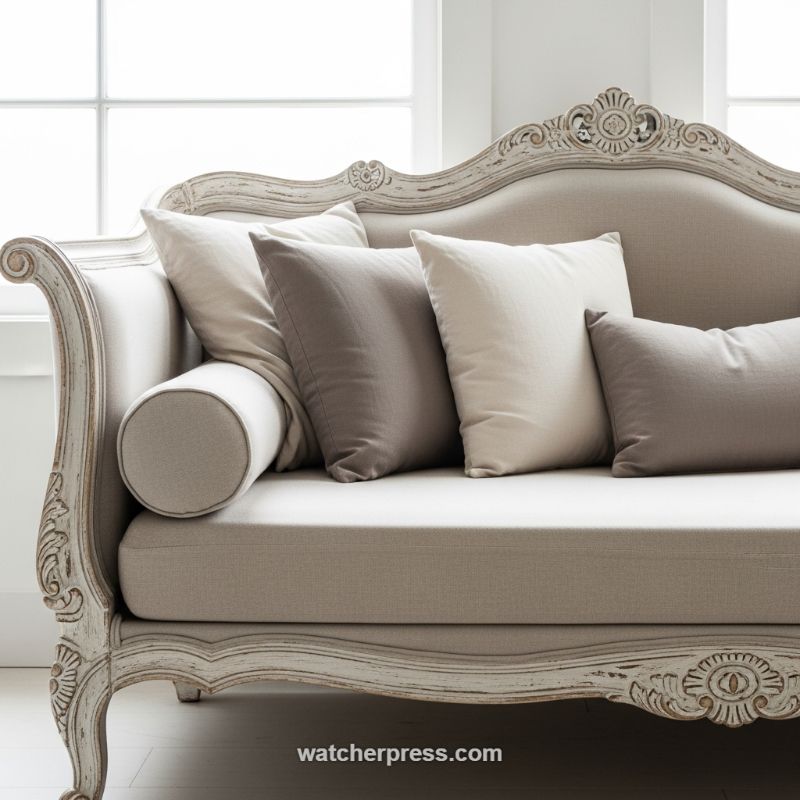
Truly luxurious design begins where mass production ends: with uncompromised craftsmanship and materials chosen for their inherent quality and longevity. The exquisite daybed shown exemplifies this principle, featuring a heavily carved frame suggesting a French Neoclassical or Louis XV revival style. This level of intricate woodworking is a non-negotiable hallmark of luxury, signifying hours of skilled artisanal labor rather than machine fabrication. When selecting furniture, look beyond mere form and examine the finishing details. The distressed, whitewashed patina on the frame is intentional, designed to lend character, history, and softness to the overall aesthetic. To replicate this element of true luxury, seek out items built using traditional methods, whether through mortise and tenon joinery or hand-applied finishes, ensuring that the piece tells a story of heritage and quality that cheap substitutes simply cannot convey.
The second layer of luxury is rooted in the selection of tactile textiles. In this instance, the upholstery and throw pillows feature high-grade natural fibers, likely linen or a durable linen blend, chosen specifically for their depth and texture rather than flashy patterns. The secret to mastering a neutral, sophisticated palette—often seen in the most expensive interiors—is layering textures and subtle tones within the same color family (creamy white, light beige, taupe, and greige). This approach ensures visual interest without reliance on high-contrast colors, which can quickly date a space. Expert advice dictates investing in fabrics with a high martindale rub count for seating, guaranteeing durability. Always opt for natural fibers that drape beautifully and soften over time, such as Belgian linen or high-thread-count cotton velvets, making the act of sitting down a tangible sensory experience.
Finally, the arrangement of cushions transforms a beautiful piece of furniture into a sanctuary of curated comfort. Notice the deliberate layering: a supportive bolster cushion for the armrest, paired with varying sizes of square pillows and a lumbar cushion. This mix of shapes is essential in avoiding a stiff, showroom-like appearance, promoting a sense of relaxed elegance. Instructional Tip: When curating luxury seating, use feather or down inserts—never foam or synthetic fill—to achieve that desirable, slightly wrinkled, lived-in look and superior comfort. Grouping three to five cushions across a daybed or sofa, varying the sizes and dedicating two complementary shades from your primary palette, provides optimal visual balance and functional support, solidifying that the piece is designed for sophisticated living, not just display.
Non-Negotiable #3: Exquisite Detailing and Layering of Finishes
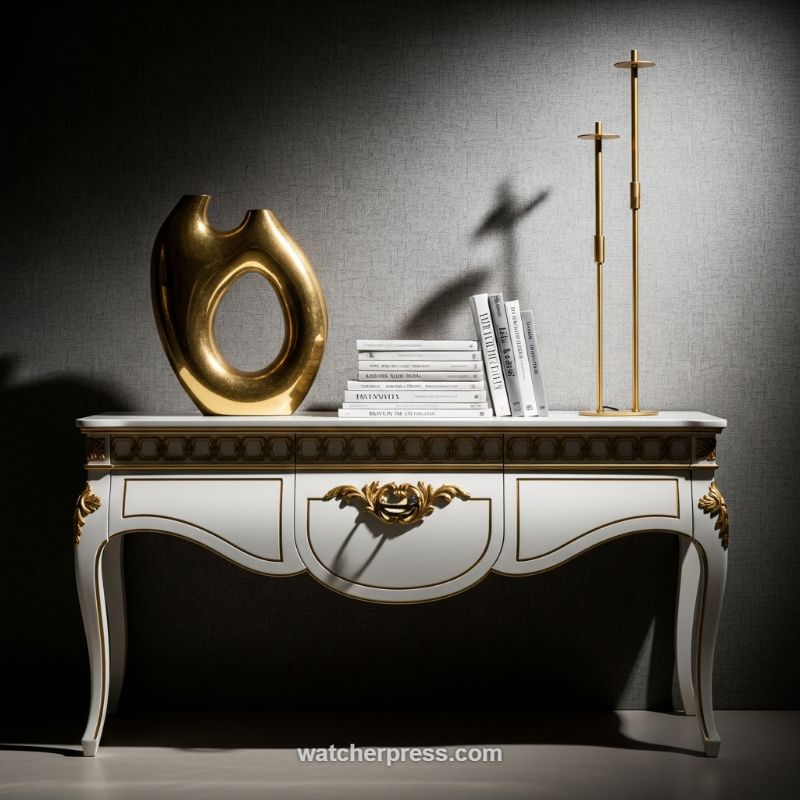
Truly luxurious interior design hinges on an unwavering commitment to detail, material quality, and layered finishes. As seen with this sophisticated console, the anchor piece utilizes high-gloss white lacquer juxtaposed with elaborate gilded ornamentation, transforming functional furniture into a sculptural focal point. Achieving this level of excellence requires selecting pieces where craftsmanship is evident, such as hand-carved elements, detailed moldings, and integrated metalwork. The marble console top adds another textural layer—cool, smooth, and inherently premium—that contrasts beautifully with the warm, detailed wood structure below. When planning your space, inspect potential pieces not just for overall form, but for the precision of their junctions, the depth of their finish, and the authenticity of their materials, ensuring that every centimeter speaks to rarity and quality rather than mass production.
Expert designers understand that visual impact is often achieved through intentional stylistic tension. While the console is deeply rooted in neoclassical or Baroque tradition, the curated accessories inject essential modernity. The highly polished, abstract golden sculpture offers a fluid, organic counterpoint to the rigid lines of the furniture, while its high sheen echoes the gilded accents on the table, creating unexpected harmony. Similarly, the minimalist, tall brass fixtures stand in stark contrast to the ornate base, proving that successful luxury layering involves mixing historical reverence with contemporary minimalism. The ‘how-to’ here is to avoid matching everything. Instead, seek out pieces that possess a shared material (like gold or brass) but divergent styles (ornate vs. sleek, traditional vs. abstract). This technique demonstrates a confident, curated eye, moving the design beyond simple opulence into genuine sophistication.
Finally, the atmosphere of luxury is sealed by deliberate, architectural lighting that highlights these intricate details and layered finishes. Notice how the focused directional lighting acts like a gallery spotlight, creating deep, dramatic shadows that give the entire vignette depth and mood. The gold finishes, both on the console and the decorative objects, become intensely reflective under this illumination, enhancing the richness of the palette. To replicate this effect, abandon broad, ambient light sources. Instead, utilize concealed track lighting or focused uplights and downlights aimed specifically at texture, art, and highly finished surfaces. The intentional use of shadow is just as important as the use of light, providing the contrast necessary to make the high-quality materials—the textured wall, the polished brass, the fine carving—truly pop and define the luxurious environment.
The Non-Negotiable Art of Textural Layering and Functional Opulence
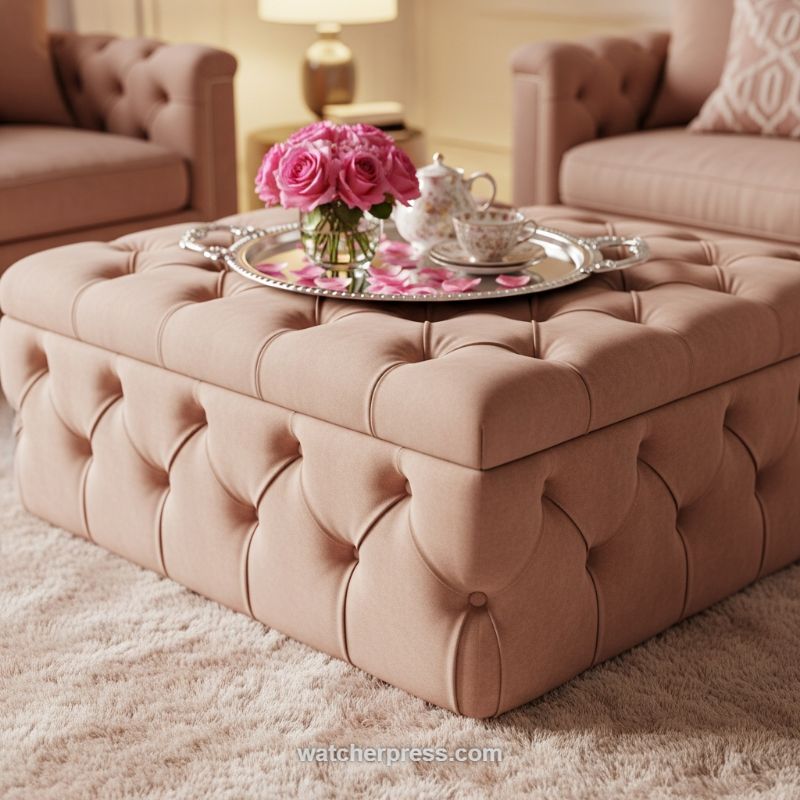
The fifth non-negotiable element of truly bespoke interior design centers on the fusion of tactile texture and multi-functional opulence, exemplified by this deeply tufted storage ottoman. Achieving this requires moving beyond simple form and prioritizing upholstery techniques that communicate superior craftsmanship, such as deep diamond tufting. This technique, labor-intensive and traditionally associated with high-end furniture, provides visual rhythm and depth while demanding flawless execution in material like performance velvet or high-grade leather. When selecting upholstery, focus on materials that offer a rich pile and respond dynamically to light, enhancing the muted blush or mauve tone shown here. This deliberate choice of texture makes the space feel luxurious to the touch, not just the eye, and is further amplified by layering it atop a complementary deep-pile rug, creating a cloud-like foundation that grounds the entire seating arrangement.The ‘how-to’ instruction for maximizing this investment involves leveraging its dual functionality. A large, plush ottoman should never be relegated only to seating or foot resting; in a luxury setting, it must seamlessly convert to a practical coffee table. This transition is achieved by pairing it with a durable, rigid serving element—ideally a mirrored, silver, or highly polished metallic tray, as depicted. The tray provides the stable, hard surface required for delicate items like porcelain tea sets, glassware, or decorative objects, preventing spills while protecting the soft fabric underneath. Crucially, the tray must be generously sized to dominate the surface, yet leave a border of the tufting visible, maintaining the visual integrity of the furniture piece itself. This practice ensures that comfort and utility coexist effortlessly, a defining characteristic of high-end design.Finally, the presentation of curated lifestyle elements is essential for signaling true luxury. The vignette shown—fresh pink roses, a traditional teapot, and scattered petals—turns the functional ottoman into a stage for cultivated leisure. Designers should instruct clients to select accent pieces that tell a story of intentional living: high-quality decorative boxes, weighty art books, or fine ceramic vessels. When applying this styling, maintain a restrained color palette that complements the main furniture tone (here, pinks, silvers, and creams) to ensure sophistication rather than clutter. The overall goal is to use these small, high-quality details to reinforce the room’s overarching elegant narrative, ensuring that every glance at the centerpiece communicates thoughtful design and bespoke living.
The Non-Negotiable Role of High-Couture Bedding and Textiles
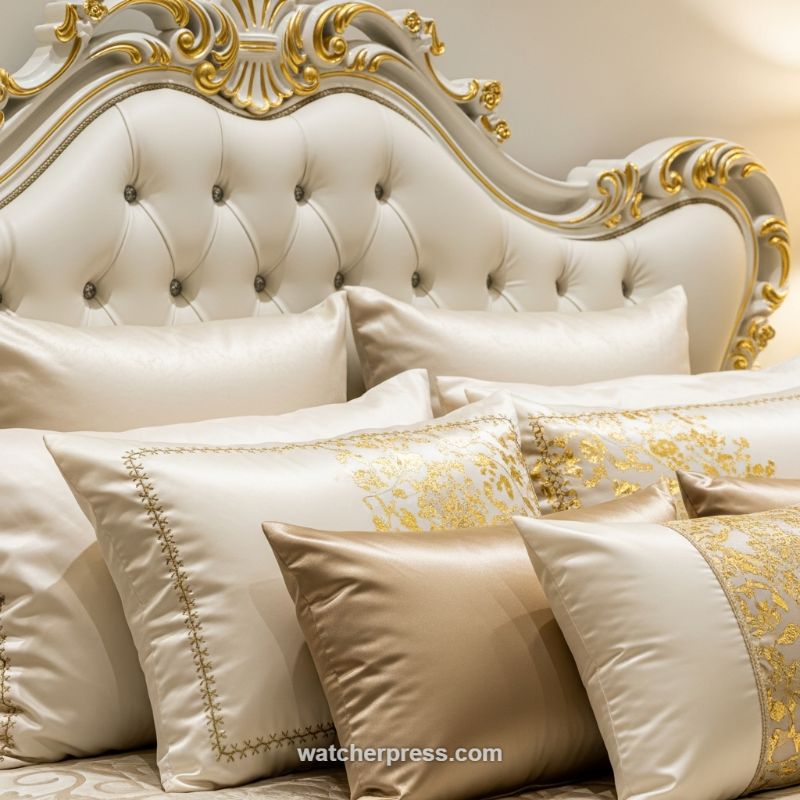
True luxury interior design mandates an absolute commitment to intentional material opulence, particularly within the bedroom, which serves as the sanctuary of the home. This level of opulence is achieved not merely by selecting expensive fabrics, but by mastering the art of layering high-sheen, tactile textiles within a sophisticated tonal palette. As seen in this visual, the foundation relies on monochromatic neutrals—creamy ivories, pale champagnes, and warm gold—which prevents the abundance of textures from feeling chaotic. To recreate this effect, begin by selecting base linens in the highest thread count or pure silk/satin, then build outward with decorative elements. The layering strategy should incorporate at least five distinct textures: the deep tufting of the headboard (a crucial grounding texture), smooth solid satin shams, cushions featuring elaborate gold embroidery or appliqué (providing necessary visual pattern), contrast-stitched edges (adding fine detail), and finally, solid throw pillows in a slightly darker metallic tone, such as burnished bronze or warm taupe. This layered density conveys deep comfort and unparalleled attention to detail, transforming bedding from a functional necessity into an architectural textile installation.
The second layer of non-negotiable luxury involves the grounding furniture element: the headboard. In truly elite design, the headboard is not simply an accessory but an ornate, often architectural, statement piece. This specific example features deep button-tufting, a classic signifier of bespoke craftsmanship, set within a frame defined by carved, gilded wood. The combination of the soft, supple texture of the upholstery (likely high-grade leather or velvet) against the cold, elaborate detailing of the gold-leafed wood provides essential contrast. When sourcing such a piece, focus on materials and construction that promise heirloom quality; the carvings should appear dimensional and hand-finished, not molded. Expert advice dictates that when utilizing such an ornate, classical headboard, the surrounding wall treatments and window dressings should remain slightly restrained—perhaps a simple, silk wall covering or heavy, floor-pooling drapery—to allow the bed to retain its central focus as the room’s sculptural centerpiece. Ensure the gold tones on the furniture match the metallic accents utilized in the embroidered textiles, maintaining a unified metallic language throughout the space.
Achieving this high-end aesthetic is fundamentally about the tactile and visual experience, moving beyond mere decoration into sensory immersion. To guarantee a truly luxurious outcome, every element must contribute to a sense of depth and richness. Notice how the light interacts with the materials: the reflective sheen of the satin amplifies the room’s ambient lighting, while the deep recesses of the tufting and the texture of the embroidery absorb it, creating a dynamic play of light and shadow. To implement this level of intentionality, consider the thread composition of your embroidery; opt for metallic threads that catch light differently than the base fabric, providing an element of sparkle without relying on glitter. Furthermore, always utilize generously sized cushions; luxury avoids skimpy proportions. The final ‘how-to’ rule is simple but critical: invest in plump, high-quality inserts for all decorative pillows. A cushion that maintains a crisp, full shape is essential, as sagging or under-filled pillows immediately detract from the meticulously planned opulence of the layered arrangement.
Creating Intimate Luxury: The Power of Defined Architectural Nooks
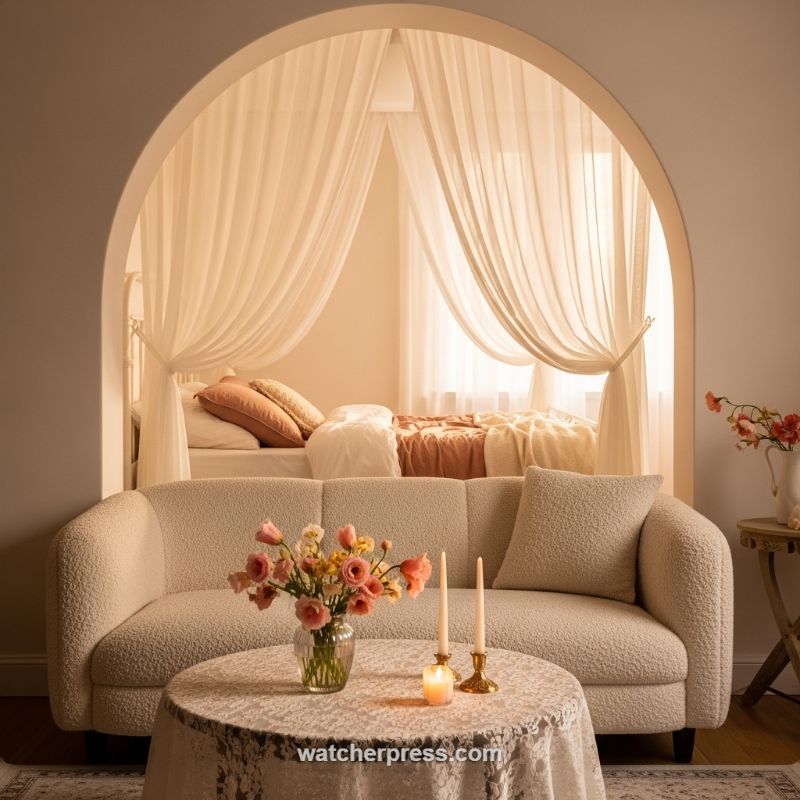
Truly luxurious design moves beyond mere aesthetic appeal to curate specific, intimate atmospheres within a larger footprint. A non-negotiable element of high-end interior architecture is the strategic use of soft boundaries, exemplified perfectly by this elegant arched transition. This architectural detail is not just decorative; it functions as a visual and psychological gatekeeper, defining a distinct ‘sanctuary zone’ (the bedroom) separate from the ‘social zone’ (the living area) without resorting to harsh, solid walls. To replicate this level of deliberate intimacy, designers should prioritize custom architectural interventions. Consider installing a curved partition or a large, deeply cased opening to frame the private space. If a full renovation isn’t feasible, achieve a similar effect by using ceiling-mounted, floor-to-ceiling sheer drapery, hung on curved tracks to emulate a soft arch, ensuring the private area feels protected and exclusive. The framing effect immediately elevates the status of the space it encloses, making the simple act of stepping into the bed area feel like entering a highly personal, curated retreat. This is the definition of quiet luxury: design that enhances function through sophisticated structural cues.
The tactile experience is paramount in defining luxury, especially when working with a predominantly soft, monochromatic palette. As seen here, the beige and cream tones are prevented from feeling flat through an expert layering of textures, which is crucial for maximizing sensory appeal. Focus on combining materials that invite touch: a durable yet soft bouclé or sherpa sofa offers immediate comfort in the foreground, juxtaposed with the smooth, high-thread-count cotton and richly textured, chunky knit throws on the bed. Even the small details, like the velvet or lace tablecloth, contribute to a high-density textural environment. For expert execution, ensure your drapery—especially the canopy enclosing the bed—is made of fine, billowy linen or sheer silk. This diffuses natural light, creating an ethereal glow that softens every surface and minimizes harsh shadows, instantly making the space feel more restful and expensive. When the color scheme is muted, tactility becomes the primary source of visual interest and luxury.
Finally, the atmosphere must be perfectly calibrated through carefully controlled light sources and curated sensory anchors. In high-end design, lighting should be layered and warm; avoid single overhead fixtures. Implement subtle ambient lighting within the alcove, supplementing filtered natural light with the soft, flickering glow of candlelight, as seen in the brass holders on the table. This warm, low-contrast illumination signals relaxation and opulence. Furthermore, never underestimate the power of organic elements in softening a sophisticated space. Fresh flowers, arranged naturally and not rigidly, introduce subtle color variations and inject life and scent into the room. Every accessory must be intentional, contributing to the overall mood of gentle indulgence—from the choice of high-quality scented candles to the plush, oversized scatter pillows. These final, thoughtful details transform a well-decorated room into a luxurious, multi-sensory environment that truly nurtures the inhabitant.
Elevating Design Through Tactile Textiles and Finishes
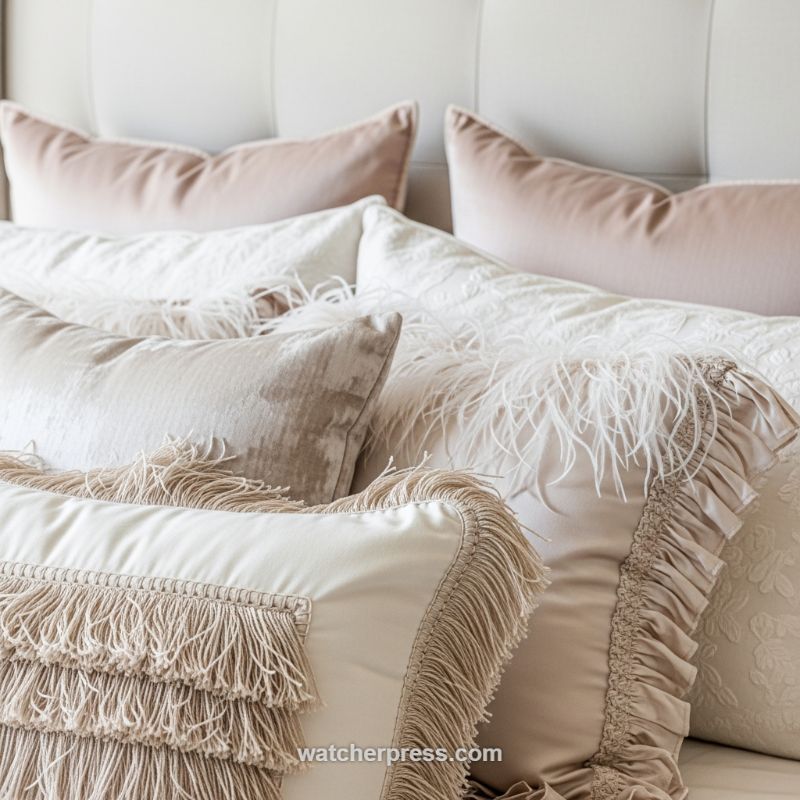
Truly luxurious interior design is defined not just by what you see, but what you feel. The most effective way to communicate opulence without resorting to ostentatious displays is through the strategic application of layered, high-quality textiles. This visual illustrates how a restrained neutral palette (creamy whites, taupes, champagnes, and soft blush) allows texture and dimensionality to become the focal points. To replicate this effect, treat your textiles as sculptural elements. Begin with a base of high-thread-count staples, then introduce at least three distinct texture profiles: a smooth, refined surface (like tailored velvet or silk), a soft, ethereal element (such as the ostrich feather trim shown here), and a weighty, artisan component (like the deep, chunky macrame fringe). The deliberate contrast between these finishes—the sleekness of the velvet against the rustic heft of the fringe—is what prevents the scheme from falling flat, creating visual tension and immediate sensory engagement.
Mastering this level of luxury requires an uncompromising commitment to material quality. Avoid synthetic fabrics that dull quickly and lack the rich drape and hand-feel of their natural counterparts. Invest heavily in materials like crushed velvets (which capture and reflect light dramatically), heavy-grade silks, fine linens, or even Mohair and cashmere blends for throws. Pay meticulous attention to tailoring and finishing details; these are the hallmarks of bespoke design. Look for items featuring flawless piping, weighted trim, hand-stitched ruffles, and superior quality inserts that maintain their structure—a hallmark of high-end design is the pillow’s ability to maintain a sharp, perfect ‘chop.’ When budgeting for a luxury space, recognize that textiles often require 20% to 30% of the decor budget, as they are the pieces that guests and residents interact with most intimately.
Achieving depth within a monochromatic or tight neutral scheme relies entirely on varying the intensity and scale of the fabrics chosen. Notice how the colors here are essentially tone-on-tone, yet each shade appears distinct due to how the material handles light: the velvet absorbs light and creates rich shadows, the fringe casts its own shadow, and the smooth silk of the ruffled pillow reflects light sharply. This subtle variation provides the complex visual layering necessary for a truly custom look. Furthermore, vary the scale and shape of the pillows (lumbar, square, boudoir) to build height and dimension against the headboard, ensuring that each layer contributes to the overall narrative of soft, inviting, yet impeccably tailored luxury. This technique creates an environment that feels highly curated and deeply comfortable, the definition of five-star living.
Masterful Lighting Design: The Crown Jewel
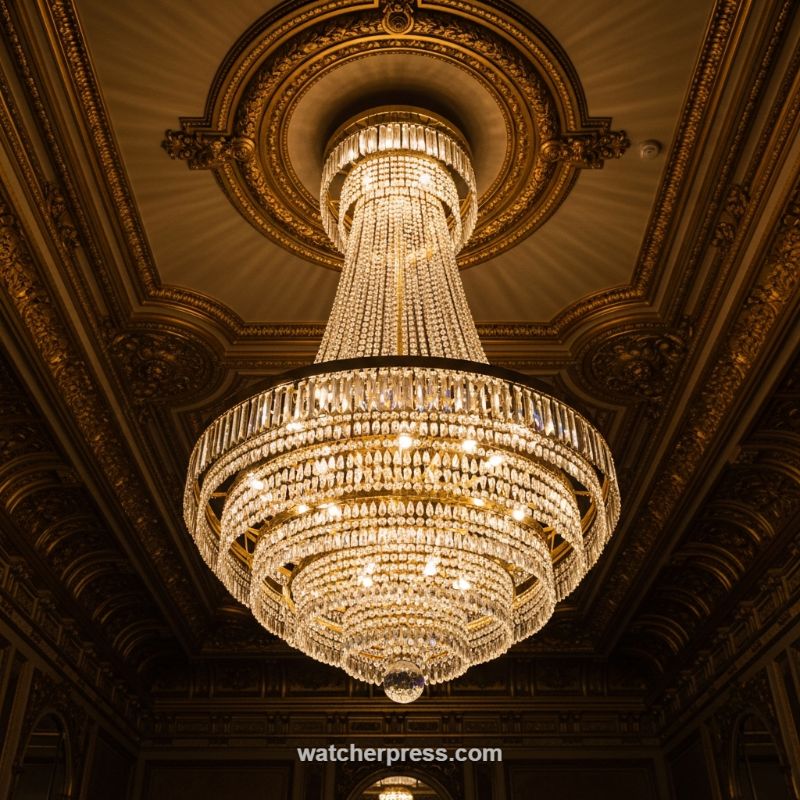
In luxury interior design, lighting transcends mere functionality; it becomes sculptural art and the emotional heart of the space. As evidenced by this magnificent, multi-tiered crystal chandelier, the goal is to introduce drama and define the room’s character. A non-negotiable rule is that your main fixture must be proportionate, if not deliberately oversized, to command attention. The brilliance of crystal, combined with warm gold-toned metalwork, is chosen specifically for its ability to refract light exponentially, transforming standard lumens into dazzling, atmospheric sparkle. This method instantly communicates opulence and meticulous craftsmanship, serving as the room’s ultimate piece of jewelry, setting the standard of grandeur for every element around it.
Achieving truly luxurious illumination requires a layered strategy that supports the central statement piece. Expert designers never rely solely on a single chandelier. Instead, flanking sconces, hidden cove lighting within the ceiling moldings (as suggested by the ornate gilded details here), and recessed ambient lights should work harmoniously to provide depth and flexibility. Crucially, every light source must be managed by professional-grade dimmers. This control allows the environment to shift seamlessly from bright, functional elegance during the day to intimate, soft drama in the evening. Furthermore, standardize the color temperature across all fixtures to a warm white, typically between 2700K and 3000K; inconsistency cheapens the look, while a unified warm glow ensures the space feels rich, welcoming, and flattering to both materials and occupants.
The final touch of non-negotiable luxury lies in the quality of the materials and their seamless integration. Avoid cheap acrylics; true luxury demands hand-cut, high-refractive crystal or artisan glass that throws mesmerizing prismatic light patterns. Notice how the substantial weight of the chandelier in the visual is supported by deeply carved, gilded ceiling architecture—this unity demonstrates that the lighting plan was integral to the overall construction, not an afterthought. When specifying, ensure all mounting hardware and wiring pathways are completely concealed, maintaining an uninterrupted flow of elegance. This level of meticulous execution, from the selection of the finest materials to the flawless alignment of the mounting plate with the architectural rosette, is what elevates a fixture from merely expensive to truly luxurious.
Elevating Spaces with Architectural Artistry: The Power of the Statement Piece
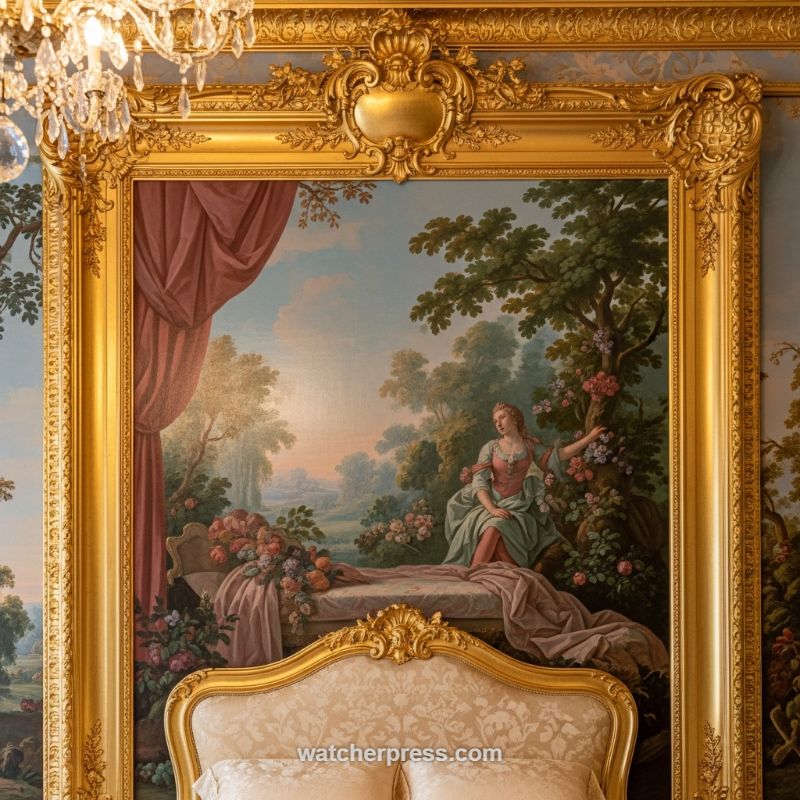
Truly luxurious interior design treats art not as a simple accessory, but as an integral architectural feature that dictates the entire mood and scale of the space. As evidenced by this magnificent bedroom, the integration of a massive, gilded, framed mural transforms the wall into a proscenium arch, staging the scene below it. To achieve this level of visual drama, the art must be oversized, filling the vertical plane completely, and its framing must be intentional. The ornate, multi-layered gold frame surrounding the pastoral scene here serves as a powerful Baroque or Rococo boundary, asserting the painting’s prominence. Expert designers understand that this frame, with its high relief carvings and opulent detailing, is as important as the artwork itself, acting as permanent jewelry for the room. When planning your high-end space, identify the central focal point—whether above a bed, a fireplace, or a dining table—and commit to enveloping that area with a statement piece framed to such a scale that it permanently defines the room’s artistic narrative.
The next level of luxury is found in the deliberate dialogue between materials and eras. This opulent design succeeds by contrasting the soft, receding pastels of the Neoclassical/Rococo landscape painting with the immediate, tactile luxury of the room’s fabrics and finishes. The creamy, patterned silk of the headboard and the reflective surfaces of the crystal chandelier create a delicate tension against the flat, expansive canvas. This layering requires an acute focus on texture: the smoothness of the paint, the reflectivity of the gold leaf, the soft drape of the theatrical maroon curtain, and the complex weave of the damask upholstery. For a truly bespoke result, ensure that the material choices—from the thread count of the bedding to the patination of the frame—speak to the same high standard of craftsmanship. This is not about matching colors; it is about harmonizing the emotional weight and historical context of your chosen materials, allowing the room to feel rich and deeply curated.
To implement this design philosophy in your own project, prioritize permanence and custom creation. Avoid ready-made art that merely hangs; instead, consider commissioning a trompe l’oeil effect, installing a permanent mural, or sourcing a massive framed piece that requires professional anchoring and lighting. The painting in this example is perfectly illuminated to enhance the idyllic scene, suggesting a window into another world, which is crucial for maximizing depth. Furthermore, ensure the surrounding architectural details, such as the crown molding and wall paneling (which appear integrated with the top of the frame), extend and support the art piece, making it feel structurally necessary. This commitment to artistic integration and architectural scale is the non-negotiable step that separates standard high-end design from truly memorable, museum-quality luxury interiors.
Subtle Sensory Engagement: Mastering Texture and Tone
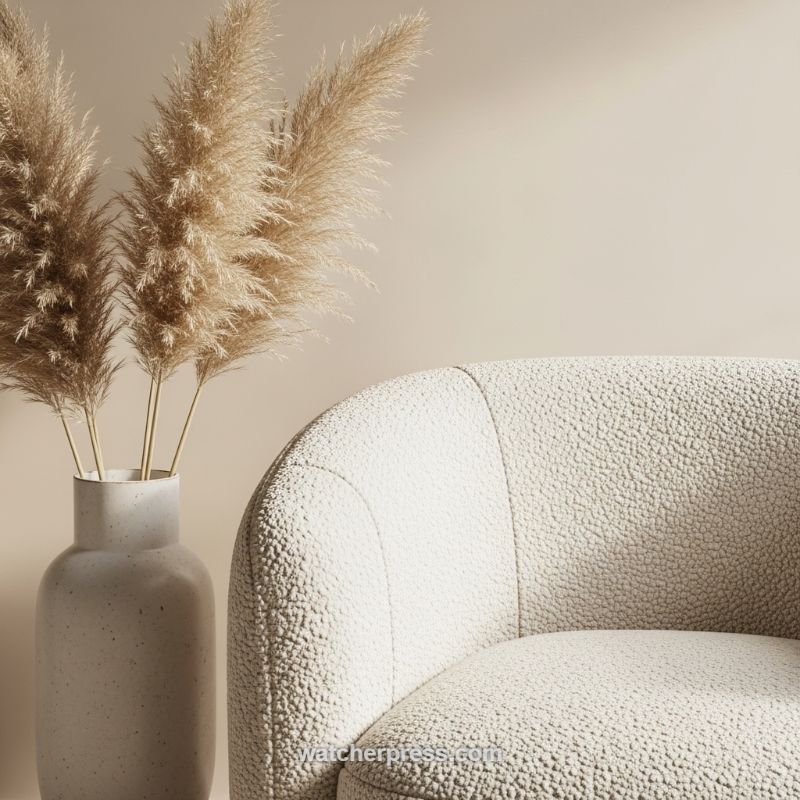
Truly luxurious interior design often eschews overt opulence for quiet, tactile richness. This is achieved not through flashy color or high gloss, but through the sophisticated layering of natural, textured materials within a restrained monochromatic palette. The key non-negotiable element here is the use of tactile textiles and organic forms that invite touch and contemplation. Examine the scene: a curved armchair is upholstered in a dense, nubby fabric—likely high-quality boucle or a heavy fleece imitation—which immediately conveys warmth and comfort. This soft, three-dimensional texture is thoughtfully juxtaposed against the matte, rough surface of the ceramic vase and the delicate, feathery softness of the oversized dried pampas grass plumes. This deliberate contrast between soft and hard, smooth and rough, ensures the neutral color scheme (creams, taupes, and beiges) feels dynamic and rich, preventing the space from appearing visually flat or sterile. To implement this level of luxury, focus on incorporating a minimum of three distinct textures within any small vignette to establish depth.
Mastering the luxury of texture requires intentional styling, especially when utilizing a limited, earth-toned color scheme. The muted backdrop seen here allows the materials themselves to become the central focus, absorbing and reflecting light in ways that highlight their inherent quality. For high-end design, always prioritize natural fibers—linen, wool, raw silk, and quality boucle or sheepskin—over synthetic alternatives, as they drape and feel significantly better, adding immediate perceived value. Expertly applying this principle means looking beyond the main seating and integrating texture into smaller details: select deeply carved wooden side tables, introduce hand-thrown pottery, and use rugs made from jute or natural, chunky wool weaves. Furthermore, pay critical attention to lighting; soft, directional lighting and natural daylight are essential for illuminating the nuances and shadows created by these varying surfaces, bringing the textiles to life and enhancing the room’s overall dimensionality.
Finally, elevate your space by injecting elements of natural imperfection and organic volume, a principle borrowed heavily from Wabi-Sabi and Japandi aesthetics. The pampas grass, while simple, serves a vital function: it introduces scale, a transient, cloud-like softness, and an element of nature that feels curated yet effortless. When selecting organic accessories, opt for items with visible texture or hand-made variation, such as the speckled stoneware vase in the image. These items communicate history and craftsmanship, which are hallmarks of true luxury. The essence of this design element is that the space must appeal not just to sight, but to the sense of touch. A room achieves non-negotiable luxury when its inhabitants feel compelled to run their hand across the furniture and materials, fostering a deep, sensory connection to the environment that lasts far longer than fleeting trends.
The Art of Bespoke Trimming and Embellishment
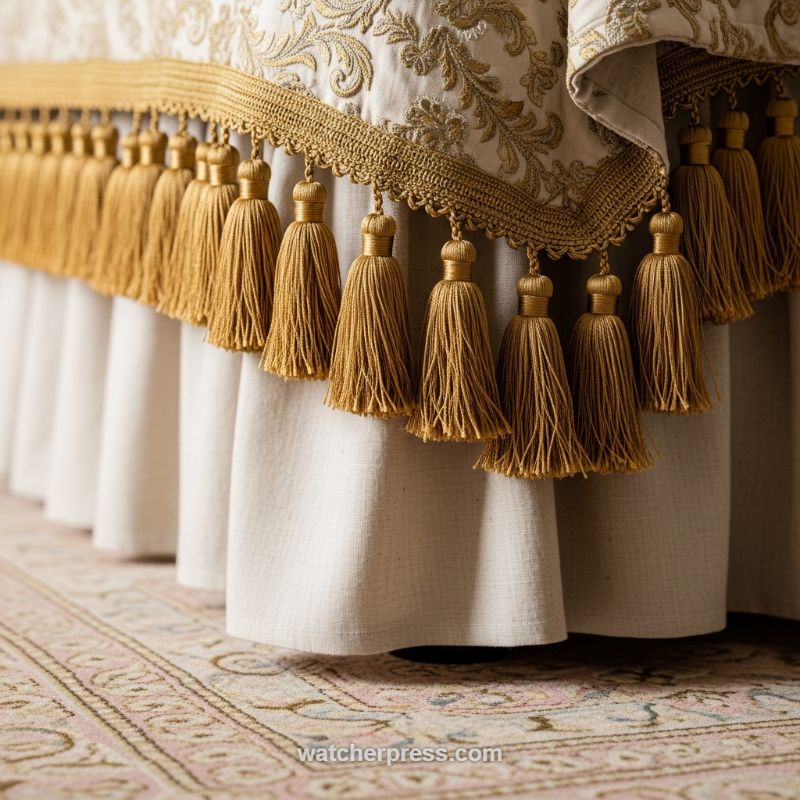
While foundational elements like furniture and wall treatments set the stage for luxury, it is the meticulous attention to textiles and bespoke embellishment that elevates a space from expensive to truly opulent. This image showcases the non-negotiable principle of using high-quality trimming not merely as decoration, but as an integral structural component of the textile design. To achieve this, analyze the relationship between the primary textile (the embroidered cream damask) and the heavy, custom-dyed trimming (the voluminous gold bullion fringe). The trimming acts as a powerful visual anchor, offering weight and definition while bridging the ornate upper layer with the grounded, textured linen skirting below. When selecting trims, insist on substantial volume and depth; flimsy, low-density fringe immediately cheapens a look. Furthermore, ensure the trim’s color palette, like the metallic gold featured here, is echoed subtly throughout the room’s hardware or other accents to maintain visual continuity and sophisticated layering. Achieving this level of detail requires precision and an understanding of fabric weight integration.
The key ‘how-to’ instruction involves marrying contrasting textures to maximize impact. Notice the juxtaposition between the crisp, tailored pleating of the natural linen bed skirt and the soft, rich embroidery of the overlying textile. This contrast is deliberate, utilizing the heavy, almost rustic texture of the linen to ground the highly reflective and elaborate gold thread work. Expert application means never allowing the trim to look mass-produced; custom-dyed threads, hand-tied tassels, or specialty braided gimp are crucial investments. For pieces like bed skirts or drapery, the trim should ideally be applied by hand, ensuring that the fall and drape of the tassels are uniform and that corners, like the one shown, are handled with custom mitering to create a seamless, high-end finish. This level of craftsmanship signals a truly tailored environment, setting your design apart from standard retail offerings.
When executing this element, remember that luxury detailing extends beyond the centerpiece textile. In this example, the bed skirting is deliberately long, grazing the subtle pattern of the area rug, which makes the entire piece of furniture feel heavier and more permanent—a hallmark of quality design. Never underestimate the power of the hemline or edge treatment; a carefully weighted, fully lined skirting, paired with the substantial weight of the bullion fringe, ensures the fabric hangs perfectly, avoiding the dreaded ‘flotation’ effect common in cheaper fabric applications. Prioritize natural fibers for foundational pieces (like the linen skirting) and reservedly deploy metallic or silk elements for high-impact detailing, ensuring that the finished product feels curated, substantial, and utterly bespoke to the room’s overall aesthetic.
Architectural Majesty: Mastering Scale and Bespoke Craftsmanship
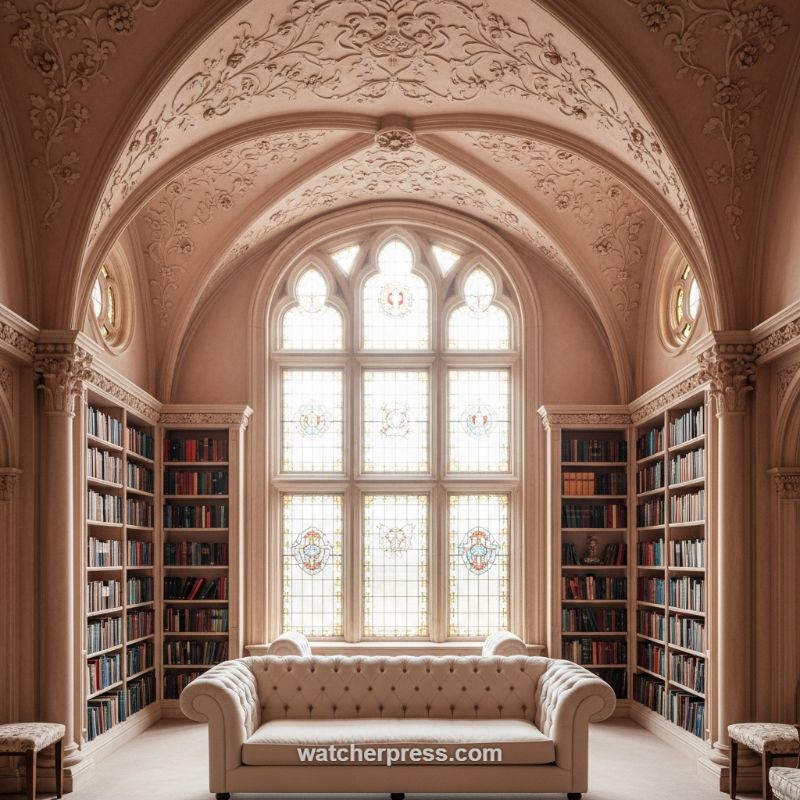
Truly luxurious interior design begins not with furnishings, but with architectural commitment. The image showcases this non-negotiable element through its extraordinary scale and highly bespoke details, primarily visible in the vaulted ceiling and intricate plasterwork. To replicate this level of luxury, designers must prioritize permanent architectural enhancements. This involves using high-relief bas-relief molding (such as the detailed floral and foliate patterns seen tracing the ceiling’s vault) and substantive columns that anchor the space. Expert advice dictates that when working with such complexity, the color palette must be restrained. The soft, monochromatic dusty taupe used here allows the light and shadow play across the highly textured ceiling to become the room’s central artistic statement. Invest heavily in skilled artisans—plasterers, millworkers, and masons—as mass-produced detailing immediately undermines the perception of exclusivity and quality that define this echelon of design.
The second non-negotiable element is the strategic use of illumination, specifically leveraging monumental fenestration. The colossal, arched Gothic window serves as a dramatic structural feature, far exceeding typical functional requirements. When designing a luxury space, the window should be a framed work of art, drawing the eye and dictating the room’s atmosphere. Notice the use of multi-paned segments combined with subtle stained or leaded glass inserts. This approach filters natural light, preventing harsh glare and bathing the reading room in a diffused, soft glow—a quality essential for creating a serene and timeless environment. Designers should consult specialty glass fabricators to incorporate subtle texture or historically resonant patterns into large window installations, ensuring the quality of light is as curated as the furniture itself. This commitment to scale and specialized fabrication transforms a standard room into a magnificent, light-filled sanctuary.
Finally, luxury requires a perfect harmony between fixed architecture and inviting comfort. While the architectural elements are grand and historic, the choice of furnishings grounds the space with accessible elegance. The large, tufted Chesterfield sofa, rendered in a pale cream neutral, provides a substantial counterpoint to the hard lines and dense detailing of the surrounding woodwork and plaster. The instruction here is to use classic, enduring furniture silhouettes constructed from the highest quality materials (such as high-density foam, fine fabric, or leather) that promise deep, lasting comfort. Furthermore, functionality must be seamless. The built-in, custom shelving flanking the window reinforces that this is a curated space for collection and intellectual pursuit, not just display. Integrating custom storage and seating ensures that every inch of the high-end space serves both aesthetic splendor and purposeful living, completing the definition of true architectural luxury.
Elevating Architecture with Intricate Detailing and Gilding
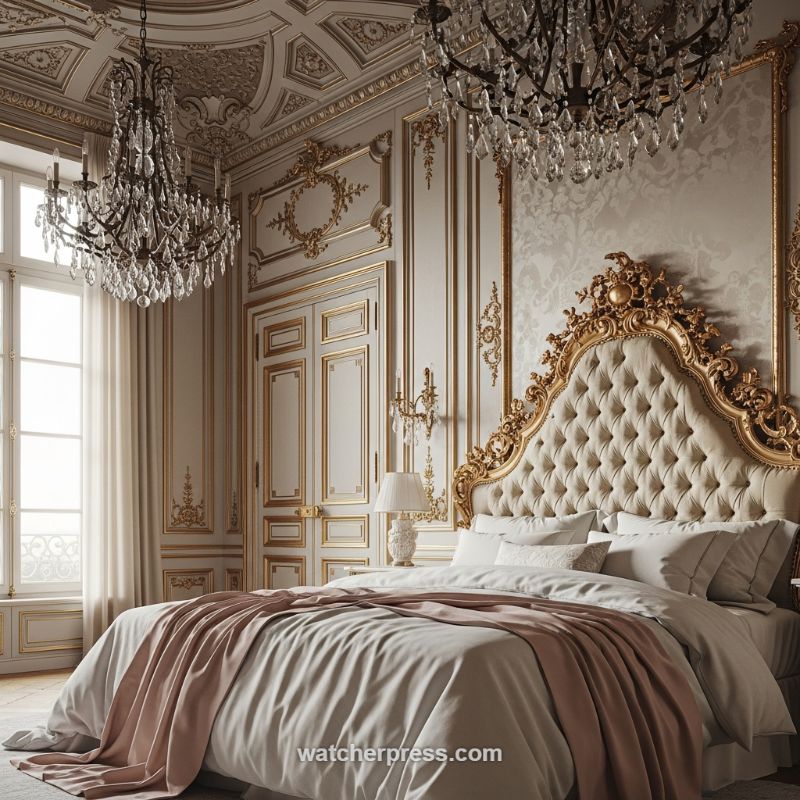
To achieve truly uncompromising luxury, the design must start with the fixed architectural elements. Look beyond simple drywall and incorporate classical structural features—like the intricate boiserie and multi-layered crown molding seen here—which instantly convey grandeur and permanence. This approach requires investing in elaborate wall panels, often custom-milled, that define vertical rhythm and scale. Paint these structural elements in a refined, muted palette (think pale French gray, ivory, or warm beige) to provide a sophisticated canvas. The goal is to create a historical context; every wall should look intentional and structurally significant, not merely decorative. This foundational work sets the stage for the dramatic detailing that follows, ensuring the space feels inherently opulent, regardless of the furniture placed within it.
The application of metal accents, particularly gilding, is critical for defining the luxury standard exemplified in this image. Expert advice dictates that gold should be used strategically to highlight the best architectural assets. Instead of cheap gold spray, use genuine or high-quality imitation gold leaf on all recessed panel borders, ceiling rosettes, and decorative relief elements. This provides a deep, matte, and rich reflection that artificial finishes cannot replicate. Notice how the gold is used to frame the majestic, tufted headboard, transforming it from a piece of furniture into an integrated architectural focal point. When executing this detail-work, ensure the ornamentation (swags, scrolls, and acanthus leaves) is finely cast and proportional to the room’s height, preventing the complex detailing from feeling busy or overwhelming. A balanced hand ensures that the rich ornamentation feels regal, not gaudy.
True luxury design requires that the architectural grandeur seamlessly merges with livable comfort. This balance is achieved through strategic lighting and masterful textile layering. Install statement chandeliers—preferably crystal and wrought iron—that serve as the room’s functional jewelry, casting glittering light patterns that accentuate the ceiling details and wall carvings. Supplemental lighting, such as elegant crystal sconces, should be mounted directly onto the wall panels to highlight the gilding and provide a soft, ambient glow. Finally, introduce textiles in voluminous, high-quality drapes and plush bedding. The use of a substantial, tufted headboard and layers of high-thread-count linens, juxtaposed with the hard, carved surfaces, softens the overall look. The strategic addition of a muted color (like the blush-pink throw) provides visual relief and ensures the room, despite its regal complexity, remains an inviting sanctuary of rest.