The essential guide to wedding dress silhouettes! Master the differences between A-Line, Mermaid, and Ballgown styles to find your dream gown effortlessly.
The Ballgown Silhouette: Achieving Ultimate Bridal Grandeur

The image showcases the quintessential Ballgown silhouette—the epitome of bridal drama and fairy-tale romance. Defined by a fitted bodice that cinches at the natural waist and explodes into an enormously full skirt, this silhouette is built for impact. The gown featured here utilizes multiple layers of sheer, flowing fabrics, likely tulle or organza, to create dynamic volume and movement, culminating in a sprawling cathedral-length train. Note the strategic detailing: cascading horizontal ruffles add texture to the upper portion of the train, while intricate white lace appliqué is concentrated near the hem, grounding the ethereal fabric with luxurious structure. When selecting a Ballgown, brides must evaluate the interplay of fabric weight and volume. While stiff fabrics like taffeta create a sculpted, defined look, lightweight, layered materials like those pictured offer a softer, more romantic cascade, which perfectly complements the grand, classical architecture of venues featuring marble stairs and towering columns. This visual balance between structured setting and flowing fabric is essential for achieving a cohesive, high-impact aesthetic.
Choosing a Ballgown requires specific logistical considerations, particularly regarding your venue and photography needs. This silhouette thrives in grand spaces—ballrooms, cathedrals, or historic estates—where its volume does not overwhelm the environment. For brides aiming to replicate the dramatic length and spread seen in the image, you must factor in the management of the train. A custom-designed, multi-point bustle is non-negotiable for the reception, and expert tailoring is critical to ensure the bodice provides adequate support without restricting movement, especially given the weight of the voluminous skirt. Expert advice: Allocate a dedicated portion of your photography time to capturing the train fully spread out, as shown here. This visual sweep of fabric—often called a ‘royal train’ when exceeding standard cathedral length—is the signature element of the silhouette and provides the high-fashion drama desired for top-tier bridal imagery. Ensure your photographer is comfortable directing the placement of the fabric to maximize its visual impact against the backdrop.
One of the greatest benefits of the Ballgown is its near-universal flattery. By cinching the waist and concealing the lower body, it creates a striking hourglass effect suitable for most body types. However, petite brides should ensure the natural waistline hits slightly higher (an empire or raised natural waist) to elongate the legs rather than shorten the frame beneath the massive skirt. When styling this dramatic piece, remember less is often more with accessories. Since the dress itself is the statement, opt for a long, traditional veil, as pictured, allowing it to seamlessly blend with the train’s fabric, rather than competing with large headpieces or heavy jewelry. The veil here extends past the body, blending into the train and adding another layer of visual depth without breaking the clean, vertical line established by the fabric’s flow down the monumental staircase. This attention to detail ensures the gown remains the undisputed focal point of your bridal ensemble.
The Sculptural A-Line: Embracing Structure and Drama
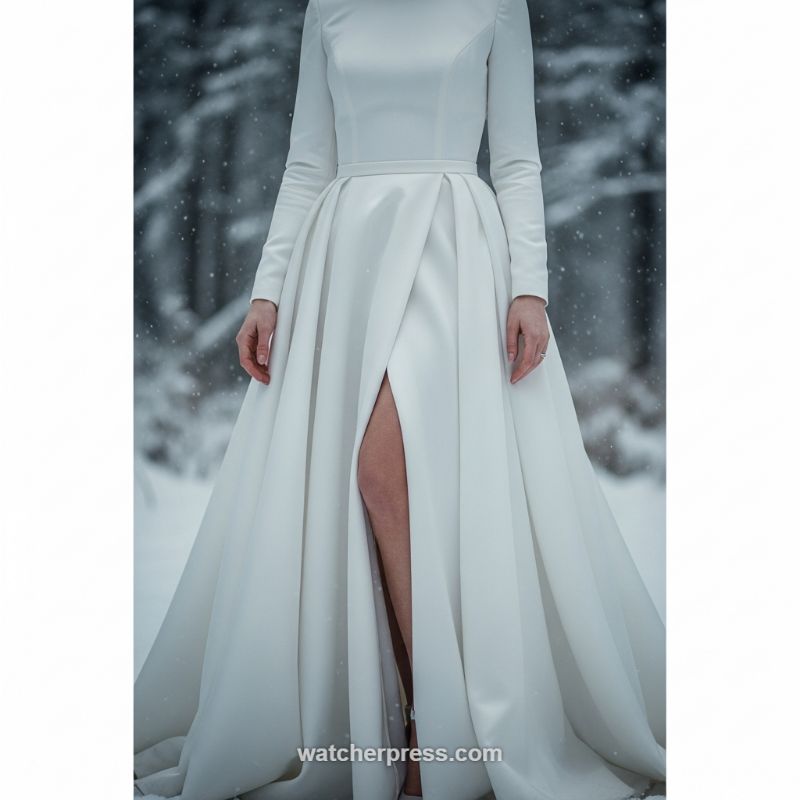
The dress captured here offers a highly modern and architectural interpretation of the classic A-Line silhouette, moving away from soft tulles toward structured, weighty fabrics like satin or Mikado. To achieve this polished, sculptural effect, focus on gowns constructed with minimal seams and maximum inherent structure. The key distinguishing feature is the defined, fitted bodice that flows seamlessly into a full skirt, creating the capital ‘A’ shape—a universally flattering cut that cinches the waist and gracefully drapes over the hips. When choosing this specific A-Line style, inspect the quality of the fabric; a heavy, lustrous satin ensures the skirt maintains its volume and crisp pleating without relying on excessive crinoline, giving the look a sophisticated, minimalist edge. Note the choice of complete coverage—long sleeves and a modest high neck—which balances the unexpected drama of the high front slit. This expert visual interplay allows the gown to feel both stately and fiercely modern, perfect for the bride seeking elegance with a strong fashion sensibility, especially in cooler climates where coverage is practical.
To successfully style a structured A-Line with dramatic features like this front slit, thoughtful consideration of accessories and foundation garments is crucial. Since the high neckline and long sleeves provide ample coverage, limit jewelry to statement earrings or a delicate bracelet, letting the fabric and silhouette carry the visual weight. The dramatic slit, a modern deviation from traditional bridal wear, dictates appropriate footwear; choose an elegant heel that complements the gown’s formality and ensures confident walking, particularly on uneven or wintry terrain as shown in the image. For ‘how-to’ guidance on achieving the perfect fit, ensure the inner lining is perfectly tailored to hold the skirt’s shape while allowing the outer layer to fall cleanly. If the gown features a natural or thin defined waistline, as seen here, ensure that a high-quality, seamless cinching garment is worn underneath to maintain the smooth lines of the bodice and maximize the waist-slimming effect of the full skirt.
This particular A-Line iteration is ideal for venues that require a high level of formality, such as grand ballrooms, historic estates, or chic winter weddings. Body type compatibility is high; the structure of the A-Line beautifully balances both pear shapes (by concealing the hips) and inverted triangle shapes (by adding volume below the waist). Expert tip for colder settings: the high-coverage satin acts as a natural insulator, but if your ceremony is outdoors, consider integrating a structural bridal coat or cape crafted from the same fabric to maintain continuity and warmth without compromising the gown’s architectural integrity. When consulting with your tailor, emphasize that the crisp folds and the defined waist must be maintained throughout all movement, ensuring that the silhouette remains sharp and graphic, rather than becoming soft or unstructured as you move throughout your wedding day.
The Elegant Drama of the Fitted Trumpet Silhouette

The image perfectly encapsulates the timeless appeal and dramatic flair of a fitted silhouette, often referred to as the Trumpet or Mermaid cut. This style is defined by a bodice that hugs the bust, waist, and hips, flaring dramatically outward just below the knee, as seen here in the luxurious sweep of the skirt and train. The featured gown utilizes a minimalist, sleek fabric—likely a heavy crepe or mikado satin—which emphasizes the clean, architectural lines of the fit. For brides seeking to showcase their figure and project confidence, this silhouette is unparalleled. It naturally elongates the body and highlights curves, making it an ideal choice for the hourglass shape, though it can also be tailored to flatter many body types by adjusting the point of the flare. When selecting a fitted gown, prioritize quality structure and careful alteration, as the precise fit around the hips and seat is crucial for comfort and movement throughout the wedding day.
To maximize the visual impact of the Trumpet silhouette, attention must be paid to the train and complementary accessories. The gown shown features an extensive, perhaps cathedral-length, train that spills across the grassy terrain, providing an incredible sense of scale and movement. The long row of delicate buttons running down the spine and onto the train provides a traditional counterpoint to the gown’s modern, sleek design. When incorporating such a lengthy train, consider the logistics: ensure your dress features a sturdy and aesthetically pleasing bustle system for the reception. Pair this drama with an equally commanding veil, like the sheer, flowing chapel-length veil draped over the bride’s shoulders here. The sheer fabric allows the detail of the gown’s back to show through while adding an ethereal layer of romance and soft texture to the overall look.
Finally, capitalize on the silhouette’s inherently dramatic nature by coordinating with your venue and photography. As demonstrated by the striking golden hour backlighting in this shot, the smooth, expansive fabric of the train and veil catches the light beautifully, making it glow against a natural, deep-toned backdrop like these rolling hills. Instruct your photographer to utilize backlighting during sunset portraits; this technique will highlight the fabric’s texture and create a halo effect around your silhouette, adding depth and majesty. The bold contrast between the form-fitting structure of the dress and the natural flow of the train and veil makes the Trumpet silhouette exceptional for capturing high-impact, editorial-style imagery, securing those breathtaking, unforgettable wedding photos.
The Structured A-Line Silhouette: Elegance in Minimalist Form
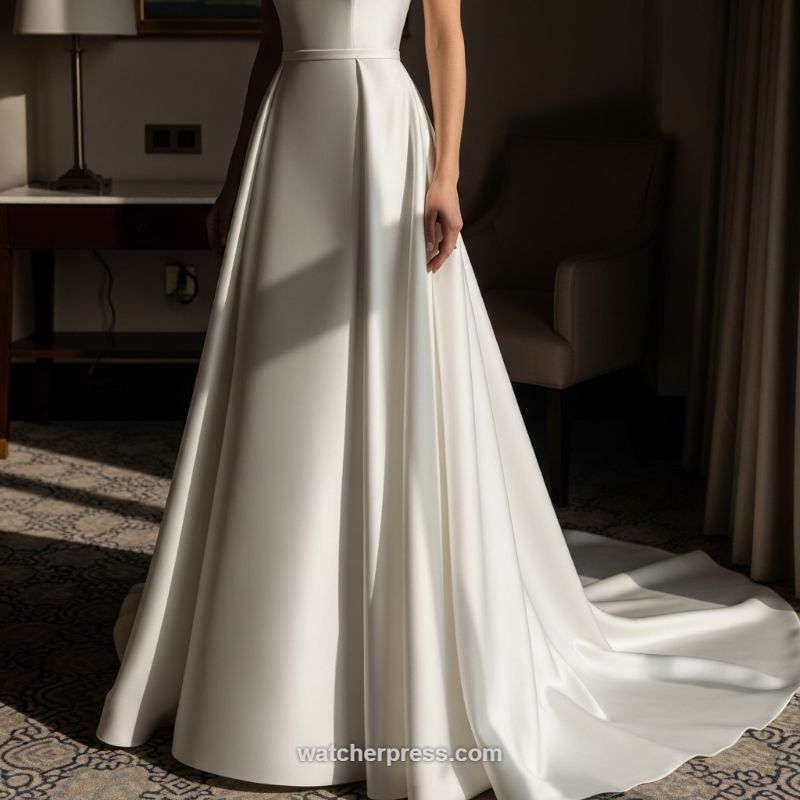
The A-line wedding dress remains the most universally flattering and enduring silhouette, characterized by its fit at the shoulders and chest, gradually widening from the natural waist to the hem, forming the shape of an uppercase ‘A’. As demonstrated in this image, selecting a structured fabric like Duchesse satin or Mikado silk transforms the classic A-line from ethereal to architecturally modern. When trying on this silhouette, pay close attention to the waistline—the clean, horizontal band shown here is crucial. This feature should sit exactly at your natural waist (the smallest point of your torso) to ensure the skirt’s perfect, smooth break. Expert advice dictates ensuring the seams and pleats maintain their vertical integrity without pulling or bunching, as structured fabrics are unforgiving if the fit is incorrect through the hips. A well-tailored A-line in a rigid material will elongate the figure and provide a beautiful, sophisticated movement that avoids excessive volume, offering the formality of a ballgown without the bulk.
To achieve this polished, high-fashion look, focus on the fabric’s properties. The pronounced sheen and structured drape of the satin visible in this example require careful attention to lighting and underpinnings. This fabric naturally catches light, highlighting the smooth, clean lines and amplifying the depth of the shadow and fold, which adds visual richness. Instructional consideration: Because this style emphasizes simplicity, accessory choices should be deliberate. Pair a gown of this nature with refined, minimalist jewelry, such as delicate drop earrings or a clean bracelet, allowing the luxurious fabric and silhouette to remain the central focus. Avoid overly voluminous veils or chunky necklaces that could detract from the dress’s streamlined elegance. Furthermore, ensure your tailor uses appropriate lining and horsehair braiding in the hem to help the skirt maintain its shape and slight stiffness, preventing it from collapsing or clinging as you move.
Finally, managing the train is a key instructional element for structured A-lines, which often feature chapel or cathedral trains, as seen extending beautifully across the floor in the photograph. Before your wedding day, practice maneuvering in the gown and decide on a bustling technique—a five-point French bustle or a classic over-bustle works best for structured fabrics, as they hide the excess material without creating excessive bulk at the back. It is critical to communicate with your seamstress about the weight of the train; heavier satin trains require more secure and reinforced bustle points to prevent tearing or sagging during movement. For the optimal wedding day experience, ensure you have comfortable, yet appropriately heeled shoes, as the length of the skirt must be precisely measured to skim the floor without dragging, allowing the magnificent flare and train to flow flawlessly behind you while maintaining ease of walking.
Mastering the Grandeur of the Ballgown Silhouette
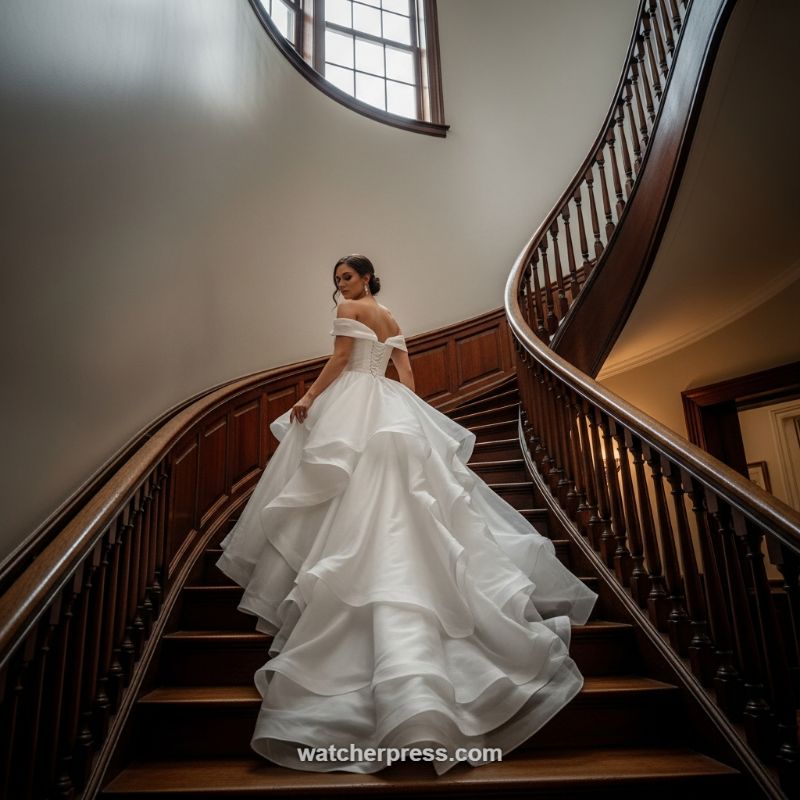
The ballgown is the undisputed champion of wedding dress silhouettes for brides seeking a truly dramatic, fairytale aesthetic. Defined by a dramatically fitted bodice that cinches at the natural or dropped waist, the ballgown transitions into a magnificent, full skirt supported by layers of tulle, crinoline, or, as seen in this stunning example, cascading layers of ruffled organza. This specific design choice, featuring delicate ruffles and an elongated train, maximizes movement and visual interest, turning every step—especially ascending a grand, sweeping staircase—into a photographic moment. When selecting your ballgown, pay close attention to the construction of the bodice; designs with visible boning or corset lacing, like the off-the-shoulder style shown, provide impeccable structure and support, ensuring the voluminous skirt looks perfectly balanced and the waist appears impossibly small.
Choosing a ballgown is a strategic decision that requires consideration of both your physique and your venue. Expert advice suggests this silhouette is universally flattering, as it creates the classic hourglass shape on virtually any figure by defining the waist and gliding over the hips and lower body. If you have a pear shape, the volume perfectly balances the lower body; if you have a straighter figure, it creates essential curves. However, the sheer scale of the ballgown demands a suitable backdrop. This silhouette is best suited for grand venues—think historic estates, ballrooms, or large cathedrals—where the dress won’t overwhelm the space. When trying on gowns, practice walking and sitting; the weight and volume of the skirt can be restrictive. Opting for lighter materials, like the airy organza seen here versus heavy satin, can significantly improve comfort and ease of movement throughout a long wedding day.
To achieve maximum impact in your wedding photography, embrace the drama inherent in this silhouette. As demonstrated by the pose on the staircase, utilizing architectural elements allows the photographer to capture the full scope and scale of the gown’s volume and train. Posing tips include practicing the over-the-shoulder glance, turning slightly away to showcase the intricate back details (like the corset lacing), and ensuring the photographer captures low-angle shots looking up, which enhances the dress’s vertical grandeur and flair. On a practical note, due to the immense amount of fabric, planning the bustle is critical. Consult with your seamstress about a multi-point French bustle, which tucks the fabric underneath, making the transition from formal pictures to reception dancing seamless and manageable without compromising the elegant look.
The Alluring A-Line: Bohemian Lace and Golden Hour Aesthetics
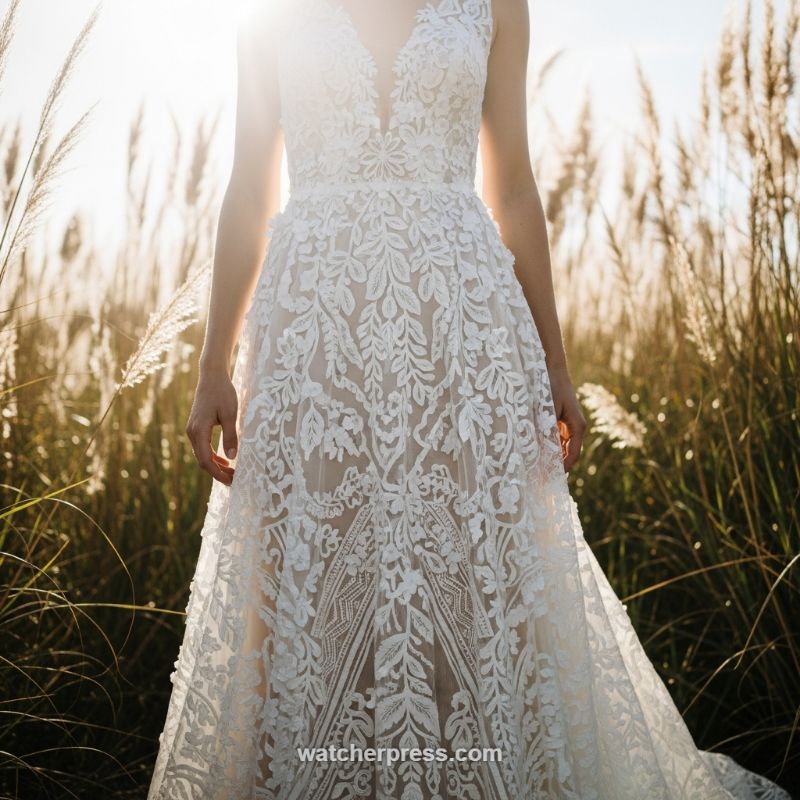
The dress captured here exemplifies the elegance and versatility of the A-Line silhouette, updated with a deeply bohemian aesthetic. The A-Line is characterized by a fitted bodice that gradually flares out from the waist, resembling the letter ‘A.’ This universal shape is incredibly flattering, cinching the narrowest part of the body while gracefully skimming over the hips and thighs. Expertly, this gown utilizes heavily patterned, textured lace appliqué layered over a nude or champagne-toned lining. This technique maximizes the visual impact of the organic, leaf-like lace patterns, making them truly ‘pop’ against the skin tone background rather than blending into a stark white lining. When selecting an A-Line gown, focus on the fabric weight and the complexity of the detailing, as these elements dictate whether the silhouette reads as classic and structured or, as shown here, soft and free-spirited.
The key to mastering this specific bridal look is harmonizing the gown’s texture with the natural environment. The deep V-neckline provides a modern counterpoint to the traditional lace work, drawing the eye vertically and elongating the torso, a fantastic feature for petite brides. The organic, vine-like lace motifs perfectly suit an outdoor ceremony, such as this field of tall grasses. Photographically, replicating this aesthetic requires choosing a golden hour (sunset or sunrise) setting. The backlighting, which creates the ethereal sun-flare, is crucial; it highlights the three-dimensionality of the lace and creates a radiant glow around the bride, enhancing the romantic and intimate atmosphere. Instruct your photographer to utilize this backlighting to truly showcase the texture of the fabric against the backdrop, rather than relying solely on front flash or midday light.
When considering a heavily textured A-Line like this, attention to undergarments and fit is paramount, particularly with the deep plunge neckline and sleeveless design. Ensure the bodice has sufficient internal structure or built-in boning to maintain shape without distracting straps or visible foundation wear. Because the lace is so intricate and bold, minimize accessories; choose nature-inspired or minimalist jewelry that complements the organic feel rather than competing with the pattern. The beauty of this silhouette is its flexibility; it maintains structure while offering comfort and movement, making it an ideal choice for a bride who desires both high fashion detailing and ease for an entire day of celebration and dancing.
The Seductive Allure of the Mermaid Silhouette
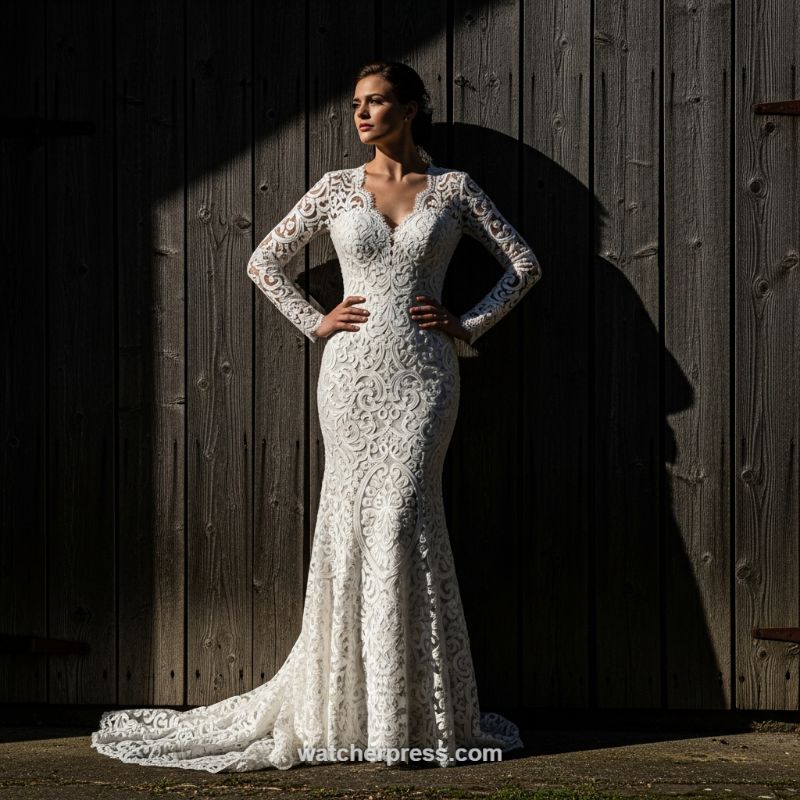
The Mermaid silhouette, also often referred to as the Trumpet or Fit-and-Flare depending on where the skirt begins to widen, is the undisputed choice for the bride seeking to accentuate her curves with high drama and undeniable sex appeal. This style is defined by its incredibly tailored fit through the bust, waist, and hips, often extending tightly down to the mid-thigh or just below the knee before flaring out dramatically to the hem. Unlike the gradual flow of the A-line, the Mermaid creates a distinct visual break between the form-fitting upper section and the voluminous lower skirt, generating an hourglass effect that flatters figures with proportionate bust and hip measurements. As demonstrated in this stunning image, choosing a structured fabric like heavy lace, Mikado silk, or taffeta ensures the silhouette maintains its crisp, sculpted lines, preventing the dress from collapsing and maximizing the dramatic flare of the train.
When considering the Mermaid silhouette, expert advice centers heavily on fit and mobility. Because the dress is so restrictive around the knees and lower legs, it inherently limits your stride. Brides opting for this style must ensure the skirt begins to flare at a height that allows comfortable movement for walking and dancing—usually right at or slightly above the knee joint. For internal structure, light boning in the bodice and the strategic use of high-quality shapewear can smooth the lines seamlessly from the bust down to the flare point, which is crucial for achieving the clean, elongated look this silhouette demands. Furthermore, balance is key; if the skirt is highly dramatic, choosing a complementary neckline and sleeve combination, such as the elegant V-neck and fitted long sleeves shown here, provides coverage and sophisticated symmetry without overwhelming the body.
The visual impact of the Mermaid silhouette is unparalleled in photographs, particularly due to its ability to hold light and shadow along the contours of the body. The defined structure of the dress, especially when crafted from deeply textured lace materials, benefits immensely from dramatic, directional lighting—like the strong side light seen in this outdoor setting. Photographers often favor the structured hemline as it beautifully frames the foot placement and leads the eye down the entire length of the body and into the train. While the Mermaid is best suited for brides confident in showing off their figures, remember that a properly tailored Fit-and-Flare (where the flare starts higher) offers a slightly more forgiving and comfortable alternative while maintaining much of the sought-after hourglass glamour. Always prioritize a flawless fitting around the hips and choose a fabric that supports the structured integrity of this show-stopping style.
Back Detail Spotlight: Mastering the Illusion Back and Bridal Buttons
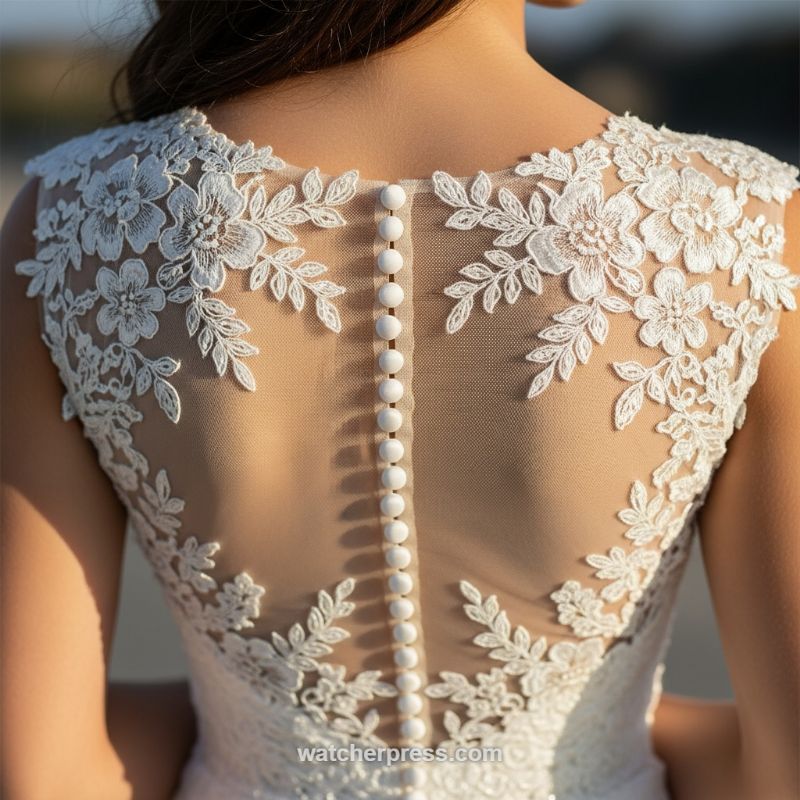
While silhouettes like A-Line and Mermaid dictate the overall shape of your gown, the exquisite back detail is often the element that captures the most attention during the ceremony. The illusion back, exemplified by this design, features delicate lace appliqué stitched onto sheer mesh or tulle, creating the stunning effect of lace floating directly on the skin. This sophisticated technique allows a bride to incorporate coverage—like sleeves or a higher neckline—while maintaining a light, ethereal feel. When considering different silhouettes, an illusion back adds a romantic contrast to the sleek lines of a Mermaid gown or elevates the grandeur of a traditional Ballgown by introducing modern transparency. This detail should be chosen carefully; ensure the nude mesh color is a perfect match for your skin tone, guaranteeing the seamless ‘barely there’ effect that makes this style so sought after.
Central to this classic back design is the vertical row of fabric-covered buttons. These small, elegant accents serve multiple purposes: they add texture, provide a flattering vertical line that elongates the torso and back, and neatly conceal the zipper closure, resulting in a cleaner, more refined finish. When opting for such a detailed back, expert advice is to plan your styling around showcasing this feature. An elaborate updo or swept-back hairstyle is crucial, ensuring the buttons are visible from the highest point down to the waistline. Furthermore, consider keeping accessories simple; a long pendant necklace might compete with the button line, making sophisticated drop earrings or simple stud earrings the preferred choice. The button detail transforms the back into a focal point, merging timeless elegance with contemporary bridal fashion.
To ensure your illusion back maintains its integrity and beauty throughout the wedding day, quality and fit are paramount. The lace appliqué must be securely stitched and lay flat against the mesh without puckering or gapping, especially around the shoulders and neckline. If you are leaning towards an A-Line gown, the structured nature of the illusion bodice can provide support, beautifully balancing the voluminous skirt. For brides selecting a fitted silhouette, this intricate back adds complexity and visual depth, ensuring the view from all angles is captivating. Ultimately, dedicating attention to these custom details ensures that the final impression of your chosen silhouette—be it structured, flowing, or dramatic—is one of absolute artistry and personalization.
Elevating Silhouettes with High-Neck Lace Overlays and Sleeves
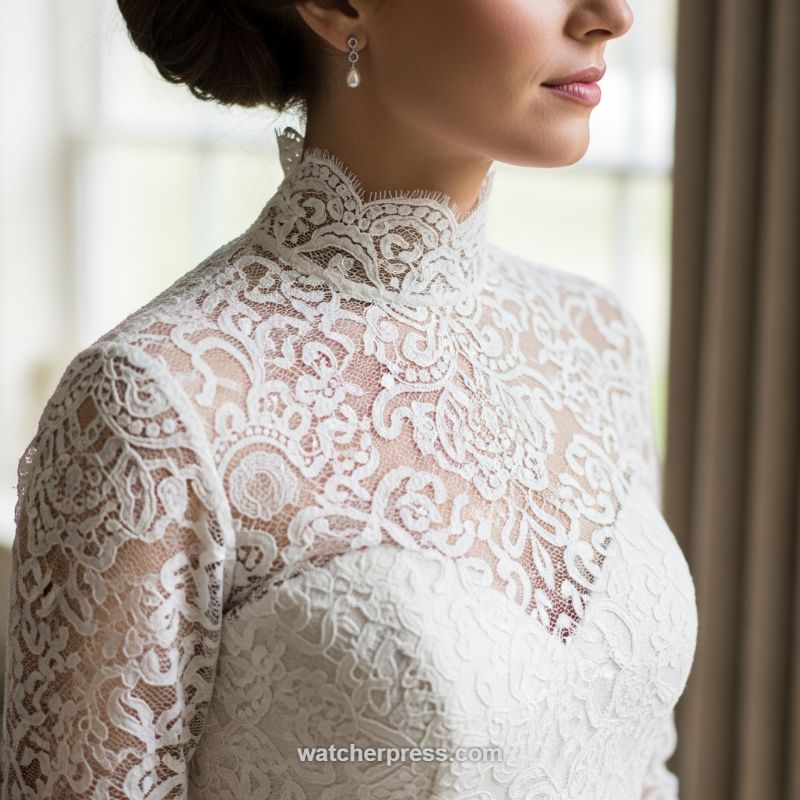
While choosing a core silhouette—be it an A-Line, Mermaid, or Ballgown—is foundational, the details of the bodice, neckline, and sleeves are what ultimately define the gown’s personality and suitability. The image perfectly illustrates the transformative power of a bespoke lace overlay, specifically featuring a sophisticated high mock neck and long sheer sleeves. This style detail instantly elevates the dress, lending a sense of regal modesty and intricate texture. When incorporating such a feature, understand that the high neck acts as a focal point, drawing the eye upward. The sheer lace against the skin provides coverage without heaviness, a perfect solution for brides who desire formality or adhering to traditional requirements, while still embracing contemporary bridal elegance. Expert advice dictates that the lace pattern must be distinct and well-structured, such as a heavy Guipure or complex Alençon, to stand out against the lining beneath. Consider how the pattern terminates at the neckline and cuff—a delicate scalloped edge, as seen here, softens the structure and ensures a comfortable, tailored fit.
Choosing a high-neck overlay is an exercise in balancing coverage with allure. This design effectively achieves that balance by pairing the full coverage of the collar and long sleeves with a sheer application, revealing the faintest hint of the skin underneath. For optimal styling, ensure the base gown silhouette features a complementary neckline, often a sweetheart or straight across strapless cut, allowing the intricate lace to drape over and define the bustline without competition. If opting for a similar high-neck, long-sleeved look, pay close attention to the fabric integrity; the lace must be high quality and resist snagging, especially at points of friction like the elbows and neck. Furthermore, since this level of detail is quite demanding on the upper body, brides should consider their venue and season; this design is particularly stunning for autumn or winter celebrations, or grand, historical settings where formality reigns supreme.
Finally, the presence of a high collar significantly impacts accessory choices, providing crucial expert guidance for the bride. A sophisticated neckline such as this usually negates the need for a necklace, which could clutter the intricate lace work. Instead, focus attention on elegant, long drop earrings (as shown with the pearl drops) or detailed hair accessories. An updo or sleek chignon is highly recommended to complement the structured neck and prevent hair from obscuring the beautiful collar detail. This ensures a clean, elongated look that emphasizes the delicate framework of the gown. By carefully considering the texture, fit, and accessory implications of a high-neck lace overlay, any core wedding dress silhouette can be transformed into a masterpiece of timeless sophistication and bridal luxury.
Enhancing Silhouettes: The Role of Detailed Sleeves and Fabric Textures
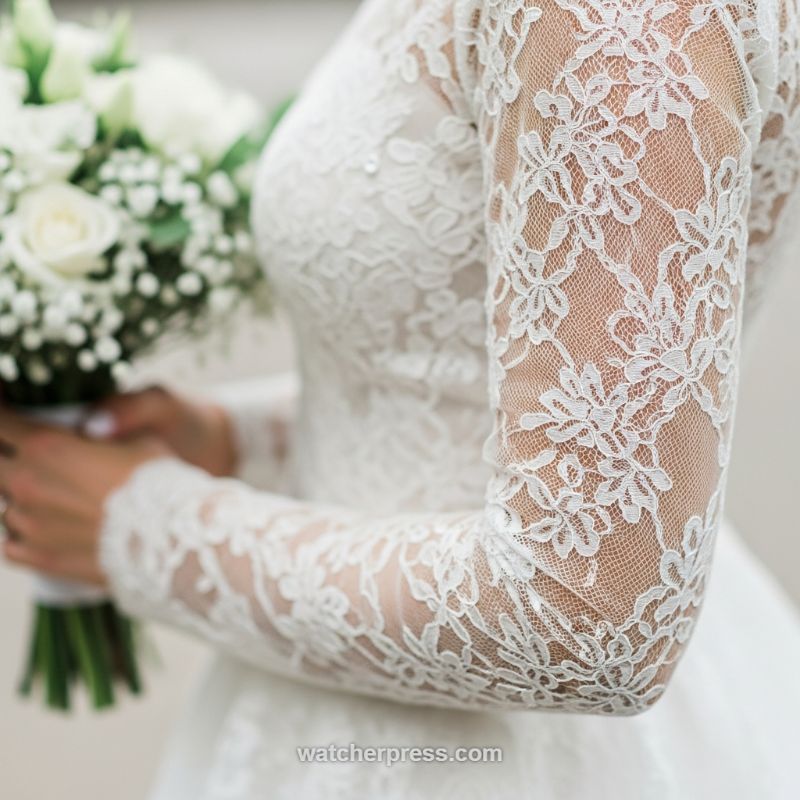
While choosing a wedding dress silhouette—whether it’s the flattering A-line, the dramatic Ballgown, or the form-fitting Mermaid—is the foundational step, the true character of the gown is often defined by its intricate fabric and sleeve details. The close-up view of this exquisite illusion lace sleeve demonstrates how texture and pattern can profoundly influence the formality and aesthetic of any chosen shape. Long, detailed sleeves, particularly those featuring dense floral appliqué over sheer netting, offer a perfect balance of traditional modesty and contemporary allure. This style is incredibly versatile, pairing beautifully with both voluminous skirts, where the detailed sleeves provide grounding elegance, and with streamlined silhouettes, where they serve as the primary focal point of ornamentation. The key instructional takeaway here is to ensure the sleeve density complements the skirt’s volume; intricate work on top requires a corresponding level of quality and careful fabric selection elsewhere to maintain harmony.
When incorporating highly detailed elements like this illusion lace, brides must consider how the fabric structure interacts with the core silhouette. For A-Line and Ballgown dresses, which rely on volume and drape, the sleeves must not look heavy or restrictive. The delicate nature of the netting allows the intricate white lace to appear almost painted onto the skin, providing coverage without weight, thus maintaining the desired flow of a softer silhouette. Expert tailoring advice suggests that the fit of an illusion sleeve is paramount; because the sheer fabric is unforgiving, any wrinkling or bunching near the elbow or wrist will detract from the luxurious effect. A proper fitting ensures the lace sits smoothly, making it appear seamless and structurally sound, which is crucial for achieving that flawless, bridal standard.
Furthermore, the decision to use detailed lace sleeves impacts accessories and overall styling. Since the arms are heavily decorated, you should often opt for minimalist jewelry, such as simple stud earrings or a delicate necklace, allowing the dress detail to remain the star. The texture of the lace shown—bold, white floral patterns on a fine, almost invisible mesh—lends itself to classic, romantic themes. When planning the silhouette, remember that sleeves like this can elevate a simple satin sheath or an understated A-line silhouette to red-carpet status, providing a significant ‘wow’ factor without the need for excessive beading on the bodice or skirt. This approach is highly recommended for brides seeking timeless elegance with an unforgettable tactile component.
Navigating the Glamorous and Body-Contouring Mermaid Silhouette
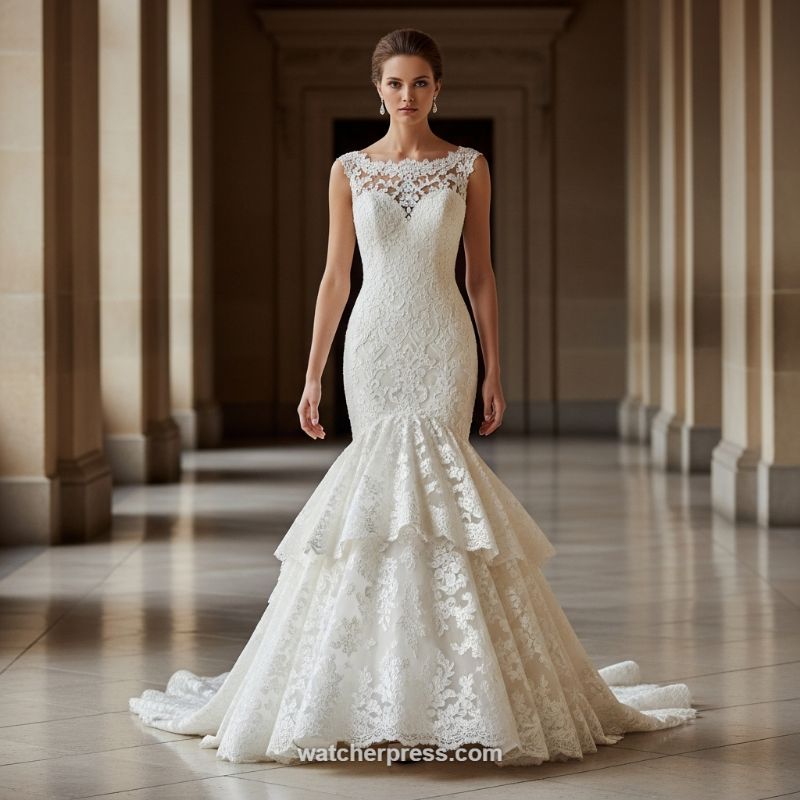
The Mermaid silhouette, sometimes referred to as the Trumpet depending on where the flare begins, is designed for the bride who wants to showcase her curves and embrace high-impact glamour. As demonstrated in this image, this style is intensely fitted, hugging the chest, waist, and hips, before dramatically flaring out around or below the knee. This structure creates an unmistakable, exaggerated hourglass shape, offering incredible drama but demanding confidence and precise tailoring. Visually, the contrast between the tightly tailored bodice and the voluminous, often tiered, skirt is what defines this look. Notice how the dress features an intricate illusion lace neckline, which provides both coverage and structural support while allowing the rich lace pattern to extend elegantly onto the décolletage, balancing the volume of the skirt with delicate, detailed upper body work.
When opting for a Mermaid dress, the fabrication is key to achieving the desired structure and movement. In this example, the bodice and skirt are covered in a rich, robust floral lace overlay, which helps create a tailored, rigid shape necessary to maintain the silhouette’s integrity from bust to knee. Expert bridal consultants stress the importance of the flare point: if the flare starts higher (mid-thigh), it is often called a Trumpet, offering slightly more mobility. If it starts lower (at or below the knee), it’s a true Mermaid, requiring more careful walking but delivering maximum drama. The addition of tiered lace panels on the skirt, as seen here, maximizes texture and volume without needing heavy satin underlays, resulting in a lighter yet equally spectacular train that trails elegantly behind the bride.
While undeniably stunning, brides must be aware that the Mermaid silhouette restricts movement; sitting and dancing require slightly more effort than in an A-line or Ballgown. Therefore, expert advice dictates that fittings for a Mermaid gown must be absolutely meticulous. Focus particularly on the hip and knee area to ensure you have enough allowance to comfortably bend and move without straining the seams. Furthermore, this silhouette typically requires high-quality, seamless shapewear to achieve the smooth, unbroken line demanded by the fitted design. Due to its inherent grandeur and dramatic flair, the Mermaid is perfectly suited for formal, large-scale weddings, especially those held in opulent venues like grand ballrooms or, as suggested by the image, classically elegant architectural spaces.
The Ballgown Silhouette: Architectural Volume and Modern Structure
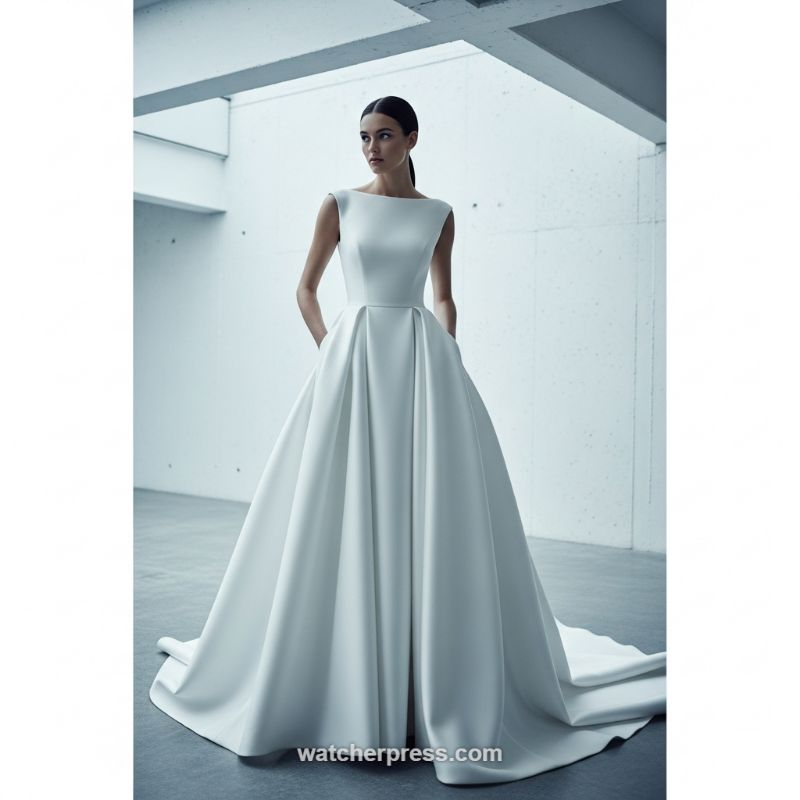
The dress captured in this image exemplifies the modern interpretation of the classic Ballgown silhouette, moving away from overly elaborate embellishments and focusing instead on architectural structure and pristine tailoring. The defining characteristic is the dramatically fitted bodice, which cinches tightly at the natural waistline, contrasting sharply with the immense volume of the skirt. For brides considering this style, understand that the magic lies in the fabric—typically a structured Mikado, Duchess satin, or heavier crepe—which maintains clean, deliberate folds and prevents drooping. Notice the clean boat (bateau) neckline and the sleeveless cut, offering a sophisticated, modest balance to the dramatic skirt volume. Expert advice emphasizes the importance of fabric weight and internal structure (crinoline or petticoats) to ensure the skirt maintains its shape and sweep without appearing flimsy. This particular design features discreet side pockets, a major contemporary update that adds both functionality and a relaxed, poised elegance to the formal silhouette, allowing the bride a subtle, confident stance.
The Ballgown silhouette is universally flattering, particularly for brides seeking to emphasize a tiny waist or those with an hourglass or pear shape. The voluminous skirt expertly conceals the lower body, while the fitted bodice draws the eye upward to the décolletage and shoulders. When trying on a gown of this magnitude, pay close attention to the fit of the bodice; it should be tailored precisely to the ribcage to achieve maximum definition where the skirt begins. If you are petite, be mindful that while the volume is flattering, a skirt that is *too* vast can overwhelm your frame; look for gowns where the gathering starts high on the waist. Conversely, taller brides can confidently carry the longest trains and the most extensive skirt volume. Styling for this clean, structured look should mirror its minimalism: opt for sleek hair (like the low ponytail shown), minimal jewelry, and sophisticated heels that will offer the necessary height without competing with the dress’s statement presence.
For the ultimate ‘how-to’ guide in choosing this magnificent silhouette, consider your venue first. While breathtaking, the Ballgown requires space to move and display its full glory, making it ideal for grand hotel ballrooms, cathedrals, or spacious outdoor settings, but less practical for intimate, constrained spaces. When budgeting for your gown, allocate funds for detailed alterations; structured fabrics require expert steaming and hemming to ensure a flawless break with the floor and a smooth, unwrinkled finish. During fittings, practice walking, sitting, and dancing to ensure the internal structure allows for movement—comfort is key, even in a dramatic gown. If you love this clean, modern aesthetic but desire a touch more drama, consider adding removable elements like an overskirt or a decorative sash, ensuring the primary structure of the elegant, pocketed silhouette remains the star of your wedding day look.
Mastering the Sheath Silhouette: Sleek, Modern, and Chic
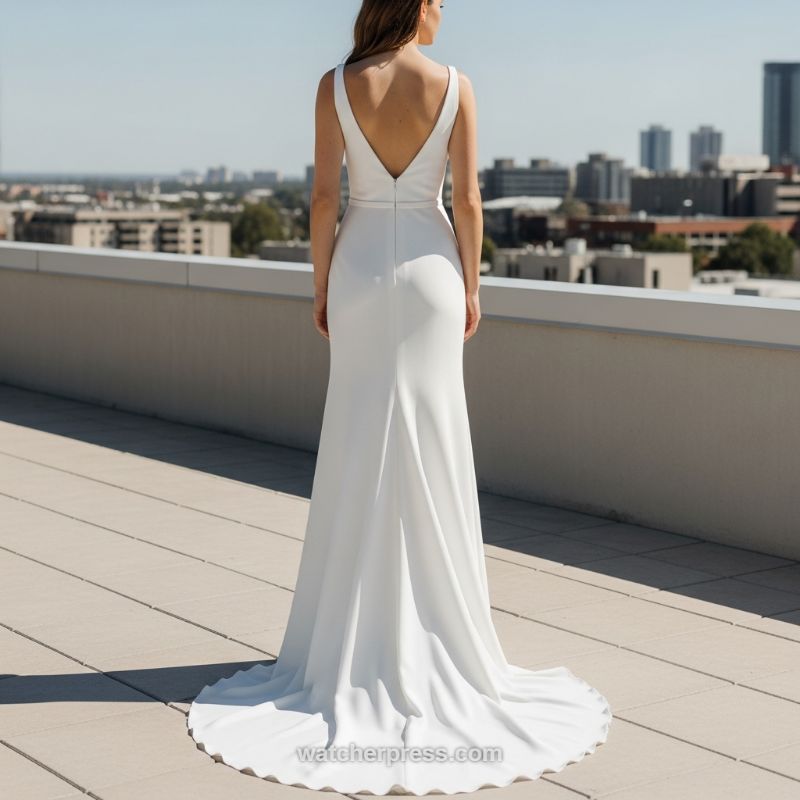
The sheath, or column, silhouette is the epitome of sophisticated minimalism, offering a design that closely follows the natural line of the body from neckline to hem. Unlike the A-line which flares out gently from the waist, or the Mermaid which dramatically hugs the body before flaring at the knee, the Sheath maintains a consistent, uninterrupted vertical line, as beautifully demonstrated by this crisp white gown. The key visual elements here include the precision tailoring, the deep V-neckline on the back—a bold, modern feature that adds dramatic appeal without compromising the gown’s sleekness—and the seamless construction that highlights the bride’s figure. This silhouette relies heavily on structure and fabric quality; note how the material (likely a luxurious crepe or heavy satin) flows smoothly without excessive wrinkling, ensuring that the silhouette remains clean and elongated. When selecting a Sheath gown, ensure that the fit is precise through the waist and hips; a small, subtle belt detail, often integrated seamlessly into the seam line as seen here, can help define the waist without breaking the gown’s elegant flow. Choosing a dress with a statement back design, like this deep scoop or V, keeps the focus on the structure and tailoring, making accessories secondary.To successfully wear the Sheath silhouette, proper tailoring is non-negotiable, as the unforgiving nature of the straight-cut fabric reveals every curve and fit imperfection. Expert advice suggests that this style particularly flatters slender, balanced figures and can be a fantastic choice for petite brides, as the vertical line visually lengthens the body. Due to its form-fitting design, selecting appropriate undergarments is crucial; seamless shapewear is often necessary to achieve the smooth, unbroken line that defines this look. Furthermore, consider the movement factor: while the simplicity of the silhouette makes it comfortable for walking and standing, a very fitted sheath can restrict large steps or dancing, so look for fabrics with a slight stretch or ensure the bottom flare (even if minimal) starts high enough to allow freedom of movement. If the dress features a train, like the chapel length one shown here with its unique scalloped edge, practicing how to bustle or manage it is essential to maintain the clean lines and prevent dragging the elegant hemline.The Sheath silhouette shines brightest in modern, urban, or destination wedding settings, perfectly complementing a clean aesthetic like the sunny rooftop depicted. If your venue is non-traditional, such as a gallery, a contemporary hotel, or a city rooftop, the Sheath silhouette offers an appropriate level of formality and sophistication without overwhelming the space. Styling should lean towards modern elegance: opt for minimalist jewelry—perhaps delicate drop earrings or a bracelet—to keep attention on the gown’s architectural lines and the exposed back. For hair, an updo or a half-up style, as seen in the image, works well to showcase the deep V-back detail. Brides should view the Sheath not just as a dress, but as a statement of chic confidence; its beauty lies in its simplicity and the quality of its execution, making it a timeless choice for the bride who values sleek design over volume.
The Elegant Simplicity of the Sheath (Column) Silhouette
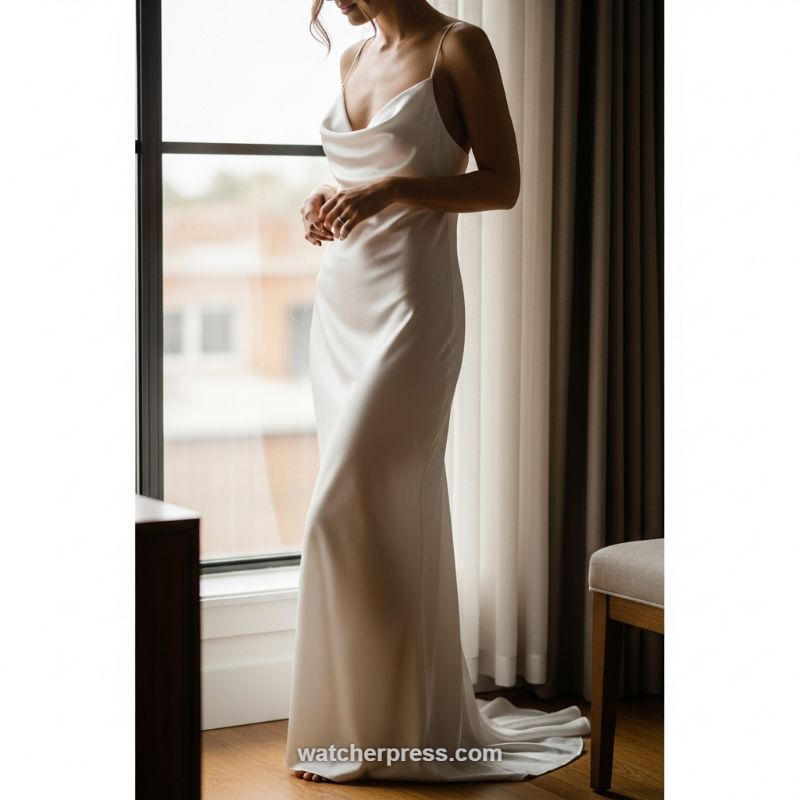
The Sheath, or Column, silhouette is the epitome of sophisticated minimalism, offering a sleek, continuous line that gracefully follows the body’s natural shape. Unlike the voluminous ballgown or the dramatically flared mermaid, the sheath skims the contours from the neckline down through the hips before falling straight to the floor, as beautifully demonstrated by this bias-cut, luminous satin gown. The key instruction when considering this silhouette is to prioritize fabric quality; because the dress relies entirely on its drape rather than structural volume, materials like heavy silk crepe, luxurious satin (like the one pictured, which catches the light perfectly), or fine velvet are essential. Visually, the Sheath elongates the frame, making it a powerful choice for petite brides or those seeking an understated, contemporary glamour. If your wedding venue is modern, urban, or a chic destination locale, this fluid silhouette will complement the setting seamlessly. To truly nail this look, ensure the dress is perfectly fitted, as any imperfections in tailoring become highly visible in such a clean, uninterrupted design.
Choosing the Sheath silhouette requires understanding that it highlights your natural form; it doesn’t hide or heavily structure the body. Expert advice suggests this style is best suited for balanced figures or brides who are comfortable with a closely fitted gown. When accessorizing, take a minimalist approach to match the dress’s clean aesthetic. Opt for delicate jewelry, perhaps a simple necklace that echoes the dramatic cowl neckline shown, or elegant drop earrings. Instructionally, brides should always try walking and sitting extensively in a sheath gown during fittings, especially if the fabric has minimal stretch, to ensure comfort and ease of movement throughout the wedding day. The narrow base of this silhouette can sometimes restrict motion more than an A-line, so proper tailoring for length and foot clearance is crucial for a confident stride down the aisle.
When it comes to styling and visual impact, the Sheath dress is defined by its verticality and the way light interacts with the fabric. The soft, window light captured here enhances the liquid movement and subtle sheen of the satin, a necessary consideration if you opt for glossy materials. Instructionally, discuss lining material with your tailor; a good quality, silky lining is paramount to ensuring the dress slides smoothly over the body without clinging or bunching, which is a common pitfall of lighter, column-style dresses. If you desire a slightly softer appearance than the strict column, look for options that feature a subtle bias cut or a gentle trumpet flare starting just below the knee, adding a touch of romance while maintaining the overall lean profile. This choice proves that a dress does not need intricate lace or extensive beading to make a profound, timeless statement.
Exquisite Embellishment: The Floral Illusion Bodice of a Statement Gown

While choosing a silhouette—A-Line, Ballgown, or Mermaid—dictates the overall shape and flow of your gown, the bodice detailing determines the character and focus of the upper body. The style seen here is a prime example of high-fashion bridal artistry, often utilized in A-Line and Ballgown silhouettes where a fitted, highly detailed top balances a voluminous skirt. This sheer, illusion neckline features intricate 3D floral appliqués hand-sewn across a nude mesh foundation, creating the breathtaking appearance of flowers blooming directly onto the skin. The strategic use of a plunging V-neckline under the illusion panel elongates the torso while the dense coverage of pearls and scattered crystals adds multi-dimensional shimmer and texture. When evaluating gowns with this level of ornamentation, assess the quality of the illusion tulle; it should match your specific skin tone seamlessly to maintain the ‘floating’ effect of the appliqué work, ensuring a bespoke and refined finish.
The density of 3D embellishment, particularly across the shoulders forming cap sleeves as shown, adds structural weight and visual interest that flatters numerous body types. For brides seeking to add volume or definition to the bust area, the layered texture of petals and beading naturally enhances contouring without excessive padding. Expert advice dictates that when your gown features such dramatic detailing, accessories should remain minimal and complementary. Opt for stud earrings or a delicate bracelet, allowing the bodice itself to serve as the primary statement piece. Avoid elaborate necklaces that would compete with the intricate lacework and crystals already adorning the neckline. Furthermore, consider how the floral motif translates to the rest of your wedding aesthetic—this romantic, garden-inspired element pairs beautifully with soft, cascading veils or loose, naturalistic hairstyles.
Practical considerations are essential when selecting an intricately embellished gown. The weight of heavy beading and 3D flowers can affect the comfort and required structure of the dress, making professional tailoring absolutely crucial. Ensure the interior bodice is fitted with robust boning and support to handle the exterior weight and prevent slipping or shifting, especially if choosing a deep-cut illusion front. For gowns incorporating heavy textures like this, movement should be tested during fittings; the appliqués should not rub uncomfortably against the arms or neck. Finally, understand that highly detailed illusion fabric requires specialized maintenance and cleaning—discuss preservation and cleaning techniques with your bridal consultant, as standard dry cleaning is often insufficient for protecting delicate hand-sewn 3D elements and illusion mesh.
The Timeless Drama of the Ballgown Silhouette
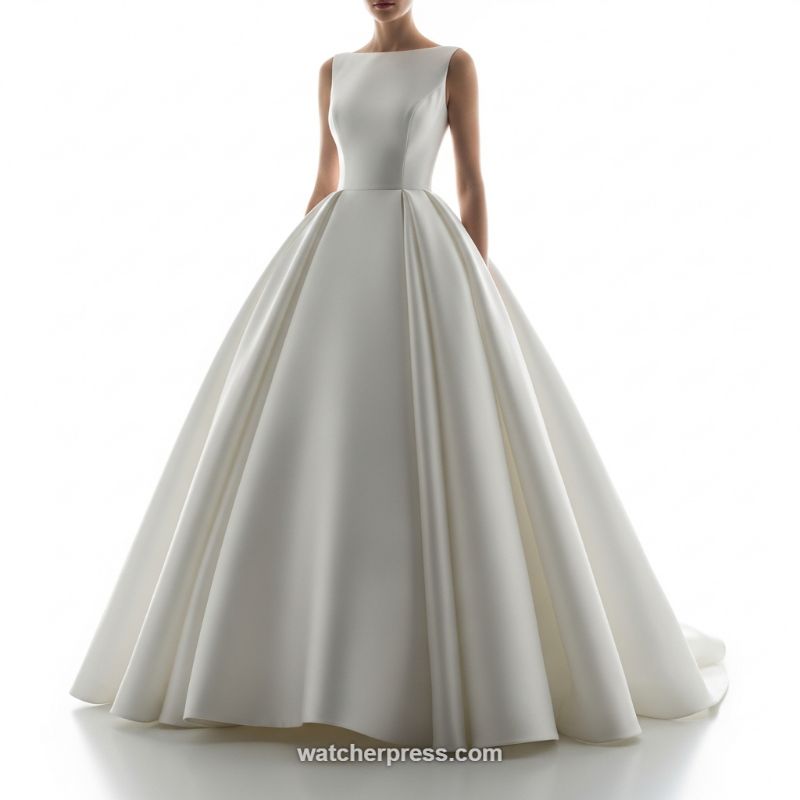
The Ballgown silhouette, exemplified by this stunning, classic design, is the epitome of bridal fantasy and grandeur. Defined by a dramatically fitted bodice that cinches at the natural waistline, it explodes into a voluminous, floor-length skirt. The visual elements here showcase unparalleled elegance: the structured, smooth fabric—likely a luxurious duchess satin—holds its shape beautifully, creating deep, architectural folds that flow from the waist down to the hem. Unlike fluffier, layered tulle skirts, this satin variation offers a sophisticated, opulent weight and a high sheen that catches the light beautifully. Notice the contrasting simplicity of the top half; the high, boat-neck (or bateau) neckline and clean, sleeveless cut provide a modern counterpoint to the traditional skirt, focusing attention upward to the bride’s collarbone and shoulders while maintaining an air of refined modesty.
Choosing a Ballgown is choosing instant spectacle and tradition. This silhouette is famously flattering to nearly all body types, serving as the ultimate canvas for maximizing the fairytale effect. The expertly defined waistline is key: it accentuates the narrowest part of the figure and allows the massive skirt to gracefully conceal the lower body, making it an excellent choice for brides looking to minimize their hips or create the illusion of a pronounced hourglass figure. Expert advice for carrying this look involves logistics; due to the sheer volume and weight of the skirt (especially in a heavy fabric like satin), ensure your venue can accommodate the width, and plan for specialized undergarments, such as a petticoat or crinoline, to maintain structure and prevent the skirt from collapsing or getting caught during movement. The clean lines of the dress pictured dictate a minimalist approach to jewelry, allowing the fabric and silhouette to remain the undisputed star.
When styling a Ballgown of this magnitude, focus on elevated simplicity to match the sleekness of the bodice. Since the neckline is high, skip the necklace entirely or opt for subtle studs and a sophisticated updo to complement the structure. For brides planning a highly traditional or formal evening wedding, the satin Ballgown provides unmatched formality and polish. While the weight of satin can be a factor, its ability to drape and maintain shape surpasses lighter fabrics. If you desire this silhouette but prefer less weight, seek out designs that utilize lighter, structured fabrics like Mikado silk or organza, which offer a similar clean finish and volume without the substantial heft of duchess satin. Ultimately, the Ballgown silhouette guarantees a dramatic entrance and unforgettable photographs, cementing its status as the quintessential wedding gown.
The Ethereal Flow of the A-Line Silhouette for Destination Weddings

While the image captures a moment of dramatic elegance, the gown itself provides a masterclass in selecting a lightweight, flowing silhouette perfect for outdoor and destination weddings. This particular dress exemplifies a soft A-line or modified Sheath cut. Unlike traditional A-lines that maintain rigidity from the waist down, this style employs sheer, delicate fabrics to create movement, where the skirt flows away from the body in a gentle, unstructured manner. To achieve this look, focus on choosing gowns constructed from materials like tulle, soft English net, or chiffon overlays. The key instructional takeaway here is movement: ensure the fabric drapes effortlessly and does not carry excessive weight, allowing the train to fan out naturally on soft surfaces like sand or grass, creating dynamic, romantic photographs like the one shown, without causing the bride to overheat or feel restricted during the ceremony or reception.
Expert advice dictates that when working with lighter silhouettes and long trains, the fabric selection must complement the environment. The stunning floral lace appliqué visible here is ideal because the design is embroidered onto a sheer net, keeping the material light while maximizing visual impact. If you are opting for a silhouette that prioritizes flow over internal structure (like boning or petticoats), you must pay attention to the gown’s lining. A nude or champagne lining under the white lace, as seen in this example, enhances the delicate nature of the overlay and provides a soft contrast, preventing the dress from appearing too stark white against natural backdrops. Furthermore, notice the construction details: the spaghetti straps and low back are common features in these flowing A-lines, offering comfort and ventilation while allowing the dramatic train and subtle lace patterns to remain the focal point, ensuring a breathable yet high-fashion look.
To successfully incorporate this style into your overall wedding aesthetic, consider the length of the train (often Chapel or Cathedral for maximum photographic effect) and how you plan to manage it. Since this is an unstructured, sheer train, ensure your dressmaker incorporates an effective, yet discreet, bustle system for the reception to prevent dragging and tearing. This particular silhouette is incredibly flattering because the gentle flare starts above the hip line, elongating the torso and balancing most body types, making it a universal choice for brides seeking an ethereal, romantic vibe. Pair this gown with minimal, organic accessories, such as a delicate hair vine or simple drop earrings, to complete the soft, goddess-like aesthetic and avoid overpowering the intricate details of the lace and the dramatic sweep of the skirt.
The Majestic Ballgown: Volume, Drama, and Fairytale Romance
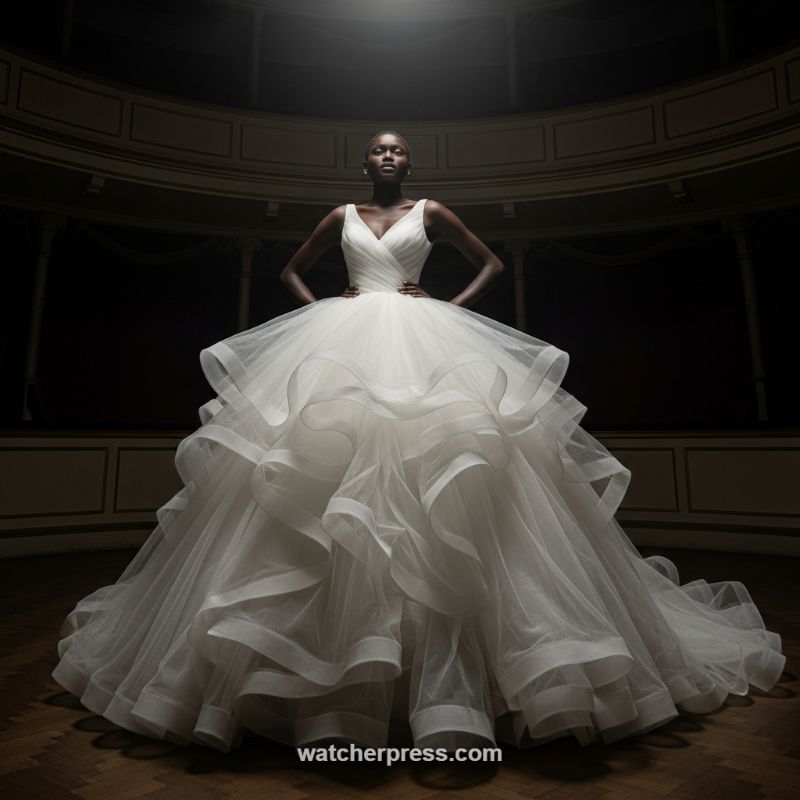
The Ballgown is the quintessential fairytale silhouette, defined by a fitted bodice that cinches at the natural waist and explodes into a dramatically full, voluminous skirt. As showcased in this dramatic portrait, the resulting effect is regal, commanding, and perfect for the bride seeking ultimate glamour and presence. The sheer scale of the Ballgown demands attention, making it the ideal choice for grand, traditional, or formal venues, such as a cathedral, an opulent ballroom, or, as pictured, a historic opera house. When evaluating this silhouette, pay close attention to the fabric used for the skirt; this example utilizes cascading layers of ruffled tulle, which creates immense, buoyant volume and a soft, cloud-like texture. This specific layering technique adds depth and movement, ensuring that every step down the aisle is truly spectacular. Because the skirt provides such powerful visual impact, the bodice—like the simple, tailored V-neck shown here—is often kept relatively clean and simple to maintain balance.
Instructionally, the Ballgown is incredibly forgiving and universally flattering, making it a popular choice across many body types. Its structured bodice naturally creates a defined waistline, enhancing or creating an hourglass figure, regardless of the bride’s natural shape. Furthermore, the sweeping volume of the skirt offers excellent coverage for the lower body, comfortably concealing the hips, thighs, or legs. However, expert tailoring is crucial, especially for petite brides. If the skirt’s volume is too vast relative to the bride’s height, the dress risks overwhelming her frame. When trying on ballgowns, pay attention to the proportion of the fitted bodice to the skirt break; ensuring the waistline hits precisely at the smallest point of your torso maximizes the flattering effect. If you opt for a highly layered or ruffled skirt like the one displayed, ensure your accompanying accessories and hairstyle are sophisticated yet minimal, allowing the gown itself to remain the undisputed focal point of your look.
Finally, selecting a ballgown requires practical consideration regarding fabric and venue compatibility. While layered tulle offers an ethereal, lightweight look, structured fabrics like satin, taffeta, or silk Mikado will create a heavier, architectural volume. Consider the movement and weight; Ballgowns are generally heavier than other silhouettes and require adequate space for maneuvering—they are not ideal for small, intimate chapels or outdoor weddings on uneven terrain. When preparing for your wedding day, practice walking, sitting, and dancing in your gown well before the ceremony. Understand the logistics of the train management and enlist a trusted member of your bridal party to assist with bustling and fluffing the skirt, ensuring the voluminous silhouette maintains its majestic drama throughout the entire event.
Elegant Necklines: Exploring the Dramatic Cowl Draping Detail
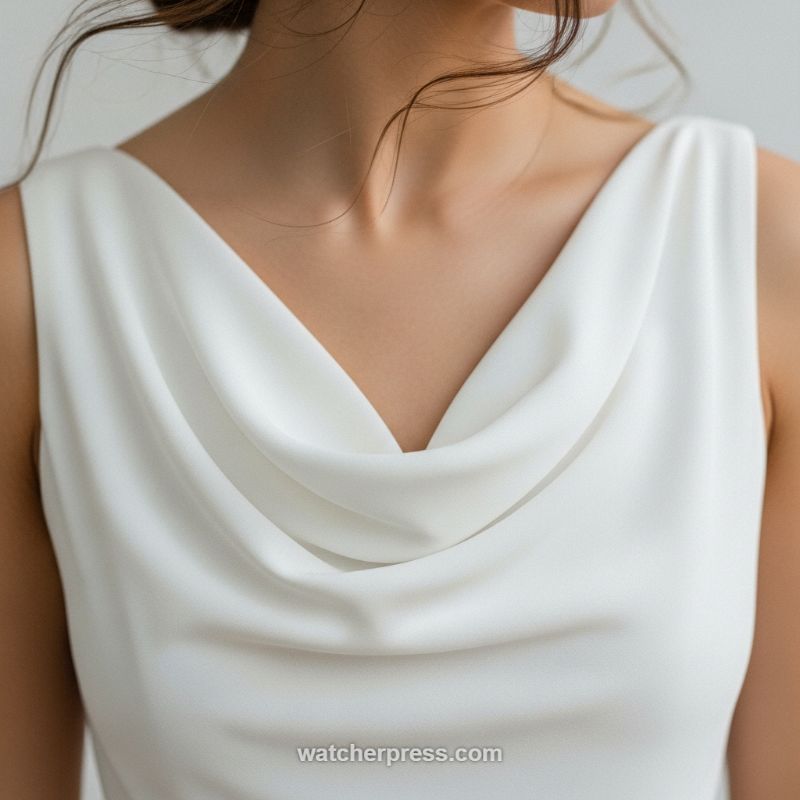
While choosing a wedding dress silhouette like A-Line or Mermaid is crucial, the neckline detail often dictates the garment’s overall sophistication and feel. The image showcases a classic yet modern cowl neckline, characterized by soft, flowing fabric draped gracefully around the collarbone and bust area, forming gentle folds. This specific feature relies heavily on the fabric choice; generally, a heavier, matte fabric like silk crepe, satin, or thick charmeuse is required to achieve the rich, structured yet soft drape seen here. Unlike plunging V-necks or sweetheart styles that focus on rigid structure, the cowl neck adds fluidity and subtle volume, providing a universally flattering effect that softens the upper body. It naturally draws the eye upward and is a hallmark of minimalist, highly refined bridal wear, often perfectly complementing sleek sheath or unfussy soft A-Line silhouettes where structure is clean but movement is prioritized.
When incorporating a dramatic detail like the cowl neck into your gown, expert styling is essential to maintain the clean, sophisticated aesthetic. Because the cowl already creates significant visual interest and texture near the face, it demands a less-is-more approach to accessories. Brides should opt for delicate stud earrings or subtle drop earrings, completely foregoing a necklace, as any chain would interfere with the beautiful flow of the fabric folds. Furthermore, the high, yet draped nature of this neckline is ideally paired with an elegant updo or a smooth, controlled half-up style, ensuring that the hair does not obscure the stunning detail that anchors the look. This design choice is particularly well-suited for contemporary or black-tie events where a bride desires timeless elegance and sophistication over heavy ornamentation or elaborate lace.
Integrating the cowl neck into a broader silhouette choice requires careful consideration of balance. If you select a highly voluminous silhouette like a Ballgown, pairing it with a cowl neck provides a contrasting softness to the structured skirt, balancing the drama with fluidity. However, this neckline truly shines when paired with inherently minimalist forms, such as the bias-cut Sheath or Column dress, enhancing the gown’s inherent sleekness and allowing the fabric quality to speak for itself. The technique of the cowl requires expert pattern cutting to ensure the drape falls perfectly and maintains its shape throughout the wedding day. When consulting with tailors or designers, always confirm the construction utilizes quality interlining to properly support the weight of the fabric, ensuring this gorgeous feature remains the pristine focal point of your refined bridal look without risk of sagging or shifting.
The Ballgown: Mastering Magnificent Volume and Embellishment
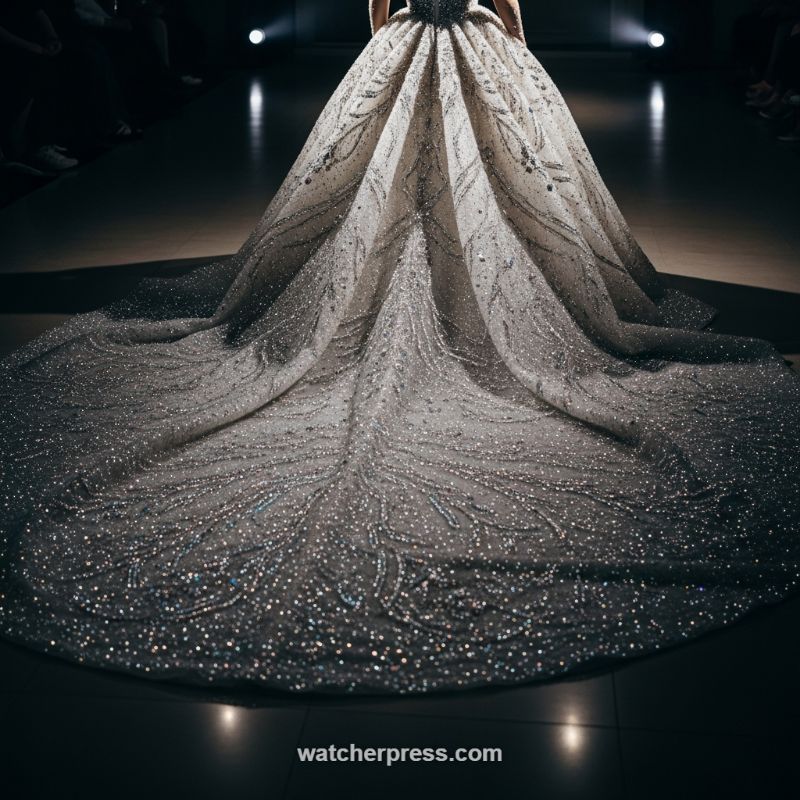
The Ballgown is the quintessential fairytale silhouette, defined by a fitted bodice and a dramatically full skirt, often supported by layers of crinoline or tulle to achieve maximum volume. As evidenced by the intricate craftsmanship in this image, the Ballgown offers the largest canvas for opulent details, particularly visible in the breathtaking train. When selecting a ballgown, pay critical attention to the skirt’s construction; the amount of volume determines the formal effect. A truly magnificent train, like the one shown, requires structure—look for fabrics like silk Mikado or heavy satin paired with substantial embellishment. This specific design uses dense, vine-like patterns of high-luster crystals and sequins that grow from the hemline up the train, creating a waterfall effect that maximizes shimmer under runway or spotlight conditions. Ensure your consultation focuses on how the volume is managed, as this directly impacts comfort and movement throughout the ceremony and reception.
Expert advice for styling heavily embellished ballgowns centers on logistics and balance. The visible pattern is achieved through hundreds of thousands of hand-applied beads, which adds significant weight. It is crucial to have multiple fittings to ensure the internal structure (like boning and foundation garments) can adequately support the skirt’s weight without pulling the bodice down. Furthermore, the selection of your bridal jewelry should complement, rather than compete with, the gown’s dazzling train. If the train features heavy, brilliant crystal work, opting for simpler, classic diamond studs or a delicate necklace can maintain focus on the garment itself. When budgeting, remember that gowns featuring this level of concentrated beading and a long court or cathedral length train require immense manual labor, placing them in the highest tier of wedding dress cost.
The functional ‘how-to’ aspect of a ballgown involves meticulous planning for movement. Due to the wide circumference of the skirt, you must rehearse walking and turning—especially if you opt for a high-volume crinoline. The most critical logistical step is planning the bustle, which is the system used to lift and secure the long train off the floor for the reception. A skilled seamstress must design a strong, reliable bustle (often a French, or under, bustle for heavy fabrics) that can withstand hours of dancing without ripping the delicate fabric or stressing the beadwork. Before the wedding day, designate a member of your bridal party to be the ‘Bustle Manager’ who is thoroughly trained by the seamstress on how to secure the train, ensuring a seamless transition from the formal ceremony to the celebratory reception.