Get the ultimate lookbook of 50+ trending nail designs! Explore manicures for every season and style: minimalist, vibrant, elegant, cute, and romantic nail art ideas.
7 Cute VIBES – Mastering the Maximalist 90s Pop Art Nail

The ‘7 Cute VIBES’ aesthetic is a vibrant homage to 90s nostalgia, characterized by bold primary colors, abstract scribbles, and playful motifs like the iconic smiley face. To execute this look successfully, you must embrace controlled maximalism, treating each nail bed as a separate mini-canvas that contributes to an overall cohesive, yet wildly chaotic, mood. Begin by selecting a palette that is both saturated and contrasting—think hot pink, sky blue, vibrant teal, and pops of electric yellow and purple. Preparation is key: ensure your nails are properly prepped and buffed, then apply a smooth layer of rubber base coat. Instead of a uniform base color across all fingers, alternate bright, opaque solid bases. For instance, dedicate one nail to a vivid pink, another to a light blue, and perhaps use a yellow-to-red ombre effect (mirroring the center of the inspiration image) on a third nail to add dynamic depth.
Now, let’s dive into the detailed pattern application. This style relies heavily on sharp contrast and layering. For the classic Polka Dot design, apply a bright blue base, cure it fully, and then use a fine dotting tool and stark white polish to create evenly spaced circles. For the dynamic Scribble Nail, use a light teal or mint base, and with an ultra-thin striping brush (size 00 or 000), overlay free-form zigzag lines in opposing colors like purple, yellow, and orange. The key to the ‘Cute VIBES’ look is incorporating literal icons: on your pink nails, use a detail brush and yellow polish to paint several small, grinning smiley faces, carefully outlining the eyes and smile with black gel liner for a crisp, cartoonish effect. Finally, tie the whole manicure together by selectively adding thin, black, abstract doodle elements (such as floating curves or stylized facial profiles, as seen in the blue section of the reference image) over 2-3 of the busiest patterns to anchor the design and provide a unifying graphic outline.
Expert curation is essential when tackling a maximalist design like this. Avoid repeating the exact same pattern on adjacent nails; the beauty of ‘7 Cute VIBES’ lies in its deliberate lack of symmetry, so ensure you rotate through dots, scribbles, solid blocks, and smileys across the ten fingers. After applying the final top coats to each nail—ensure you are using a non-yellowing, high-shine top coat to maximize the graphic punch of the colors—pay close attention to the thickness. Because this design involves multiple layers of polish and detailed art, a thicker top coat can help encapsulate the design smoothly and prevent premature chipping or texture irregularity. The result should be a high-energy, playful manicure that perfectly captures the joyful anarchy of 90s pop culture, ready to be showcased year-round.
10 Clean Vibes
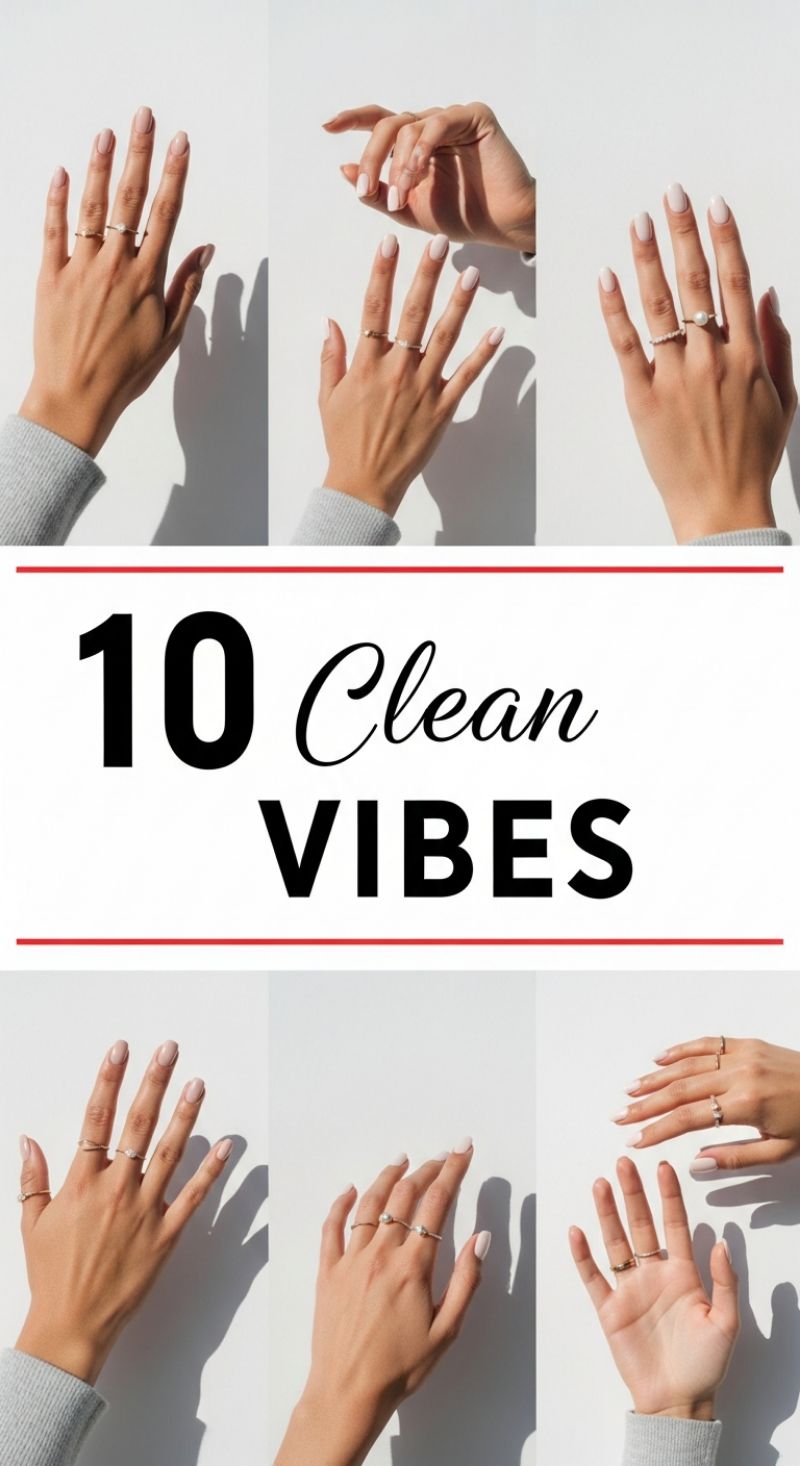
The “Clean Vibes” manicure is the quintessential expression of effortless sophistication, relying on immaculate nail health and sheer perfection rather than complex art. To replicate this look, start by focusing intensely on shaping. The preferred contour seen here is a short to medium-length soft oval or squoval—a shape that looks naturally strong and maintains the elegance required for this minimalist style. The core of this trend is the color: select a high-quality, sheer polish, such as a milky white, translucent blush, or pale nude. The objective is enhancing the natural nail bed color, not masking it entirely. Apply one or two extremely thin coats only; too much pigment sacrifices the clean transparency that defines the style. Once the color is perfect, a glass-like finish is crucial. Use a high-gloss, durable top coat, ensuring it seals the tips completely to prevent chipping and enhance the overall luminous appearance of the design.
While the application is simple, the true expertise lies in hand preparation and maintenance. The longevity and visual impact of the “Clean Vibe” are directly tied to the condition of your cuticles and skin. Expert tip: regularly exfoliate your hands and never skip the cuticle care ritual. Use a quality cuticle oil multiple times a day and always push back the cuticle line gently to maximize the clean, white space near the base of the nail. This contrast elevates the look instantly. As demonstrated in the imagery, this sheer style pairs perfectly with delicate, layered jewelry. When accessorizing, choose minimal pieces—thin gold stacking rings, simple bands, or tiny pearl accents—to maintain harmony with the understated elegance of the manicure. Avoid heavy or oversized rings which can distract from the clean aesthetic.
This trend is remarkably adaptable, making it a year-round staple regardless of the season. To subtly shift the look, adjust the underlying tone of the nude: a touch more pink works well in spring and summer for a fresh, sun-kissed feel, while incorporating a cool, gray-tinged nude is perfect for pairing with heavier winter fabrics. For those who want a hint of design without sacrificing the minimalist theme, this polished base serves as the ultimate canvas for micro-art. Consider adding a single, tiny metallic dot near the base of the index finger or a microscopically thin french tip line using an opaque white or silver polish. Remember, with “Clean Vibes,” less is always more; the focus remains on the flawless finish and the inherent beauty of healthy, manicured hands.
20 Effortless Nails: Mastering the Minimalist Gold Accents
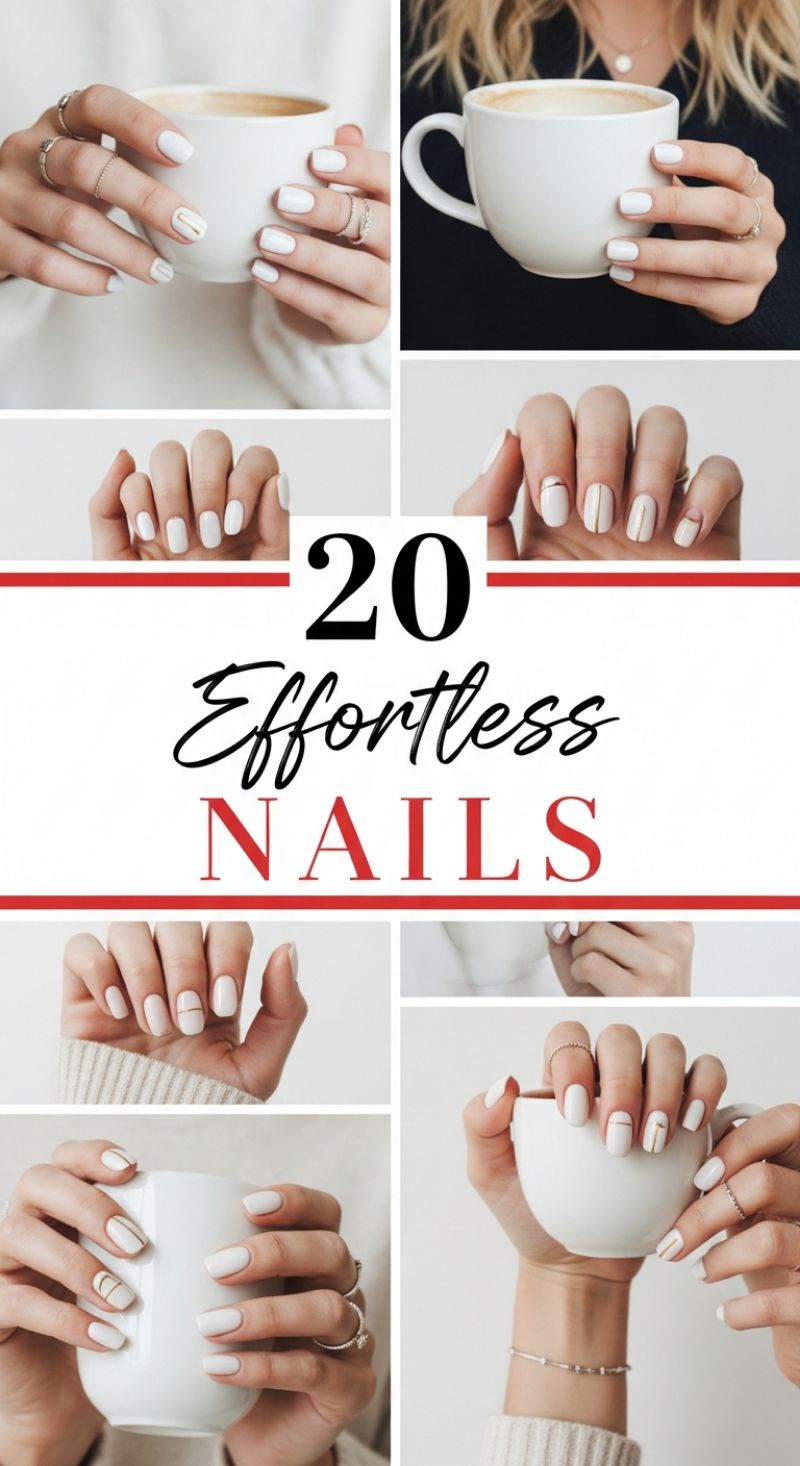
The cornerstone of this “effortless” nail look is a flawlessly executed foundation. Begin by shaping your nails into a short, manageable soft square or squoval shape—this prevents chipping and emphasizes neatness. The base color should be a creamy, opaque white, or a pale nude/bone shade. For a truly professional finish, invest in a highly pigmented lacquer and apply 2-3 very thin, even coats, ensuring each layer is completely dry before proceeding. This immaculate canvas is essential, as the minimalist design elements draw attention to the overall health and uniformity of your manicure. Prep work is key: push back cuticles and lightly buff the nail plate to ensure optimal adhesion and a smooth surface.
The signature element of these designs is the subtle, high-impact gold striping. To replicate this precision at home, you have two primary options: metallic nail polish applied with an ultra-fine liner brush (size 00 or smaller) or dedicated metallic striping tape. For the vertical line designs—a popular choice seen here—ensure the line runs perfectly straight down the center of the nail bed, extending from the cuticle to the free edge. For a modern twist on the half-moon design, apply a single, thin curved line following the natural arc of the cuticle. If using striping tape, cut the piece slightly shorter than the nail width and press it down firmly with a silicone tool before applying the top coat; this prevents lifting. If painting, dip your brush lightly and stabilize your hand on a flat surface to maintain a steady, consistent line thickness.
What makes these nails truly “effortless” is their ability to elevate any look without being distracting. This minimalist style transcends seasons, pairing beautifully with winter sweaters and summer linens alike. For maximum longevity and a glass-like finish, apply a high-quality UV-cured gel top coat or a fast-drying quick-finish polish immediately after the art has dried. When using striping tape, two generous layers of top coat are mandatory to encapsulate the metallic element fully and prevent premature peeling. Expert tip: These detailed manicures demand well-hydrated skin. Regular application of cuticle oil and hand cream will ensure the overall aesthetic—clean, polished, and sophisticated—remains consistent between salon visits. This design proves that often, the most impactful statements are the most subtle ones.
10 Pastel LOOKS
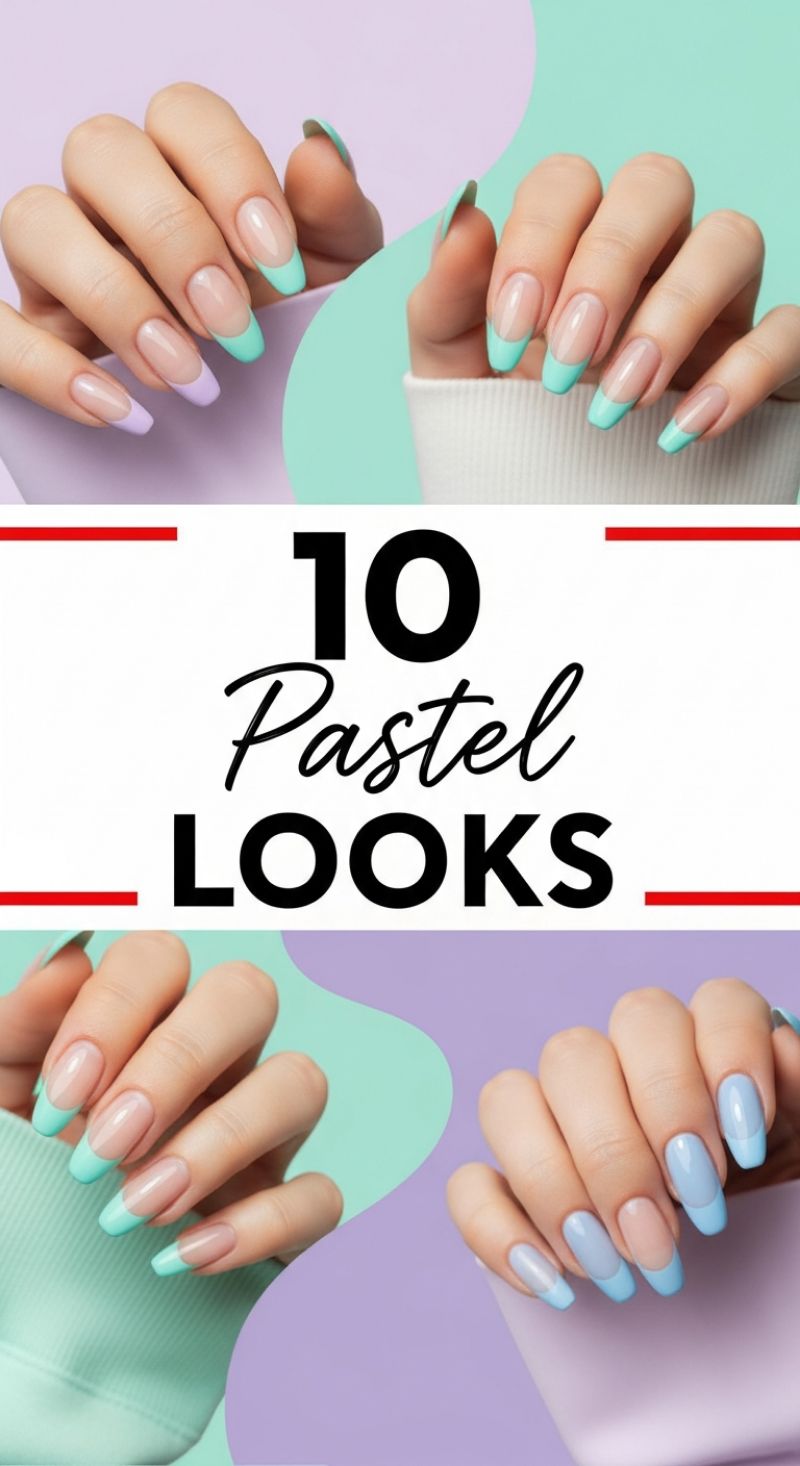
The image showcases the ultimate revitalization of the classic French manicure, transforming it from a traditional stark white tip into a vibrant, yet soft, pastel masterpiece. This trend is ideal for spring and summer, injecting a playful dose of color while maintaining sophistication. The featured designs primarily utilize almond or medium-length coffin shapes, which provide the optimal canvas for the curved “smile line” of the French tip. Notice the brilliant use of colors: cool mint green/aqua and soft lavender/lilac dominate the palette, often paired with a universally flattering sheer pink or nude base coat. The aesthetic is clean, glossy, and highly adaptable, proving that the French manicure is far from boring when color is introduced.
To recreate this elegant pastel French tip look, preparation is key. Begin with a meticulous manicure, ensuring clean, buffed nails and the application of a high-quality sheer nude base coat to elongate the nail bed. Once the base is cured (if using gel) or dry (if using lacquer), the real artistry begins. For a crisp, defined line, use a thin, pointed striping brush, rather than attempting to paint the entire tip freehand. Dip the brush into your chosen pastel shade—mint green and baby blue are excellent starting points—and carefully trace the curve, building up the color in thin layers to avoid bulkiness. For the multi-tonal look displayed (e.g., incorporating a lilac accent nail), ensure the shape and thickness of the smile lines are uniform across all fingers to maintain harmony. Alternatively, for the softer, blended look shown in the lower right, you can use a fine sponge or blotting technique to subtly diffuse the pastel color near the edge of the nude base.
For longevity and a truly professional finish, always cap the free edge of the nail with both the colored polish and the top coat. Expert technicians recommend applying two thin coats of the pastel color for maximum opacity and vibrancy before sealing the entire design with a high-shine, non-yellowing top coat. If you struggle with keeping the French line uniform, utilize French tip guides or a specialized silicone stamper tool designed for this technique. This style works exceptionally well for oval and almond shapes, as the defined tip accentuates the natural elongation of the finger. For an added touch of sophistication that transitions well into fall, consider finishing the design with a matte topcoat to give the pastel shades an almost chalky, ethereal quality.
16 Transition Nail Designs

Transition nail designs are perfect for bridging the gap between seasons or shifting from one aesthetic to another, much like the split, contrasting color palette displayed in the accompanying visual. This look is characterized by a deliberate shift in color temperature or shade intensity, moving away from the moody, rich hues of winter (like the deep, textured red seen in the image) towards the light, vibrant pastels of spring and summer (mirrored by the soft, gradient tones in the lower section). A true transitional set moves beyond simple seasonal application, often utilizing techniques like ombre, vertical gradients, or strategic color-blocking to symbolize this change, ensuring your manicure looks perfectly in sync with the current climate and upcoming fashion trends. This approach offers incredible versatility, allowing you to gradually introduce lighter, brighter tones while maintaining the foundational richness of the preceding season, preventing an abrupt shift in your personal style.
To master the art of transition nails, the ombre technique is your most effective tool for a seamless blend. Begin by selecting two contrasting or complementary colors—for a typical winter-to-spring transition, choose a foundational cool color like a dusty mauve or deep slate and pair it with a light mint or soft peach. After applying a base coat, paint both chosen colors side-by-side onto a disposable makeup sponge, ensuring the meeting point is lightly blended on the sponge surface before application. Gently dab the sponge onto the nail, repeating the process two or three times until the gradient is fully opaque and the shift between colors appears smooth. Alternatively, for a more defined and graphic transitional look that echoes the intentional split shown here, opt for crisp diagonal or horizontal color blocking. After curing your base color, use thin striping tape to mask off the area designated for your secondary color. This creates a sharp, clean line that provides an intentional visual break, perfectly embodying the dynamic moment of seasonal or style shift.
Choosing the right palette is absolutely crucial for a successful transition manicure. If you are moving from deep winter to early spring, incorporate subtle metallics or soft shimmers into the gradient—a touch of silver shimmer or iridescent pearl can soften the visual weight of heavier winter hues and beautifully reflect the incoming light. For a late spring moving into summer transition, consider shifting from earthy greens and dusty blues to playful electric neons or bright corals. Nail shape also significantly influences the final look; longer shapes like almond or coffin provide a generous canvas, making it easier to execute a smooth, multi-color gradient that transitions across a large distance. For those with shorter, round nails, focus on a subtle vertical ombre using closely related shades (e.g., sky blue transitioning to cobalt blue) for a sophisticated, everyday look. Always finish your manicure with a high-shine or velvety matte top coat to protect the delicate blend and ensure long-lasting wear.
10 Romantic Designs
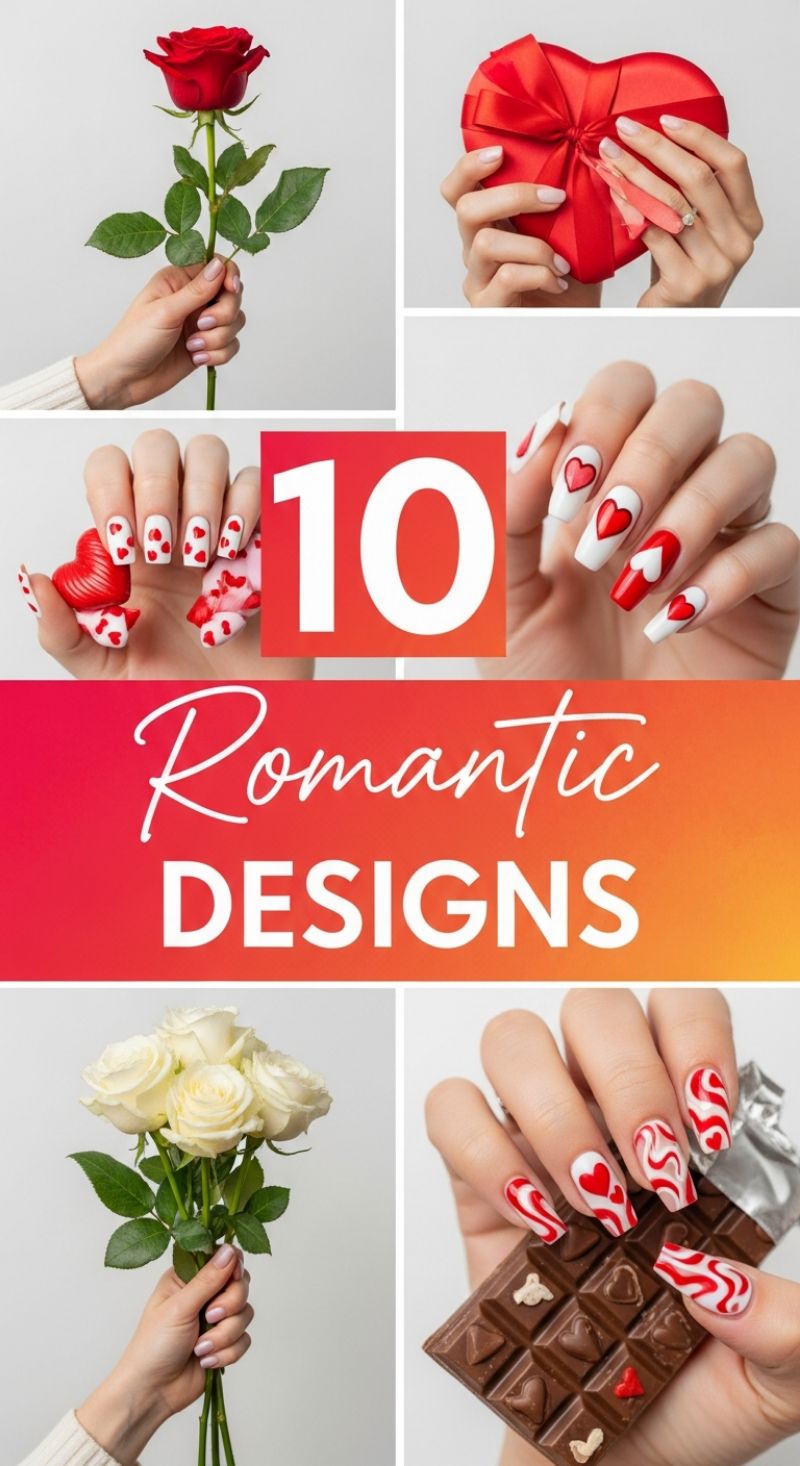
Capture the spirit of romance with a manicure dedicated to classic symbols of love: hearts, red, and white. This curated lookbook demonstrates how versatile a simple two-tone palette can be, moving beyond basic solid colors into sophisticated, detailed art. To achieve the fundamental heart motif seen throughout these styles, start with a flawless base—for white designs, ensure you use two to three thin coats of a highly pigmented polish to avoid streaks. The hearts themselves are best executed using a small dotting tool or a fine liner brush. For classic, symmetrical hearts, place two adjacent dots of red polish, and while the polish is still wet, gently drag a tiny brush or needle down through the center bottom of the two dots, meeting at a perfect V-point. Whether you opt for a field of scattered micro-hearts across a white background or large, centrally placed accent hearts on a feature nail, precision is key. Always seal your art with a quick-drying top coat to prevent smudging.
For a more avant-garde or retro romantic vibe, incorporate flowing abstract elements like the popular swirl or candy-cane stripe design. This technique utilizes the ‘wet-on-wet’ marbling effect. After applying the primary base color (often white or nude), quickly apply several thick lines of the contrasting color, red. While both polishes are still tacky and wet, use a fine detail brush, a toothpick, or a stylus to gently pull and twist the colors together. The key is swift, light movements to create the organic, hypnotic waves without fully mixing the colors into a solid pink. Expert advice dictates that designs featuring such dramatic line work often look best on longer nail shapes, such as coffin or squareletto, as they provide a generous canvas for the artwork to flow. Experiment with negative space, too: consider a half-heart outline or leaving part of the base nude for a modern interpretation of the classic French tip.
To ensure your romantic manicure achieves maximum longevity and shine, always cap the free edge of the nail with your top coat. For looks that feature bold, contrasting colors like red and white, choosing a high-gloss top coat will enhance the vibrancy and definition of the artwork, making the red especially pop against the crisp white background. These designs are ideal for occasions celebrating love, but their playful yet polished execution makes them appropriate year-round. Remember that the design complexity can be adjusted; if you are pressed for time, simply apply the heart pattern to one accent nail per hand, while keeping the remaining nails a coordinating solid red or white. This allows you to integrate the trend seamlessly without committing to a full, highly detailed ten-nail look.
5 Trending Minimalist Nail Designs for Chic Elegance
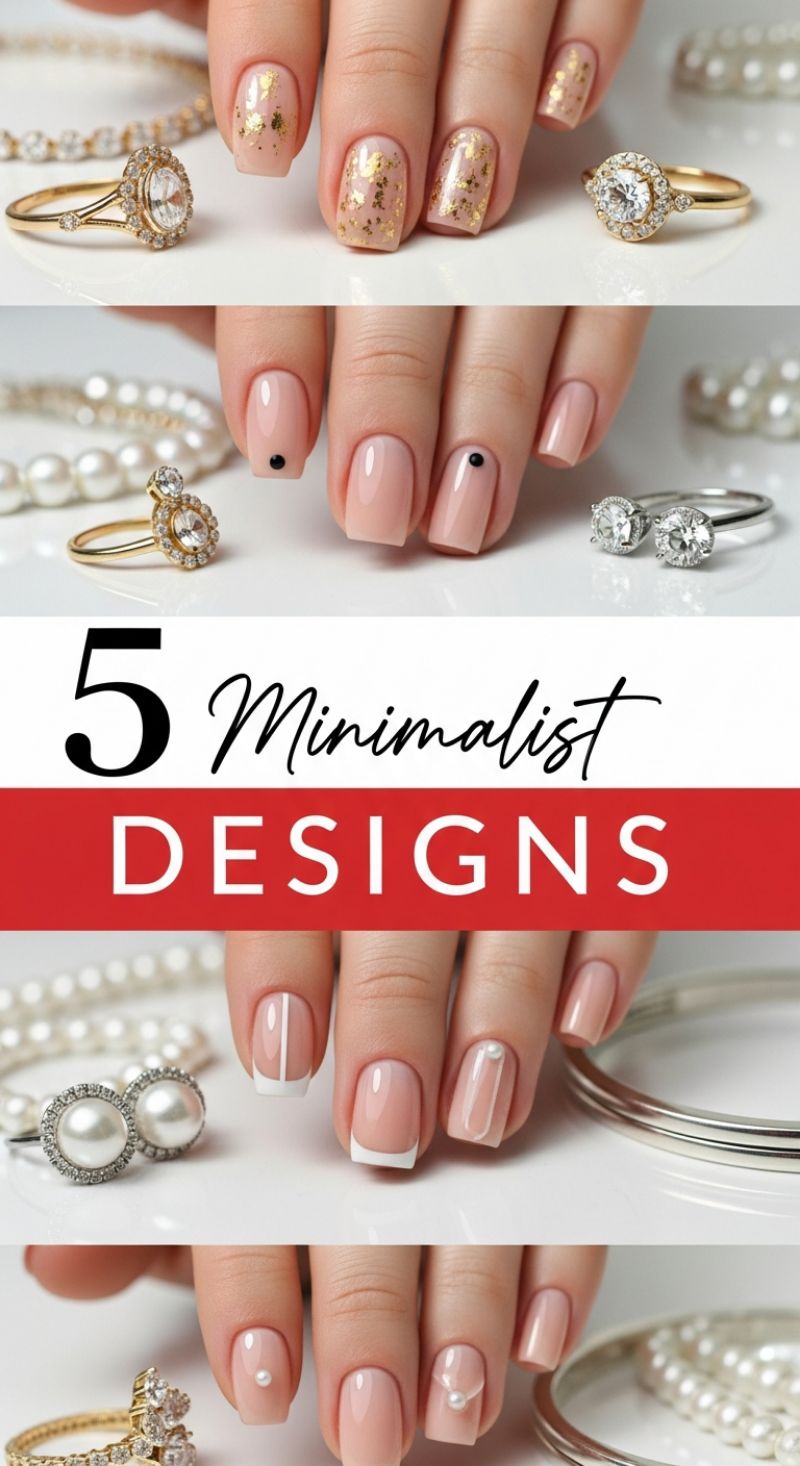
Achieving a minimalist manicure doesn’t mean sacrificing glamour; it means perfecting the details. The foundation for all five styles showcased here is a flawless, sheer nude or blush base coat, lending a soft, sophisticated canvas. To replicate the opulent Gold Foil Look (Design 1), start with two coats of your chosen nude polish, then apply a layer of builder gel or specialized foil adhesive. While tacky (or cured to the inhibition layer), use tweezers or an orange wood stick to gently press small, irregular flakes of gold foil onto the nail surface. These random, scattered placements mimic natural geological patterns, adding depth without clutter. Seal immediately with a high-shine, non-wipe top coat to encapsulate the foil and prevent lifting. For the ultra-clean Black Dot Accent (Design 2), ensure the base is fully cured. Use a fine dotting tool dipped in highly pigmented black polish to place a single, precise dot near the center of the nail plate, slightly above the natural curvature of the cuticle line. Consistency in dot size and placement across the chosen accent nails is key to achieving this modern, sophisticated simplicity.
The image also highlights three stunning designs utilizing crisp white lines and pearls for a jewelry-inspired effect. The key to the flawless lines seen in the French tip variation (Design 3), featuring a vertical white stripe bisecting the tip, is using a long-bristle striping brush and heavily pigmented white polish. Stabilize your hand and draw one continuous line from the base to the tip, ensuring perfect straightness. For designs incorporating dimensional elements like pearls (Designs 4 and 5), specialty nail glue or a thick layer of rhinestone gel is mandatory for secure attachment and longevity. For the simple Single Pearl Look (Design 4), place a tiny amount of adhesive where desired—typically centralized on the nail plate—and gently set the pearl in place before curing under a lamp. This subtle ornamentation is an elegant take on nail piercing, providing dimension without bulk.
Expert execution demands symmetry and restraint, especially when combining intricate elements, such as in the geometric Pearl Pendant Design (Design 5). This style marries thin, curved white lines, drawn using a micro-striping brush, with a pearl strategically placed near the center of the nail plate where the lines converge, creating the illusion of a delicate piece of draped jewelry. When executing any line work, always cure the base color first, then cure the lines to prevent bleeding. Finally, add the pearl and secure it with a final layer of thick top coat or builder gel applied carefully around the base of the embellishment, avoiding coating the pearl itself to maintain its natural luster. These subtle, polished embellishments work beautifully on short, square, or squoval nails, amplifying the inherent elegance of the natural shape and making them perfect for sophisticated everyday wear or special occasions.
15 Aesthetic LOOKS
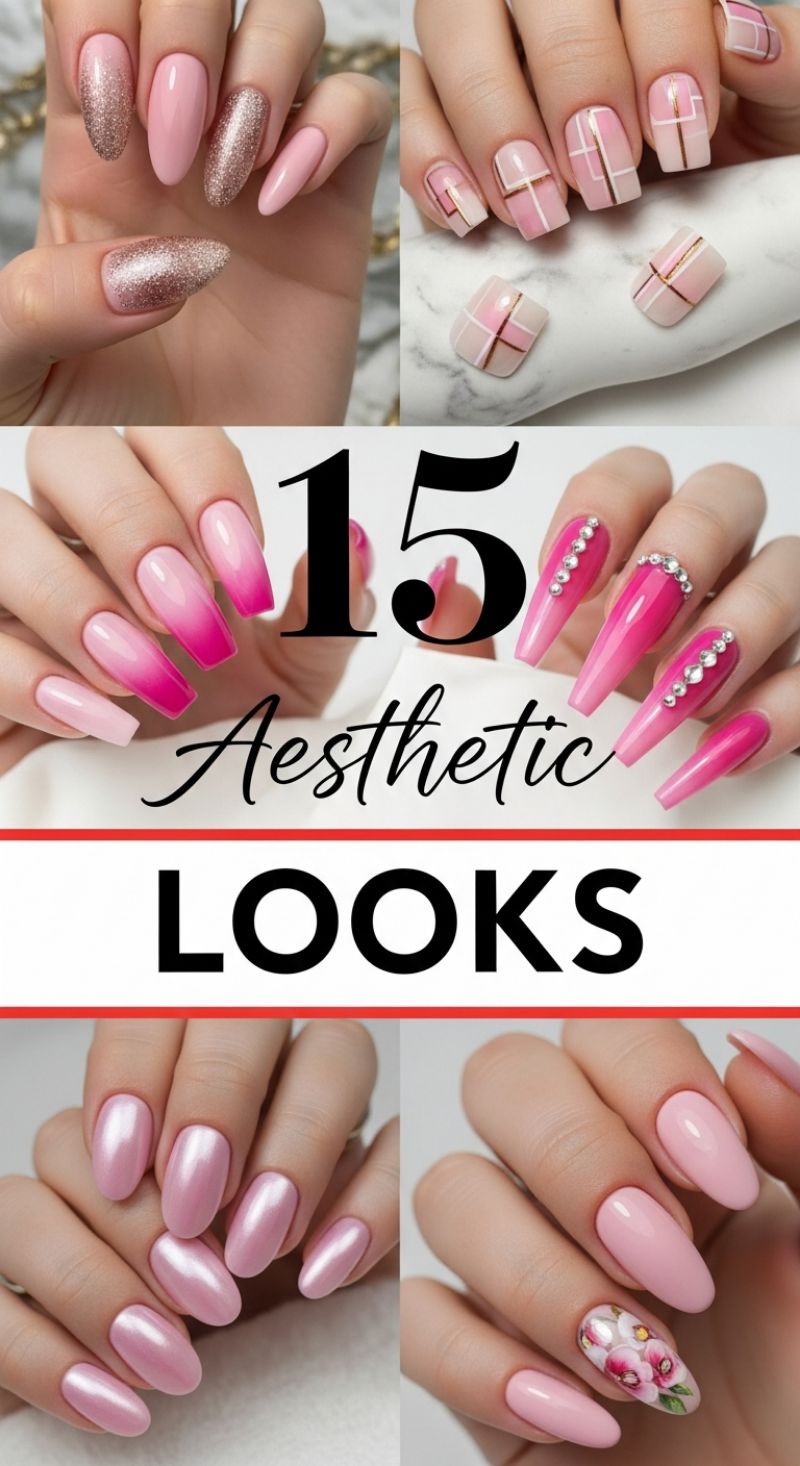
The ‘Aesthetic Looks’ collection showcases the immense versatility of the color pink, moving beyond simple solids into complex artistry, texture, and dimension. To recreate the vibrant high-impact styles seen here, focus on mastering the gradient and embellishment techniques. The dramatic hot pink ombre, often executed on long coffin or ballerina nails, requires a blend of light pink and magenta gel polish. Achieve a seamless transition by applying both colors to a makeup sponge and repeatedly dabbing the surface onto the nail until the gradient is smooth. For the stunning rhinestone placement, as seen vertically cascading down the nail, select uniform, high-quality flat-back crystals. Secure these stones using a thick layer of builder gel or specialized rhinestone adhesive, ensuring the gems are fully locked in but not drowning in product. After curing, use a fine detail brush dipped in topcoat to meticulously seal the edges of the stones, which prevents clothes from snagging and guarantees maximum wear time for these eye-catching accents.
To integrate trending textures and subtle elegance, focus on the pearlescent chrome and the sophisticated geometric styles. The iridescent pink chrome manicure (bottom left) is achieved using a specialized chrome powder buffed over a light pink base layer that has been cured with a non-wipe topcoat. Vigorously buffing the powder ensures a high-shine, luminous finish, which should then be sealed with a durable topcoat to protect the delicate chrome film. For the geometric designs (top right), precision is non-negotiable. Start with a neutral or sheer pink base and use highly pigmented art gels or thin striping tape to create the horizontal and vertical lines. Expert tip: Applying the base color as a semi-sheer wash allows the lines to stand out clearly. If using tape, ensure the ends are firmly pressed down before applying the final clear topcoat to avoid lifting, giving a clean, architectural finish.
For classic almond shapes, the integration of glitter or micro-art offers a softer aesthetic punch. The rose gold glitter accent nail (top left) should utilize a dense, highly pigmented glitter gel or encapsulated loose glitter, strategically placed to complement the solid pastel pink nails. Always ensure the chunky glitter is fully encapsulated beneath several layers of topcoat or builder gel to create a smooth, durable surface. Alternatively, the floral accent nail (bottom right) requires mastery of micro-painting. Using an ultra-fine detail brush and soft, opaque art gel, paint delicate petals in white, light pink, and accentuating darker tones, sometimes incorporating a subtle green for foliage. These soft aesthetic looks are highly effective because they rely on excellent nail preparation, including precise shaping and meticulous cuticle care, ensuring the simple base colors and delicate artistry truly shine.
7 Darling MANIS
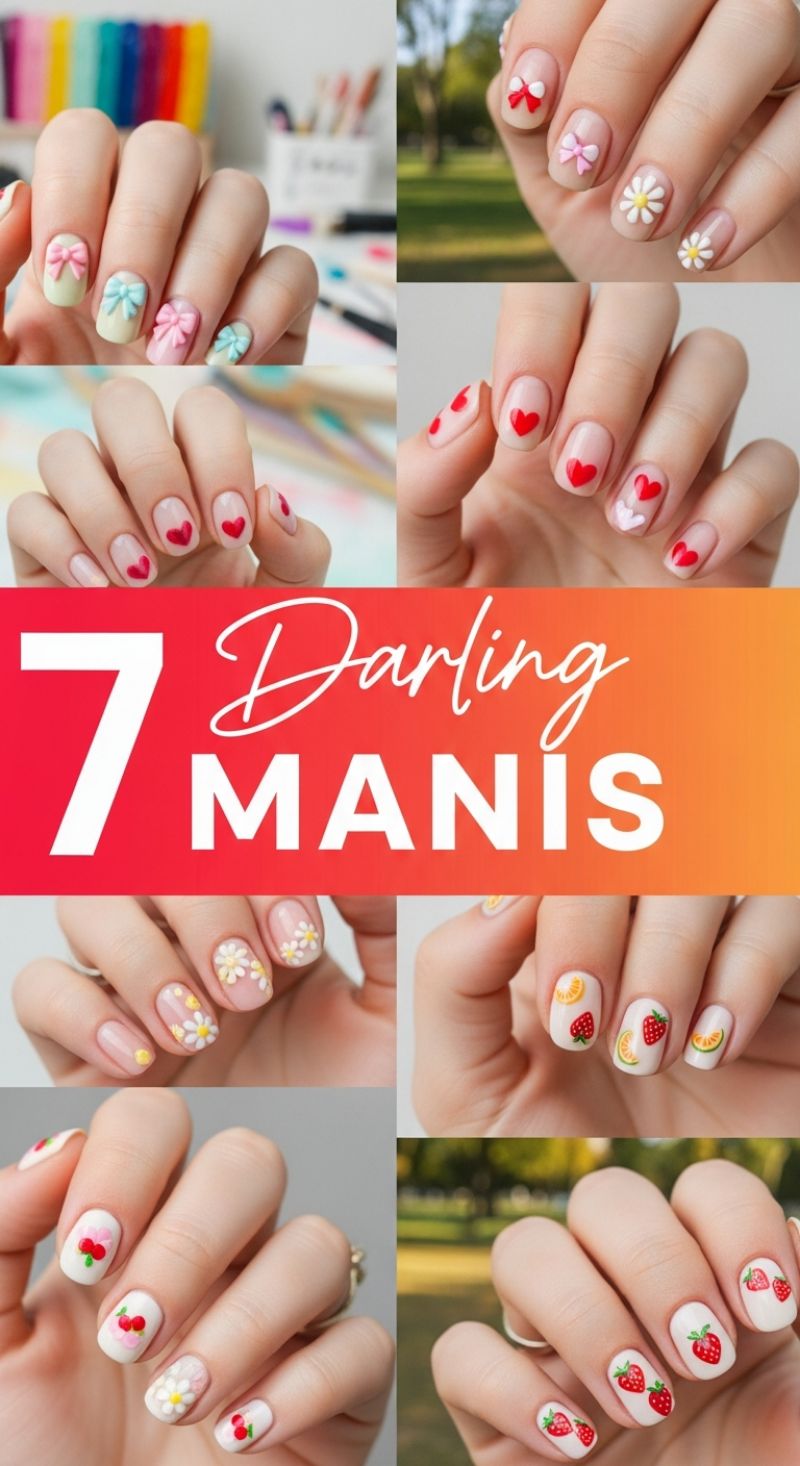
The “Darling Manis” trend encapsulates playful, youthful nail art using soft color palettes and intricate, often dimensional, motifs. To successfully replicate the looks featured here, careful attention must be paid to both base selection and application technique for the various detailed elements, ranging from 3D bows to delicate hand-painted hearts and fruits. For the popular 3D designs, such as the pastel bows and daisies seen in the top rows, professional tools like soft sculpting gel (3D builder gel) or an acrylic powder and monomer mix are essential. Begin by preparing the nail with a base coat, then apply your chosen soft pastel base color (mint, baby pink, or a milky nude). Once cured, use a fine detail brush and your sculpting medium to mold the dimensional element—a bow or a tiny daisy. These pieces should be strategically placed to avoid overwhelming the small surface area of the nail. For longevity, ensure the edges of the 3D element are securely anchored to the nail using a thin layer of topcoat before the final cure, which minimizes snagging and premature detachment.
Simpler, yet equally charming, designs include the clean, vibrant heart and fruit patterns. The minimalist heart designs are best executed on a sheer nude or light pink base, allowing the bold red polish to become the focal point. To achieve perfect symmetry for the hearts, use a small dotting tool: create two adjacent dots near the cuticle or tip, then use a micro-detail brush to gently drag the polish down and connect the dots into a sharp point. When transitioning to playful motifs like strawberries, cherries, or citrus slices, select a bright, opaque white base coat to maximize the visual impact and make the contrasting colors pop. Hand-paint the primary shape of the fruit using precise brushstrokes, then add small details—like green stems on cherries or tiny yellow seed dots on strawberries—using a micro-liner brush. These designs require steady hands and layering of polishes, curing between each layer to prevent colors from bleeding together.
Mastering the various floral elements, like the charming daisies featured alongside the fruit and heart patterns, is critical for achieving this aesthetic. The easiest method for painting small flowers is the “five dots” technique: use a small dotting tool to place five equally sized white dots in a circular arrangement, then add a tiny yellow dot in the center once the white petals have cured. For a cohesive and balanced manicure across all ten fingers, ensure you alternate between heavily patterned nails and simpler ones; for instance, pair a cherry-detailed nail with a solid color or a single, subtle flower decal on the adjacent nail. All the featured looks are set on short to medium-length nails shaped into a soft oval or squoval, which inherently complements the gentle, cute nature of the art. Always finish your design with a high-gloss, non-yellowing UV topcoat to protect the intricate artwork and provide a high-shine, professional finish.
18 Sexy TIPS
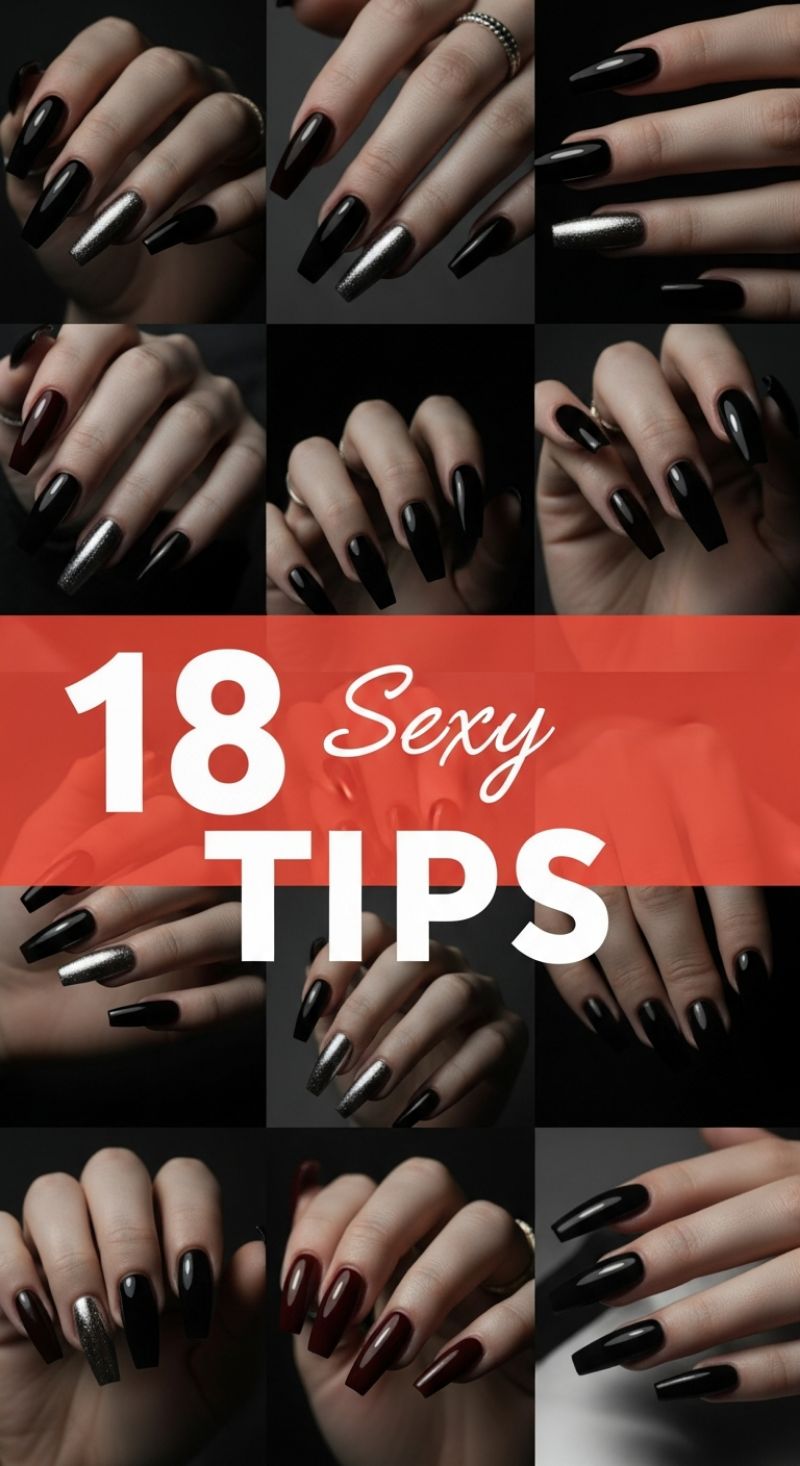
This ultimate lookbook entry, centered on the powerful aesthetic of “18 Sexy TIPS,” showcases a dramatic and fiercely fashionable approach to manicures, focusing on the iconic long coffin or ballerina shape. The visual impact is achieved through the expert use of rich, deep colors—primarily high-gloss jet black and a luxurious, vampy oxblood burgundy—juxtaposed with a dazzling silver accent nail. This combination instantly evokes sophistication and a sultry, edgy glamour. The meticulous application of high-shine lacquer ensures the dark colors look deep and dimensional, rather than flat. The uniformity in shape and length across all fingers, emphasizing clean, sharp lines characteristic of the coffin style, contributes significantly to the modern and refined feel of the design. This powerful aesthetic is perfectly suited for those seeking a bold statement, particularly during the cooler months or for formal evening events.
Recreating this luxurious, high-contrast look requires precision, especially in shaping and polish application. Start by achieving the perfect long coffin shape, which involves carefully filing the sidewalls inward to taper the nail, then squaring off the tip—a crucial process for both structural integrity and aesthetic impact that often requires professional assistance or high-quality press-ons. For the dark base, professional application is key: ensure the nails are completely prepped to avoid chips and then apply two to three thin, even coats of the chosen deep color (black or burgundy) for maximum opacity and depth. The signature accent nail typically features a striking silver metallic or chunky holographic glitter polish. To get the highest density of shimmer without needing excessive coats, try a ‘patting’ technique rather than sweeping, pressing the glitter polish onto the nail surface. Finish the entire look with an ultra-high-gloss, non-yellowing top coat. For nails this dark and long, the top coat is non-negotiable, as it provides that coveted mirror-like finish and protects the statement design from premature wear and fading.
While the design is stunning, maintenance is vital due to the extreme length and dark color, which unforgivingly highlights any imperfections or dullness. Expert advice suggests reinforcing the underlying structure (if using tips, gel, or acrylics) to ensure the durability required for this length, minimizing the risk of breakage. For longevity and shine, advise clients to apply cuticle oil daily to keep the nail bed healthy and flexible. Stylistically, this bold manicure pairs beautifully with minimalist fine jewelry; thin silver stackable rings worn on the fingers adjacent to the silver accent nail will enhance the reflective quality of the metallic polish. Complement this look with luxurious dark fabrics like velvet, silk, or black leather to fully embrace the sophisticated, dark glamour aesthetic. This confident and highly polished design is less about subtlety and more about asserting an intentional, powerful style statement.
9 Blush Inspiration: The Ultimate Guide to Perfect Pink Nude Nails
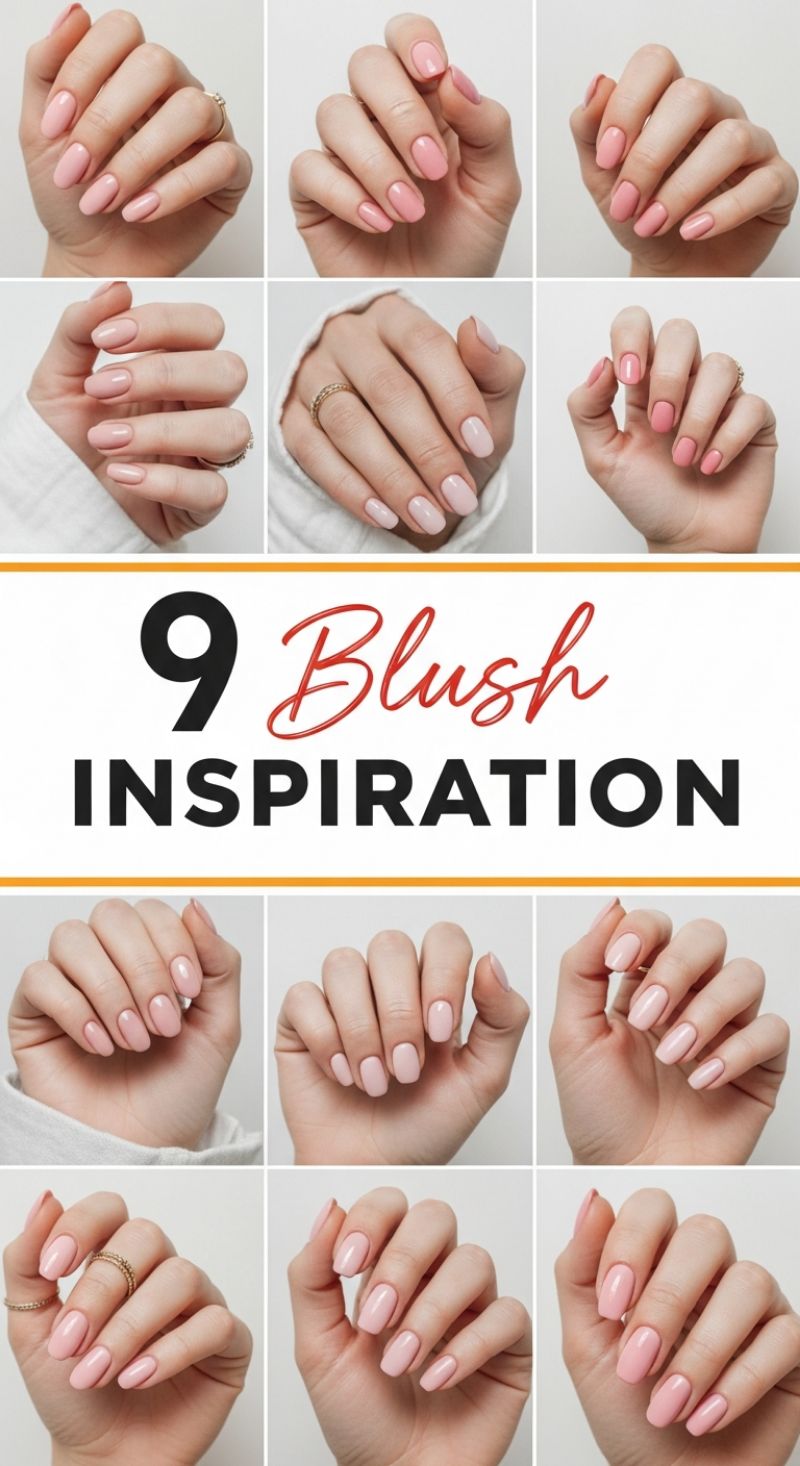
The ‘blush’ nail trend is the epitome of understated elegance, offering a universally flattering, clean, and polished look that seamlessly transitions between seasons and occasions. As seen in these nine inspirational manicures, ‘blush’ isn’t just one color, but a spectrum ranging from sheer, milky pale pinks to deeper, opaque rosy hues. The key to nailing this trend is finding the shade that perfectly complements your natural skin tone—it should look like your nails, but better. For cool undertones, opt for colors with a hint of blue or mauve, which appear bright and refreshing. Warmer complexions thrive with shades that lean toward peach or creamy beige-pink. Start by testing 2-3 coats of your chosen lacquer on one nail; the finished color should enhance your hands without overpowering them, providing a healthy, youthful glow.
Achieving this pristine, glossy finish requires meticulous application and preparation. Begin with thorough cuticle care and shaping your nails into a soft oval or almond—the shapes predominantly featured here—which enhance the femininity of the blush polish. Always apply a ridge-filling base coat to ensure a smooth canvas and prevent staining. When applying the color, use thin, even layers. The most common mistake is applying polish too thickly, which leads to bubbling and a muddy finish. For the sheerer looks, two coats may suffice; for the more opaque rosy tones, three very thin coats will build depth and luminosity. Ensure each layer is nearly dry before applying the next, culminating in a high-shine top coat, perhaps a gel-effect formula, to seal the color and provide that crucial glass-like finish.
To elevate your blush manicure from basic to brilliant, consider the overall styling and maintenance. The longevity of this delicate shade depends heavily on daily cuticle oil application, which keeps the nail plate flexible and hydrated. For an expert-level touch, try the viral ‘blush bomb’ effect by slightly concentrating a brighter pink or white polish at the center of the nail bed, blending outward before sealing with a sheer top coat, mimicking a natural flush. These neutral shades also provide the perfect canvas for minimal gold jewelry, as demonstrated by the delicate rings featured throughout the imagery. With proper technique, your blush manicure will exude sophistication and remain the chicest staple in your beauty routine.
5 Modern Geometric Nails: Mastering Negative Space and Color Blocking
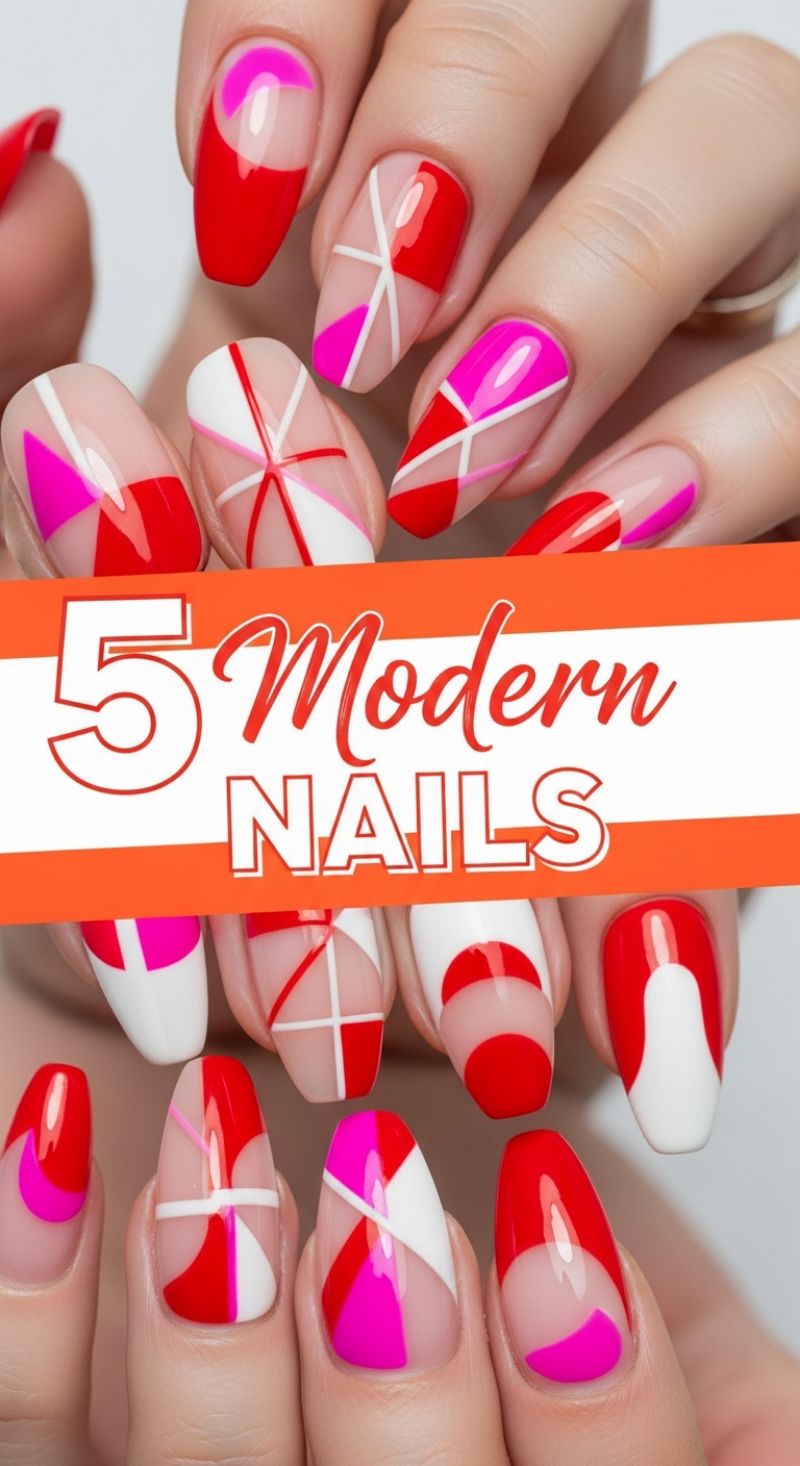
This featured design set, aptly titled “5 Modern Nails,” showcases the epitome of contemporary manicure artistry: bold color blocking paired with sophisticated negative space. The high-contrast palette of vibrant primary red, electric fuchsia, and crisp optic white provides a sharp, energetic look. The success of this style hinges on the clean separation between colors and the natural nail bed. The sheer nude base coat acts as the foundational negative space, making the bright colors pop without overwhelming the hand. This look is best executed on medium to long almond or coffin-shaped nails, which offer the canvas necessary for intricate geometric patterns and large color fields. To maximize visual impact, ensure the base layer is cured perfectly smooth before applying the abstract designs to guarantee a flawless, high-gloss finish.
To recreate these sharp geometric patterns, precision is paramount. Start with a thin layer of a sheer nude polish or simply a rubber base coat to define the negative space areas. The designs vary from nail to nail, incorporating elements like reverse half-moons (lunulas) painted in contrasting colors (e.g., pink lunula over a red tip) and complex radial spoke patterns. For the spokes and large color fields, use high-pigment gel polishes. The main color blocks (red and pink) should be applied first, often using a curved art brush or dotting tool to define the soft, curved lines that delineate the negative space boundaries. Once the colors are fully cured and sealed, the final and most crucial step is applying the thin, structural white lines. A long, thin striping brush (typically 5-7mm long) is essential for drawing these straight, continuous lines across the color boundaries and negative space, which give the entire manicure its defining architectural look.
While these designs look complicated, their structure allows for great artistic freedom; you don’t need all ten nails to match exactly. Focus on two main design concepts: curvilinear blocking on the thumbs and pinkies, and linear/radial patterns on the middle fingers. Expert advice for longevity involves sealing all free edges thoroughly, especially where the fine white lines meet the natural nail, as these small details are prone to premature chipping. After applying the final white structural details, float a non-wipe, high-shine top coat over the entire design. This step seals the artistry and dramatically enhances the saturated hues of the red and pink polishes. This style is incredibly versatile, working brilliantly as a bold statement piece for spring and summer or as a stylish, modern update for traditional holiday color pairings.
22 Vibrant Colors
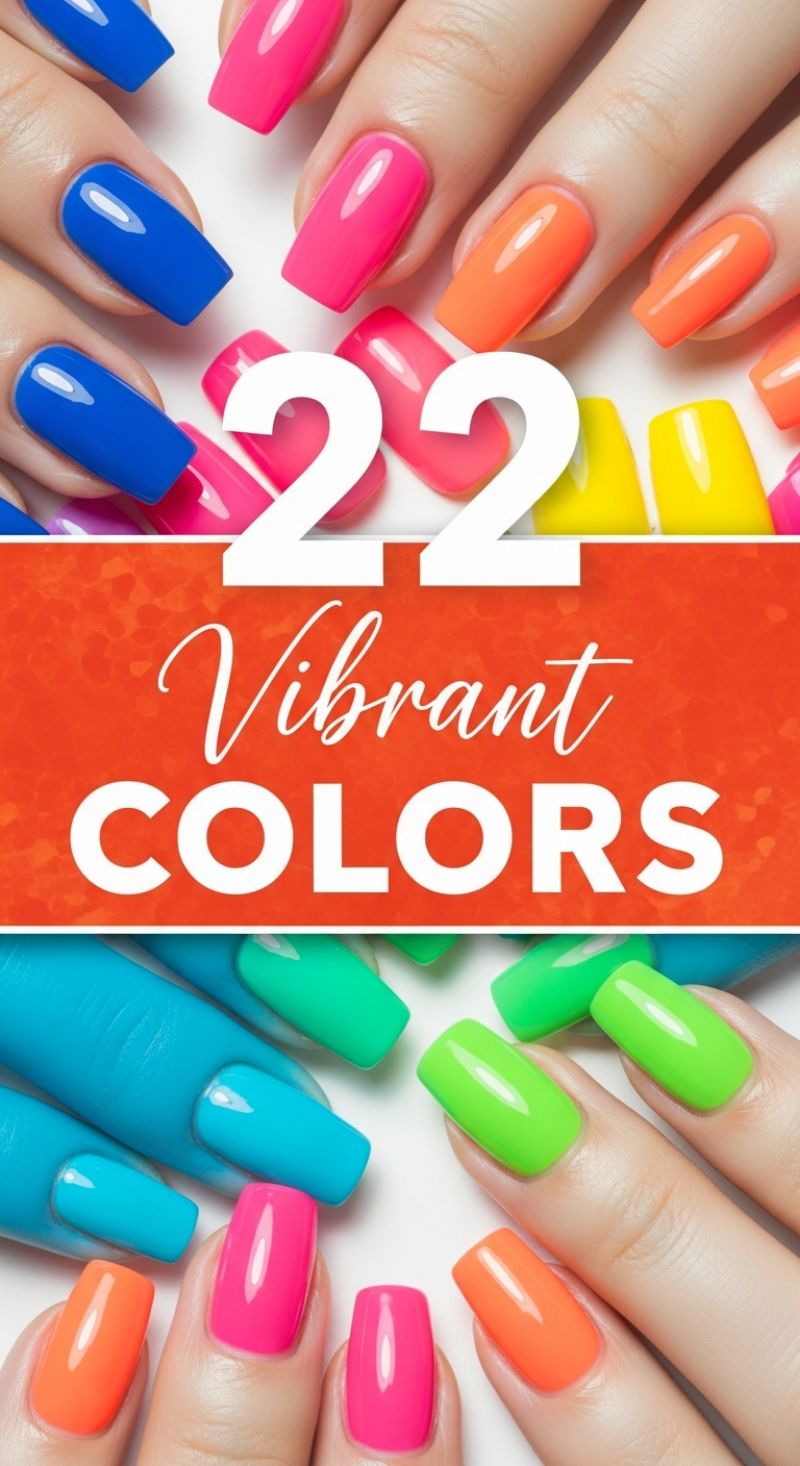
The ‘Vibrant Colors’ trend, encapsulated beautifully by this collection of striking neon and electric hues, is the quintessential look for making a bold, energetic statement, perfectly suited for spring break, summer festivals, or simply chasing away the winter blues. This lookbook showcases powerful, fully saturated solids—including electric cobalt, fuchsia, tangerine, lime green, and neon turquoise—applied flawlessly across a medium-length, square or squoval nail shape. The key to mastering this visual element lies in achieving complete, streak-free opacity and maximizing the high-gloss finish. For true neons, a professional tip is to apply a single, opaque coat of pure white polish as a base layer before applying the color. This white canvas ensures that the fluorescent pigment reflects light maximally, preventing the neon shade from looking muddy or darkening against the natural nail bed. Precision in application and high-quality, maximally pigmented polishes are non-negotiable for this intensely saturated style.
To replicate the high-impact finish shown here, preparation and technique are paramount. Start with meticulous nail prep, ensuring the nail surface is lightly buffed and free of oils. When applying the vibrant color, adopt the three-stroke method: one stroke down the center, followed by a stroke on each side, ensuring you ‘float’ the polish rather than pressing too hard, which causes streaks. Since highly pigmented polishes can sometimes be thicker, apply two very thin, even coats rather than one thick coat, allowing each layer ample drying or curing time if using gel. This layering technique prevents bubbling and ensures the color cures evenly, locking in that smooth, mirrored surface. Additionally, always remember to ‘cap’ the free edge of the nail with the brush on every coat, including the base and top coat, which significantly extends the wear time and prevents premature chipping at the tips.
Maintenance for these eye-catching shades is crucial for longevity. After achieving the perfect solid application, finish with a UV-protective, extreme high-shine top coat. The glossy top coat not only adds depth and dimension to the vibrant colors but also shields the color from fading or dulling, which can happen quickly with bright pigments exposed to sunlight. Beyond standard polish techniques, these colors lend themselves beautifully to color blocking—trying a different vibrant shade on each finger, or even alternating hands—which leans into the playful energy of the trend. Maintain the look by regularly moisturizing the cuticles and applying a quick-dry top coat every two to three days to refresh the shine and harden the existing manicure. This intense color palette is proof that sometimes, the most sophisticated look is achieved through sheer, unadulterated color brilliance.
20 Sunny Abstract Designs: Mastering Neon Yellow and Orange Nail Art
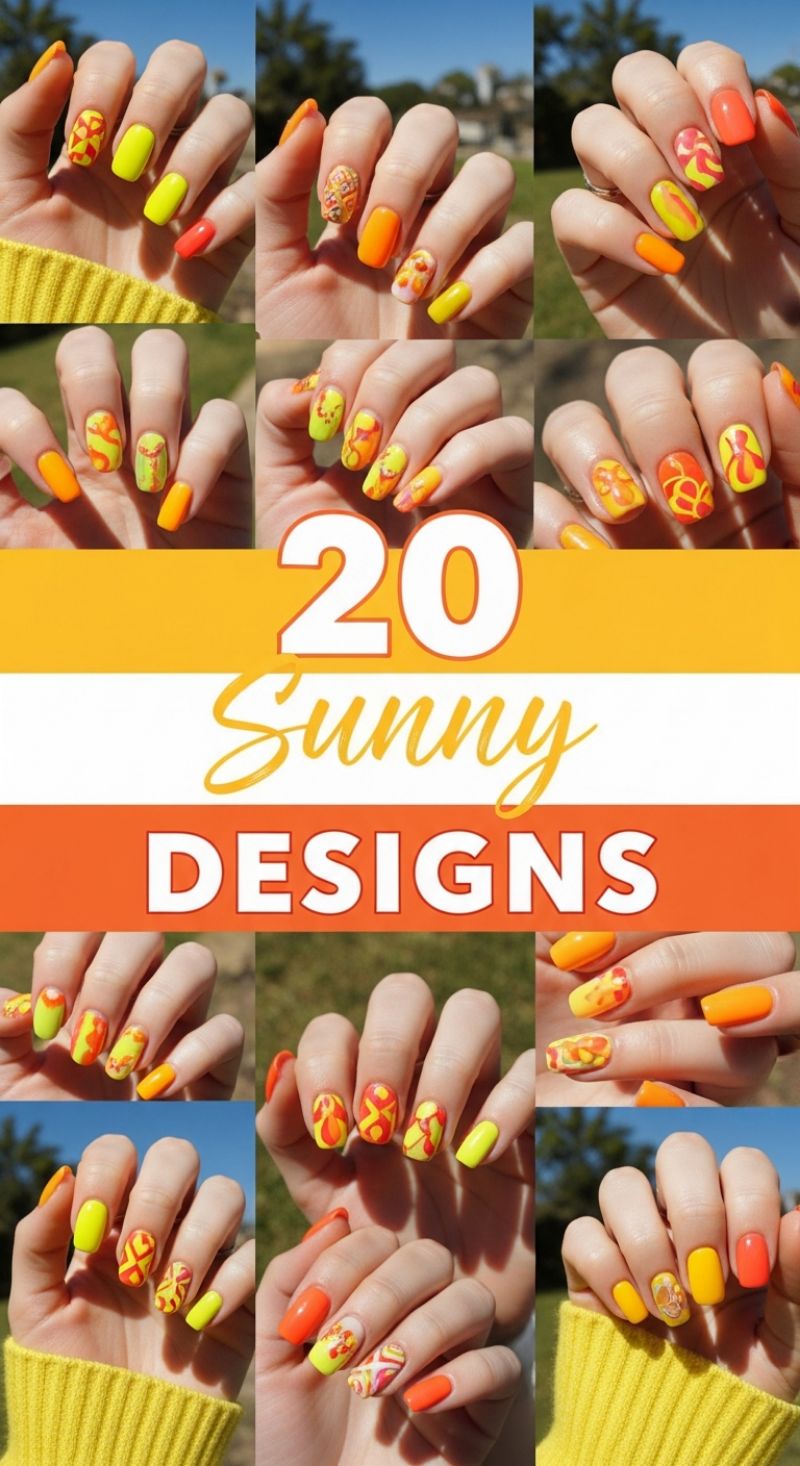
This vibrant collection of ‘sunny designs’ is the ultimate inspiration for summer and tropical getaways, focusing entirely on the high-contrast synergy between neon yellow (or bright lime) and saturated orange. To recreate this look, begin by curating your core color palette. You need a truly fluorescent yellow or chartreuse and a vivid, traffic-cone orange. The key to making these designs pop is strategic placement: dedicate one or two fingers (like the ring finger and thumb) to intricate artwork, while keeping the rest a clean, glossy solid of either the yellow or the orange shade. This technique, often referred to as the ‘accent nail’ strategy, prevents the overall manicure from looking too busy while highlighting the craftsmanship of the detailed designs. Ensure you apply a high-quality white base coat before the neon yellow to guarantee maximum opacity and true color brightness, as neons often appear sheer without a bright foundation.
The complexity of these 20 designs primarily falls into two categories: fluid abstract art and bold geometric patterns. For the abstract swirls and ‘lava lamp’ effects, work wet-on-wet or use a careful marbling technique. After applying a coat of your base color (e.g., neon yellow), immediately dot small amounts of the contrasting orange, red, and perhaps a paler yellow shade. Use a fine-tipped nail art brush or a clean toothpick to lightly swirl the colors together before they dry completely, creating those organic, molten transitions. For the graphic and tribal-inspired patterns—characterized by clean lines, Xs, and circular motifs—precision is paramount. Use striping tape to block off sections for flawless straight lines, or utilize a medium-sized dotting tool to create perfect circles and defined curves, filling them in carefully with a detail brush. Allow ample drying time between colors when executing geometric patterns to prevent bleeding, which is crucial for maintaining crisp edges.
To ensure these intricate, bright designs stand the test of time, proper finishing is essential. Once all your designs are completely dry (and fully cured if using gel polish), apply a high-shine, UV-protective top coat. Make sure to ‘cap the free edge’ of every nail, sealing the tip of the polish to prevent premature chipping and edge wear. For those seeking an alternative finish, a matte top coat can transform these sunny shades into a completely different aesthetic—the neon colors will appear soft and almost chalky, adding a sophisticated velvet texture to the bright palette. This sunny yellow-and-orange combination is incredibly versatile; while perfect for summer, consider swapping the neon yellow for a rich mustard and the orange for a deep terracotta to transition this vibrant style seamlessly into the autumnal months.
25 Trending STYLES

This ultimate lookbook showcases a vibrant array of styles dominated by romantic reds, playful pinks, and sophisticated neutrals, providing the perfect foundation for planning your next standout manicure. To flawlessly integrate your nails with these trending aesthetics, begin by focusing on the core color palette. For the rich, saturated reds seen in the mini dresses and bold knitwear, aim for high-gloss, full-coverage manicures. A true crimson or deep berry lacquer provides an elegant, striking match. Alternatively, when rocking the softer blush and dusty rose ensembles, transition to milky pinks or sheer ballerina shades. The instructional aspect here is dual-toned contrast: for a high-fashion edge that mirrors the visual impact of a red top paired with pink bottoms (as seen in the image grid), try a deep red on the pointer and ring fingers, balancing it with a soft pink on the rest. Expert tip: ensure your preparation is meticulous—a glossy red requires a perfectly smooth surface, so invest time in buffing and base coat application for a mirror finish that truly elevates the bold hue.
Next, interpret the textures and patterns from the clothing into your nail art. Many of the featured outfits incorporate specific fabrics like delicate lace, ribbed knitwear, satin, and crisp cotton collars. To complement the satin slips and flowy skirts, try abstract, fluid nail designs, using tone-on-tone pinks or reds swirled together for a subtle marbling effect that mimics movement. For the chunky knit sweaters and ribbed tops, integrate a matte top coat or a ‘sugar effect’ polish (a slightly granulated texture) to literally reflect the fabric’s tactile quality. When styling the tailored pieces, such as the blazers and collared shirts, a minimalist approach works best—think micro French manicures using white or black tips against a neutral base, or perhaps clean geometric lines in gold or silver placed strategically on one accent nail to tie into belt buckles or jewelry. These intricate design elements should be applied using fine liner brushes, requiring steady hands and precision to maintain a professional look.
Finally, consider the seasonal transition inherent in these styles, providing longevity to your nail choices. While the light fabrics and bright colors scream spring and summer, the inclusion of heavier knits and long-sleeved dresses allows for year-round adaptation. For warmer months, embrace negative space designs, perhaps using clear gaps within a pink or red design to keep the look light and airy. As you move into cooler weather, transition the bright pinks to mauve or terracotta shades, maintaining the red base but deepening the tone. When selecting your nail shape to maximize the impact of these feminine trends, opt for soft, elongated shapes like almond or oval, which inherently enhance the romantic and refined nature of the ensembles shown. Always finish with a high-quality quick-dry top coat, not only for shine and protection but also to encapsulate any intricate art, ensuring your trending style lasts as long as your fashion inspiration.
12 Blooming TRENDS
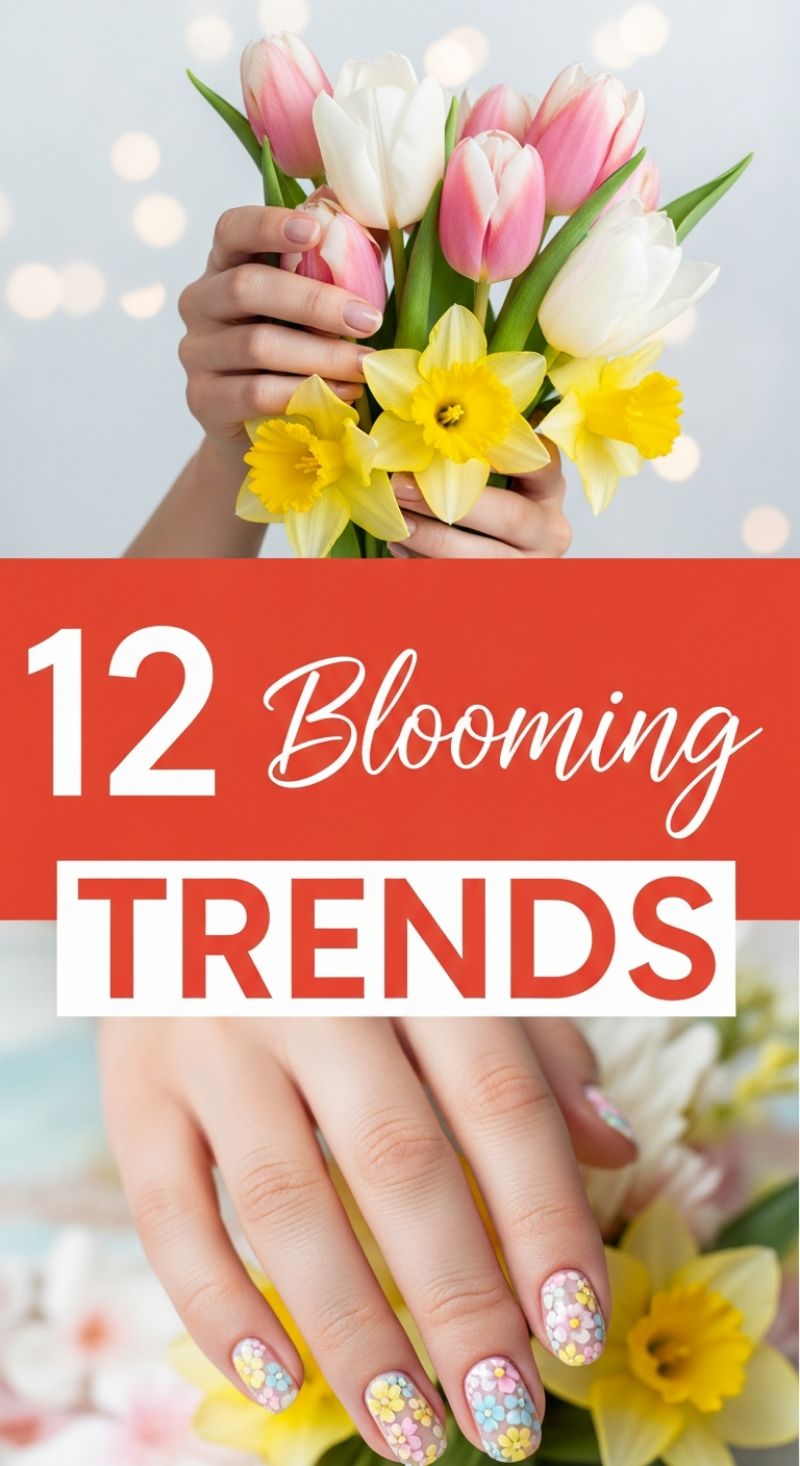
This “Blooming Trends” manicure captures the delicate vibrancy of a fresh spring bouquet, offering a sophisticated take on classic floral nail art. The core appeal of this design lies in its ethereal base: achieving the look requires starting with a sheer, milky nude, or a light jelly pink polish to mimic a delicate veil over the natural nail bed. After prepping the nails—shaping them into a soft oval or squoval and applying a foundational base coat—apply one to two sheer coats of the chosen base color and cure completely. This transparency is critical, as it ensures the subsequently applied flowers appear to float gently across the surface, rather than sitting heavily on an opaque canvas. Proper preparation guarantees longevity and provides the perfect backdrop for the detailed artistry to come.
Recreating the tiny, scattered floral pattern requires meticulous detail work, utilizing a very fine dotting tool (or a 000 detail brush) and a palette of contrasting pastel gel polishes: think buttercup yellow, lilac, robin’s egg blue, and baby pink. To create a single bloom, pick up one of your chosen pastel colors and place five tiny, closely clustered dots in a circular pattern. The dots should just barely touch to form the petals. Immediately, or after flash curing the first color set, repeat this process with the remaining colors, scattering the flowers unevenly and allowing some to overlap or extend off the nail edge, which creates a more realistic, abundant garden effect. Expert tip: keep the polish consistency thin enough for easy placement but thick enough that the colors do not bleed into the sheer base.
Once the pastel petals are in place and cured, the final details bring the design to life. Use a micro-dotting tool and an opaque color, typically white or bright gold, to place a single, precise dot in the center of each flower to represent the stigma. For added dimension, some artists choose to outline key petals with a sheer white gel liner before adding the center dot, enhancing the definition of the blooms. To finish and protect this intricate work, encapsulate the entire design with a medium-viscosity clear top coat or builder gel, ensuring a smooth, glossy finish that seals the artwork completely. For a contemporary twist, a matte top coat can be applied to give the petals a soft, fabric-like texture, perfectly complementing the freshness of the spring season.
12 Chic Shapes
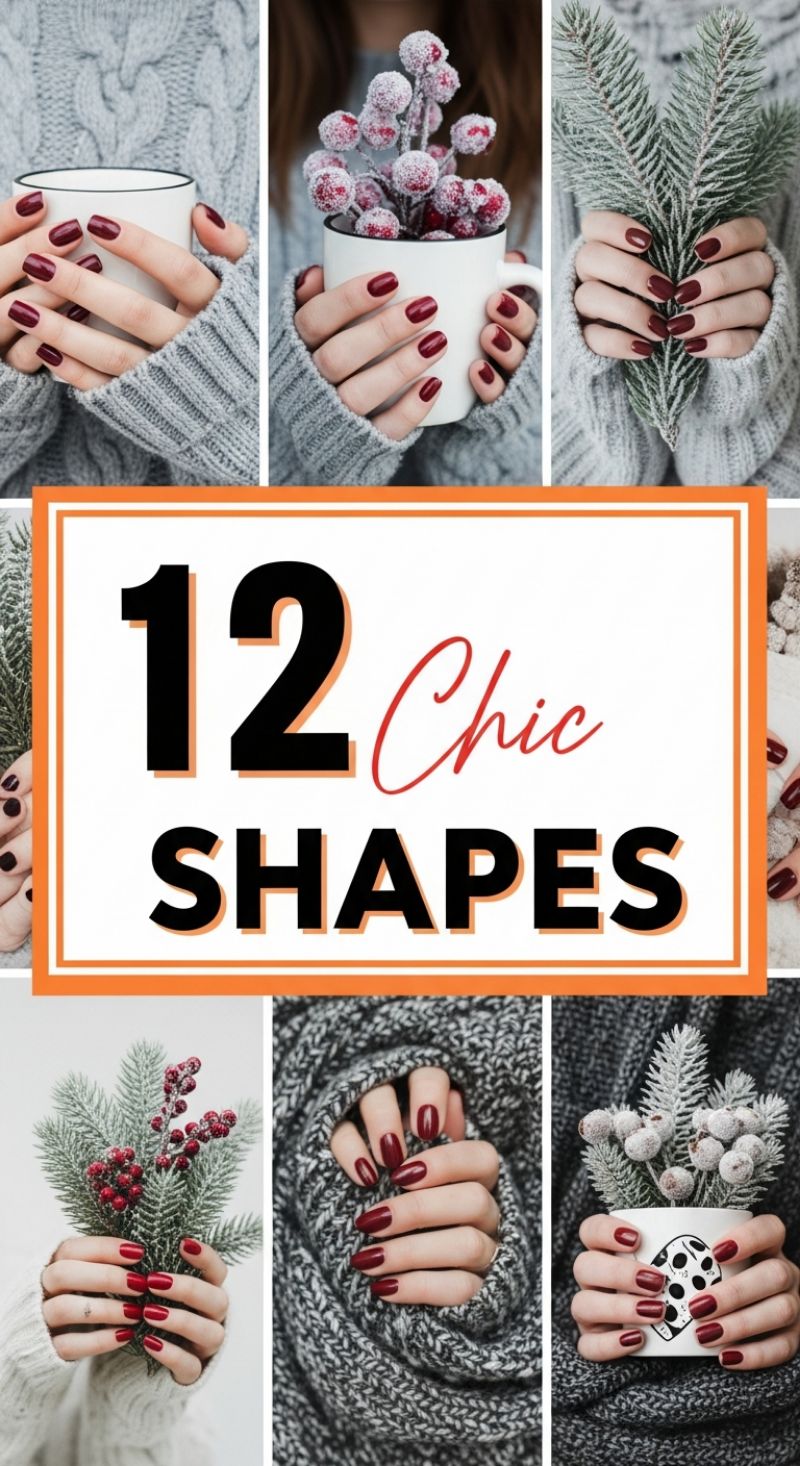
Selecting the perfect nail shape is fundamental to achieving a polished, high-end manicure, especially when donning rich, deep winter shades. While the banner promises twelve options, the visual aesthetic championed here is the sophisticated medium-length, soft-edged nail—typically a ‘squoval’ or ’rounded almond.’ These shapes offer the perfect balance of modern elegance and practicality, preventing snags common with sharp edges while elongating the fingers subtly. To achieve this look, start by assessing the natural width of your nail bed; if you have wider nail beds, favor the squoval shape (square with rounded corners), which provides a strong, balanced look. If your nail beds are narrower, the soft almond is ideal, tapering slightly to create a delicate, elongated effect. The key to both shapes is meticulous filing, ensuring symmetry and smooth curves, allowing the deep burgundy color featured here to shine without distraction.
The deep, glossy maroon or cranberry color showcased across all hands in the collage is the quintessential winter shade, perfectly complementing the cozy, textured gray and white knits. To replicate this rich saturation, proper application is non-negotiable. Begin with a ridge-filling base coat, which is crucial when using dark polishes as it prevents staining and ensures an even surface. Apply the color in two thin, uniform coats, curing fully between each layer if using gel, or allowing ample dry time if using traditional lacquer. The opacity should be rich enough to resemble dark velvet. Finish the manicure with a high-shine, protective topcoat to maximize gloss and lock in the color, providing the durability needed to withstand winter activities and frequent hand washing. The juxtaposition of the smooth, reflective polish against the chunky, matte texture of the sweaters elevates the entire cold-weather ensemble.
Expert styling demands that your manicure enhances your overall aesthetic, not overwhelm it. The shape and color combination shown here—a medium, soft shape paired with a luxurious, deep red—is a timeless classic that exudes warmth and sophistication. For added flair within this theme, consider seasonal accents; perhaps integrating a single nail with a fine metallic gold or silver shimmer that catches the light like fresh snow, keeping the underlying shape consistent. Alternatively, focus on nail health during the colder months; regularly applying cuticle oil and hand cream will keep the skin around your perfectly shaped nails soft and hydrated, enhancing the overall presentation of your manicure. This focus on shape and saturation ensures your hands look elegant whether you are holding a hot mug of cocoa or a sprig of frosted pine.
15 Fresh Ideas: Pastel Florals and Sunny Springtime Nail Art
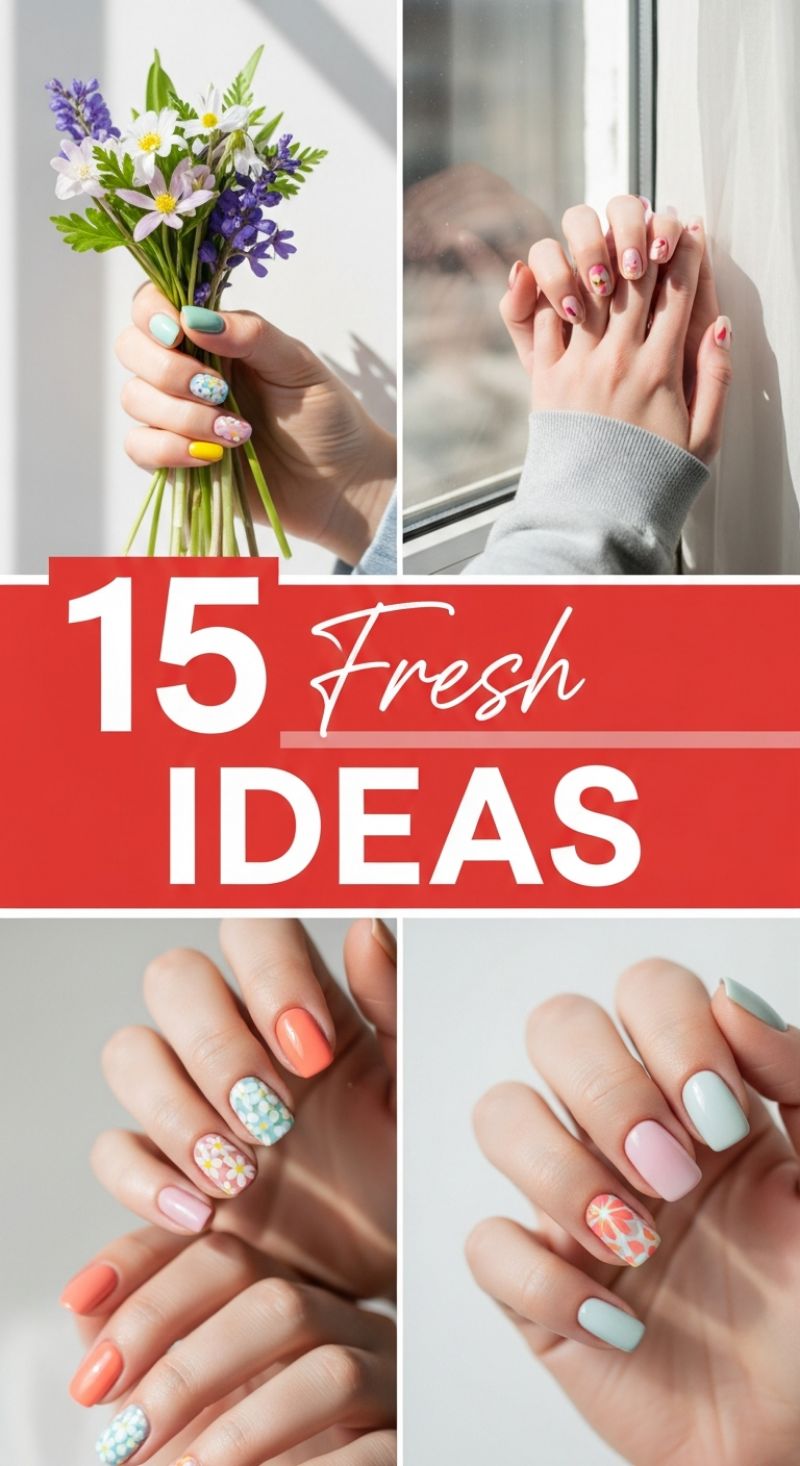
This stunning collection, embodying 15 fresh ideas, is the quintessential guide to mastering the playful and cheerful aesthetic of springtime nails. The design philosophy centers around a carefully curated pastel palette—think soft mint, baby pink, sunny yellow, and vibrant coral—applied to short or medium squoval nails for a practical yet fashionable result. The key trend showcased here is the mixed-media manicure, where solid, luminous blocks of color are strategically balanced with intricate, hand-painted accent nails. To replicate this foundational look, start with a high-quality ridge filler and two layers of your chosen base color (e.g., the soft coral or mint seen on the main nails). Ensure all nails are filed consistently and gently buffed to guarantee a smooth, professional finish, allowing the bright colors to pop without discoloration.
The instructional core of this look lies in the detailed floral designs. For the classic daisy pattern seen on the ring finger, you will need a precision dotting tool and a fine striping brush. After curing the pastel base color (such as the light blue or pink), use the dotting tool dipped in opaque white polish to create five small dots in a circle, forming the petals. Before curing the white, switch to a smaller dotting tool or the fine brush and place a tiny dot of bright yellow or orange polish in the center of the petals. For the more abstract, vibrant orange floral pattern (as seen on the lower right hand), utilize a wet-on-wet technique: apply a coat of white or light cream polish, and while it is still wet, dab small spots of coral and peach, gently swirling them with a needle or toothpick to create a blurred, painterly effect before curing. Maintaining clean edges is paramount; use a detail brush dipped in acetone to clean up the cuticle line before the final top coat.
Expert application of this style relies on thoughtful color placement and sealing techniques. If you find detailed art challenging, focus the intricate designs only on the ring and middle fingers, keeping the remaining nails solid pastels to draw attention to the accents without overwhelming the manicure. For a long-lasting, high-gloss finish that protects the delicate artwork, always use a non-yellowing, UV-cured top coat, ensuring you ‘cap’ the free edge of every nail. This technique prevents chipping and protects the vibrancy of the pastels from dulling. To transition this design into the summer months, swap the soft pastels for neon versions of the same shades, keeping the floral structure the same for a bolder, seasonal adaptation. Remember to nourish your cuticles daily with oil, especially when sporting short, bright nails, as well-maintained skin elevates even the most intricate design.
Verdant Leaf-Themed Nail Art
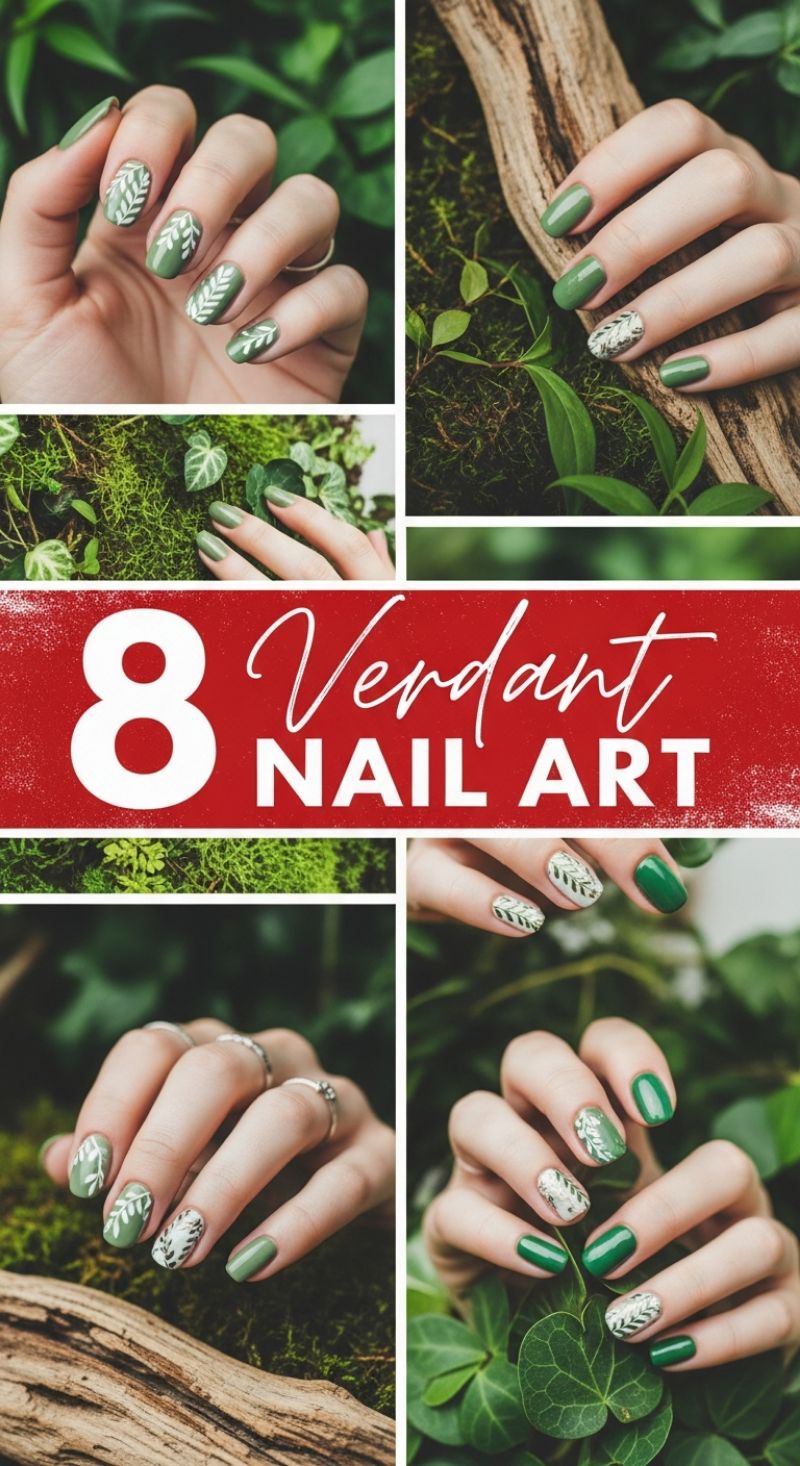
This collection of “Verdant Nail Art” showcases a sophisticated, nature-inspired manicure that captures the lush beauty of a forest floor. The dominant palette revolves around deep, earthy green tones
—ranging from soft moss and olive hues to rich, vibrant forest green. What makes this design particularly appealing is the skillful use of white or pale green accents to create delicate, botanical patterns, primarily fern or laurel leaf motifs. This aesthetic strikes a perfect balance between vibrant color and subtle artistry, making it an excellent choice for a fresh spring look or a grounding summer style. The matte or semi-gloss finish seen in these examples ensures the look remains organic and refined, avoiding any overly synthetic or harsh appearance.
To replicate this verdant masterpiece, start by selecting 2-3 complementary shades of green lacquer; mixing hues (e.g., a creamy olive base with a deeper green accent) adds significant dimension. Apply two even coats of your chosen base color, ensuring they are fully dry before proceeding. For the accent nails, which often feature the detailed leaf work, the key is precision: use a fine-tipped detail brush (or a specialized striping brush) and white or light sage polish. Begin by drawing a thin central spine down the length of the nail. Then, using very short, precise strokes, fan out small symmetrical lines from the spine to convincingly mimic the look of a fern frond or laurel branch. For those finding freehand challenging, investing in a high-quality stamping plate featuring botanical designs is an efficient and reliable alternative that guarantees uniformity and sharp edges.
The key to pulling off this cohesive look is strategic variation. Reserve the detailed leaf designs for 2-3 accent nails per hand (typically the ring and middle fingers) and keep the remaining nails solid green. This careful ratio prevents the manicure from looking too busy and ensures that the intricate artistry truly stands out. For professional polish longevity, always finish with a high-performance topcoat. A matte finish enhances the earthy, natural vibe, lending a velvety texture to the mossy greens, while a high-gloss finish will emphasize the vibrancy of the deeper colors. Furthermore, incorporating subtle silver rings or bands, as demonstrated in the imagery, beautifully complements the cool undertones of the green polish and elevates the overall naturalistic elegance of the design.
10 Elegant Manis: The Bridal French Fade with Pearl Accents
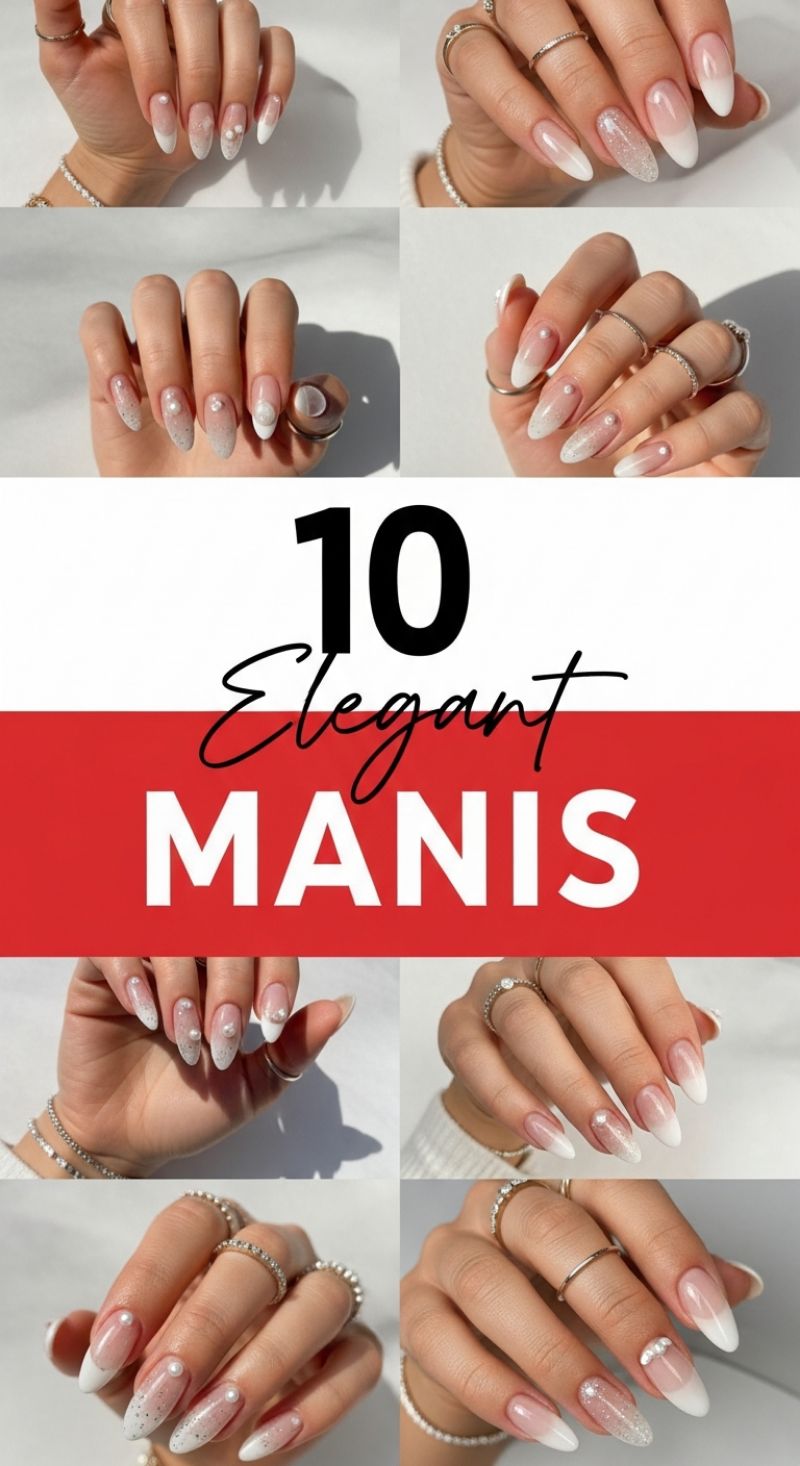
This design takes the classic French manicure and elevates it into a sophisticated, highly decorative look perfect for bridal wear, formal events, or anyone seeking a timelessly glamorous style. The foundation of this manicure is the ‘French Fade’ or ‘Baby Boomer’ technique, utilizing a sheer milky pink or nude base coat that seamlessly transitions into a soft, crisp white tip. To achieve this smooth gradient, start with two coats of a sheer base color. Using a blending brush or sponge, feather the white gel onto the tip, concentrating the pigment before diffusing it toward the center of the nail bed. The ideal shape for this look is the long almond or stiletto, as the extended length provides ample canvas for the ombre effect and the subsequent embellishments. Expert advice suggests using a high-quality builder gel for the structure, which helps maintain the delicate shape and longevity needed for such an intricate design.
What truly defines this elegant manicure is the strategic application of shimmer and 3D embellishments. Once the ombre is cured, apply a thin layer of fine silver or opalescent micro-glitter gel, focusing the sparkle over the white-to-nude transition zone and fading it out gently toward the cuticle. The inclusion of glitter ensures the nails catch the light, adding depth and dimension without overpowering the subtle color base. The key decorative element here is the pearl accent; tiny pearls or soft white rhinestones are placed individually or in small clusters. Common placements include near the cuticle line (a ‘pearl garland’) or centered along the nail axis, often just above the fading white tip. For maximum staying power, these 3D elements must be secured with a specialized jewel adhesive gel, followed by a meticulous application of non-yellowing top coat around the base of each pearl, ensuring they are fully sealed.
This aesthetic works exceptionally well because it balances modern trends (nail shape and glitter fade) with enduring classic elements (the white tip and pearl motif). It is inherently versatile; while often chosen for weddings due to its delicate, ethereal quality, it remains appropriate year-round. For colder seasons, the icy white and silver glitter provide a winter wonderland feel, and for spring/summer, the sheer pink base keeps the look fresh and light. To maintain the sophisticated quality, avoid overloading the nail—if you choose large pearl clusters on one nail, opt for minimal or no pearls on the adjacent nails, allowing the overall elegance of the design to shine through. Finishing with a durable, high-shine top coat is essential to protect the detailed work and keep the crisp white tips flawless.