30-Minute Veggie Chicken Lo Mein

I love food that tastes like it came from a fancy restaurant but only takes a few minutes to make. Life gets very busy, and sometimes I just do not have the energy to spend two hours in the kitchen. That is why I started making this 30-minute veggie chicken lo mein. It is fast, full of bright colors, and my family asks for it at least once a week. If you have some chicken and a few bags of veggies in your fridge, you are already halfway there.
This dish is perfect for anyone who wants a healthy meal without a lot of stress. You do not need any special tools or hard-to-find items from the store. I will show you how to get the noodles just right and how to make the sauce taste like real takeout. This meal is also a great way to use up any leftover vegetables you have sitting in your drawer. It is hard to mess up and always hits the spot when you are hungry and in a hurry.
You will learn the best way to cook the chicken so it stays soft and juicy. I will also tell you which noodles work best and how to keep them from getting sticky. We are going to make a sauce that is sweet and salty at the same time. Let’s get into the kitchen and start cooking this easy dinner together.
Want more quick dinner ideas? Check out our easy stir-fry guides next!
Recipe Quick Info
- Prep Time: 15 minutes
- Cook Time: 15 minutes
- Servings: 4 people
- Difficulty: Easy
The Best Ingredients for Quick Lo Mein
Getting the right stuff from the store makes a big difference in how your food tastes. For a quick lo mein, you want items that cook fast but still have a lot of flavor. I usually pick up fresh chicken breast because it is lean and cooks in just a few minutes. If you are very short on time, you can even buy pre-sliced chicken or rotisserie chicken from the store. That is a great trick for those nights when you are running late from work or school.
Vegetables are the star of this dish alongside the noodles. I like to use a mix of colors to make the plate look pretty and healthy. Carrots, bell peppers, and snow peas are my favorite choices. They stay a little bit crunchy even after you cook them. This crunch is important because it balances out the soft noodles. If you do not have fresh ones, frozen stir-fry mixes work well too. Just make sure to thaw them a little bit so they do not add too much water to your pan.
The Perfect Lo Mein Noodles

Noodles are the base of this whole meal, so picking the right ones is key. True lo mein uses egg noodles which are yellow and a bit thick. You can usually find them in the refrigerated section of your grocery store near the tofu. These fresh noodles are great because they only need a few minutes in boiling water. They have a chewy texture that feels much better in your mouth than plain spaghetti. If you cannot find fresh ones, look for dried lo mein noodles in the pasta aisle.
If your store is out of lo mein noodles entirely, do not worry. I have used standard spaghetti or linguine many times, and it still tastes very good. Just make sure you do not overcook them. You want the noodle to have a little bit of a bite, which people sometimes call al dente. If the noodles get too soft, they will break apart when you toss them with the sauce and veggies. One tip I always share is to rinse the cooked noodles in cold water. This stops them from cooking and removes extra starch so they do not stick together in a big clump.
Choosing Your Fresh Vegetables

The best part about making lo mein at home is that you can pick your favorite veggies. I love to use red bell peppers because they are sweet and look beautiful. I also shred my carrots into thin sticks so they cook at the same speed as the peppers. Snow peas add a nice pop of bright green and a sweet crunch that I really enjoy. You can also add broccoli or baby corn if you want to make the meal even bigger. The more colors you have on the plate, the better it usually tastes.
I once made the mistake of cutting my vegetables into very big chunks. They were still hard while the chicken was already done. Now I make sure to slice everything into thin strips. This helps everything cook evenly in the hot pan. If you have kids who do not like big pieces of vegetables, you can chop them up very small. They will still get all the vitamins but might not even notice the veggies are there. Using fresh produce makes the dish feel light and crisp instead of heavy and oily like some takeout can be.
Making the Savory Lo Mein Sauce

The sauce is what brings all the flavors together and makes the dish taste real. You only need a few simple things from your pantry to make it. I use soy sauce for saltiness and a little bit of honey or brown sugar for sweetness. A splash of toasted sesame oil is very important because it gives the sauce a nutty smell that is classic for lo mein. I also like to add a little bit of oyster sauce or vegetarian stir-fry sauce to make it thicker and richer. It adds a deep flavor that soy sauce alone cannot provide.
Mixing the sauce in a small bowl before you start cooking is a smart move. When the pan is hot, things move very fast, and you do not want to be looking for the honey while the chicken is burning. I always taste my sauce with a small spoon before I pour it in. If it is too salty, I add a tiny bit more water or honey. If it is too sweet, I add another splash of soy sauce. This is your chance to make the meal taste exactly how you like it. FYI, you can make a big batch of this sauce and keep it in your fridge for a week to use on other meals.
How to Cook Lo Mein Like a Pro
Cooking lo mein is all about heat and speed. You want your pan to be very hot so the chicken and veggies sear quickly. This keeps the juices inside the meat and prevents the vegetables from getting soggy. I prefer using a large wok, but a big flat skillet works just as well. The main goal is to have enough room to toss everything around without it falling over the sides. If your pan is too small, the food will steam instead of fry, and you will lose that great stir-fry texture.
Timing is everything when you are working with high heat. You should have all your ingredients chopped and ready to go next to the stove. I call this getting my station ready. Once the oil starts to shimmer in the pan, the whole process only takes about ten minutes. I start with the chicken, then move to the hard veggies, and finally add the noodles and sauce. Following a specific order ensures that nothing gets overdone or stays raw. It is a very active way of cooking, so keep your spatula moving!
Preparing the Chicken for Stir-Frying

To get the best chicken, you need to slice it against the grain. This means looking at the lines in the meat and cutting across them. This makes the chicken much easier to chew. I like to cut mine into thin strips or small bite-sized pieces. One trick I learned from a friend is to toss the raw chicken with a tiny bit of cornstarch and soy sauce. This creates a thin coating that protects the meat from the high heat. It helps the chicken stay moist and gives the sauce something to stick to later on.
When you put the chicken in the pan, let it sit for a minute before you move it. This lets it get a nice brown crust on the outside. Browned meat has way more flavor than meat that is just grey and boiled. I usually cook the chicken about 90 percent of the way and then take it out of the pan. I set it on a clean plate while I cook the veggies. I do this because if I leave the chicken in the pan the whole time, it will get tough and dry. I add it back at the very end just to warm it through with the sauce.
The Correct Order for Adding Vegetables

Not all vegetables cook at the same speed, so you cannot just throw them all in at once. I start with the hard ones like carrots and the white parts of green onions. These need a couple of minutes to soften up. Next, I add the bell peppers and snow peas. These only need about two minutes to get tender but stay bright. If you are using leafy greens like spinach or the green tops of onions, save those for the very last thirty seconds. They wilt almost instantly when they touch the heat.
I once tried to cook a whole bag of broccoli at the same time as thin carrot sticks. The carrots turned to mush before the broccoli was even warm! Now I know better. If you have a veggie that takes a long time, like thick broccoli stalks, you can steam them for a minute in the microwave first. This gives them a head start so they finish at the same time as everything else. Keeping the veggies slightly crisp makes the lo mein feel fresh and vibrant. It is a much better experience than eating a bowl of soft, overcooked mush.
Bringing the Dish Together

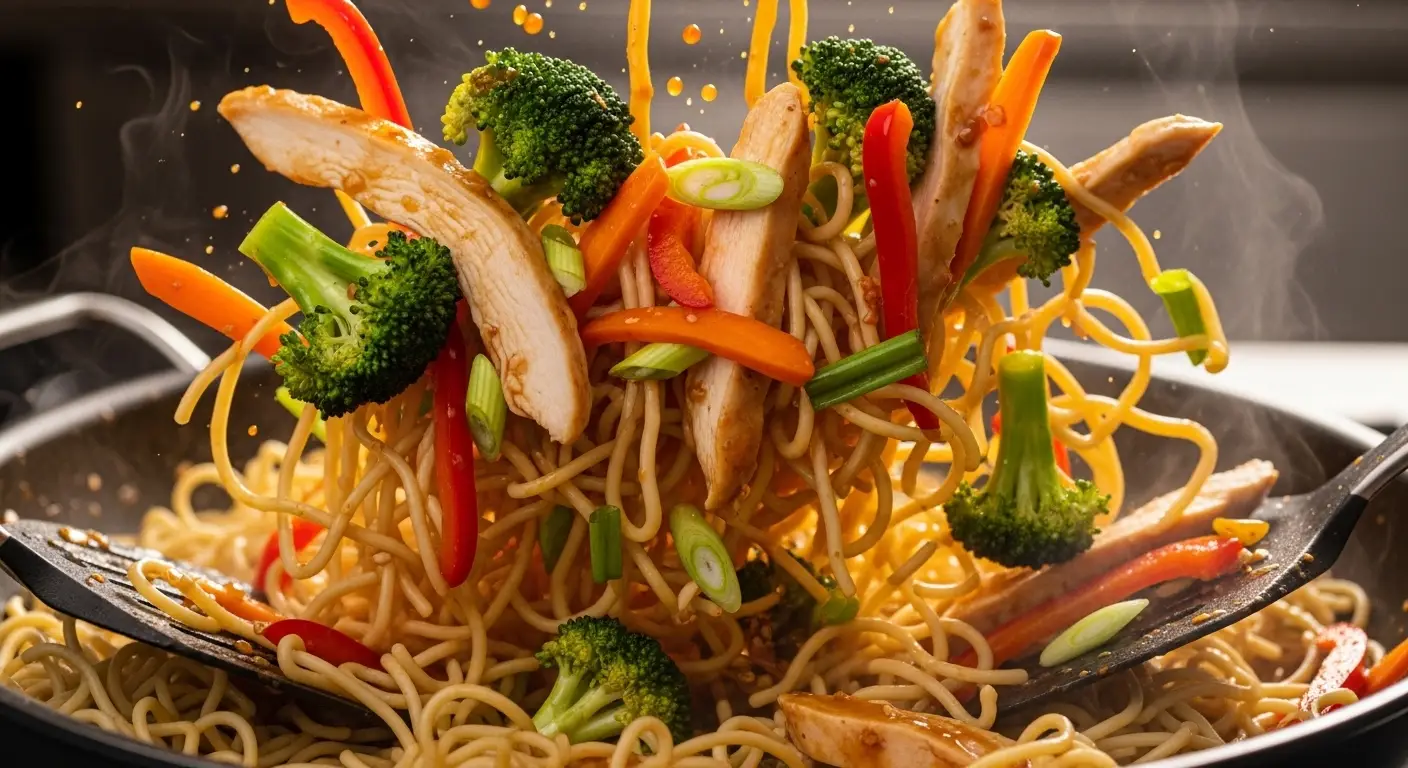
This is the most exciting part of the process. Once your veggies are ready, you slide the cooked chicken back into the pan. Then, you add your noodles and pour that beautiful sauce over everything. Use a pair of tongs or two large spoons to toss the mixture. You want every single noodle and every piece of chicken to be coated in the glossy sauce. This usually takes about two to three minutes over medium heat. As the sauce heats up, it will thicken slightly and cling to the food.
If the pan looks a little bit dry, you can add a tablespoon of water or chicken broth. This helps the sauce spread out more easily. I like to keep tossing until the noodles are hot all the way through. You will see the colors start to pop as the sauce glazes the peppers and carrots. This is also the time to add any final touches, like a handful of bean sprouts or some sesame seeds. The smell at this stage is amazing and usually brings everyone in my house running to the kitchen. Dinner is almost served!
Pro Stir-Fry Tips
- Dry Your Veggies: Wet vegetables will steam instead of fry. Use a paper towel to pat them dry before cooking.
- Don’t Crowd the Pan: If you put too much food in at once, the temperature drops and things get soggy.
- Use High Smoke Point Oil: Use vegetable or canola oil. Olive oil can burn at high stir-fry heats.
Serving and Customizing Your Lo Mein
Serving lo mein is very simple because it is a full meal in one bowl. You have your protein, your carbs, and your vitamins all together. I usually put the big pan right in the middle of the table so everyone can scoop out what they want. It is a fun, family-style way to eat. If you have leftovers, this dish is actually great the next day. The noodles soak up even more of the sauce, making them very flavorful. Just heat them up in a pan with a tiny bit of water to loosen them back up.
You can change this recipe to fit whatever you like to eat. If you do not like chicken, you can use shrimp, beef, or even tofu. For a vegetarian version, just use more mushrooms and skip the meat. I often change the veggies based on what is on sale at the market. Sometimes I use zucchini or celery for extra crunch. IMO, the sauce is so good that almost any vegetable will taste great in it. This is a very flexible recipe that grows with your skills and your tastes.
Easy Toppings for Extra Flavor

Toppings are like the cherry on top of a sundae. They add that final bit of flavor and make the dish look like it came from a chef. I always have a bunch of green onions in my fridge. I slice the green parts very thin and sprinkle them over the top right before eating. They add a fresh, sharp taste that cuts through the salty sauce. Toasted sesame seeds are another favorite of mine. They add a tiny bit of crunch and look very pretty against the dark sauce.
If you like a bit of heat, you can add red pepper flakes or a drizzle of sriracha. My brother loves spicy food, so he always adds extra chili oil to his bowl. For a bit of sourness, a squeeze of fresh lime juice can really brighten up the whole meal. It might sound strange for lo mein, but the acid in the lime makes the other flavors stand out more. I usually put these toppings in small bowls on the table. This way, everyone can fix their bowl exactly how they like it. It makes dinner feel like a little party.
How to Store and Reheat Leftovers
If you have leftovers, you are in luck. Lo mein stays good in the fridge for about three to four days. I put mine in a glass container with a tight lid. This keeps the noodles from drying out and prevents the fridge from smelling like onions. When you are ready to eat it again, the microwave is the fastest way. I suggest adding a teaspoon of water to the bowl before you heat it. This creates a little bit of steam that helps soften the noodles and makes the sauce saucy again.
For the best texture, you can reheat it in a pan on the stove. Just put a tiny bit of oil in a skillet and toss the leftovers for a few minutes. This can actually make the noodles a little crispy, which some people think is even better than when it was fresh. I do not recommend freezing lo mein. The noodles can get very soft and mushy when they thaw out, and the veggies lose their nice crunch. Since it only takes 30 minutes to make fresh, it is usually better to just make a new batch when you crave it again.
Your Quick Dinner Questions Answered
Can I make this recipe gluten-free?
Yes! Use tamari or liquid aminos instead of soy sauce. Also, use rice noodles or gluten-free spaghetti instead of egg noodles.
What if I don’t have a wok?
A large, deep skillet or even a soup pot will work. The main thing is having enough space to toss the noodles and veggies together easily.
Can I use frozen vegetables?
Sure! Just thaw them and pat them dry first. If they are too wet, the sauce will get watery and the dish won’t have as much flavor.
Is lo mein the same as chow mein?
Not quite. Lo mein means tossed noodles that are soft. Chow mein usually means fried noodles that are a bit more crispy and dry.
How do I keep my noodles from sticking?
Rinse them in cold water right after boiling. You can also toss them with a tiny drop of oil to keep them separate until you add them to the pan.
Happy Cooking and Eating
This veggie chicken lo mein is a total winner for busy nights. It is fast, cheap, and much better for you than ordering out. I hope you enjoy making this easy meal as much as I do. Now go get your pan hot and start stir-frying!