Best Ever Crispy Beer Battered Fish and Chips at Home

Making fried fish at home used to scare me. I always thought the batter would be soggy or the fish would be dry. After many tries and a few messy kitchens, I found the secret to the perfect crunch. You do not need a big deep fryer or a chef hat to make this work. All you need is a heavy pot, some cold beer, and the right kind of fish.
In this guide, I will show you every step to get that golden crust. We will talk about the best oil to use and how to cut your potatoes so they stay firm. You are going to learn how to keep the batter light and airy like a cloud. By the time you finish reading, you will be ready to host your own fish fry tonight.
Want to see how easy it is to get that perfect snap when you bite into your dinner?
The Secrets to a Perfect Crunch
The biggest mistake people make is using a batter that is too thick. If it looks like pancake mix, it is too heavy. You want a thin coating that bubbles up when it hits the hot oil. I once made a batch that was so thick it tasted like a loaf of bread around a tiny piece of fish. It was a sad dinner, but it taught me a big lesson about measuring my flour.
Temperature is your best friend here. Everything needs to be very cold except for the oil. When cold batter hits hot oil, it creates steam. That steam pushes the batter out and makes those tiny bubbles we love. If your batter is warm, it just soaks up the oil and gets greasy. Trust me, keep your beer in the fridge until the very last second.
Choosing the Best Fish

Not all fish are good for frying. You want a firm white fish that can stand up to the heat. Cod is the classic choice because it flakes apart in big, meaty chunks. Haddock is also great if you want a slightly sweeter taste. I usually look for fillets that are about one inch thick so they cook at the same speed as the batter browns.
Stay away from oily fish like salmon or very thin fish like tilapia for this recipe. Oily fish can make the whole meal feel too heavy. Thin fish will overcook before the outside is crispy. If you can, buy your fish fresh from the counter. Pat it very dry with paper towels before you start. Any extra water on the fish will make the batter slide right off, and nobody wants naked fish!
The Magic of Beer Batter

The bubbles in the beer are what make this recipe special. Carbonation acts like tiny lift kits for your crust. I like using a light lager because it does not change the color of the fish too much. If you want a deeper, earthy flavor, you can use a dark ale. Just remember that dark beer will make your crust look brown very quickly, even if the fish isn’t done yet.
I mix my dry ingredients first and then slowly pour in the cold beer. Do not over-mix! A few lumps are actually okay. If you stir it too much, you create gluten. Gluten makes things chewy like pizza crust, but we want this to be crisp and brittle. Think of it like mixing a quick muffin batter. Just a few turns with the whisk and you are good to go.
Why Cold Liquid Matters

I mentioned this before, but it is worth saying again. Cold liquid is the key to success. When the ice-cold batter hits the 375-degree oil, it reacts fast. This creates a barrier so the oil stays on the outside. This is how you get fish that is juicy inside but not oily. If you find your batter getting warm while you wait, put the bowl inside a larger bowl filled with ice.
One time I left my batter on the counter near the hot stove. The last piece of fish I fried was soft and oily. It was a bummer! Now I always keep my liquid in the back of the fridge. If you don’t want to use beer, you can use very cold club soda. It provides the same bubbles without the beer flavor. IMO, the beer adds a nice toasted taste that soda misses, but both work for the crunch factor.
The Right Potatoes for Chips

In the world of fish and chips, the chips are just as important as the main event. You want a potato with a lot of starch. Russet potatoes are the gold standard here. They have a low water content which means they get very fluffy inside. If you use red potatoes or waxy ones, they might stay firm or get soggy after they cool down.
I like to cut my chips into thick batons. This is the traditional way. I leave the skin on sometimes because it adds a nice earthy flavor, but peeling them gives you that classic pub look. After cutting them, I soak them in cold water for at least thirty minutes. This washes away the extra starch on the outside so they don’t stick together in the fryer. It also helps them get that beautiful golden brown color.
The Double Fry Method
If you want chips that stay crunchy even after they sit on the plate, you have to fry them twice. I learned this the hard way after serving many plates of limp fries. The first fry happens at a lower heat. This cooks the inside of the potato until it is soft and tender. You take them out before they turn brown and let them rest on a wire rack.
The second fry happens right before you eat. You turn the heat up and drop them back in for just a minute or two. This creates a hard, crispy shell on the outside. It is a bit more work, but it makes a huge difference. FYI, you can do the first fry hours in advance. This makes it much easier to finish dinner quickly when everyone is hungry.
Safety Tips for Deep Frying

Cooking with a large pot of hot oil can be scary. I always use a deep pot so the oil only fills it halfway. This gives the oil room to bubble up without spilling over. Never, ever use water to put out an oil fire. Keep a lid or a baking sheet nearby. If things get too hot, you can just slide the lid on to cut off the air. It is better to be safe than sorry!
I highly recommend buying a clip-on thermometer. Guessing the temperature of oil is a recipe for disaster. If the oil is too cold, your food will be greasy. If it is too hot, the outside will burn while the inside stays raw. Keeping the oil between 350 and 375 degrees is the sweet spot. I always let the oil come back up to temperature between batches too.
Recipe Quick Info
- Prep Time: 40 minutes
- Cook Time: 20 minutes
- Servings: 4 people
- Difficulty: Medium
Gather Your Ingredients

Before you start heating the oil, make sure everything is ready. You will need two cups of all-purpose flour. I also use a teaspoon of baking powder because it helps the batter puff up. For seasoning, I keep it simple with salt and a lot of black pepper. Some people like to add garlic powder or paprika, which is a great way to change it up.
- 1.5 lbs of fresh Cod or Haddock fillets
- 2 cups of all-purpose flour (plus extra for dusting)
- 1 teaspoon baking powder
- 12 oz of very cold light beer
- 4 large Russet potatoes
- 1 quart of vegetable or canola oil
- Salt and pepper to taste
- Lemon wedges for serving
Make sure you have a wire rack ready too. Placing fried food on paper towels can actually make the bottom soggy because the steam gets trapped. A wire rack lets air move all around the fish so it stays crisp on all sides.
Step-by-Step Cooking Guide

Now it is time to put it all together. Follow these steps carefully and you will have a meal that looks like it came from a restaurant. Don’t rush the process!
- Peel and cut your potatoes into thick strips. Soak them in cold water for 30 minutes, then pat them completely dry.
- Heat your oil to 325 degrees. Fry the potatoes for about 5 minutes until soft but pale. Remove and drain on a rack.
- Increase oil heat to 375 degrees. Pat your fish fillets very dry with paper towels.
- Whisk 1.5 cups of flour, baking powder, salt, and pepper. Slowly pour in the cold beer and whisk until mostly smooth.
- Dust the dry fish fillets in the remaining half cup of flour. This helps the batter stick.
- Dip the fish into the batter, let the extra drip off, and gently lower into the hot oil.
- Fry for 4-5 minutes until golden brown. Move to a wire rack and sprinkle with salt immediately.
- Drop the chips back into the oil for 2 minutes until dark gold and crispy. Serve hot!
Pro Frying Tips
- Don’t Crowd: Only fry two pieces of fish at a time. Too many pieces will drop the oil temperature and make the fish soggy.
- Dry is Key: If the fish is even slightly damp, the batter will peel off like a wet sock. Use lots of paper towels!
Serving Suggestions and Sides

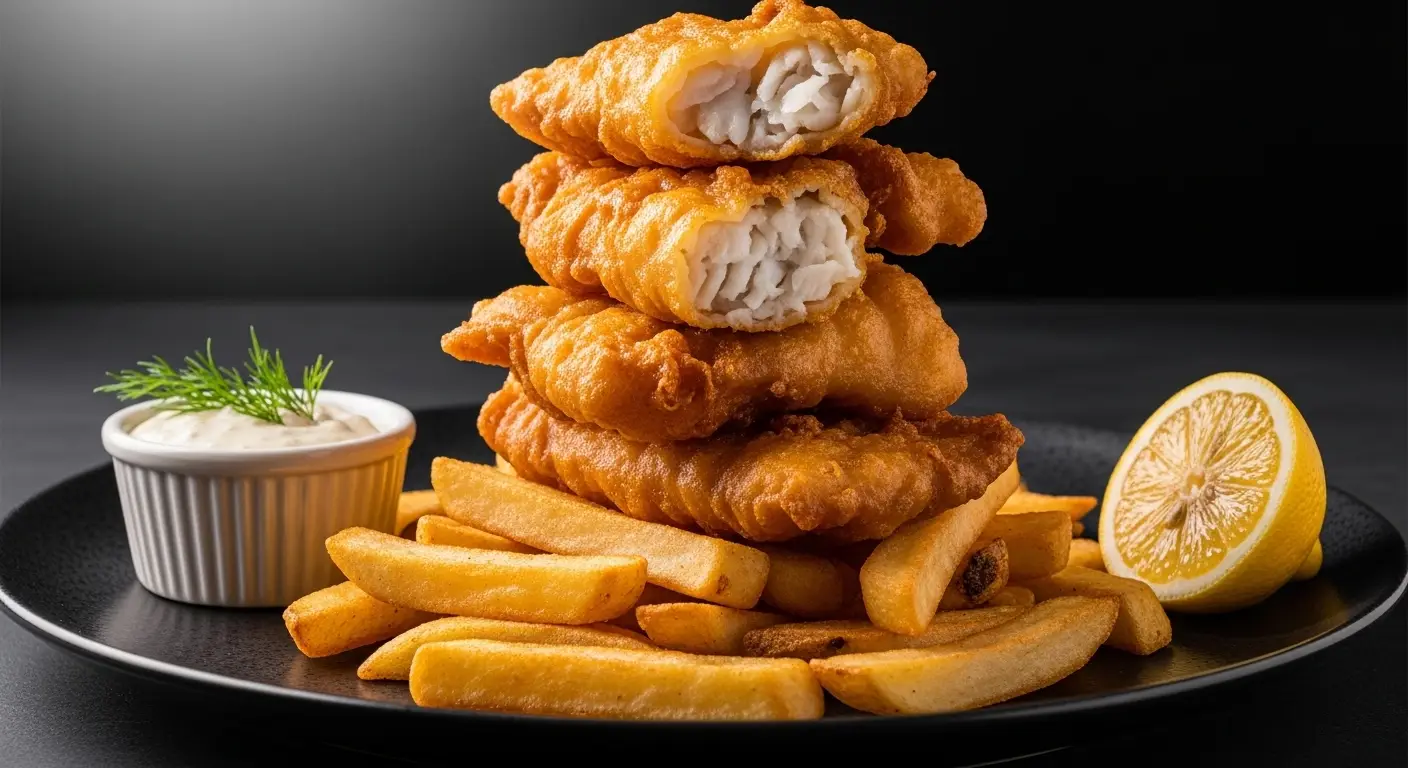
Fish and chips aren’t complete without the right sides. I love a good tartare sauce. You can make a quick version by mixing mayo, chopped pickles, and a squeeze of lemon. If you want to be really traditional, you can make mushy peas. Just boil some frozen peas with a little butter and mint, then mash them with a fork. It adds a nice bright color to the plate.
Don’t forget the malt vinegar! Sprinkling vinegar over the hot fish adds a sharp tang that cuts through the richness of the fried batter. I also like to serve a big lemon wedge on the side. Squeezing fresh juice over the fish right before you bite in wakes up all the flavors. If you are feeling fancy, a side of creamy coleslaw provides a nice cold crunch to go with the hot meal.
Common Questions About Homemade Fish and Chips
Can I use frozen fish for this recipe?
Yes, but you must thaw it completely and pat it very dry. Frozen fish holds more water, which can make the batter soggy if not dried well.
What is the best oil for deep frying fish?
Use an oil with a high smoke point like canola, vegetable, or peanut oil. These won’t burn at the high heat needed for a crispy crust.
How do I keep the fish warm while I fry the rest?
Put a wire rack on a baking sheet and keep it in a 200-degree oven. This keeps the fish hot and crispy without overcooking it.
Can I make the batter ahead of time?
It is best to make the batter right before frying. The bubbles in the beer provide the lift, and they will disappear if the batter sits too long.
Why is my batter falling off the fish?
This usually happens if the fish is wet or if you skipped the flour dusting step. The flour acts like glue between the fish and the batter.
Time to Start Frying
Making fish and chips at home is a skill that will make you a hero at the dinner table. It takes a little practice to get the timing right, but the reward is a meal that tastes better than any takeout. Just remember to keep your beer cold, your oil hot, and your fish dry. You have all the tools you need now to make the crunchiest dinner of your life. Enjoy every bite!