Irresistible Stuffed Grape Leaves

I remember the first time I tried to make stuffed grape leaves. My kitchen looked like a green forest had exploded. There were leaves on the floor, rice on the counter, and I felt very lost. But after many years of practice, I finally figured out the secret to making them perfect every single time. Today, I am going to share everything I know so you can make them too.
Stuffed grape leaves are also called Dolmas. They are little rolls made of tender leaves filled with tasty rice and herbs. They are healthy, fun to eat, and they look beautiful on a plate. You will learn which leaves to buy, how to mix the filling, and the best way to roll them so they do not fall apart in the pot. It is a slow process, but it is very relaxing once you get into a rhythm.
Ready to get started? Let us look at what you need to make these amazing little bites for your friends and family.
Do you want to see how easy it is to become a pro at rolling leaves?
Getting Everything Ready for Your Kitchen
Before you start cooking, you need to have a clear workspace. This recipe takes some time, so I like to put on some music or a podcast. It makes the rolling part go by much faster. You will need a large pot, a big bowl for mixing, and a flat surface like a cutting board to roll the leaves on. I usually clear off my whole kitchen table so I have plenty of room to work without feeling squished.
One thing I learned the hard way is to check my grape leaves before I start. If you use leaves from a jar, they come sitting in salty water called brine. You must rinse them very well. If you do not, the whole dish will taste way too salty. I once forgot to rinse them and nobody could eat more than one! It was a sad day for my dinner party, but a great lesson for my future cooking. Now, I always taste a tiny piece of a leaf first to make sure it is not too salty or tough.
The Ingredients You Will Need

- 1 jar of grape leaves (about 60 to 70 leaves)
- 2 cups of uncooked short-grain white rice
- 1 large onion, chopped very small
- 1 cup of fresh parsley, chopped
- 1/2 cup of fresh dill, chopped
- 1/2 cup of extra virgin olive oil
- 1/4 cup of fresh lemon juice
- 1 teaspoon of salt
- 1/2 teaspoon of black pepper
- 2 cups of warm water
- Optional: 1/2 pound of ground beef or lamb for a meat version
Using the right rice is very important. I always use short-grain rice because it gets sticky and soft. Long-grain rice stays too firm and can poke through the leaves. If you want to make this vegan, just leave the meat out. IMO, the veggie version tastes even better because the herbs really shine. Fresh herbs are a must here. Dried herbs just do not have that bright, happy flavor that makes these so special.
Preparing the Grape Leaves

Take the leaves out of the jar carefully. They are usually folded in bundles. Do not pull too hard or they might tear. Put them in a big bowl of cool water and move them around with your hands. This gets the extra salt off. After rinsing, I like to put them in a colander to drain. If some leaves are torn, do not throw them away! You can use them to line the bottom of your pot so the good rolls do not burn.
Sometimes the leaves have long stems. I use a pair of kitchen scissors to snip those off. You want the leaf to be smooth so it rolls up easily. If the leaves feel very tough, you can soak them in hot water for a few minutes to soften them up. This makes them much easier to handle. Think of it like giving the leaves a little spa day before they get stuffed with rice.
Recipe Quick Info
- Prep Time: 45 minutes
- Cook Time: 60 minutes
- Servings: 6 people
- Difficulty: Medium
Making the Rice Filling

In your big bowl, mix the rice, onion, parsley, and dill. Pour in half of your olive oil and half of the lemon juice. Add your salt and pepper. I use my hands to mix it all together. It feels a bit messy, but it is the best way to make sure the oil coats every grain of rice. This prevents the rice from turning into a giant hard lump inside the leaf. The onions should be chopped very tiny so they cook at the same rate as the rice.
If you are adding meat, mix it in now. Make sure the meat is broken up into tiny bits. You do not want a big meatball inside your leaf. The filling will look very bright and green from all those fresh herbs. It should smell amazing already! One tip most blogs skip: do not cook the rice before stuffing. It will cook inside the leaf and soak up all the delicious juices. This is what makes the flavor so deep and good.
How to Roll a Perfect Dolma

Lay one leaf flat on your board with the shiny side down. The veins should be facing up at you. Put about one tablespoon of filling near the stem end. Do not put too much! The rice will grow as it cooks. If you put too much, the leaf will pop open like a balloon. Fold the bottom part of the leaf over the rice. Then, fold in the left side and the right side. It should look like a little open envelope.
Now, roll it up toward the pointy top of the leaf. Keep it firm but not too tight. If you roll it too tight, the rice won’t have room to expand and the leaf will rip. If you roll it too loose, the filling will fall out into the pot. It takes a few tries to get the feel for it. My first five always look a bit wonky, but by the tenth one, I feel like a master. Just keep going and do not worry if they are not all perfect.
Pro Rolling Tips
- Don’t Overfill: One tablespoon is plenty for a medium leaf.
- Vein Side Up: Always put the rice on the bumpy side of the leaf.
- Patch Work: Use small pieces of torn leaves to cover holes in bigger ones.
Arranging the Pot for Cooking

Take those torn leaves I mentioned earlier and cover the bottom of your pot. This creates a cushion. It protects your hard work from the direct heat of the stove. Place your rolled leaves in the pot in neat rows. I like to pack them in quite close together. This helps them stay closed while they simmer. You can even do two or three layers if you have a lot of rolls. Just make sure they are snug.
Once all the rolls are in, pour the rest of the olive oil and lemon juice over them. Add the two cups of warm water. The water should almost cover the rolls but not quite. To keep them from floating around and unrolling, place a heavy ceramic plate upside down on top of the leaves. This acts as a weight. It is a classic trick that works every time. Without the plate, you might end up with a pot of loose rice and leaves! FYI, any heat-safe plate will work.
The Low and Slow Cooking Process

Put the lid on the pot and turn the heat to medium. Wait until you see the water start to bubble. As soon as it boils, turn the heat down to very low. You want a tiny simmer, not a big splashy boil. Let it cook for about 50 to 60 minutes. Do not keep lifting the lid to peek! You want to keep the steam inside. The steam is what makes the leaves tender and the rice fluffy.
After an hour, take the pot off the heat. Take off the lid and the plate, but be careful because the steam is very hot. Let the rolls sit in the pot for at least 20 minutes before you touch them. They need time to soak up any liquid that is left. This also lets them firm up so they don’t break when you pick them up. Patience is the hardest part of this recipe because the smell is so tempting!
Serving Suggestions and Dips

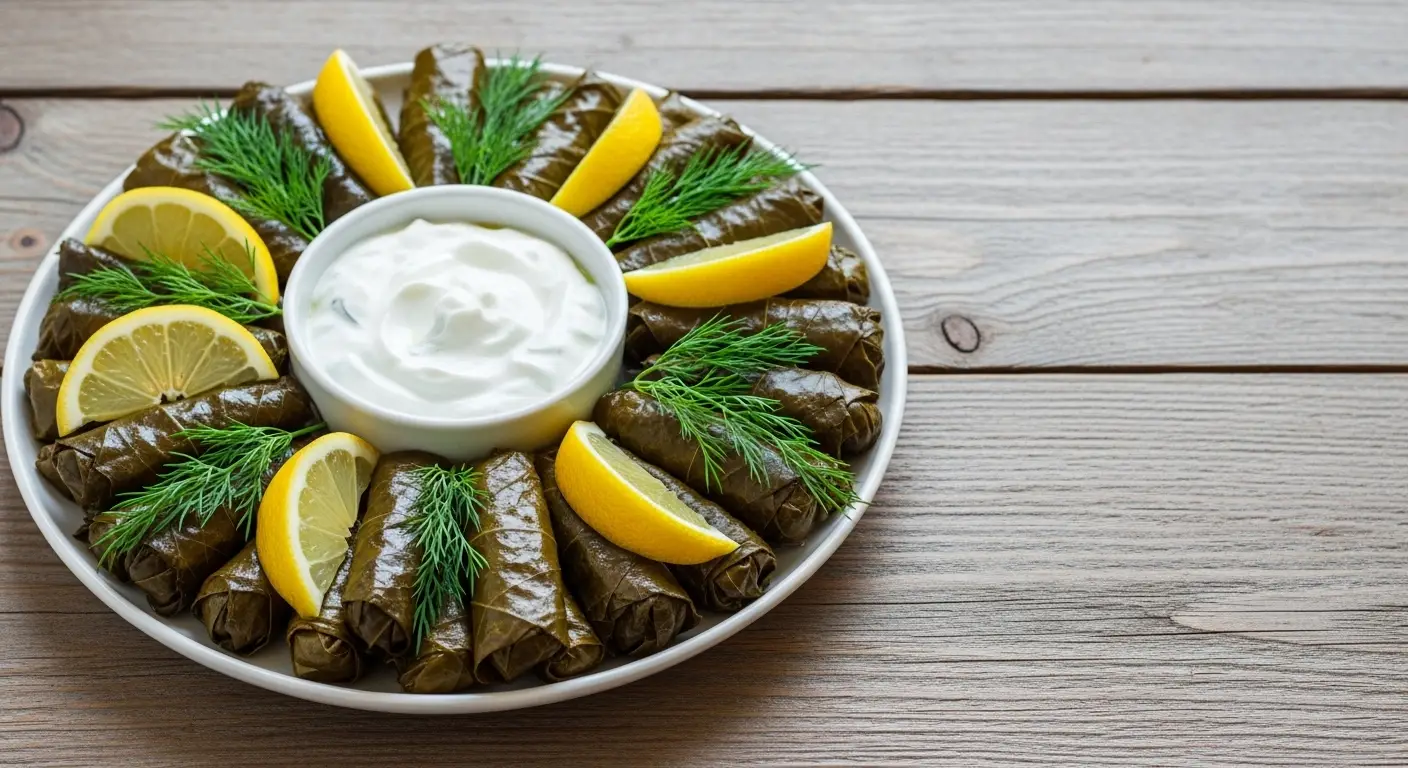
I think these taste best at room temperature or even cold from the fridge. They make a great snack or a side dish for a big dinner. I love to serve mine with a big dollop of plain Greek yogurt or a garlic sauce called Tzatziki. The cool yogurt tastes so good with the lemony rice. You can also add some olives and feta cheese on the side to make a full Mediterranean feast.
If you want to be fancy, garnish the platter with extra lemon wedges and some fresh sprigs of dill. It looks like something from a high-end restaurant! These are great for parties because you can make them a day early. In fact, I think they taste even better the next day after the flavors have had time to settle. They are the perfect “make-ahead” food for busy people. Everyone will be impressed that you made these by hand.
Common Questions About Dolmas
Can I use brown rice instead of white rice?
Yes, but you must soak the brown rice for two hours first. It takes much longer to cook than white rice and needs more water in the pot.
What if my grape leaves are too small?
If a leaf is too small, just overlap two small leaves to make one big surface. It works perfectly and helps you use up all the leaves in the jar.
How long do these stay fresh in the fridge?
You can keep them in a sealed container for up to 5 days. They are a great snack to grab when you are hungry and want something healthy.
Can I freeze stuffed grape leaves?
Yes! You can freeze them after they are cooked and cooled. Put them in a freezer bag. Just thaw them in the fridge when you are ready to eat.
Why are my grape leaves still tough after cooking?
This usually happens if the heat was too high and the water evaporated too fast. Add a little more water and simmer for 15 more minutes.
Time to Enjoy Your Homemade Feast
Making stuffed grape leaves is a labor of love that is totally worth the effort. You now know how to prep, fill, roll, and cook these healthy treats like an expert. Your kitchen will smell like a dream and your belly will be very happy. Enjoy every bite of your hard work!