
Discover 100+ stunning hairstyles for every hair length, texture, and occasion. Find your perfect look, from everyday styles to wedding updos, in this ultimate lookbook.
Effortless Elegance: Romantic Half-Up, Half-Down Styles
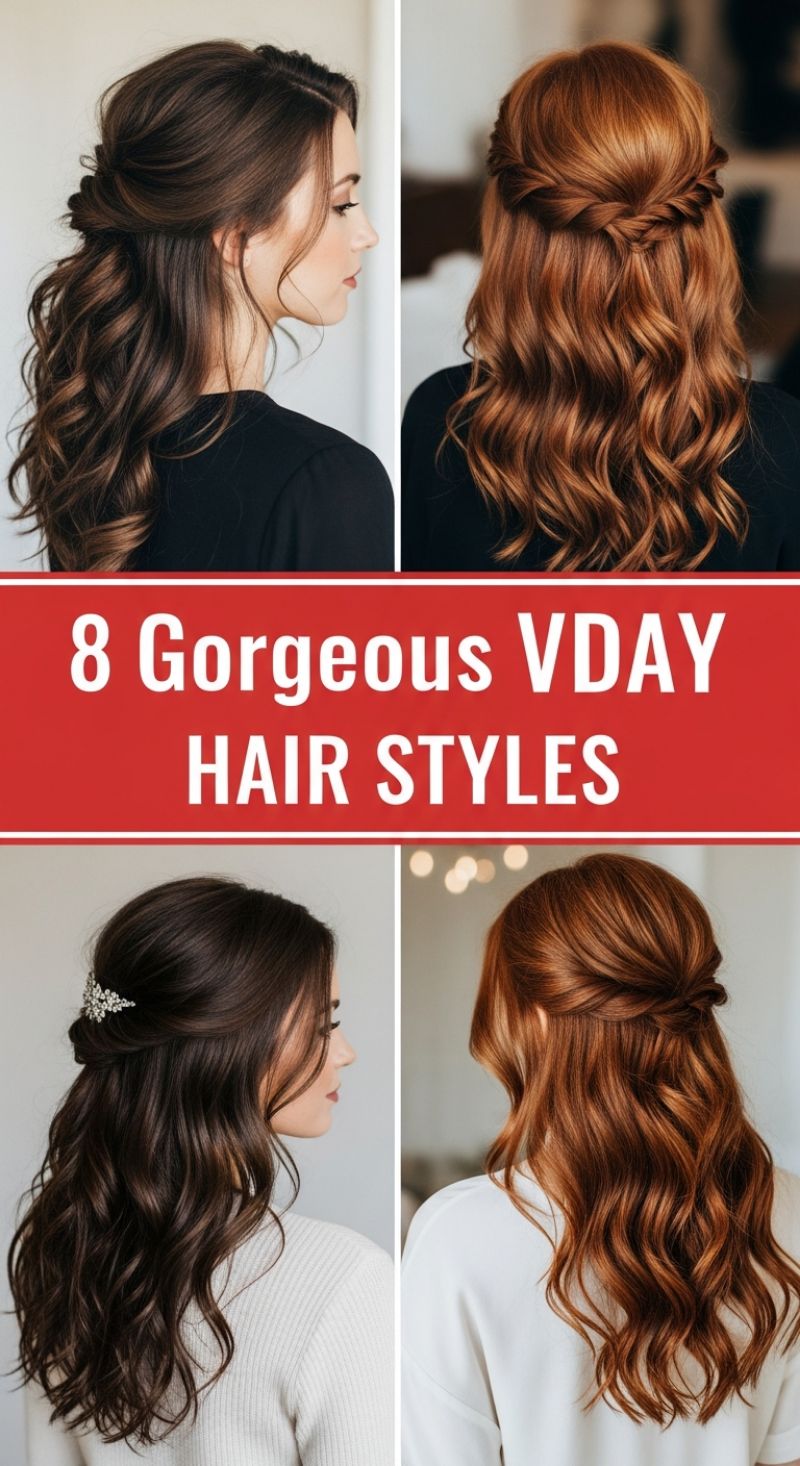
The half-up, half-down style is the pinnacle of romantic versatility, perfect for showcasing beautiful length while keeping hair elegantly away from the face. To achieve the voluminous, soft texture seen in these gorgeous examples, preparation is key. Begin by treating the entire length of your hair with a heat protectant, then curl sections loosely using a 1.25 to 1.5-inch barrel iron, curling away from the face. Once cooled, brush the curls out gently to transform them into soft, cascading waves. Before gathering the top section, apply a texturizing spray or dry shampoo generously at the crown and roots. This provides the necessary grip and lift, ensuring the style holds all day and maintains that desirable, slightly undone volume when pinned back. The success of this look lies in deliberately separating the secured portion from the loose waves below, creating dynamic contrast.
To execute the foundational half-up twist (as seen in the dark brown and auburn examples), start by isolating the top third of your hair, extending from temple to temple. For the sophisticated, voluminous look, take two sections just above the ears, twist them individually backward toward the center, and cross them over. Alternatively, for a woven look like the braided crown variation, braid the sections near the temples and secure them at the back of the head, letting the braid act as a natural headband before joining the rest of the loose hair. The secret to achieving the romantic looseness is ‘pancaking’—gently pulling apart the twists or braids once secured to soften the line and enhance texture. Secure the twisted section using several small bobby pins tucked invisibly into the underside of the gathered hair, making sure to push them through in the opposite direction of the twist for maximum hold.
Expert styling demands careful attention to finishing details. If your hair is naturally slick or very fine, backcombing the root area of the secured section before twisting will provide a much stronger anchor point. For an added touch of luxury, consider incorporating a delicate accessory, such as a jeweled barrette or floral pin, placed strategically over the secured section to draw attention to the style’s architecture. Ensure the remaining loose hair falls naturally and flawlessly; if any waves have dropped, use a touch-up curl at the bottom. Finish with a flexible hold hairspray, focusing on the secured crown area, while letting the rest of the hair move freely. This hairstyle is universally flattering and transitions seamlessly from a formal event to a casual date night, making it an essential addition to any hairstyle lookbook.
12 Stunning PROM UPDOS
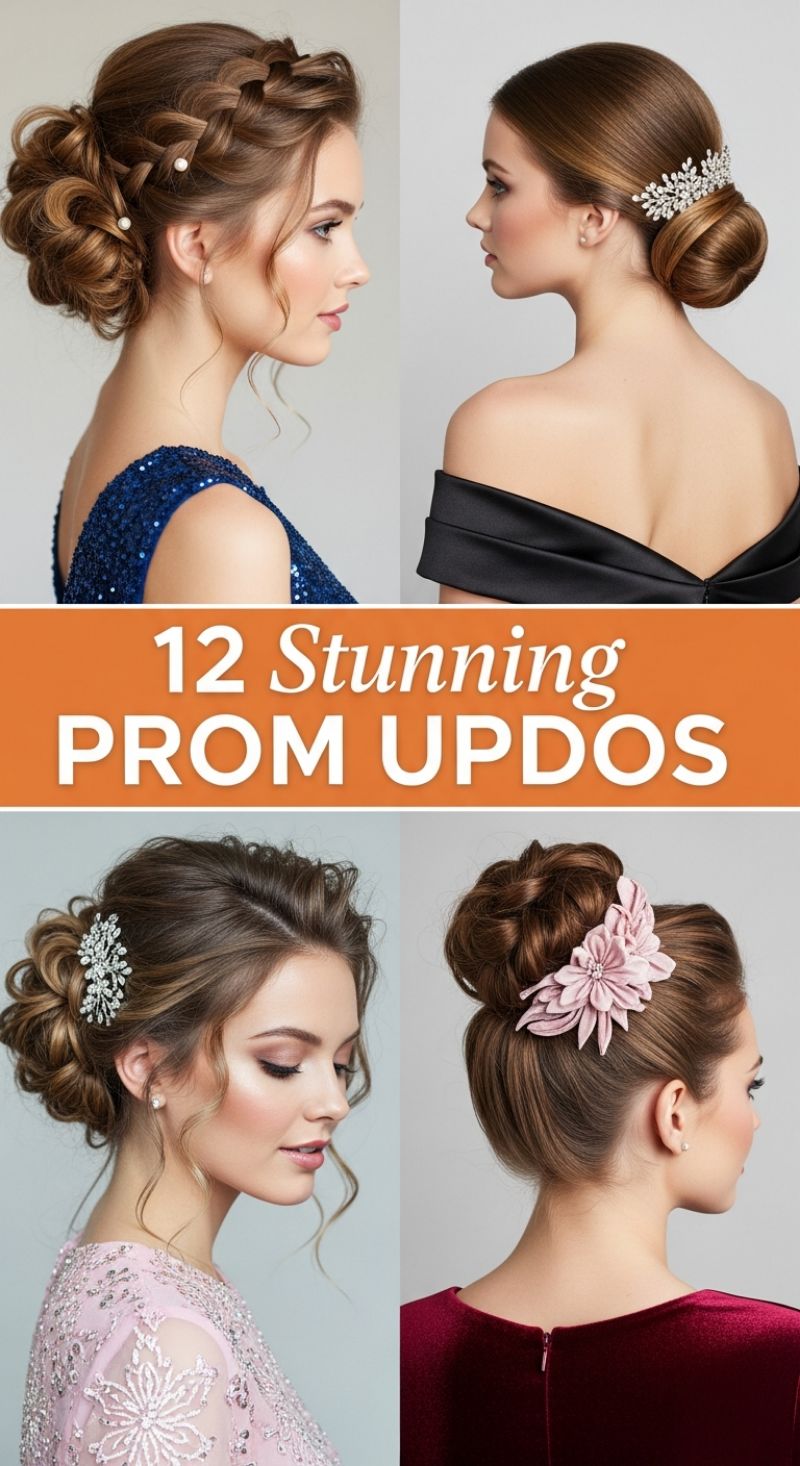
Formal occasions like prom, weddings, and galas demand a hairstyle that is both elegant and secure, and these four featured updos offer a masterclass in sophistication. The key to choosing the right style lies in balancing volume, texture, and accessories. On the upper left, we see a romantic, textured low bun seamlessly integrated with a side-swept Dutch braid that wraps around the crown. This look thrives on soft volume and carefully placed accents, such as the delicate pearl pins nestled within the curls. To recreate this, ensure you prep hair with a volumizing mousse before curling and braiding; the braid should be slightly pulled apart (pancaked) for a softer, fuller appearance. In sharp contrast, the adjacent style (upper right) showcases a classic, impeccably smooth chignon. This timeless look requires maximum precision, achieved by flat-ironing hair for sleekness and using high-hold hairspray and shine serum to eliminate flyaways before gathering the hair into a tight, neat bun at the nape. The dazzling crystal hair comb placed above the chignon adds the necessary formal sparkle, making it the perfect choice for a sophisticated, structured gown.
The lower row explores variations in texture and height. The side-swept, tousled updo (lower left) captures a modern, undone romance. This style starts with a deep side part and relies on loosely curled sections pinned strategically to create a voluminous low bun that falls slightly to one side. The soft, face-framing tendrils are crucial for maintaining that effortless, youthful look. The substantial, snowflake-like crystal pin acts as the central decorative feature, complementing the intricate beading of the dress. For a high-impact, polished vintage feel, consider the high bun with a fabric flower (lower right). This style requires serious structure, often achieved using a hair donut or intensive backcombing at the crown to ensure height and perfect symmetry. The smooth transition from the tight crown to the voluminous bun is essential. The large, dusty rose velvet floral accessory provides a soft, textural counterpoint to the sleekness of the hair.
Expert application of products is critical to making these updos last all night. For any look involving volume and texture (like the two romantic buns), begin with dry shampoo or texturizing spray on dry hair to add essential grit and hold. When securing the hair, use clear elastic bands and plenty of high-quality bobby pins, interlocking them in an X-shape for maximum security. When choosing accessories, ensure the piece complements the size and style of the bun—smaller, scattered pins work well in textured hair, while large, statement combs are perfect for framing a sleek chignon. Always finish with a mist of flexible-hold hairspray, allowing the hair to settle before hitting the dance floor.
7 Effortless EASY HAIR STYLES
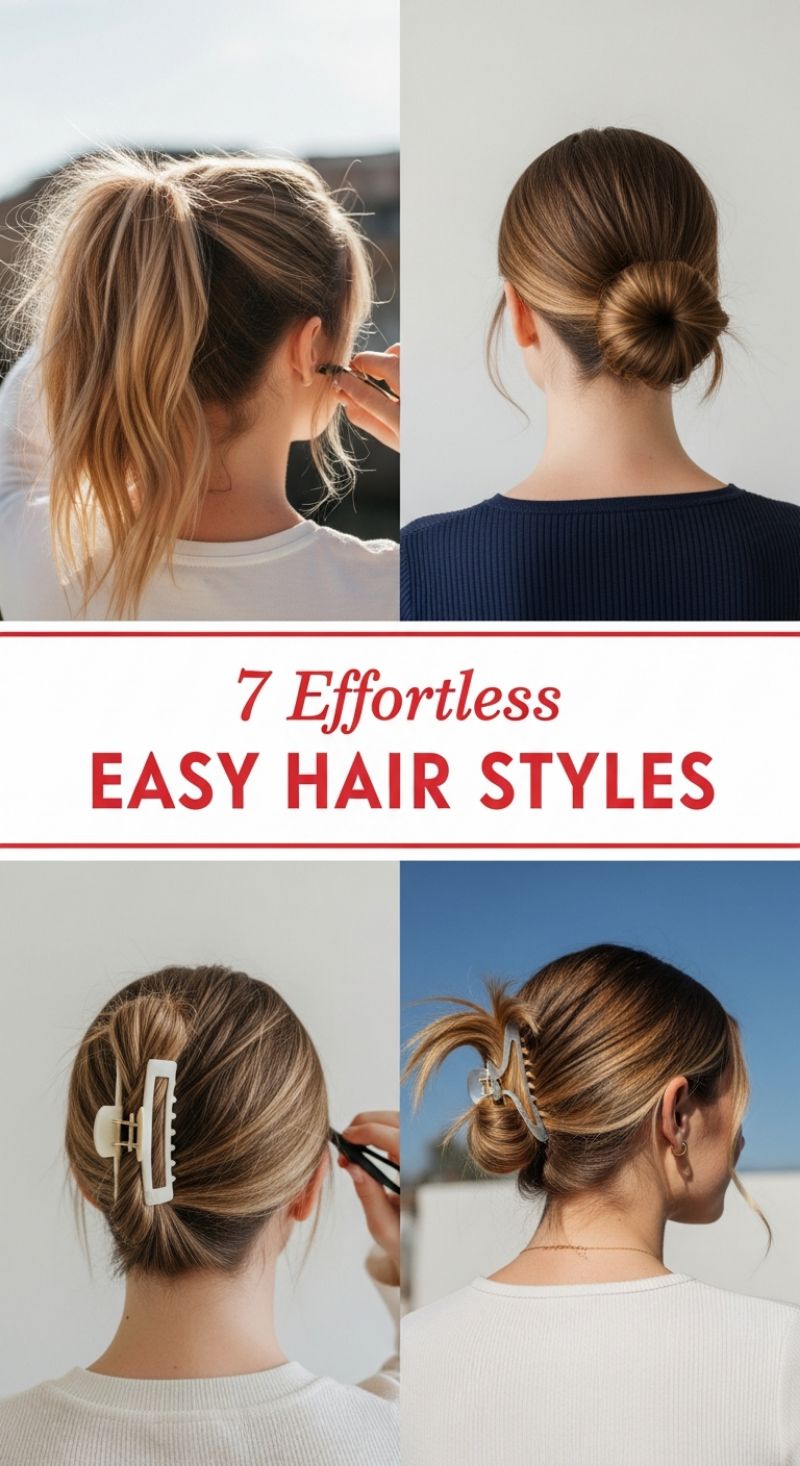
Achieving a chic look doesn’t require hours of styling; these four visual examples prove that simplicity is often the ultimate sophistication. The key to mastering truly effortless hairstyles, like the seven promised in this guide, is focusing on building foundational texture and executing quick, strategic moves. Start with the classic high ponytail (top left). To ensure it looks bouncy and full, like the blonde style pictured, flip your head upside down while gathering your hair high on the crown. Before securing with an elastic, use a texture spray or dry shampoo near the roots and base of the ponytail for maximum lift and movement. Finish by concealing the elastic: take a small section of hair from underneath the tail, wrap it tightly around the base, and secure it underneath with a small bobby pin. For a completely different vibe, move to the sleek, low ballerina bun (top right). This polished style demands smooth execution; brush the hair back tautly from the face and gather it precisely at the nape of the neck. Twist the length of the ponytail into a tight rope, coil it flat and centrally against the head, and secure it firmly with long U-shaped pins. If your hair is on the finer side, consider integrating a foam doughnut bun maker beneath the coils for that perfect, voluminous circular shape.
The modern resurgence of the claw clip offers an unbeatable combination of speed and style, showcased in the bottom row with two distinct variations. The polished updo (bottom left) is achieved by gathering the hair low at the base of the neck, performing a clean vertical twist, and using a sturdy, structured clip—like the elegant opaque white rectangular design shown—to hold the twist firmly in place. For fine hair, lightly spritzing the hair with hairspray before twisting will maximize hold. Note the detail in the image: the hands are shown gently pulling out tiny, face-framing strands around the nape and ear, which softens the overall effect and prevents the look from appearing too severe. Contrast this technique with the relaxed, undone claw clip (bottom right). This style is purposefully messy and positioned slightly higher up the back of the head. Gather the hair very loosely, twist it once or twice (less twisting equals more volume), and clamp the center, allowing the ends to fan out playfully over the top of the clip for a casual, ’90s-inspired look. This style thrives on texture; use texturizing spray on your lengths before styling to enhance the volume and the spiky effect of the loose ends.
Expert Tip: The key difference between a rushed appearance and an effortless, intentional style lies in preparation and placement. Before attempting any of these updos, ensure your hair has a functional base of texture. If your hair is freshly washed and slippery, mist it lightly with sea salt spray or dry shampoo to give it necessary grip and volume, especially crucial for holding the weight of a high ponytail or keeping the clip from slipping. For the low bun and other sleek looks, invest in a quality smoothing serum, applied lightly to the lengths before brushing back, to control flyaways and add a mirror-like shine. When using claw clips, select one that contrasts slightly with your hair color (like the white clip on brown hair) or one that matches your outfit for a coordinated finish. Remember, the beauty of these effortless styles is their flexibility; they transition seamlessly from a morning workout to an evening dinner. Embrace slight imperfections—the goal is practical beauty that takes under five minutes to achieve, proving that you don’t need complex braiding or heavy heat tools to look perfectly put together.
15 Protective LOW MANIPULATING STYLES
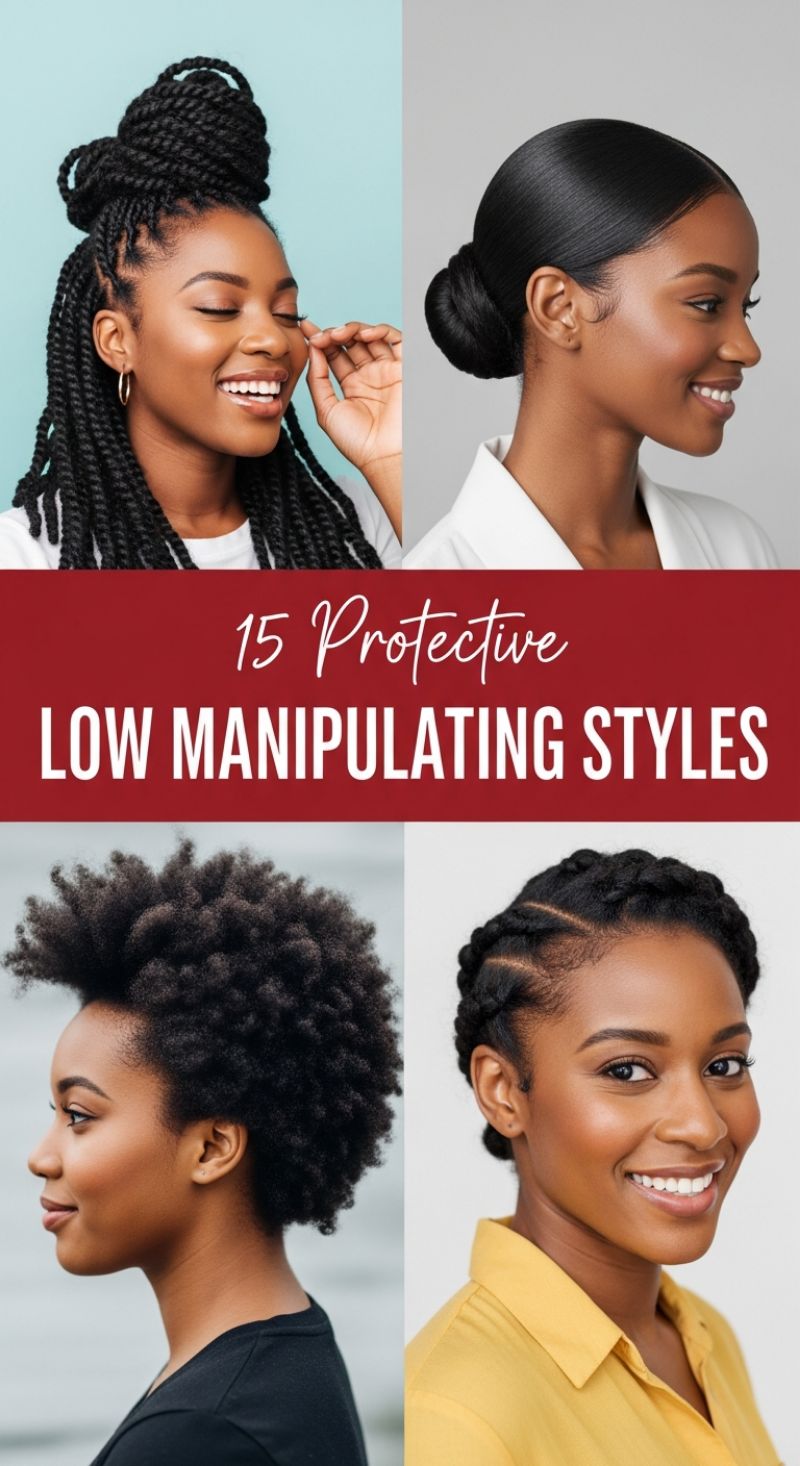
Protective, low-manipulation hairstyles are the cornerstone of a successful natural hair journey, particularly for individuals aiming for length retention and minimizing breakage. The styles featured here—ranging from voluminous twist updos and sleek, polished buns to practical crown braids and beautifully defined afros—all serve the primary function of keeping delicate ends tucked away and reducing daily handling that leads to wear and tear. Adopting a low-manipulation routine means styling your hair once and leaving it alone for several days, or even weeks. This approach significantly lowers friction and stress on the hair shaft. For long-term health, always begin these styles on clean, deep-conditioned hair to ensure maximum moisture absorption before locking the hair away. The twist updo, seen in the top left, is an excellent example of maximizing protection while achieving a sophisticated look, using rope twists or marley twists that draw attention upward while shielding the ends from environmental factors and rough clothing.
The successful execution and longevity of these styles rely heavily on product application and technique. When creating foundational protective styles like cornrows or twists (as seen in the updo and the crown braid on the bottom right), the L.O.C. (Liquid, Oil, Cream) or L.C.O. method is crucial. Use a water-based liquid or leave-in conditioner first, followed by a light oil to seal, and finished with a styling cream or butter to provide hold and definition. When opting for a sleek look, such as the low bun, prioritize minimizing tension to prevent traction alopecia. Use an alcohol-free edge control or firm-hold gel, applied sparingly, and utilize a soft boar-bristle brush to achieve that glassy smoothness. However, the bun should be loose enough to be comfortable, and you should always wrap your hair with a silk or satin scarf for at least 30 minutes to set the style without excessive heat, ensuring the fragile perimeter of your hairline remains healthy and intact.
Even seemingly simple styles, like the defined natural afro (bottom left), benefit immensely from low-manipulation practices. To achieve a textured, voluminous look like this, the hair is usually set using two-strand twists or braid-outs while damp, then allowed to dry completely before unraveling—this constitutes the low-manipulation component. To maintain the volume and prevent frizz overnight, use the ‘pineapple’ method, gently gathering the hair loosely at the highest point of your head and securing it with a scrunchie, then covering with a bonnet. For all protective styles, moisturizing throughout the week is essential. Use a light, water-based refresher spray focused primarily on the scalp and exposed strands, then lightly mist the twists or braids. Avoid heavy butters during the installation period, as they can cause buildup. These styles are designed to offer a visual break and a rest for your hair, supporting healthy growth while providing versatile, stunning looks for any occasion.
EASY & CUTE MEDIUM LENGTH HAIRSTYLES
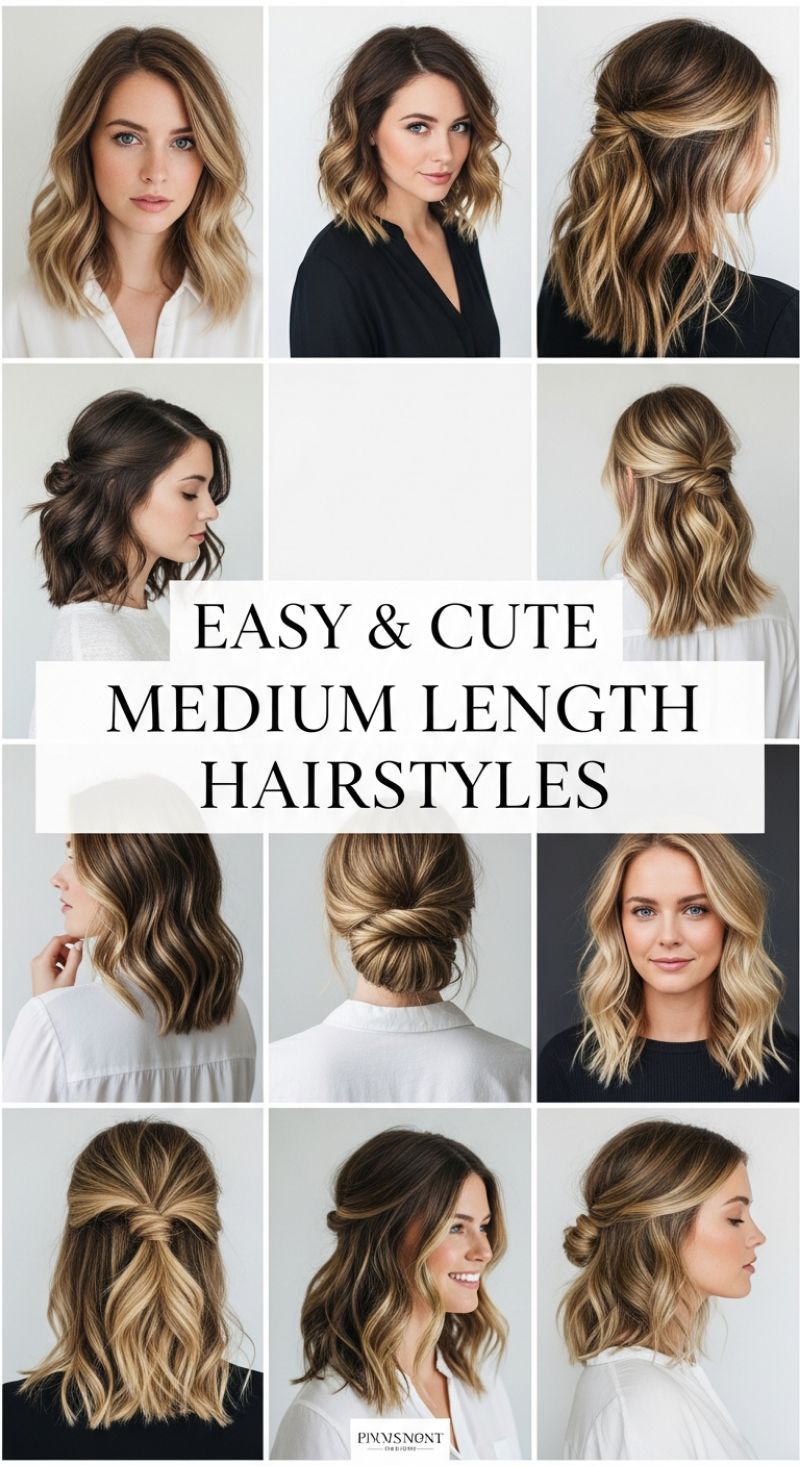
Medium-length hair, often characterized by the versatile lob (long bob) cut, offers the perfect canvas for achieving high-impact style with minimal effort. The foundation for nearly all the looks pictured here is a soft, undone wave. To replicate this core texture, begin by prepping dry hair with a heat protectant and a volume-boosting mousse or spray, focusing on the roots. Use a 1.25-inch curling wand or iron, alternating the direction of the curls (forward and backward) to prevent them from merging into one large wave, which ensures maximum separation and texture. Crucially, leave the last inch or two of the hair ends completely straight—this modern technique instantly makes the style feel effortless rather than overly done. Once cooled, rake fingers through the curls and finish with a strong texturizing spray or dry shampoo at the mid-lengths and ends to lock in that messy, lived-in movement. The strategic use of balayage or ombre coloring, as demonstrated, further enhances this texture by providing visible depth and dimension.
The true versatility of medium hair shines in its ability to execute elegant half-up styles that won’t fall flat. The simplest approach involves the classic twisted half-up: isolate a section of hair from above the ears, gently twisting each side back toward the center of the head. Secure these two twisted sections together with a clear elastic or two bobby pins placed in a crossing ‘X’ shape for extra hold. For a more creative look, such as the knotted or bowed style shown, after securing the twisted sections, pull the resulting small ponytail through itself to create a tight loop or knot before securing with pins. Alternatively, the quick half-up top knot is perfect for second-day hair: gather the top third of your hair, twist it loosely, coil it into a small messy bun high on the crown, and pin it into place. Always remember to pull out fine, face-framing pieces around the temples and neck to soften the appearance and add an intentional, relaxed air to the final look.
While medium length can sometimes feel restrictive, it is ideally suited for creating voluminous, low chignons and tucked updos, which are often challenging to achieve neatly with excessive long hair. For the polished low bun (or ‘tucked chignon’) featured, start by applying a smoothing serum and sweeping all the hair back into a low, loose ponytail at the nape of the neck. Instead of fully securing the ponytail, use a technique where the hair is twisted tightly and then rolled upward and inward against the back of the head, concealing the ends underneath the twist. Use strong U-shaped pins or large bobby pins placed horizontally to anchor the entire shape securely to the scalp. Medium hair naturally provides the right density and length to form this compact, yet voluminous, twist without the bulkiness that comes from overly long hair. This results in a refined, structural style that is perfect for professional settings or formal occasions.
10 Quick Natural Hair Styles
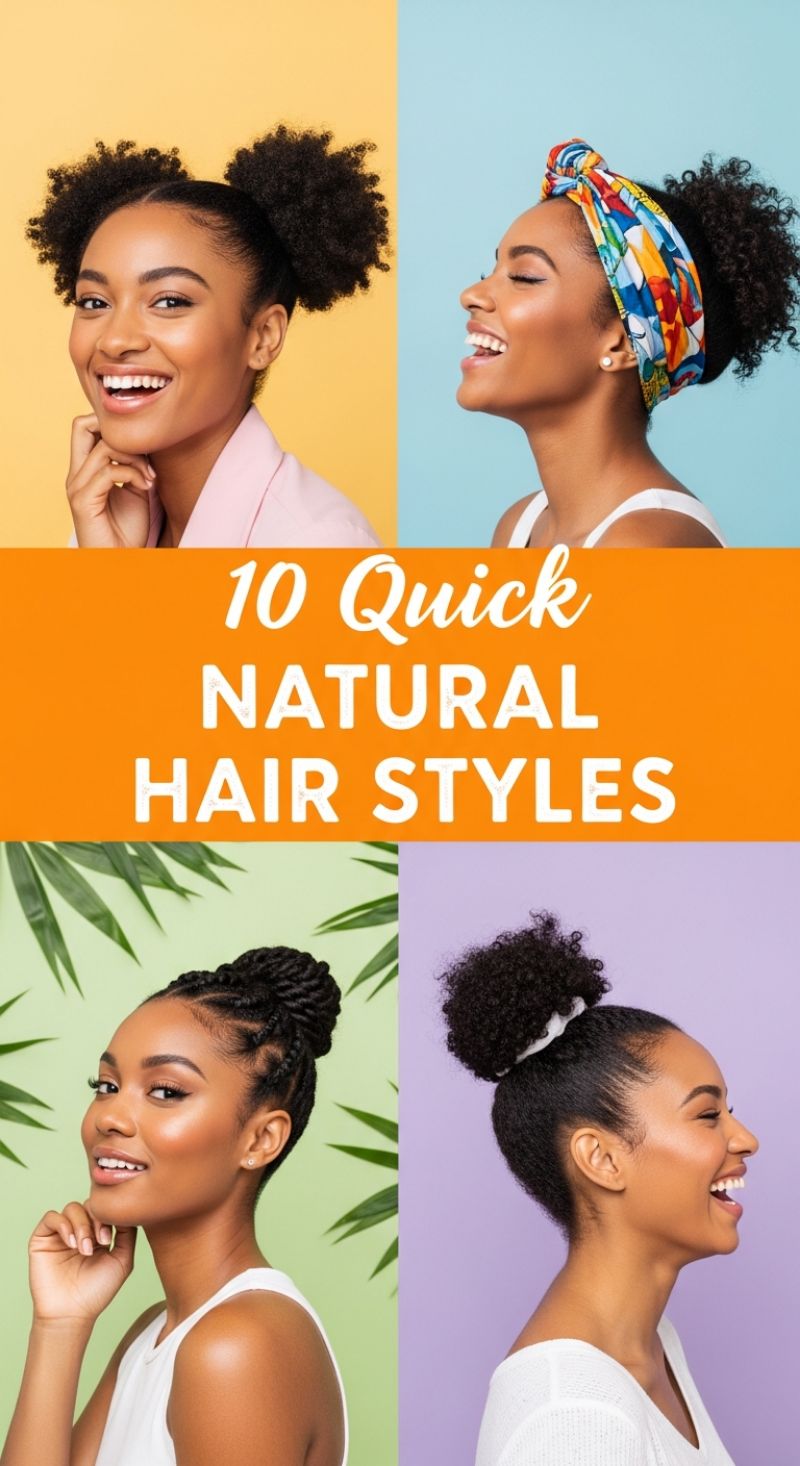
Natural hair versatility is unmatched, but sometimes speed is of the essence. This collection showcases four essential natural hair looks that are stylish, protective, and achievable in under 30 minutes. The cornerstone of these quick styles is the High Puff, exemplified by the looks in the top right and bottom right quadrants. To master the High Puff, first ensure your hair is properly moisturized. Gather your hair high on your crown—using an extra-long shoelace, a tight headband, or a bungee cord works better than a traditional elastic band for securing the base without crushing your curls. Once the base is secure, gently fluff the resulting puff with a hair pick for maximum volume and shape, ensuring the perimeter remains sleek using a non-flaking edge control product. For an extra vibrant touch, like the look in the top right, substitute or supplement the securing band with a colorful satin scarf. Tying the scarf across the forehead not only adds a fashionable element but also helps to further lay down the edges and protect the sensitive hairline area from dryness.
For those seeking playful volume, the Space Puffs (top left) are a fantastic, quick option. Begin by parting your hair down the middle from front to back, ensuring the line is clean and precise. Next, choose your desired height for the puffs. Using strong elastic bands or scrunchies (preferably soft, satin-covered ones to prevent breakage), secure each section into a high ponytail near the crown, similar to the High Puff method. The trick to achieving that soft, voluminous ‘cloud-like’ texture seen here is extensive fluffing. Once secured, use a wide-tooth comb or hair pick to gently stretch the hair within the puff outward, carefully separating the curl clumps to increase density and volume without causing excessive frizz. Finish with a light mist of setting spray or hair oil to lock in moisture and shine, ensuring the puffs are secure enough to last the entire day without drooping.
The protective Twisted Updo (bottom left) offers a slightly more intricate appearance while still being manageable and fast, especially if you have pre-stretched hair. This style involves creating a foundation of flat twists or cornrows leading toward the center crown, culminating in a chunky rope-twisted bun. Start by sectioning off the front portion of your hair where you want the twists to sit (usually 4-6 parallel sections). Flat twist or cornrow each section tightly toward the center, feeding the hair ends into the final ponytail placement. Once the base is secured at the crown, twist the remaining loose hair into chunky two-strand twists or simple rope twists. Coil these twists tightly around the base to form a sophisticated bun shape, securing it with bobby pins. This updo is an excellent way to maintain moisture and prevent manipulation damage, functioning as a stylish protective style that can easily transition from a workday look to an evening event, often lasting several days with proper care.
6 Effortless Curly Hair Styles Made Easy
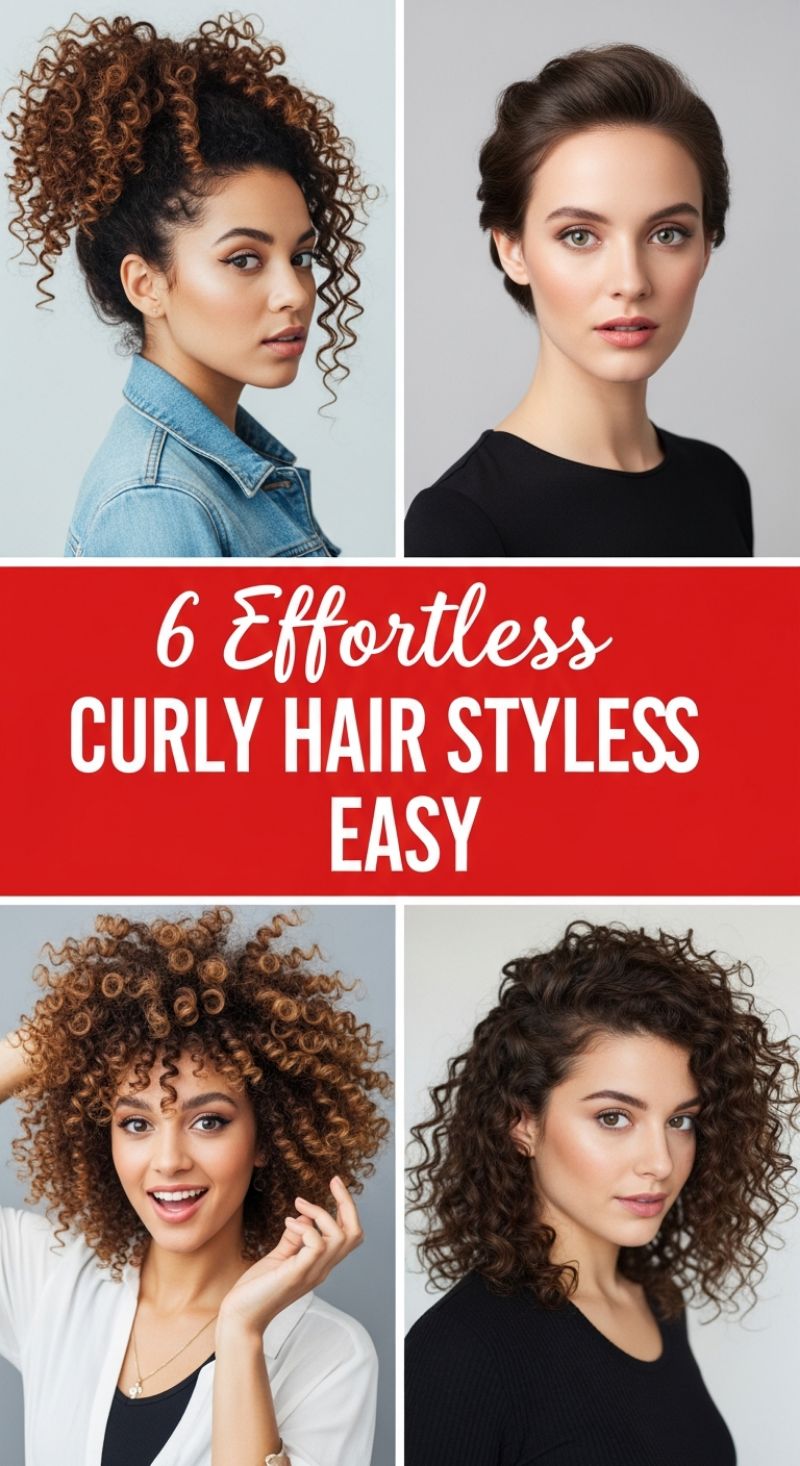
Achieving beautiful, defined curls doesn’t have to mean sacrificing time or struggling with complex techniques. The foundation of these six effortless looks lies in excellent moisture retention and establishing a defined curl pattern right from the wash day. For the natural, medium-length looks seen in the lower quadrants of the visual guide, the key is the ‘wash-and-go’ technique perfected. Start by ensuring your hair is soaking wet. Section your hair and apply a moisture-rich leave-in conditioner, followed by a strong-hold curl cream or gel. Instead of vigorously raking the product through, try the ‘prayer hands’ method to smooth the product over the clumps of curls without disturbing their formation, or use a Denman brush for added definition. Either air dry or use a diffuser on low heat and low speed, ensuring you don’t touch the hair until it is 100% dry. This approach minimizes frizz and locks in the perfect, bouncy spirals and ringlets showcased here.
To transition these defined curls into the chic updos displayed in the upper quadrants, strategic manipulation is necessary. For the voluminous high pineapple updo (top left), the goal is to gather the hair loosely without crushing the definition. Flip your head forward and gather the curls high on the crown, securing them with a soft scrunchie or a coil hair tie—pulling the hair only halfway through to create a cascading ‘fountain’ effect. Use a few discreet bobby pins around the perimeter if needed. Conversely, for the sleek, low updo (top right), you will need to utilize a smoothing balm or pomade on the edges, using a boar bristle brush to tightly smooth the hair back before twisting it into a secure chignon or French twist at the nape of the neck. This contrast between smooth edges and potential subtle texture in the knot creates an elegant style suitable for formal occasions, proving curly hair can easily achieve polished looks.
Expert advice for maintaining these effortless styles centers on refreshing and protection. Since ‘effortless’ primarily means efficient and low-maintenance, ensure you protect your investment overnight with a satin or silk bonnet or pillowcase to prevent friction and preserve definition. On day two or three, refresh flat or frizzy sections by mixing a small amount of conditioner with water in a spray bottle. Gently spritz the areas that need revitalization and then lightly scrunch in a tiny bit of lightweight mousse or gel. For added volume, especially in the looser, layered styles, consider using curl clips at the root while the hair is drying or use a hair pick to lift the roots gently once fully dry. Remember that a great haircut that complements your curl pattern is the easiest tool for making any style, whether loose or pinned, truly effortless.
14 Stunning Hair Styles for Wedding
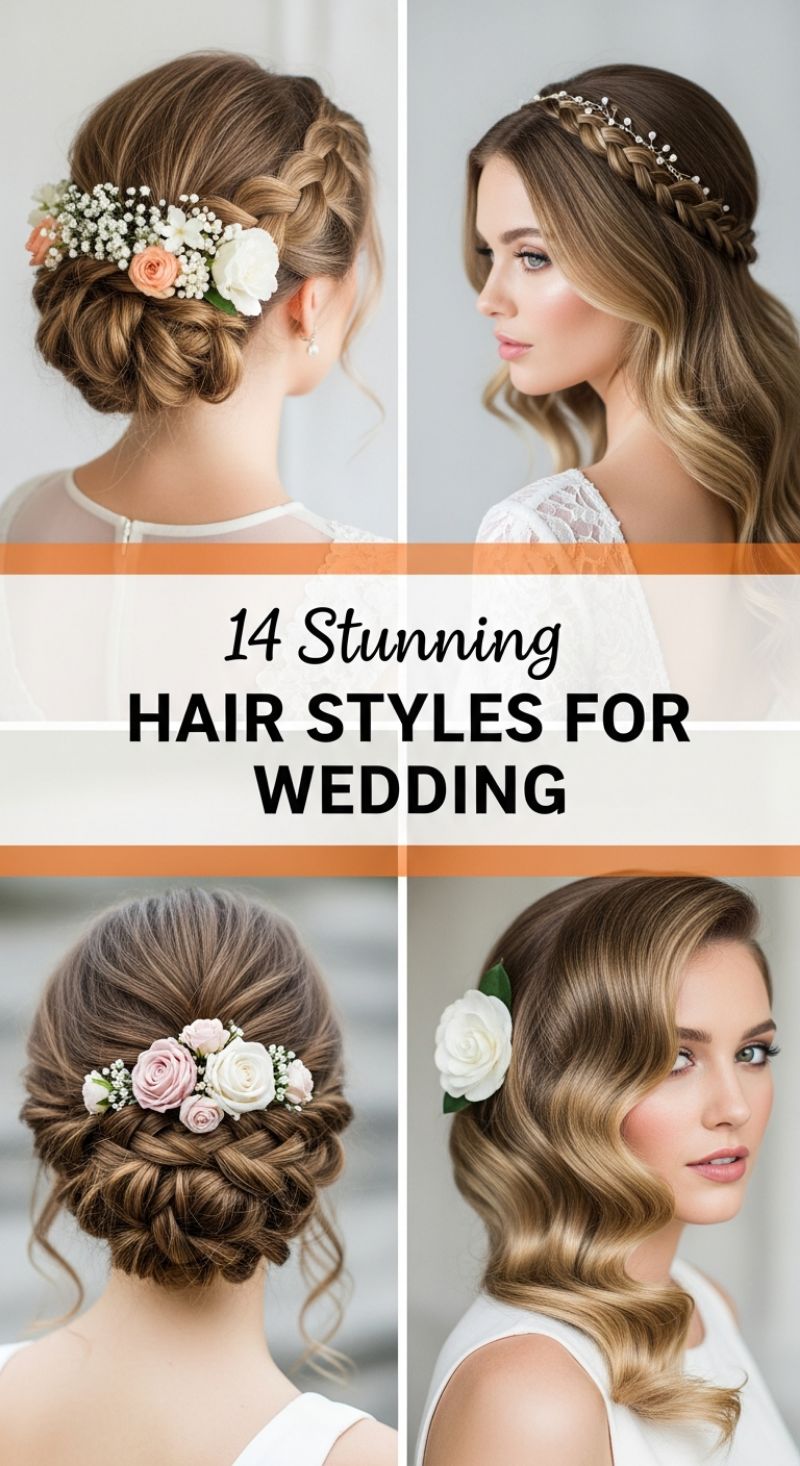
These four styles exemplify the breadth of options available for bridal hair, ranging from romantic, textured updos to glamorous, flowing waves. The intricate updos showcased—particularly the woven basket-weave bun and the halo braid chignon—embody timeless bridal romance. To recreate these looks, use a volumizing product and backcomb the roots before beginning any braiding or weaving, which ensures the necessary density and texture. The braided components, often employing Dutch or lace braid techniques, should be gently pulled apart (pancaked) before being pinned into the final chignon or bun structure. The key to finishing these classic looks is the strategic placement of accessories; integrating fresh florals like peach and blush roses alongside delicate baby’s breath adds depth and color, making sure the arrangement complements the braided pattern rather only obscures it.
For brides preferring hair down or half-up, the image offers two sophisticated alternatives. The top-right example demonstrates an elegant half-up style using a crown braid as a sophisticated headband, perfect for medium to long hair. To achieve the soft, voluminous waves that flow below the braid, use a large barrel curling iron (1.5 inches or greater), holding the curl tight as it cools, then gently brushing through for a seamless, natural finish. Alternatively, the bottom-right style channels high-end retro glamour with defined Hollywood waves. This S-shaped pattern requires careful setting using a strong setting mousse or gel; hair should be deep-parted and sculpted using specialized clips before being heat-set or dried, resulting in a smooth, high-shine finish. Both looks are easily elevated with accessories, whether a delicate pearl hair vine woven into the braid or a single, bold white flower placed above the temple.
Expert application and preparation are paramount for bridal hair that needs to last through the ceremony and reception. Start with a clarifying shampoo the day before, avoiding heavy conditioning treatments that can weigh hair down. For all styles, use a texture spray on dry hair before styling to give bobby pins and clips maximum grip. For the voluminous buns and long waves shown, those with fine or short hair may need to incorporate professional extensions to achieve the desired fullness. Finish the final look with a high-performance, humidity-resistant hairspray, focusing heavily on securing the perimeter and any delicate floral arrangements. Always consult with your stylist to ensure the chosen look harmonizes with the neckline of your wedding gown.
11 Chic Cute Short Hair Styles
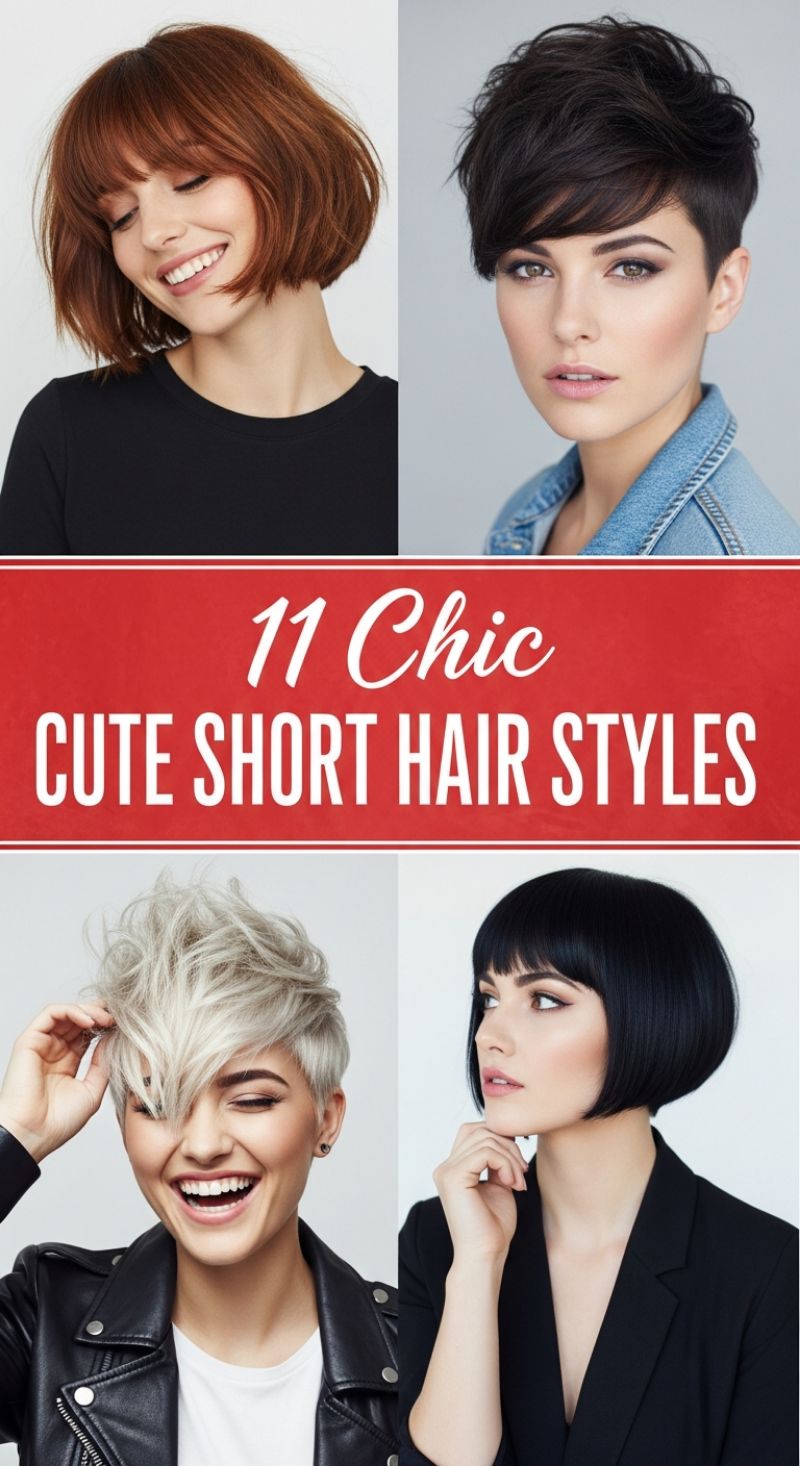
Embracing a short cut is the ultimate power move in hairstyle evolution, offering undeniable chicness and surprisingly vast styling versatility. The four looks showcased here demonstrate the spectrum of short hair possibilities, ranging from classic bobs to bold, textured pixies. To achieve the timeless charm of the bob, focus on structure and finishing. The copper bob (top left) relies on soft, interior layering to create volume and a gentle curve inward, paired with a subtle brow-skimming fringe that flatters oval and heart-shaped faces. Style this with a round brush during blow-drying to ensure fullness at the crown and smooth ends, locking in the look with a light-hold smoothing cream. Conversely, the jet-black A-line bob (bottom right) is defined by its architectural precision. This blunt cut requires straight-across fringe and flawless shine. Use a flat iron for maximum sleekness and finish with a high-gloss serum, paying close attention to keeping the perimeter sharp—this dramatic style is perfect for emphasizing strong jawlines and creating a sophisticated, edgy statement.
For those seeking bolder, high-texture looks, the modern pixie is essential. The dark, side-swept pixie (top right) is built on an undercut foundation, meaning the sides and back are tightly clipped or faded, leaving significant length on top for dramatic movement. To style, apply a volumizing mousse at the roots and blow-dry the top section forward and diagonally across the face. Finish with a strong matte paste or texturizing wax, focusing on separating strands to create defined peaks and valleys. For the striking platinum textured pixie (bottom left), the emphasis is less on asymmetry and more on exaggerated, spiky volume. This look requires heavy layering throughout the crown and the strategic use of texturizing powder applied directly to the roots. Use your fingers to lift the hair and guide the longer front pieces slightly over the eye, creating a playful, windswept effect. This high-contrast texture works beautifully for showcasing vibrant color and adding dimension to fine hair.
Maintaining these sharp short cuts requires commitment, starting with regular salon visits every 4-6 weeks to preserve the shape and prevent the style from growing out awkwardly. When customizing your short cut, consider your hair texture: if your hair is wavy or curly, opt for cuts with more interior layering to reduce bulk and allow natural movement. For fine hair, focus on blunt edges (like the A-line bob) or strategic undercuts (like the pixies) to maximize perceived density. Furthermore, the striking color choices—from deep copper to icy platinum—are integral to the impact of a short hairstyle. Consult with your colorist to select a tone that complements the geometry of the cut, as short hair inherently puts the focus on the hair’s overall health and shine. Whether you choose the soft framing of a fringed bob or the fierce asymmetry of a structured pixie, short hair is the ultimate canvas for expressing personal style.
10 Iconic PIXIE CUT STYLES
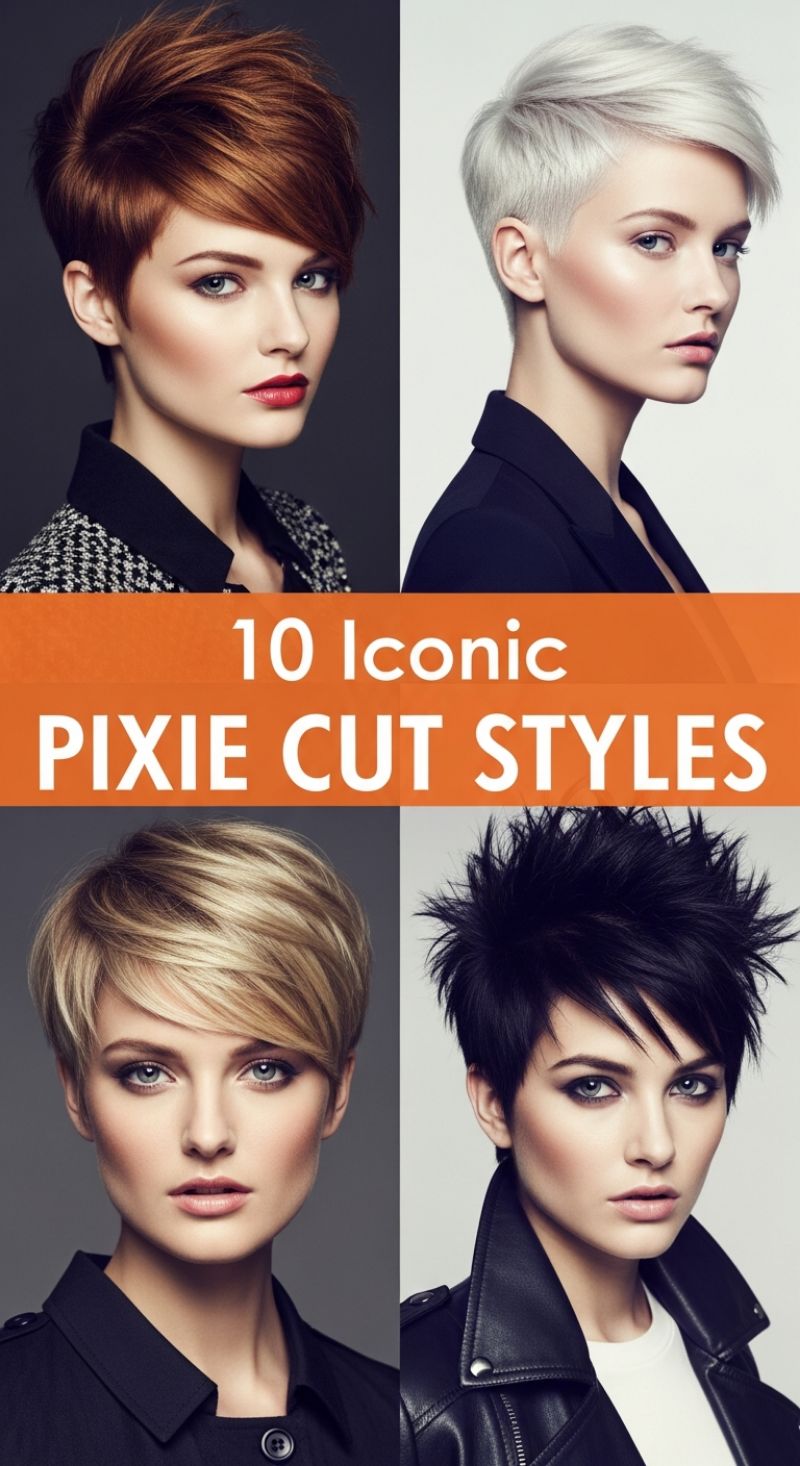
The pixie cut remains one of the most transformative and versatile short hairstyles, offering everything from edgy punk rock aesthetics to polished, refined elegance. The key to pulling off an iconic pixie, as demonstrated by these four examples, lies entirely in strategic texturizing and product application, tailored to your hair’s natural density and the desired finish. For achieving the gravity-defying volume seen in the warm auburn style (top left), the instructional routine begins with clean, damp hair prepped with a volumizing mousse and root-lifting spray. When blow-drying, use your fingers or a vent brush to direct the hair upward and away from the scalp, focusing heat at the roots to set volume. Once dry, work a matte texturizing clay or paste through the top sections, raking it through to create separation and height, ensuring the hair maintains a piecey, windswept look rather than falling flat. Conversely, if you prefer the dramatic, aggressive texture of the spiky black style (bottom right), you must utilize a firm-hold wax or pomade. Apply the product by emulsifying a small amount between your palms and aggressively pushing the product through the hair, defining individual spikes and layers to achieve that sharp, outward projection that characterizes an avant-garde short cut.
For those leaning toward a sleeker, high-fashion aesthetic, the styling requirements shift toward control and shine. The striking platinum blonde pixie (top right) is defined by its precision-cut taper at the back and sides, contrasting sharply with the longer, brushed-forward layers on top. To replicate this ultra-smooth finish, ensure the hair is meticulously straightened, potentially requiring a flat iron on the top sections, followed immediately by a high-gloss serum or lightweight oil applied sparingly from mid-shaft to ends to maximize shine and eliminate flyaways. This look demands flawless color maintenance, as any brassiness or uneven texture will compromise the sleek silhouette. Similarly, the soft, honey blonde side-swept look (bottom left) requires a disciplined blow dry. Use a flat brush or small paddle brush to smooth the hair down while directing it diagonally across the forehead, creating that flattering, face-framing curtain. This approach offers a softer, more classic take on the pixie and is often achieved with a medium-hold styling cream that adds pliability and sheen without the heaviness of wax.
Expert advice for maintaining any iconic pixie centers on consistent trims and customized product cocktailing. Because a pixie cut’s shape is dependent on precise geometry, a professional trim every four to six weeks is non-negotiable to maintain the clean lines around the ears and neck. When choosing styling products, match them to your texture goal: matte finish products (clays, dry texture sprays) are ideal for dense, voluminous, or spiky styles; high-shine products (serums, liquid gels) are crucial for sleek, tapered, and sophisticated looks. Always consider your face shape—longer, sweeping bangs (as seen in the blonde and auburn examples) beautifully soften angular or round face shapes, while sharp, geometric cuts highlight strong cheekbones and jawlines. Mastering the pixie cut is about embracing contrast—clean edges meet textured tops, and boldness meets inherent femininity.
8 Sleek Hair Styles Bun
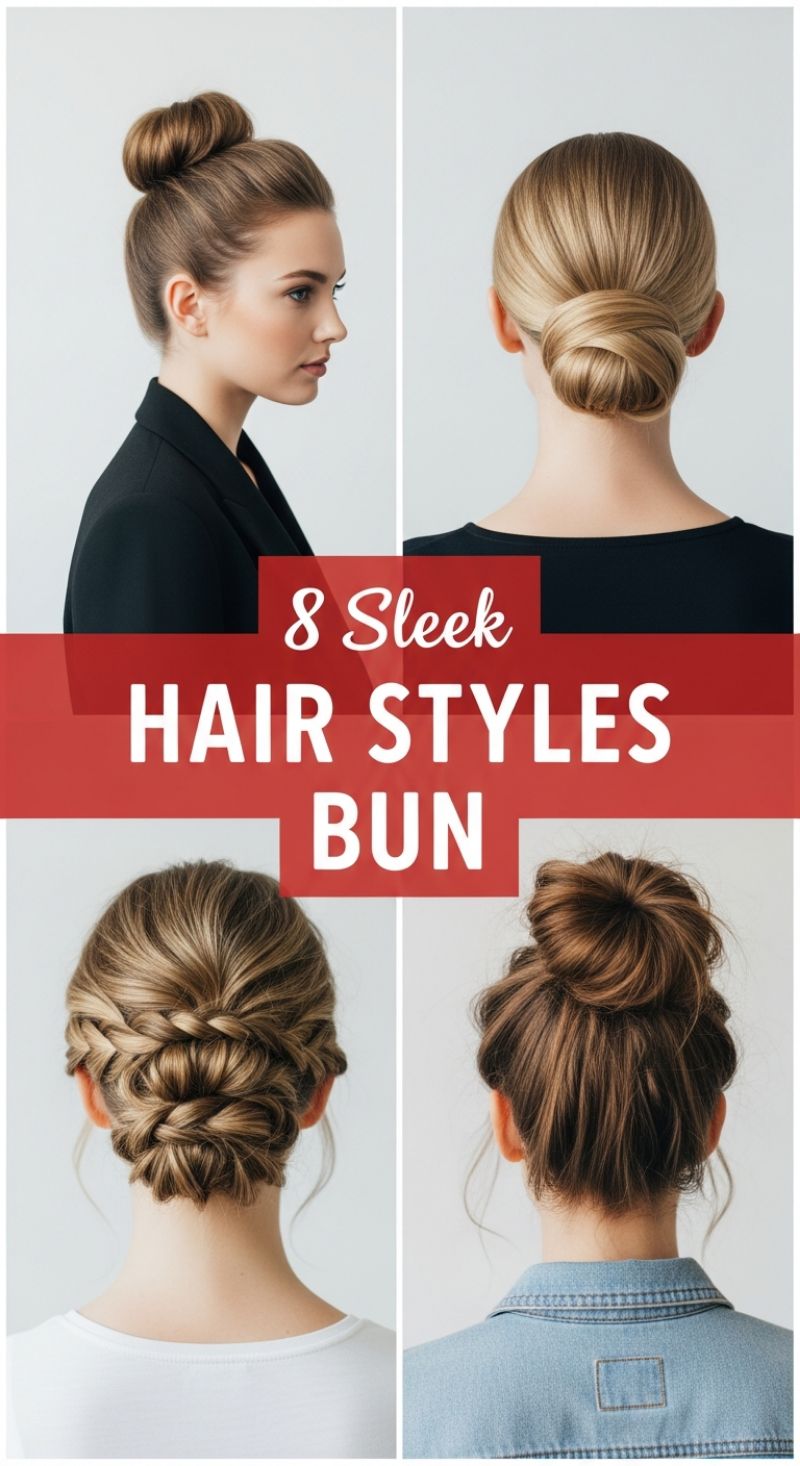
The bun is arguably the most versatile hairstyle, effortlessly transitioning from a polished boardroom look to an ethereal bridal style, as demonstrated in this four-quadrant layout showcasing its range. The key difference between a good bun and a great bun lies in preparation and intention. For the professional, high-impact styles featured in the top half of the image—the high, voluminous ballerina bun and the low, immaculate chignon—achieving that sleek finish is paramount. Begin by treating the hair with a smoothing serum and heat protectant. Brush all hair back tightly, securing the base with a strong elastic. When creating the low chignon (top right), twist the hair tightly, wrap it flat against the scalp, and use specialized U-pins or bobby pins every inch, ensuring they are invisible. For the high polished bun (top left), the base must be high on the crown; twist the hair loosely to build height before wrapping and pinning the base. The final, essential step for both sleek styles is applying a firm-hold hairspray directly to a soft bristled brush (or even a toothbrush) and sweeping the entire hairline and nape to eliminate every single flyaway, creating a glass-like finish ideal for formal or corporate settings.
Conversely, when introducing texture and detail, the approach must be softer, focusing on maximizing volume and movement. The intricate Braided Updo (bottom left) uses multiple sections of hair woven into Dutch or French braids, often starting low near the nape. The trick to making these braids look rich and dimensional is ‘pancaking’—gently pulling apart the sides of the braids immediately after finishing them to widen the weave before pinning the entire structure into a decorative low bun. This creates a soft, romantic texture ideal for events where elegance is required but rigid structure is not. Finally, the Messy Bun (bottom right) is the ultimate casual style, but it requires strategy, not just speed. Start by spraying hair heavily with a dry texturizing or sea salt spray to provide necessary grip and volume. When gathering the hair high on the head, do not secure it too tightly; instead, loop the ponytail partially through the elastic several times, leaving ends out or wrapping them loosely. After securing, gently tug at sections of the bun itself to increase its volume and pull out strategic face-framing tendrils to give that effortlessly undone aesthetic. Remember, whether sleek or textured, the ultimate goal is a balanced look that complements your head shape and the occasion.
Geometric Goddess Box Braids: Mastering the Intricate Part
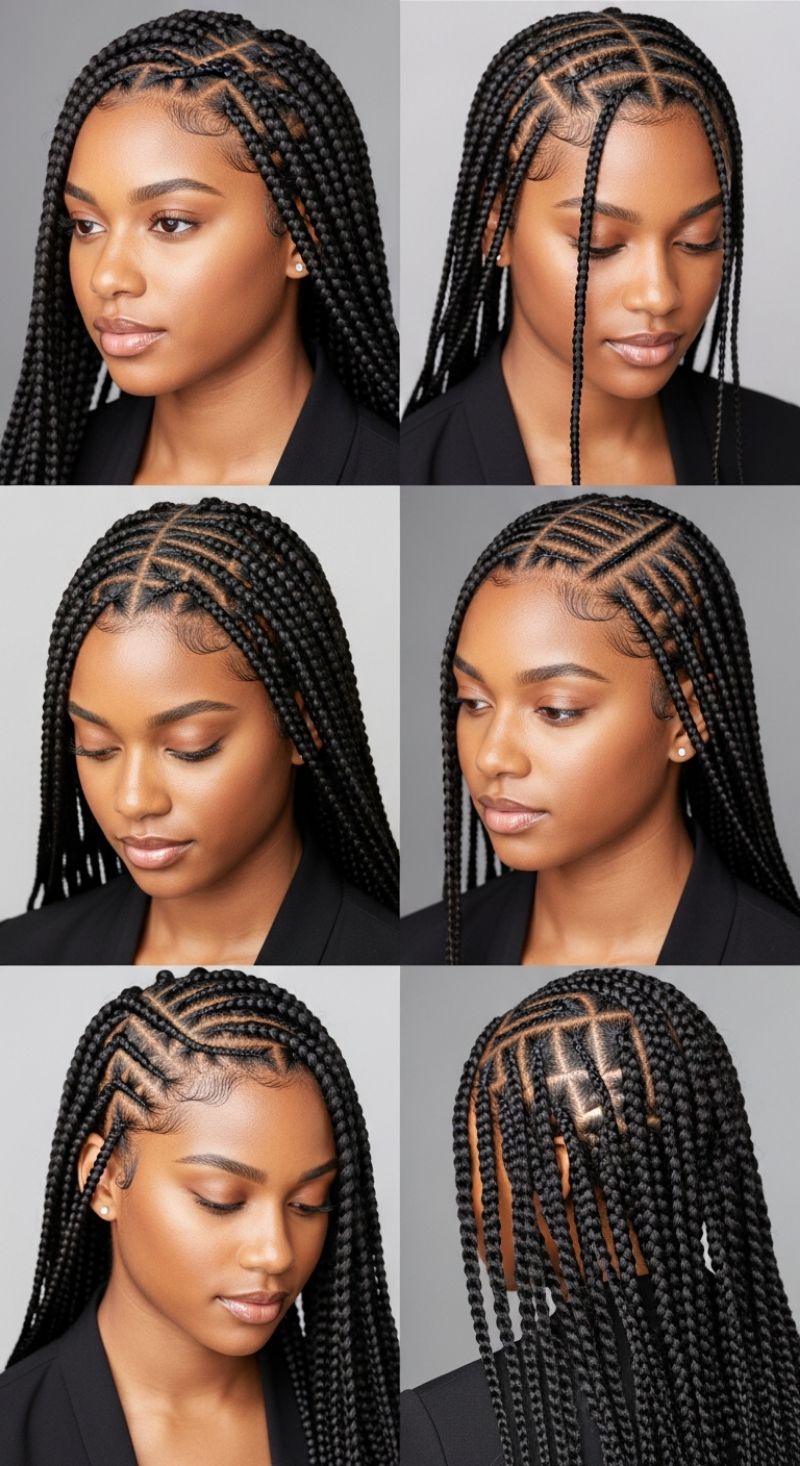
The standard box braid gets a high-fashion architectural upgrade in this stunning presentation. Unlike traditional large square partings, this style utilizes precision sectioning at the crown and hairline to create a striking geometric mosaic. The visual interest is concentrated at the front, featuring a sharp center part flanked by a sequence of small, triangular, and chevron-like sections that transition cleanly into medium-sized box braids extending down the back. Achieving this level of neatness requires exceptional skill and preparation. To replicate this look, hair should be thoroughly cleansed, stretched, and lightly coated with a non-flaking edge control product before sectioning begins. The defining element is the sharp contrast between the clean scalp skin and the dense, uniform braids; therefore, using a thin rattail comb to meticulously draw each line is non-negotiable. Expert stylists often recommend marking the entire parting design on the scalp first before starting any braiding to ensure perfect symmetry, especially for the intricate front design shown here.
To ensure maximum longevity and a sleek finish, the braids themselves must be uniform in size and tension throughout. The medium size featured here strikes a perfect balance: they are substantial enough to hold their shape and length, yet not so heavy that they cause undue strain on the roots. When braiding, ensure that the extension hair is smoothly incorporated at the root using the knotless technique (or a very secure, subtle knot) to reduce tension and create a flatter, more natural lay against the scalp. After installation, set the entire style with a light setting mousse, concentrating on the part lines and the braid roots. This step is crucial for eliminating flyaways and sealing the fresh, polished look. Furthermore, pay close attention to the edges; the soft, perfectly laid baby hairs complement the sharp geometry of the parts, adding a touch of feminine elegance to this powerful protective style.
This Geometric Box Braid style is exceptionally versatile and built for durability, making it an ideal choice for the busy professional or traveler. To maintain the crispness of the parts and the definition of the braids, avoid overwashing. Instead, focus on light moisturizing of the scalp with a lightweight oil (like jojoba or tea tree) every few days, applying it directly via an applicator bottle. At night, always protect the hair by covering it with a silk or satin scarf or bonnet to prevent friction and preserve the sleek finish. With proper care, this style can last between six to eight weeks, transitioning seamlessly from a sophisticated daytime look (as demonstrated with the structured blazer) to an elaborate evening look. The intricate parting ensures that even simple styling—such as pulling the front pieces back or wearing them completely down—offers visual complexity and flair.
7 Fresh HAIR STYLES FOR MEN
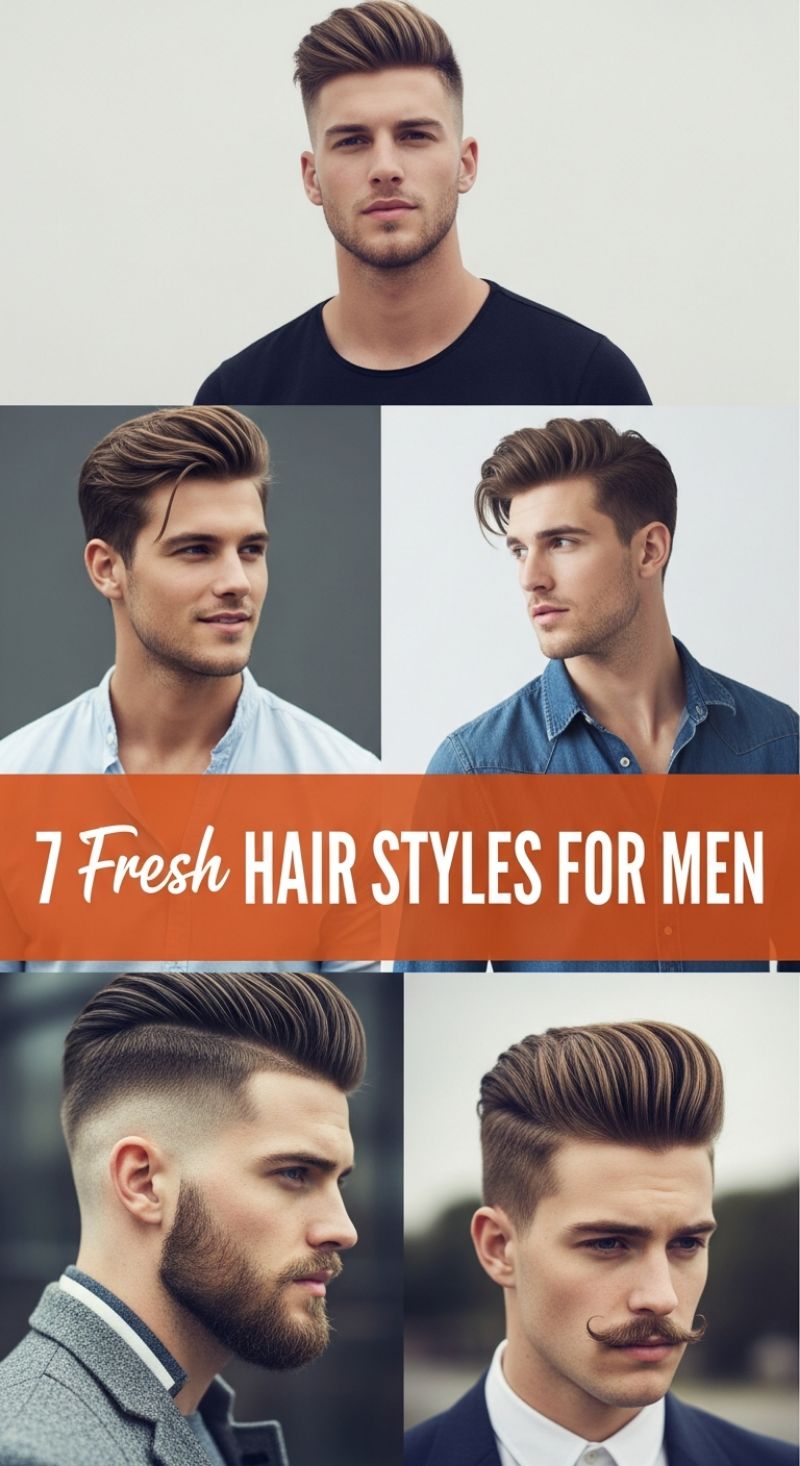
The foundation of modern masculine styling revolves around contrast, clearly exemplified by these seven fresh looks. Each style utilizes a high-impact fade or undercut on the sides and back, ranging from a skin fade (zero tolerance) to a shadow fade (gradual taper). This contrast immediately elevates the overall appearance, providing a clean, sharp canvas that draws attention upward to the styled top section. When instructing your barber, specify the desired fade level (low, mid, or high) and whether you prefer a subtle taper that blends seamlessly or a dramatic disconnected undercut. The length on top should be maintained at least 3 to 5 inches to allow for the significant volume and movement required for the quiffs, pompadours, and swept-back styles featured here. Achieving this distinct structure is crucial; the precise graduation of the fade requires consistent upkeep, usually requiring a visit every 2-3 weeks, to maintain that polished, razor-sharp edge that defines these modern cuts.
The secret to mastering the voluminous tops seen in these examples lies in diligent preparation and expert blow-drying techniques. Begin by applying a quality sea salt spray, tonic, or mousse to damp hair—these pre-stylers add essential grip, heat protection, and foundational volume before styling begins. Using a round brush and a high-heat setting, direct the hair straight up and slightly back from the forehead, concentrating the air flow at the roots to maximize height and longevity. For maximum hold and definition, choose your finishing product carefully based on the desired sheen: a matte clay or wax is ideal for the textured, slightly messy quiff, providing strong hold and separation without excessive shine. Conversely, a high-shine pomade is perfect for the classic, polished slick-back or the intensely sculpted pompadour, giving that vintage, high-gloss finish. Rub the product thoroughly between your palms to emulsify it before raking it through the hair, starting from the roots and working towards the tips, then refine the final shape with a comb or your fingers.
While these styles share a common aesthetic base—the high-contrast fade—they offer immense room for personalization, making them suitable for various face shapes and professional settings. For instance, the softer, side-swept fringe offers a more approachable and everyday look, while the intensely structured, high-volume pompadour (often paired with a sharp mustache, as shown in the bottom right image) commands a bolder, more retro presence ideal for formal or fashion-forward occasions. Furthermore, the integration of well-groomed facial hair is key to completing these looks. A full, defined beard perfectly complements a tight fade and voluminous top, balancing the face and emphasizing the jawline, while a clean shave or trimmed stubble ensures the focus remains solely on the sharp definition and height of the haircut itself. Ensure you discuss your specific face shape and daily styling commitment with your stylist to select the perfect height, flow, and product combination for your individual needs.
13 Adorable KIDS HAIR STYLES
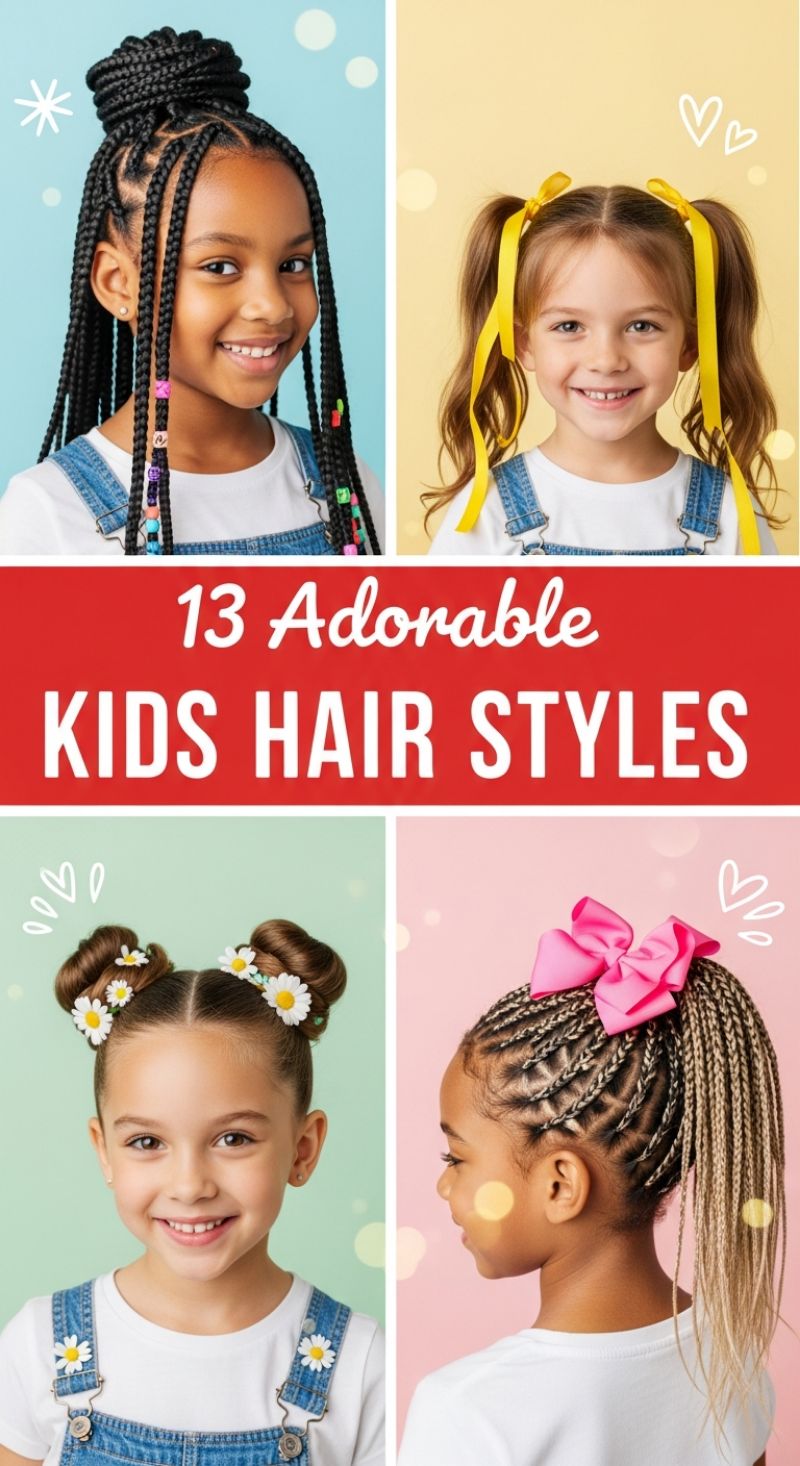
This dedicated section showcases versatile, charming, and practical hairstyles for younger clients, ranging from protective styles designed for durability to quick, accessory-driven looks perfect for everyday wear. The diversity highlighted here proves that functional children’s hairstyles can also be incredibly fashion-forward.
For active children with textured hair, protective styles offer the dual benefits of minimal daily maintenance and hair health preservation. To achieve the stunning feed-in braid ponytail (bottom right), hair is meticulously parted into defined geometric shapes (often triangles or diamonds) before being cornrowed close to the scalp, using the feed-in method to incorporate extensions seamlessly. The braids are gathered high on the crown, allowing the long, extended braids to flow freely, creating a look that lasts for weeks. Expert advice dictates using a hydrating braid sheen or light oil spray daily to prevent dryness and minimize tension headaches by ensuring the braids are not pulled too tightly at the edges. Alternatively, the half-up, half-down beaded bun (top left) is an excellent way to incorporate vibrant personal flair. To recreate this, section off the top half of the box-braided hair and secure it into a voluminous bun, leaving several face-framing braids loose to be adorned with colorful, patterned beads, making this a playful and secure style.
When speed and simplicity are the priority, accessory-driven updos provide maximum impact with minimum effort. The double space bun look (bottom left) is universally adored and surprisingly simple to execute: part the hair down the center, secure two high ponytails, twist the lengths into tight coils, and wrap them flat against the head, securing with pins. The key to elevating this simple updo is the addition of small, whimsical floral accents, such as the daisy clips shown, which soften the lines and add a natural touch perfect for holidays or picture day. Similarly, the high pigtails (top right) transform from basic to beautiful with the strategic use of ribbons. Instead of simple elastic bands, secure the pigtails and wrap long, colorful satin ribbons around the base, letting the ends hang down the length of the hair for dynamic movement and a bright pop of color. To maintain the shine and smooth finish required for these sleek updos, use a lightweight finishing serum to tame flyaways and ensure a clean center part.
Whether opting for long-term protective artistry or simple, cute accessories, the focus remains on keeping the styling process fun and ensuring comfort for the child. Always use appropriate children’s hair products, minimize heat exposure, and regularly check the scalp for signs of irritation or excessive tightness. These styles demonstrate that blending ease, durability, and bold accessories results in looks that both parents and kids will love.
Short Hair, Maximum Style: A Pixie Cut Lookbook for Versatile Textures
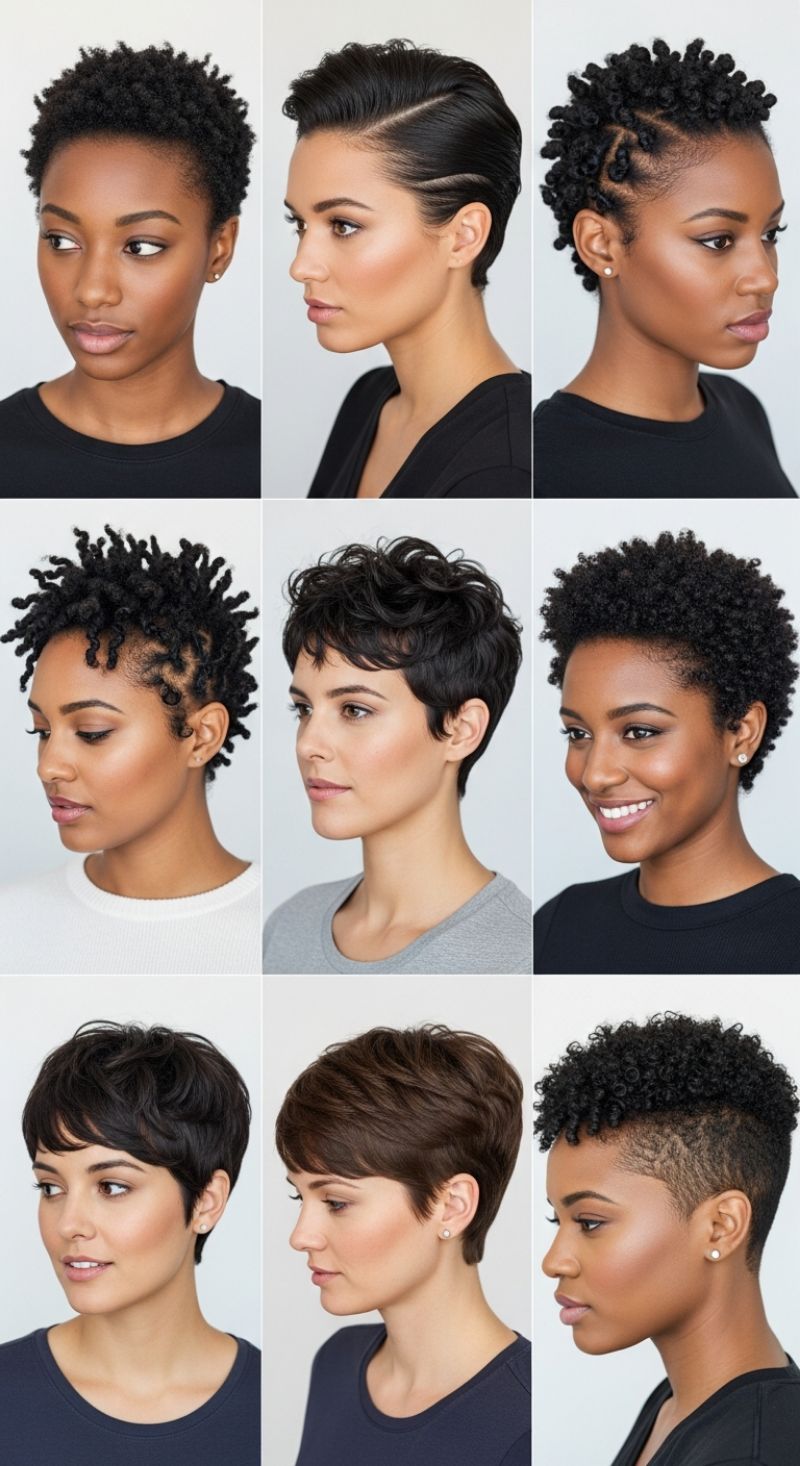
The collection of short hairstyles presented here serves as a masterclass in versatility, demonstrating that opting for a shorter length opens up a vast array of styling possibilities regardless of your hair’s natural texture. Whether you favor high-definition coils, a polished, slicked-back profile, or a soft, tousled pixie, the key to success lies in understanding the foundational cut and implementing the right products. For those with naturally coily or kinky textures, shaping is paramount; consult your stylist for a carefully tapered cut that complements your facial structure. To achieve the defined coil looks shown, begin with thoroughly moisturized, damp hair, applying a strong-hold curl cream or gel section by section, and utilizing techniques like finger coiling or shingling to encourage maximum definition and minimize frizz. This focused technique ensures that the texture remains bouncy and voluminous while maintaining the intended shape of the haircut.
For a completely different aesthetic—the highly structured and sleek looks—you will need a precision cut with closely cropped sides and slightly more length on top. Achieving the high-gloss, deep-side-part style requires high-performance pomade or styling gel applied to wet hair. Create a razor-sharp side part using the tail of a comb, sweeping the bulk of the hair back and toward the side opposite the part. For maximum hold and a flawless finish, use a fine-toothed brush to smooth the hair flat against the head before allowing it to set, perhaps even securing it temporarily with clips while drying. Conversely, if you are aiming for the softer, voluminous pixie cuts—often best suited for wavy or fine hair—avoid heavy products. Instead, use a texturizing spray or light mousse on damp hair, scrunching and diffusing until dry to enhance natural movement and volume, creating that effortless, slightly messy elegance.
Finally, consider the dramatically contrasting styles, such as the edgy undercut and fade pictured. This look demands high-maintenance upkeep to preserve the sharpness of the faded sides, requiring touch-ups every two to four weeks. The contrast between the closely shaved sections and the soft, defined curls on top is what makes this style so striking. To style the top, focus on defining those curls with a lightweight yet moisturizing curl activator, preventing the curls from becoming heavy or weighed down. Regardless of which short style you choose, remember that routine trims (every 4-6 weeks) are crucial for maintaining the intended shape and preventing the style from losing its structural integrity. Short hair may require less time to dry, but it often requires more diligence in maintaining the sharp, clean lines of the cut itself.
6 Trendy Curly Hair NATURALLY
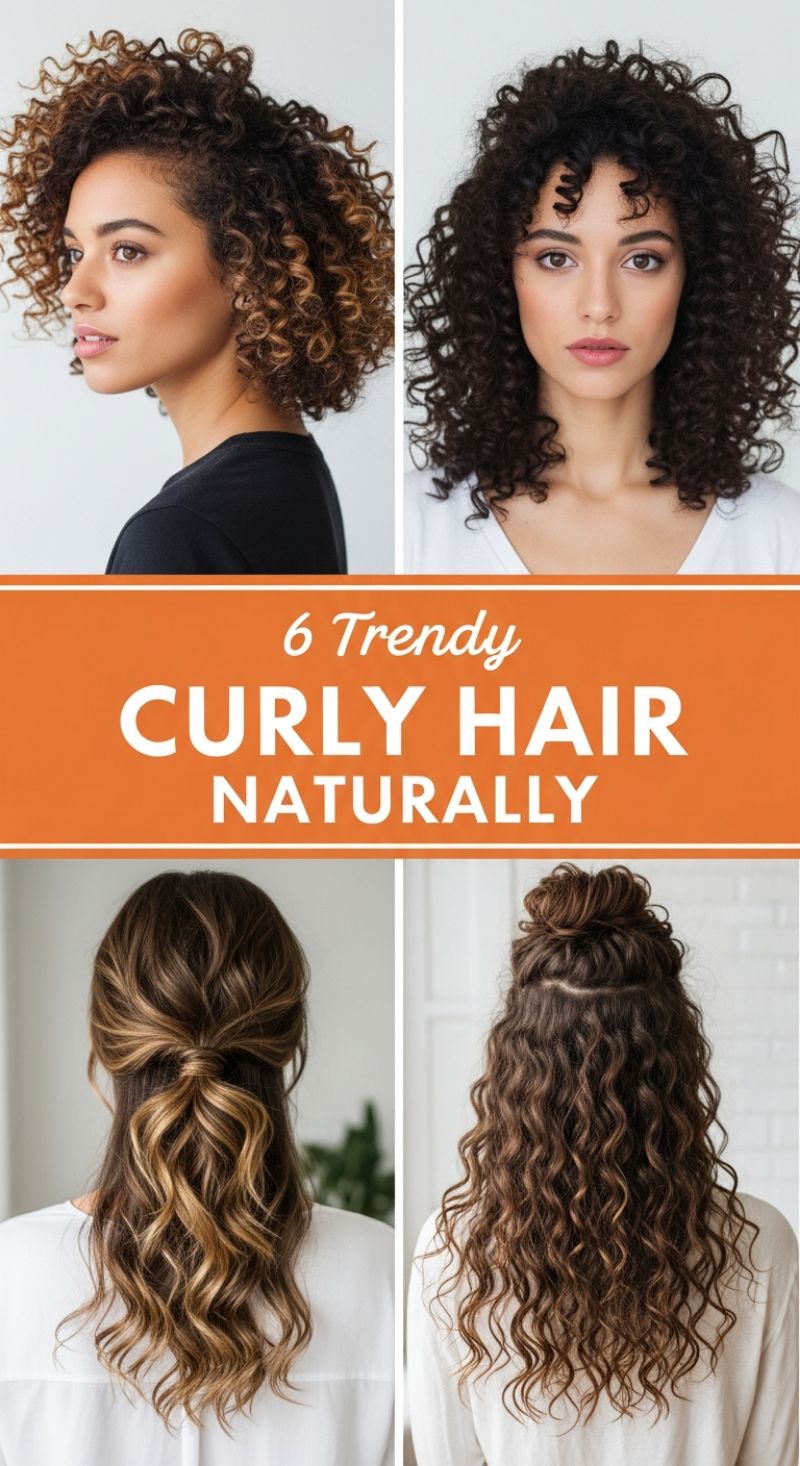
Natural curls are versatile, bold, and perpetually trendy. The secret to maximizing the beauty of any curl pattern—from loose waves to tight coils—lies in moisture retention and careful styling. The featured looks demonstrate incredible dimension, often enhanced by strategic color placement like balayage and highlights, which visually amplify the volume and definition of each strand. For daily maintenance, experts recommend adopting the ‘squish to condish’ method during washing to ensure maximum hydration, followed by applying a curl cream or defining gel to soaking wet hair. Avoid touching the hair while it dries to prevent frizz, and consider diffusing on a low setting with the head tilted forward to lift the roots and achieve maximum volume, as seen in the chic, voluminous medium-length style (top right) and the shorter, highlighted cut (top left).
To master the art of the curly half-up style, preparation is key. Before styling, ensure curls are fully dry and set. For the elegant knotted half-up (bottom left), section the top third of your hair from ear to ear. Gently pull these sections back, securing them initially with a clear elastic. Instead of leaving a ponytail, twist the resulting lengths around the elastic to form a soft, relaxed knot or bow shape, pinning it securely underneath. This sophisticated technique works beautifully on loose waves or looser curl patterns. If you prefer a more bohemian and effortless vibe, opt for the half-up top knot (bottom right). For this look, gather the crown section tightly, twist it into a messy bun high on the head, and secure it with a hair tie or pins. This draws attention to the beautiful length and definition of the remaining curls cascading down the back.
Expert advice for styling natural curls emphasizes protection and longevity. To keep curls bouncy and defined for multiple days, sleep on a silk pillowcase or tie hair into a loose ‘pineapple’ on top of the head before bed. When refreshing second or third-day hair, use a mixture of water and a light leave-in conditioner in a spray bottle to re-dampen sections, then apply a tiny amount of gel or mousse and scrunch gently. Pay special attention to layered cuts; layers are crucial for releasing weight and allowing the hair to spring up into its natural spiral pattern. Regular trims are non-negotiable for curly hair, as they remove split ends which hinder curl formation and overall health, ensuring that all six of these trendy looks remain vibrant and defined.
5 Luxurious STRAIGHT HAIR STYLES
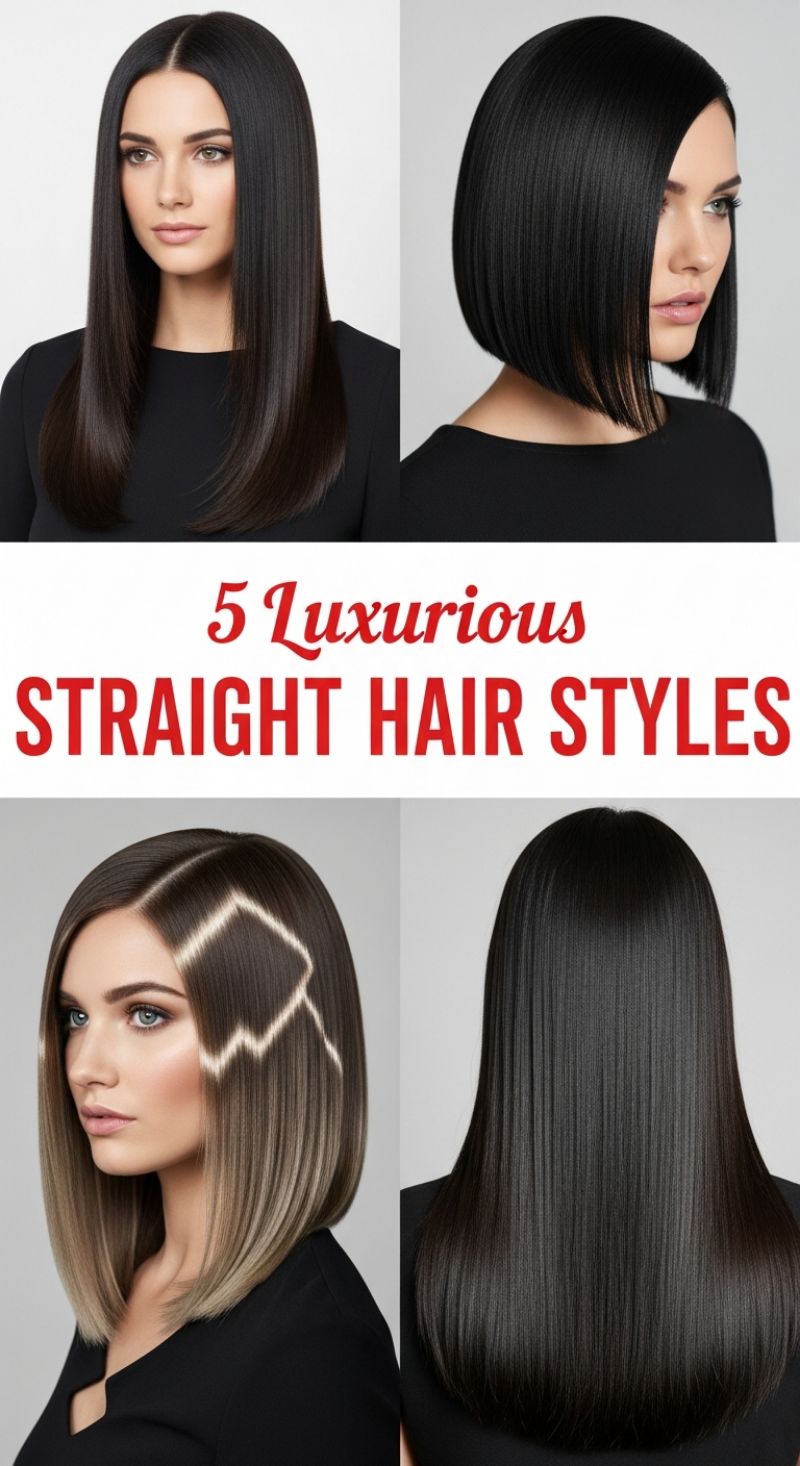
The key to achieving the “luxurious” look featured in these five straight styles lies entirely in the preparation, impeccable health, and masterful finishing of the hair fiber. Before attempting any of these sleek looks—whether a waist-length straight style, an edgy asymmetric bob, or a dimensional midi cut—begin with products specifically formulated for smoothing and high shine. Start with a clarifying shampoo followed by a keratin-infused deep conditioning mask to lay the foundation for a glass-like finish. When styling, the meticulous application of a quality heat protectant is non-negotiable. For optimal straightness, execute a professional tension blow-dry using a high-quality paddle brush to pre-smooth the hair, minimizing the reliance on the flat iron and thus protecting the hair’s integrity. The final step involves precision flat-ironing in small, manageable sections, ensuring the iron is moved smoothly and quickly from root to tip to maximize shine and avoid heat damage.
These images showcase three primary variations of straight luxury. First, the classic, ultra-long straight style (top left and bottom right), which demands a precise perimeter cut, often with a subtle U or V shape in the back to add movement and prevent the hair from looking heavy or blocky. This style relies on a flawless center part and rich, saturated color to enhance its polished appeal. Second, the architectural precision bob (top right), characterized by its blunt, sharp edges and dramatic angle, where the hair is typically longer in the front. For this geometric look, the straight texture is essential; any wave or frizz compromises the powerful silhouette. Third, the dimensional straight lob (bottom left) combines sleekness with complex coloring, often featuring balayage or ombre techniques. When styling hair with such dimension, the high-gloss finish is crucial as it allows the light to reflect off the surface, maximizing the contrast between the darker base and the lighter ends, making the color pop—as visually demonstrated by the dimensional shine graphic.
To lock in this expensive, high-end finish, expert application of finishing products is mandatory. Once the hair is cooled, apply a pea-sized amount of lightweight shine serum or argan oil, distributing it primarily through the mid-lengths and ends to avoid weighing down the roots. For those prone to humidity-induced reversion, a targeted anti-frizz or anti-humidity spray applied as a final shield is vital. A professional tip for maintaining this style overnight is to wrap the hair tightly around the head and cover it with a silk bonnet or use a silk pillowcase; this technique prevents friction and preserves the straight texture, reducing the need for daily restyling. Regular dusting (trimming split ends) is especially critical for long, straight styles to maintain the healthy, thick density seen in these exemplary looks, ensuring the ends remain smooth and do not detract from the overall polished appearance.
Radical Transformations: Cool, Edgy, and Alternative Hair Styles
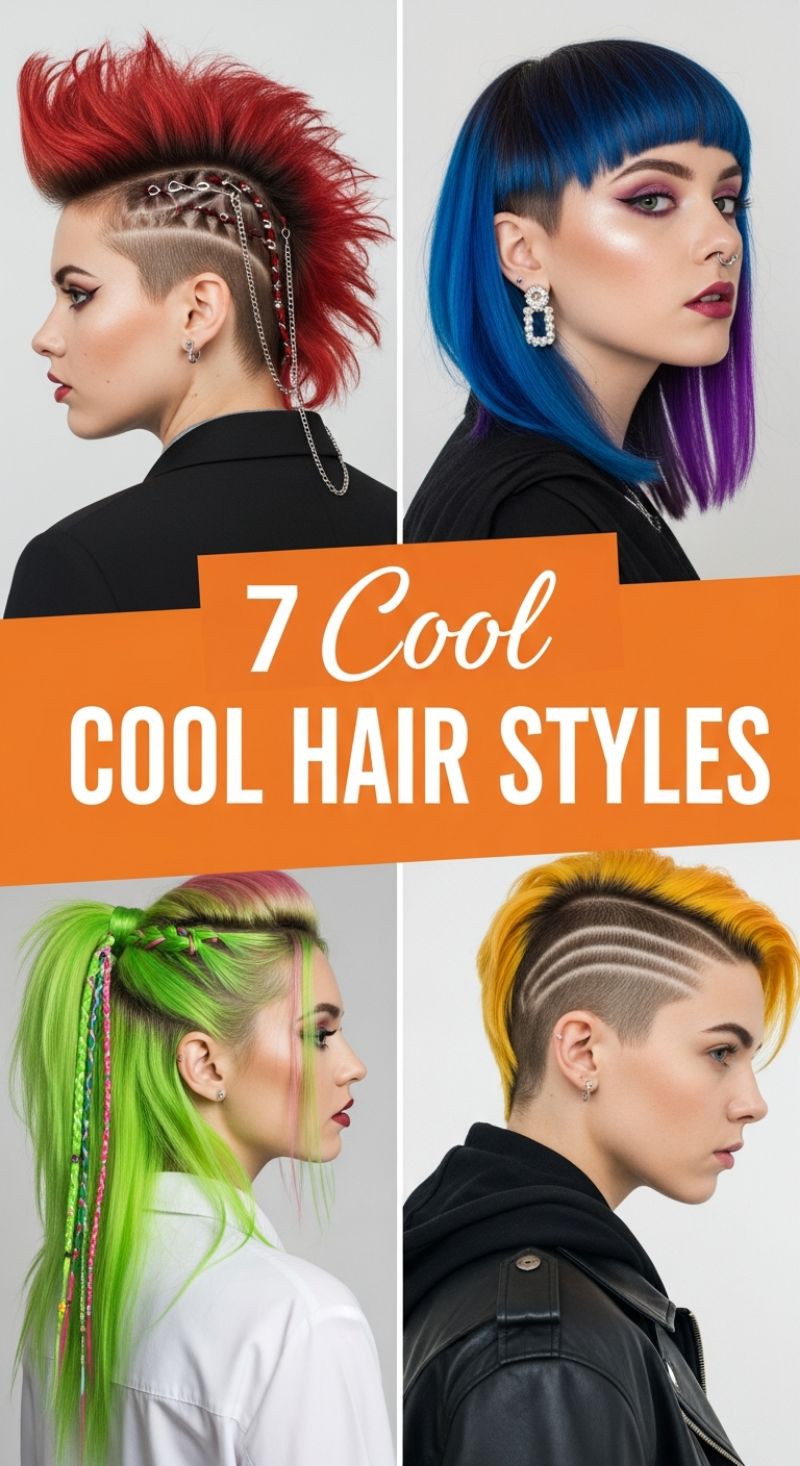
The visual appeal of alternative hairstyles lies in their commitment to color and structure, challenging conventional norms with sharp lines, vibrant hues, and dramatic textural contrasts. Achieving these looks, such as the electric red spiked mohawk or the geometric yellow undercut, requires a significant collaboration between you and your color specialist and barber. For the vibrant color palette featured—neon green, ruby red, and cobalt blue—a double-process lift (bleaching) is almost always mandatory, making hair health a priority. Expert tip: always use high-quality, professional-grade fashion dyes and establish a rigorous at-home maintenance routine using sulfate-free shampoos and color-depositing conditioners to prolong vibrancy and counteract fading, which is rapid with highly saturated hues. The contrasting blue and purple angled bob with a clean undercut, for instance, demonstrates how bold color framing can completely redefine facial structure, while the razor-sharp bangs add an element of powerful, graphic precision.
The foundation of many of these cool styles is the use of the undercut and hair carving—techniques that offer both visual drama and functional lightness. Hair carving, particularly the detailed latticework visible on the red mohawk or the clean parallel lines on the yellow cut, demands precision equipment and regular maintenance (ideally, a refresh every 10–14 days) to keep the patterns crisp. When opting for a structural style like the mohawk, preparation is key; consult with your stylist about the optimal length and density needed for the central strip to achieve maximum height and hold, utilizing strong-hold waxes and freeze sprays during styling. The long neon green look, while less dependent on shaving, showcases a softer interpretation of alternative style, using strategic braiding and brightly colored thread wraps to incorporate texture and additional pops of color, demonstrating versatility in accessorizing radical colors.
Styling techniques for these looks range from intricate to simple but always require high-performance products. To achieve the voluminous, gravity-defying spikes seen in the punk styles, invest in high-lift texture sprays applied directly to the roots before blow-drying, followed by a putty or clay for definition and separation. For the slick, graphic looks (like the carved yellow side), a pomade or gel with a high shine and extreme hold is essential to keep the longer hair section perfectly controlled and swept over. Finally, don’t overlook the role of accessories in finalizing the aesthetic. Hardware like chains, rings, and decorative studs (as seen incorporated into the red mohawk) elevate the edgy feel, turning the hairstyle into a piece of statement jewelry. Remember that the confidence you wear with these bold transformations is the most essential element of the style.
12 Regal PROM HAIR STYLES
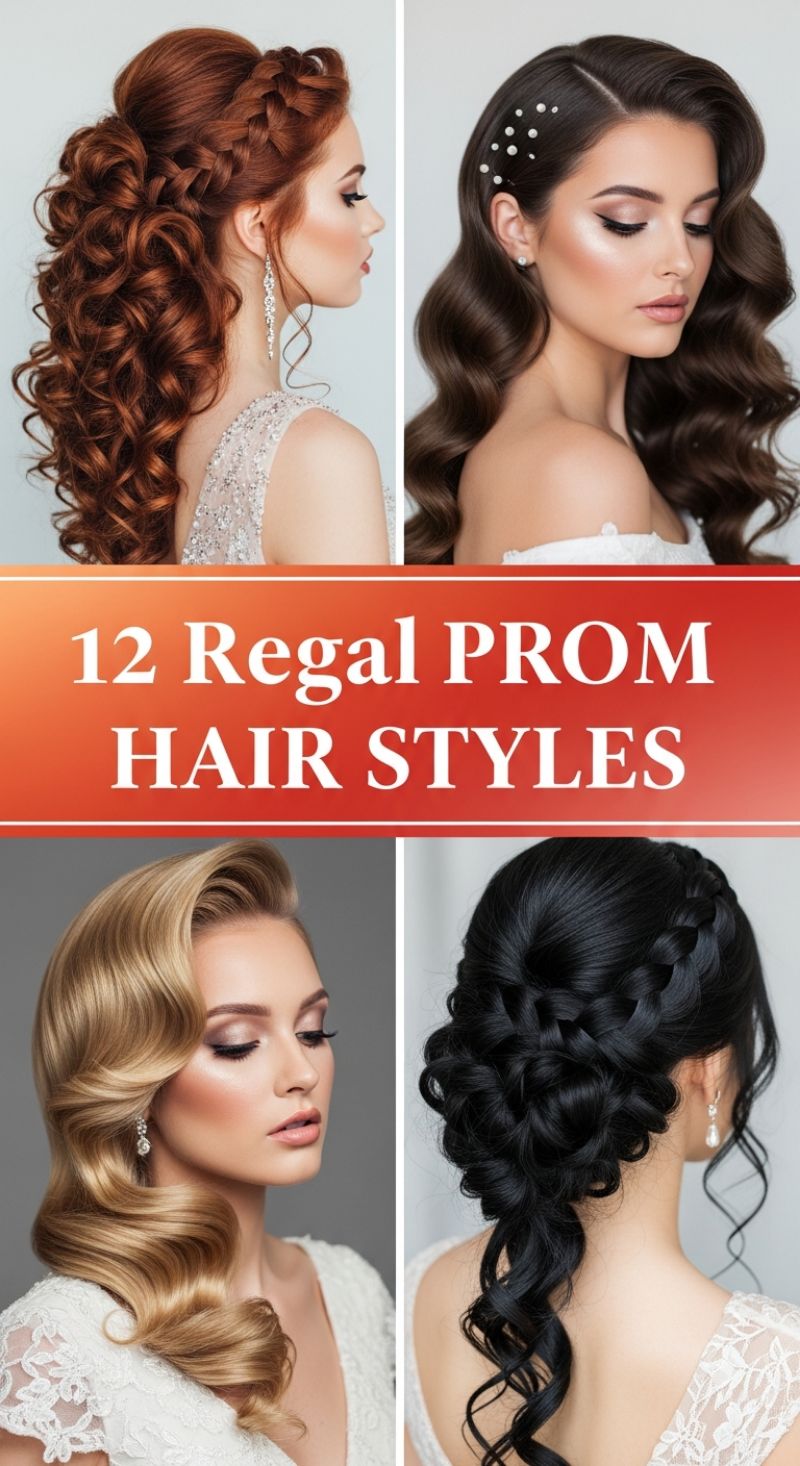
When aiming for a truly show-stopping look for a formal event like prom, ‘regal’ translates to structured elegance, high volume, and impeccable polish. This collection showcases two dominant luxury trends: highly stylized waves and intricately structured braided updos. To achieve the voluminous half-up, half-down look featured (top left), begin by prepping the hair with a strong hold mousse and heat protectant. Use medium to large barrel rollers or a curling iron to create uniformed, spiraling curls throughout the length. The key element is the braided crown; section off a thick area above the temples and execute a loose, textured Dutch braid that arches across the top of the head, meeting the voluminous curls at the back. For stability and height, tease the hair at the crown before incorporating the braid, ensuring the overall silhouette is lifted and dramatic, perfect for pairing with statement earrings.
The ultimate symbol of vintage glamour, Hollywood waves (top right and bottom left) require precision and meticulous finishing. To sculpt these iconic S-patterns, start with a deep side part while the hair is damp. After blow-drying, use a large 1.5-inch or 2-inch curling iron, curling all sections toward the face. Immediately after releasing each curl, secure it with a flat duckbill clip close to the scalp, allowing the curls to cool completely—this setting process is non-negotiable for lasting structure. Once cooled, remove the clips and use a wide-tooth brush or a paddle brush to gently smooth the curls into cohesive, ripple-like waves. Finish with a high-shine hairspray, like an aerosol lacquer, to lock in the shape. Expert Tip: Embellish the side part with delicate accessories, such as scattered pearl pins, to add a modern, ethereal touch, mirroring the chic look seen in the dark brown example.
For those desiring a fully secured but equally dramatic look, the intricate braided updo (bottom right) is the perfect choice. This style is built on a foundation of professional sectioning and tight weaving. Start by sweeping all the hair back and dividing it into 4-6 horizontal sections. The visible design often uses a basket-weave or interconnected French braid technique, where sections are braided horizontally or diagonally and then pinned together to form a highly textured, dimensional panel at the nape. The tail ends of the hair are typically curled and left cascading down the back in soft spirals, providing essential balance and movement. If your natural hair lacks the density for such a large structure, integrating clip-in extensions that match your hair color is highly recommended; weave the extensions directly into the base of the structure before beginning the braiding process to ensure seamless integration and maximum impact.
10 Perfect NATURAL HAIR 4C STYLES
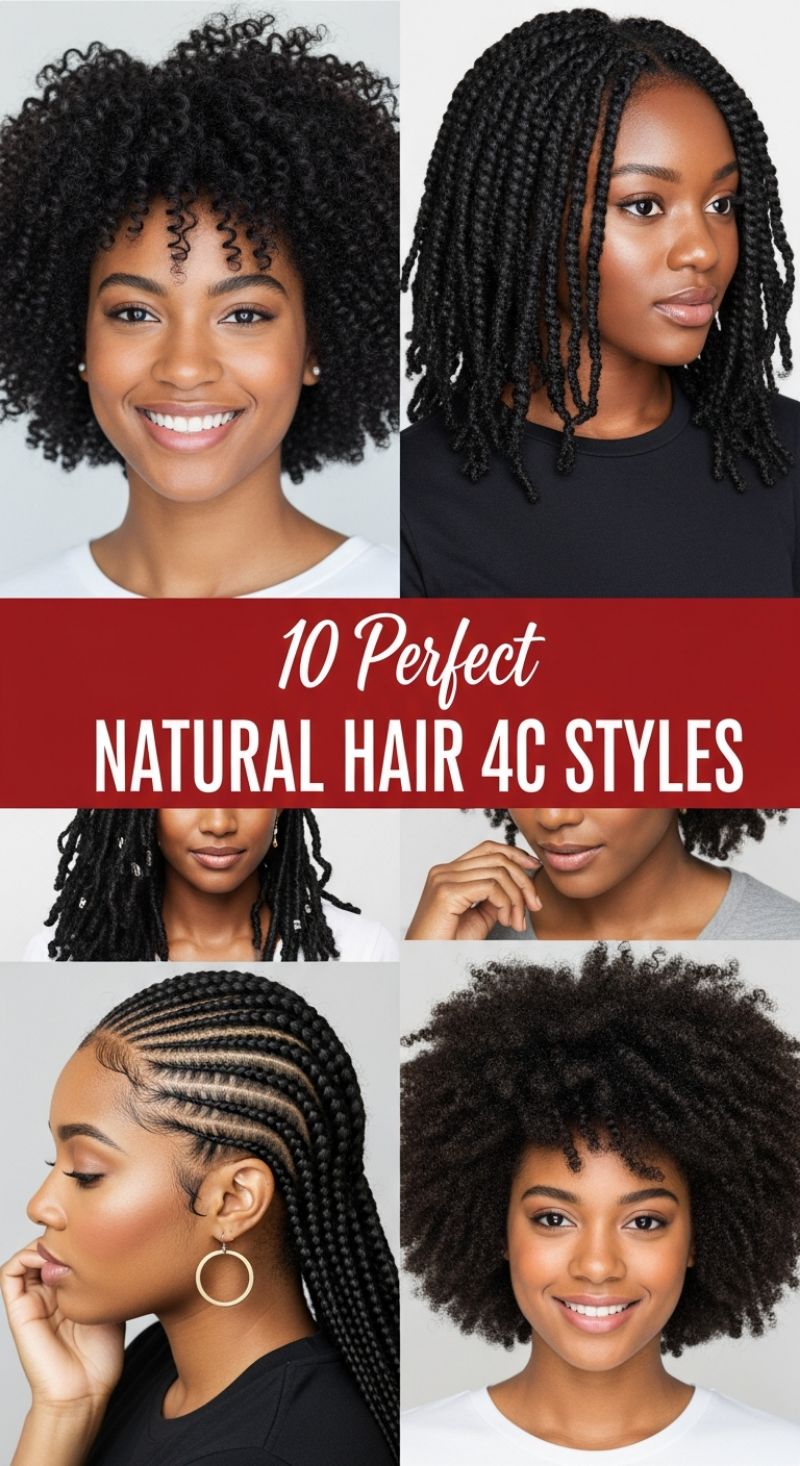
4C hair, characterized by its tightly coiled, Z-pattern strands, demands a specific approach to styling that prioritizes moisture retention and minimal manipulation. This visual guide showcases the incredible versatility and beauty achievable with this texture. To master the definition seen in the top-left and top-right sections, two-strand twists are your foundational technique. For the defined curly style (top-left), ensure your hair is thoroughly saturated with water or a moisturizing leave-in conditioner before applying a heavy-duty styling cream and then a gel to lock in the curl pattern. Twist the hair tightly while damp, allowing it to fully dry before unraveling. Conversely, to achieve maximum volume like the large, fluffy afro (bottom right), stretching is key. This can be done by gentle heat (low-setting blow dryer with a diffuser) or through tension methods (banding or thread wrapping) before picking out the hair gently from the root to achieve that full, gravity-defying shape.
Protective styling is non-negotiable for 4C hair health and length retention, and the examples here demonstrate elegant options. The shoulder-length twists (top right) and long cornrows (bottom left) are stellar choices. When installing twists, ensure your parts are clean and moisturize each section thoroughly using an oil or pomade to seal the ends, which are the oldest and most fragile part of the hair. For the sleek cornrows, achieving the smooth, defined edges requires using a quality edge control product applied gently with a brush before starting the braid. Expert advice for protective styles includes spraying the scalp and braids daily with a light, liquid moisturizer or a specific braid spray to prevent dryness and itching. Remember that the tightness of the style should never compromise comfort or cause excessive pulling at the hairline, which can lead to traction alopecia.
Successfully maintaining 4C styles long-term hinges on a robust maintenance routine. Whether you opt for a high-tension style like cornrows or a low-tension style like a voluminous wash-and-go, weekly deep conditioning treatments are vital to replenish the moisture lost due to the hair’s high porosity and coil density. Always use a silk or satin bonnet or pillowcase at night to prevent moisture from being pulled out by cotton fabrics. When taking down twists or braids, coat your fingertips with a light oil (like coconut or olive oil) to minimize friction and prevent breakage. The inherent strength of 4C hair allows for creativity, but consistency in moisturizing, stretching (to mitigate shrinkage), and minimizing heat application are the secrets to replicating these stunning looks.