Poached Salmon in Coconut Lime

I love cooking fish because it is fast and healthy. But sometimes fish can get dry if you cook it too long on a stove. That is why I want to show you how to poach salmon. Poaching means cooking the fish slowly in a liquid. It keeps the fish very soft and juicy. In this article, you will learn how to make a creamy coconut lime sauce. You will also see what tools you need and how to pick the best fish at the store. This meal looks fancy but it is actually very simple to make at home.
By the time you finish reading, you will know the exact steps to get perfect salmon every single time. I will talk about the best ingredients to use. I will also share a few tricks to make the sauce taste like it came from a big restaurant. This recipe is great for a quiet night or for a fun dinner with friends. Let us get started with the basics of this yummy dish.
Check out the steps below to start your cooking journey!
Getting Ready for Your Salmon Meal
Before you turn on the stove, you need to have everything in place. This helps you stay calm while you cook. I used to forget my lime or my salt, and then I would run around the kitchen. Now, I lay everything out on the counter first. You need fresh salmon, a can of coconut milk, and some fresh limes. Fresh juice is much better than the juice from a plastic bottle. It has a bright taste that cuts through the fat of the fish.
You also want to think about your pan. A wide pan with tall sides is best. This lets the salmon lay flat so it cooks evenly. If the pan is too small, the fish might break when you try to take it out. I learned that the hard way when I tried to squeeze four big pieces into a tiny skillet. It was a big mess! Now I use a large pan that gives the fish plenty of room to swim in the sauce.
Choosing the Best Salmon

When you go to the store, look for salmon that is bright pink or orange. It should not smell like old fish. It should smell like the ocean. I prefer buying fillets that are about the same thickness. This ensures they all finish cooking at the same time. If one piece is very thin and one is very thick, the thin one will get dry while the thick one stays raw. This is a common problem that many people face when they start cooking fish.
Frozen salmon is also okay to use. Just make sure you thaw it completely in the fridge before you start. If you cook it while it is still frozen, the outside will be tough and the inside will stay cold. I usually take my fish out of the freezer the night before I want to eat it. It is a simple habit that makes a big difference in the final taste of your meal.
Gathering Your Liquid Ingredients

The sauce is the most important part of this dish. You want full-fat coconut milk from a can. Do not use the coconut milk that comes in a carton for drinking. That kind is too watery and will not make a thick sauce. The fat in the canned milk helps the salmon stay moist. It also carries the flavor of the lime and the ginger. I like to shake the can before opening it so the cream and the water mix together well.
Limes bring the magic to this recipe. You will need the juice and the green skin, which is called the zest. The zest has a lot of oil that smells amazing. I use a small grater to get the zest off before I cut the lime in half. IMO, the zest is the secret to making the sauce pop. Without it, the sauce might feel a bit flat or too heavy from the coconut fat.
Essential Kitchen Tools

You do not need fancy gear for this recipe. A good skillet with a lid is the main thing. The lid is important because it holds the steam inside. This steam helps cook the top of the salmon while the bottom sits in the liquid. If you do not have a lid, you can use a large cookie sheet or some tin foil to cover the pan. Just be careful not to burn your fingers when you lift it up.
A thin spatula is also very helpful. It lets you slide under the fish gently. Salmon can be very delicate when it is cooked. If you use a heavy tong, you might crush the meat. I like using a metal fish spatula because it is flexible. It bends with the shape of the fish so everything stays in one piece. Having the right tools makes the whole process feel much easier and more fun.
How to Cook the Salmon Perfectly
Now that you have your ingredients and tools, it is time to cook. The process is very quick. It usually takes less than fifteen minutes from start to finish. I love this because I can have a healthy dinner ready even when I am tired after work. The key is to keep the heat low. If the liquid bubbles too hard, it can make the fish tough. You want tiny bubbles, not a big rolling boil. This gentle heat is the secret to the soft texture.
I usually start by heating up the coconut milk with some salt and spices. Once it starts to simmer, I slide the fish in. You should see the liquid come up about halfway on the sides of the salmon. This lets the bottom cook in the juice while the top steams. It is a very safe way to cook fish because it is hard to overcook it in liquid. Even if you leave it in for an extra minute, it will still be juicy because of the coconut milk.
Starting the Flavor Base

I like to start by putting a little oil in the pan. Then I add some fresh ginger and garlic. I stir them for just one minute until they smell good. This adds a deep flavor to the coconut milk later. You do not want to brown them or burn them. Just a light sizzle is enough. This step is optional, but I think it makes the meal taste much better. It gives the sauce a little bit of spice that goes well with the lime.
After the ginger and garlic are ready, pour in the coconut milk. Add a pinch of salt and a little bit of sugar. The sugar helps balance the sour lime juice. I learned this from a chef friend. He told me that every good sauce needs a balance of salt, sweet, and sour. This simple trick changed my cooking forever. Now my sauces always taste balanced and professional instead of just tasting like one thing.
Tips for a Better Sauce
- Use Fresh Ginger: The stuff in the jar is okay, but fresh ginger has a much better bite.
- Watch the Heat: Keep the milk at a low simmer so it does not separate or curdle.
- Add Herbs Last: Put things like cilantro or basil on at the very end so they stay green.
Poaching the Salmon Fillets

Once your liquid is simmering, place the salmon in the pan with the skin side down. If your salmon has no skin, that is fine too. Cover the pan with the lid. This is where the magic happens. The fish will slowly turn from a deep translucent pink to a light, opaque pink. I usually check it after about eight minutes. You can use a fork to gently press on the thickest part. If it flakes easily, it is done.
One mistake I made many times was overcooking the fish until it was dry and chalky. To avoid this, take the fish out when it still looks a tiny bit dark in the very center. The heat inside the fish will finish the cooking while it sits on your plate. This is called carryover cooking. It is a pro tip that helps you get that perfect, buttery texture every time. Your family will be so impressed with how soft the fish is!
Finishing with Lime and Herbs

When the salmon is done, take the pan off the heat. This is the time to add the lime juice. If you add it too early and boil it, the juice can turn a little bitter. Stir it into the sauce around the fish. I also like to add a handful of fresh cilantro or green onions. This adds color and a fresh crunch. FYI, if you hate cilantro, you can use parsley or even fresh basil. Both taste great with coconut.
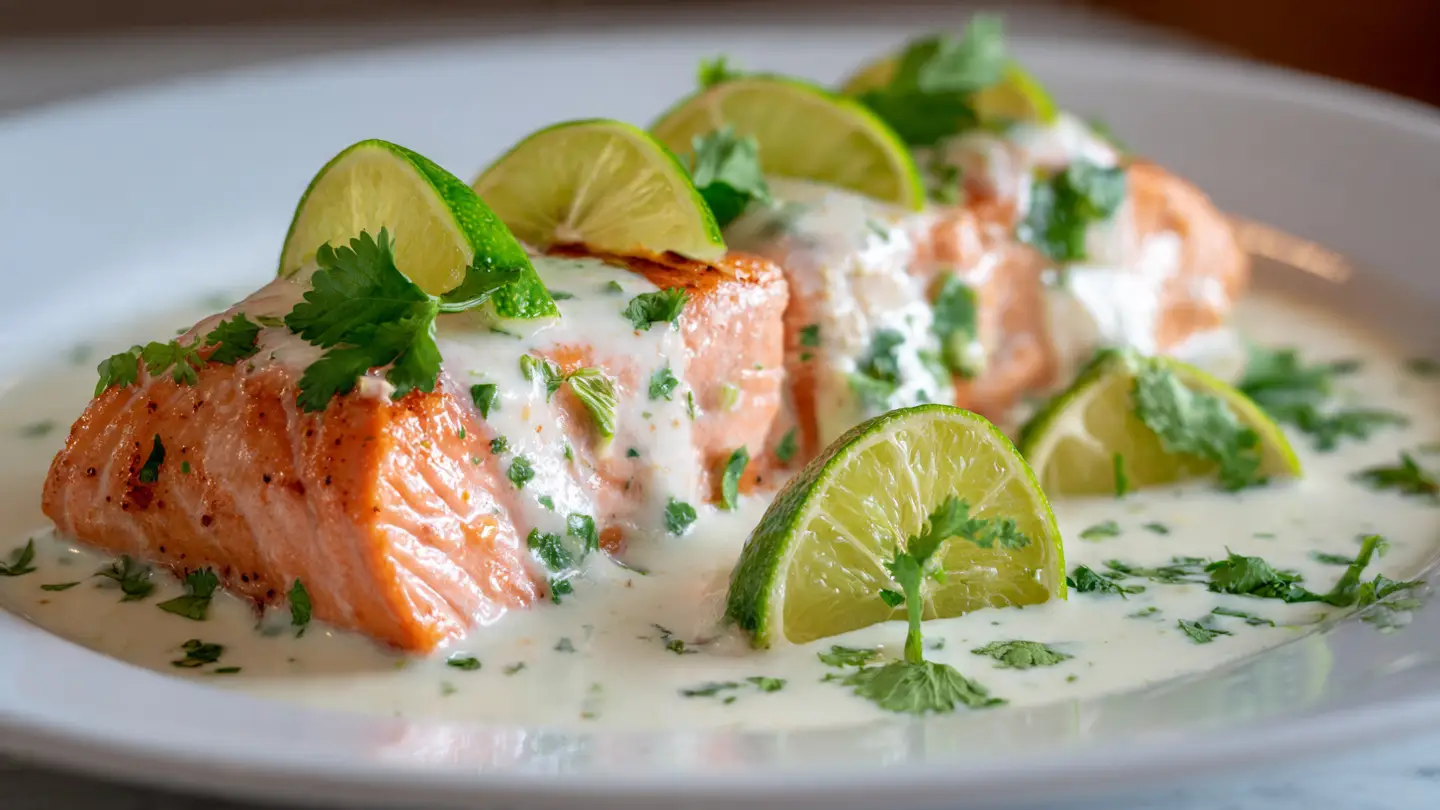
I like to spoon the extra sauce over the fish once it is on the plate. The sauce is so good that you will want to eat every drop. I usually serve this with white rice or some steamed broccoli. The rice is perfect because it soaks up all that creamy coconut lime goodness. It makes the whole meal feel very filling and satisfying. You won’t believe how much flavor comes from just a few simple ingredients!
Serving and Storing Your Meal
Presentation makes the food taste even better. I like to use white plates because the pink fish and green lime look very pretty against them. You can add an extra slice of lime on the side for people who want more sour flavor. This dish is best served hot right out of the pan. The sauce is at its creamiest when it is warm. If it sits too long, the coconut fat might start to get thick, but you can always stir it back together.
This recipe might not work well if you use very thin fish like tilapia. Salmon is a fatty fish, so it stays together in the liquid. Thinner fish might fall apart and get lost in the sauce. If you want to use a different fish, try something thick like cod or halibut. They are sturdy enough to handle the poaching liquid without breaking into tiny pieces. Always think about the texture of your meat before you start poaching.
What to Serve on the Side

Rice is the classic choice for this meal. Jasmine rice is my favorite because it has a nice smell that matches the coconut. You can also try quinoa or even small noodles. If you want a low-carb option, cauliflower rice works very well too. I have tried it with roasted sweet potatoes, and that was also delicious. The sweetness of the potato goes well with the lime.
For vegetables, I usually go with something green. Snap peas, bok choy, or asparagus are all great choices. You can even cook the vegetables right in the sauce with the salmon! Just put them in the pan during the last three or four minutes of cooking. This saves you from washing another pot, which is a big win in my book. I love one-pan meals because cleaning up is so much faster.
Handling Leftovers Safely

If you have leftover salmon, put it in a container and get it into the fridge quickly. Cooked fish stays good for about two days. When you want to eat it again, be careful with the microwave. Microwaves can make fish very dry and smelly. I prefer to warm it up slowly in a small pan on the stove. Add a splash of water or more coconut milk to keep the sauce smooth.
Another idea for leftovers is to cold-flake the salmon into a salad. The coconut and lime flavors are still there, and it tastes great on top of some greens. I sometimes do this for lunch the next day. It is a cold, refreshing meal that feels very healthy. Just make sure the fish was stored properly so it stays safe to eat. Never leave fish out on the counter for more than an hour.
Simple Variations to Try

If you like spicy food, you can add a little bit of red curry paste to the milk. This will turn the sauce orange and give it a nice kick. I do this when I want something more exciting. You can also swap the lime for lemon if that is all you have. It will taste a bit different, but it still works well with the coconut. Cooking is all about using what you have and making it your own.
You can also add different veggies like spinach or sliced bell peppers. Spinach is great because it wilts down into the sauce and adds a lot of vitamins. I like to experiment with different herbs too. Mint sounds strange, but it actually tastes very fresh with lime and salmon. Don’t be afraid to try new things in your kitchen. That is how you find your own favorite recipes!
Common Questions About This Dish
Can I use low-fat coconut milk?
You can, but the sauce will be thin. Full-fat milk makes the salmon much more tender and the sauce much creamier. I suggest sticking to the full-fat version for the best taste.
What if I don’t have fresh ginger?
You can use a half teaspoon of ground ginger powder instead. It won’t be as zingy, but it still adds a nice warmth to the coconut milk sauce.
How do I know the salmon is cooked?
Press the top with a fork. If the meat separates into flakes easily, it is done. The color should be a light pink all the way through, not dark or shiny in the middle.
Can I make this in an oven?
Yes, you can bake it in a dish covered with foil at 375 degrees. It takes about 15-20 minutes. However, poaching on the stove gives you more control over the sauce.
Is this recipe gluten-free?
Yes! Salmon, coconut milk, and lime are all naturally gluten-free. It is a great choice for people with food sensitivities or special diets.
My Final Thoughts on This Recipe
Poaching salmon in coconut lime sauce is one of the easiest ways to cook fish at home. It keeps the salmon very soft and gives you a delicious sauce to pour over rice. I hope you feel ready to try this in your own kitchen today! It is a healthy, fast, and very tasty meal that anyone can master with just a little bit of practice.